Month: November 2021

  • Striving hard to look after your lash extensions? Here’s how to take care of them

    Striving hard to look after your lash extensions? Here’s how to take care of them

    You just love how just a single pair of eyelashes can add drama to your whole eye makeup, don’t you? And with adding extensions, you definitely don’t need to worry about putting on a lot of makeup as they can make a statement by themselves. But while applying it, we have to be extra careful while putting them on as you don’t want to affect your real lashes. And as they make a bigger impact, volumizing your lashes, go easy with your eye makeup.

    These extensions may seem a cakewalk but they are surely not. To make them long-lasting, they require proper care as they can easily fall off from your eyes if not given a little TLC. So here are a few tips on giving them the little attention they need.

    Clean your Lashes

    Before applying those falsies, make sure your own lashes are free of any dirt or makeup. If not, wash them because they will stick much better.

    Don’t get them wet

    After getting your lashes done, wetting them for at least 24 hours is a huge no-no. The glue hasn’t dried off and having water on them make cause them to fall off.

    Avoid Steam

    Yes, that means no sweaty workout session either. No swimming, no saunas too. You should avoid moisture in all cases because the first 24 hours is crucial.

    Avoid Oily Products

    Oils in your makeup or skincare products can bring down the glue in your lashes so it would be better to avoid them.

    Brush Them

    Maintaining your extensions is to give them a proper brush daily so as to retain their natural shape as they mean to get tangled sometimes.

    Do not pull or rub

    The first and foremost rule after getting your lashes done is not to rub, pull or tug in it any way. Just keep your hands off them, give them the time to dry so you could look your fab best.

    Say No to Mascara

    We know how you love applying mascara but this will only lead to a breakdown in the adhesive of your lashes. Source: Pinkvilla

  • Chana masala

    Chana masala

    Ingredients

    1 tablespoon olive oil, 1 large onion, chopped, 2 cloves minced garlic, 2 teaspoons grated fresh ginger, 1 green chile pepper, chopped, 1 tablespoon ground cumin, 2 teaspoons paprika, 1 teaspoon ground coriander, 1 teaspoon garam masala, 1 teaspoon ground turmeric, ½ teaspoon ground cayenne pepper, 4 cups chopped tomatoes, 4 cups cooked chickpeas (garbanzo beans), ½ cup tomato sauce, ½ cup plain yogurt, 1 lemon juiced, ½ teaspoon salt,

    Directions

    –             Heat oil in a large saucepan over medium heat. Saute onion, garlic, ginger, and green chile pepper in hot oil until onions are translucent, about 10 minutes.

    –             Season onion mixture with cumin, paprika, coriander, garam masala, turmeric, and cayenne pepper; stir. Cook onion with spices until fragrant, 1 to 2 minutes. Add tomatoes, chickpeas, and tomato sauce; stir and simmer until the tomatoes soften, about 5 minutes.

    –            Stir yogurt into the mixture until the color of the mixture is even; simmer until again hot, about 5 minutes more. Remove pan from heat; stir lemon juice and salt into the mixture.

  • ‘No Time to Die’ crosses $700 million mark

    ‘No Time to Die’ crosses $700 million mark

    The 25th James Bond movie, No Time to Die, has become one of the few big-screen releases during the Covid-19 pandemic to cross the $700 million mark. A Cary Joji Fukunaga directorial, the Daniel Craig-starrer has accumulated $708 million. It is only the second Hollywood film after F9 to achieve this feat. Now, only F9: The Fast Saga ($721 million), Hi, Mom ($822 million), and The Battle at Lake Changjin ($874 million) are above No Time to Die.

    But in terms of purely overseas (outside North America) earnings, the film has grossed more than F9, and is thus the biggest overseas earner in Hollywood during the pandemic. The film was made on a hefty budget of $250 million, so great performance at the box office was essential. Craig has received a lot of praise for his swan song performance in No Time to Die, with some saying it is the best performance of his career. Directed by Cary Joji Fukunaga, and written by Neal Purvis, Robert Wade, Fukunaga and Phoebe Waller-Bridge, the film follows a jaded Bond who has retired from MI6 but gets recruited by the CIA to rescue a kidnapped scientist. Léa Seydoux, Ben Whishaw, Naomie Harris, Jeffrey Wright, Christoph Waltz, Rory Kinnear, and Ralph Fiennes return from previous films. Rami Malek, Lashana Lynch, Billy Magnussen, Ana de Armas, David Dencik, and Dali Benssalah join the franchise with No Time to Die.

  • Tulsi Vivah

    Tulsi Vivah

    Tulsi Vivah is a Hindu festival in which a ceremonial marriage of Tulsi with Lord Shaligram or Amla branch, which are personifications of Vishnu, is held. This year, Tulsi Vivah was celebrated on November 15, 2021. The Tulsi wedding signifies the end of the monsoon and the beginning of the wedding season in Hinduism.

    Legend

    According to Hindu scripture, the Tulsi plant was a woman named “Vrinda” who was the wife of Asura Jalandhar and was a great devotee of Vishnu. Her devotion made her husband invincible, not even Gods could defeat him. One time, when Vrinda was praying for her husband’s victory, Vishnu disguised himself as Jalandhar and went in front of her. She stopped her prays and went to touch Jalandhar/Vishnu’s feet. This took away the real Jalandhar’s powers and then he was killed by Shiv. When Vrinda heard about it, she cursed Visnu that he would become Shaligram and he would get separated from his wife, Laxmi. Visnu turned into Shaligram and was separated from Sita in his Ram avatar.

    After that, Vrinda walked into the ocean and drowned herself. The Gods turned her into the Tulsi plant. Visnu had promised her that he would marry her in the next life. So he marries Tulsi in the form of Shaligram. Hence, this day is celebrated as Tulsi Vivah.

    Celebrations

    The marriage of Tulsi with Vishnu/Krishna resembles the traditional Hindu wedding. The marriage ceremony is conducted where a fast is observed on the Tulsi Vivah day until evening when the ceremony begins. A mandap is built around the courtyard of the house where the Tulsi plant is usually planted. It is believed that the soul of Vrinda resides in the plant at night and leaves in the morning. The bride Tulsi is clothed with a sari and the groom, an image of Vishnu or the Shaligram is clothed with dhoti. The couple is linked with a cotton thread in the ceremony. People burst firecrackers and distribute sweets on this day.

    A day of fast, feast and ‘tulsi vivah’

    The much-awaited wedding season begins as Hindu deities wake up from their deep sleep and are all set to bless the newlyweds from Monday. The day is celebrated as Dev Uthani Gyaras or Prabodhini Ekadashi or Chhoti Diwali. The most important ceremony of the day is ‘tulsi vivah’.

    The ritual involves ceremonial marriage of holy basil (tulsi) plant to Lord Shaligram (Lord Vishnu). This day is considered auspicious and weddings take place on this day. All auspicious functions that cannot be performed during ‘chaturmas’ will begin on this day. Almost all local marriage gardens have been booked for weddings tomorrow. Many devotees will observe fast and stay on fruit diet. This day helps people in detoxification of bodies. Sugarcanes will be sold in large quantities during the day.

    Preparing for celebrations, Gera family bought decorative items, puja goods and new cloth from market. “In our family, ‘tulsi vivah’ is organised as a proper wedding and celebrated with music, prayers and feast,” businessman Vasudev Gera said. He bought sugarcane, red shiny cloth, havan goods and a large earthen lamp.

    “Earthen lamp is lit at night. It burns all night to commemorate the start of new season and bright future,” Gera said. Besides, earthen lamps are lit all around the house like on Diwali. Hospital administrator Ashish Ramnani also talked about importance of sugarcane. ‘Tulsi vivah’ will be organised at temples in Khajrana, Vijay Nagar and other places. ISCON temple will also hold the ceremony

    The Devi Bhagavata Purana regards Tulsi as an manifestation of Lakshmi, the goddess of wealth and principal consort of Vishnu. Once upon a time, King Vrishadhvaja-a devotee of the god Shiva-banned worship of all other deities except for that of his patron god. An agitated sun god Surya cursed him that he would be abandoned by Lakshmi. Upset, Shiva pursued Surya, who fled, finally seeking shelter with Vishnu. Vishnu said to the deities that years had passed on earth. Vrishadhvaja and also his heir-son were dead and his grandchildren-Dharmadhvaja and Kushadhvaja-were now worshiping Lakshmi to gain her favor. Lakshmi rewarded their efforts by being born as their daughters Tulsi (literally “matchless”) to Dharmadhvaja and Vedavati to Kushadhvaja, respectively. In time, Tulsi gave up all her royal comfort and went to Badrinath to perform penance to gain Vishnu as her husband. The god Brahma was pleased with her penance but told her that she would have to marry the daitya Shankhachuda before she could marry Vishnu.

    Curse of Tulsi & Lord Vishnu

    Shankhchuda was Sridama reborn. Though he was a devotee of Shri Krishna, he detested Shri Radha. He considered Prema as Vilas. Once on his visit to Golok, Shri Krishna asked him to guard the gate of His palace and not allow anyone to enter. Following the order, he stopped Shri Radha from entering Shri Krishna’s palace as He was resting. They got into a heated argument. In a fit of anger, he cursed Shri Radha that she would forget all about Shri Krishna and would abandon Golok and live on Lok (Prithvi) for a hundred years. He was made to realise that Radha-Krishna’s prema is the foundation of the universe. He too was cursed to be born on Prithvi as Shankhchuda.

    This mighty daitya underwent terrific tapa and penance and pleased Brahma. Brahma blessed him with a boon of invincibility. Shankhachuda pleased Brahma with his penance, was granted the Vishnu-Kavacha (armour of Vishnu) and he blessed shankhachuda that as long as Vishnu-Kavacha was on his body, no one could slay him. Shankhachuda and Tulsi were soon married. He practiced the laws of dharma religiously but was also prone to commit mistakes and sins for the sake of community. Therefore, after victory over the three worlds, he drove out gods from various celestial kingdoms. To rescue the universe, Shiva challenged Shankhachuda to war. Vishnu appeared in his true form and urged Tulsi to abandon her earthly body and return to his celestial abode. In her anger and grief, she cursed Vishnu to be turned into stone. Vishnu turned into a stone and reside on riverbank Gandaki River. People and devotees will call it a chunk of Shaligrama. Tulsi’s mortal remains decayed and became the Gandaki River, while her hair transformed into the sacred Tulsi plant.

    Vrinda and Jalandhara

    A variant of the legend replaces the name Tulsi with Vrinda (a synonym of the Tulsi plant) and in this legend, Tulsi is distinct from Lakshmi. She was daughter of Kalanemi, an asura. Vrinda was very pious and a great devotee of god Vishnu. Jalandhara, a demon born from lord Shiva’s rage, married her. After Jalandhara took control of the three realms, he had a conflict with lord Shiva. To protect her husband from death, Vrinda performed a penance which made him immortal. The later part of the story concentrates on the tale of Vishnu destroying Vrinda’s chastity to lead to the death of Jalandhara by Shiva. Different texts suggest different methods used by Vishnu. Some say that Vishnu, disguised as Jalandhara, performed a ritual belonging to married couples, others say that Vishnu broke Vrinda’s fast or slept with her. The legend ends with Vrinda cursing Vishnu to become a stone, turning him the Shaligram stone (which are found only in the Kali Gandaki River of Nepal) and Vishnu transforming Vrinda into the Tulsi plant. In a variant, Vrinda immolated herself in her husband’s funeral pyre (see sati) but Vishnu ensured that she got incarnated in the form of tulsi plant on the earth. In both versions, she gain the status of a goddess named Tulsi, while her earthly form is the Tulsi plant.

  • Akasa Air signs $4.5-bn deal to buy CFM engines

    Akasa Air signs $4.5-bn deal to buy CFM engines

    Ace investor Rakesh Jhunjhunwala-backed Akasa Air on Wednesday announced signing an agreement to purchase CFM LEAP-1B engines to power its Boeing 737 MAX airplanes and the overall deal is estimated to be worth $4.5 billion. The announcement comes a day after the upcoming ultra low-cost carrier said it would buy 72 Boeing 737 MAX planes from Boeing Co. With this purchase and services agreement, Akasa Air will have from day one of its operations an innovative and comprehensive maintenance programme delivered by CFM, the airline said. The pact was signed with CFM at the ongoing Dubai Airshow. The deal, which includes spare engines and long-term service agreement, is estimated to be worth $4.5 billion at list price. “We are pleased to partner with CFM International as we embark on an exciting journey to launch the greenest, most affordable and most dependable airline in India.

  • US, EU, Japan to renew alliance against China trade practices

    US, EU, Japan to renew alliance against China trade practices

    The U.S., European Union and Japan will announce Wednesday they will renew their trilateral partnership to address the challenges posed by the non-market policies and practices of countries such as China, according to two people familiar with the matter. The three plan to meet on the sidelines of the upcoming WTO ministerial meeting taking place in Geneva, Switzerland, at the end of the month where they will aim to set out a work program for the following weeks, one of the people said.

    The talks, which are built on a Trump-era initiative with the EU and Japan, aim to establish new international rules to restrict the market-distorting behavior of state-owned enterprises, confront harmful subsidy practices and deter forced technology transfers and intellectual property theft.

    A spokesman for the office of the U.S. trade representative didn’t immediately respond to a request for comment. An EU spokesperson couldn’t be immediately reached for comment.

    The initiative seeks to rein in China’s massive state aid to strategic domestic industries — like steel and aluminum — through tax benefits, government grants, energy subsidies, preferential lending and financing, under-priced inputs and cheap land-use fees.

    The announcement comes days after U.S. President Joe Biden met virtually with Chinese leader Xi Jinping. In the 3 1/2-hour sit-down on Monday evening, Biden made clear his concerns with China’s non-market economic practices, U.S. officials said.

    Officials in Washington estimate the Chinese government offered more than $500 billion in state aid to key industrial sectors via the Made in China 2025 and related industrial plans.

    The trilateral effort was endorsed earlier this year by trade ministers from the world’s seven largest advanced economies, who said they want to bolster regulations on industrial subsidies and curb actions by state-owned companies that distort trade.

    The Group of Seven’s goal in the talks, which have been ongoing since 2017, is to produce an agreement that might eventually be adopted by the members of the World Trade Organization.

    But getting China to join the talks, which are ostensibly aimed at restricting Beijing’s state-led economic model, remains a major hurdle.

    In July China’s ambassador to the WTO said there’s scope for Beijing to participate in the initiative but said new international trade rules should not be negotiated in China’s absence and then presented as a fait accompli.

    If China plays ball, the negotiations could represent the most significant attempt to rewrite WTO rules since the ultimately unsuccessful Doha Round of trade negotiations was launched in 2001.

  • Apple will soon let you repair your iPhone, Mac at home

    Apple will soon let you repair your iPhone, Mac at home

    Apple will now allow users to carry out Do-It-Yourself (DIY) repairs on certain iPhone and Mac computers.

    It starts sometime next year with the new Self Service Repair option, which will roll out in the US and other countries.

    It will allow users to access – in other words, buy – genuine parts and tools for iPhone and Mac repairs on the new Apple Self Service Repair Online Store, thereby doing away with the need to go to a service centre.

    It makes Apple the first smartphone brand, and indeed a computing device maker, to offer a self-repair option to its consumers. In the first stage of this DIY repair adoption, parts and tools will be available for the iPhone 13 and iPhone 12 series. That’ll be followed by parts and tools for Mac computing devices, the recent ones powered by the M1 chips, including the new MacBook Pro 14 and the iMac 24-inch.

  • Economic recovery taking hold: RBI Governor Das

    Numerous macro indicators suggest that the economic recovery is now taking hold after the beating it has taken during the pandemic, but for growth to be sustainable and reach its potential, private capital investment has to resume, the Reserve Bank Governor said on Tuesday.

    RBI Governor Shaktikanta Das said the economy has the potential to grow at a reasonably high pace in the post-pandemic scenario, provided private capital investment resumes.

    Despite many economists revising down their growth forecasts between 8.5 and 10 per cent for the current fiscal, the central bank has not changed its forecast of 9.5 per cent for the year so far.

    Addressing a banking function—which he said is his first since the pandemic begin in March 2020, the governor asked banks to be investment-ready when the investment cycle picks up, which the RBI feels to begin from the next fiscal.

    It can be noted that since 2013, private capital has been missing from the economy and many are of the view that this should begin from mid-next fiscal.

  • Paytm lists at Rs 1,950, shares plunge 21% in first day of trade

    Shares of One 97 Communications, the parent company of digital payments company Paytm, debuted on the stock market on Thursday. The stock was opened for trading at Rs 1,950 on the NSE, marking a drop of 9.3% or Rs 200 from its issue price of Rs 2,150. Paytm shares extended losses after l opening, with the stock falling 21% from the issue price, reaching an intraday low of Rs 1,705.

    Paytm’s 18,300 crore IPO, which was the largest in the country, was underwritten 1.89 times last week. On BSE, the Paytm share was opened for trading at Rs 1,955.

    Despite the decline in Paytm shares in its early days, the company recorded a valuation of over Rs 1 lakh crore.

    Analysts said Paytm’s expensive valuations were the reason for the stock price plummeting in its first trading session.

    The IPO of Paytm consisted of a new issue of Rs 8,300 crore and an offer to sell (OFS) by existing shareholders valued at Rs 10,000 crore. Paytm awarded shares worth Rs 8,235 crore to more than 100 institutional investors, including the Singapore government, ahead of the country’s largest stock exchange listing.

    Paytm has attracted the interest of 122 institutional investors who bought more than 3.83 crore of shares for Rs 2,150 a piece, according to a regulatory document dated November 3.

    Engineering graduate Vijay Shekhar Sharma founded Paytm in 2010 as a mobile top-up platform. The company grew rapidly after ride-sharing company Uber listed it as a fast-payment option in India and its use increased further in late 2016 after the shock ban on high-value banknotes boosted digital payments.

    Paytm’s success made Mr. Sharma, the son of a schoolteacher, a billionaire with a net worth of $ 2.4 billion according to TSWT. Its IPO also struck hundreds of new millionaires in a country where per capita income is less than $ 2,000.

  • Google bans 2 smart TV apps with Joker malware from Play Store

    Google bans 2 smart TV apps with Joker malware from Play Store

    Google bans malicious apps from its Google Play Store whenever it finds them there or comes to know about them when security companies point it out. This kind of action goes a long way in protecting users from scams on the internet. In the latest such instance, the company has banned two new smart TV-based apps from the Google Play Store. These two apps are ‘Smart TV remote’ and ‘Halloween Coloring’. Out of these, the former has been downloaded at least 1,000 times. The information comes courtesy of Kaspersky’s security analyst Tatyana Shishkova who took to Twitter to disclose the names of two malicious apps on the Google Play Store. Shishkova says that these apps come with Trojanised Joker malware.

    Notably, Joker malware is known to subscribe users to premium content without their knowledge. Earlier this year, over 5,00,000 Huawei devices were found to be infected with Joker malware. Bleeping Computer also analysed the code of these malicious apps, that is, ‘Smart TV remote’ and ‘Halloween Coloring’ and it found out that it exists in the “resources/assets/kup3x4nowz” file within the Smart TV remote app.

  • International Space Station manoeuvres higher to swerve satellite junk

    International Space Station manoeuvres higher to swerve satellite junk

    The International Space Station(ISS) performed a brief manoeuvre to dodge a fragment of a defunct Chinese satellite, Russian space agency Roscosmos said. On November 12, 2021, a fragment of the Fengyun-1C spacecraft will approach the International Space Station at about 4 am Moscow time, Roscosmos added.

    The station crewed by seven astronauts climbed 1,240 metres higher to avoid a close encounter with the fragment and settled in an orbit 470.7 km (292 miles) above the Earth, Roscosmos said. It did not say how large the debris was.

    “In order to dodge the ‘space junk’, (mission control) specialists…have calculated how to correct the orbit of the International Space Station,” the agency’s statement said adding that the minimum distance between the object and the ISS was just over 600 meters.

    An ever-swelling amount of space debris is threatening satellites hovering around Earth, making insurers leery of offering coverage to the devices that transmit texts, maps, videos and scientific data.

    Over the station’s 23-year orbital lifetime, there have been about 30 close encounters with orbital debris requiring evasive action. Three of these near-misses occurred in 2020. In May this year there was a hit: a tiny piece of space junk punched a 5mm hole in the ISS’s Canadian-built robot arm.

    This week’s incident involved a piece of debris from the defunct Fengyun-1C weather satellite, destroyed in 2007 by a Chinese anti-satellite missile test. The satellite exploded into more than 3,500 pieces of debris, most of which are still orbiting. Many have now fallen into the ISS’s orbital region.

    To avoid the collision, a Russian Progress supply spacecraft docked to the station fired its rockets for just over six minutes. This changed the ISS’s speed by 0.7 metres per second and raised its orbit, already more than 400km high, by about 1.2km.

    Orbit is getting crowded Space debris has become a major concern for all satellites orbiting the Earth, not just the football-field-sized ISS. As well as notable satellites such as the smaller Chinese Tiangong space station and the Hubble Space Telescope, there are thousands of others.

    As the largest inhabited space station, the ISS is the most vulnerable target. It orbits at 7.66 kilometres a second, fast enough to travel from Perth to Brisbane in under eight minutes.

  • Here are five simple tips to quickly speed up your laptop

    Here are five simple tips to quickly speed up your laptop

    A slow laptop on your hands can be a primary cause of loss of productivity and focus. It can also be extremely frustrating when you’re in the middle of important work only to find yourself waiting more and doing less of the work. However, there are simple tips you can follow to see a quick performance boost on your machine, which can be handy when you’re out with your laptop and need to get stuff done fast.

    Quit foreground, background programs that are not in use

    Programs that are not in use right now, but are running regardless, are the prime reasons for your laptop’s resources being spent for the wrong task. Close any program windows that are not necessary to the work at hand and you should see an almost immediate increase in performance, especially if you have an older, not-so-powerful machine. Not all programs can be simply closed by hitting the ‘X’ button. You may also want to keep an eye on what’s running in the background. You can do this by hitting Ctrl+Shift+Esc and seeing what’s running in the Windows task manager. You can also check your system tray by hitting the upward facing arrow on the right side of your taskbar to see if any programs are running in the background.

    Close unnecessary browser tabs

    If your work involves having a browser open at all times, you may want to keep the number of open tabs at a minimum if your machine is not fast enough. Remember that the more tabs that are open in a browser window, the heavier the toll on your RAM and processor.

    Restart your laptop

    A simple restart once a while can do your older laptop more good than you think. Restarting clears the temporary cache memory and allows your laptop to quite literally start fresh. Note that if you have programs that start along with Windows, simply restarting could be counterproductive unless you do something about those programs first.

    Keep an eye on startup apps

    Startup apps will silently build up over time and will not only affect your laptop’s boot time, but its general performance as well. These programs also mean your resources will be used behind these programs, probably without you realising it.

    Source: Indian Express

  • Apple’s AR headset could cost $2000, will compete with Meta’s Project Cambria: Report

    Apple’s future AR/VR headset could be in the price range of $2000, according to Bloomberg’s Mark Gurman who has mentioned new details in his newsletter PowerOn. Gurman expects Apple’s headset to make an appearance in 2022, and he’s predicting it will come just a few months after Meta (formerly Facebook) launches its own headset, which is so far known as Project Cambria. Gurman says both devices will be direct challengers for users looking to jump into the metaverse. Zuckerberg had given a glimpse of Project Cambria during the Meta announcement. He had said that the product would be more expensive, and come with the more “advanced technologies.” In a blog post the company had said the headset would include “improved social presence, colour Passthrough, pancake optics,” and this was not a successor to the existing Oculus Rift 2 or 3.

    It said Project Cambria was designed “for people who want to start testing out a new kind of computing on the cutting edge of what’s possible today.”

    Meanwhile, Gurman’s newsletter also notes that Apple and Meta could compete in fitness watches as well given the latter is supposed to launch its own smartwatches next year. This has been previously reported by The Verge as well, which had stated that Meta’s smartwatch would come with two camera options.

    The report had said that while one camera would be geared for video calling, the other detachable camera would be capable of recording video at full HD or 1080p resolution.

  • Pahalgam: Valley of the shepherds

    Pahalgam: Valley of the shepherds

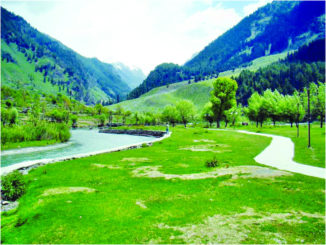
    Situated in the Anantnag district of Jammu & Kashmir Valley, Pahalgam is a beautiful hill station and a popular tourist attraction. Pahalgam is located on the banks of the Liddar River and is famous for adventure activities like hiking, trekking, fishing. Pahalgam serves as the base of one of the most important pilgrimages in India – the Amarnath Yatra. Chandanwari, located 16.6 km. away from Pahalgam is the actual base camp of the Amarnath. Kolhoi Glaciers trek via a beautiful village named Aru is one of the most popular treks in the region. The local people also offer sledging on the frozen glaciers. In addition, the long stretches of rivers in Pahalgam are the perfect site for people who enjoy trout fishing.

    Pahalgam is where the famous Bollywood movie Betaab, starring Sunny Deol and Amrita Singh, was shot. The valley was consequently named Betaab Valley after that. Sheshnag Lake, situated near Pahalgam, is another bliss altogether. When in Pahalgam, buy authentic Kashmiri saffron from Pampore.

    Must Visit Places Aru Valley

    Juxtaposed against the snow-covered Himalayan peaks, Aru Valley is an enthralling village in Kashmir. Located around 11 km from Pahalgam, it is the base camp for trekking to the Kolhoi Glacier and the Tarsar-Marsar Lake. Aru lies beside the Aru river, a tributary of the Lidder river, and is known for its scenic meadows and activities like horse riding, hiking and trekking.

    During the winter months, Aru Valley becomes a winter wonderland covered with snow as far as the eyes can see. This makes it a perfect place for skiing. There is an entry fee for Aru Wildlife Sanctuary but it doesn’t have any fauna.

    Chandanwari

    Chandanwari, located 15 km from Pahalgam, is the starting point of the famous Amarnath Yatra. It is also famous for the snow sledging on a snow bridge. Surrounded by snow-dusted mountains and the Lidder River flowing by, Chandanwari is perfect to enjoy a picnic with your family and enjoy the natural beauty.

    Chandanwari remains covered in snow from November to May which makes it ideal for sledging. However, the best time to visit Chandanwari is April to June as the weather is perfect for sightseeing during this time.

    Betaab Valley

    Betaab Valley is one of the most popular tourist attractions in Pahalgam which is a breathtaking combination of picturesque surroundings encircled by tall deodar trees and pine forests, with the Lidder River flowing right through it. The valley is located at a distance of 15 kilometres from Pahalgam in the Anantnag district of Jammu and Kashmir. Betaab Valley got its name from the Bollywood movie Betaab starring Sunny Deol and Amrita Singh shot here. The valley falls between Pahalgam and Chandanwadi on the way to the Amarnath Temple Yatra and is one of the three angelic valleys of Pahalgam, the other two being Aru and Chandanwadi. Sprawling fertile pastures, snow-capped mountains and meandering streams are characteristic of Betaab valley. Apart from being well-known for this stunning landscape, the valley is also a renowned as a famous trekking base and camping site for travellers who want to explore the nearby regions or set out for the Amarnath Yatra.

    Baisaran

    Baisaran is a beautiful destination 6 kms away from Pahalgam in Jammu & Kashmir. With tranquil meadows, pristine lakes and picturesque setting, you can just stroll down the area or sit down to have a picnic. The place also has very many options of fun games and rides, pony rides, zorbing etc. The place is a popular tourist attraction in the area and you should definitely stop by if you are visiting here.

    Lidder River

    Located in the picturesque beauty of Jammu and Kashmir, the Lidder River is a 73-kilometre long glacial river that originates from the Kolhoi glacier. Flowing through the valleys of Pahalgam, Lidden River is a quaint picnic spot. Other adventure sports that you can indulge in are white water rafting, angling, horse riding, and fishing. Considered as one of the most important tributaries of the Indus, the Lidder River is the main water source for the nearby Anantnag region, which is only accessible by trekking.

    Kolahoi Glacier

    Situated over the Lidder River, Kolahoi glacier is a hanging glacier known for its breath taking views. While the only way of reaching this glacier is though trekking, one can also hire ponies or horses for some parts of the journey.

    The terrains to reach the glacier are extremely challenging and are not advised to be undertaken by inexperienced trekkers.

  • Taapsee hails ‘inspiring’ Mithali Raj for getting Khel Ratna Award

    Taapsee hails ‘inspiring’ Mithali Raj for getting Khel Ratna Award

    Bollywood actress Taapsee Pannu has heaped praises on Mithali Raj, who is the first-ever Indian woman cricketer to receive the Major Dhyan Chand Khel Ratna Award. Taapsee will be seen playing Mithali Raj, who has the distinction of being the highest ODI run-getter in women’s cricket, in the biopic titled ‘Shabaash Mithu’, directed by Srijit Mukherjee. Posting a video of the women’s cricket team captain being bestowed the honour by President Ram Nath Kovind, Taapsee tweeted: “Just by hearing this exhaustingly long introduction of her accolades I feel she actually deserves a series made on her, not just a film.” She added: “So inspiring.” The actress has wrapped up shooting for ‘Shabaash Mithu’. She also treated her fans to a picture of her in the film.

  • Bhumi Pednekar feels lucky to have found scripts that are distinct

    Bhumi Pednekar feels lucky to have found scripts that are distinct

    Young Bollywood star Bhumi Pednekar is on a roll with a lineup of films such as ‘Bheed’, ‘Badhaai Do’, ‘Govinda Naam Mera’ and ‘Raksha Bandhan’, and calls herself lucky to find scripts that are distinct right from her debut in 2015 with ‘Dum Laga Ke Haisha’. Bhumi said: “My slate of films will give audiences a unique theatrical experience with every project. I will have five releases on the big screen next year and all of them are super diverse and different from each other. “I have been lucky to have always found scripts that are distinct right from my debut and next year I will be able to give audiences five very different sides to my personality through the characters that I’m playing on screen.” She added that she is really excited about these films. Bhumi is happy that the theatres are bouncing back to business. “This is the best news for the industry that has suffered a lot because of covid-19. People want to see good cinema and the success of ‘Sooryavanshi’ proves just that. I was always confident that people will return to the theatres and people are feeling safe to do so now.

  • Rajkummar Rao ties the knot with Patralekhaa

    Rajkummar Rao on Monday, Nov 15,  tied the knot with his longtime girlfriend Patralekhaa. Rajkummar and Patralekhaa, who have been dating for over a decade, got married in a traditional ceremony with only their family members and close friends in attendance. The Citylights actors had a destination wedding in New Chandigarh’s The Oberoi Sukhvilas Spa Resort.

    Sharing photos from the wedding, Rajkummar wrote, “Finally after 11 years of love, romance, friendship and fun, I got married to my everything today, my soulmate, my best friend, my family. Today there is no greater happiness for me than being called your husband @patralekhaa. Here’s to forever .. and beyond ??”

    Patralekhaa too shared a post. It read, “I got married to my everything today; my boyfriend, my partner in crime, my family, my soulmate…My best friend for the last 11 years! There is no greater feeling than to be your wife! Here’s to our forever…@rajkummar_rao.”

    For the wedding, Rajkummar Rao opted for a traditional off-white sherwani paired with a pink dupatta. He matched his turban with his wife’s red attire. Patralekhaa looked stunning in her bridal avatar. While she chose a red lehenga with gold detailing, what stood out was her dupatta which had Bengali words embroidered on it.

    The dupatta featured the words, “Amaar pran bhora bhalobasha aami tomay somporna korilam.” It can be loosely translated as ‘I pledge all my love to you’, which could perhaps be one of her wedding vows.

  • Alia Bhatt-starrer Gangubai Kathiawadi bows out of clash with RRR, to release in Feb 2022

    Alia Bhatt-starrer Gangubai Kathiawadi bows out of clash with RRR, to release in Feb 2022

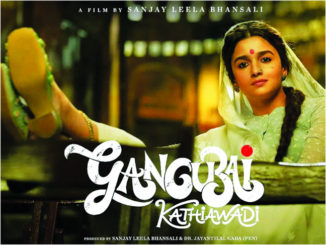
    Sanjay Leela Bhansali’s Gangubai Kathiawadi, starring Alia Bhatt in the lead role, has a new release date. Bankrolled by Pen Studios, the film will release on February 18, 2022. Gangubai Kathiawadi was earlier supposed to release in January 2022 when it would have clashed with RRR, starring Jr NTR, Ram Charan, Ajay Devgn and Alia, as well as Prabhas-starrer Radhe Shyam.

    Pen Studios took to Twitter and made the announcement, “Watch her rise with power, courage & fearlessness. #GangubaiKathiawadi coming to take over 2022 on 18th February, in cinemas near you.” The film has been produced by Sanjay Leela Bhansali and and Dr Jayantilal Gada from Pen Studios. Gangubai Kathiawadi was initially scheduled to release on July 30 this year, but got pushed due to production delays. The Pen India Ltd had recently assured that Gangubai Kathiawadi will release in theatres on January 6, 2022 after there was speculation about it heading for a digital premiere.

    Gangubai Kathiawadi is a biographical crime-drama chronicling the life of a girl named Gangubai from Kathiawad who became one of the most powerful, loved and respected women from Kamathipura during the 1960s.

  • ‘Example of responsible govt’: BJP hails PM Modi’s decision to repeal farm laws

    Shortly after Prime Minister Narendra Modi announced the scrapping of three farm laws, reaction started pouring in. While the Opposition parties, led by the Congress, termed this as victory for farmers and defeat for “arrogant” government, the Bharatiya Janata Party (BJP) leaders called the decision a step towards the welfare of the farmers.

    The three laws were passed by Parliament in September last year and triggered protests by farmers, who sat on the borders of Delhi demanding the repeal of the laws. They called the three laws as pro-corporate.

    “All the farmers should welcome this move and end their stir. They should go to their homes and start regular life,” Haryana minister and BJP leader Anil Vij said on Twitter.

    The party’s national general secretary Dushyant Gautam said the decision is dedicated to the people of the country.

    “I thank Prime Minister Narendra Modi. Now the farmers should resume their regular work for the betterment of the country. It is a decision that is dedicated to the people of the country,” Gautam said in a vide message.

    Prakash Javadekar, former Union minister, said it’s an example of responsible government. “On the auspicious occasion of Prakash Parv, the Prime Minister, Narendra Modi ji has withdrawn all the three agricultural laws. This is an example of a responsible government which is constantly working and continues to work in the welfare and national interest of the farmers,” he tweeted.

    The Centre, which has held 11 rounds of formal dialogue with the farmers, had maintained that the new laws are pro-farmer, while protesters claim they would be left at the mercy of corporations because of the legislations.

  • Centre takes back 3 farm laws; ‘It’s a beginning’: Tikait says farmers won’t return until passed by Parliament

    Centre takes back 3 farm laws; ‘It’s a beginning’: Tikait says farmers won’t return until passed by Parliament

    New Delhi (TIP): The Indian government on Friday, November 19, took back its three contentious farm laws. Prime Minister Narendra Modi in his address to the nation announced this. Farmers from Punjab, Haryana and Uttar Pradesh have been protesting at the Delhi borders against these laws for more than a year.

    The PM talked about farmers’ issues and what his government had done to address them. He said the government had brought the three farm laws to improve the lot of farmers. He said it had been the demand of farmers for long and they brought these laws after delibrations in Parliament and these were welcomed in many quarters.

    Modi said they brought these laws with utmost sincerity but could not make a section of the farmers see their benefits. Terming Prime Minister Narendra Modi’s announcement to withdraw the three contentious farm bills as a beginning, Bharatiya Kisan Union (BKU) leader Rakesh Tikait reiterated that the protesting farmers will return to their homes only after the decision is duly passed by the Parliament.

    Speaking to HT over the phone Tikait said that multiple issues are pending, including the legalisation of Minimum Support Price, which have not been addressed by the PM. He reiterated that “Khoonta tabhi ukharenge jab kaam pakka ho Javega (will return only when the deed is done)“. He made no bones in admitting that farmers don’t trust such announcements until it is duly passed by the Parliament.

    “Sanyukt Kisan Morcha meeting will be convened today to discuss and review the development and further course of action will be decided accordingly, said Tikait who showed reluctance to welcome the announcement and said,“ we can say its a beginning.”

    He said that over 600 farmers had given their sacrifice to strengthen and carry forward the movement and we need to honour their sacrifice while taking any decision.

    What they say

    Haven’t been able to convince farmers. Only a section of them was opposing the laws, but we kept trying to educate, inform them.

    We tried our best to explain to farmers. We were even ready to modify the laws, suspend them too. The matter reached the Supreme Court as well.

    We haven’t been able to explain to our farmers. This is not a time to blame anyone. I want to tell you that we have taken the farm laws back. We are repealing the farm laws.

    — Narendra Modi

    Great news! Thankful to PM @narendramodi ji for acceding to the demands of every punjabi & repealing the 3 black laws on the pious occasion of #GuruNanakJayanti. I am sure the central govt will continue to work in tandem for the development of Kisani! #NoFarmers_NoFood

    @AmitShah. — Capt Amarinder Singh

    Repealing of black laws a step in the right direction …. Satyagrah of Kisan morcha gets historic success…. You’re sacrifice has paid dividends…. Revival of farming in Punjab through a road map should be the top priority for the Pb govt ….accolades. — Navjot Sidhu

    Huge Victory of Farmers’ Movement! ?? Modi Govt has withdrawn the 3 black #FarmLaws fearing loss in the upcoming elections. PM Modi should apologise to the families of all those farmers who’ve lost their lives in the struggle for justice! — AAP

    Arrogance has succumbed to the satyagrah of the nation’s providers. Congratulating protesting farmers on “victory against injustice”, the former Congress president wrote in Hindi on Twitter, “Jai Hind. Jai Hind ka kisan!” — Rahul Gandhi

    The “martyrdom” of “over 700 farmers” who died during the protests will always be remembered. “The coming generations will remember how the farmers of my country risked their lives to protect farmers and farming. — Arvind Kejriwal

  • India, China agree on early resolution of LAC issues

    India, China agree on early resolution of LAC issues

    New Delhi (TIP): The Supreme Court today ruled that “skin to skin” contact is not necessary for a crime to be considered under the Protection of Children from Sexual Offences (POCSO) Act. Calling it a “narrow interpretation of the law”, the court set aside a Bombay High Court judgement that had acquitted a man saying, “groping a minor’s breast without ‘skin to skin contact’ can’t be termed as sexual assault under POCSO”.

    Pointing out that the objective of POCSO is to protect children from sexual abuse, the court said that physical contact made with sexual intent comes under POCSO, and “skin to skin” contact is not the criteria.

    Attorney General KK Venugopal had opposed the Bombay HC verdict arguing that the court’s interpretation would mean that “someone can wear a surgical glove and exploit a child and get away scot-free”. He had added that it will be treated as precedent and the result will be “devastating”.

    Senior Advocate Sidharth Luthra had argued for the accused and said, “sexual intent requires physical contact but, in this case, the clothing was touched not the skin.” The POCSO Act defines sexual assault as when someone “with sexual intent touches the vagina, penis, anus or breast of the child or makes the child touch the vagina, penis, anus or breast of such person or any other person, or does any other act with sexual intent which involves physical contact without penetration is said to commit sexual assault”.

    The SC had questioned the interpretation of touch during the hearings. “What does touch mean, simply a touch? Even if you’re wearing a piece of clothing, they’re not trying to touch clothing. We must see touch in the meaning that Parliament intended,” the Court noted.

    “We have held that when the legislature has expressed clear intention, the courts cannot create ambiguity in the provision. It is right that courts cannot be overzealous in creating ambiguity,” the bench, comprising of Justices UU Lalit, SR Bhat, and Bela M Trivedi said. The Attorney General, National Commission of Women, State of Maharashtra, and Youth Bar Association of India had challenged the Bombay HC order stating that such observations would have a wide impact on the entire society and public at large.

    “The most important ingredient for constituting the offence of sexual assault is sexual intent and not skin-to-skin contact with the child. The construction of a rule should give effect to the rule rather than destroy it. Any narrow interpretation of the provision which would defeat its object cannot be accepted. The intention of the legislature cannot be given effect unless the wider interpretation is given,” the bench said.

    Senior advocate Sidharth Luthra appeared for the convict in the case as an amicus curiae, while his sister, senior advocate Geeta Luthra, appeared for the National Commission of Women. The Supreme Court said this time a brother and sister have also opposed each other. Source: NDTV

  • 2 cops attack judge, point gun at him inside court

    Two policemen allegedly attacked a judge inside a courtroom in Bihar’s Madhubani district on Thursday, Nov 18, prompting the Patna High Court to take suo motu cognisance of the matter and ask the state’s Director General of Police to file a status report.

    The two policemen entered the courtroom during the hearing of a case involving them, allegedly pointed a gun at Additional District and Sessions Judge of Jhanjharpur Avinash Kumar, and attacked him. The judge is safe but is reportedly shaken by the sudden development.

    SHO Gopal Krishna and Sub-Inspector Abhimanyu Kumar also attacked lawyers and court employees who tried to protect the judge, injuring them. Terming the incident as “unprecedented and shocking”, a Division Bench of the HC directed the DGP to file a status report in a sealed cover on November 29.

    The DGP was also directed to be present in the court on that day. “Prima facie, it appears that this episode puts the independence of judiciary in jeopardy. We, thus, deem it fit to issue notice to the respondents the Chief Secretary,… the DGP, the Principal Secretary, Home Department, … and the SP (Madhubani),” the court said.

  • Ensure cryptocurrency doesn’t end up in wrong hands, says PM Modi

    Prime Minister Narendra Modi has flagged the downside of critical technologies and said India with its strong democratic credentials, with an accent on individual rights, was the best partner for other democracies.

    The PM was delivering the keynote address at the Sydney Dialogue where Australian Prime Minister Scott Morrison had listed 63 critical technologies that would enable the Quad and AUKUS groupings to match China’s advances in technologies that could enable global economic and security dominance.

    “Take cryptocurrency or bitcoin for example. It is important that all democratic nations work together on this and ensure it does not end up in wrong hands, which can spoil our youth,” he said. India has unmatched experience in using digital technology in a democratic framework with strong guarantees for individual rights and the use of technology linked to values and vision, PM Modi said, using an idiom employed by US President Joe Biden and Morrison in their attempt to counter Chinese foray in critical technologies.

  • Shri Guru Nanak: The First Master of the Sikhs

    Shri Guru Nanak: The First Master of the Sikhs

    Guru Nanak Gurpurab, also known as Guru Nanak Jayanti and Guru Nanak ji’s Parkash Utsav, is a prominent festival for people who follow Sikhism. It is celebrated to commemorate the birth of the first Sikh Guru, Guru Nanak Dev Ji. It is the most important festival for the Sikh community and is celebrated with a lot of devotion and reverence.

    The festival is celebrated on the day of Kartik Poornima, which is the fifteenth lunar day in the month of Kartik as per the Hindu calendar, and usually falls in the months of October and November as per the Gregorian calendar.

    This year will mark the 552nd birth anniversary of Guru Nanak Dev ji and will be observed on Friday, 19th November 2021. Guru Nanak is the founder of Sikhism and is the first Guru of Sikhs.

    He was a great Indian spiritual leader who believed in harmony and meditation in the name of the divine soul. His teachings and his way of devotion to the almighty were different from others and people of all religions respect him and his teachings.

    He was the one who spread the message of humanity and mankind at a time when everyone was focusing on spreading their religion. He talked about women and their rights and equality. He was a great scholar but still used local languages to spread his message among the people while he journeyed in all four directions.

    His teachings did not die with him but passed to further generations through his successor and his teachings are now included in Shri Guru Granth Sahib Ji which is a holy book of Sikhs that contains all the teachings of Sikh Gurus and other spiritual leaders as well.

    Early Life

    He was born in the year 1469 in “Rai Bhoe Ki Talwandi” on 15th April. This place was part of India by then but now it is known as Nankana Sahib, which is located in the territories of today’s Pakistan.

     Guru Nanak Dev Ji birth place is near Lahore. Every year the birth anniversary of Guru Nanak Dev Ji is celebrated on full moon day in the month of Katak i.e. October – November. It falls on different dates every year and is celebrated by all the Sikhs around the world.

    The name of his father was Mehta Kalu who worked as a village accountant and belonged to the Khatri caste and the name of his mother was Tripta who was very simple and a religious woman. He had an elder sister namely Nanki who loved his younger brother a lot. He was an extraordinary child from his childhood and his teachers and elders used to be astounded with his level of knowledge, understanding, and rational thinking on all the matters especially the spiritual ones. In his growing age only, he used to put questions on the prevailing rituals of the society and even refused to participate in such rituals and religious activities and he also put questions on casteism and the practice of idolatry. Even he refused to put the sacred thread on the ” Upanayana ritual”. Besides this, he was very intelligent and by the age of 16 only he learned many languages such as Sanskrit, Persian, Hindi, etc.

    Two Important Incidents

    When his father realized that Guru Nanak was not interested in farming or related activities so he thought of giving him some money for the business transaction so that he could do something profitable. Thus, he gave twenty rupees to him and sent Mardana with him to do some profitable transactions. As per the records, Guru Nanak saw some hungry and needy people on the way and spent the entire amount on his food and said what could be more profitable and called a true bargain than helping the needy. This incident is known as ” Sacha Sauda” or “True Bargain”.

    Another incident was of Sultanpur Lodhi. His beloved sister got married to Jai Ram. She moved to Sultanpur. Guru Nanak also went with her sister and brother-in-law for some days and started working there under his brother-in-law. In 1487, He was married to Mata Sulakhni and had two sons namely, Sri Chand and Lakhmi Das. In Sultanpur, he used to visit a nearby river to bathe and meditate. One day he went there and did not return for three days. When he returned, he was looking like a man possessed and when he spoke, he said “There is no Hindu or Muslim”. These words were considered as the beginning of his teachings.

    Spiritual Journeys (Udasiyan)

    He took majorly four spiritual journeys in the sub-continent to spread the message of God. First of all, he visited his parents and told them the importance of these journeys and then he started travelling. In the first journey, he covered most of the parts of Pakistan and India and this journey took almost 7 years i.e. from 1500 AD. to 1507 AD. He covered most parts of present-day Sri Lanka in his second journey and it also took 7 years. He covered mountain regions in his third journey such as the Himalayas, Kashmir, Nepal, Sikkim, Tibet, and Tashkent. It took place from 1514 AD to 1519 AD and took almost 5 years to complete. He visited Mecca and other places in the Middle East on his fourth journey and it took 3 years. In his final journey, he spread the message in Punjab for two years. It is believed that he spent almost 24 years of his life on these journeys and travelled on foot to almost 28,000 km. Many languages were known to him but he usually used the local languages to spread his message with the people which became more effective during these journeys.

    Teachings

    He taught people that to reach God, we do not require any rituals and priests. He believed that every human being can have that level of spiritual perfection that can lead him to God. To attain God, he asked people to repeat the name of God. He taught people to live a life of spirituality by helping and serving others. He asked them to remain away from any kind of fraud or exploitation and living an honest life. Basically, through his teachings he founded three pillars of the new religion i.e. Sikhism that are mentioned below:

    Naam Japna

    This means repeating the name of the God and practising the name of the God through meditation in different modes such as singing, chanting, and reciting along with studying God’s Name and his virtues. For Sikhs, There is only one eternal creator and God ie. Waheguru and we should practice his name.

    Kirat Karni

    This simply means to earn honestly. He expected people to live a normal life of householders and earn honestly for living through their own physical or mental efforts and always accept both pleasure and sufferings as gifts and blessings of God.

    Vand Chakna

    This simply means to share and consume together. In this, he asked people to share some part of his wealth with the community. Practising Vand Chakna is an important pillar of Sikhism where every Sikh contributes as per whatever possible in his hands with the community. Sharing and Giving are important virtues of Sikhism founded by Guru Nanak Dev Ji.

    His Contribution to Humanity

    He was a very respectful and beloved leader at that time among the people of all faiths. Even today as well, people of other faiths respect and believe in his teachings.

    During the period of Guru Nanak, the caste system was at its peak and he spoke against it. He reached people against all these discriminations such as caste, creed, race, status, etc. He taught people to see mankind above all and everything. He asked people to conquer their minds because if they can conquer their minds, they can conquer the world. Mankind is above all the ego and evil practices.

    All human beings are equal and have equal light of God. It was the time by then when no respect and status used to give to women. He also spread messages related to women. He said without a woman, there is nothing and no one. Every person takes birth from a woman, is conceived in a woman, marries a woman, and several relations start and end with a woman. He said a woman should be respected in all the ways because she is above all and should not be ill-treated.

    He spread this message everywhere and spoke about women’s rights and equality. Besides this, when everyone used to talk about his religion and wanted to spread that only, Guru Nanak was the one who was focusing on humanity and mankind. According to the Guru Nanak Dev history, there are so many stories and incidents related to his contribution to society.

    Death (Joti Jot)

    In his last days, he was living in Kartarpur, the city which was established by Guru Nanak himself in the year 1522 AD.

    He became a very beloved and respectful spiritual leader by that time for his contribution to humanity and his teachings to society. Arguments were happening at that time on the funeral rites of Guru Nanak Dev Ji. Who would own the body of Guru Nanak because be it Sikhs, Hindus, or Muslims, everyone wanted to perform the funeral rituals according to them.

    Then, Guru Nanak himself introduced the concept of “Joti Jot” and also explained it. He mentioned that only his mortal body would die but the light within the body was not perishable and would continue to enlighten. He said this light would pass to his new successor who was Guru Angad Dev Ji.

    Guru Nanak Dev Ji took his last breath in Kartarpur on September 22, 1539 AD. Before that, he asked Sikhs and Hindus to place some flowers on his right side and Muslims to place flowers on his left side and asked them whichever flowers would remain fresh throughout the whole night, would have the permission for funeral rites.

    When everyone came another morning to check Guru’s body and flowers, they were all very astonished to find no traces of Guru Nanak’s body but all the flowers were fresh as it is.

    Therefore, everyone performed funeral rites according to them through those flowers. In this way, he was buried by the Muslims and cremated by the Sikhs and Hindus. A grave and a monument of remembrance, both were made. Now, a Gurdwara is there at the death place of Guru Nanak on the banks of the Ravi river in Pakistan. This site is considered a sacred place for all, especially Sikhs.

  • Motivational Quotes By Guru Nanak

    Motivational Quotes By Guru Nanak

    If there is one God, then there is only His way to attain Him, not another. One must follow that way and reject the other. Worship not him who is born only to die, but Him who is eternal and is contained in the whole universe.

    Burn worldly love, rub the ashes and make ink of it, make the heart the pen, the intellect the writer, write that which has no end or limit. There is but One God. His name is Truth; He is the Creator. He fears none; he is without hate. He never dies; He is beyond the cycle of births and death. He is self-illuminated. He is realized by the kindness of the True Guru. He was True in the beginning; He was True when the ages commenced and has ever been True. He is also True now. Dwell in peace in the home of your own being, and the Messenger of Death will not be able to touch you.

    I bow at His Feet constantly, and pray to Him, the Guru, the True Guru, has shown me the Way.

    Alone let him constantly meditate in solitude on that which is salutary for his soul, for he who meditates in solitude attains supreme bliss. Even kings and emperors, with mountains of property and oceans of wealth – these are not even equal to an ant, who does not forget God. Asceticism doesn’t lie in mere words; He is an ascetic who treats everyone alike. Asceticism doesn’t lie in visiting burial places; it lies not in wandering about nor in bathing at places of pilgrimage. Asceticism is to remain pure amidst impurities.

    There are worlds and more worlds below them, and there are a hundred thousand skies over them. No one has been able to find the limits and boundaries of God. If there be any account of God, then alone the mortal can write the same; but God’s account does not finish, and the mortal himself dies while still writing.

    Nanak, the whole world is in distress. He, who believes in the Name, becomes victorious.

    Me, the bard out of work, the Lord has applied to His service. In the very beginning, He gave me the order to sing His praises night and day. The Master summoned the minstrel to His True Court. He clothed me with the robe of His true honour and eulogy. Since then, the True Name had become my ambrosial food. Whatever be the qualities of the man with whom a woman is united according to the law, such qualities even she assumes, like a river, united with the ocean. Thou has a thousand eyes and yet not one eye; Thou host a thousand forms and yet not one form.