Isla Fisher has joined the high-wattage cast of Strays, the live-action/CGI hybrid that Barb and Star Go to Vista Del Mar filmmaker Josh Greenbaum is directing for Universal. Will Ferrell, Jamie Foxx and Randall Park are already on the voice call sheet, while Will Forte is the rare live-action human in the production, which is intended to skew hard into adult comedy territory. Dan Perrault (American Vandal) wrote the script, which follows an abandoned dog who teams up with other strays to get revenge on his former owner. Ferrell is the abandoned dog, while Foxx is one of the pooches who befriends him. Forte is the nasty human owner. Fisher’s character details are being kept in the doghouse. Universal has set a June 9, 2023, release date for the feature. Picturestart founder and CEO Erik Feig, Louis Leterrier and Greenbaum are producing along with Phil Lord and Chris Miller, as well as Lord Miller president of film Aditya Sood.
Month: March 2022
-

Jamie denies he and Andrew excluded Robert from their circle after Twilight
In a recent interview, The Batman star Robert Pattinson claimed that fellow actors Jamie Dornan and Andrew Garfield excluded him from their tight-knit friend circle after he appeared in his breakthrough role in the 2008 film Twilight. Jamie has now reacted to the claim saying they were unsure if he would fit in since he had become an overnight star then.
Back in the 2000s, Jamie Dornan, Andrew, and Daredevil actor Charlie Cox were all roommates. Robert was also initially a part of their friend circle. But his stardom took off first when he was cast as the lead in the vampire romance franchise Twilight.
Earlier this month, Robert told ET, “I wasn’t actually roommates. They were all roommates, and I was kind of the last one invited. I was invited as an afterthought. There’d be like one slice of pizza left and I’d be like, ‘Is there any for me?’”
But Jamie, best known for his starring role in the Fifty Shades franchise, told ET at the 2022 Critics Choice Awards, “No! The pity invite? No. I think with Rob it’s always been like, he sort of had success earlier, so we were a bit like, ‘Does he really fit in with us?’ Because we were not working and he’s working all the time. He did Twilight and was suddenly in a different stratosphere than us and we’ve sort of, not caught up, but we all started working more consistently, but yeah, Jesus, we’ve known each other a long time.” Source: HT
-

Doctor Strange 2 photo confirms the MCU’s next superhero group’s debut
Doctor Strange in the Multiverse of Madness appears to have officially confirmed that Marvel Comics’ Illuminati will factor into the film. The latest issue of Empire magazine features a still from the upcoming Doctor Strange sequel, apparently taken from the scene in which Stephen Strange (Benedict Cumberbatch) is brought before a mysterious, bald-headed figure (Patrick Stewart) — who is flanked by other, shadowy figures. The photo’s official caption confirms fans’ suspicions that Strange has been detained by the Illuminati, a collection of the Marvel Universe’s greatest minds. “Strange stands before the Illuminati,” it reads. The official trailer for Multiverse of Madness set the internet on fire thanks to a voice cameo by Stewart, who appears to be reprising his role as Charles Xavier/Professor X from 20th Century Fox’s X-Men films.
-

Vidya Balan on why she decided not to work with husband Siddharth Roy Kapur
Bollywood actors Vidya Balan and Shefali Shah, who will soon be seen together in the upcoming film Jalsa, spoke about not collaborating with their producer husbands in a recent interview. Vidya, who is married to producer Siddharth Roy Kapur, said that they decided to never work together again after their 2013 film Ghanchakkar. The Sherni actor told Film Companion that after Ghanchakkar did not do well, they were both low and that’s when Vidya decided that one of them has to be the pillar if the other one is going through a lull. She also added that in terms of monetary compensation, she will compare what a co-actor is getting paid in comparison. “I’ll start comparing how much he is paying another actor vs how much he is paying me. If he is paying another actor more, I’ll hate it. I want to be the most valued in his eyes,” she said. Vidya also added that it takes a lot of hard work to get to the position that they have reached and she does not want it to get diluted because someone might say that her achievements happened because of her husband. “I also think that I don’t want anyone to reduce my achievements to saying this happened for you because of your husband because one has worked very hard to get here and as much as I love him, I don’t want that to happen for either of us. It’s very reductive in a lot of ways. People say na aapka toh production house hai na and I say mere pati ka hai, mera nahi hai, fark hai. (People say you have a production house, and I say it’s not mine, it is my husband’s, there is a difference) They don’t understand it,” she said.Source: The Indian Express
-

Most men were not willing to do films’ in which her role was bigger: Kriti
Kriti Sanon is currently busy with the promotions of her upcoming film Bachchhan Paandey. The actor has come a long way from her Heropanti days and has an impressive lineup of films scheduled for release this year. After Bachchhan Paandey, Kriti will be seen in three more films in 2022. The actor has now said many male actors have refused starring opposite her, feeling insecure if her role is bigger than them in the film. Last year, she was seen in the titular role in Netflix’s Mimi. The film got her lot of praise for portraying the role of a surrogate mother. Kriti now stars opposite Akshay Kumar in Bachchhan Paandey and gave his example of how he is not insecure of his co-stars. Talking to Indian Express, Kriti said, “There are very, very few who would let others share screen space equally. I’ve been in situations where most men were not willing to do a film where 60% was me and 40% was a male actor’s role. Nobody was willing to do it. So, I obviously think that these things need to change a little. What Akshay did in Atrangi Re was so commendable. It was a small but good role. Akshay is so not insecure of anyone, and plays his part honestly.” -

The Kashmir Files: Rs 100 Cr seems to be cakewalk for Vivek Agnihotri’s directorial
Vivek Agnihotri’s directorial venture, The Kashmir Files, has done the unthinkable! The film has smashed all records at the box office in its first week. Big releases like Prabhas’ Radhe Shyam and Alia Bhatt’s Gangubai Kathiawadi haven’t affected it at all as huge crowd of people have flocked to the theatres to watch The Kashmir Files. On Day 6, the film minted Rs 19.05 crore reportedly. The total box office collection now stands at Rs 79.25 crore. The Kashmir Files, which released on March 11, is based on the exodus of Kashmiri Hindus during the Kashmir insurgency in 1990. The film stars Anupam Kher, Darshan Kumaar, Mithun Chakraborty and Pallavi Joshi. The Kashmir Files earned Rs 18 crore at the worldwide box office on Day 5. And on Day 6, it showed tremendous growth. The film reportedly clocked in Rs 19.05 crore on its sixth day, taking the total box office collection to Rs 79.25 crore worldwide. The second-week collection of Vivek Agnihotri’s film is expected to be more than what the film earns this week. We are sure it would enter the Rs 100-crore club soon. All eyes are now set on the Holi holiday as well as the second weekend since its release. It would also be interesting to watch the Anupam Kher-starrer compete with Akshay Kumar’s Bachchhan Pandey that releases on March 18. -

Kareena Kapoor to make her OTT debut
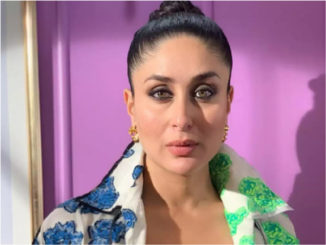
Kareena Kapoor has been away from the silver screen since the birth of her second baby Jehangir aka Jeh. However, we have a good news that will leave her fans excited, the actress will be soon making her OTT debut with Sujoy Ghosh’s next film. The actress, on Monday, gave her fans a glimpse of her upcoming project, co-starring Jaideep Ahlawat and Vijay Varma in the lead. Sharing the post on her Instagram handle, she wrote, “And so it begins…12th Street Entertainment & Northern Lights Films in association with Boundscript and Kross Pictures present a Netflix Original directed by Sujoy Ghosh. Produced by Jay Shewakramani & Akshai Puri. Produced by Sujoy Ghosh & Thomas Kim.” Kareena Kapoor will be debuting with Netflix’s screen adaptation of Japanese author Keigo Higashino’s The Devotion of Suspect X. Confirming the news to Hindustan Times, the actress said that this project will mark her return to the acting world after the birth of Jeh. The actress further stated that she is quite excited about the project as she will be working with a stellar cast and crew.
-

“My Personal Number”: Bhagwant Mann Announces Anti-Corruption Helpline
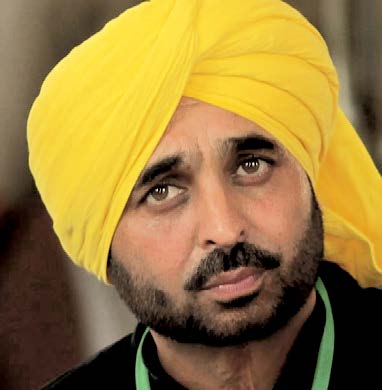
Punjab’s new Chief Minister, Aam Aadmi Party’s Bhagwant Mann, announced the launch of an anti-corruption helpline on March 17. Mann, who took oath on March 16, promising that he would not “waste a day”, said the helpline number will be launched on March 23, the death anniversary of freedom fighter Bhagat Singh.. “The anti-corruption helpline number will be my personal number… If anybody asks for bribe, send audio and video on that number,” he said.
“I am not threatening any govt employee as 99 per cent of govt employees are honest but 1 percent of such employees are corrupt which has rotted the system. Only AAP can clean this corrupt system,” he added in the tweet.
The number will be exclusively for people to upload videos of corrupt officials demanding bribe for their day to day work or indulging in other malpractices. Such officials, he later said, will be given exemplary punishment.
Eradication of corruption from Punjab was one of the key promises of AAP, which traces its birth to the anti-corruption movement of freedom fighter and Gandhian Anna Hazare. On February 5, party chief and Delhi Chief Minister Arvind Kejriwal had promised to “end corruption in government jobs if AAP government is formed”.
In his first meeting with police and administration officials today, Mr Mann stressed on the need for a corruption-free government.
“Corrupt officers have no place in my government and if any such complaint comes to my notice, then don’t expect any sort of sympathy for such officers,” he told the officials who had assembled at the Chief Minister’s Office.
In a first, the Chief Minister also announced reward for both civil and police officers. The “Best Performance Award” will be given quarterly for making a difference in the lives of common man at the grassroots level, besides ensuring free and fair justice.
-

Bhagwant Mann: Stand-up comedian to Punjab’s CM
From a comedian to Punjab chief minister, Bhagwant Mann has seen a phenomenal rise in a political career of just over a decade. Mann on Wednesday, March 16, was sworn in as chief minister at Khatkar Kalan, the ancestral village of freedom fighter Bhagat Singh in Punjab’s Shaheed Bhagat Singh (SBS) Nagar district.
Mann, 48, is a sitting Member of Parliament from Punjab. He won from the Sangrur Lok Sabha constituency in 2014 and 2019. He was chosen as the AAP’s chief ministerial candidate earlier on January 18 this year and won the Punjab polls from Dhuri seat.
He now becomes the first non-Congress and non-Akali leader to become the CM after the reorganisation of Punjab in 1966. Inviting people of Punjab to his oath-taking ceremony, Mann told them it will be their government. Weeks before election day, Arvind Kejriwal’s AAP declared him its CM face after a phone-in poll, called ‘Janta Chunegi Apna CM’ (people will pick their own CM).
The AAP state unit president was the first choice of over 90 per cent of the 21 lakh callers. He fought the polls from Dhuri, an assembly segment in his Sangrur parliamentary constituency, winning by a margin of over 58,000.
Mann’s career in comedy was at its peak when he quit and took the political plunge. In 2011, he joined Manpreet Badal’s People’s Party of Punjab. The People’s Party of Punjab was an experiment in clean politics in 2011 by Manpreet Badal, a nephew of Akali patriarch and five-time Punjab chief minister Parkash Singh Badal.
In 2012, Mann fought his first election from Lehragagga assembly seat against former chief minister Rajinder Kaur Bhattal but lost.
Manpreet Badal merged his party with the Congress before the 2014 Lok Sabha polls, but Mann refused to go along.
In 2014, Mann fought on the AAP ticket from the Sangrur Lok Sabha sear and won by a record margin of over two lakh votes defeating veteran Akali leader S.S. Dhindsa.
Early Life And Childhood
Mann was born into the family of a school teacher at Satoj village in Sangrur on October 17, 1973. He released his maiden audio cassette while in B.Com 1st year at Shaheed Udham Singh Government College, Sunam (Sangrur), at the age of 18. Mann, a master of social and political satire, was soon the undisputed king of comedy in Punjab with long-running television shows such as ‘Jugnu Mast Mast’.
Some of the notable comic characters played by Maan include Jugnoo, Jhandaa Singh, Bibo Buhaa and Pappu Paas. His comedy TV shows include ‘Jugnu Mast-Mast’ and ‘No Life With Wife’. In 2008, Mann competed in the Great Indian Laughter Challenge on Star Plus which increased his audience. He also acted in National Award winning film “Main Maa Punjab Dee” directed by Balwant Dullat.
-

Bhagwant Mann sworn in as 18th Chief Minister of Punjab
Punjab Governor Banwarilal Purohit (right) administering the oath of office and secrecy to Bhagwant Mann at Khatkar Kalan. Khatkar Kalan (TIP): Punjab Governor Banwarilal Purohit administered the oath of office and secrecy to Bhagwant Mann in the swearing-in ceremony at Khatkar Kalan, the ancestral village of legendary freedom fighter Bhagat Singh in Punjab’s Shaheed Bhagat Singh (SBS) Nagar district. The venue was brimming with ‘basanti’ turbans and dupattas,
Mann, the 18th CM of Punjab, took oath in Punjabi. Besides newly-elected AAP MLAs, Delhi Chief Minister & Aam Aadmi Party national convener Arvind Kejriwal, deputy chief minister Manish Sisodia, and other leaders wearing yellow turbans took part in the ceremony.
The AAP romped home winning 92 seats in the 117-member Punjab Assembly, decimating the Congress and the SAD-BSP combine.
Besides the newly-elected AAP MLAs, Delhi Chief Minister Arvind Kejriwal, deputy chief minister Manish Sisodia, Delhi minister Satyendar Jain, and other leaders were also present in bright yellow turbans.
The 48-year-old Mann, who took the oath in Punjabi, also delivered a brief address after the ceremony.
In his first speech after becoming the chief minister, Mann assured the people of the state that his party’s government in Punjab will work to address issues like unemployment, corruption and farmers’ plight.
Starting his speech after the Governor left, the new Chief Minister said: “Bhagat Singh had a dream of taking this freedom to every household. AAP is fighting that battle. You have supported us. I will require many lifetimes to pay off the debt of this love that you have showered over me,” he said from the stage.
Kejriwal, Delhi deputy CM Manish Sisodia and other party leaders, who were seated on a separate stage on Mann’s left, were seen applauding as the new CM took oath and later spoke. The newly-elected 91 AAP MLAs were also seated on another stage to Mann’s right. Mann and Governor were on the podium in the middle. AAP’s Punjab affairs in-charge Jarnail Singh and co-incharge Raghav Chadha also attended the event. Dressed in a white kurta-pyjama, blue blazer and a ‘basanti’ turban, Mann sounded a note of caution as he asked AAP supporters to exercise restraint.
“I am not going to speak against anyone today. I want to tell you too that we do not have to be arrogant. We do not have to go to anyone’s house and challenge him. We do not have to say that we are the winners. Those who did not vote for us, we are their Chief Minister also. We are their government too. It is democracy. Everybody has the right. I should not get this news that these people are arrogant,” said Mann.
He reiterated that the new government will start working without losing any time.
“We will work. We have to start working from today. We have already wasted 70 years. We have no time to waste anymore,” he said.
Later, in the evening, Mann assumed charge of the office at the Punjab Civil Secretariat.
During his speech after taking oath, Mann also touched upon the issue of youth of Punjab migrating to other countries for better opportunities and said that this trend has to be reveresed. He assured the people of the state that his party’s government in Punjab will work to address issues like unemployment, corruption and farmers’ plight.
“I want to share a couplet by Bhagat Singh – ‘Ishq karna sab ka paidayashi haq hai, kyo na iss baar vatan ki sar-zameen ko mehboob bana liya jaye (Loving is everyone’s birthright. Why not choose the nation as our beloved this time)’. We will change the state like Delhi. People will come from abroad to take selfies at our schools. You people created history. Punjab’s name was written in golden words on March 10. It will be written in the school books that February 20, 2022, was the day when people started voting without fear or greed of inducements,” he said.
Saying that he paid obeisance to the martyrs and sought courage and wisdom to carry out his task as CM, Mann said: “I am not even the dust of their feet. But when public supports you, then you can expect anything from a person.”
He also thanked Kejriwal for changing country’s politics by creating a political party out of an “aandoolan”.
He ended his speech, saying: “Haqumat who karate hain jinka dilon par raj hota hai, yun kehne ko toh murge ke sarr pe phi taj hota hai (Real rulers are those who rule over people’s hearts, otherwise even a rooster has a ‘crown’ over its head)’.”
A number of singers and artists, including Gurdas Mann, Karamjit Anmol, singer-turned-politician and Congress MP Mohammad Sadique, and Amar Noorie, were present at the event.
There was heavy police presence at the the venue to manage lakhs who started descending at Khatkar Kalan to attend the event from morning itself. The event scheduled to start at 12.30 pm, began at 1.25 pm.
Mann had invited the people of the state to attend his swearing-in ceremony, saying the three crore people of Punjab will also take oath with him.
Elaborate arrangements were made for the ceremony which was attended by AAP supporters from various parts of the state. Almost all were seen wearing yellow – in form of dupattas or turbans. While many arrived in buses, few also cycled to the venue.
The atmosphere was surcharged with enthusiasm as the people raised slogans of ‘Inquilab Zindabad’ (long live revolution) and ‘Bole So Nihaal’.
In a tweet, the PM said: “Congratulations to Shri @BhagwantMann Ji on taking oath as Punjab CM. Will work together for the growth of Punjab and welfare of the state’s people.”
Union Defence Minister Rajnath Singh too tweeted his best wishes to Mann for his tenure ahead.
Tamil Nadu CM M K Stalin and his Odisha counterpart Naveen Patnaik, Samajwadi Party president Akhilesh Yadav were also among those who congratulated the new Punjab CM. Source: The Indian Express and Agencies
-
March 18 New York & Dallas E – Edition
[vc_row][vc_column][vc_column_text]
[/vc_column_text][/vc_column][/vc_row][vc_row][vc_column width=”2/3″][vc_custom_heading text=”Dual Edition” font_container=”tag:h2|text_align:center” google_fonts=”font_family:Istok%20Web%3Aregular%2Citalic%2C700%2C700italic|font_style:700%20bold%20regular%3A700%3Anormal” link=”url:https%3A%2F%2Fwww.theindianpanorama.news%2Fwp-content%2Fuploads%2F2022%2F03%2FTIP-March-18-Dual-Edition.pdf”][vc_single_image image=”121736″ img_size=”full” add_caption=”yes” alignment=”center” onclick=”custom_link” link=”https://www.theindianpanorama.news/wp-content/uploads/2022/03/TIP-March-18-Dual-Edition.pdf”][/vc_column][vc_column width=”1/3″][vc_single_image image=”82828″ img_size=”medium” alignment=”center” onclick=”custom_link” link=”https://www.theindianpanorama.news/advertising-media-kit-portal-indian-panorama/”][vc_single_image image=”82829″ img_size=”medium” alignment=”center” onclick=”custom_link” link=”https://www.theindianpanorama.news/advertising-media-kit-portal-indian-panorama/”][/vc_column][/vc_row][vc_row][vc_column][vc_custom_heading text=”Lead Stories This Week” font_container=”tag:h2|text_align:center” google_fonts=”font_family:Istok%20Web%3Aregular%2Citalic%2C700%2C700italic|font_style:700%20bold%20regular%3A700%3Anormal” link=”url:https%3A%2F%2Fwww.theindianpanorama.news%2F%20″][vc_wp_posts number=”8″ show_date=”1″][/vc_column][/vc_row]
-

Chikmagalur: The coffee land of Karnataka
Popularly known as the ‘Coffee Land of Karnataka’, Chikmagalur is situated in the foothills of the Mullayangiri Range and is one of the most beautiful hill stations in Karnataka. Chikmagalur has a perpetual fragrance of coffee lingering in the air with it plenty of coffee plantations. Famous for its tall mountains, lush green forests and its tranquil environment (apart from its coffee production), Chikmagalur is a very popular tourist destination and is a quick retreat for the people of Karnataka.
Being the largest producer of coffee in the country, Chikmagalur is mainly all about its coffee. So if you’re a coffee enthusiast as well as a nature lover, taking a walk through one (or a few) of the numerous coffee plantations in the city is a must-do activity. Many of these coffee estates not only allow visitors to take guided tours through the plantations, but they also provide home-stays right within the estates, so you can literally wake up to and end your day with the smell of coffee in the air.
Chikmagalur is a very popular trekking spot and boasts of many incredible trekking trails, such as the Mullayangiri trek, the Kemmanagundi trek, and the Baba Budangiri trek. Mullayangiri is the highest peak in all of Karnataka and is the best place to get a perfect view of the sun rising from behind the mountains.
Must Visit Places- Mullayanagiri
Perched at an altitude of 1930 m above the sea level, Mullayanagiri peak is located in the Baba Budan Giri Range of Western Ghats and is just 45 minutes from Chikmagalur. It serves as the highest peak between the Nilgiris and the Himalayas offering its visitors a peaceful getaway with temperature ranging between 20 – 25 degrees Celsius. Known for its serene ambience and nature’s raw beauty, this peak is adorned with verdant grassland, rugged rocks, and a good trek path is also quite popular among adventure lovers. Mullayanagiri is also known for coffee plantations that are situated nearby.
Rafting in Bhadra River
Located in Karnataka, Chikmaglur is a haven for adventure-seekers. It is situated 45 kms from Bhadra River which is equidistant from well-known hill stations and wildlife regions in the Western Ghats such as Sakleshpur, Kudremukh, Charamadi Ghats.
River Bhadra originates in the Western Ghats and flows across Deccan Plateau through the Bhadra Wildlife Sanctuary providing rafters with a spectacular view of the lush greenery of the Western Ghats, quaint villages and plantations. It is fed by the tributaries Somavahini, Thadabehalla and Odirayanahalla. The rapids span out over a distance of 8 km and the rafting activity takes 1.5 hours to complete.
Kemmanagundi
A hill station of widespread views and scents of beautiful gardens, Kemmanagundi or KR hills offer a perfect summer retreat for nature lovers and adventure enthusiasts. The area also has trekking, nature walks and picnics. The Royal Horticulture Society of Karnataka is located here and has some of the most beautiful gardens. The Rock garden, Z point, Hebbe falls, Kalahasti falls and the Shiva temple are a few must-see attractions here.
The name Kemmanagudi means red soil which the region is popularly known for. It was a summer retreat for the Mysore King Krishnaraj Wodeyar IV. Completely awestruck and mesmerised by the beauty of the surroundings, he donated his resort to the government of Karnataka. This place has a lot to offer right from the beautiful waterfalls to nature treks. The weather is lovely throughout the year, and you can visit it all year round.
Baba Budangiri
To the north of Chikkamagalur district of Karnataka, lies the Baba Budan Range of the Western Ghats of India. Baba Budangiri is a mountain in the Baba Budan Range and is renowned for its shrine to the Sufi Saint, Hazrat Dada Hayat Khalandar (also known as Baba Budan). This is a famous pilgrim site for both Hindus and Muslims and is often flocked by travellers. This famous mountain range is also known as Dattagiri Hill Range, as the shrine here is believed to be associated with Hindu God Guru Dattatreya. This mountain range proudly exhibits one of the highest mountain peaks, with altitude lying between that of the Himalayas and the Nilgiris. Legend has it that via the Chikamagalur district, coffee was first brought into India when the coffee crop was grown in Baba Budangiri Hills by Sufi Baba Budan during 1670 AD.
-

Sheetala Ashtami
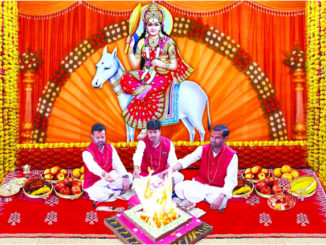
Sheetala Ashtami is also known as ‘Basoda Puja.’ It is a Hindu festival dedicated to Goddess Sheetala which is observed on the eighth day of the Krishna Paksha, the dark fortnight of the moon during the month of ‘Chaitra.’ Sheetala Ashtami is celebrated after the eight days of the festival of Holi. In some communities, it is observed on the first Thursday or Monday that falls after Holi. Also in some regions, Sheetala Ashtami is observed on the ‘ashtami’ of the Krishna Paksha in every month. Chaitra Krishna Paksha Ashtami is considered most auspicious.
Sheetala Mata is known to cure ailments such as chicken-pox and small pox and measles. The Goddess seated on a donkey is seen holding neem leaves, broom, soup and a pot. Her magnificence has been mentioned in several religious scriptures. In the Skanda Purana, the benefit of worshipping Goddess Sheetala has been explained in details including Sheetala Mata Stotra or Sheetalashtak which was written by Lord Shiva. The day is dedicated to worshipping Goddess Sheetala. By worshipping the Goddess, devotees can prevent the outbreak of epidemic diseases, especially among children.
According to Basoda customs families don’t lit fire for cooking. Hence most families cook one day before and consume stale food on Sheetala Ashtami day. It is believed that Goddess Sheetala controls smallpox, chickenpox, measles, etc. and people worship her to ward off any outbreak of those diseases.
In Gujarat, the similar ritual as Basoda is observed just a day before Krishna Janmashtami and is known as Shitala Satam. Shitala Satam is also dedicated to Goddess Sheetala and no fresh food is cooked on the day of Sheetala Satam.
Mother Sheetala is considered the goddess who can cure heat borne diseases including measles, chicken pox and small pox. Therefore, this vrat is observed with great involvement so that people are saved from these dreaded diseases during the outbreak of summer months.
Mother Sheetala is one of the manifestations of Mother Parvati in the name Katyayani, the daughter of Rishi Katyayan. In this form, the goddess ventured into destroying the demonic forces and save the worlds. In course of her voyage, she came across a demon called Jwarasur, the demon of fever who was spreading several heat borne diseases like chicken pox, small pox, fevers, and measles.
Goddess assumed the form of Sheetala devi to destroy this demon. She was mounted on a donkey and carried in her four arms a silver broom, a winnowing fan, a bowl and a pitcher of Ganges water. She gave rise to a dwarf Bhatuk who in turn assumed the ferocious form of Bhairav and vanquished the demon. Sheetala devi cured the diseases of all the people with her benevolence.
Legend
A king named Indralumna was ruling Hasthinapur. His daughter Shubhakari was married to prince Gunvan. Once, the king invited them to observe Sheetal Ashtami. The couple left for a lake and performed the vrat with devotion. Pleased with their dedication, Goddess Sheetala appeared before them and granted a boon to Shuhbakari. On their way back, Shubhakari saw a family of priest grieving over the death of the priest due to snakebite. Shubhakari used the boon to revive the priest from death. Locals realised the power of the Sheetal Ashtami vrat, and they too observe the vrat with great faith.
Rituals and Celebrations
On the day of Sheetala Ashtami, Devotees take a bath before sunrise on a lake or river and install an image of Goddess Sheetala. They decorate the idol with Sandalwood paste, Turmeric, Vermilion and also offer fruits as well as sixteen types of offerings. At the end of the puja, rice mixed with ghee is offered as Prasad which is cooked the previous day. After the puja, the rice is eaten by all the family members. On Sheetala Ashtami, the families do not lit the fire for cooking. They prepare food a day in advance and consume the food on Ashtami day. Devotees visit Sheetala Devi Temple and worship the Goddess with Turmeric and ‘Bajra.’ After performing the puja, they read or listen to the ‘Basoda Vrat Katha.’ ‘Rabri,’ ‘curd’ and other essential offerings are made to Goddess. Remaining food is eaten as Prasad and is known as ‘Basoda’ in the local language. The food is also distributed among the devotees. On this day reading ‘Sheetalashtak’ is also considered favorable.
The celebrations of Sheetala Ashtami are very popular in the Indian states of Rajasthan, Gujarat and Uttar Pradesh. In Rajasthan, Sheetala Ashtami festival is celebrated with great devotion. A huge fair is organised, and several musical events and programs are also staged on this day. Devotees celebrate Sheetala Ashtami with immense fervour and devotion.
-

India fared better than others in managing Omicron-driven Covid surge: Health ministry
New Delhi (TIP)- Global Covid case surge due to the Omicron variant led to a peak six times the previous waves but India managed to control its spread causing lower hospitalisation and fewer deaths than earlier surges, the government said on Thursday, March 17.
With 3,536 cases reported on an average in the week ending March 15, India contributed to only 0.21 per cent of global cases, the Union health ministry said. It pointed out that many countries are still experiencing a rise in cases which is higher than their previous surges.
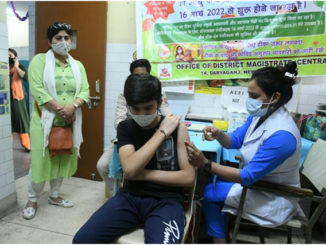
“Not only the reported peak in India was much lower, but the consistent efforts also led to a decreasing trajectory soon. “The country managed the Omicron surge much better than others,” a health ministry official said during a presentation at a webinar on India’s Public Health Response to Manage Covid. Expedited vaccination drive compounded by effective containment measures and early identification of cases contributed to lower hospitalisation and fewer deaths during the third surge in India, officials said. They said that by December 31, 2021, when the first signs of the third wave emerged, India had already vaccinated 90.8 per cent of the eligible population with the first dose and 65.4 per cent with the second dose, which proved pivotal in saving lives. India has administered more than 180 crore vaccine doses which is 3.2 times that of the US and 12.7 times of France, officials said.
India reports 2,539 new Covid cases
With 2,539 new coronavirus infections being reported in a day, India’s total tally of Covid cases rose to 4,30,01,477, while the active cases have declined to 30,799, according to the Union health ministry data updated on Thursday, March 17. The death toll has climbed to 5,16,132 with 60 daily fatalities, the data updated at 8 am showed. The active cases constitute 0.07 per cent of the total infections, while the national Covid recovery rate has further improved to 98.73 per cent, the health ministry said. A reduction of 2,012 cases has been recorded in the active Covid caseload in a span of 24 hours. The daily positivity rate was recorded at 0.35 per cent while the weekly positivity rate was 0.42 per cent, according to the health ministry.
Source: PTI
-

Japanese PM Fumio Kishida to visit India from March 19-20
New Delhi (TIP)- Japanese Prime Minister Fumio Kishida will pay a two-day visit to India beginning Saturday to hold the 14th India-Japan summit with his Indian counterpart Narendra Modi. External Affairs Ministry Spokesperson Arindam Bagchi said on Thursday that the summit will be held on Saturday. At the invitation of Prime Minister Narendra Modi, Japanese Prime Minister Fumio Kishida will be undertaking an official visit to India from March 19-20. He said the summit will provide an opportunity for both sides to review and further strengthen bilateral ties.
-

DRDO constructs multi-storey building in 45 days; to house R&D facilities for aircraft project
New Delhi (TIP)-India’s premier Defence Research and Development Organisation DRDO has built a multi-storey facility for flight control system at Aeronautical Development Establishment in Bengaluru in record 45 days using in-house technology, officials said on Thursday, March 17. The seven-storey building, with a plinth area of 1.3 lakh square feet, will house research and development facilities for the development of a fifth-generation medium weight deep penetration fighter jet for the Indian Air Force. “The DRDO has completed the construction of a multi-storey infrastructure for flight control system at ADE Bengaluru with hybrid technology consisting of conventional, pre-engineered and precast methodology in record 45 days,” said one of the officials. He said the complex will have facilities for developing avionics for fighter aircraft and flight control system (FCS) for the Advanced Medium Combat Aircraft (AMCA) project.
India has been working on the ambitious AMCA project to develop a fifth-generation medium fighter jet with advanced stealth features to significantly bolster its air power capability. The initial development cost of the project, being undertaken by the ADE, has been estimated at around Rs 15,000 crore. The defence ministry on Monday said it has initiated the process of obtaining the approval for the design and prototype development of the AMCA from the prime minister-led Cabinet Committee on Security.
The officials said the building has been constructed using composite construction technology in the “shortest time frame” of just 45 days to provide the necessary infrastructure for the AMCA project and related activities.
The foundation stone for the project was laid on Nov 22, 2021, and actual construction began on February 1.
“It is a unique record of completing a permanent seven-storey building with hybrid construction technology, that too in ready-to-move condition for the first time in the country,” the official involved in the project claimed. In hybrid construction technology, the column and beam elements of the structural frame are built with steel plates; the columns are of hollow steel tubular section.
Source: PTI
-
Government okays Bill allowing use of technology to keep criminals’ info
The government today cleared a Bill to provide legislative backing for the use of latest technology in maintaining records of convicts and of those who are arrested for different types of crimes. Sources in the know of the development said a decision to this effect was taken at a meeting of the Union Cabinet, which was chaired by Prime Minister Narendra Modi. The draft law “Identification of Prisoners Bill” seeks to replace the Identification of Prisoners Act, 1920, which would be repealed, they said. The sources pointed out that the present British-era law allows limited “body measurements” of convicts and those arrested for different types of crimes, which carry the provision of rigorous punishment for a term of one year or more. The draft bill, they said, allowed collection of various details of convicts and those arrested for various crimes, including finger and palm prints, footprints, photo, iris or retina scan and handwriting samples.
-
AgustaWestland scam: Ex-Def Secy, four IAF men named in chargesheet
New Delhi (TIP)-The Central Bureau of Investigation (CBI) in its supplementary chargesheet in the Rs 3,600-crore AgustaWestland scam has named former Comptroller and Auditor General (CAG) and Defence Secretary Shashi Kant Sharma and four retired Indian Air Force officers, officials in the agency said. The officials said the chargesheet was filed in a special CBI court here after getting the nod from the government to prosecute Sharma, who served as the Defence Secretary between 2011 and 2013 before being appointed the CAG.
The CBI has also named the then Air Vice Marshal Jasbir Singh Panesar (now retired), deputy chief test pilot SA Kunte, the then Wing Commander Thomas Mathew and Group Captain N Santosh. Kunte and Santosh retired as Air Commodore.
It is to be noted here that the case pertains to the alleged bribery to swing a deal to procure 12 VVIP helicopters from AgustaWestland, which was ineligible as its helicopters did not meet the 6,000-metre operational ceiling parameter set by the IAF. The need for new helicopters to ferry VVIPs — the President, Prime Minister, Vice-President and Defence Minister — was felt in 1999 when a proposal was moved to find an alternative to the IAF’s Soviet-era Mi8s.
The CBI, in its first chargesheet filed in in September 2017, had accused then IAF Chief SP Tyagi of recommending reduction in the operational ceiling of the helicopters from 6,000 metres to 4,500 metres, which brought AgustaWestland into the race.
Source: TNS
-
MEA says Russia not major supplier of crude oil, India exploring all options
New Delhi (TIP)-The Ministry of External Affairs (MEA) on Thursday said Russia is not a major crude oil supplier for India and it “is always exploring all possibilities in the global energy markets” to bring home oil. The statement came amid reports that India is taking up Moscow’s offer of discounted crude oil and inching closer to setting up an alternative payments system to maintain its trade with Russia, even as the United States and its Western allies impose massive sanctions on the Kremlin for invading Ukraine. “We are always exploring all possibilities in global energy markets because of the situation of importing our oil requirements. I don’t think Russia has been a major supplier,” news agency ANI quoted MEA spokesperson Arindam Bagchi as saying. India is a major oil importer and as the war between Russia-Ukraine enters the fourth week, pressure on India to stop oil imports from Russia may increase with the West expected to slap another round of sanctions on Moscow. Speaking about the evacuation of Indians from war-torn Ukraine, the MEA spokesperson said India has brought back more than 22,500 of its citizens via alternative routes.
Source: HT
-

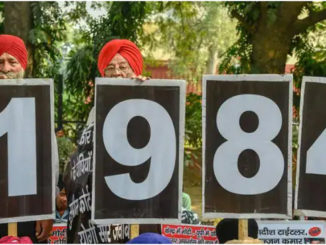
Special team probing Kanpur’s 1984 anti-Sikh riots to send officials to Punjab
New Delhi (TIP)- The Special Investigation Team (SIT), constituted to re-investigate the anti-Sikh riots in Kanpur following the assassination of former Prime Minister Indira Gandhi, will send a team of three sub-inspectors and three constables to Punjab. The team will gather statements and further investigate some of the witnesses.
If needed, witnesses will be brought to Uttar Pradesh and their statements recorded again, officials told India Today TV. Arrests will be made soon on the administration’s orders after the statements are recorded. The SIT has identified 67 accused in 11 cases so far. The SIT has handed over the list of the accused to the government. And they will be arrested as soon as the order is received, they said.
127 Sikhs were killed in Kanpur in the riots of 1984. 40 cases were registered in Kanpur Nagar for murder, robbery and dacoity. The police had submitted the final report in 29 of these cases. Earlier, the SIT had recorded statements and searched the archives by meeting members of the victims’ families in different states. In these cases, 146 rioters were identified, of whom 79 are dead. Although, of the 67 alive, nearly 22 are over the age of 75 or are suffering from serious diseases, the officials added.
-

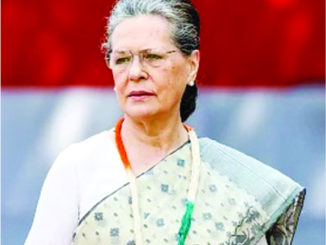
Poll debacle: Sonia sacks Cong chiefs in five states
New Delhi (TIP)- In a move to fix accountability for the party’s decimation in the recently concluded Assembly elections in five States, Congress president Sonia Gandhi on Tuesday, March 15, sacked the Congress chiefs of Uttar Pradesh, Uttarakhand, Punjab, Manipur and Goa. Cricketer-turned-politician Navjot Singh Sidhu is among the Pradesh Congress Committee (PCC) chiefs asked to put in their papers.
The Congress’ chief spokesperson, Randeep Surjewala, claimed it was for the reorganisation of the PCCs. Uttarakhand’s PCC chief Ganesh Godiyal was the first to tender his resignation. The move not only comes just two days after the Congress Working Committee (CWC) asked Ms. Gandhi to take immediate corrective steps but also before a possible meeting of the “G-23” leaders, who had earlier written to Ms. Gandhi for sweeping internal reforms and collective leadership, on Wednesday to decide their next strategy.
A key member of the group, Kapil Sibal, has already publically taken on the Gandhis by stating that while people like him wanted a “Congress for all”, some others wanted a “Congress for the family”. Former party chief Rahul Gandhi walked away when reporters asked him for a response as he was entering Parliament House. But several Gandhi family loyalists including Rajasthan Chief Minister Ashok Gehlot and his Chhattisgarh counterpart, Bhupesh Baghel, slammed Mr Sibal.
Lok Sabha member Manickam Tagore tweeted: “Why RSS [Rashtriya Swayamsevak Sangh] and BJP [Bharatiya Janata Party] wants Nehru-Gandhi’s out of the leadership? Because without Gandhi’s [Gandhis’] leadership Congress will be become Janata party. It’s easy to kill Congress then it’s easy to destroy the idea of India. Kapil Sibal knows it but why he is speaking the language of RSS/BJP.”
Another member of the G-23 grouping, Sandeep Dikshit, said, “Those who were responsible for formulating policies in the poll-bound States should accept responsibility for the loss.” Former Uttarakhand Chief Minister Harish Rawat was one of the Congress leaders who took responsibility. Mr. Rawat hit out at his detractors. He hinted at sabotage by colleagues, not just against him but also his daughter, while countering the charge that he had “sold” tickets to unworthy candidates. He indicated that he could look at “other options” if he alone was seen as a liability for repeatedly losing elections.
The Congress veteran, who has been blamed for the loss in Uttarakhand as well as “mishandling” Punjab as a former in-charge of that State, also defended himself. “In Punjab, Hindus are our largest support base. In the middle of the elections, who said I was not made a Chief Minister because I am a Hindu?” asked Mr. Rawat, referring to former Punjab Congress chief Sunil Jakhar.
“I pray to god that the Congress takes note of the allegations against me and expels [me] from the party. Holi is a festival where one burns down evil and Harish Rawat should also be politically buried,” Mr. Rawat added, to counter the allegation by friend-turned-foe Ranjeet Rawat (who lost the election from the Salt constituency of Almora) that tickets were sold.
As the disquiet within the Congress over the poll debacle played out in the public domain, general secretary Priyanka Gandhi Vadra held a closed-door review of the party’s performance in Uttar Pradesh. The review meeting came just two days after the CWC decided to hold a chintan shivir (brainstorming session) to review as well as prepare for the upcoming Assembly elections this year and next year, and the Lok Sabha election of 2024. Source: The Hindu
-
Vadodara businessman gifts a land on moon to his fiancee
Vadodara (TIP)- For centuries, the beauty of the moon has remained a central theme amongst couples across the world. Even today, people promise to bring moons and stars for their partner’s happiness. For Hemali Patel of Vadodra, this, however, turned out to be more than just affectionate words when her fiance, 25-year-old businessman Mayur Patel, brought an acre of land on the moon, in her name. Hemali, who works as an engineer, got engaged to Mayur on February 27, this year, after a relationship of two and a half years. Expecting her would-be husband to gift her a diamond ring or a gold necklace, Hemali’s joy knew no bounds when Mayur surprised her with the ownership document of the land that he had brought on the moon, in her name. Although provided with a written document stating Hemali as the owner of the piece of the heavenly body, the couple can only treat their ownership as a digital property. An international treaty called ‘The Outer Space Treaty of 1967’ prohibits any individual or organization from laying claim to any celestial body, citing it as a common heritage of mankind.
-
India doesn’t expect OIC to encourage terrorist actors: MEA on invite to Hurriyat leader
Chandigarh (TIP)- India does not expect Organisation of Islamic Cooperation (OIC) to encourage actors and organisations engaged in terrorism, the Ministry of External Affairs (MEA) said on Thursday, March 17. The MEA spokesperson made the statement in response to a question about OIC’s invitation to the chairman of the All Parties Hurriyat Conference. The OIC has invited the chairman of All Parties Hurriyat Conference to attend a meeting of its foreign ministers in Islamabad on March 22 and March 23.
Addressing a press conference on Thursday, MEA spokesperson Arindam Bagchi said the Government of India takes a very serious view of such actions, which are aimed directly at subverting India’s unity and violating our sovereignty and territorial integrity.
“We do not expect the OIC to encourage the actors and organisations engaged in terrorism and anti-India activities,” Bagchi said.
Without naming Pakistan, the MEA spokesperson added, “It is highly unfortunate that OIC continues to be guided by a single member’s political agenda rather than focusing on other important development activities.
Source: India Today
-

Holi: Let the color shower joy
Holi is considered as one of the most revered and celebrated festivals of India and it is celebrated in almost every part of the country. It is also sometimes called as the “festival of love” as on this day people get to unite together forgetting all resentments and all types of bad feeling towards each other. The great Indian festival lasts for a day and a night, which starts in the evening of Purnima or the Full Moon Day in the month of Falgun. It is celebrated with the name Holika Dahan or Choti Holi on first evening of the festival and the following day is called Holi. In different parts of the country it is known with different names.
The vibrancy of colors is something that brings in a lot of positivity in our lives and Holi being the festival of colours is actually a day worth rejoicing. Holi is a famous Hindu festival that is celebrated in every part of India with utmost joy and enthusiasm. The ritual starts by lighting up the bonfire one day before the day of Holi and this process symbolizes the triumph of good over the bad. On the day of Holi people play with colours with their friends and families and in evening they show love and respect to their close ones with Abeer.
History of Holi
Holi is an ancient festival of India and was originally known as ‘Holika’. The festivals finds a detailed description in early religious works such as Jaimini’s Purvamimamsa-Sutras and Kathaka-Grhya-Sutras. Historians also believe that Holi was celebrated by all Aryans but more so in the Eastern part of India. It is said that Holi existed several centuries before Christ. However, the meaning of the festival is believed to have changed over the years. Earlier it was a special rite performed by married women for the happiness and well-being of their families and the full moon (Raka) was worshiped.
Holika Dahan
There are numerous mythological explanations that are described in the historical books regarding the death of Holika and its reference for the celebration of Holi. In accordance to those historical explanations Holika was booned by Brahma for not getting any harm from fire or never getting burnt in fire. Following the order of his Brother Hiranyakashyap (who was also the father of Prahlad) Holika sat on fire with Prahladf in order to burn him in fire and let to death. It was Prahlad’s prayers to Lord Vishnu that saved him from burning in fire. It was the protective shawl of Holika that flew to cover Prahlad’s body from Holika who was having it. This is the story behind the celebration of Holika Dahan that is still followed by the people of India.
Holika and Prahlad
There was once a demon king by the name of Hiranyakashyap who won over the kingdom of earth. He was so egoistic that he commanded everybody in his kingdom to worship only him. But to his great disappointment, his son, Prahlad became an ardent devotee of Lord Naarayana and refused to worship his father.
Hiranyakashyap tried several ways to kill his son Prahlad but Lord Vishnu saved him every time. Finally, he asked his sister, Holika to enter a blazing fire with Prahlad in her lap. For, Hiranyakashyap knew that Holika had a boon, whereby, she could enter the fire unscathed. Treacherously, Holika coaxed young Prahlad to sit in her lap and she herself took her seat in a blazing fire. The legend has it that Holika had to pay the price of her sinister desire by her life. Holika was not aware that the boon worked only when she entered the fire alone. Prahlad, who kept chanting the name of Lord Naarayana all this while, came out unharmed, as the lord blessed him for his extreme devotion. Thus, Holi derives its name from Holika. And, is celebrated as a festival of victory of good over evil.
Holi is also celebrated as the triumph of a devotee. As the legend depicts that anybody, howsoever strong, cannot harm a true devotee. And, those who dare torture a true devotee of god shall be reduced to ashes.
The Legend of Radha-Krishna
Young Krishna is known to be very playful and mischievous. The story goes that as a child, Krishna was extremely jealous of Radha’s fair complexion since he himself was very dark.
One day, Krishna complained to his mother Yashoda about the injustice of nature which made Radha so fair and he so dark. To pacify the crying young Krishna, the doting mother asked him to go and colour Radha’s face in whichever colour he wanted.
In a mischievous mood, naughty Krishna heeded the advice of mother Yashoda and applied colour on her beloved Radha’s face; Making her one like himself.
Well, there is also a legend to explain Krishna’s dark complexion. It so happened that once a demon attempted to kill infant Krishna by giving him poisoned milk. Because of which Krishna turned blue. But Krishna did not die and the demon shriveled up into ashes.
The Legend of Dhundhi
It is believed that there was once an Ogress called Dhundhi in the kingdom of Prithu (or Raghu). The female monster used to specially trouble little children who became fed- up of her.
Dhundhi, had a boon from Lord Shiva that she would not be killed by gods, men nor suffer from arms nor from heat, cold or rain. These boons which made her almost invincible but she also had a weak point. She was also cursed by Lord Shiva that she would be in danger from boys going about crazy.
Deeply troubled by the Ogress, the King of Raghu consulted his priest. Giving the solution, the priest said that on Phalguna 15, the season of cold vanishes and summer starts. Boys with bits of wood in their hands may go out of their house, collect a heap of wood and grass, set it on fire with mantras, clap their hands, go around the fire thrice, laugh, sing and by their noise, laughter and homa, the ogress would die.
The legend has it that on the day of Holi, village boys displayed their united might and chased Dhundhi away by a blitzkrieg of shouts, abuses and pranks. It is for this reason that young boys are allowed to use rude words on the day of Holi without anybody taking offence. Children also take great pleasure in burning Holika.
Lathmaar Holi
In what is known as the hub of holi in India – Barsana, Holi is known as Lathmaar Holi. Sounds violence?? There is more violece than the name signals off. The stick is in the hands of the women on this day and the men need to work a lot to save themselves from the immensely charged up womenfolk.
The birth place of Lord Krishna’s beloved Radha, Barsana celebrates Holi with extreme enthusiasm as Krishna was famous for playing pranks on Radha and gopis. In fact, it was Krishna who started the tradition of colours by first applying colour on Radha’s face.
Womenfolk, of Barsana it seems, after thousands of centuries want to take a sweet revenge of that prank of Krishna. Even men have not left their mischief and are still eager to apply colour on the women of Barsana.
Following the tradition, men of Nandgaon, the birthplace of Krishna, come to play Holi with the girls of Barsana, but instead of colours they are greeted with sticks.
Completely aware of what welcome awaits them in Barsana, men come fully padded and try their best to escape from the spirited women. Men are not supposed to retaliate on the day. The unlucky ones are forcefully led away and get a good thrashing from the women. Further, they are made to wear a female attire and dance in public. All in the spirit of Holi.
The next day, it is the turn of men of Barsana. They reciprocate by invading Nandgaon and drench the womenfolk of Nandgaon in colours of kesudo, naturally occurring orange-red dye and palash. This day, women of Nadagow beat the invaders from Barsana. It is a colourful site.
-

The Sikh festival of Hola Mohalla
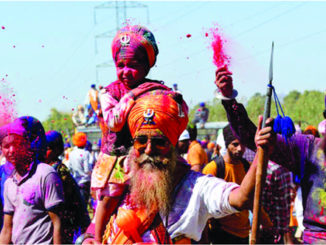
Hola Mohalla is a Sikh festival that takes place on the first of the lunar month of Chet, which usually falls in March. This, by a tradition established by Guru Gobind Singh, follows the Hindu festival of Holi by one day; Hola is the masculine form of the feminine sounding Holi. The word “Mohalla” is derived from the Arabic root hal (alighting, descending) and is a Punjabi word that implies an organized procession in the form of an army column. This year, the festival will conclude with a mohalla (procession) by Nihang Sikhs on March 19 in Anandpur Sahib. But unlike Holi, when people playfully sprinkle color, dry or mixed in water, on each other, the Guru made Hola Mohalla an occasion for the Sikhs to demonstrate their martial skills in simulated battles.
Together the words “Hola Mohalla” stand for “mock fight.” During this festival, processions are organized in the form of army type columns accompanied by war-drums and standard-bearers, proceeding to a given spot or moving in state from one Gurdwara to another.
The custom originated in the time of Guru Gobind Singh, who held the first such mock fight event at Anandpur Sahib in February 1701. The foothills of the Shivaliks in Ropar district of Punjab’s north-eastern region, especially around the historic townships of Anandpur Sahib and Kiratpur Sahib, have, since 1701 been playing host to Hola Mohalla.
The military exercise, which was personally supervised by the Guru, was carried out on the bed of the River Charan Ganga with the famous Hindu temple of Mata Naina Devi in the Shivaliks as the backdrop.
The Indian government eventually accorded it the status of a national festival.
On this three-day grand festival, mock battles, exhibitions, displays of weapons, etc. are held, followed by Kirtan, music and poetry competitions. The participants perform daring feats, such as Gatka (mock encounters with real weapons), tent pegging, bareback horse-riding, standing erect on two speeding horses and various other feats of bravery.
There are also a number of Darbars where the Sri Guru Granth Sahib is present, and Kirtan and religious lectures take place. On the last day a long procession, led by Panj Pyaras, starts from Takhat Keshgarh Sahib, one of the five Sikh religious seats, and passes through various important Gurdwaras like Qila Anandgarh, Lohgarh Sahib, Mata Jitoji and terminates at the starting place (Keshgarh Sahib).For people visiting Anandpur Sahib, langars (voluntary community kitchens) are organized by the local people as a part of seva (community service). Raw materials like wheat flour, rice, vegetables, milk and sugar are provided by the villagers living nearby. Women volunteer to cook and others take part in cleaning utensils and other manual tasks that need to be carried out. Traditional cuisine is served to the pilgrims who eat while sitting in rows on the ground (Pangat). Sikhs in large numbers still assemble at Anandpur Sahib on this day and an impressive and colorful procession is taken out in which the Nihangs, in their traditional panoply, form the vanguard while parading their skill in the use of arms, horsemanship, tent-pegging, and other war-like sports.
Originally known as Akalis, the Nihang Singhs are endearingly designated as Guru’s Knights or the Guru’s beloved. They still carry the military ambience and heroic style that was cultivated during the lifetime of Guru Gobind Singh. Nihangs constitute a distinctive order among the Sikhs and are readily recognized by their dark blue Bana and their ample Dumallas.
The most spectacular event at Hola Mahalla is the magnificent procession of Nihangs on horses and elephants and on foot carrying a variety of traditional and modern weapons and demonstrating their skill in using them.
The Hola Mahalla festival is unique and distinguishable from other festivals in that the Nihang have tried to preserve the traditional form and content as established during its inception, and strictly observed by the Akalis, for more than three centuries.
Highlights
– It is a yearly fair where Nihangs, renowned for their courageous acts dating back to the days of Ranjit Singh, demonstrate their martial arts skills in a distinctive yet traditional style.
– The Nihangs, adorned in their ceremonial garb, show the people gathered, their astonishing feats of fighting, drills and ‘gatka’ or mock-battles.
– Daredevil acts like bareback horse-riding, standing upright on two speeding horses and many other such performances.
– Since the Hola Mohalla Festival is celebrated after Holi, the festival of colours is also celebrated during the three days.
— According to Guru Gobind Singh, “mostly during festivities of Hola Mohalla, a sword is often in demand at Nanded, so each member in the ceremony (jaloos) must have one in his hand.”
– An exciting part of the Sikh community is their cuisine. The Langars, which is a Sikh community kitchen, prepares delicious vegetarian food. Visitors enjoy their meal sitting together on Pangats.
– Visitors also enjoy a traditional line of Kirtans and Bhajans which are devotional songs and various religious lectures, music and poems.