Year: 2022

  • China touts support from Gulf for Uighur treatment

    Beijing (TIP): China said on January 14 it gained support on issues, including the treatment of Uighur Muslims, from a number of Persian Gulf states following talks between their foreign ministers at which they agreed to upgrade relations. Chinese Foreign Ministry spokesperson Wang Wenbin said the ministers and Gulf Cooperation Council Secretary-General Nayef Falah Al-Hajraf expressed firm support for China’s “legitimate positions on issues related to Taiwan, Xinjiang and human rights”. He said they “expressed opposition to interference in China’s internal affairs and politicisation of human rights issues”. They also rejected the “politicisation of sports and reaffirmed their support” for China’s hosting of the Beijing Winter Olympics that open on February 4, he said. — AP

  • Female Chinese agent active in UK Parliament, MI5 warns

    Female Chinese agent active in UK Parliament, MI5 warns

    London (TIP): The UK’s secret service MI5 has warned members of Parliament that a female Chinese agent has been active in Parliament, it emerged in the House of Commons on January 13.

    Senior Conservative Party MP and outspoken China critic Iain Duncan Smith brought up the issue with reference to a letter sent to Commons Speaker Sir Lindsay Hoyle by MI5.

    China has placed sanctions on Duncan Smith for speaking up against its treatment of the Uyghur minority in the country’s restive Xinjiang Uyghur Autonomous Region.

    “I understand that Mr Speaker has been contacted by MI5 and is now warning members of Parliament that there has been an agent of the Chinese government active here in Parliament working with a member of Parliament, obviously to subvert the processes here,” said Smith.

    “I say, as a member of Parliament who has been sanctioned by the Chinese government, that this is a matter of grave concern,” he said.

    In a letter sent to MPs by Hoyle, he reportedly said that MI5 had warned him a woman called Christine Lee has been “engaged in political interference activities on behalf of the Chinese Community Party, engaging with members here at Parliament”.

    MI5 sent out the so-called “interference alert” warning Lee has “facilitated financial donations to serving and aspiring parliamentarians on behalf of foreign nationals based in Hong Kong and China… done covertly to mask the origins of the payments”.

    MI5, which stands for Military Intelligence Section 5, said the Chinese lawyer has been involved with MPs and hopeful MPs as well as members of the now-disbanded All-Party Parliamentary Group, Chinese in Britain.

    According to ‘Sky News’, the alert says that “Lee has acted covertly in coordination with the United Front Work Department of the Chinese Communist Party (UFWD) and is judged to be involved in political interference activities in the UK.” Hoyle told MPs if they have been approached by Lee, they should contact the director of security for Parliament.

    Opposition Labour Party MP Barry Gardiner was named as an MP who accepted donations from the Chinese woman, and he confirmed her son was working for him but has now resigned. The MPs’ register of interests shows Lee has made about 500,000 pounds in donations to British parliamentarians. (PTI)

  • Canada drops vaccine mandate for its truckers after pressure from industry

    Canada drops vaccine mandate for its truckers after pressure from industry

    Ottawa (TIP): Canada will allow unvaccinated Canadian truckers to cross in from the United States, reversing a decision requiring all truckers to be inoculated against the coronavirus, Canada’s border agency said on January 12.

    Canadian Prime Minister Justin Trudeau had faced pressure from the main opposition party and trucking lobby to drop the vaccine mandate for truckers, due to come into force on Saturday, saying it could result in driver shortages, disrupt trade and drive up inflation. The Canada Border Services Agency (CBSA) said that unvaccinated, or partially vaccinated Canadian truck drivers arriving at the US-Canada border will remain exempt from pre-arrival, arrival and post-arrival testing and quarantine requirements. However, truckers from the United States will still need to be vaccinated or they will be turned back at the border from Jan. 15, a CBSA spokesperson said. A Canadian government source said the decision was taken to ensure smooth supply chains.

    Trudeau’s Liberal government had set the Saturday deadline requiring all truckers entering from the United States to show proof of vaccination as part of its fight against COVID-19.

    With more than two-thirds of the C$650 billion ($511 billion) in goods traded annually between Canada and the United States travelling on roads, the trucking industry is key.

    The Canadian Trucking Alliance (CTA) had estimated the government mandate could force some 16,000 cross-border drivers – 10 % of them – off the roads. The mandate was the first policy measure taken since the pandemic began that could limit cross-border trucking traffic. Trucks crossed the border freely when the border was closed for 20 months because they were considered essential to keep supply chains open.

    Supply chain disruptions drove Canada’s headline to an 18-year high in November, and the Bank of Canada has signalled that it could raise interest rates as soon as April. The cost of bringing a truckload of fruit and vegetables from California and Arizona to Canada doubled during the pandemic due to a driver shortage, Steve Bamford, chief executive of Bamford Produce, an importer and exporter of fresh fruit and vegetables based in Ontario told Reuters last week. Fresh foods are sensitive to freight problems because they expire rapidly. The Biden administration wants truck drivers at companies with 100 or more employees to be vaccinated or submit to weekly testing, a policy that has been challenged to the Supreme Court. Reuters

  • January 14 New York & Dallas E – Edition

    [vc_row][vc_column][vc_column_text]

    [/vc_column_text][/vc_column][/vc_row][vc_row][vc_column width=”2/3″][vc_custom_heading text=”Dual Edition” font_container=”tag:h2|text_align:center” google_fonts=”font_family:Istok%20Web%3Aregular%2Citalic%2C700%2C700italic|font_style:700%20bold%20regular%3A700%3Anormal” link=”url:https%3A%2F%2Fwww.theindianpanorama.news%2Fwp-content%2Fuploads%2F2022%2F01%2FTIP-January-14-Dual-Edition.pdf”][vc_single_image image=”119314″ img_size=”full” add_caption=”yes” alignment=”center” onclick=”custom_link” link=”https://www.theindianpanorama.news/wp-content/uploads/2022/01/TIP-January-14-Dual-Edition.pdf”][/vc_column][vc_column width=”1/3″][vc_single_image image=”82828″ img_size=”medium” alignment=”center” onclick=”custom_link” link=”https://www.theindianpanorama.news/advertising-media-kit-portal-indian-panorama/”][vc_single_image image=”82829″ img_size=”medium” alignment=”center” onclick=”custom_link” link=”https://www.theindianpanorama.news/advertising-media-kit-portal-indian-panorama/”][/vc_column][/vc_row][vc_row][vc_column][vc_custom_heading text=”Lead Stories This Week” font_container=”tag:h2|text_align:center” google_fonts=”font_family:Istok%20Web%3Aregular%2Citalic%2C700%2C700italic|font_style:700%20bold%20regular%3A700%3Anormal” link=”url:https%3A%2F%2Fwww.theindianpanorama.news%2F%20″][/vc_column][/vc_row][vc_row][vc_column][vc_wp_posts number=”8″][/vc_column][/vc_row]

  • Indian American Republican politician Rik Mehta to challenge Frank Pallone in New Jersey

    Indian American Republican politician Rik Mehta to challenge Frank Pallone in New Jersey

    NEW JERSEY (TIP): Indian American Republican politician Rik Mehta, who made an unsuccessful bid for US Senate against Democrat Cory Booker in 2020, now plans to challenge Democrat incumbent Frank Pallone in New Jersey’s 6th Congressional District.

    Mehta, 43, who then made history as the first Indian American candidate to win a statewide nomination for either party, previously planned to run against Democrat Tom Malinowski in District 7.

    Mehta who has been living in Chester, Morris County announced Monday he is relocating to Iselin in Middlesex County, according to insidernj.com. Mehta’s decision to switch districts follows publication of new congressional map last month. “Out of touch politicians who think the Bill of Rights is above their pay grade don’t understand what it’s like to lose a business,” Mehta, a pharmaceutical entrepreneur, stated.

    “My father came to this country with only $100 in his pocket. We didn’t have much, but we found the American Dream,” he said. “It’s time that our communities and small businesses, from Oak Tree Road to Ocean Avenue, get the right representation in Washington.”

    “I’m ready to be the voice for the people and work to create economic freedom, make effective testing and treatment options to Covid available, bring medical innovation and manufacturing back to New Jersey, stand up for small business owners and protect our beautiful shores and beaches,” Mehta said.

    “For over 30 years, Rep. Pallone built his career off the backs of our proud immigrant communities while turning his back on our small businesses when they needed him the most. He’s not one of us and I plan to retire him in November”.

    A former US Food and Drug Administration official, Mehta lost to Booker by 724,126 votes, 57%-41%, according to New Jersey Globe. Record voter turnout in the 2020 general election caused Booker to become the highest vote-getter for statewide office in New Jersey history.

    At the same time, Mehta received more votes than any other Republican statewide candidate in history after breaking a record set by US Senator Clifford P. Case in 1972.

    He received 1,817,052 in his race against Booker, a vote total that outperformed Republican statewide victors like former governors Chris Christie, Christine Todd Whitman, and Thomas H. Kean.

    Mehta is seeking to become the first South Asian American to win a House seat in New Jersey, in a district that has the state’s largest percentage of Asian American voters, the media noted.

    In the peak of the pandemic, Mehta championed his slogan “Save Small Business” which became a rallying cry across the state and the nation in 2020 amidst the lockdowns pushed by Democrat Governor Phil Murphy, media reported.

    Murphy and Mehta traded jabs after Mehta opened his campaign headquarters at the Atilis gym, creating a Constitutional checkmate against Murphy, forcing him to reopen all gyms across the state, the media said.

    Mehta said, “I spent much of my FDA career fighting to remove dangerous, unapproved drugs from the market while we were left alone by Pallone,” who served as the ranking member on the Health Subcommittee.

    “There is no coincidence here – 30 years sitting in Congress as the ranking member of the Health Committee, Pallone never put forward a winning legislative agenda to END the opioid epidemic, hold opioid manufacturers accountable, and save American lives,” he said. “So today, we’re left with over one million Americans dead under his watch and with countless numbers of families destroyed. Enough is enough. We deserve better,” Mehta said.

  • Indian American entrepreneur Pooja Ika’s eternalHealth raises $10 million

    Indian American entrepreneur Pooja Ika’s eternalHealth raises $10 million

    BOSTON (TIP): eternalHealth, a Medicare Advantage health plan, founded and run by Indian American entrepreneur Pooja Ika, has raised another $10 million in Series A funding to build a sustainable business doing things the right way. This additional financing follows an initial $10 million in seed and pre-Series A investment by successful healthcare and tech entrepreneurs last summer in the first new health plan to be approved in Massachusetts since 2013, the company announced Tuesday.

    Ika, the first woman at the age of 24 to launch a new Medicare Advantage Health Plan in the US, said the Series A funding, which includes seed investors and additional successful technology and healthcare entrepreneurs, will be used to support the day-to-day operations.

    It will also help attract and retain membership, while most of the capital will be used as risk-based capital to support the company’s membership growth, she said.

    Typically, the launch of a new health plan takes two to three years and costs tens of millions of dollars, said Ika. “At eternalHealth, we accomplished this historic goal within a year.”

    “The initial seed round helped us build a technology-powered infrastructure, optimize our operations, and hire a skilled team of 20 professionals,” added Ika.

    “Now, that we are operationally sound, we are actively trying to grow and increase our membership base,” she said. “The goal has always been to build a sustainable business model, that is committed to doing things the right way.”New insurers have raised hundreds of millions of dollars at the same stage eternalHealth is at now, but Ika is very mindful about raising capital, according to the release.

    “It is not because we cannot raise the capital, it is because we are being intentional with our use of capital,” she said. “I strive to achieve the same results of some of my mentors who have started successful health plans across the country.“Their advice to me was to get all of our regulatory approvals with as little capital as possible, and that is exactly what we did.”

    Ika said that this is the first time ever that a health plan has been launched in the United States by a woman at 24 and not only that, but by a woman of color.

    “Navigating through the healthcare system can be complicated, and insurance companies are not always the best at helping beneficiaries navigate through it,” she said.

    Headquartered in Boston “eternalHealth is committed to empowering and educating our members so that they make informed decisions and take their care into their own hands,” Ika said.

    “By educating our members, establishing collaborative relationships with the providers and health systems in our network, and using the latest technology and tools, we can deliver higher quality care at a lower cost to our members.” John Sculley, former Apple CEO and an investor and shareholder in eternalHealth, is involved in the Series A funding round and believes in the mission of eternalHealth, according to the release. “Around two decades ago, I decided I wanted to disrupt the healthcare industry by collaborating with entrepreneurs who believed in their mission,” he said.

    “I truly believe we have a healthcare Moonshot with eternalHealth and I am excited to see how we can better the space together,” Sculley said. “I believe in Pooja’s mission and with the help of her team, she has been able to accomplish so much in one year.”

    eternalHealth believes that through their partnership with Red Sox legend David Ortiz, popularly known as Big Papi, Massachusetts residents will be able to connect David’s trustworthy and kind personality to eternalHealth’s commitment to offering high quality, affordable products, while acting as a trustworthy and transparent partner to its members, the release said.

    Through its technology-driven, innovative platform, eternalHealth is looking to substantially reduce its administrative & operating costs (SG&A) across the entire enterprise, it said.

    The cost savings will allow for more dollars to be allocated towards the total cost of care, while also passing down the savings to their members through its robust benefits to lead them in the healthy direction, the release added.

    Once eternalHealth reaches the critical membership threshold, it will implement value-based contracting with providers, through which they will collaborate with providers and help them manage the overall quality of care for their patients through platform driven intelligence, improve the overall quality of life, and reduce healthcare costs.

    “At eternalHealth, we believe we can really reduce healthcare costs by leveraging the right technology. That helps with member retention and satisfaction, which remains a key priority for eternalHealth,” said Ika.

    “Just because it has not been done before, that does not mean it is impossible,” she said. “eternalHealth strives to be a catalyst for change in a market that has seen little disruption.”

  • Indian American entrepreneur Cherian Thomas owned Octopus Interactive acquired by T‑Mobile

    Indian American entrepreneur Cherian Thomas owned Octopus Interactive acquired by T‑Mobile

    Parminder S Aujla

    SACRAMENTO (TIP):Octopus Interactive, the largest national network of interactive video screens inside Uber and Lyft vehicles, co-founded and run by Indian American entrepreneur Cherian Thomas has been acquired by T-Mobile.

    This move marks the next step for Marketing Solutions, T-Mobile’s fast-growing advertising technology business, in expanding its advertising offerings for marketers, the telecom company announced Monday.

    Octopus Interactive helps brands reach audiences through video ads presented on screens inside rideshare vehicles, providing marketers a new way to reach consumers, and its impact is growing rapidly.

    Octopus’s rideshare network enables brands to execute comprehensive geotargeted campaigns across a range of highly engaged consumers. And beyond the rideshare network, this acquisition will connect T-Mobile’s Marketing Solutions group with big brands, like current Octopus clients Audible, Fox Entertainment, Philo and many more, according to a T-Mobile press release.

    “We’re thrilled to join the T-Mobile team on their mission to provide better results for marketers and better experiences for consumers,” said Cherian Thomas, co-founder and CEO of Octopus Interactive.

    “Our rideshare technology will unlock massive opportunities for brands working with Marketing Solutions.”

    “Octopus allows us to highlight our library of rich media content and drive awareness amongst a younger and tech savvy demographic.  We’ve seen engagement rates over 3.5% and QR codes convert extremely well given the captive rideshare environment” said Matt Stein, Head of Brand & Creative Strategy at Philo.

    Moving forward, devices used by drivers in the rideshare network will be powered by T-Mobile’s network, connecting thousands of drivers across the US to the Un-carrier experience.

    “With this move, we’re expanding our toolkit for marketers, meeting the needs of advertisers and empowering brands to better connect with consumers, beyond linear and traditional digital channels” said Mike Peralta, VP and GM of Marketing Solutions, a division of T-Mobile.

    “As the Un-carrier, we’re committed to disrupting the ad tech space. We’re making good on that commitment through innovative solutions, like Octopus.”

    In the US, out-of-home advertising spend increased by nearly forty percent in the second quarter of 2021, and digital-out-of-home ad spend in particular increased by nearly eighty percent over the same time.

    In just the last quarter, the Octopus network of drivers grew by thirty five percent. Now brands can reach over five million unique riders per month on the Octopus platform, the release said.

    But it’s not only great for marketers. It enhances the riders’ experience too – delivering interactive games, prizes, premium video and infotainment curated specifically for Uber and Lyft audiences.

    Octopus reaches an attractive demographic that is often difficult to reach through traditional channels.

    Here’s a snapshot of Octopus’s rideshare audience:

    — Nearly 80% of riders are between the ages of 18 and 49.

    — Riders have an average household income of more than $130K.

    — 45% live in urban areas.

    — Nearly 40% of riders are traveling – to the airport or on business – and more than 50% are going to and from social outings.

    — 72% are cord cutters.

  • American Society of Engineers of Indian Origin (ASEI) organizes “Aerospace symposium for Everyone” on Jan 15

    American Society of Engineers of Indian Origin (ASEI) organizes “Aerospace symposium for Everyone” on Jan 15

    WASHINGTON (TIP):  Fasten your seatbelts for a high-speed flight into the future at an “Aerospace symposium for Everyone”, being organized by the American Society of Engineers of Indian Origin (ASEI) on Jan 15.

    To be keynoted by Dr. Michael Griffin, former Administrator of NASA and former Undersecretary of Defense, the symposium at 8 am PT/11 am ET, will also have NASA’s current Indian American Associate Administrator for Technology, Policy and Strategy, Dr. Bhavya Lal.

    Other prominent Indian American speakers from aero and space fields include Vik Kachoria, CEO Spike Aerocspace, Dr. Ajay Kothari, President Astrox Corp, Dr. Naveed Hussain, CTO Boeing and Dr. Anita Sengupta CEO founder, Hydroplane.

    Four panels on High-Speed Air Travel, Living on the Moon, Space Access & Tourism, and Flying Air Taxis promise to be equally interesting to both the scientific community and the general public.

    For registration and sponsorship: www.aseiusa.org

    The first session on ‘High-Speed Air Travel’ moderated by Dr. Bala Bharadvaj will discuss the prospect of flying across the Pacific in only four hours or cross the Atlantic in half the time the modern subsonic jets take!

    Over six decades of research on supersonic commercial aircraft design have paved the way for a new era in high-speed travel that is not too far from becoming a reality.

    The grounding of the Anglo-French Concorde has perhaps spurred even more of an urgency to bring the next supersonic aircraft to the market.

    Several aerospace companies have been at the forefront in the design and development of supersonic transport and business jet aircraft that will fly above the speed of sound and carry as many as 90 passengers.

    This panel will discuss technology advancements in materials, manufacturing, engines, design methods for efficient aerodynamics, reduced sonic boom, affordability, and the business potential, made possible by extensive research & development by NASA over last several decades.

    Dr. Bhavya Lal and Dr. Ajay Kothari, President Astrox Corp will be among the speakers discussing how it would be like ‘Living on the Moon’.

    This panel will explore getting most efficiently and cheaply to the Moon and also establishing settlements on Moon, this time not just to visit and plant a flag, but also to live and work there.

    It will also explore how to mine for the most important, life sustaining water-ice on Moon, as well as exploring the lava tubes for habitats.

    In just a few decades, a thousand or more people are expected to live on the Moon at a time, with many hundreds rotating every few months, so as to avoid long-term impact of smaller gravity. With the advent of reusable rockets, the paradigm has shifted to be able to do this much cheaper than earlier. The panel will discuss how to give a third dimension to a continued evolution, which is an expanding presence in Space.

    The panel on ‘Space Access & Tourism’ moderated by Dr. Kavya Manyapu will discuss space tourism encompassing the sub-orbital tourism as well as orbital tourism.

    Cheaper and more frequent Space access as offered by Rocket Lab and Astra have helped humanity benefit from Space by their launches of smaller satellites to near Earth orbits, thus helping improve life on Earth.

    For sub-orbital tourism, Blue Origin and Virgin Galactic have recently taken passengers to Space and back. SpaceX of Elon Musk have also inspired us all with its orbital flight for passengers using Falcon 9 and Crew Dragon capsule in Flight Inspiration-4.

    The orbital tourism will also be extended to tourism on Moon in coming years. All of them promise to be multi tens of billion dollars business over next two decades.

    All these developments of late are what dreams can be made of now. With the advent and successful deployment of reusable rockets, these dreams will be in the grasp of many in the coming decade.

    Dr. Naveed Hussain, CTO Boeing and Dr. Anita Sengupta CEO founder, Hydroplane among others will discuss the modalities of ‘Flying Air Taxis’ as this dream is very close to being a reality.

    In a matter of only a few years from now, a large number of aviation and auto companies are expected to launch their air taxi operations in major metropolitan cities around the world to connect urban centers to bypass the high traffic congestion.

    The business potential for air taxis is expected to grow to $1.5 trillion by 2040. All of this is possible now because of new and emerging technologies, including new batteries, autonomous operations, and advanced manufacturing.

    This also provides exciting opportunities for future generation engineers and scientists. In this panel, experts and corporate executives will discuss how flying air taxis are expected to revolutionize urban air transportation.

  • British Indian author reinvents Princess Sophia Duleep Singh as a role model for children

    British Indian author reinvents Princess Sophia Duleep Singh as a role model for children

    Nirpal S Shergill

    LONDON (TIP): Princess Sophia Duleep Singh deserves more attention as a role model for young girls in Britain, says British Indian author Suifya Ahmed about her new children’s book on the granddaughter of Maharaja Ranjit Singh and goddaughter of Queen Victoria. ‘My Story: Princess Sophia Duleep Singh’, released this month, is intended to complement Britain’s school curriculum for nine to 13-year-olds around the country’s suffragette movement as it celebrates the royal’s tireless campaign for women’s right to vote.

    Ahmed felt a gap in the knowledge about this inspiring historical figure during school workshops, where she encountered very little awareness about Sophia Duleep Singh among not only pupils but also teachers.

    “I wanted to change that and so I wrote her story for children. Sophia’s story is inspirational because she puts the cause she believes in ahead of herself,” Ahmed told media

    “Sophia believed in a woman’s right to vote. She stood up for what she believed in and played a role in a defining historical event of the 20th century,” she said.

    Sophia Duleep Singh was the daughter of Maharaja Duleep Singh – the last maharaja of the Sikh Empire and the youngest son of Ranjit Singh. He was famously exiled to England as a little boy during colonial rule and grew up in the midst of the British royal family, based at Elveden Hall in Norfolk, eastern England. As a young woman in the early 1900s, Sophia was introduced to the Women’s Social and Political Union and threw herself into efforts to campaign for women’s right to vote, using her position as a princess to bring publicity to the movement.

    From selling newspapers to protesting outside Parliament, Sophia was actively engaged in the suffragette cause. Her activism extended to the First World War, during which she tended to wounded Indian soldiers.

    “When I first heard about Princess Sophia, I was sad for that younger me who was always interested in women’s rights and who always felt like I was looking into someone else’s history. When really, it was my history too,” said Ahmed, whose familial roots are in Surat, Gujarat.

    “Sophia was a woman who looked like me in the suffragette movement and knowing about her when I was a schoolgirl would have made a huge difference to my sense of belonging in this country. These are role models who contributed to Britain,” she said.

    The London-based author has also written a similar children’s story about Noor Inayat Khan, a descendant of Mysore ruler Tipu Sultan who lost her life behind Nazi enemy lines in France during World War II as a British spy.

    “There are so many women from Indian history that we need to celebrate. I would love to write a book on Queen Laxmi of Jhansi, Razia Sultan, Nur Jahan… All wonderfully empowered women whose stories should be more widely known,” said Ahmed.

    For the moment, however, the author’s focus is on a fictional tale entitled ‘Rosie Raja – Churchill’s Spy’.

    “It is a thrilling and empowering World War II adventure about the French Resistance and their British allies, with a determined, mixed-race heroine,” the author said, of her next book to be published soon.

  • Defections- A Bane of Punjab Politics

    Defections- A Bane of Punjab Politics

    By Prabhjot Singh

    The story of defections has continued since the early 60s.

    Defections have become an integral part of politics. Essentially, they lure the defector with power while overlooking the political ideology, discipline and respect for constitutionalism. Though legislation was brought in 1985 to check this political menace, the 1985 Anti-Defection Law has failed in many ways as it has its own limitations. The outgoing Punjab Assembly is an example. Many legislators announced leaving their parties and joining others but none was unseated.

    Defections are primarily of two types. In the first group come those who have enjoyed perks and privileges as a legislator of one party or the other and at the end of their terms, they look for a change. The other group comprises those who want to change their ship or the boat midstream. They generally try to indulge in anti-party activities as they want their parties to expel them so that they could stay as Independent or unaffiliated legislators.

    Whatever be the situation, defection is something that will continue to be politically detestable though mostly rewarding for the beneficiary. There are instances when established leaders after quitting their prime parties failed to win the mandate in their subsequent electoral battles. In recent times, many political turncoats got the rejection slip of the electors.

    If there is a growing list of leaders, including legislators, defecting to one party or the other on the eve of the coming Assembly elections, it is primarily for a ticket or a coveted Constitutional appointment. Laws or no laws, defections are a reality and cannot be just wished away.

    If Punjab pioneered coalition politics in India, Haryana wrested the initiative with the concept of political defections. The adage Aaya Ram Gaya Ram owes its origin to Haryana.

    It was coined as an expression in politics meaning frequent floor-crossing, turn coating, switching parties and political horse trading in the legislature by the elected politicians and political parties. Former Chief Minister Bhajan Lal was credited to engineer the concept in 1967.After reorganization, he did it in Haryana where excessive political horse trading, counter horse trading and counter-counter horse trading took place; triggering several rounds of frequent political defections by the serial-turncoat politicians within a span of few weeks; resulting in the dissolution of the Haryana Legislative Assembly and consequently the fresh elections were held in 1968.

    The concept was virtually reduced to a joke as its frequency picked pace. Between 1967 and 1973 some 45 State Governments were toppled with as many as 2700 cases of defections. Nearly 60 per cent of the legislature during that period were involved in the game of defections. Ultimately, an attempt was made to check it as the anti-defection law was made in 1985. The trend, however, has continued unabated.

    The outgoing Punjab Assembly witnessed frequent instances of legislators resigning from their parties to join others. Intriguingly, in most of the cases, their resignations were not ratified and status quo continued.

    Defections are nothing new to Punjab. Haryana may have fueled mass or collective defections, Punjab had been experiencing this bane since early 60s. Looking back, Congress played the lead role in defections in Punjab between 1962 and 1966 as it engineered 23 defections. These were mostly from Akali Dal and Independents.

    After reorganization, the first United Front Government in Punjab led by Justice Gurnam Singh, faced several rounds of defections, starting with an Independent Bhajan Lal, withdrawing support from the government at the instance of the Congress. The Chief Minister retaliated and got three Congress legislators – Satnam Singh Bajwa, Jagtar Singh and Amar Singh Dosanjh – into the United Front to ensure the election of Joginder Singh Mann as Speaker. Before the election of the Speaker could be held, Congress managed to win over an Independent Bakhtawar Singh. Later, four Congress MLAs – Balwant Singh, Baloo Ram, Shiv Chand and Gurmeet Singh – besides an Independent – Raja Narinder Singh – defected to the United Front. It did not end there. The process of defections continued as Congress persuaded Baldev Singh to leave the United Front. However, the United Front continued its political poaching and got Shangara Singh and Bakhtawar Singh in its fold.

    The defection story peaked in November 1967, when Congress managed to get Lachman Singh Gill and 16 of his supporters to topple the United Front Government. Lachman Singh Gill was accompanied by Piara Ram (Republican), Faqir Chand, B.N. Makkar, Shangara Singh and Bakhtawar Singh (all Independents), Dr Gurcharan Singh and Dr Jagjit Singh (Republican), Mahant Ram Parkash (Independent), Karnail Singh, Parkash Singh Majithia, Harbhajan Singh, Jasdev Singh, Hardit Singh and natha Singh (all from Akali Dal – Sant), Sardara Singh Kohli (Akali Dal Master) and Raja Narinder Singh (Independent).

    This was the first joint defection that led to the fall of the Justice Gurnam Singh Government. Lachman Singh Gill became the new Chief Minister. The story of defections has continued since then.

    In Punjab politics, Congress was the mastermind behind the concept of defections. After reorganization of the State on November1, 1966, it went out of power for the first time. Stung by the electoral reverses, both in 1967 and 1969, it unleashed a concerted campaign to engineer defections in the ruling coalitions. The Congress itself could not escape the wrath of defections. In four years – from 1967 to 1971 – as many as 124 defections took place in the State that led to the collapse of four governments, including those of Justice Gurnam Singh (twice), Lachman Singh Gill and Parkash Singh Badal. The impact of defections was so much that none of these four governments could spend more than 10 months in office. In the subsequent 1972-1981 period, there was a significant change. Defections were getting noticed with contempt. The rate of change of political loyalties fell considerably and only 11 defections were reported in the intervening period.

    Analysis of defections during its worst period – 1967-1971 – makes interesting reading. Akali Dal (Sant) suffered 57 losses while it gained 56 in the process. Akali Dal (Gurnam Singh) was the major beneficiary as it had 45 gains against 29 losses. Congress was a sufferer as it lost 19 and gained only 6 from defections. Also, a major gainer was Punjab Janata Party, which emerged in the political scenario. It lost one and gained 17 from defections.

    While initially Congress got the blame for introducing the concept of defections in Punjab politics, the role was gradually taken over by the Akalis. In fact, Punjab happenings could not be studied in isolation.

    The menace of defections that spread across the country was mainly a brainchild of Congress as it wanted to stay in power. State Governments of the opposition parties were toppled and the States, especially Punjab, were frequently brought under President’s rule. This is perhaps one reason that no non-Congress government in Punjab could complete a full five-year term in office till 1997 when the SAD-BJP government scripted this historic success.

    What Congress did to wreak havoc with the elected governments at that time is now being replicated by the ruling Bharatiya Janata Party. What happened in West Bengal is an example. Defections were engineered from the ruling Trinamool Congress as the BJP had an ambitious plan to come to power. But the plan flopped. TMC emerged both victorious and stronger and many of its senior leaders, who had left the party, returned to its fold shortly after the people of West Bengal reimposed their trust in the leadership of Mamata Banerjee.

    Similar attempts were made in other States.

    Now is the turn of Punjab where the BJP has shed its “junior alliance partner” status to play a more aggressive role. Its alliance partners – Punjab Lok Congress and Sanyukat Akali Dal of Sukhdev Singh Dhindsa – still do not have enough winnable political manpower to contest all 119 seats. It has now gone about its task of scouting Sikh faces to make a dent in the territory ruled till now by both the Shiromani Akali Dal and Congress.

    There are two key players in the entire game of defections – the Speaker of the Assembly and the Governor of the State.  Though they do not have any direct role in engineering defections, they can play the “Master” in nipping the evil in the bud.

    Since the concept of Minority government failed to catch on in India, proving majority on the floor of the House is the only alternative to find legitimacy of those heading or seeking to head an elected government. Conventions are that leader of the single largest party should be invited to form a government by seeking help or support of like-minded parties or legislators. Here comes the discretion. Balance of power in such situations is held by either Independents or parties with a small number of legislators.

    The institution of the Speaker, like that of the Governor, is Constitutional. Besides conducting the business of the Assembly, the Speaker is vested with powers that can decide the status of a legislator, especially in cases where there is a dispute between the party high command and the legislator, or the legislator has decided to defect.

    Ironically, while Speakers remain glued to their political affiliations, the Governors often play to the diktats of the Union Government. The system needs to be more transparent and democratic.  Inordinate delays in taking decisions should be dispensed with. Instead, time limits need to be set up for taking decisions on issues that scuttle democratic processes.

    If Congress lost its rule and popularity not only at the Centre but also in many States, it must blame itself for it. The BJP should have drawn lessons from the experiences of Congress. Instead, it is more aggressive than its predecessor, in its political intolerance.

    Elections are still some weeks away. Defections have picked up pace putting political opportunism above the sworn ideal of serving people. The ball is in the court of the electors. They will decide.

    (The author, a former Tribune editor and a senior journalist, is a regular contributor to The Indian Panorama. He can be reached at prabhjot416@gmail.com)

  • A welcome probe: On PM security breach and propaganda

    SC should restrain political parties from using any lapse in PM’s security for poll propaganda

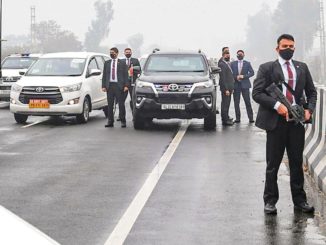
    An impartial inquiry into a politically contested incident is always welcome. Earlier this month, Prime Minister Narendra Modi’s convoy was stranded on a flyover near Ferozepur in Punjab for about 20 minutes. Treating this as a serious security lapse, and taking note of the potential for partisan inquiries, the Supreme Court has appointed its former judge, Justice Indu Malhotra, to lead an inquiry. Other members of the probe committee comprise the DGP of Chandigarh, a senior officer of the National Investigation Agency, the additional DGP (security) of Punjab, and the Registrar-General of the Punjab and Haryana High Court. The court official has already secured the records related to the Prime Minister’s tour programme on that day. One hopes the probe, which has been constituted only to avoid one-sided inquiries at the instance of either the Union government or the State government, will give a quietus to the raging political controversy. None will disagree that once the matter was taken to the apex court, only an inquiry of this nature will steer clear of partisan politics, especially in the backdrop of the incident emerging as an exploitable issue in the elections to five State Assemblies. The Union government’s show-cause notice to the Chief Secretary and DGP of Punjab, demanding a response within 24 hours, evoked some resentment from the Bench.

    Initial inquiries ordered by both governments have been put on hold. However, there is something disquieting about the way an isolated lapse in the Prime Minister’s security is being used to raise the political temperature and garner electoral dividends. It is unfortunate that the attempt on the part of the ruling BJP to fix the blame on the Punjab government, and the Congress which helms it, is continuing even after the Supreme Court appointed an independent committee to probe the incident. Assam Chief Minister Himanta Biswa Sarma has made some crude and unwarranted remarks on his Punjab counterpart, Charanjit Singh Channi, demanding Mr. Channi’s arrest and alleging a conspiracy to kill the Prime Minister. It is clear that a divisive narrative is sought to be built by key functionaries of the BJP, as though they have been asked to milk the issue as much as possible in the run-up to the Assembly elections. The petition, which the Bench headed by the Chief Justice of India, N.V. Ramana, agreed to hear early, seemed to be an exercise to put the Punjab government in the dock. However, the Supreme Court has managed to emancipate the litigation from its political overtones and preserve the scope for a dispassionate inquiry. It would be in the fitness of things if the Court took note of the attempts to use the incident for electoral propaganda and restrained political parties from the resort to needless rhetoric.

    (The Hindu)

  • Hate speeches: Onus on Supreme Court, ECI to stem the rot

    Hate speeches have come under judicial scrutiny, with the Supreme Court agreeing to hear a public interest litigation (PIL) seeking an ‘independent, credible and impartial’ investigation by an SIT into the inflammatory remarks made by speakers at last month’s Dharma Sansad in Hardwar and an event in New Delhi. The petitioners have claimed that no effective steps have been taken by the Uttarakhand and Delhi police to arrest those who targeted the Muslim community in their speeches. Another petition, filed by the Jamiat Ulama-i-Hind in the apex court, has sought a ban on anti-Muslim speeches and programs, saying that ‘it is not just a matter of religion but of the Constitution, law, unity and integrity of the country.’

    Uttarakhand is among the five states going to the polls next month. The Election Commission of India (ECI) has already cautioned political parties over hate speeches and said that it is keeping tabs on social media posts. Even as a SIT formed by the BJP government in the hill state is probing the Hardwar case, the ruling party is being accused of dragging its feet on the sensitive issue due to electoral considerations. What seems to have emboldened the hate-mongers is the silence of the Central and state governments on the ‘genocidal’ speeches, which were also delivered at a recent conclave in Raipur, Chhattisgarh.

    ‘Practise your religion but don’t abuse and indulge in hate speech and writings’ — that’s what Vice President M Venkaiah Naidu said at an event held in Kerala last week to mark the 150th death anniversary of Saint Kuriakose Elias Chavara, a 19th-century Catholic priest and social reformer. His strong disapproval of attempts to ridicule other religions and create dissensions in society ought to spur politicians of all hues to call out the black sheep. However, most of them are preferring to remain mute spectators with an eye on their vote banks. With the political class generally reluctant to condemn bigotry and intolerance, the courts and the ECI would have to go the extra mile to ensure exemplary action against those spreading hatred and inciting violence in the name of religion.

    (Tribune, India)

  • Krish Sengupta’s solo art exhibition in New York City thrills art lovers

    Krish Sengupta’s solo art exhibition in New York City thrills art lovers

    Krish gifting a painting to a model. (Photo : Jay Mandal-on assignment)

    NEW YORK CITY (TIP): Art lovers went ga ga over the paintings of Krish Sengupta who organized his first solo art exhibition in New York City. The inauguration of the exhibition on Thursday, January 13 at On The Fringe, aka 72 Warren at Tribeca attracted a number of painters, art lovers, friends, and above all, the mentor of Krish, as he said, RaulSebasco. About 30 creations, which included graphics and charcoal and oil on canvas were exhibited.

    Commenting on the artist and his work, Sebasco said: “It’s the classical theme with the human figure which is actually one of the most difficult subjects to draw into paint. And so, it’s very classic in the Western tradition. So, he handles it very well and this is why I am looking at these pieces, and I would like him then to develop these into his next show,into maybe 15 or 20 pieces. Same format. And that would be I think, something spectacular to present. And, in a sense, you know, following the Western tradition, which is the figurative tradition.”

    Asked if he found any pronounced influences on Krish, Santiago quipped: “You can almost say Michelangelo and Raphael, as well, especially in the female figures. So, there are so many of these painters that have continued the Western tradition that have fostered the Western tradition. And so, I would like him then to take this and explore it in a uniform way with just charcoal. There’s a beauty to charcoal. Charcoal is one of the oldest mediums actually. When early humans burnt wood for the first timethen there were ashes. They then actually probably started painting themselves with the charcoal. So, it’s one of the oldest art mediums.”Krish is an India born artist, now based in Jersey City, NJ. Since arriving in the USA in the summer of 2009, he has actively cultivated his art in Chicago, New York and New Jersey. Largely self-taught, he has honed his skills at eminent artist workshops in these cities, namely those of Layne Jackson, Tom Robinson, Raul Sebasco and Joe Velez.

    Among others   at the opening of the exhibition was a gentleman very well known in the Indian American community, in particular for his films. Mr. Tirlok Malik who, besides being a film actor, director and producer, is a motivational speaker and Yoga and Ayurveda expert. He introduced a new dimension to the exhibition by initiating the gathering into a laughter yoga session, of course, to the delight of everyone. Here are some pictures of exhibited work of the artist at the art gallery and visitors on the opening day.

    Oils on canvas

    Photo :Jay Mandal- On assignment

    Work in charcoal

    Mr. Tirlok Malik (extreme left) initiates a laughter Yoga session.( Photo :Jay Mandal-on assignment)
  • Army hoists world’s biggest national tricolor hoisted in Jaisalmer

    Army hoists world’s biggest national tricolor hoisted in Jaisalmer

    Special correspondent

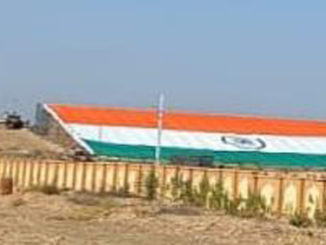
    JAIPUR (TIP):  The world’s biggest national tricolor, 225 long, 150 feet wide and weighs about 1000 km, was on Saturday be hoisted on the Jodhpur National Highway in the Jaisalmer Military area to mark the 75th year of Indian Independence. On the occasion of Army Day, on 15 January 22, the Southern Command unveiled a Monumental National Flag at Jaisalmer Military Station.

              The Flag has been manufactured by M/s Khadi Dyers and Printers, a befitting tribute to the Indian heritage as the flag is made of hundred percent Khadi material. The hoisting of flag also commemorates the 75th year of India’s Independence being celebrated as Azadi Ka Amrit Mahotsav, according to a defense spokesman here. GOC 12 RAPID unveiled the national flag amidst select dignitaries who were amongst those present.The monumental national flag has been prominently displayed and is clearly visible from a distance of several kilometers. This monumental flag showcases the pride and aspiration of people of our country with an aim to knit all citizens in support of glory and spirit of nationalism. The flag hoisting was followed by national anthem and military band display. This initiative of Army to inculcate patriotic fervor amongst citizens in the border region isbeing widely appreciated.

  • Khorana & Indian Science

    Khorana & Indian Science

    Real tribute to the Nobel Laureate would be to encourage young scientists and research

    By Dinesh C. Sharma

    The birth centenary of Nobel laureate Har Gobind Khoranais an occasion to recall the pioneering contributions he made to the fields of chemical biology and genetics and their continuing relevance. The centenary has brought into focus the lesser-known scientific legacy of undivided Punjab which was the birthplace of three Nobel laureates — Subrahmanyan Chandrasekhar, Abdus Salam and Khorana. The state also produced several other scientists like Shanti Swarup Bhatnagar, Ruchi Ram Sahni and Yash Pal. It is a shared legacy of the subcontinent that needs to be celebrated.

    The New Year has begun with a significant event on India’s science calendar — the birth centenary of Nobel laureate Har Gobind Khorana. It is an occasion to recall the pioneering contributions he made to the fields of chemical biology and genetics and their continuing relevance. The centenary has brought into focus the lesser-known scientific legacy of undivided Punjab which was the birthplace of three Nobel laureates — Subrahmanyan Chandrasekhar, Abdus Salam and Khorana. The state also produced several other scientists like Shanti Swarup Bhatnagar, Ruchi Ram Sahni and Yash Pal. It is a shared legacy of the subcontinent that needs to be celebrated. Larger issues relating to hierarchy, academic freedom, inadequate thrust on research and research-industry collaboration need to be addressed.

    Amidst the celebrations have surfaced stories about how Khorana failed to get a job after he returned to India in 1949 with a doctorate from the University of Liverpool and post-doctoral research experience at the Swiss Federal Institute of Technology, and that he was forced to return to Europe. Though the phrase ‘brain drain’ was not in vogue then, Khorana’s could be the most celebrated case of the phenomenon, in retrospect.

    Khorana was among the earliest products of the exercise to boost modern higher education in India, initiated by Sir Ardeshir Dalal, head of Planning and Development in the Viceroy’s Executive Council appointed in 1944. Dalal found that existing educational institutions were not capable of producing manpower necessary for developing an industrial base in India. It was his idea that India needed MIT-like technology universities. For the short term, he drew up a scheme, Government of India Fellowship Programme, to sponsor higher education of Indian students in Europe and America. Among the first set of students to benefit from this scheme was Khorana who had just finished post-graduation in chemistry from Punjab University in Lahore. Several generations of Indian students got this scholarship which was continued after Independence as well, and upon return to India they were deployed to work in scientific institutions and industry.

    At the time Khorana was beginning a career in science in the post-war world, scientific research in the newly Independent India was just getting organized. The Indian Agricultural Research Institute — where he was seeking an appointment — was far from being a vibrant research outfit. The facilities for basic research were lacking, as pointed out by several visiting scientists. For example, Kenneth V Thimann of Harvard University, who was in India to address the Indian Science Congress in 1957, wrote to PM Nehru: ‘Numerous young PhDs have gone abroad to receive some training in some aspect of modern plant physiology, but too often they return to a heavy schedule of teaching and a laboratory whose equipment can only be described as medieval.’

    The Council of Scientific & Industrial Research (CSIR) — founded to meet the war exigencies in the 1940s — was being shaped to serve the needs of an aspiring nation. The overhaul of other colonial-era research councils such as agriculture and medical research councils was yet to begin. The work on a spate of new educational and research institutions meant there was a clamor for resources. The scientific community and the government were still debating the division of resources for utilitarian research meant for nation-building and basic research. Foreign exchange crunch meant scientists either had to fabricate instrumentation on their own or look for aid from UN agencies or foreign governments. Dollars needed for subscriptions to scientific journals had to be justified to the Reserve Bank of India.

    This answers if Khorana could have achieved in India what he did in universities in Europe and North America had he been employed in any Indian laboratory in the 1940s.

    In the early 1960s, Khorana moved from Vancouver to the University of Wisconsin at Madison to become co-director of the Institute for Enzyme Research where he did his path-breaking work on the synthesis of proteins. In India, biochemistry research then was just taking shape and the discourse centered on establishing a National Biological Laboratory on the lines of the National Physical Laboratory (NPL) and the National Chemical Laboratory (NCL) under the CSIR. The UGC was trying to figure out ways to promote biochemistry education and research in universities. Dr Pushpa Mittra Bhargava, then a young biochemist at the Regional Research Laboratory at Hyderabad, was prodded by his mentor Dr Syed Husain Zaheer to organize a group of biochemists to chalk out research agenda in this new field. The group met informally in January 1960 in Khandala – at a villa owned by writer Mulk Raj Anand who happened to be a close friend of Zaheer. Independent of this initiative, Dr Obaid Siddiqi networked with international groups to shape the Molecular Biology Group at the Tata Institute of Fundamental Research (TIFR). Siddiqi’s brainstorming sessions became famous as the Mahabaleshwar Seminars in modern biology, while Bhargava’s initiative continued as ‘Guha Research Conference’.

    Khorana was not directly involved in such efforts to promote biochemistry research and education in India but he was in touch with members of these groups, such as Dr GP Talwar at the AIIMS and Zaheer at the CSIR. Bhargava also interacted with Khorana at the famous Gordon Research Conference on Nucleic Acids in 1964, in which the who’s who of modern biology were present. Khorana was the vice-chairman of this landmark meeting where several past and future Nobel laureates were present.

    Scientific research in India has come a long way from the time of Khorana not finding suitable research opening in Indian laboratories in the late 1940s. The research infrastructure in Indian laboratories is no more ‘medieval’ as described by visiting scientists in the 1950s. Access to scientific knowledge is just a click away. Research funding is growing and multiple channels of funding are available. But larger issues relating to hierarchy, academic freedom, inadequate thrust on research in universities, research-industry collaboration etc., remain not fully addressed. A real tribute to Khorana would be to correct some of these imbalances to encourage fundamental research and provide opportunities to young scientists in emerging areas of new biology.

    (The author is a Science Commentator with The Tribune, India)

  • The sail that Indian diplomacy, statecraft need

    The sail that Indian diplomacy, statecraft need

    By D.B. Venkatesh Varma

    By D.B. Venkatesh Varma

    Striking the right balance between continental and maritime security will enable India’s long-term security interests.

     When Prime Minister Narendra Modi hosts the five Central Asia leaders at the Republic Day Parade on January 26, it will send a strong signal — of the new prominence of the Central Asian region in India’s security calculations. In 2015, Mr. Modi visited all the five Central Asian states. Recently, National Security Adviser Ajit Doval and External Affairs Minister S. Jaishankar also hosted their Central Asian counterparts in Delhi. The collapse of American military power in Afghanistan, the subsequent takeover of Kabul by the Taliban and the consequent rise in the influence of Pakistan and China are developments of high concern for India’s continental security interests.

    While the Republic Day invitation is significant symbolically, in substance, however, hard work lies ahead. India’s continental strategy, in which the Central Asian region is an indispensable link, has progressed intermittently over the past two decades — promoting connectivity, incipient defense and security cooperation, enhancing India’s soft power and boosting trade and investment. It is laudable, but as is now apparent, it is insufficient to address the broader geopolitical challenges engulfing the region.

    Focus on Eurasia: China’s assertive rise, the precipitous withdrawal of forces of the United States/North Atlantic Treaty Organization (NATO) from Afghanistan, the rise of Islamic fundamentalist forces, the changing dynamics of the historic stabilizing role of Russia (most recently in Kazakhstan) and related multilateral mechanisms — the Shanghai Cooperation Organization (SCO), the Collective Security Treaty Organization, and the Eurasian Economic Union — have all set the stage for a sharpening of the geopolitical competition on the Eurasian landmass. This competition is marked by a weaponization of resource and geographical access as a form of domination, practiced by China and other big powers. To meet this challenge, evolving an effective continental strategy for India will be a complex and long-term exercise.

    Some course correction: India’s maritime vision and ambitions have grown dramatically during the past decade, symbolized by its National Maritime Strategy, the Security and Growth for All in the Region (SAGAR) initiative for the Indian Ocean Region and major initiatives relating to the Indo-Pacific and the Quad, in which maritime security figures prominently. This was perhaps an overdue correction to the historic neglect of India’s maritime power. It was also a response to the dramatic rise of China as a military power. It may also be a by-product of the oversized influence over our think-tank community of Anglo-Saxon strategic thinking, which has tended to emphasize the maritime dimensions of China’s military rise more than others.

    The U.S. is a pre-eminent naval power, even more so in the Indo-Pacific region, and defines its strategic preferences in the light of its own strengths. That said, maritime security is important to keeping sea lanes open for trade, commerce and freedom of navigation, resisting Chinese territorial aggrandizement in the South China Sea and elsewhere, and helping littoral states resist Chinese bullying tactics in interstate relations. However, maritime security and associated dimensions of naval power are not sufficient instruments of statecraft as India seeks diplomatic and security constructs to strengthen deterrence against Chinese unilateral actions and the emergence of a unipolar Asia.

    The Chinese willingness and capacity for military intervention and power projection are growing far beyond its immediate region. Its rise is not merely in the maritime domain. It is expanding on the Eurasian continent — its Belt and Road Initiative projects in Central Asia up to Central and Eastern Europe and the Caucasus, undercutting traditional Russian influence, its gaining access to energy and other natural resources, and its dependency-creating investments, cyber and digital penetration and expanding influence among political and economic elites across the continent. The American military footprint has shrunk dramatically on the core Eurasian landmass, though it has a substantial military presence on the continental peripheries. Bulwarks against Chinese maritime expansionist gains are relatively easier to build and its gains easier to reverse than the long-term strategic gains that China hopes to secure on continental Eurasia. Like Association of Southeast Asian Nations (ASEAN) centrality is key to the Indo-Pacific, centrality of the Central Asian states should be key for Eurasia.

    Border, connectivity issues : India’s partition and the emergence over the past six decades of a persistent two-front threat from Pakistan and China set the stage for a tough continental dimension of our security. There is increased militarization of the borders with Pakistan and China, with the Ladakh sector now increasingly looking like it will see permanent deployment on the Siachen Glacier. India has been subject for over five decades to a land embargo by Pakistan that has few parallels in relations between two states that are technically not at war. Connectivity means nothing when access is denied through persistent neighboring state hostility contrary to the canons of international law.

    Difficulties have arisen in operationalizing an alternative route — the International North-South Transport Corridor on account of the U.S.’s hostile attitude towards Iran. It may appear strange that while we join the U.S. and others in supporting the right of freedom of navigation in the maritime domain, we do not demand with the same force the right of India to conduct interstate trade, commerce, and transit along continental routes — be it through the lifting of Pakistan’s blockade on transit or the lifting of U.S. sanctions against transit through Iran into Eurasia. With the recent Afghan developments, India’s physical connectivity challenges with Eurasia have only become starker. The marginalization of India on the Eurasian continent in terms of connectivity must be reversed.

    Where the U.S. stands : The ongoing U.S.-Russia confrontation relating to Ukraine, Russian opposition to future NATO expansion and the broader questions of European security including on the issue of new deployment of intermediate-range missiles, following the demise of the Intermediate-Range Nuclear Forces (INF) treaty will have profound consequences for Eurasian security. This comes against the background of an ongoing U.S. review of its global military commitments. While the U.S. had over 2,65,000 troops under its European command in 1992, it now has about 65,000. Even with the rise of China’s military power, over the past decade, the U.S. which had about 1,00,000 troops in the early 1990s under what is now called the Indo-Pacific Command, currently has about 90,000 troops mostly committed to the territorial defense of Japan and South Korea. The U.S. Central Command (CENTCOM) has undergone a major transformation during the last decade; it had about 1,70,000 troops a decade ago (related to the wars in Iraq and Afghanistan), but has less than 10,000 personnel now.

    The bottom line is clear – the U.S. would be severely stretched if it wanted to simultaneously increase its force levels in Europe and the Indo-Pacific. Successive waves of post-Cold War NATO expansion only increased overall insecurity, with the potential to create for the U.S. the mother of all quagmires. A major conflict — if it erupts in Central Europe, pitting Russia, Ukraine and some European states — will stall any hopes of a substantial U.S. military pivot to the Indo-Pacific. Geopolitics may be fractured but always add up globally. Russia and China do not need to be alliance partners to allow for coordinated actions relating to Taiwan or Donbas, as such coordination would flow from the very logic of the strategic conundrum that the U.S. now finds itself in. In the same vein, European NATO powers dependent on the U.S. can do only so much for strengthening security in the Indo-Pacific. Their engagement with the Indo-Pacific is welcome but we should not only be cognizant of the limitations of geography, obvious gaps between strategic ambition and capacity but also the inherently different standpoints of how major maritime powers view critical questions of continental security. India is unique as no other peer country has the same severity of challenges on both the continental and maritime dimensions.

    Be assertive about rights : Going forward, it is clear India will not have the luxury of choosing one over the other; we would need to acquire strategic vision and deploy the necessary resources to pursue our continental interests without ignoring our interests in the maritime domain. This will require a more assertive push for our continental rights — namely that of transit and access, working with our partners in Central Asia, with Iran and Russia (not that we have many other options), and a more proactive engagement with economic and security agendas ranging from the SCO, Eurasian Economic Union (EAEU) and the Collective Security Treaty Organization (CSTO). Stabilizing Afghanistan is a necessary but not a sufficient condition.

    Striking the right balance between continental and maritime security would be the best guarantor of our long-term security interests. But this will not be easy as we would need to work with different partners on different agendas even while their geopolitical contradictions play out in the open. India will need to define its own parameters of continental and maritime security consistent with its own interests. In doing so, at a time of major geopolitical change, maintaining our capacity for independent thought and action (namely strategic autonomy) will help our diplomacy and statecraft navigate the difficult landscape and the choppy waters that lie ahead.

    (Author is a former Ambassador to Russia)

  • Punjab Government tripped, and how

    Punjab Government tripped, and how

    Failed to fulfil its constitutional obligation to ensure safe passage to PM

    By Julio Ribeiro

    I do not subscribe to the BJP’s charge that the Congress government willfully exposed the PM to danger in the hope that he would be harmed. That is a misstatement of facts meant to gain political mileage. The people are not so dumb. But what the people do not know is that unwittingly the state government has thrown itself open to the charge that the PM’s personal security could have been compromised by the sudden hold up on the bridge near his destination. Any unhinged person could have caused damage. That lapse cannot be excused and it will not be, though here again the charge that the Punjab Police purposely leaked the details of the route to be followed by the PM to the farmer protesters can be discarded as another instance of political grandstanding. A route prescribed for the travel has to be secured well in advance. Movement of policemen detailed for such work will be known to everyone, friend or foe, by the very nature of the exercise.”

    The PM’s inability to reach his destination in Punjab on January 5 showed the state government and its police force in a very bad light. It failed to fulfil its constitutional obligation to ensure safe passage to the nation’s Chief Executive! This has not happened before, as far as my memory goes. There is an elaborate drill that precedes the PM’s visit to a state. State governments ruled by Opposition parties, as in the case of Punjab, have an added responsibility in this matter as they have to keep their own followers in check. If the newly installed CM thought he was teaching his rivals a lesson in political jugglery, I reckon he has picked on the wrong horse.

    Before a PM crosses into a state, the SPG, which is in charge of the PM’s personal safety, sends an advance party of senior officers to thrash out every detail of his or her itinerary with the DGP and his Intelligence wing. Visits are paid to the spots where the PM is scheduled to visit. The law and order machinery of the police, as represented by the DSP and his juniors, is associated in the planning of the entire event.

    The Intelligence Bureau (IB), which monitors the political pulse of the parties and people involved in the event, is associated with the security arrangements. The final call on every detail is with the SPG, which has been especially raised for securing the life of the country’s PM. In the case of Modi, the threat perception must be considerably higher than what it was for Dr Manmohan Singh or Atal Bihari Vajpayee.

    I presume these drills, which cover all the special precautions to be taken in case of eventualities like a change in route, were discussed and finalized by the state’s police leadership with the SPG and the IB team. The PM was to use a helicopter to travel from Bathinda to Hussainiwala in Ferozepur district, where he was to honor the martyrs who laid down their lives to free the country from colonial rule. That the helicopter may have to be abandoned was always on the cards. Winter mist and rain that hampers visibility is a regular feature in Punjab at this time of the year. It must have been factored in during the course of the preparations for the visit.

    I am afraid that the Congress government has messed up badly. No excuses can soften the blow, since no excuses will be accepted. The security of the PM is the topmost concern of every citizen of this country and not merely the agencies constituted to ensure that his life is safe. It is a matter of national honor.

    While the SPG guards his proximity and his person, it is the responsibility of the state’s police to ensure that the PM moves about without any hindrance. Malcontents and sundry political opponents who wish to demonstrate against him have to be called and told what will be permitted and what will not be allowed. Uniformed police officers are adept in this particular police duty.

    I do not subscribe to the BJP’s charge that the Congress government willfully exposed the PM to danger in the hope that he would be harmed. That is a misstatement of facts meant to gain political mileage. The people are not so dumb. But what the people do not know is that unwittingly the state government has thrown itself open to the charge that the PM’s personal security could have been compromised by the sudden hold up on the bridge near his destination. Any unhinged person could have caused damage. That lapse cannot be excused and it will not be, though here again the charge that the Punjab Police purposely leaked the details of the route to be followed by the PM to the farmer protesters can be discarded as another instance of political grandstanding. A route prescribed for the travel has to be secured well in advance. Movement of policemen detailed for such work will be known to everyone, friend or foe, by the very nature of the exercise.

    But the act of the protesters in blocking the road had to be prevented at all cost. I cannot believe that the police had no inkling of the farmers’ moves. This was a group that was attempting to establish its individual identity on the political landscape. This was an added reason for the Intelligence wing to keep them under strict surveillance. The wing has obviously failed.

    The normal drill is for the police to summon the leader of the demonstrators and tell them how far they could go in their constitutional right to protest. Simultaneously, the protesters needed to be told that the higher constitutional right of the nation’s top leader to go where he legitimately wished to go would be safeguarded by the state’s police, under any circumstance. If the protesters were determined to block the PM’s journey, they should have been temporarily detained till the PM had completed his meeting and departed. If they went further and resorted to violence, the police should have used force to disperse them. But in that case, the police would need enough men to chase, arrest and restrain, and a fleet of Black Marias or hired buses to whisk away those detained. All this needed to have been planned in advance.

    This drill has been practiced by the police in all parts of the country over the years. Why was it not planned on this occasion? If the newly installed CM thought he was teaching his political rivals a lesson in political jugglery, I reckon he has picked on the wrong horse! It is a foolhardy venture that is bound to boomerang.

    CM Channi’s taunt that the PM had to cancel his meeting in Ferozepur because only 700 of the 70,000 chairs were actually occupied is ridiculous. If you allow the roads to be blocked to ensure that those who were on their way to the venue could not get there in the first place, the taunt is not a taunt anymore. It is an outright lie which will diminish his credibility.

    The BJP is convinced that unless its writ runs in the states, like it runs at the Centre, no real progress is possible. In short, it envisages an Opposition-free government in the country, which translates into one-party rule. This concept spells disaster for Indian democracy.

    (The author is a former Director General of Punjab Police)

  • Mountaineer Major HPS Ahluwalia dies at 85

    Mountaineer Major HPS Ahluwalia dies at 85

    NEW DELHI/NEW YORK (TIP): Indian mountaineer and Padma Shri Awardee Major HPS Ahluwalia has died at the age of 85. The Indian Spinal Injuries Centre founder breathed his last on Friday, January 14, 2022, according to a statement released by the Center. The statement said that Ahluwalia was a trained mountaineer, a retired army officer, a social worker, and an author who gave his contribution in several fields that include disability and social work, sports, adventure, and environment.

    Born on November 6, 1934, in Punjab, HPS Ahluwalia’s full name was Hari Pal Ahluwalia. HPS was among one of the six men in India who climbed Mount Everest. He wasthe world’s twenty-first man to do so. Along with Phu Dorjee Sherpa and HCS Rawat, he made the fourth and final attempt of the 1965 Indian Everest Expedition. This also became the first time when a total of three climbers stood together on the summit. After his advanced training which he took at Himalayan Mountaineering Institute, the author climbed extensively in Nepal. Hari Pal was brought up with his two younger brothers and sisters in Shimla.

    HPS Ahluwalia is survived by wife BholiAhluwaliaandtheir daughter Sugandh Ahluwalia.

    Condoling Ahluwalia’s death, New Jersey based lobbyist Harry Singh Panaser said, it is “sad that Chairman ISIC, Maj HPS Ahluwalia, passed away on 14 Jan 2022 due to cardiac arrest.  An avid mountaineer and a keen adventure enthusiast, Maj Ahluwalia left an indelible mark in many fields including adventure, sports, environmental, disability and social work. He was awarded Padma Bhushan, Padma Shri & Arjuna Award for his contributions.

     I convey my heartfelt condolences to the family to bear this irreparable loss.

      May the departed soul rest in peace.”

    The staff at The Indian Panorama condole Major Ahluwalia’s demise and pray for eternal peace to the departed soul.

  • Gurmat Sangeet legend Prof Kartar Singh passes away

    Gurmat Sangeet legend Prof Kartar Singh passes away

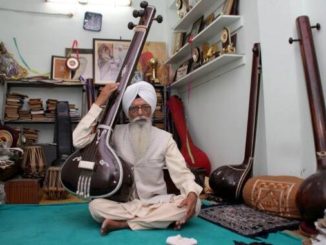
    LUDHIANA/NEW YORK TIP): Padma Shri awardee Gurmat Sangeet legend Prof Kartar Singh (94) passed away in Ludhiana on January 2, 2022, according to a belated report.

    Prof Kartar Singh won several prestigious honors for his contribution to Gurbani, which he had been practicing since the age of 13 and was specialized in the popular classical music form of ‘tanti saaz’. He was one of the few ‘Gurmat Sangeet’ legends, who pursued music teaching.

    He was a recipient of the Sangeet Natak Akademi Award, the highest Indian recognition given to practicing artists, and the Tagore Ratna Award. He also won the Punjab government’s Shiromani Ragi Award and the Punjabi University’s Gurmat Sangeet Senior fellowship.

    Kartar Singh was given the Sikh Lifetime Achievement Award in London in 2011 and nominated to the Top 100 Global Sikhs by the Sikh Directory in the United Kingdom. He wrote five books on Gurmat music, with a total of over 40,000 copies, published by the SGPC. Two of his books are under publication.

    Born at Ghummanke village in Lahore on April 3, 1928, Kartar Singh completed graduation and post-graduation in music (vocal and instrumental) from Panjab University, Chandigarh.

    On December 20, Ludhiana deputy commissioner Varinder Kumar Sharma handed over the Padma Shri award to Kartar Singh at the Dayanand Medical College & Hospital (DMCH), Ludhiana, as health issues had prevented him from attending the function in Delhi. Kartar Singh is survived by his daughters Manjit Kaur and Sukhbir Kaur, sons Amarjit Singh and Amritpal Singh, daughter-in law Amarjit Kaur, and grandchildren.The staff at The  Indian Panorama condole Major Ahluwalia’s demise and pray for eternal peace to the departed soul.

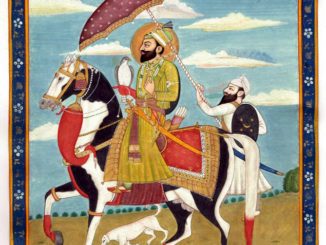
  • Guru Gobind Singh Sahib ji sayeth “Acknowledge Entire Humanity as One Race”

    Guru Gobind Singh Sahib ji sayeth “Acknowledge Entire Humanity as One Race”

    Amarjit Singh Anand

    Commemorating the 356th Sacred Anniversary of his Blessed Advent in the city of Patna, State of Bihar in India, the disciples of Guru Gobind Singh Sahibji offer homage to the multi-dimensional Prophet, the Beacon-of-Light, who strictly proclaimed an injunction upon his followers thus: “I am an insignificant slave of the Primordial-Being. Those who worship me as GOD shall have to endure hell”.

    Hewas a Visionary, Saint, Scholar, Poet, Philosopher, Warrior, Connoisseur & Patron of artistes and skilled warriors. Guru Gobind Singh Ji sacrificed his parents, spouse and 4 minor sons, at the altar of upholding human dignity and Freedom of Faith/Religion & Right to Expression. Guru Gobind Singh Ji mastered many languages including Sanskrit, Urdu, Hindi, Braj, Gurmukhi and Persian. He also learned martial arts to become adept in combat. In his 42-year sojourn on this planet, he authored several poetic compositions like ‘Akaal-Ustat’ (Pristine-Praise of the Timeless One). The Great Guru accomplished all of this while remaining mindful of his Divine Assignment of steadfastly being the Defender of Human Rights of the populace. Hence, he did not shirk his duty, when he was pulled into fighting 16 battles against the overpowering might of the Mughal Emperor of India, who was equipped with a massive army and large arsenals. Although he braved several acts of betrayal, treachery, deception, jealousy from various quarters, yet his utmost trust in ONENESS of humanity brought him loyalty from both sides, all of the Divine-conscious and conscientious Muslims and Hindus, when they sacrificed their life, fighting against tyrannical oppressive forces of darkness.

    Takht Shri Patna Sahib. Guru Gobind Singh ji was born here on December22, 1666.

    He was anointed Guru, when he was merely 9, by his predecessor and father, Guru Tegh Bahadur Ji, when the latter marched towards Delhi, to voluntarily court arrest, in support of the Kashmiri Pundits who were being forced by the Mughal emperor, to give up their religion or to face death. Guru Tegh Bahadur Ji was, then, martyred by being beheaded, after witnessing the torturous martyrdom of his three disciples, Bhai Mati Das Ji, Bhai Sati Das Ji and Bhai Dayal Das Ji. This was a turning point in Indian history, which led to another historic event. On the day of Vaisaakhi in 1699, Guru Gobind Singh Ji formalized the martial institution of ‘The Order of The Khalsa’, the valiant force, making it mandatory for all Sikhs to wear a turban and to retain unshorn hair and beard.

    The creation of Khalsa on the day of Vaisaakhi in 1699 proved to be a turning point in the history of Hindustan (India).

    In our contemporary world, the Khalsa-panth (Pathway) or ‘The Way of Life’ is what The Guru gave to the Sikh community, which constitutes a large part of the global diaspora where several Sikhs are the influencers, being in positions of authority, as Parliamentarians and officials in government, in U.S.A., Canada, U.K., Australia, New Zealand, Malaysia, Singapore amongst other nations. In numbers, Sikhism is the 5th largest religion in the world, with some 28 million adherents.

    The Sacred Utterances of the Tenth-Divine-Sovereign includethe poetic Zafar-Nama (The Epistle of Victory) as a voluminous letter to the tyrant Aurangzeb, who felt such immense remorse upon reading it, that he died, soon thereafter. This communication clearly said that the Mughal Emperor did not behave as behoves a Sovereign ruler.

    The Guru wrote: “The Lord is One and His Word is True. The Victory is of the Lord. Aurangzeb, you’ve been pretending to be a devout and pious Muslim, whilst in reality, you are a liar who committed a blasphemous act by swearing on the Oath of Holy Quraan, which oath was falsified by your treacherous and devious actions like attacking my forces, who were promised safe passage, if we vacated the Fort of Anandpur Sahib. Furthermore, you ought to be castigated for the execution of my two minor sons, who were bricked alive in Sirhind”.

    Guru Gobind Singh Sahibji authored the ‘Resplendent-Drama’ or Play (Bachitar or Vichitra Naatak) a poetic-autobiography about the time on the Hemkunt range of mountains, where he was immersed in meditation, merged in Communion with The Divine. Thence, he was Commanded by The Almighty Majesty to assume the human-frame, in the form of the 10th Embodiment on The Spiritual Throne of The Divine Preceptor, Guru Nanak Sahibji, in order to thwart the nefarious designs of tyrannical forces. Bachitar-Natak is part of the ‘Dasam Granth’, the Sacred Texts written by the 10th Guru. One stanza reads thus: “I have come into this mortal-world for this purpose. The Supreme Lord has sent me for the propagation of Righteousness, everywhere, and to seize and destroy the sinful and the wicked. I have taken birth for this purpose, let all holy men understand this. I have come to disseminate Divine Religion. I am committed towards the protection of saints; and for annihilating all the tyrants”. 

    Shri Daulat Rai Ji, a prominent figure in the Arya-Samaj sect of Hindusism, wrote a book ‘Sahib-E-Kamaal’ Guru Gobind Singh, the Spiritual-Master par excellence. It is dedicated to Guru Gobind Singh’s life, his noble thought and his mission so that the populace at large could have a just view of the Guru’s greatness.”

    Mai Bhaago, the brave soldier who inspired the 40 deserters to return to the Guru and fight alongside of him against the Mughal forces.

    At the battle of Muktsar Sahib, he was rejoined by his 40 Sikhs, who had earlier deserted him. They were inspired by a brave lady Mai Bhaago Ji to return to the battlefield. Travelling through Gwalior, The Guru was headed towards The Deccan area, at the invitation of Aurangzeb who wanted to apologize. The Guru was forgiving and went ahead, considering that the Mughal Emperor was almost double his age. En-route, The Guru got news that Aurangzeb had died.

    Finally, Guru Gobind Singh Ji decided to terminate human-Guruship and so he passed on the mantle to The Scripture, at Nanded, where Gurdwara Takht Hazoor Sahib attracts devotees and pilgrims, from all over the world. Now, The Scripture, Sri Guru Granth Sahib was anointed as the Eternal-Guru in 1708, when Guru Gobind Singh Ji realized his mission was accomplished and it was time to shed the mortal-frame. As a mark of humility, he did not include his Sacred Verses in Sri Guru Granth Sahib, as he opined, he was not evolved up to the level of 6 Gurus and 35 Hindu & Sufi Muslim Saints, whose compositions are enshrined therein.

    Takhat Sachkhand Sri Hazur Abchal Nagar Sahib, Nanded, India- the final resting place of Guru Gobind Singh who left for heavenly abode on October 7, 1708.


    The five virtues recognised in
    Sikhism are Sat (Truth), Santokh (Contentment), Daya (Compassion), Nimrata (Humility) and Pyaar (Love). For the Sikhs, the final goal of life is to reunite or merge with God (Mukti). The Sikh Gurus taught that to achieve this goal it was important to work hard at developing positive human qualities which lead the soul closer to God. The Gurus taught that all human beings have the qualities they need to reunite with God but they must train their minds to make the most of these qualities.In order to reach the final goal of life, Sikhs believe that they must constantly develop their love for God by developing compassion for all God’s creation. The mind of someone who is gurmukh (literally, ‘Guru facing’), is constantly focused on God at all times; while the mind of Manmukh (literally, ‘mind facing’ or “mind centred”) is full of desire, attractions, doubts, greed, etc and he or she will be full of sorrow and pain.

    Amongst the faithful devotees of Guru Gobind Singh Ji, several notable loyal Hindus and Muslims are respected by all Sikhs.

    Bhai Nand Lal Ji (c. 1633-1713), was an eminent poet laureate in the Guru’s Darbaar. He fled from Aurangzeb’s persecution. Hakim Allah Yaar Khan Jogi, an unbiased Muslim poet/writer wrote two poems almost a century ago, one on Chamkaur, under the title Ganj-a-Shaheedan and the other on Sirhind, entitled Shaheedan -a-Wafa, in homage to the 4 minor sons of The Guru. Pir Bhikan Shah saw the Divine Light emanating from the birthplace of The Guru and started bowing in Islamic Prayer, towards the East instead of towards Mecca in the West. He visited the newly born Guru, tested him by presenting two bowls (representing Muslims & Hindus). The Guru placed his hands on both. The Pir further said that he was immensely impressed and pleased with this act of the Holy child. The Pir, his disciples and servants then returned to his home and remained a steadfast supporter of the Guru for his entire life. Pir Buddhu Shah was a Muslim-Divine whose real name was Badr ud Din, who was an admirer and ally of Guru Gobind Singh. He brought many hundreds of his followers and his family members to assist the Guru’s force. However, the Mughals executed him, after the battle, for supporting the Guru. Diwan Todar Mal Ji was a wealthy Hindu merchant of Sirhind,performed the cremation of the three martyrs: the two younger sons of Guru Gobind Singh, Gujri aged 9, Fateh Singh aged 6 and their grandmother, Mata Gujari JiThe two children were bricked alive, for refusing to renounce their faith. Their grandmother at the news of the sudden and despicable execution of the innocent youngsters. This wealthy merchant had to cover the required ground for cremation with an estimated7,800 gold coins.Baba Moti Ram Mehra Ji served edibles and milk to the two little Sahibzadas and Mata Gujri Ji. He did not conceal his act and boldly told the Nawab that it was his pious duty to serve edibles to the imprisoned innocent children and their grandmother. Hence, Baba Moti Ram Mehra, along with his family, were sentenced to death by being squeezed in a Kohlu (oil press).The Guru blessed the brother-duo, Ghani Khan and Nabi Khan with a ‘Hukamnama’: a letter of commendation stating that both of them were the “Sons of Guru Gobind Singh”.Guru Gobind Singh Ji blessed Nawab Sher Khan, Ruler of Malerkotla, for vociferously protesting against the inhuman act of bricking-alive two minor sons of The Guru. Muslim-dominated Malerkotla is the only Muslim majority city in Punjab with 68.5% residents being Muslim and the rest being Hindus, Sikhs, Jains, Christians and Buddhists. Not a single one was harmed here, during the riots erupted during the partition of India. All these noble ones have gained immortality and have become a part of Sikh history.

    The Guru was an empathetic humanist to the core, a brave commanding general as well as a soldier, leading from the front. The Divine Guru Gobind Singh Ji gifted his disciples, a practical ‘Way of Life’, after sacrificing his entire familyfor Human-Rights. His unflinching resolve to stand up and to fight for Equality, Justice, Liberty, Peace and Harmonious Co-Existence which are as relevant, today, as they were over three centuries ago.

    “For this purpose was I born, let all virtuous people understand. I was born to advance righteousness, to emancipate the good, and to destroy all evil-doers root and branch.” —Guru Gobind Singh.

    (The author, a thinker and scholar, is a regular contributor to The Indian Panorama. He can be reached at amar1ujagar1pritam@gmail.com)

  • International Indian Icon (3iii) A global platform for Indian talent across the globe

    International Indian Icon (3iii) A global platform for Indian talent across the globe

    3iii Team – Judges and Participants.
    Abnash Kaur from San Francisco, California USA was declared 5th INTERNATIONAL INDIAN ICON of 3iii 2021 Season-V in singing Senior category.

    CHICAGO, IL (TIP): The Grand Finale of 3iii (Three Eye) 2021 International Indian Icon (3iii) Season-V resulted in successful completion of 1st Phase of 5 seasons. The awards ceremony of the Grand Finale was hosted by Sharan Walia, CEO of Gee Vision Inc. All judges and participants, including legendary music director and Grandmaster Jatin Pandit (DDLJ, KKG, KKHH, Fanah etc), lyricist and music director Arko Mukherjee, Slumdog Millionaire Jai Ho Choreographer Longinus Fernandes and Ms. India 2013, International celebrity anchor and 3iii Fashion Ambassador Simran Ahuja were present here, along with 148 participants along with their families from all over the world approximately 24 countries.

    Winners were picked after 3 days of rigorous semi-final and finale competitions (28th to 30th December 2021) 1st and 2nd runner-ups, along with judges’ choices in different categories for Juniors and Seniors were also declared here. The winners are as follows:

    • Abnash Kaur from San Francisco, California USA was declared 5th INTERNATIONAL INDIAN ICON of 3iii 2021 Season-V in singing Senior category.
    • Uttara Vaidya from Miami, Florida USA got the title for Dancing senior and tied with Ankur Sharma for Fashion Senior
    • Hasini Namala grabbed the Fashion Junior title
    • Mrunal Behere-Langote from India got the title in IGT (Whistling) Senior Shrusti Gubbi became the International Indian Icon in Junior category for singing
    • For dancing, there was a tie between groups The Dynamites and Season-II winner Mirava Vekaria
    • Ryana Rajesh won the title in IGT category for Instruments.

    3iii Multiple episodes are planned to be aired globally on some National/International TV Channel, OTT Platform and/or Streaming Platform (TBD) globally in 2nd quarter of 2022.

    Other participants who were recognized as 1st & 2nd Runner-ups, along with judges’ choices in different talent categories under Junior and Senior age categories are:

    • Singing: Sunidhi Chiplunkar, Sanika Pandey, Tulip Ghosh, Mahimn Dave, Aupsara Banik, Akshitha jagadeesan, Sohana Mansur, Chirag Chaya, Pranav Shil, Sushmit Das Rahul, Prabodh Chiplunkar
    • Dance: Arnav Amit, Mannat Bhagel (India), Rahul Kathak (India), Nayan Nampally, Aruna Ramamurthy, Sanika Lingayat & Ghazal Seth,
    • Fashion: Vama Shah, Arnav Amit Mehta, Nayan Nampally, Kashish Joshi (India), Pranjali Sharma & Yatin Kumar (London, UK), Elena Y Elsoukov, Lori Neena
    • Instruments, Acing & IGT: Skipper Crew (IGT, India), Hasini Namala (Instruments, USA), Karthikk Voruganti (Instruments, India), Kaira Gard (Acting, India), Surjit Singh (Instruments, India), Mamta Garg (Poetry, USA), Deepak Krishan Kant (Acting, India)

    During 3iii 2021 Season-V, 6951 participants from 24 courtiers of 7 continents registered for on-line audition (Video up-load), online live audition (Zoom) and on-site audition in all 7 talent categories under two age groups of junior and senior. In India, Gee Vision Inc., with the help of India Partners Ajit Bains & Arun Thakran (Cosmic Energy), Deepak Walia (AGE Group) planned multiple auditions in multiple cities. In Delhi, 3iii audition was held on 12th Nov, Semi-final on 13th Nov and 3iii Indian Icon 2021 finale (Semi-final of 3iii 2021 Season-V) and Awards ceremony on 14th Nov 2021 in Godavari Auditorium (Andhra Association), 24-25 Lodhi Institutional Area, Lodhi Road, New Delhi – 10003.

    Gee Vision Inc’s Vision and Mission of building 3iii is to give opportunities to Indian talent of all age groups across the globe to perform and showcase their talent at international level in all types of talent categories, including Singing, Dancing, Instruments, Acting, Fashion, Comedy & I Got Talent (Any Talent) in all three participation categories of Solo, Duet & Group without any restrictions. The aim is to keep the talent close to Indian Art & Culture and make them proud of Indian Art & Culture

    3iii is a unique 5 level on-line, on-line LIVE & on-site platform with no restrictions where any talent of any age group of any culture, any gender, any region, any religion and any color can showcase his/her talent and can compete at City, State, Country level to win title of State Indian Icon (California Indian Icon, Delhi Indian Icon) and Country Indian Icon (Indian American Icon, Indian Icon) in their respective category and age group and proceeds to win prestigious title of International Indian Icon (3iii) in their respective category. Any Indian talent can sing in any language, can perform in any dance format, can play any instrument, can showcase any Indian or non-Indian talent. Only restrictions for non-Indian participants are to sing on one of Indian languages, perform in one of Indian Dance format, play any Indian instrument, wear Indian dresses and jewelry for Fashion or show any Indian art and culture.

    After huge success of 1st four seasons of 3iii International Indian Icon with 1000s of participants from 24+ countries of 7 continents and with multiple Bollywood legendary celebrity judges like Bappi Lahiri, Jatin Pandit, Meenakshi Seshadri, and others, Gee Vision India Pvt. Ltd. launched 3iii 2021 Season-V in 7th continent Asia and hosted semi-final 3iii Indian Icon 2021 (Semi-final of 3iii 2021 Season-V) in Delhi NCR, India on Nov. 12th to 14th 2021 and Grand-finale International Indian Icon – 3iii 2021 Season-V in Chicago, USA. To give Indian talent international exposure and experience, starting from 3iii 2022 Season-VI, Gee is planning 3iii Episode Production & Grand-finale in different countries.

    Sharan Walia, CEO. Gee Vision Inc. / Gee Vision Pvt. Ltd., with the help of partners, is in the process of requesting Indian Govt. to recognize 3iii International Indian Icon as Indian Art & Cultural Program and seeking support from Indian business community and Global Indian community to help 3iii in reaching each and every Indian on this earth to give opportunity to deserving Indian talent.

    World-wide 3iii Season-6 audition registration on-line (Video Upload), on-line Live (through Zoom) and on-site will open on Apr 1st, 2022 on 3iii websites and 3iii Apps (iOS & Android). State level competition (Level-3, State Indian Icon) will be completed by end of July 2022 while Country level competitions (Level-4, Country Indian Icon) are planned to finish by end of Sep 2022 so that participants can get sufficient time to get visa to come to USA for 3iii S-6-episode production & Grand-finale in USA.

    (Photographs and Press release / Asian Media USA)

  • New Jersey Police arrests Mohamed Hassanain in hate crime against Sikh taxi driver; Sikh Coalition thanks police for swift action

    New Jersey Police arrests Mohamed Hassanain in hate crime against Sikh taxi driver; Sikh Coalition thanks police for swift action

    TRENTON, NJ (TIP): The Port Authority of New York and New Jersey Police Department has arrested one Mohamed Hassanain in the hate crime case where he had assaulted an Indian-origin Sikh taxi driver at John F. Kennedy International Airport on January 3. According to Sikh Coalition, the accused is also a taxi driver, media reports said.

    A video of the incident had gone viral where accused Hassanain is seen shouting at the victim “go back to your country,” and “turbaned people” in a derogatory manner. Hassanain had further punched and shoved the Sikh driver and ripped off his turban. Hassanain has been charged with assault in the third degree as a hate crime, assault in the third degree, and aggravated harassment in the second degree. Accused Hassanain is set to be arraigned on January 15 by the competent court. Sikh Coalition, a community-based civil and human rights organization thanked police for the quick action. “We are grateful to the Port Authority Police Department and Queens District Attorney’s Office for their prompt action on this case, and for recognizing that the attack on Mr. Singh included clear anti-Sikh bias,” said Amrit Kaur Aakre, the Legal Director of the Sikh Coalition.

    “This case underscores the importance of sharing all of the details of these kinds of attacks with law enforcement. Holding perpetrators accountable for both their actions and their hateful motivations is the clearest way to show that bigotry, and the violence that it fuels, have no place in our communities,” she said further.

    She said that taxi and rideshare drivers from the Sikh community are at a heightened risk of hateful assault. In recent years, the Sikh Coalition has provided free legal aid to many Sikh drivers who were attacked in various places across the USA. The incident left people shocked and angered as the Sikh driver was assaulted and abused without any provocation.The victim had parked his taxi at the Terminal 4 taxi stand and, in the meantime, accused blocked his vehicle. When he picked up a customer, he stepped out of his car and asked Hassanain to move. On this Hassanain attempted to hit him with his own car door and later on started punching the victim in the head, chest, and arms, knocking off his turban. The victim said that he was shocked and angered when he was assaulted for doing nothing. “I am thankful for law enforcement, the Sikh Coalition, and all those in the community who have offered their strength in this difficult time. No one should experience what I did–but if they do, I hope they receive the same overwhelming amount of support and quick, professional action by the authorities in response,” the driver said.

  • AAPI Organizes Cervical Cancer Vaccine Camp in Hyderabad

    AAPI Organizes Cervical Cancer Vaccine Camp in Hyderabad

    HYDERABAD/CHICAGO (TIP): “We at AAPI, in keeping with our efforts and initiatives to educate, create awareness and provide support on disease prevention, I am pleased to announce that API organized a Cervical Cancer Vaccine Camp On January 9th at Tanvir Hospital in Hyderabad as part of the ongoing APPI’s 15th annual Global Healthcare Summit (GHS) 2022 being held at the Hotel Avasa in Hyderabad, India,” Dr. Anupama Gotimukula, President of Association of American Physicians of Indian Origin (AAPI) said here today. “I am grateful to Dr. Meeta Singh and Dr. Naunihal Singh, who led the Vaccination camp in Hyderabad,” she added.

    The Global Healthcare Summit 2002 was inaugurated on Jan 5th at Hotel Avasa in Hyderabad by Honorable Vice President of India, Shri Venkaiah Naidu. In his address, delivered virtually he said, ““With numerous initiatives, AAPI has come a long way since its inception and has proved to be beneficial not only to Indian-origin American Physicians, but to Indian healthcare as well,” Mr. Naidu observed. He urged the medical fraternity and told them: “As you seek excellence in human health and well-being, do not forget the power of a kind human touch when treating your patients.” The Vice President complimented AAPI for its services in India – for raising $5 million during the second wave of the pandemic, for its ‘Adopt a Village’ program among its other initiatives.

    The Vice President of India noted that “AAPI, founded in 1982, is one of the largest groups that represent the interests of more than 80,000 practicing Indian-origin physicians in the United States and 40,000 medical students, residents and fellows of Indian origin.”

    Usually, cervical cancer develops slowly over time, and another powerful preventive measure is Pap test screening, a procedure during which cells are collected from the surface of the cervix and examined. The Pap test can both detect cancer at an early stage, when treatment outcomes tend to be better, and detect precancerous abnormalities, which can then be treated to prevent them from developing into cancers.

    “January is #CervicalCancer Awareness Month! In coordination with the local organizers of the GHS, AAPI donated the funds for the HPV Vaccination, a total of 200 doses of the vaccine for 100 children from the state of Telangana on January 9th,” said Dr. Meher Medavaram, an organizer of the program. “AAPI’s this new initiative through education and awareness programs, is aimed at helping save millions of lives in India,” she added.

    “GHS 2022, which has initiated several new programs benefitting India, has become an effective forum to educate and create awareness about these deadly diseases that are preventable,” Dr. Udhaya Shivangi, Chair of AAPI GHS 2022 said. “If vaccination programs are effectively implemented, approximately 90 percent of invasive cervical cancer cases worldwide could be prevented, in addition to the majority of precancerous lesions.”

    Patients being examined at the camp.

    Dr. Ravi Kolli, President-Elect of AAPI, said, “Our theme for GHS 2022 is: ‘Prevention Better than Cure.’ Cervical Cancer is preventable through Vaccination and Early Pap smears and cervical examinations. Justifiably so, one of our preventive campaign goals this year is to provide education and prevention of Cervical Cancer in India.”

    While elaborating the objectives of the Summit, Dr. Satheesh Kathula, Secretary of AAPI, said, “In addition to Cervical cancer, GHS 2022 has provided education on: Chronic diseases which can be prevented- notably diabetes, cardiovascular, hypertension, COPD, oncology, maternal and infant mortality, lifestyle changes, geriatrics, management of neurological emergencies, ENLS, a certification course”. Dr. Krishan Kumar, Treasurer of AAPI said, “Through Continuing Medical Education and non-CME seminars by experts in their fields, AAPI provides comprehensive and current reviews and guidelines for the diagnosis and treatment of various disease states to reduce morbidity and mortality and achieve cost effective quality care outcomes.” According to The American Cancer Society, Cervical Cancer was once one of the most common causes of cancer death for American women. The cervical cancer death rate dropped significantly with the increased use of the Pap test for screening. Cervical cancer is among a number of cancers that can be caused by infections with pathogens – bacteria, viruses, and parasites.

    Cervical cancer could be the first cancer EVER in the world to be eliminated, if: 90 % of girls are vaccinated; 70% of women are screened; and, 90% of women with cervical disease receive treatment.

    Once a leading cause of cancer death for women in the United States. Today, screening and prevention have greatly reduced the impact of this form of cancer. Increasing screening and prevention are key components of the effort to eradicate cervical cancer. Since almost all cases of the disease are caused by human papillomavirus (HPV) infection, vaccines that protect against the virus could prevent the vast majority of cases. Moreover, regular Pap tests can catch – and lead to treatment of – the disease at the precancerous stage.

    There are several AAPI leaders who have worked hard to make the GHS a memorable event, said Dr. Gotimukula. “Among them, I want to recognize Dr. Sujeeth Punnam, US Coordinator, Dr. Dwarkananda Reddy, GHS Indian Coordinator; Dr. Lokesh Edara, Chair Global Medical Education; Dr. Prabhakar Sharma, CME Chair, Dr. Prabhat Sinha, Chair Sponsorships and Exhibits, Dr. Seema Arora, Chair of Women’s Forum; Dr. Joseph M. Chalil, Chair of CEO Forum; Dr. Belani Kumar, Chair of the Medical Students Research Poster presentations; Dr. Lakshmi Thirunagari and Coordinators of Medical Jeopardy. Expressing confidence, Dr. Gotimukula, the 4th ever Woman President in the four decades long history of AAPI, the largest ethnic medical organization in the United States, said, “Together we can all bring the awareness in the community to prevent Cervical Cancer in India which is 2nd leading cause of cancer deaths in women!” For more information, please visit www.aapiusa.org/ https://summit.aapiusa.org

  • Woman pushed onto Subway tracks dies; elected officials express concern and indignation

    Woman pushed onto Subway tracks dies; elected officials express concern and indignation

    NEW YORK CITY (TIP): A woman was killed on Saturday, January 15 morning after she was pushed in front of an oncoming subway train at the Times Square station, the police said.The woman was standing on the platform around 9:30 a.m. waiting for the train to arrive at the station at 42nd Street in Manhattan, the police said. As a Brooklyn-bound R train pulled into the station, she was pushed onto the tracks and struck by it.

    She died at the scene, the police said. Her name was not immediately released. Officers took a man who they said may be homeless into custody shortly afterward, and he was still being questioned at around 11 a.m., the police said. A second man was also being interviewed, the police said. The woman who was killed was Asian, though it was unclear whether she was targeted because of her race or ethnicity.

    Unprovoked attacks on Asian Americans during the pandemic, including several in the subway system, have stoked fear and anger in New York and elsewhere, with activists and elected officials pointing both to mental illness and the impact of rhetoric blaming the coronavirus on China.

    The killing on Saturday lies at the crux of several issues that have spurred concerns from some New Yorkers over subway safety since the pandemic began. It came after state and city officials this month announced changes to how the police would operate in the transit system and work with homeless people as they aim to lure back more riders.

    Gov. Kathy Hochul and Mr. Adams have said that the more than 2,000 officers who are assigned to patrol the system will lead more regular sweeps of subway platforms and trains as they attempt to ease broad concerns of crime.

    Elected officials said the killing on Saturday underscored the importance of a more well-rounded approach to matters of safety and homelessness in the subway system. “We need to implement better policies to protect New Yorkers riding mass transit and to get people the proper help that they need — mental and social services,” Representative Grace Meng wrote on Twitter after the killing. The state plans to develop small teams of social workers and medical professionals to provide services as homelessness on the streets and subways persist for thousands. Officials said that transit officers would make referrals to the teams, with an aim to better address the needs of people who are homeless or who have mental illnesses. Mr. Adams said that he believed an underlying “perception of crime” had prompted worries among some subway riders.

    New York State Senator John C. Liu commenting on the incidents of attacks on Asians across New York City, said in a statement issued to media: “It’s 2022 and Asians in New York City and around America still suffer from relentless and hate-fueled attacks on a regular basis. Just this week, there have been at least three despicable and high-profile attacks on Asians – one on the eve of Korean American Day when a good Samaritan was assaulted as he attempted to help a man shivering in the cold, then an elderly woman was viciously shoved to the ground in Queens resulting in serious injuries, and finally today’s horrific and fatal attack in the subway. In addition, Yao Pan Ma, a 61-year-old who was collecting cans when he was attacked eight months ago, sadly succumbed to his injuries this week. Mayor Adams has shown tremendous promise in his commitment to address public safety, but hatred doesn’t care about who’s in office. Our city clearly needs to act immediately to address these unending attacks; do more to connect mental health services to those who so desperately need them and redouble our efforts to improve and expand education about the Asian American community and experience.”

    Transit officials have emphasized that serious crimes in the system are at their lowest in decades, and major felonies were at their lowest combined total in 25 years through November. However, ridership was also much lower, and the rate of several crimes per million riders has risen since 2019.

    High-profile attacks throughout the pandemic against Asian New Yorkers, along with other episodes, such as assaults, stabbings and the shoving of people onto tracks, have also generated a flurry of news reports about violence that transit officials say have fed the fears. Three murders were reported in 2019 in the system; that the number doubled to six in 2020. Through November, six murders were also reported in 2021.

  • Virat Kohli quits Test captaincy, a day after series-defeat against South Africa

    Virat Kohli quits Test captaincy, a day after series-defeat against South Africa

    CAPE TOWN / NEW YORK (TIP): Virat Kohli on Saturday, January 15, dropped a bombshell by quitting Test captaincy, a day after India suffered an unexpected series-defeat against a second-string South Africa. Kohli signed off as India’s most successful captain 40 wins in 68 Tests after being given the reins of the side back in 2014 when M S Dhoni stepped down in the middle of the series against Australia.Arguably the biggest ambassador of the five-day game, Kohli took India to new heights in his tenure which saw the team become a force to reckon with in all conditions. Kohli made the announcement in the backdrop of his tense relations with the BCCI which removed him as ODI captain after the star batter himself decided to leave T20 captaincy.A massive controversy erupted when BCCI president Sourav Ganguly and chief selector contradicted Kohli’s claims that that he was not asked to stay back as T20 captain. “Everything has to come to a halt at some stage and for me as Test captain of India, it’s now,” Kohli wrote in a statement which he posted on Twitter, taking everyone by surprise.

    “There have been many ups and also some downs along the journey but there has never been lack of effort or lack of belief.” Interestingly, when Kohli had quit T20 captaincy, he had also posted his message on social media. “It’s been seven years of hard work, toil and relentless perseverance every day to take the team in the right direction. I have done the job with absolute honesty and left nothing out there,” he wrote in his statement. Kohli led India to the top of the world rankings and during his tenure, the team recorded memorable series wins in England and Australia.

    He is the fourth most successful captain in history of Test cricket (who have led in at least 20 Tests) in terms of wins behind Graeme Smith (53 wins in 109 matches) Steve Waugh (41 wins in 57 games) and Ricky Ponting (48 in 77 games). In what turned out to be his last series as captain, Kohli was at the center of controversy during the third Test in South Africa as he vented his anger into the stump mic after a close DRS call for LBW went in favor of opposition skipper Dean Elgar. “I have always believed in giving my 120 percent in everything I do, and if I can’t do that, I know it’s not the right thing to do. I have absolute clarity in my heart and I cannot be dishonest to my team,” he said. He hasn’t had the best of relationship with the BCCI of late but took the opportunity to thank the establishment in his statement. “I want to thank the BCCI for giving me the opportunity to lead my country for such a long period of time and more importantly to all the teammates who bought into the vision, I had for the team from day one and never gave up in any situation,” he said.

    He didn’t forget to thank former coach Ravi Shastri with whom he made a very successful combination and the legendary Dhoni for their contribution.

    “You guys have made this journey so memorable and beautiful. To Ravi bhai and the support group who were the engine behind this vehicle that moved us upwards in Test cricket consistently, you all have played a massive role in bringing this vision to life.”

    “Lastly, a big thank you to MS Dhoni who believed in me as a captain and found me to be an able individual who could take Indian cricket forward,” he signed off.

    BCCI secretary Jay Shah and treasurer Arun Dhumal acknowledged Kohli’s massive contribution to India’s stellar run in the five-day format.

    “Congratulations to @imVkohli on a tremendous tenure as #TeamIndia captain. Virat turned the team into a ruthless fit unit that performed admirably both in India and away. The Test wins in Australia & England have been special,” wrote Shah.

    “Congrats @imVkohli for a great tenure as captain. You have been a phenomenal leader and beyond doubt the most successful Indian captain be it home or overseas.I wish u great success in future and I’m sure you’ll keep contributing with your top class batting for team India,” wrote Dhumal.

    (Source: PTI)