JOHANNESBURG (TIP): A nighttime fire ripped through a rundown five-story building in Johannesburg that was occupied by homeless people and squatters, killing at least 73 people early on August 31, emergency services in South Africa’s biggest city said.
Some of the people living in a maze of shacks and other makeshift structures inside the building threw themselves out of windows to escape the fire and might have died then, a local government official said. Seven of the victims were children, the youngest a 1-year-old, according to an emergency services spokesperson.
As many as 200 people may have been living in the building, witnesses said.
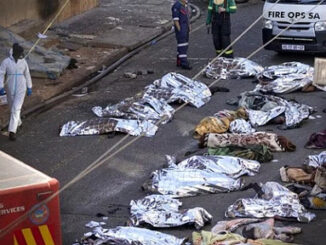
Emergency crews expected to find more victims as they worked their way through the building, a process slowed by the conditions inside. Dozens of bodies were lined up on a nearby side road, some in body bags, and others covered with silver sheets and blankets.
Another 52 people were injured in the blaze, which broke out at about 1 a.m. in the heart of Johannesburg’s central business district, Johannesburg Emergency Services Management spokesman Robert Mulaudzi said.
Abandoned and broken-down buildings in the area are common and often taken over by people desperately seeking some form of accommodation. City authorities refer to them as “hijacked buildings.”
Mulaudzi said the death toll was likely to increase and more bodies were likely trapped inside the building. The fire took three hours to contain, he said, and firefighters had only worked their way through three of the building’s five floors by mid-morning.
“This is a tragedy for Johannesburg. Over 20 years in the service, I’ve never come across something like this,” Mulaudzi said. The building’s interior was effectively “an informal settlement” where shacks and other structures had been thrown up and people were crammed into rooms, he said. There were “obstructions” everywhere that would have made it very difficult for residents to escape the deadly blaze and which hindered emergency crews trying to work through the site, according to Mulaudzi.
Search teams found 73 bodies. The chance of anyone being found alive hours after the fire broke out was “very slim,” he said.
City officials said 141 families were affected by the tragedy, although they were not able to immediately say how many people were in the building at the time of the blaze. Many of them were believed to be foreign nationals, officials said.
A witness who didn’t give his name told television news channel eNCA that he lived in a building next door and heard people screaming for help and shouting “We’re dying in here” when the fire started. Mgcini Tshwaku, a local government official, said there were indications that people lit fires inside the building to keep warm in the winter cold. Officials are looking into the cause of the blaze.
After the fire was extinguished, smoke still seeped out of the windows of the blackened building as daylight broke. Strings of sheets and other material hung out of some of the broken windows. It was not clear if people used those items to try and escape the fire or if they were trying to save their possessions. (AP)
Month: September 2023
-

Death toll rises to 73 in Johannesburg building fire, many of them homeless, authorities say
-

Rights Court agrees to hear French prostitution law appeal
STRASBOURG (TIP): The European rights court said on August 31 it would hear an appeal by sex workers against a French anti-prostitution law which they say has shattered their livelihoods and driven them underground.
Sex workers technically operate legally in France, but the country in 2016 moved against their clients by outlawing the purchase of sexual acts in the hope of curbing the sex trade.
Arguing that their livelihood is unjustly threatened by the law, 260 sex workers backed by several groups filed an appeal with the European Court of Human Rights (ECHR) in 2019 after exhausting all legal recourse in France. Sex workers and their associations regularly protest against the law with action days and street marches.
The Strasbourg-based court said it agreed to rule on the matter after hearing several statements from sex workers — French and foreign — about how precarious their lives had become since clients stayed away because of fear of the law.
“According to the claimants who legally work as prostitutes, the criminalisation of prostitution clients has pushed prostitutes into clandestinity and isolation, has exposed them to a heightened risk to their physical integrity and their lives, and impacts their freedom to decide on how to lead their private lives,” the court said in a statement.
“They condemn the criminalisation of the purchase of sexual acts which targets even consenting adults,” it said.
The sex workers say the French law contravenes several articles of the European Convention on Human Rights, including on the protection of life and against inhumane treatment.
The court’s agreement to hear the case is in itself already a victory, given that it usually throws out more than 90 per cent of all applications.
The 2016 French law aimed to curb prostitution by penalising clients rather than sex workers, who are categorised as victims of the sex trade in need of protection.
Clients risk a fine of 1,500 euros ($1,600) when caught, rising to up to 3,750 euros for repeat offenders with a possible obligation to attend sensitivity training.
The court will make its ruling in the coming months. (AFP) -

Claire Coutinho: Newest Indian-origin minister in Rishi Sunak Cabinet
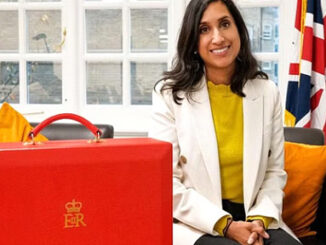
LONDON (TIP): Claire Coutinho, a close aide of British Prime Minister Rishi Sunak, got a big promotion as his new Energy Security and Net Zero Secretary in a mini reshuffle on August 31. Coutinho, 38, becomes the second Goan-origin minister after Home Secretary Suella Braverman in the Sunak Cabinet and has a tough brief ahead of her as energy costs have been soaring in the wake of the Russia-Ukraine conflict.
She has committed herself to work on safeguarding energy security and reducing bills for families struggling with a cost-of-living crisis. In her first Cabinet role, Coutinho replaced Grant Shapps after he was promoted to the post of Defence Secretary following the resignation of Ben Wallace.
“I am delighted to have been appointed Secretary of State for Energy Security and Net Zero. I will work with the Prime Minister to safeguard our energy security, reduce bills for families, and build cleaner, cheaper, homegrown energy,” she tweeted.
Like Sunak, UK-born Coutinho grew up in a family connected with the National Health Service (NHS) and was in the field of investment banking before joining politics.
The pro-Brexiter with a Master’s degree in Maths and Philosophy from Oxford University was elected member of Parliament for East Surrey, south-east England, in 2019 with a promise to serve people. “I was elected the Member of Parliament for East Surrey in 2019. Growing up, I watched my parents work as GPs (general practitioners) in the NHS, listening to people’s problems and solving them as best they could. It is in that spirit that I hope to serve the people of East Surrey,” reads the London-born politician’s mission statement as a Tory MP. Sunak’s decision to catapult her into the cabinet – as its youngest member in fact – marks her out instantly as a major figure in Conservative politics, present and future, the BBC reported. She says she started her career at Merrill Lynch, before leaving the City of London firm for a career in social justice policy.
“I focused on a wide range of issues from education to financial inclusion, to the regeneration of deprived communities including at the Centre for Social Justice. I then spent two years within government as a Special Adviser, including at HM Treasury. My local priorities include fixing our roads, supporting the local economy, and protecting our environment,” she adds in her mission statement.
Having worked as a special adviser in the UK Treasury department, Coutinho went on to become an aide to Sunak in his role as Chief Secretary to the Treasury and later Chancellor of the Exchequer. She backed the British Indian candidate for Prime Minister in his leadership bid last year and was later rewarded with a junior ministerial post in the Department for Education. “Big thank you to my stellar team who supported me as Minister for Children, Families and Wellbeing. I know my successor, David Johnston, will be champing at the bit to improve the lives of children and families up and down the country,” she tweeted after her promotion.
“From the largest expansion of childcare in history to our new Freedom of Speech Act to driving forward reforms in SEND, for foster carers, in children’s social care and for childminders. It has been a privilege to work with so many talented people,” she said. (PTI) -
At least 48 people killed in crackdown on anti-UN protest in eastern DR Congo
DR Congo (TIP): At least 48 people have been killed in a crackdown on an anti-UN protest in eastern DR Congo, according to local sources and official documentation seen by AFP on August 31.On August 30, Congolese soldiers cracked down on a religious sect planning a demonstration against United Nations peacekeepers in the city of Goma.
Some ten people were initially reported killed, including a police officer who was lynched by sect members.
But an internal army document consulted by AFP, and verified by security officials, gave a toll of 48 people killed in the crackdown — in addition to the killed policeman — and 75 people wounded.
The document also says that soldiers seized a number of bladed weapons and arrested 168 people, including the sect’s leader.
Congolese pro-democracy activist group LUCHA also stated on Thursday that the number of protesters killed was “close to 50”.
Two unverified video clips circulating on social media on Thursday appeared to show Congolese soldiers throwing lifeless bodies — some drenched in blood — into the back of a military vehicle.
The UN peacekeeping mission in the region is one of the largest and costliest in the world, with an annual budget of about $1 billion (915,000,000 euros). But the UN comes in for sharp criticism in the central African nation, where many people perceive the peacekeepers as failing to prevent conflict (AFP). -
Niger military regime orders expulsion of French envoy
NIAMEY (TIP): Niger’s new military rulers have withdrawn the French ambassador’s diplomatic immunity and ordered police to expel him, according to a letter seen on August 31 by AFP. The envoy “no longer enjoys the privileges and immunities attached to his status as a member of the diplomatic personnel in the French embassy,” according to their letter, dated Tuesday, to the foreign ministry in Paris.
“(His) diplomatic cards and visas and those of the members of his family have been cancelled. The police have been instructed to proceed to his expulsion,” it said.
The move follows a coup in the troubled Sahel state on July 26 that toppled a close French ally, President Mohamed Bazoum.
Relations with France spiralled downwards after Paris stood by Bazoum and refused to recognise Niger’s new rulers. On Friday, the authorities gave French envoy Sylvain Itte 48 hours to leave the country. France refused the demand, saying that the government had no legal right to make such an order. On Tuesday, French President Emmanuel Macron singled out Itte for praise after he remained at his post.
French military spokesman Colonel Pierre Gaudilliere on Thursday warned that “the French military forces are ready to response to any upturn in tension that could harm French diplomatic and military premises in Niger”. “Measures have been taken to protect these premises,” he said. (AFP) -

Suicide bomber attacks security convoy in NW Pakistan killing 9 soldiers, says military
PESHAWAR, Pakistan (TIP): A suicide bomber riding on a motorcycle targeted a security convoy in northwest Pakistan on August 31, killing at least nine soldiers and wounding 20 others, the military and three security officials said, a sign of increasing militant violence.
The attack happened in Bannu, a district of Khyber Pakhtunkhwa province bordering Afghanistan, the military said in a statement. It said five soldiers were wounded in the attack.
However, security officials put the number of wounded persons at 20. They spoke on condition of anonymity because they were not authorized to speak to the media on the record.
There was no immediate claim from any group, but the suspicion is likely to fall on the Pakistani Taliban, who have stepped up attacks on security forces since 2022. Authorities say the insurgents have found sanctuaries and have even been living openly in Afghanistan since the Taliban takeover, which also emboldened them,
Bannu is located near the former militant stronghold of North Waziristan, which served as a base for insurgents until the army years ago announced that it had cleared the region of local and foreign militants. Occasional attacks have continued, however, raising concerns that the local Taliban, known as Tehrik-e-Taliban Pakistan, are regrouping in the area. The Pakistani Taliban are a separate group but allies of the Afghan Taliban, who seized power in Afghanistan in 2021 as the US and NATO troops were in the final stages of their pullout. (AP) -
Taliban say security forces will stop women from visiting Afghan national park
ISLAMABAD (TIP): The Taliban will use security forces to stop women from visiting one of Afghanistan’s most popular national parks, according to information shared by a spokesman for the Vice and Virtue Ministry.
The ministry alleges that women have not been observing the proper way to wear the hijab, or Islamic headscarf when going to Band-e-Amir in the central Bamiyan province.
This comes a week after the minister, Mohammad Khalid Hanafi, visited the province and told officials and religious clerics that women haven’t been adhering to the correct way of wearing the hijab, asking security personnel to stop women from visiting the tourist hotspot.
“Going sightseeing is not a must for women,” Hanafi said.
Ministry spokesman Molvi Mohammad Sadiq Akif shared a report of Hanafi’s remarks late Saturday night, including the use of security forces, clerics, and elders to carry out Hanafi’s order. A recording of the minister’s speech in Bamiyan, aligning with Akif’s report, was shared on social media.
Akif was not immediately available for comment on Sunday.
“Not content with depriving girls and women of education, employment, and free movement, the Taliban also want to take from them parks and sport and now even nature, as we see from this latest ban on women visiting Band-e-Amir,” said Heather Barr, the associate women’s rights director at Human Rights Watch in an emailed statement. “Step by step, the walls are closing in on women as every home becomes a prison.”
Last November, the Taliban-led government barred women from using public spaces, including parks, saying that they were not wearing the hijab correctly or following gender segregation rules.
Since taking over the country on August 15, 2021, after the withdrawal of U.S. and NATO forces, they have imposed several restrictions targeting Afghan girls and women, including stopping girls from going to school beyond the sixth grade, and prohibiting Afghan women from jobs at local and non-governmental organizations while cracking down on media.
These harsh measures triggered a fierce international outrage, including from Muslim-majority countries.
Band-e-Amir is a major tourist attraction in Bamiyan. It became the country’s first national park in 2009 and pulls in thousands of visitors every year.
It is a major source of income for locals and their sightseeing, restaurant, hotel, and handicraft businesses. (AP) -
Former Thai PM Thaksin Shinawatra jailed after returning from exile, requests a royal pardon
BANGKOK (TIP): Former Thai Prime Minister Thaksin Shinawatra, who recently returned from exile and began serving an eight-year prison term, has requested a royal pardon, a senior member of the outgoing Cabinet said on August 31. Thaksin was moved from prison to a state hospital soon after his return last week for reported ill health.
Wissanu Krea-ngam, who is acting justice minister as well as a deputy prime minister, said he has received a letter from Thaksin requesting a pardon, but declined to say how long it would take to be approved. “The process of approval entirely depends on his royal grace,” he said. Thailand is a constitutional monarchy, giving King Maha Vajiralongkorn the final word on pardons of convicted criminals.
Thaksin, by promoting populist policies and using the fortune he made in telecommunications to build his own political party, was elected prime minister in 2001 and easily reelected in 2005. He was ousted in a military coup in 2006 and accused of corruption, abuse of power and disrespecting the monarchy.
He returned last week after 15 years of self-imposed exile and was immediately sent to Bangkok’s main prison because of several criminal convictions he has decried as politically motivated. Hours after Thaksin’s return, Srettha Thavisin of the Pheu Thai party won enough votes in Parliament to become prime minister, ending more than three months of uncertainty after May’s general election. Pheu Thai is the latest in a string of parties affiliated with Thaksin. To achieve a parliamentary majority, Srettha formed a coalition with pro-military parties linked to a 2014 coup that ousted a Pheu Thai government formed by Thaksin’s sister, Yingluck Shinawatra. Pheu Thai had vowed during the May election campaign that it would not join with any pro-military party in forming a government. It also excluded the progressive Move Forward Party, which won the most seats and votes in the polls.
It is widely believed that Thaksin returned out of hope that a new government friendly to him would reduce his sentence and that he may have made a deal with authorities, although he has said his decision had nothing to do with the Pheu Thai party’s bid for power.
Srettha told reporters on Thursday that he expects to submit a list of his new Cabinet ministers for royal endorsement on Friday. Wissanu said Thaksin’s health condition could support his case for a pardon. (AP) -

US-India Chamber of Commerce, Dallas/Fort Worth organized a Wellness & Workplace Conference


DALLAS (TIP): On Thursday, August 24, we heard from an all-star lineup of DFW’s healthcare industry leaders at our second annual Wellness and Workplace Conference. State Senator Nathan Johnson reported on healthcare legislation that passed in the last legislative session. Keynote speaker Dr. Fred Cerise, President and Chief Executive Officer of Parkland Health, shared about the latest efforts to improve health outcomes and bridge the gap in access to healthcare in DFW.Our Incorporating Technology in Healthcare panelists Vince Doyle, Chief Information Officer, Medical City Healthcare, Andrew Olowu, Chief Technology Officer, Axxess, Dr. Hiren Patel, Chief Medical Officer, UnitedHealthcare Texas & Oklahoma Markets, and Badruddin Pitter, Founder and CEO, Callcare24, discussed how technology is changing the practice of medicine and gave tips on how to protect patient privacy.
Our Mental Health in Adults and Children panelists Sue Schell, VP and Clinical Director of Behavioral Health, Children’s Health, Dr. Hicham Ibrahim, Associate V.P. and Chief Medical Officer of Ambulatory Service, UT Southwestern Medical Center, and Dr. John Bennett, Psychiatrist, Metrocare, shared information about resources that are available to improve mental health and also discussed the new psychiatric hospital coming to Dallas in 2025.
-

California Assembly passes anti-caste discrimination bill
WASHINGTON, D.C. (TIP) An anti-caste discrimination bill has been passed by the California State Assembly that seeks to combat caste discrimination and strengthen protections for marginalized communities across the state. The bill was passed by the Assembly on Monday, August 28. It now heads to Governor Gavin Newsom for his signature to make it into law, making California the first US state to add caste as a protected category in its anti-discrimination laws.
The bill passed by the California Assembly seeks to combat caste discrimination and strengthen protections for marginalized communities across the state. It was first introduced by State Senator Aisha Wahab and was supported by several caste equity civil rights activists and organizations from across the country.
Thank you to all the Assembly members who voted in support of SB 403 today. We are protecting people from a long-standing form of discrimination with SB 403, Wahab said in a tweet.
A coalition of Hindus of North America (CoHNA) described it as a black day in California history.
The legislation will revise California’s Unruh Civil Rights Act, Education, and Housing codes by adding caste as a protected category under ancestry. Since its introduction earlier this year, the bill has flown through the different steps in the legislature, achieving a largely bipartisan consensus across multiple labor and civil rights entities.
The Assembly Vote is a win for the ages. After conducting over 700 advocacy meetings across the entire state of California the people have spoken resoundingly for caste equity protections.
As a Californian who has endured caste my whole life I know the struggles and adversity caste-oppressed Californians have unjustly faced firsthand, said Thenmozhi Soundararajan, executive director of Equality Labs.
Caste-oppressed people have organized for over twenty years so we could have lives free from violent attacks and discrimination; now, the California Assembly has voted decisively to bring us closer to victory, she said.
As the bill progresses we ask Governor Newsome to sign this bill once it crosses his desk so that California can lead the nation and the world to ensure that our institutions are free from discrimination and ensure opportunity for all, Soundararajan said. In a statement, CoHNA said the passing of a bill that is NOT facially neutral and written to specifically target Hindu Americans is the latest in a long line of unjust bills, like the Asian Exclusion Act, which were popular at the time of their passing and were used to target minorities of color.
This bill will be no different and is indeed worse since it ignored the mounting body of evidence about the overreach of CRD in the Cisco lawsuit, the flawed data from a hate group that underpinned the whole effort, the championing of this bill by foreign actors and the rising numbers of Dalit and Bahujan voices speaking against it, it said.
Amar Shergill, California Democratic Chair of the Progressive Caucus said there is broad consensus in California among Democrats and Republicans that discrimination, in any form, is unacceptable.
Pooja Ren, Hindus for Caste Equity said as a dalit Hindu, she wants to make sure that they can make workplaces safe for all workers, as well as all schools for their children. Future dalit generations in the diaspora must be protected. Pathways must be paved for our children to feel safe from casteist bullying and discrimination from casteist parents. We must have justice when caste discrimination occurs.
We are a community that has suffered for centuries, and protection will give us the human rights as residents of California to live a life free from caste discrimination, she said. Tarina Mand, South Asian Bar Association Civil Rights Taskforce said California has taken a bold step to dismantle caste discrimination in a call for equity and a recognition that deep-seated biases can be passed through a community for generations and across continents.
As our communities process some incredibly disheartening judicial decisions in recent months about the value of our diverse national spirit, the passage of SB-403 today stands out as a watershed moment, he said.
Dalit activist Deelip Mhaske said amidst the shifting tides of the world, California’s adoption of the Caste Law stands as a groundbreaking testament, echoing far beyond its borders.
The resounding influence of the Indian diaspora reverberates through the corridors of power, with four Indians eyeing the presidential throne in 2024, and multinational giants swayed by the decisions of Indian diaspora leaders, said Mhaske, president of the Foundation For Human Horizon.
(Source: PTI) -

US Congress asked to update ‘woefully outdated’ immigration system
WASHINGTON, D.C. (TIP): The Biden administration has asked the Congress to update the woefully outdated immigration system, the White House said Monday, August 28. “As we have said many times before, this is an outdated immigration system. We’ve asked the Congress to update our woefully outdated immigration system. We’ve been very clear on that, including, including the temporary visa programs that haven’t been updated in more than two decades,” White House Press Secretary Karine Jean-Pierre told reporters at her daily news conference. Under the current regulations, workers on certain temporary visas usually have 60 days to secure new employment, pursue a different visa classification or make preparations to depart the United States.
“So, the Congress needs to do their job and pass legislation, updating our immigration laws to reflect the needs of where we are, where we are currently in this 21st century economy,” she said.
On the first day of his administration, President Joe Biden put forth an immigration reform legislation because he took this very seriously, the White House Press Secretary said.
He wanted to make sure that was the first piece of legislation that he put forward on Day One because “this is such a broken system”, Jean-Pierre said in response to a question.
-

The message of Interfaith Actions comes loud and clear from the Parliament of World Religions

Islam, Sikh, Hindu, Jain and Christian faith leaders at the All-Faith Seminary International booth of Parliament of World Religions Expo. CHICAGO, IL (TIP): The message resonates with clarity and conviction: We must join hands, unite, and safeguard the religious rights of all faiths. The Parliament of World Religions (PoWR) has traversed a remarkable journey since 1893. The 1893 Parliament of the World’s Religions brought together 400 men and women, representing 41 diverse religious traditions. It was during this momentous gathering that Catholicism and Judaism gained recognition as significant American religions, and the luminous traditions of Hinduism and Buddhism were unveiled to the Western world.
In the contemporary landscape, where the specters of religious fanaticism and state-sanctioned alienation loom large, the initial tableau of the plenary challenges our reality. The camaraderie among individuals from Mexico, China, and India on the dais extends a warm invitation to stakeholders of faith, beckoning them towards a realm of peace, harmony, and genuine discourse on pressing matters. Chicago’s atmosphere was electric, and Mayor Brandon Johnson astutely proclaimed, “In this moment, seeking refuge solely within scriptures and holy texts falls short; it is essential to exhibit the most magnificent creation and power of humanity – the act of love.”
PoWR 2023 resounded as a summons to conscience. The central theme was the defense of freedom and Human Rights. A sojourn through the exhibition hall became a journey into one’s moral compass. Here, spiritual traditions, religious collectives, faith-based seminaries, modern mantras for bonding, ancient sutras for equilibrium, poignant reflections on religious animosity, organizations dedicated to social progress, and revitalizing yoga meditations converged. One stall orchestrated interfaith harmonies through melodious songs, while another presented sobering data on minorities targeted by right-wing regimes. Tokens of memory took the form of pens, badges, shirts, chocolates, pins, and meticulously annotated leaflets and brochures. The Boston School of Theology extended courses to fathom the nuances of various religions, while the Divine Life Society resonated with masses, nurturing understanding through the prism of yoga. The panorama was a tapestry woven with the threads of diversity.
The PoWR embodies an idea. Over 250 breakout sessions grappled with diverse subjects. The inner dialogues, cast as a broad mandate, often witnessed some gems eclipsed in the shadows. The spectrum of topics, spanning the gamut from deconstructing religious patriarchy to serendipitous revelations in the realm of anti-nuclear activism, enticed discerning minds. Yet, amidst the symphony of simultaneous sessions, flowing with the current was akin to chasing ephemeral wisps. The plenary sessions, a harmonious ensemble of thought, struck deep chords. The Women’s Assembly held profound significance, addressing the very core of female participation within faith-infused societies. Amidst this resplendence, the assembly advocating climate action, the council amplifying indigenous voices, and the solemn rite of climate repentance shone a luminous light on faith’s role.

Packed Hall for the Closing Plenary or Parliament of World Religions in MCCormick Place of Chicago. Within the tapestry of aspirations, it was religious fanaticism that garnered the earnest ears of all. Rev. Jen Butler, the visionary founder of Faith in Public Life, lamented, “Religion, once the sanctuary of moral teachings, now stands manipulated, its moral fabric corroded by heinous acts of violence. Autocratic forces wield religion as an instrument for amassing power and maintaining control, from the prism of Russian Orthodox nationalism to the fervor of Catholic nationalism in Hungary and Poland, from India’s Hindutva to Israel’s nascent ruling coalition’s Jewish nationalism, and further to the evangelical and Pentecostal strains of religious nationalism in the U.S. and Brazil.” The expo center echoed this sentiment with a clamor of urgency.
The Langar, an enchanting ritual embedded in past PoWR gatherings, enchanted thousands. Orchestrated by the Birmingham-based Nishkam Seva Jatha, this Sikh tradition was brought to life under the guidance of Bhai Sahab Mohinder Singh, who joyously proclaimed adherence to Sikh guru teachings through service to the world, transcending all biases. Faith leaders, adorned with white scarves, formed orderly queues, savoring Indian delicacies with hearts full of contentment. Within the tent, a grand theater of interfaith harmony and service unfolded. Nishkam Seva Jatha’s legacy of offering free langar since the 2004 PoWR was radiant.

Expo area of Parliament of World Religions. More than 100 stalls from various Faith traditions. A poignant tribute unfolded for the 30,000 children lost to gun violence. Scraps of orange fabric coalesced into labyrinthine patterns or transformed into raw tools by the skilled hands of Shane Claiborne’s blacksmith forge. His declaration reverberated, “When we mold that metal, it resounds with the proclamation that the world can be reshaped.”
The Parliament of World Religions 2023 encapsulates the elements required for reimagining our perceptions of faith. It beckoned forth distinguished faith leaders, entwining them in conversations that bear rich fruit. Concealed within closed chambers, the International Religious Freedom Roundtable murmured profound secrets, reminiscent of the hallowed halls of Washington. The Indian delegation of interfaith leaders radiated with fervor. The quest for a better world necessitates the exchange of ideas. PoWR has evolved into a pertinent platform for intricate discussions, where faith assumes a fresh and actionable agenda.
(Photographs and Press release by Bhavya Srivastava)
-

IDPUSA 12th India Day Parade in Hicksville witnessed enthusiastic participation of the community
Mallika Sherawat and Khuda Baksh were the main attractions

Grand Marshal Naveen Shah speaking. L to R: Harry Singh Bolla, Mallika Sherawat, Kanak Golia, Ravi Chopra, Naveen Shah, Deepak Bansal. 
Harry Singh Bolla addressing the gathering. L to R: Vimal Goyal, Mallika Sherawat, Kanak Golia, Ravi Chopra, Harry Singh Bolla, Deepak Bansal, and IDPUSA Founder Bobby Kalotee, 
L to R: Beena Kothari, Consul Community Affairs Achanthodiyal Kesavan Vijayakrishnan (3rd from the left), and Nassau County Legislator Rose Marie Walker. HICKSVILLE, NY (TIP): The 12th IDP USA India Day Parade on August 27, with a record number of floats and booths, clearly indicated the efforts of the organizers and the participation of the community.
As before, the Grand Marshals and sponsors extended greetings on the occasion before the parade started. Those who addressed the gathering included Nassau County Executive Bruce Blakeman, Town of Oyster Bay Supervisor Joseph S. Saladino, Grand Marshals Naveen Shah, Harry Singh Bolla, Harshad Shiv Bhai Patel, and the celebrity Grand Marshal Mallika Sherawat. The Consulate General of India was represented by Consul Community Affairs Mr. Achanthodiyal Kesavan Vijayakrishnan.
Co-Presidents Deepak Bansal and Vimal Goyal also spoke on the occasion. IDP Founder Bobby Kalotee welcomed and thanked the dignitaries and celebrities for their presence. The parade started from Patel Brothers and ended at LIRR Parking lot on West John Street in Hicksville where around 35 booths and an entertainment stage were set up. Well known singer Khuda Baksh regaled the visitors with his melodious singing.

The gathered crowd at Patel Brothers listening to the speakers 

Some booths -

Indian-American arrested in New Jersey in USD 13 million tech fraud
The count of conspiracy to commit wire fraud carries a maximum penalty of 20 years in prison
NEWYARK, NJ (TIP): An Indian American has been arrested in New Jersey on charge of being part of a technical support scam that targeted more than 7,000 victims defrauding them of more than USD 13 million, a US Attorney announced Thursday, August 31.
Charged with one count of conspiracy to commit wire fraud, Manoj Yadav appeared before US Magistrate Judge José R. Almonte in Newark federal court.
“The defendant and his conspirators are alleged to have misled their numerous victims into thinking that they were a legitimate technology support company affiliated with a major software company,” US Attorney Philip R Sellinger said. After claiming to provide technical support for issues involving the software company’s popular accounting software, they allegedly charged the victims exorbitant fees for purported support services that were not authorized by the software company, he alleged.
“We allege Yadav lied to software users and forced them to pay for services that would usually come free with their initial purchase,” FBI Special Agent in Charge James E Dennehy said.
The count of conspiracy to commit wire fraud carries a maximum penalty of 20 years in prison and a fine of USD 2,50,000 or twice the gross profit or loss caused by the offense, whichever is greatest.
“The amount he’s accused of stealing from his victims and the number of victims seem shocking; however, we are seeing an incredible increase in all types of tech support scams. The fraudsters are pretty savvy in how they con money out of people, even those of us who think we’re smart enough to not fall for it. If you think you’re a victim, please reach out to the FBI,” Dennehy said.
According to federal prosecutors, from 2017 through 2023, Yadav and his conspirators, many of whom were in India, fraudulently held themselves out as a technology support company affiliated with a major US business and accounting software company that developed and sold a widely used accounting software product.
They operated under multiple fraudulent business names, including “Phebs Software Services, LLC,” “Phebs Software Services,” “PN Bookkeeping Services,” “Phebbs Consulting,” “Quickbooks Tech Assist,” “Quickbook US,” “Quickbooks Accounting,” and “Quickbooks Support Team.” According to court documents, the conspirators would contact victims under the guise of fixing technical issues they faced with the accounting software. After receiving tech support from the conspirators under these fraudulent pretenses, the victims would either be charged exorbitant fees or additional subscription fees.
These “services” were all fraudulent: They would not cost any additional money for customers who contacted the actual software company, and the software company never authorized Yadav or his conspirators to act on its behalf or charge any fees.
Yadav personally participated in the scheme by charging the victims for the fraudulent technology support services and funnelling millions of dollars from these victims to his conspirators, it alleged, adding that he fraudulently obtained these funds through the Phebs Software Services, LLC, which he himself formed.
That entity did business as both “Phebs Software Services” and “Quickbooks Accounting.” Yadav also used these entity names to falsely hold himself out to banks and victim customers as an accounting company legitimately affiliated with the software company. He did this to prevent charge backs, Better Business Bureau complaints, and the closure of bank accounts. Yadav sent his conspirators over USD 13 million in funds obtained from victims and would routinely keep approximately 17 per cent when he wired funds to the conspirators, it said.
(Source: PTI)
-
Acclaimed Filmmaker Neha Lohia, Author Kelly Tallaksen, and Neurologist Specialist Dr. Candice J. Perkins Unite for ‘The Voice of Spirit’ – An Extraordinary Cinematic Voyage into Inner Dimensions

Neha Lohia (center) with Kelly Tallaksen and Dr. Candice J. Perkins NEWARK (TIP): In an unprecedented collaboration and an extraordinary convergence of talent, acclaimed filmmaker Neha Lohia, renowned author Kelly Tallaksen, and esteemed vascular neurology specialist Dr. Candice J. Perkins have united to create an animated film titled “The Voice of Spirit.” This visionary project is poised to revolutionize the cinematic landscape by exploring terrain within the human psyche where science is only just now beginning to venture.
“The Voice of Spirit” is an ambitious extension of Kelly Tallaksen’s critically acclaimed book, “The Voiceless Soul,” brought to life under the masterful direction and creative guidance of filmmaker Neha Lohia and medically informed scientific inputs by Dr. Perkins. This groundbreaking cinematic endeavor fuses spirituality, science, and personal growth, offering viewers an unparalleled journey of self-discovery and transformation. With its rich insights and the power to challenge preconceived notions, the film dares to unlock the hidden potential within each of us, seamlessly bridging the literary and cinematic worlds.
This unique execution will be a collaborative effort between American and Indian talent. Animation teams from India will be working on the film, bringing their expertise to life, while the creative teams from the USA will be responsible for designing characters and storyboards. This harmonious collaboration reflects Neha’s background, originating from India and now residing in the USA, creating a fusion of artistic perspectives that promises to elevate the cinematic experience.
Neha Lohia, an award-winning filmmaker with a remarkable track record spanning over two decades, leads this project as the director, co-producer, and project head. With her visionary approach and commitment to pushing the boundaries of storytelling, Neha ensures that “The Voice of Spirit” will transport audiences to unexplored realms and leave an indelible mark on the cinematic landscape.
Speaking about the profound collaboration, Neha Lohia expressed her unwavering passion, stating, “I am humbled and exhilarated to embark on this extraordinary journey alongside Kelly Tallaksen and Dr. Candice J. Perkins. Our collective vision is to craft a film that transcends the limits of imagination, much like mega films such as ‘Star Wars’ and ‘Avatar’ transported us into their mesmerizing depictions of fantastical worlds outside. Our aim, however, is to delve deeper within ourselves into the inner worlds, peering into the multidimensional inner realms that exist within us. ‘The Voice of Spirit’ is a humble effort towards an exploration of the boundless human potential and potent healing waiting to be discovered.”
Dr. Candice J. Perkins, a pioneering vascular neurology specialist and co-producer of the film, brings her scientific expertise and profound understanding of the mind-body-spirit connection to the project. Collaborating with Neha and Kelly, Dr. Perkins aims to bridge the gap between science and spirituality, unraveling the mysteries of consciousness and unveiling the uncharted dimensions of human existence.
Dr. Candice J. Perkins enthusiastically shares her vision, stating, “Through ‘The Voice of Spirit,’ we aim to merge the wisdom of science and spirituality, inviting audiences to embark on an extraordinary odyssey within their own consciousness. We seek to unlock the potential for healing, growth, and self-realization that lies dormant within each individual. This collaboration between three visionary artists promises to deliver a profound cinematic experience that will captivate and inspire audiences on a cosmic scale.”
Kelly Tallaksen’s professional education includes transpersonal hypnosis, holistic psychology, metaphysics, and spiritual healing. She is a guest author for several digital magazines and has been a guest speaker on several podcasts. She is also a public speaker and educator in metaphysical hypnosis and healing at a soul level. Kelly is a member of the National Guild of Hypnotists, one of their instructors, and the President of the Long Island Chapter. The exceptional author of “The Voiceless Soul” not only serves as a co-producer but also lends her voice talent to breathe life into one of the main characters. With her gift for poetic storytelling and unique healing perspective, Kelly’s involvement adds authenticity and depth to the film, guiding audiences on a transformative journey to reconnect with their inner voice.
Kelly Tallaksen expresses her excitement, saying, “Working on ‘The Voice of Spirit’ has been an extraordinary odyssey of creativity and exploration. This collaborative effort unites visionaries from diverse disciplines, enabling us to create something truly transformative. We are thrilled to embark on this cinematic adventure, one that will transport audiences to unimaginable depths and ignite the flames of self-discovery within their souls to bring about the healing that we all as humans deserve to experience and live with that inner knowing that we are all here by a greater design and that we are always taken care of only if we dare to listen to that voice of our spirit.”
As “The Voice of Spirit” enters the pre-production stage, it carries with it the anticipation of a profound and enlightening cinematic experience. Rooted in unity, healing, and self-discovery, this joint endeavor of talents from east and west seeks to holistically empower individuals, transcending boundaries and ushering in a new era of introspection and enlightenment.
To know more about Kelly Tallaksen and her work: https://heartsinharmonyhypnosis.com/
To know more about Neha Lohia and her work: https://nehalohia.com/ | https://consciouscontentcompany.com/
For press inquiries, please contact: info@thevoiceofspirit.com | filmwithher@gmail.com
-

Global AI development needs robust guard rails
Amid fears of unregulated growth of cutting-edge technology, there are concerns that innovation could be the end of civilization
“IT WAS THE LAUNCH OF CHATGPT BY OPEN AI WITH THE SUPPORT OF MICROSOFT EARLIER THIS YEAR THAT MADE THE WORLD RECOGNIZE THE POTENTIAL OF AI. IT HERALDED THE AVAILABILITY OF GENERATIVE AI FOR USE BY EVERYONE. THE DIFFERENCE BETWEEN NORMAL AND GENERATIVE AI IS THAT THE FORMER CAN ANALYZE DATA, WHILE THE LATTER CAN USE DATA TO CREATE SOMETHING NEW. MUCH HAS BEEN DISCUSSED ABOUT THE WAY IN WHICH THIS FRONTIER TECHNOLOGY CAN HIT JOBS IN NUMEROUS ECONOMIC SECTORS, BUT THE ETHICAL ASPECTS OF ITS MANIFOLD APPLICATIONS ARE OF EVEN GREATER CONCERN. LEADERS IN THE INFORMATION TECHNOLOGY INDUSTRY HAVE VARYING VIEWS ON THE ISSUE. TESLA AND X OWNER ELON MUSK HAS BEEN WARNING ABOUT THE NEGATIVE ASPECTS OF ALLOWING UNREGULATED GROWTH OF AI FOR QUITE SOME TIME. OTHERS ARE MUCH MORE SANGUINE ABOUT THE ISSUE, SUCH AS META CHIEF MARK ZUCKERBERG AND GOOGLE FOUNDERS LARRY PAGE AND SERGEY BRIN. THEY AGREE THAT REGULATION IS NEEDED, BUT DO NOT FEAR THAT IT COULD BE THE END OF CIVILIZATION, AS MUSK ONCE DECLARED.”

By Sushma Ramachandran The buzz around artificial intelligence (AI) is becoming louder by the day. The prospect that this technology may take over our lives in the coming decades is a very real possibility. In many ways, it has already done so. As I write this article on a tablet, prompts are repeatedly given, suggesting which words should follow in the sentence. Reminders to leave for the airport at a particular time pop up on the phone simply because an air ticket has been sent by email. Advertisements about a particular product — say, a handbag — surface on one’s electronic devices after the purchase of such an item. And the whole world knows about the various disembodied voices that do our work via audio commands. The names are varied — Siri, Alexa or Google. These are all AI-driven applications. But much more lies ahead. As they say in this country, picture abhi baaki hai.
It was the launch of ChatGPT by Open AI with the support of Microsoft earlier this year that made the world recognize the potential of AI. It heralded the availability of generative AI for use by everyone. The difference between normal and generative AI is that the former can analyze data, while the latter can use data to create something new. Much has been discussed about the way in which this frontier technology can hit jobs in numerous economic sectors, but the ethical aspects of its manifold applications are of even greater concern. Leaders in the information technology industry have varying views on the issue. Tesla and X owner Elon Musk has been warning about the negative aspects of allowing unregulated growth of AI for quite some time. Others are much more sanguine about the issue, such as Meta chief Mark Zuckerberg and Google founders Larry Page and Sergey Brin. They agree that regulation is needed, but do not fear that it could be the end of civilization, as Musk once declared.
It is in this backdrop that Prime Minister Narendra Modi’s call for a global framework to ensure the ethical use of AI needs to be considered carefully. He is not the first to suggest that there must be convergence among countries on AI regulation. But so far, this has only been talked about while differing routes are simultaneously being taken on regulation. The European Union (EU) has raced ahead and is already talking about an AI legislation. It is also the EU which has been taking the toughest stance against the tendency of Big Tech to improve profitability at any cost. Its new Digital Services Act will come into force shortly, imposing rules regarding content moderation, user privacy and transparency on Internet giants. It also has other measures in the pipeline, including stricter enforcement of the new Digital Markets Act and formulating an AI Act.
As for the US, it is negotiating the issue carefully. So far, it has proposed an AI Bill of Rights aimed at protecting citizens from the use of discriminatory algorithms by corporates. It is worried about the disruptive effect of ‘algorithmic bias’. For instance, companies can use algorithms with inherent biases while carrying out recruitment. The pitfalls of using facial recognition algorithms are similarly well known. The idea of adopting non-mandatory guidelines for regulation is clearly not considered the right way forward for India despite the two countries’ avowed interest in cooperating in the AI regulation arena.
The Telecom Regulatory Authority of India (TRAI) recently presented a paper recommending the establishment of a statutory regulatory authority for AI. It has outlined a risk-based framework with legally binding obligations, in cases that directly impact humans.
From this cursory outline of different approaches by various countries, it is clear that global convergence on AI regulation will not be an easy task. Amid the fears of an unregulated growth of such cutting-edge technology, there are concerns that innovation could be stifled by excessive rule-making. On the one hand, there is the Musk-led ‘doomsday group’, which submitted a petition by over 1,000 tech leaders and researchers to the US Government in March, seeking a pause on all AI development. The petition, also signed by Apple co-founder Steve Wozniak, has said the pause would enable the creation of ‘shared safety protocols’. It should be lifted only when there is confidence that the effects of AI systems will be positive and their risks will be manageable, the petition says.
On the other hand, there is another segment of the tech fraternity which dismisses such concerns as being overblown. These include Meta that feels the industry does not need a license-based regime. Google, which has already launched Bard as a competitor to ChatGPT, is more amenable to a risk-based approach to the regulatory process. None of the Big Tech firms, however, agree with the concept of a pause on development. Seven of these giants in the race to provide more powerful generative AI recently agreed to the US administration’s proposal for voluntary curbs on technology development, pledging to manage the risks of the new tools.
In other words, there are sharp divisions in the tech fraternity over the pace of AI regulation. Ensuring that these are bridged, should become the role of a global regulator that takes into account the profound possibilities of misuse by individuals, corporations or countries.
For the layman, this may sound like a high-tech issue. It is no longer at that esoteric level. It is this technology that is helping students write their academic essays. It is drafting mundane emails for executives at the workplace. And for journalists, it’s actually churning out articles for potential publication. Imagine my dismay when ChatGPT zipped out a 1,000 word article on the state of the economy within seconds. Luckily such essays tend to have fake data and misleading comments, termed as hallucinations. These are the flaws that still make the human element indispensable. But this is a rapidly advancing technology and these flaws could be ironed out soon. It is thus time to quickly place some guard rails on AI to control unrestricted growth and potential malpractices.
(The author is a Senior Financial Journalist)
-

U.S. to send $250 million in weapons to Ukraine
WASHINGTON, D.C. (TIP): The Biden administration announced on August 29 that it will send an additional $250 million in weapons and ammunition to Ukraine as part of its ongoing support of Kyiv’s counteroffensive.
The weapons will be drawn from existing U.S. stockpiles and will include mine-clearing equipment, artillery and rocket rounds, ambulances and medical gear, among other items and spare parts, according to the State Department. “The package will help Ukrainian forces on the battlefield and support its air defenses as Russia continues to launch brutal, brutal strikes against the people of Ukraine, including attacks this past week,” White House spokeswoman Karine Jean-Pierre said Tuesday. The State Department said the package contained AIM-9M missiles for air defense, High Mobility Artillery Rocket System munitions, 155mm and 105mm artillery ammunition and more than 3 million rounds of small arms ammunition.
The U.S. would have already run out of funding for the year to provide additional stockpile equipment to Ukraine but earlier this year realized the Pentagon had overvalued the equipment it had already sent, which freed up an additional $6.2 billion in funding. Ukraine has already received more than $43 billion from the U.S. since Russia invaded last year. Those funds have provided weapons systems like howitzers and millions of rounds of ammunition to fight back against the much larger Russian military. Due to the intense and bloody land war, now in its 18th month, much of the ammunition and weaponry has already been used up.
-

Ahead of G20 Summit, U.N. chief Guterres calls for reform of global financial institutions, climate action
UNITED NATIONS (TIP): As U.N. Secretary-General Antonio Guterres arrives in India next week for the G20 Summit, the message he will take to the grouping of the world’s biggest economies will be a strong call for reform of global financial institutions and action to combat climate change.
Mr. Guterres has a busy travel schedule lined up as he heads to the Africa Climate Summit in Nairobi, Kenya, on September 4-5; the ASEAN-UN Summit in Jakarta, Indonesia, on September 6-8; the G20 Summit in New Delhi, India and the Summit of the G77 and China in Havana, Cuba, on September 14-15.
India, president of the G20, will host global leaders, including U.S. President Joe Biden, for the Summit scheduled to take place on September 9 and 10 in New Delhi.
Speaking to UN reporters here on Thursday, August 31, Mr. Guterres said his message to G20 — the world’s biggest economies, which are also the biggest emitters — is that as climate chaos gathers pace, the world is looking to them. “They need to step up, accelerating their reduction of emissions — they account for 80% of them — and supporting countries that are already paying the price for decades of heating caused by fossil fuels,” he said.
Mr. Guterres added that G20 countries also need to look seriously into reform of global financial institutions, rules and frameworks to adapt them to today’s realities and more effectively enable developing countries to access the resources they need to invest in the Sustainable Development Goals. “We must overcome the inequalities and divisions that blight our world today, including here, at the United Nations. Unless we act now, the Sustainable Development Goals could become an epitaph for a world that might have been,” he said.
Mr. Guterres noted that the Africa Climate Summit, the UN-ASEAN Summit, the G20 Summit and the G77 Summit together “demonstrate the vitality of our multipolar international community.”
“And multipolarity in itself does not guarantee peace and stability. On the contrary, without strong multilateral institutions, multipolarity could be a factor for escalating geostrategic tensions, with tragic consequences,” Mr. Guterres said.
He noted that unless the international community strengthens and reforms global multilateral frameworks, fragmentation is all but inevitable. “And with fragmentation, confrontation can come. Multilateral institutions will only survive if they are truly universal,” he said.
“And I will therefore be carrying the same message to all these meetings – the strong call for reforms to bring our outdated multilateral institutions and frameworks into line with the economic and political realities of today’s world based on equity and solidarity,” Mr. Guterres said.
(Source: PTI)
-

INDIA bloc leaders hold talks to chart out roadmap for Lok Sabha poll
Around 63 representatives from 28 political parties to attend the meet, says Sharad Pawar
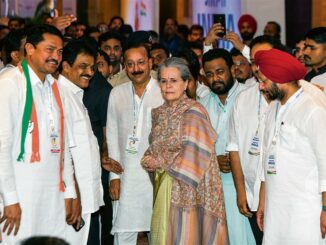
MUMBAI (TIP): The first leg of the India National Developmental Inclusive Alliance (INDIA) coalition’s third meeting kicked off on August 31 with an informal meeting in Mumbai. What may appear to be the largest single gathering of political leaders from many political parties, several leaders, including Sonia Gandhi, Rahul Gandhi, Mamata Banerjee, Lalu Prasad Yadav, MK Stalin, Sitaram Yechury, D Raja, Akhilesh Yadav, Ram Gopal Yadav, Mehbooba Mufti, Manoj Jha and Raghav Chadha, arrived in Mumbai on Thursday, August 31. Around 63 representatives from 28 political parties will be attending the meet, Nationalist Congress Party (NCP) supremo Sharad Pawar had said at a press conference earlier.
The multi-party group is expected to take various steps, including deciding on a coordination committee and unveiling a logo on Friday, September 1
“The meeting was good. You will know the details tomorrow,” Shiv Sena (UBT) president Uddhav Thackeray told reporters. Thackeray hosted a dinner for the leaders after the meeting.
The run-up to the meeting saw the Adani issue take center stage with Congress leader Rahul Gandhi holding a press conference on the premises of the hotel where the INDIA leaders had gathered.
Before the start of the meeting in the evening, Rahul was seen chatting with Shiv Sena (UBT) leaders Aaditya Thackeray and Sanjay Raut and NCP’s Supriya Sule and Jayant Patil.
Uddhav Thackeray and NCP supremo Sharad Pawar were also seen sharing light moments ahead of the meeting. Ahead of the crucial third round of discussions, the alliance on Wednesday, August 30, exuded confidence that it would provide a formidable alternative to the BJP. Sources said three north-eastern parties wished to join the alliance and this too would be discussed at the meeting. Alliance leaders had earlier met in Patna and Bengaluru. At the Mumbai meeting, they are expected to chalk out a common campaign strategy to take on the BJP-led NDA in the 2024 Lok Sabha elections. Earlier in the day, several leaders of the alliance said they had come together to “save the Constitution and democracy” in the country.
-

Dell, HP among 40 companies looking to set up plants in India
NEW DELHI (TIP): A total of 40 companies, including established players like Dell and Hewlett Packard (HP), are participating directly under a scheme to manufacture laptops, tablets and servers in India. Other major players such as Foxconn, Lenovo, Acer and ASUS are participating through their partner subsidiaries.These companies have applied for incentives under the Centre’s Production Linked Incentive (PLI) scheme for IT hardware. The scheme, application window for which ended on August 30, aims to promote the manufacturing of laptops, personal computers (PCs), servers and related devices.
-

Adani group used ‘opaque’ funds in stocks: Report
Rahul Gandhi asks Modi to come clean on the accusations
NEW DELHI / MUMBAI (TIP): The Adani group on Thursday, August 31, battled accusations about the use of “opaque funds from tax havens in its publicly trading companies in order to shield the identity of its business partners”. The allegations were made by the Organized Crime and Corruption Reporting Project (OCCRP), said to be a global network of investigative journalists focused on exposing graft and funded, among others, by George Soros and the Rockefeller Brothers Fund.
The charges came just two days after a preliminary probe by the Enforcement Directorate claimed that dozen companies, including foreign portfolio investors and foreign institutions, had taken up positions just two-three days before the first adverse report on the Adani group was published by Hindenburg Research on January 24. Some of these were taking short positions for the first time ever and were major beneficiaries from the crash in stock prices of Adani companies that followed the report’s publication.
The release of “Hindenburg 2.0”, however, has led to only ripples in the shares of Adani group companies as compared to the meltdown that occurred in January. Following the report’s release, the flagship Adani Enterprises fell by 3 per cent and the other group companies slid by one to five per cent.
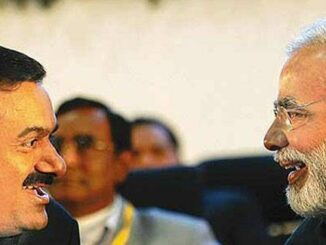
The OCCRP said the Adani Group routed investments in its publicly traded stocks through “opaque” Mauritius funds. OCCRP claimed these funds obscured the involvement of alleged Adani family business partners. It was indicating that these were ‘benami’ funds routed from India via tax havens into Adani group companies to inflate their stock prices. Soros had earlier spoken on the Hindenburg report and had questioned PM Narendra Modi’s ties with Gautam Adani. The Adani Group did not think the report was “Hindenburg 2.0”. Rather it felt these were “recycled” allegations backed by interests associated with George Soros and a section of the foreign media to resuscitate the “meritless” Hindenburg report. The group also claimed that the OCCRP’s claims were based on investigations from a decade ago by the Directorate of Revenue Intelligence (DRI) with the matter resolved by the Supreme Court ruling in March 2023.
Meanwhile, the opposition saw its opportunity to attack Modi whose close relationship with Adani is no secret.
Congress leader Rahul Gandhi on Thursday, August 31, demanded that Prime Minister Narendra Modi should come clean on the Adani issue before world leaders start arriving in Delhi for attending the G20 summit.
He also reiterated the demand for a joint parliamentary committee (JPC) to look into the charges against the Adani Group. Citing recent reports published in two British dailies (Financial Times and The Guardian) about alleged stock manipulation by the Adani Group, Rahul said even the headline in one of the papers mentioned PM Narendra Modi’s close links with the Adani Group.
“These are raising very serious questions about the Indian Prime Minister just before the leaders of G20 are coming here to be our guests. They are going to be asking the question what is this special company? Why is it that in an economy like India the gentleman has been given a free ride? They are going to ask this question and I think it is very important that this matter is made clear before they arrive,” the Congress leader said while addressing a press conference in Mumbai.
“I don’t understand why the Prime Minister is not forcing an investigation (into the charges against the Adani Group). Why is he quiet? Why doesn’t he say that he is going to make sure that this issue is investigated and people who are responsible are put behind the bars?” he said. Describing the two London papers as “prominent global financial newspapers”, Rahul said the news would hurt India’s image globally.
He said it had been alleged in the media reports that a billion dollars were circulated through a network of the group’s companies before being brought back to India to invest in the group’s shares to inflate their prices. “The charge has been proved with the help of documentation,” Rahul said.
(With inputs from TNS)