

In the heart of Maharashtra lies a city where history does not merely rest in museums – it breathes through caves carved in basalt, echoes in Mughal tombs, and flows quietly through centuries-old watermills. Aurangabad is not just a destination; it is a passage through time. Every monument here carries the imprint of dynasties, faiths, traders, artisans, and emperors who shaped India’s layered civilizational story.
Named after the Mughal emperor Aurangzeb, Aurangabad once served as a strategic capital of the Deccan during the 17th century. Yet its story stretches far beyond the Mughals – into ancient Buddhist monastic traditions, medieval trade routes, and architectural marvels that continue to astonish the world.
The Timeless Wonder of Ajanta Caves
About 100 kilometers from the city, hidden in a horseshoe-shaped gorge overlooking the Waghora River, lie the Ajanta Caves – a UNESCO World Heritage Site that feels almost otherworldly. Dating back to the 2nd century BCE and flourishing between the 5th and 6th centuries CE, these rock-cut caves are masterpieces of Buddhist art and devotion.
Step inside and you are greeted by intricate murals depicting the Jataka tales – stories of the Buddha’s previous births. The expressions, colors, and delicate brushwork have survived centuries, offering a rare glimpse into ancient Indian painting traditions. The chaityas (prayer halls) and viharas (monasteries) carved into solid rock stand as testimony to the devotion and skill of artisans who worked without modern tools.
The silence inside Ajanta is profound. It is not empty silence, but one filled with centuries of chanting, meditation, and artistic dedication.
Architectural Brilliance at Ellora Caves
Closer to Aurangabad, about 30 kilometers away, the Ellora Caves present an extraordinary confluence of faiths – Buddhist, Hindu, and Jain monuments coexist here, carved between the 6th and 10th centuries.
The crown jewel is the magnificent Kailasa Temple, dedicated to Lord Shiva. Unlike typical temples built stone by stone, Kailasa was carved from a single massive rock, excavated top-down. The scale is staggering – elephants, pillars, deities, and mythological scenes emerge seamlessly from the rock. It is considered one of the greatest achievements in Indian rock-cut architecture.
Ellora is not merely about grandeur; it represents harmony. The presence of multiple religious traditions within one complex speaks of a time when artistic patronage transcended boundaries.
The Mini Taj: Bibi Ka Maqbara
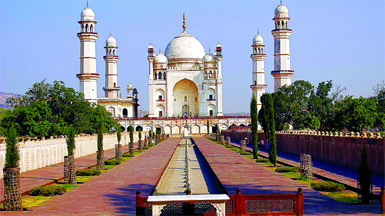
Often referred to as the “Taj of the Deccan,” Bibi Ka Maqbara was built by Aurangzeb’s son, Azam Shah, in memory of his mother. Its resemblance to the Taj Mahal is unmistakable, though its story is uniquely Deccani.
Surrounded by manicured gardens and reflecting pools, the monument glows beautifully during sunrise and sunset. Though less ornate than its Agra counterpart, it possesses a quiet elegance and historical charm that makes it a must-visit.
Echoes of the Mughal Deccan
Aurangabad’s Mughal connection runs deep. The imposing Daulatabad Fort, originally known as Devagiri, predates the Mughals but became strategically important during their rule. Its labyrinthine passages, steep defenses, and ingenious military architecture tell tales of shifting capitals and ambitious rulers.
Nearby, the Panchakki watermill – powered by an underground water channel – reflects medieval engineering brilliance. The city gates, remnants of fortifications, and old neighborhoods still retain a vintage aura.
A Spiritual Pause at Grishneshwar Temple
One of the 12 Jyotirlingas dedicated to Lord Shiva, Grishneshwar Temple stands close to Ellora. Pilgrims from across the country visit this sacred shrine, making Aurangabad not just a heritage hub but also a spiritual destination.
The temple’s red basalt structure, intricate carvings, and devotional atmosphere offer a deeply immersive cultural experience.
Flavors of the Deccan
Travel in Aurangabad is incomplete without indulging in its cuisine. The city reflects a blend of Mughlai and Maharashtrian flavors – from fragrant biryanis and naan qalia (a local meat preparation) to simple yet satisfying thalis. Street-side stalls offer sweets and snacks that carry a distinct Deccan identity.
When to Visit
The best time to explore Aurangabad is between October and March, when the weather is pleasant. Summers can be harsh, but early mornings at the caves reward visitors with cooler breezes and softer light for photography.
Beyond Monuments
Aurangabad is not just about ticking off UNESCO sites. It is about standing before a 1,500-year-old mural and realizing it still speaks. It is about tracing the ambitions of emperors, the devotion of monks, and the artistry of anonymous craftsmen who carved mountains into prayer.
In Aurangabad, stone is not lifeless. It remembers. It narrates. It invites you to listen.
For travelers seeking history, spirituality, architecture, and quiet reflection in equal measure, Aurangabad offers an experience that lingers long after the journey ends.

Be the first to comment