
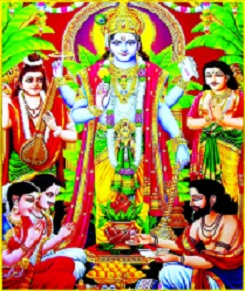

Shri Satyanarayan Puja is one of the most sacred and widely performed household rituals in Hindu tradition. Dedicated to Lord Satyanarayan, a benevolent form of Lord Vishnu, this puja symbolizes devotion to truth, righteousness, and gratitude towards the divine. The word Satyanarayan is derived from two Sanskrit terms – Satya, meaning truth, and Narayan, meaning the Supreme Being. Together, the name represents the divine power that sustains the universe through truth and moral order. The worship of Satyanarayan is believed to bring prosperity, peace, and fulfillment of wishes while removing obstacles and suffering from the lives of devotees.
Shri Satyanarayan Puja is usually performed on auspicious occasions such as housewarming ceremonies, weddings, birthdays, and anniversaries, or after the successful completion of an important task. Many families observe this puja after the fulfillment of a vow or wish. Although it can be performed on any convenient day, full moon days (Purnima) are considered especially auspicious for the ritual. The simplicity and universality of the puja make it accessible to everyone, regardless of social status or economic condition, which is one of the reasons for its popularity across India.
The origin of Satyanarayan Puja is described in ancient Hindu scriptures, particularly in the Skanda Purana. According to tradition, the ritual was revealed to sage Narada by Lord Vishnu so that people suffering from difficulties in the world could find relief through devotion and truthful living. The teachings associated with the puja emphasize that a person who lives honestly and worships with sincerity receives divine blessings, while neglect of truth and promises leads to hardship. Thus, the puja is not merely a ritual but also a spiritual reminder to follow the path of righteousness.
Preparations for the puja begin with cleaning and purifying the home and the mind. Devotees bathe and wear clean or traditional clothes before beginning the worship. A small altar is prepared by placing a clean cloth over a wooden platform on which an image or idol of Lord Satyanarayan is installed. The place is decorated with flowers and leaves, and a sacred pot known as the kalash is placed near the deity. The kalash is filled with water and topped with mango leaves and a coconut, symbolizing abundance, life, and divine presence. Lamps are lit and incense is burned to create a sacred and peaceful atmosphere.
Various items are required for the puja, including fruits, flowers, sandalwood paste, betel leaves, rice grains, incense sticks, ghee or oil lamps, and tulsi leaves, which are considered especially sacred in the worship of Lord Vishnu. Panchamrit, a mixture of milk, curd, honey, ghee, and sugar, is prepared for offering to the deity. A special sweet preparation, usually semolina halwa or sheera, is made as prasad and later distributed among the devotees. The prasad holds great spiritual importance and must be shared with everyone present as a symbol of divine blessings.
The puja begins with the invocation of Lord Ganesha to remove obstacles and ensure the successful completion of the ritual. This is followed by the installation and worship of the kalash and other sacred elements. The main worship of Lord Satyanarayan includes offering flowers, fruits, rice, sandalwood paste, tulsi leaves, and sacred water while chanting prayers and mantras. Devotees pray for peace, prosperity, and protection for themselves and their families.
The most important part of Shri Satyanarayan Puja is the recitation of the Satyanarayan Katha, a sacred narrative describing the glory of Lord Satyanarayan and the benefits of the puja. The katha consists of several stories about devotees who performed the puja with faith and were blessed with happiness and success. It also tells of those who ignored their promises or disrespected the prasad and consequently faced difficulties in life. These stories convey simple yet profound spiritual lessons about honesty, devotion, humility, and gratitude. Listening to the katha with devotion is considered essential, and it is believed that the spiritual merit of the puja is incomplete without it.
After the recitation of the katha, devotees perform the aarti by lighting a lamp and singing devotional hymns in praise of the Lord. The atmosphere during the aarti is filled with devotion and spiritual joy as family members and guests participate together. The ceremony concludes with the distribution of prasad, which symbolizes the sharing of divine grace among all. It is considered important that prasad be accepted with reverence and not refused, as it represents the blessings of Lord Satyanarayan.
Every element of Satyanarayan Puja carries deep symbolic meaning. The kalash represents the universe and the presence of divine energy. The coconut placed on the kalash symbolizes purity and surrender to God. Tulsi leaves represent devotion and are considered dear to Lord Vishnu. The lamp signifies the removal of ignorance and the awakening of spiritual knowledge, while prasad symbolizes divine grace that is shared equally among all devotees.
Beyond its religious significance, Shri Satyanarayan Puja also holds social and cultural importance. The ceremony often becomes a gathering where relatives, friends, and neighbors come together in a spirit of devotion and harmony. It strengthens family bonds and encourages a sense of community. The inclusive nature of the puja reflects the belief that divine blessings are available to everyone who worships with sincerity.
Shri Satyanarayan Puja is ultimately a celebration of truth and faith. It reminds devotees that a life guided by honesty, devotion, and gratitude leads to peace and prosperity. Through the simple yet meaningful rituals of the puja, devotees renew their faith in divine justice and seek blessings for a harmonious and fulfilling life. The enduring popularity of Satyanarayan Puja across generations reflects its timeless message – that truth and devotion remain the foundation of spiritual and worldly well-being.


Be the first to comment