


Vaisakhi, celebrated on April 14 this year, stands as one of the most profound and multifaceted festivals in the Indian cultural and spiritual calendar. It is at once a joyous harvest festival, a historic turning point in the evolution of Sikh identity, and a timeless reminder of the values that bind humanity together—faith, courage, equality, and service. For millions across the world, particularly the nearly 30 million followers of Sikhism, Vaisakhi is not merely a date—it is a living legacy.
In the fertile plains of Punjab, Vaisakhi heralds the ripening of golden wheat fields. It is a time of gratitude—gratitude to nature, to the Almighty, and to the toil of farmers whose sweat nourishes nations. Long before it became etched in history as a day of religious transformation, Vaisakhi was celebrated as a harvest festival marking abundance and prosperity. Villages come alive with music, bhangra and giddha dances, and community gatherings. It is a celebration of life itself—of food, fellowship, and the simple joy of shared existence.
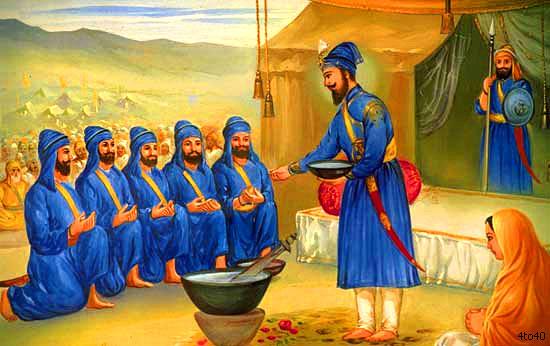
Yet, Vaisakhi transcends agrarian joy. Its deepest significance lies in the epochal events of 1699, when the Tenth Sikh Guru, Guru Gobind Singh, transformed a spiritual community into a collective of saint-soldiers. On that historic day at Anandpur Sahib, Guru Gobind Singh founded the Khalsa—a brotherhood of initiated Sikhs committed to righteousness, equality, and the defense of truth.
The story of that day continues to inspire. The Guru called for volunteers willing to offer their heads in devotion. Five brave souls responded—later known as the Panj Pyare (the Five Beloved Ones). In a ceremony that symbolized rebirth, they were initiated into the Khalsa and, in a remarkable act of humility, the Guru himself was initiated by them. This was not merely a ritual, it was a revolution. It shattered caste barriers, abolished discrimination, and proclaimed that all human beings are equal in the eyes of God.
The Khalsa was envisioned as a force that combined spiritual depth with temporal courage—a community that would stand against injustice, protect the weak, and uphold dignity. In a world often divided by hierarchy and prejudice, the message of Vaisakhi was—and remains—profoundly democratic and liberating.
Sikhism, one of the youngest religions in the world, carries within it a remarkable clarity of purpose. Founded by Guru Nanak in the 15th century, it rests on three fundamental principles: Naam Japna (meditating on God), Kirat Karni (earning an honest living), and Vand Chakna (sharing with others). These are not abstract ideals, they are practical guides to living a life of integrity and compassion.
The Sikh faith emphasizes belief in one God, the rejection of superstition, and the importance of equality across all human distinctions—be they caste, creed, gender, or social status. The Guru Granth Sahib, the eternal Guru of the Sikhs, enshrines teachings that advocate humility, service, and universal brotherhood.
Perhaps nowhere are these values more visibly expressed than in the institution of Langar—the community kitchen. In every Gurdwara, across continents, free meals are served to all, without distinction. Rich or poor, high or low, believer or non-believer—all sit together in a single row to partake of food. It is a quiet yet powerful assertion of equality and shared humanity.
The Sikh community’s commitment to service Seva extends far beyond the walls of their places of worship. In times of crisis, whether natural disasters or humanitarian emergencies, Sikh organizations have consistently been among the first to respond. From feeding the hungry during pandemics to providing aid in war-torn regions, their actions speak louder than any words.
Equally noteworthy is the contribution of Sikhs to nation-building, both in India and across the diaspora. Despite being a small minority, Sikhs have played a disproportionately large role in shaping modern societies. In India, they have been at the forefront of agriculture, transforming the country into a food-secure nation during the Green Revolution. In the armed forces, their bravery is legendary, earning them some of the highest honors for valor.
Across the globe—from North America to Europe, from Africa to Australia—the Sikh diaspora has distinguished itself in business, education, public service, and philanthropy. They carry with them not just their identity, but their values, hard work, honesty, and an unwavering commitment to community welfare.
In the United States, Sikh Americans have enriched the social fabric through enterprise, civic engagement, and acts of charity. Their Gurdwaras have become centers not just of worship, but of outreach—feeding the homeless, supporting the needy, and fostering interfaith harmony. They embody the spirit of Vaisakhi every day—not only in celebration, but in action.
As we reflect on Vaisakhi in this milestone year of global uncertainty and introspection, its message acquires renewed relevance. In a world fractured by conflict, inequality, and mistrust, the principles enshrined in the creation of the Khalsa offer a path forward. Courage tempered by compassion, faith anchored in equality, and strength guided by service—these are not merely Sikh ideals; they are universal necessities.
Vaisakhi reminds us that true strength lies not in domination, but in protection; not in exclusion, but in inclusion. It calls upon us to rise above divisions and recognize the shared destiny of humanity.
At a time when societies grapple with questions of identity, belonging, and justice, the example of the Khalsa stands as a beacon. It teaches us that one can be deeply rooted in faith while remaining open to the world; that one can be strong without being oppressive; and that one can serve without seeking reward.
As the golden fields of Punjab sway in the April breeze and the Nishan Sahib flutters proudly atop Gurdwaras worldwide, Vaisakhi speaks to all of us—irrespective of religion or nationality. It invites us to harvest not just crops, but virtues; not just prosperity, but purpose.
Let this Vaisakhi be more than a celebration. Let it be a renewal of our commitment to justice, to equality, and to the service of humanity.
For in the final analysis, the true harvest of Vaisakhi is not in the fields, but in the human spirit.
Waheguru Ji Ka Khalsa, Waheguru Ji Ki Fateh!


Be the first to comment