
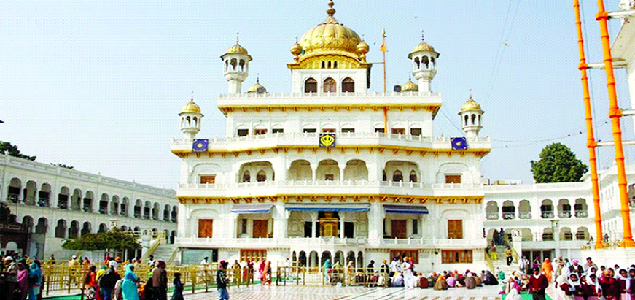

In Sikhism, authority is not vested in a single individual but rests in a carefully balanced system rooted in scripture, collective wisdom, and historical continuity. At the center of this framework stand the Five Takhts-the highest seats of religious and temporal authority in the Sikh world. Each Takht is not merely a physical shrine, but a powerful institution that embodies the sovereignty, discipline, and spiritual vision of the Sikh faith.
The word Takht, meaning “throne,” signifies a seat of power. Yet in Sikhism, it carries a deeper meaning: a place where divine guidance meets worldly responsibility, where faith informs action, and where the community gathers to seek direction.
The Origins of the Takht Tradition
The concept of the Takht is deeply rooted in the Sikh principle of balancing spiritual devotion with temporal responsibility-a vision first articulated by Guru Hargobind Sahib Ji through the doctrine of Miri-Piri.
Following the martyrdom of Guru Arjan Dev Ji, the Sikh community entered a new phase-one that required not only spiritual resilience but also organized leadership and the ability to defend justice. Guru Hargobind Sahib Ji responded by establishing a system that combined spiritual authority with temporal governance.
This vision laid the foundation for the Takhts-institutions that would guide the Sikh community in both faith and action.
The Role and Authority of the Takhts
The Five Takhts function as the highest decision-making bodies in Sikhism. Their authority extends across multiple dimensions:
Religious Guidance
They interpret and uphold Sikh doctrine, ensuring that practices remain aligned with the teachings of the Guru Granth Sahib.
Issuance of Hukamnamas
Edicts or directives issued from the Takhts-particularly the Akal Takht-carry significant weight and are followed by Sikhs worldwide.
Conflict Resolution
Historically, the Takhts have served as forums for resolving disputes within the community, maintaining unity and discipline.
Preservation of Tradition
They safeguard rituals, customs, and historical memory, ensuring continuity across generations.
Symbol of Collective Authority
Unlike centralized religious systems, the Takhts represent a shared authority, reflecting the Sikh emphasis on collective decision-making.
Akal Takht Sahib: The Supreme Seat of Authority
Situated within the sacred complex of Amritsar, the Akal Takht is the highest temporal authority in Sikhism.
Established in 1606 by Guru Hargobind Sahib Ji, the Akal Takht stands directly opposite the Harmandir Sahib, creating a powerful architectural and symbolic dialogue between spirituality and governance.
Historically, the Guru would sit here to address the community, hear grievances, and make decisions. It was also a place where warriors gathered, reinforcing the idea that faith and responsibility go hand in hand.
Over the centuries, the Akal Takht has witnessed major events in Sikh history, including political struggles, reform movements, and periods of conflict. Despite these challenges, it remains the central authority for guiding the Sikh Panth.
Takht Sri Keshgarh Sahib: The Birthplace of the Khalsa
Located in Anandpur Sahib, Takht Sri Keshgarh Sahib holds immense historical and spiritual importance.
It was here, on Vaisakhi in 1699, that Guru Gobind Singh Ji created the Khalsa-a defining moment that transformed Sikh identity.
The initiation of the Panj Pyare and the establishment of a collective identity rooted in equality, discipline, and courage marked a turning point in Sikh history. Keshgarh Sahib stands as a symbol of that transformation.
The Takht also preserves sacred relics associated with Guru Gobind Singh Ji, offering a tangible connection to this historic moment.
Takht Sri Damdama Sahib: The Center of Learning
In the town of Talwandi Sabo lies Takht Sri Damdama Sahib, often referred to as the intellectual seat of Sikhism.
After years of conflict, Guru Gobind Singh Ji spent time here in reflection, teaching, and literary work. It was at this site that the final recension of the Guru Granth Sahib was prepared, ensuring the preservation and authenticity of the Sikh scripture.
Damdama Sahib became a center for learning, attracting scholars and students. Its legacy continues as a symbol of study, and spiritual education.
Takht Sri Patna Sahib: The Sacred Birthplace
In Patna stands Takht Sri Patna Sahib, marking the birthplace of Guru Gobind Singh Ji in 1666.
This Takht holds deep emotional and spiritual significance, as it preserves the early life of the Guru. Stories of his childhood-his wisdom, courage, and spiritual insight-continue to inspire devotees.
Patna Sahib serves as a reminder that even the greatest spiritual leaders begin their journey in humble surroundings.
Takht Sri Hazur Sahib: The Final Chapter
The sacred city of Nanded is home to Takht Sri Hazur Sahib, where Guru Gobind Singh Ji spent his final days.
In 1708, at this very site, he made a historic declaration-ending the line of human Gurus and bestowing eternal Guruship upon the Guru Granth Sahib.
Hazur Sahib is unique in its traditions, preserving certain practices that reflect the historical period of the Guru. It stands as a place of completion-a site where the Sikh spiritual journey transitioned into its eternal form.
Interconnected Significance
of the Five Takhts
Each Takht represents a distinct dimension of Sikh philosophy and history:
– Akal Takht – Authority and justice
– Keshgarh Sahib – Identity and transformation
– Damdama Sahib – Knowledge and preservation
– Patna Sahib – Origins and beginnings
– Hazur Sahib – Continuity and completion
Together, they form a comprehensive framework that guides the Sikh community-spiritually, socially, and historically.
The Takhts in Contemporary Sikh Life
In the modern era, the Five Takhts continue to play a vital role in guiding the global Sikh community. Their influence extends across continents, addressing issues related to religious practice, identity, and social responsibility.
They also serve as major pilgrimage centers, drawing millions of devotees each year. Festivals, commemorations, and gatherings at these sites reinforce a sense of unity and shared heritage.
At the same time, the Takhts face contemporary challenges-navigating the complexities of modern society while remaining true to tradition. Their ability to adapt while preserving core values reflects the resilience of Sikh institutions.
A Living Legacy of Authority and Faith
The Five Takhts are not static monuments-they are dynamic institutions that continue to evolve with the times. They represent the enduring vision of the Sikh Gurus: a community guided by wisdom, grounded in equality, and committed to justice.
They embody the balance of Miri-Piri, ensuring that spirituality remains connected to real-world responsibility.
Thrones of Timeless Guidance
The Five Takhts stand as pillars of Sikh identity-anchors of faith, guardians of tradition, and beacons of collective wisdom.
They remind the Sikh community that authority is not about power alone, but about responsibility, integrity, and service. Through their guidance, the teachings of the Gurus continue to illuminate the path forward.
In their presence, history is preserved. In their decisions, the present is guided. And in their legacy, the future of Sikhism remains rooted, resilient, and alive.


Be the first to comment