
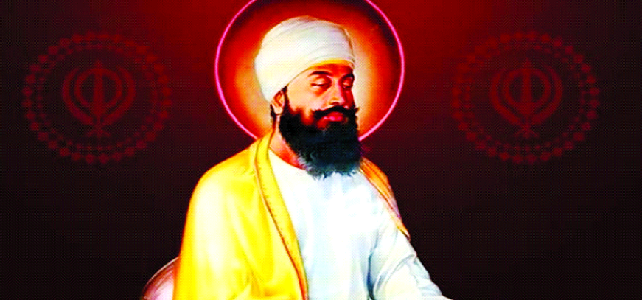

In the spiritual and historical fabric of Sikhism, martyrdom is not seen as tragedy alone-it is revered as the highest expression of faith, courage, and moral conviction. It is a legacy written in sacrifice, where individuals chose truth over fear, justice over submission, and faith over life itself.
From the earliest Gurus to the valiant warriors of the Khalsa, the Sikh tradition of martyrdom stands as a powerful testament to the unwavering commitment to righteousness. It is not a glorification of death, but a celebration of principles so deeply held that they transcend the fear of mortality.
The Foundation of Sacrifice in Sikh Thought
At the heart of Sikh philosophy lies the teaching of the Guru Granth Sahib, which emphasizes truth, humility, and devotion to the Divine. The Gurus taught that life must be lived with integrity, even in the face of adversity.
Martyrdom, in this context, is not sought-it is accepted when all other paths to uphold justice and dignity have been exhausted. It reflects a fearless spirit rooted in faith and guided by moral clarity.
This ethos is closely connected to the Sikh ideal of standing against injustice while remaining spiritually grounded-a principle that would define Sikh history in the centuries to come.
Guru Arjan Dev Ji: The First Martyr
The tradition of martyrdom in Sikhism begins with Guru Arjan Dev Ji, whose execution in 1606 marked a turning point in Sikh history.
Guru Arjan Dev Ji was subjected to severe torture under Mughal authority for refusing to alter the teachings of Sikhism or compromise his principles. Despite immense suffering, he remained composed and immersed in divine remembrance.
His martyrdom was not only an act of personal sacrifice but a powerful declaration of religious freedom-the right to practice one’s faith without coercion. It set a precedent for future generations, establishing that truth must be upheld at any cost.
Guru Tegh Bahadur Ji: Defender of Religious Freedom
The legacy of sacrifice reached a profound height with Guru Tegh Bahadur Ji, who is remembered as the “Protector of Faith.”
In 1675, Guru Tegh Bahadur Ji gave his life in Delhi to defend the religious rights of Kashmiri Pandits who were facing forced conversion. Remarkably, his sacrifice was not for his own community, but for the freedom of others to practice their beliefs.
His martyrdom stands as one of the most powerful examples of interfaith solidarity in history. It reflects a universal principle: that true spirituality transcends boundaries and stands for justice for all.
The Sahibzadas: Innocence and Courage
Few stories in Sikh history are as deeply moving as the martyrdom of the four sons of Guru Gobind Singh Ji, known as the Sahibzadas.
The Elder Sahibzadas: Ajit Singh and Jujhar Singh
During the Battle of Chamkaur, the Guru’s elder sons embraced martyrdom while fighting bravely against overwhelming forces. Their courage at such a young age exemplified the Khalsa spirit of fearlessness and honor.
The Younger Sahibzadas: Zorawar Singh and Fateh Singh
The younger sons were captured and subjected to immense pressure to convert. When they refused, they were executed in Sirhind at a tender age.
Their sacrifice is remembered not only for its bravery but for its purity-an unwavering commitment to faith even in the face of death.
The Khalsa and the Spirit of Resistance
The creation of the Khalsa by Guru Gobind Singh Ji in 1699 transformed the Sikh community into a collective force grounded in courage and discipline.
The Khalsa embodied the spirit of martyrdom-not as a goal, but as a readiness to sacrifice everything for justice and righteousness. This spirit continued through the turbulent 18th century, as Sikhs faced persecution under various regimes.
Countless unnamed men and women gave their lives during this period, choosing death over the abandonment of their faith. Their sacrifices ensured the survival and resilience of the Sikh community.
Bhai Mani Singh and Baba Deep Singh: Icons of Devotion
The legacy of martyrdom extends beyond the Gurus and their families to devoted Sikhs who upheld the same principles.
– Bhai Mani Singh was executed for refusing to convert and for organizing religious gatherings during a time of oppression.
– Baba Deep Singh is remembered for his unwavering determination to defend the Harmandir Sahib, fighting even after sustaining fatal injuries.
Their stories have become symbols of devotion, courage, and unwavering faith.
Martyrdom as Moral Strength, Not Violence
A defining feature of Sikh martyrdom is its ethical foundation. It is not rooted in aggression or fanaticism, but in restraint, dignity, and moral strength.
The Sikh tradition emphasizes:
– Standing for justice without hatred
– Accepting sacrifice without seeking revenge
– Upholding truth without compromising compassion
Martyrdom is therefore seen as a last resort-a response to injustice when all peaceful avenues have been exhausted.
Living Memory: Remembrance
and Inspiration
The legacy of Sikh martyrs is preserved through daily prayers, historical narratives, and commemorative events. Their stories are not confined to the past-they continue to inspire present and future generations. Gurdwaras associated with these events serve as sacred reminders of sacrifice, where devotees reflect on the values of courage, faith, and resilience. The remembrance of martyrdom is not about mourning-it is about inspiration. It encourages individuals to live with integrity, stand for truth, and remain steadfast in their beliefs.
Relevance in the Modern World
In today’s world, where issues of justice, human rights, and freedom remain pressing, the Sikh tradition of martyrdom offers a powerful example.
It teaches that:
– Faith must be accompanied by courage
– Freedom must be defended for all, not just oneself
– Moral conviction must not yield to fear
These lessons remain as relevant today as they were centuries ago, offering guidance in times of uncertainty and conflict.



Be the first to comment