

There are moments in the life of a community when celebration must give way to introspection, when pride must be accompanied by honesty, and when identity must be examined with clarity rather than comfort. For the Indian American community, that moment has arrived.
We have, over decades, built a remarkable story in the United States. From the early arrivals who came seeking opportunity in the 1960s, to the professionals, entrepreneurs, academics, and workers who followed in waves over the past forty years, the Indian diaspora has flourished. Today, Indian Americans are among the most successful, educated, and influential communities in this nation.
We celebrate that success. We showcase it. We take pride in it.
And yet, beneath this success lies a question that demands to be asked—plainly, without embellishment, and yes, even uncomfortably: why is it that we celebrate India’s Independence Day and Republic Day with unmatched enthusiasm, yet remain conspicuously subdued, if not indifferent, when it comes to celebrating the Fourth of July?
This is not a trivial question. It goes to the very heart of identity, allegiance, and responsibility.
Let there be no misunderstanding. There is nothing wrong, indeed, everything right, in celebrating India. India is our motherland. It gave birth to us, nourished us, shaped our values, and instilled in us the cultural and civilizational richness that we proudly carry across oceans. Our emotional, cultural, and even spiritual bonds with India are deep and enduring. They deserve to be honored, preserved, and celebrated.
But let us not confuse affection with allegiance.
For most Indian Americans today, America is not a temporary shelter. It is not a transit lounge. It is not a place where we merely earn our livelihoods before turning our gaze elsewhere. It is our home. It is the country whose passport we carry, whose Constitution protects us, whose laws we are bound to obey, and whose prosperity enables our success.
Many among us stood before a judge, raised our right hand, and took the oath of allegiance to the United States of America. That oath was not a ceremonial formality. It was not a bureaucratic checkbox. It was a solemn declaration—one that required us to “absolutely and entirely renounce and abjure all allegiance and fidelity to any foreign prince, potentate, state, or sovereignty.”
Those are not casual words. They are binding words.
And yet, how often do we reflect upon them?
We organize grand parades, cultural programs, and community gatherings for India’s national days. We drape ourselves in the tricolor, sing patriotic songs, and relive the history of India’s freedom struggle with passion and pride. There is energy. There is visibility. There is commitment.
But when the Fourth of July arrives—the Independence Day of the United States—where are we?
Where are the large-scale community celebrations?
Where are the organized gatherings?
Where is the visible, collective expression of patriotism?
Yes, many individuals celebrate privately. Some attend local fireworks. Some display the American flag. But as a community—cohesive, organized, and visible—we are, at best, muted participants.
This is not merely an oversight. It reflects a deeper hesitation—perhaps even a reluctance—to fully embrace the identity of being American.
It is time to confront that hesitation.
Patriotism is not a zero-sum game. Loving America does not diminish our love for India. Honoring the Stars and Stripes does not require us to forget the Tricolor. But allegiance demands clarity. It demands priority.
India may be the land of our birth. But America is the land of our belonging.
This is where we earn our bread and butter. This is where we build our homes. This is where our children are educated, where our businesses thrive, where our freedoms are protected. This is the nation that has opened its doors to us, often more generously than many nations would.
And let us be candid: America has not merely tolerated us; it has embraced us.
From the corridors of academia to the heights of corporate leadership, from public service to entrepreneurship, Indian Americans have been given opportunities that have transformed lives and futures. We have prospered not in spite of America, but because of it.
Is it too much, then, to expect that we celebrate its Independence Day with the same enthusiasm that we bring to India’s?
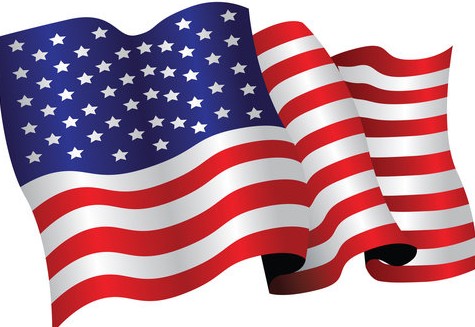
The forthcoming Fourth of July carries even greater significance. As the United States marks 250 years of its independence, it is not merely commemorating a historical milestone. It is reaffirming a set of ideals—liberty, democracy, equality, and justice—that have inspired people across the world, including many of us who chose to make this nation our home.
This is not just America’s celebration. It is ours.
And yet, unless we consciously change, we risk remaining spectators—beneficiaries of a system we hesitate to fully embrace.
This must change.
It is time for Indian American organizations to step forward and organize Fourth of July celebrations with purpose and pride. It is time for our community leaders to speak openly about the importance of visible allegiance. It is time for families to ensure that their children grow up not with divided identities, but with a clear understanding of where they belong.
Let our homes proudly display the American flag—not as a token gesture, but as a statement of identity. Let our community centers host Independence Day events that reflect our gratitude and participation. Let us engage with our neighborhoods, our cities, and our nation—not as outsiders looking in, but as citizens who belong.
Above all, let us send a clear message to the next generation.
Our children must not inherit confusion. They must not grow up wondering whether their primary identity lies elsewhere. They are Americans—by birth, by law, and by destiny. It is our responsibility to ensure that they feel it, live it, and celebrate it.
This is not a call to abandon India. That would be both unrealistic and undesirable. Our heritage is our strength. Our roots enrich us. Our connection to India is a source of pride.
But roots must not become chains.
We can honor India with love, respect, and cultural continuity. But we must honor America with loyalty, participation, and visible patriotism.
To do otherwise is to live in contradiction.
This editorial is not meant to offend. But if it unsettles, it has served its purpose.
For too long, we have avoided this conversation, preferring comfort over clarity. But communities, like individuals, grow only when they are willing to confront their own inconsistencies.
The Indian American community has achieved much. But maturity demands that we align our celebrations with our commitments.
We are no longer merely people of Indian origin living in America. We are Americans of Indian origin.
And that distinction must not only be understood; it must be lived.
As the Fourth of July approaches—particularly this historic 250th anniversary—let this be the year we step forward with conviction.
Let us celebrate India with love.
But let us celebrate America with loyalty.
Not quietly. Not reluctantly.
But proudly, visibly, and without hesitation.
God Bless America!


Be the first to comment