
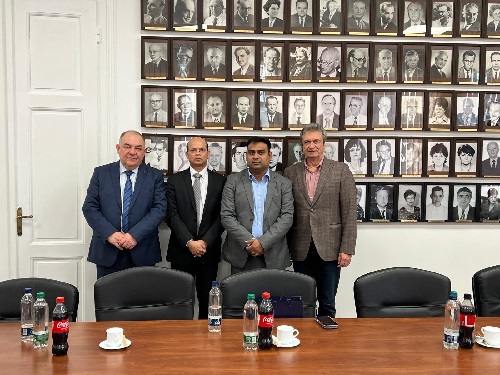

BUCHAREST (TIP): Dr. Manoj Kumar Mohapatra, Ambassador of India to Romania, accompanied by Dr. Vikas Kumar Sabata, Joint Director of International Relations at Kalinga Institute of Industrial Technology (KIIT), Bhubaneswar, has successfully concluded a dynamic series of high-level engagements across Timișoara, Cluj-Napoca, and Bistrița. These visits, spanning academic dialogues, institutional partnerships, and industrial outreach, underscore India’s unwavering commitment to deepening India-Romania cooperation in higher education, technological innovation, industrial development, and vibrant community engagement. Amid growing global interconnectedness, such initiatives not only fortify bilateral ties but also position both nations as key partners in Europe’s evolving educational and economic landscape.
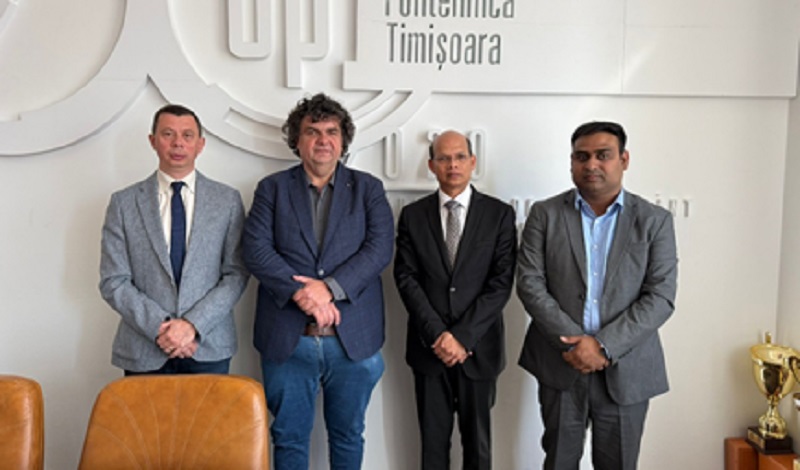
In Timișoara, a vibrant academic hub in western Romania, the Ambassador and Dr. Sabata engaged in substantive discussions with leading rectors: Prof. Univ. Dr. Marilen Gabriel Pirtea of West University; Dr. Ing. Florin Drăgan of Politehnica University; and Prof. Dr. Octavian-Marius Crețu of “Victor Babeș” University of Medicine and Pharmacy.
The conversations focused on amplifying bilateral academic cooperation through expanded student and faculty mobility, joint research ventures in fields like artificial intelligence, sustainable engineering, and biomedical sciences, and the establishment of twin-institution frameworks. Emphasis was placed on innovation-driven partnerships that facilitate knowledge exchange, curriculum co-development, and collaborative funding applications to international bodies such as the European Union’s Erasmus+ program.
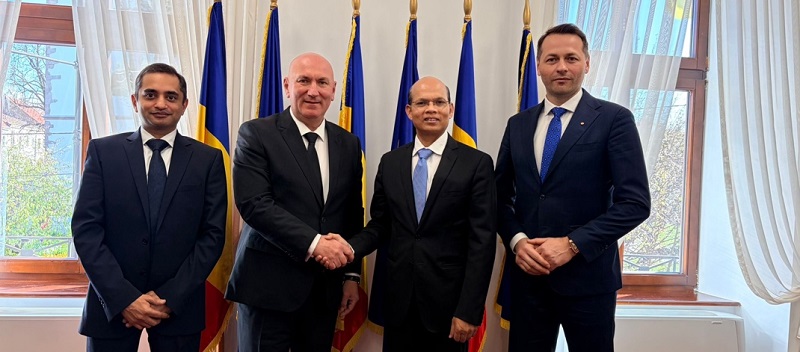
The Ambassador elaborated on India’s transformative strides in education, including substantial public investments in higher education infrastructure, the proliferation of digital learning platforms like SWAYAM and DIKSHA, and the landmark National Education Policy (NEP) 2020. This policy envisions a flexible, multidisciplinary education system with a strong international orientation, aiming to host 50,000-100,000 international students by 2030 while sending over a million Indian students abroad.
Particularly resonant was the discussion on demographic synergies. With Romania facing a gradual decline in its youth population, its universities are primed to internationalize. Ambassador Mohapatra noted, “Romanian institutions rank among Europe’s finest, offering a wealth of English-taught programs at tuition fees 40-60% lower than in North America or Western Europe. As Indian students, comprising one of the world’s largest mobile cohorts, with over 1.4 million studying abroad, seek quality, affordable European exposure, this presents a win-win: Romanian academia gains diversity and vitality, while our students access world-class research, multicultural environments, and career-launching opportunities. Indians, known for their discipline and contributions, are a most welcome addition to Romania’s communities.” Ambassador also highlighted that Indian students pay more than USD 70Bn as tuition fee annually.
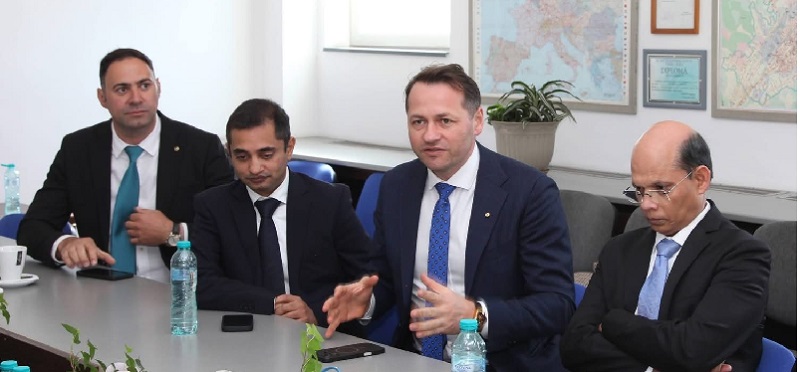
Shifting to Cluj-Napoca, Romania’s “Silicon Valley,” Dr. Sabata conducted forward-looking meetings with prominent vice rectors: Mr. Marian Tăulescu for International Affairs at the University of Agricultural Sciences and Veterinary Medicine (USAMV); Prof. Cristian Săcărea and Prof. Mihaela Gligor of Babeș-Bolyai University; and Prof. Adrian Groza of the Technical University of Cluj-Napoca at the AI Research Institute.
Cluj-Napoca’s ascent as a tech powerhouse is evident in its ecosystem of over a thousand IT firms, including major Indian players like Tata Consultancy Services and Wipro, which employ thousands and align academic curricula with industry demands in software development, cybersecurity, and data analytics. Dr. Sabata highlighted potential joint programs, such as KIIT-Cluj dual-degree initiatives in AI and agritech, to equip graduates for global markets.
The city’s safe, student-friendly vibe, boasting low crime rates, modern infrastructure, and a thriving cultural scene, makes it increasingly attractive for Indian students. “Cluj’s blend of academic excellence and economic dynamism creates a fertile ground for people-to-people connections,” Dr. Sabata observed. These ties not only enhance student mobility but also catalyze industry-academia bridges, propelling India–Romania relations into a new era of shared prosperity.
In Bistrița, the Ambassador met Hon’ble Mayor Mr. Gabriel Lazany to chart avenues for localized economic collaboration, including business matchmaking, investment promotion, and sector-specific tie-ups in manufacturing and renewables. A key outcome was the Ambassador’s invitation for a Mayor-led delegation to India, targeting trade expos and investor roundtables.
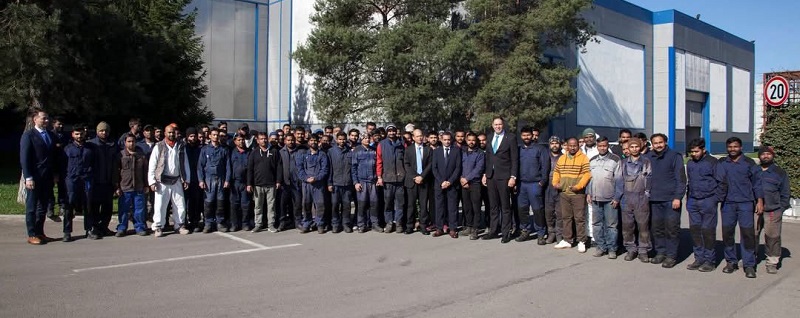
At COMELF factory, renowned for electrical transformers and automation solutions, the Ambassador received insights into cutting-edge production and discussed supply chain resilience, technology transfers, and joint ventures under India’s “Make in India” and Romania’s reindustrialization drives. Interactions with over 200 Indian expatriate workers highlighted their pivotal role in Romania’s growth, with the Ambassador announcing August 2026 Independence Day festivities at the site to celebrate cultural unity.
Further engagements with local industrialists and Rotary Club of Bistrița members spotlighted India’s 8%+ GDP growth trajectory and incentives like production-linked incentives (PLI) schemes, inviting investments in manufacturing, green energy, and innovation hubs.
These multifaceted visits exemplify the robust India–Romania strategic partnership, rooted in mutual respect and aligned visions for sustainable development.


Be the first to comment