
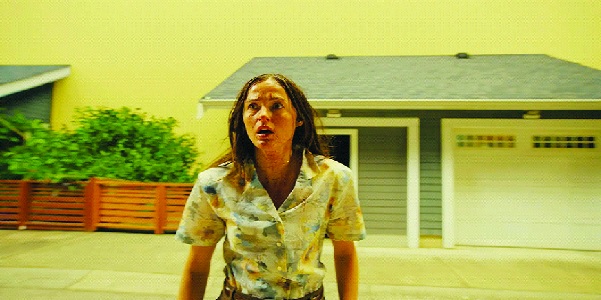

There are films that invite audiences in. Backrooms practically dares them to keep up.
That isn’t necessarily a criticism. In fact, it is probably the most honest way to describe Kane Parsons’ long-awaited feature adaptation of the internet phenomenon he helped popularise. Like the sprawling, unsettling universe that inspired it, Backrooms is less interested in answering questions than creating new ones. The problem is that what feels mysterious to one may feel frustratingly incomplete to another.
And that divide will likely determine whether the film works for you.
For those unfamiliar with Parsons’ sprawling online mythology, Backrooms can feel like being dropped into the middle of a conversation everyone else has been having for years. The film follows Clark (Chiwetel Ejiofor), a troubled furniture store owner whose life appears to be quietly falling apart. Battling alcoholism, emotional outbursts and the lingering collapse of his marriage, Clark discovers strange electrical anomalies hidden within his failing business. What begins as curiosity soon becomes obsession.
Behind the walls of his store lies an impossible world – the Backrooms, an endless labyrinth of yellow corridors, abandoned office spaces and distorted realities that seem to exist outside the laws of time and physics. Alongside his employees and later a therapist played by Renate Reinsve, Clark ventures deeper into this strange dimension, encountering creatures, unexplained phenomena and fragments of reality that feel both alien and oddly familiar. At least, that’s the straightforward version.
Because Backrooms is ultimately less concerned with plot than atmosphere. And on that front, the film is genuinely impressive. Parsons, who rose to prominence through his viral YouTube shorts before making the leap to feature filmmaking, demonstrates a remarkable command of visual storytelling. The cinematography is exceptional. Empty hallways threaten. Fluorescent lighting becomes oppressive and endless spaces feel claustrophobic.
The production design hit it out of the park. Every corridor, office space and endless yellow room feels meticulously crafted to evoke unease. There is a tactile quality to the environments that many modern studio horror films struggle to achieve. The film understands that the Backrooms themselves are the attraction, and for much of its runtime, simply watching characters navigate these uncanny spaces is compelling enough. The visual grammar is particularly strong. Parsons knows how to use scale, silence and negative space to create dread. Some of the film’s best moments arrive when absolutely nothing happens. That feeling of uncertainty is where Backrooms thrives.

Be the first to comment