
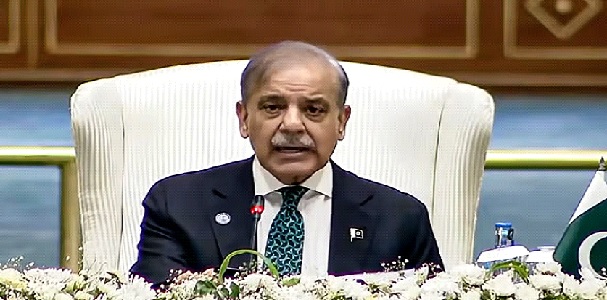

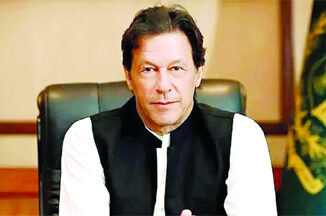
Pakistan has once again dipped into its familiar playbook of indulging in empty and hollow rhetoric against India, with Prime Minister Shehbaz Sharif threatening a “direct response” over water even as Islamabad grapples with a mounting share of crises at home — from worsening militant violence in Khyber Pakhtunkhwa to unrest and human-rights abuses in Balochistan and Pakistan-occupied Jammu and Kashmir (PoJK), alongside the continued imprisonment of former Prime Minister Imran Khan.
Yet, rather than confronting these failures, Sharif has once again chosen India as the target of his rhetoric.
Sharif, speaking at an event on the eve of Pakistan’s Independence Day on Thursday, sought to portray India as an “enemy of peace” over New Delhi’s decision to keep the Indus Waters Treaty in abeyance following the Pahalgam terror attack on April 22, which led to the death of 26 innocent individuals and ranting about the treaty as a national “red line”.
Following the April 22, 2025 terror attack in Jammu and Kashmir’s Pahalgam, India kept the Indus Waters Treaty in abeyance after a Cabinet Committee on Security (CCS) meeting on April 23, 2025 and asserted that the conditions under which the treaty was negotiated have fundamentally changed.
India has stated that the treaty can no longer function in its present form and will remain in abeyance until Pakistan “credibly and irrevocably” ends its support for cross-border terrorism.
“The Prime Minister said that India has proven itself an enemy of peace by unilaterally and illegally suspending the Indus Waters Treaty. He announced that every drop of Pakistan’s water is our red line. There will be no compromise on the water issue. If India does not come to the right path, we will give it a direct response,” the Pakistan Prime Minister’s Office said in a statement on X.
A government presiding over deepening instability across multiple regions of the country is once again attempting to project toughness by threatening India, even as its own citizens continue to face violence, political repression and insecurity amid growing economic pressure and instability.
Pakistan’s carefully cultivated image of national unity is facing one of its sharpest challenges in Balochistan, where nationalist voices have called for August 14, Pakistan’s Indepence Day to be observed as a “Black Day”.
Baloch leader and activist Mir Yar Baloch has urged Baloch people across the world to reject Pakistan’s Independence Day celebrations, calling for black flags and armbands as a symbol of opposition to Islamabad’s rule. (ANI)

Be the first to comment