
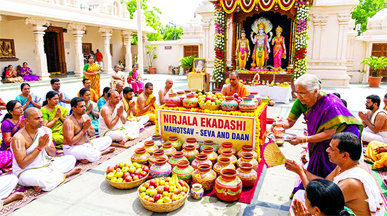

Nirjala Ekadashi is regarded as one of the most sacred and powerful observances in the Hindu spiritual calendar. Falling on the Ekadashi (eleventh lunar day) of the bright fortnight (Shukla Paksha) in the month of Jyeshtha (May-June), this holy day is dedicated to Lord Vishnu, the preserver and sustainer of the universe. Among the twenty-four Ekadashis observed throughout the year, Nirjala Ekadashi holds a unique status because it involves abstaining not only from food but also from water, making it the most rigorous of all Ekadashi fasts.
Nirjala Ekadashi 2026 falls on Thursday, June 25, 2026. The word “Nirjala” literally means “without water.” The fast symbolizes complete self-restraint, unwavering devotion, and total surrender to the divine. Hindu scriptures state that observing Nirjala Ekadashi with sincerity grants the spiritual merits of observing all twenty-four Ekadashis of the year, making it a highly revered vrata among devotees.
Origin of Nirjala Ekadashi
The origin of Nirjala Ekadashi is narrated in ancient Hindu scriptures, particularly the Mahabharata and the Padma Purana. The most popular legend revolves around Bhima, one of the five Pandava brothers.
Bhima, known for his immense physical strength and appetite, found it extremely difficult to observe the regular Ekadashi fasts prescribed throughout the year. While his brothers Yudhishthira, Arjuna, Nakula, Sahadeva, and their mother Kunti faithfully observed every Ekadashi, Bhima struggled to remain without food.
Seeking a solution, Bhima approached the revered sage Maharishi Vyasa and expressed his inability to undertake multiple fasts due to his voracious hunger. Sage Vyasa advised him that if he could observe just one strict fast in the year without consuming either food or water, he would receive the same spiritual benefits as observing all the Ekadashis.
Following the sage’s instructions, Bhima observed a complete fast on the Ekadashi of Jyeshtha Shukla Paksha. Pleased with his devotion and determination, Lord Vishnu granted him immense spiritual merit. Since then, the observance came to be known as Bhimseni Ekadashi or Nirjala Ekadashi.
This legend highlights an important spiritual message: sincere devotion and wholehearted commitment are more important than ritual complexity.
Spiritual Significance of Nirjala Ekadashi
Nirjala Ekadashi is not merely a ritualistic fast; it is a profound spiritual discipline aimed at purification of the body, mind, and soul.
Symbol of Complete Self-Control
Water is the most basic necessity of life. Abstaining even from water for an entire day symbolizes mastery over bodily desires and worldly attachments. The fast teaches devotees that spiritual strength can triumph over physical cravings.
Pleasing Lord Vishnu
According to Hindu scriptures, Lord Vishnu is especially pleased by those who observe Ekadashi with devotion. Nirjala Ekadashi is considered particularly dear to Him because of the intense austerity involved.
Devotees believe that worshipping Vishnu on this day helps remove sins accumulated through past actions and brings divine grace into one’s life.
Gateway to Spiritual Liberation
Ancient texts describe Ekadashi as the “doorway to liberation.” Observing Nirjala Ekadashi is believed to free individuals from the cycle of birth and death and guide the soul toward Moksha (spiritual liberation).
Purification of Karma
The scriptures emphasize that fasting, prayer, and charity performed on Nirjala Ekadashi cleanse negative karmas and strengthen positive spiritual tendencies. It is considered a day for introspection, repentance, and renewal.
Scriptural Importance
The Padma Purana, Vishnu Purana, and Bhavishya Purana extol the greatness of Nirjala Ekadashi. These texts proclaim that the merit obtained from this vrata equals that acquired through pilgrimages, sacrifices, donations, and observance of all other Ekadashis combined.
The scriptures also mention that Lord Vishnu Himself resides in the hearts of those who sincerely observe this sacred fast and engage in devotional practices throughout the day.
Rituals of Nirjala Ekadashi
Early Morning Purification
Devotees wake up during the Brahma Muhurta, the auspicious period before sunrise. After bathing and wearing clean clothes, they take a vow (Sankalpa) to observe the Nirjala fast with devotion and discipline.
Worship of Lord Vishnu
Images or idols of Lord Vishnu are ceremonially worshipped with: Tulsi leaves, Flowers, Incense, Sandalwood paste, Lamps, Fruits and offerings.
Recitation of Vishnu Sahasranama, Bhagavad Gita, and sacred Vishnu mantras forms an important part of the observance.
Devotees spend the day chanting:
“Om Namo Bhagavate Vasudevaya”
“Om Namo Narayanaya”
The repetition of these sacred mantras is believed to purify the mind and deepen one’s connection with Lord Vishnu.
Observing the Nirjala Fast
The distinguishing feature of this Ekadashi is complete abstinence from both food and water for approximately twenty-four hours.
Those who are elderly, pregnant, ill, or medically unable to undertake such strict austerity often observe a modified fast according to their capacity while maintaining devotional practices.
Reading Sacred Scriptures
Many devotees spend the day listening to or reading passages from: Bhagavad Gita, Vishnu Purana, Srimad Bhagavatam, Ramayana.
Scriptural study is considered highly meritorious on this sacred day.
Night Vigil
Some devotees remain awake during the night, singing devotional hymns, performing kirtans, and meditating on Lord Vishnu. This practice, known as Jagaran, further enhances the spiritual merit of the observance.
Importance of Charity on Nirjala Ekadashi
Charity (Daan) occupies a central place in the observance of Nirjala Ekadashi.
Because the fast involves abstaining from water, donating water and items associated with relief from heat is considered especially auspicious. Common charitable offerings include:
Water-filled pots, Umbrellas, Fans, Clothing, Fruits, Food grains, Jaggery, Cows (symbolically or traditionally), Monetary donations to the needy.
Providing drinking water to travelers and the poor during the hot summer season is regarded as an act of immense spiritual merit.
Breaking the Fast
The fast is concluded on Dwadashi, the twelfth lunar day, after offering prayers to Lord Vishnu. Devotees first offer water and food to Brahmins, saints, or needy individuals and then break their own fast.
This ritual signifies gratitude, humility, and sharing divine blessings with others.
Symbolic Meaning of Nirjala Ekadashi
Beyond the physical act of fasting, Nirjala Ekadashi carries profound symbolism.
The absence of food represents detachment from material pleasures.
The absence of water symbolizes conquering the deepest bodily needs.
The prayers signify surrender to divine will.
The charity reflects compassion and selflessness.
Together, these elements create a complete spiritual discipline that encourages inner purification and devotion.
Relevance in Modern Times
In today’s fast-paced world, Nirjala Ekadashi offers a valuable opportunity to pause and reconnect with spiritual values. The observance reminds individuals that true happiness does not arise solely from material comforts but from inner peace, self-control, and devotion.
The day encourages mindfulness, gratitude, discipline, and compassion-qualities that remain relevant regardless of time and place. Even those unable to undertake the strict fast can embrace its essence through prayer, charity, meditation, and self-reflection.
Nirjala Ekadashi stands as one of Hinduism’s most revered spiritual observances, embodying devotion, discipline, sacrifice, and faith. Rooted in the inspiring story of Bhima and blessed by Lord Vishnu, this sacred vrata teaches that sincere dedication can overcome even the strongest physical limitations. By observing Nirjala Ekadashi through fasting, prayer, chanting, scriptural study, and charity, devotees seek not only divine blessings but also inner transformation. The festival serves as a timeless reminder that spiritual growth is achieved through self-control, compassion, and unwavering devotion to the Supreme Lord. Through its profound symbolism and sacred traditions, Nirjala Ekadashi continues to inspire millions of devotees on their journey toward righteousness, peace, and ultimate liberation.


Be the first to comment