


We cannot conceive of building a better world without raising happy, emotionally secure children. Smiling children will make the world smile. I am sure if we resolve to invest seriously in developing the “heart and soul” of our citizens—through conscious parenting, value-based education, and ‘training mind and soul’—we will take a giant step toward making America great again and the world a better place to live in.
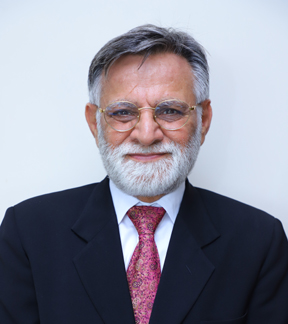
I extend my warmest congratulations to my friends in America on the completion of 250 years of independence. My relationship with the United States has always been deeply personal and enriching. I used to be one of the youngest lawyers on the list of lawyers maintained by the U.S. Embassy in New Delhi. My academic engagements at prestigious institutions such as Harvard, Oxford, Stanford, Fordham, Faculty of Law, and Hindu College Delhi, provided me with good opportunities to exchange ideas with students, professors, and scholars.
True celebration of any historic milestone demands introspection. It requires us to examine not only what has been achieved, but what remains undone, and how we can genuinely improve the lives of ordinary citizens. Having been a student and teacher of law and politics for nearly five decades, I wish to reflect upon a few powerful ideas from America’s 250-year journey—ideas that, if consistently applied, could have made the United States and the world far better places. Several towering figures immediately come to mind: Martin Luther King Jr., John
F. Kennedy, Lyndon B. Johnson, Justice Thurgood Marshall, Jimmy Carter, and above all, Abraham Lincoln.
Martin Luther King Jr. warned us with moral clarity: “Injustice anywhere is a threat to justice everywhere.” President Kennedy inspired a generation with his famous call: “Ask not what your country can do for you—ask what you can do for your country.” Jimmy Carter consistently championed the simple yet profound principle of treating every human being with the same dignity and respect we accord our own children. Lyndon B. Johnson often highlighted the tragic reality captured in the poem attributed to the human rights activist and civil rights leader Rev Jesse Jackson. It says, “I am not in jail because I have been convicted, I am not in jail because I have not been granted bail, I am in jail because I am poor.” This insight moved me deeply; relying on similar reasoning, I was able to secure the release of hundreds of underprivileged prisoners in Delhi’s Central Jail who had been languishing for petty offences.
Justice Thurgood Marshall built his distinguished legacy on a deep commitment to human dignity and social justice. Many other outstanding jurists, including Justice Sandra Day O’Connor and Justice Sonia Sotomayor, have repeatedly emphasized the importance of pragmatism, civility, and lived experience in the wise interpretation of law.
Yet, despite these inspiring voices, significant challenges persist. While studying Family Law in the United States, I was struck by the scale of certain social difficulties: millions of children in foster care, widespread intimate partner violence against women, and serious mental health struggles affecting large segments of the population. The U.S. birth rate has been declining, with annual births falling from approximately 4 million in 2015 to 3.6 million in 2021. Estimates suggest that over the past decade, roughly 15 million children were born to unmarried mothers. We all know that children not provided with loving up bringing, face higher risks of poor educational outcomes, behavioral challenges, unemployment, and involvement in crime.
Additionally, recent data reveals that 20.7 million adults suffer from severe obesity, while approximately 58.7 million adults—22.8% of the adult population—experienced mental illness in 2023. These figures compel us to ask a candid question: If millions of children, women, and ordinary citizens cannot lead healthy, dignified lives, can we truly claim to have achieved excellence in democracy?
I firmly believe that among all American leaders, Abraham Lincoln’s wisdom remains the most profound and, regrettably, the most overlooked. The letter he reportedly wrote to his son’s teacher offers timeless guidance for raising good human beings. The letter, as commonly quoted, reads:-
**He will have to learn, I know, that all men are not just, all men are not true. But teach him also that for every scoundrel, there is a hero; that for every selfish politician, there is a dedicated leader. Teach him that for every enemy, there is a friend. It will take time, I know, but teach him, if you can, that a dollar earned is far more valuable than five found. Teach him to learn to lose, and also to enjoy winning. Steer him away from envy, if you can, and teach him the secret of quiet laughter. Let him learn early that bullies are the easiest to defeat. Teach him, if you can, the wonder of books, but also give him quiet time to ponder the eternal mystery of birds in the sky, bees in the sun, and flowers on a green hillside. In school, teach him it is far more honorable to fail than to cheat. Teach him to have faith in his own ideas, even if everyone tells him they are wrong. Teach him to be gentle with gentle people, and tough with the tough. Try to give my son the strength not to follow the crowd when everyone else is doing it. Teach him to listen to all men, but also teach him to filter all he hears on a screen of truth, and take only the good that comes through. Teach him to laugh when he is sad, teach him that there is no shame in tears. Teach him to scoff at cynics and to be wary of too much sweetness. Teach him to sell his brawn and brain to the highest bidders, but never to put a price on his heart and soul. Teach him to close his ears to a howling mob and to stand and fight if he thinks he’s right. Treat him gently, but do not cuddle him, because only the test of fire makes fine steel. Let him have the courage to be impatient, let him have the patience to be brave. Teach him always to have sublime faith in himself, because then he will always have sublime faith in mankind. This is a big order, but see what you can do.
He is such a fine little fellow, my son**
Unfortunately, America and the world so far have failed to take benefit from the wisdom shared by Lincoln. It is very important that we follow the path shown by Lincoln. Lincoln wanted the citizens, especially the children, to evolve as good human beings. The question is, how can we think of a great nation unless the citizens are great? Democracy is a dish and the people are raw material. The big question is how we can prepare a delicious dish, MAGA, unless the people are trained. A great nation cannot emerge without great citizens. Democracy is only as strong as the character of its people. I therefore resolved to do some work on this issue, and the topic of my research is, “Developing Citizenry for Real Freedom to Billions Suffering Undignified Life”. As someone deeply influenced by Lincoln and other spiritual masters, I have long believed that the real purpose of education is, as Einstein said, the “training of the mind.” Oscar Wilde wonderfully said, “Nothing worth learning can be taught”. The education must groom children to enable them to joyfully deal with the issues relating to personal and professional life. Unfortunately, throughout the world the education system is converting human beings into computers and not compassionate human beings. That is why we couldn’t produce many Lincolns, Mahatma Gandhis, Martin Luther Kings, Bhagat Singhs or Mother Teresas. Many of us, despite getting professional degrees, struggle to deal with day-to-day stress of interpersonal relationships and professional life. The main reason for all the sufferings in the world whether personal or professional is the lack of ‘training of the mind’. Like untrained drivers, they kill themselves and others on roads. Many people in the world living untrained lives make a mess of their and others lives.
Influenced by the idea of Abraham Lincoln and quite a few other spiritual masters and scholars I understood the importance of child development and training parents in Child development. I’m happy to share that I started studying child development and child psychology when my son was conceived 43 years ago. I was recently honored to serve as a panelist at a Continuing Legal Education program organized by the New York City Bar Association on the topic “Best Interest of the Child.”
We cannot conceive of building a better world without raising happy, emotionally secure children. Smiling children will make the world smile. I am sure if we resolve to invest seriously in developing the “heart and soul” of our citizens—through conscious parenting, value-based education, and ‘training mind and soul’—we will take a giant step toward making America great again and the world a better place to live in.
This truly would be the finest celebration of 250 years of independence.
(Ashok Arora, LLM (U.S. Laws), Fordham New York, is a Former Secretary, Supreme Court Bar Association (India), Member, UN Committee, Member, New York City Bar Association. He can be reached at ashokarora2310@gmail.com)


Be the first to comment