
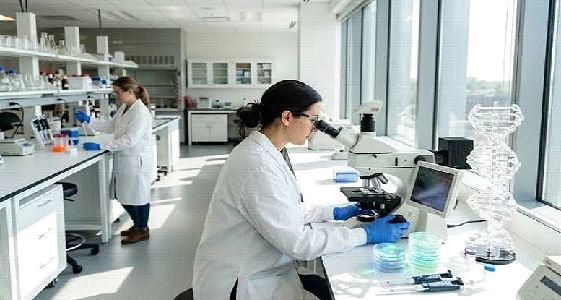

Scientists have achieved a significant milestone in synthetic biology by developing a technology that brings researchers closer to creating life-like systems entirely in the laboratory, marking another step in the quest to understand the fundamental building blocks of living organisms.
The latest breakthrough centers on the construction of increasingly sophisticated synthetic cells-artificial structures that mimic some of the essential functions of natural cells without being fully alive. Researchers say the work could eventually deepen our understanding of how life began on Earth and pave the way for innovations in medicine, biotechnology and environmental science.
Unlike living cells, synthetic cells are assembled from non-living components such as lipids, proteins and genetic material. Scientists have been working for years to recreate key biological processes, including energy production, communication, growth and controlled division, in these artificial systems.
The newest research demonstrates improved coordination between these cellular functions, allowing synthetic structures to behave in ways that more closely resemble natural cells. While the artificial cells cannot reproduce independently or evolve like living organisms, they are capable of performing increasingly complex biological tasks under carefully controlled laboratory conditions.
Experts say the findings represent progress toward understanding the minimum requirements needed for life. By stripping biology down to its simplest components and rebuilding it piece by piece, researchers hope to uncover how the earliest cells may have emerged billions of years ago. The work also holds promise for practical applications. Artificial cells could one day be engineered to deliver drugs directly to diseased tissues, detect harmful pathogens, manufacture valuable chemicals or clean up environmental pollutants. Because they can be designed with specific functions, synthetic cells may offer safer and more precise alternatives for certain medical and industrial applications. Despite the excitement surrounding the research, scientists emphasise that creating fully living organisms in the laboratory remains a distant goal. Current synthetic cells lack many of the defining characteristics of life, including the ability to sustain themselves, reproduce without assistance and undergo natural evolution. Researchers also stress that ethical oversight will remain essential as the field advances.



Be the first to comment