
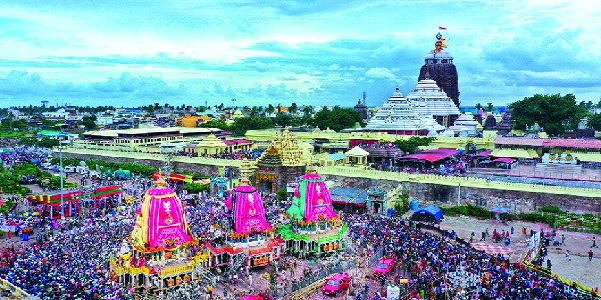

Every year, millions of devotees gather in the sacred coastal town of Puri in Odisha to witness one of Hinduism’s most spectacular and spiritually uplifting festivals-the Jagannath Puri Rath Yatra. More than a grand religious procession, the Rath Yatra is a celebration of divine love, inclusivity and the timeless bond between God and devotee. As three majestic, elaborately decorated wooden chariots roll through the streets amid the chants of “Jai Jagannath,” the festival transforms the town into a sea of devotion, where people from every walk of life come together in prayer and celebration.
For devotees, pulling the ropes of the chariots is not merely a ritual but a sacred act of surrender, symbolising the soul’s journey towards the Divine. The festival carries profound spiritual messages that transcend religion, reminding humanity of compassion, equality and the impermanence of worldly life.
The Meaning of ‘Jagannath’
The word Jagannath literally means “Lord of the Universe.” Lord Jagannath is worshipped as a form of Lord Vishnu and Lord Krishna, accompanied by his elder brother Lord Balabhadra and younger sister Devi Subhadra. Unlike conventional stone idols found in most temples, the deities at the Jagannath Temple are carved from sacred neem wood, giving them a distinctive appearance that has fascinated devotees and scholars for centuries.
Their large round eyes, unfinished limbs and unique form symbolise the limitless and all-encompassing nature of the Divine. Spiritual teachers often explain that Jagannath’s wide-open eyes represent His eternal watch over every living being, irrespective of caste, creed or status.
The Sacred Origins of the Rath Yatra
Ancient scriptures and local traditions offer several fascinating legends about the origin of the Rath Yatra. One popular belief is that the procession commemorates Lord Krishna’s annual visit to his birthplace and relatives. Another tradition associates it with Lord Jagannath’s journey to the Gundicha Temple, regarded as the home of His aunt, where He stays for several days before returning to the main temple.
The festival symbolises the Lord stepping out of His sanctum to bless all devotees. Since entry into the Jagannath Temple is restricted to practising Hindus, the Rath Yatra offers everyone, regardless of religion or nationality, an opportunity to have the darshan of the deities.
The Three Magnificent Chariots
Months before the festival begins, skilled artisans start constructing three enormous wooden chariots using traditional techniques passed down through generations. Remarkably, fresh chariots are built every year from specially selected wood, reflecting the Hindu philosophy of renewal and the cyclical nature of existence.
Lord Jagannath rides the majestic Nandighosha, the largest of the three chariots. Lord Balabhadra travels in Taladhwaja, while Devi Subhadra is seated in Darpadalana, also known as Devadalana.
Each chariot has its own distinctive colour, flag, guardian deities and symbolic significance. Decorated with vibrant fabrics, intricate carvings and floral adornments, they become moving temples that carry divine blessings through the streets of Puri.
Chhera Pahanra: A Lesson in Humility
One of the most moving rituals associated with the Rath Yatra is the Chhera Pahanra, during which the Gajapati King of Puri ceremonially sweeps the platforms of the chariots with a golden broom while sprinkling fragrant water.
This tradition carries a profound spiritual lesson. Despite being the temporal ruler of the region, the king performs the role of a humble servant before the Lord. The ritual reinforces the belief that no one is above God and that true greatness lies in humility, selfless service and devotion.
It serves as a reminder that worldly power and social status fade before the Divine.
Pulling the Chariot
Perhaps the most iconic image of the Rath Yatra is thousands of devotees pulling the massive chariots with thick ropes. For believers, this is not simply a physical act but a deeply symbolic one.
The chariot represents the human body, while the ropes signify devotion and righteous action that guide the soul toward spiritual liberation. By participating in the procession, devotees express their desire to overcome ego, attachment and ignorance while moving closer to God.
Many believe that even touching the ropes or catching a glimpse of the deities during the procession brings immense spiritual merit.
A Festival That Celebrates Equality
The Jagannath tradition has long been recognised for promoting social harmony and equality. During the Rath Yatra, distinctions of caste, wealth, gender and social background dissolve as devotees stand shoulder to shoulder in devotion.
The Lord does not discriminate among His devotees. Everyone has the same opportunity to seek blessings, pull the chariot and participate in the celebrations.
This universal message has inspired saints, poets and spiritual leaders across centuries, reinforcing the idea that divine love belongs to all humanity.
Mahaprasad: The Blessing Shared by All
An integral part of Jagannath worship is the sacred Mahaprasad, prepared in the temple’s traditional kitchens using age-old methods. It is considered one of the largest community kitchens in the world, where food is cooked in earthen pots over wood-fired stoves.
The Mahaprasad is shared without discrimination, emphasising the ideals of equality, gratitude and collective harmony. Eating the blessed food together is regarded as an act of spiritual unity that transcends social divisions.
For many pilgrims, receiving Mahaprasad is as spiritually significant as witnessing the Rath Yatra itself.
Spiritual Lessons from the Divine Journey
Beyond its grandeur, the Rath Yatra offers timeless lessons relevant even in modern life. It reminds us that God is not confined within temple walls but walks among people, sharing their joys and sorrows. The moving chariots symbolise life’s journey, where progress is possible only when guided by faith, humility and righteous actions.
The annual rebuilding of the chariots teaches that change is inevitable and renewal is essential for spiritual growth. The king sweeping the chariot illustrates that leadership must be rooted in service. The participation of millions demonstrates the strength of collective devotion and the unifying power of faith.
Above all, the festival inspires devotees to let go of pride, cultivate compassion and recognise the Divine presence in every individual.


Be the first to comment