
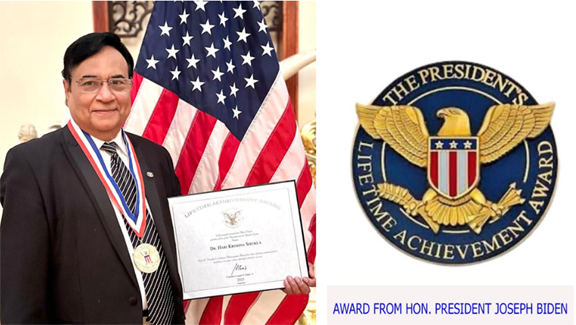

The pediatrician arrived in the United States on a three-month Rotary exchange scholarship, expecting to return home before his first child was born. Instead, a chance encounter changed the course of his life—and Neonatal Medicine.
Current Position: Clinical Assoc. Professor of Pediatrics, NYU. School of medicine. Founder & Medical Director, Children’s Medical Center, Flushing,
Known For: Forty-one years of care to the children of New York, a Pioneer of Surfactant therapy, and for the developing Birth Weight formula for Umbilical catheters.
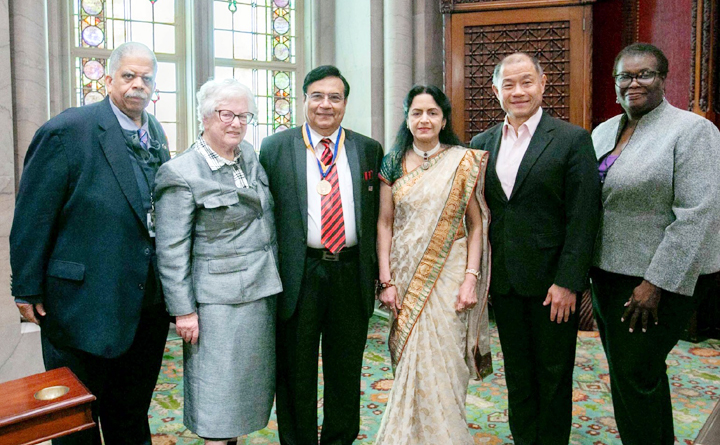
Major Recognitions: 1. First South Asian American to receive New York State’s Highest Civilian Award “The Liberty Medal”.
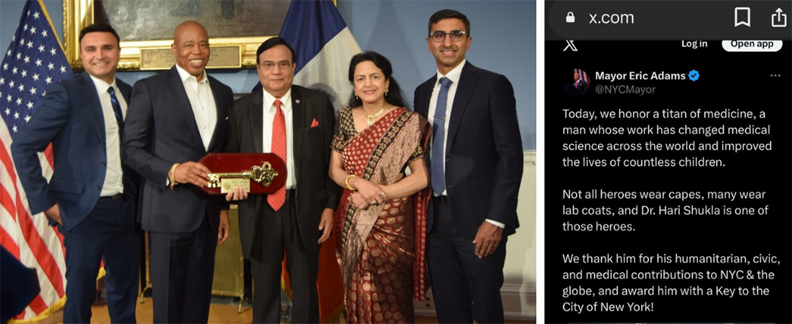
- First south Asian American to receive ‘The Key to the City of New York’ from Hon. Mayor Eric Adams.
- First South Asian American Physician to receive ‘The Lifetime Achievement award’ from the President of the United States – Hon. Joe Biden.
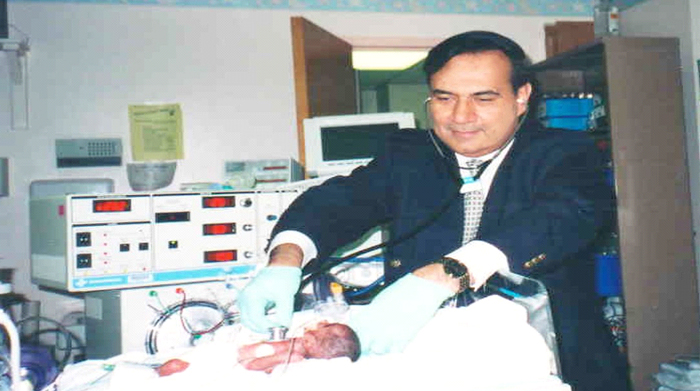
baby at Flushing Hospital.
When pediatricians around the world care for critically ill newborns in neonatal intensive care units, many rely on a simple mathematical formula developed nearly four decades ago by an Indian-American physician who never intended to settle in the United States.
Known in medical literature as the Shukla Criteria or Birth Weight Criteria, the formula is a reliable method to determine the correct insertion length of umbilical catheters in newborns—a breakthrough that became standard neonatal practice, reducing life-threatening complications in newborns. It remains one of the most enduring contributions of Dr. Hari Krishna Shukla, whose career has combined pioneering research, clinical excellence, medical education, and community service over more than four decades.
Yet, when Dr. Shukla reflects on the defining moment of his professional life, he does not begin with his research or the awards that followed. He goes back to the summer of 1980, when he boarded a flight to America with no plans of staying.
“I came to the United States as a Rotary International Exchange Scholar,” he recalls.
“It was a three-month program. Rotary International sent me from R.I Dist. 305 (Gujarat, Rajasthan, and Madhya Pradesh) to R. I. Dist. 545 (Colorado, Wyoming, and Nebraska). Every week, I stayed with a different American family. It was an incredible experience, but I was supposed to return to India on July 1 because my wife was expecting our first child on July 15.”
Fate intervened just a day before his departure.
Before leaving, Dr. Shukla decided to visit a hospital to meet Dr. Edward Wasserman whose book, Survey of Clinical Pediatrics, had guided him during Pediatric residency in India.
The visit, meant only as a courtesy, became a life-changing interview.
“They interviewed me and offered me a job,” he says with a smile. “I told them, ‘How can I start tomorrow? I’m going back to India. I have just one bag with me.’ They said, ‘You can stay in the hospital. There are on call residents’ rooms. So, I spent my first week sleeping in the hospital before I found an apartment. That is how my life in America began.” Later on, NYU medical Center and Bellevue Hospital sponsored me for Green Card.
What began as a three-month exchange became the foundation of a career that would influence neonatal care worldwide. Training in New York exposed Dr. Shukla to advanced research, technology, and mentors that shaped his innovations.
“America allows excelling in your field,” he says. “When I came here in 1980, we used to read about different diagnostic tests in textbooks, but many of those tests simply weren’t available in India then. Here, whatever was written in the books was available—and often even more. Some professors devoted their entire careers to research, so you trained under people who were constantly discovering new things. It gives you opportunities that were difficult to find elsewhere.”
Equally important, he believes, was a professional culture that rewarded merit.
“It is a fair system,” he says. “If someone is very good, people appreciate it and allow them to excel. Instead of pulling you down, they support you. That makes a tremendous difference for anyone who wants to innovate.”
Umbilical catheters are essential for treating premature and critically ill newborns, but incorrect placement can have serious consequences. In the mid-1980s, Dr. Shukla set out to solve a problem for which no standard method existed.
His answer was elegant in its simplicity.
“Umbilical catheters are considered the lifeline for very sick babies,” he explains. “If they are not positioned correctly, children can lose kidneys, intestines, or even limbs because of complications.”
Published in 1986, his mathematical formula provided physicians with a quick, reliable, and reproducible method for catheter placement based on a newborn’s measurements.
“I wanted doctors to have a simple method that could be used anywhere in emergency settings and no one has to look for the graphs. I never received any grant od financial assistance. There were no computers. Everything was done manually. It was published so that every physician could use it. That is what gives me “the greatest satisfaction.”
Over time, the “Shukla Criteria” was adopted by hospitals, incorporated into medical textbooks, and taught in residency programs across the United States and beyond. It is estimated that over four hundred million sick infants have received Umbilical Catheters using Dr. Shukla’s criteria.
Over the decades, the Shukla Criteria has influenced neonatal care for countless newborns worldwide, becoming one of the most widely recognized practical innovations in the field. He smiled and mentioned, I am a foreign Medical Graduate, I cannot get residency at Harvard, however, Harvard protocol reads ‘use Dr. Shukla’s formula’.
For many physicians, such a breakthrough would define an entire career. For Dr. Shukla, it was only the beginning.
A Career Built on Innovation
The catheter formula that now bears his name was only the first of several contributions Dr. Shukla would make to neonatal medicine. He continued to focus on problems that confronted physicians in neonatal ICUs every day.
He went on to develop another widely cited formula for estimating the insertion length of endotracheal tubes in newborns—an equally critical procedure in emergency care. The work was later incorporated into physician training programs and neonatal resuscitation protocols, helping doctors quickly establish airways for infants struggling to breathe.
“What interested me was research that doctors could actually use,” Dr. Shukla says. “Medicine is constantly evolving, but if your research stays only in journals, it helps very few people. I wanted to develop something practical—something that could immediately improve patient care.”
His research also advanced understanding of bilirubin metabolism and the blood-brain barrier, contributing to the prevention and management of kernicterus, a severe neurological disorder caused by untreated neonatal jaundice. Additional studies on gestational age assessment helped physicians evaluate newborn development more accurately, particularly in premature babies whose treatment often depends on precise clinical assessment.
Another milestone came in 1987 when Dr. Shukla was the first physician in New York state to use Surfactant Therapy for premature infants.
At the time, neonatal medicine stood on the threshold of a revolution. Babies born months before full term often lacked surfactant, a naturally occurring substance that prevents the lungs’ tiny air sacs from collapsing. Without it, breathing became an enormous struggle, and survival rates were poor.
Surfactant therapy changed that.
As one of the earliest physicians to introduce the treatment in the United States—and among the first doctor of Indian origin in the world to do so—Dr. Shukla helped bring a breakthrough from clinical research into everyday hospital practice.
“It completely changed neonatal care,” he says. “Children who earlier had very little chance of surviving suddenly had a real opportunity to live. To be part of that transition was one of the most rewarding experiences of my career.”
His interest in preventive medicine also extended beyond neonatal intensive care.
He participated in research related to polio vaccines and immunization programs, work that contributed to broader vaccination efforts in developing countries. For these contributions, he received the Pasteur Mérieux Connaught Award, recognizing his role in advancing vaccine research and public health.
Although each project addressed a different challenge, they shared a common purpose—making medicine safer, simpler, and more accessible.
Yet, he has never regarded scientific research as the defining measure of a physician.
“I have always believed that treating patients, teaching young doctors, and doing research should go together,” he says. “One strengthens the other.”
Teacher, Mentor, and Physician
Dr. Shukla built an equally distinguished career as an educator.
As a clinical associate professor of Pediatrics at NYU School of Medicine, Proctor at Cornell Medical College and attending at several hospital, he trained hundreds of Medical students, Pediatric residents, and Neonatal fellows. Former trainees remember him not only as a skilled clinician but as a physician who insisted that technical excellence must always be matched by compassion.
Medicine, he believes, cannot be learned from textbooks alone.
“You can teach knowledge in the classroom,” he says. “But judgment, ethics, and how you treat families—that is something young doctors learn by watching experienced physicians.”
Beyond the university, his expertise was sought by several institutions.
Dr. Shukla serves as a consultant Pediatrician to diplomatic missions at United Nations, Consulate General of India in New York, a U.S.-designated civil surgeon for immigration medical examinations, and had been a Question/Writer for examination in American board of pediatrics & Neonatology, while building the Children’s Medical Center in Flushing into one of Queens’ leading pediatric practices.
For thousands of immigrant families arriving in New York from South Asia and elsewhere, it became a place where they found not only medical care but also reassurance.
Many parents were navigating an unfamiliar healthcare system, struggling with language barriers, insurance requirements, and the anxieties of raising children in a new country.
He understood those challenges because he had lived them himself.
“The biggest challenge in the beginning is getting settled,” he recalls of his own early years in America. “When my wife came with three months old son, I didn’t even have a car. I had to ask another resident to bring them from the airport. When we reached our apartment, we found it had been burglarized. There was nothing inside.”
Those first months tested the young family in ways they had never imagined.
“I’m a vegetarian,” he says with a laugh. “In those days, finding vegetarian food wasn’t easy. Today, you have Patel Brothers and Indian grocery stores everywhere, but in those days, even simple things were difficult. I remember asking my mother to bring jaggery from India when she visited first time because you couldn’t buy it here.”
The challenges extended beyond food and finances.
“There were times when people didn’t understand Indians,” he recalls. “Once someone followed me shouting, ‘Gandhi! Gandhi!’ But America has changed tremendously over the years. Today, people know Indian doctors, scientists, and business leaders. The respect for the Indian community has grown enormously.”
For over four decades, he has continued to practice in Queens, mostly working 60-hour weeks for four decades. He has also lived in that county all along.
“The biggest support has always been my wife,” he says. “For 46 years, I’ve worked around sixty hours every week. That would never have been possible without her.”
Kirti Shukla, a trained microbiologist, initially worked in a hospital before choosing to help raise their two sons. She later became the administrator of the Children’s Medical Center, founded by Dr Shukla, managing the practice while supporting her husband’s demanding professional schedule.
Together, they built not only a successful medical practice but also a family deeply rooted in medicine. Their sons, Mrugank and Mehul, both became radiologists and now practice in New York.
For Dr. Shukla, however, medicine has never ended at the clinic doors.
“Being a doctor,” he says, “also means serving the community outside the hospital.”
Serving Beyond the Boundary and Above Self
For Dr. Shukla, community service has always been inseparable from medicine.
Long before moving to the United States, he volunteered with the Indian Red Cross Society, serving as secretary of its medical wing and joining relief teams during floods and droughts in Gujarat and Bihar. The work earned him recognition from two governors of Gujarat and instilled a lifelong commitment to public service.
“I worked a lot with the Indian Red Cross Society,” he recalls. Whenever there was a flood, drought, or any difficult situation, we would go there and treat people. Community service became part of my life very early.”
“I did lot of community work with Rotary clubs in India. I was District Rotaract Representative of R.I. Dist. 305 in 1979.
That commitment continued after he arrived in America as a Rotary International Exchange scholar. “So, when I came here,” he says, “I naturally continued doing community work.”
Over the years, Dr. Shukla transformed that philosophy into institutions that have served thousands of immigrants. In 2004, he founded South Asians of New York, Inc., bringing together communities from India, Pakistan, Bangladesh, Nepal, Sri Lanka, and Afghanistan through health awareness, civic engagement, and youth programs. He is a Chairman and the founder member of the New American Voters Association (NAVA) to encourage immigrants to participate in the democratic process.
“We work on many issues—children’s obesity, gun violence, health education, and medical empowerment,” he says. “Being part of America also means contributing to society.”
His desire to bridge cultures inspired another enduring tradition. After seeing American leaders join Diwali celebrations, he decided the South Asian community should also embrace American festivals. For nearly three decades, he has led an annual Christmas toy drive, visiting hospitals dressed as Santa Claus to distribute gifts to children spending the holidays in the hospital.
“The children don’t want to be in the hospital during Christmas,” he says. “We tell them not to feel bad because they’re sick and can’t go home. We give toys to every admitted child.”
Breaking Barriers in Women’s Healthcare
He also focused on women’s health. Many South Asian women delayed breast cancer screening because of cultural barriers. He secured funding to establish a free screening program at Flushing Hospital staffed entirely by female healthcare professionals.
“I realized many South Asian women were not going for screening,” he says. “Sometimes they were shy, or the family didn’t encourage it. But if breast cancer is detected early, it can be cured.”
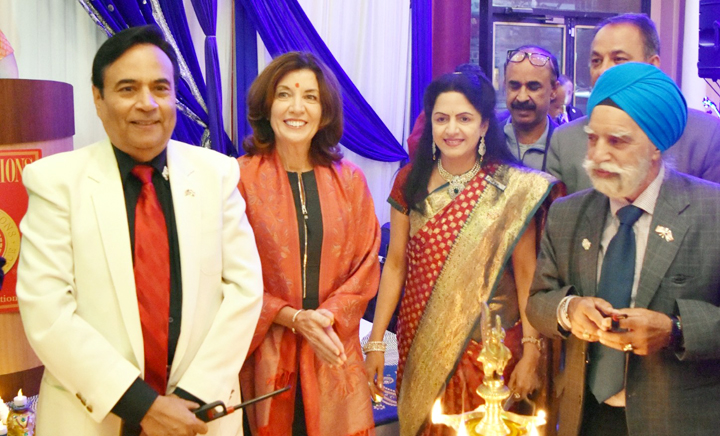
contributions to the medical field.
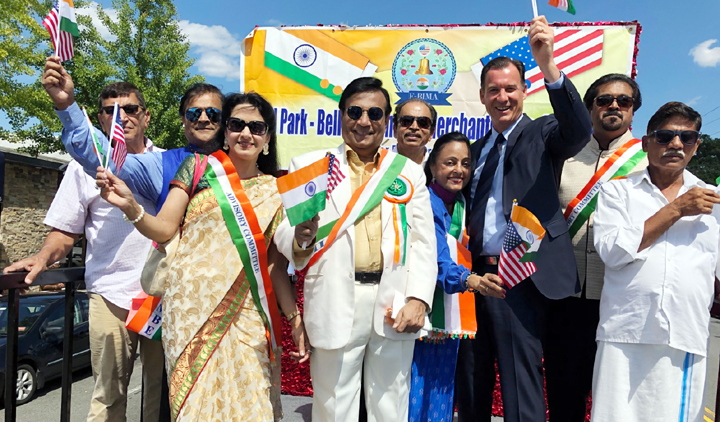
Beyond these initiatives, he has organized vaccination drives, childhood obesity awareness campaigns, health fairs, disaster-relief fundraisers for India, Sri Lanka, and Haiti, and educational programs across New York. He has also served as chairman of the Queens India Day Parade, helping strengthen ties between Indian Americans and the wider community.
Recognition that Followed Service
As his contributions to medicine and community service grew, so did the recognition. He became the first South Asian to receive New York State’s Liberty Medal, the state’s highest civilian honor, and later received the Presidential Lifetime Achievement Award and President’s Gold Voluntary Service award and India’s Bharat Gaurav and Hind Ratan awards.
Despite the honors, Dr. Shukla measures success differently. “It was for children, and it was free for everyone to use,” he says of the neonatal formula that bears his name. “I never developed it to make money. Anyone could publish it, teach it and use it. If it helped save a child somewhere in the world, that was enough.”
Family, Faith and the Values He Carried Across Oceans
Although America became home, Dr. Shukla says he never left behind the values with which he was raised.
“My children are vegetarian. My six grandchildren are vegetarian,” he says with quiet pride. “They take a lunch pack from home to school. They go to the temple. None of them smoke or drink.”
Those traditions, he believes, have helped keep the family connected across generations while embracing life in America.
His wife, Kirti, has remained his closest partner throughout that journey.
“The biggest support has always been my wife,” he says. “Whatever I have been able to do—in medicine, research, or community service—would not have been possible without her.”
Even after more than four decades in practice, retirement is not something that occupies his thoughts.
At 75, Dr. Shukla continues to see patients, mentor young physicians, and devote time to community service.
Looking back, he credits America for allowing him to turn ideas into innovations. “America allows excelling in your field,” he says. “If someone is very good, people appreciate it, they support you, and they allow you to excel.”
Be the first to comment