

New Delhi (TIP): In a major push to safeguard the integrity of public recruitment examinations, the Centre has introduced a stringent anti-paper leak legislation that proposes up to 10 years of imprisonment and fines of up to Rs 10 crore for individuals and organisations found guilty of leaking question papers or engaging in organised examination fraud.
The proposed law, aimed at curbing malpractices in competitive examinations conducted by central agencies, seeks to establish a strong legal framework to deter paper leaks, impersonation, cyber fraud and other unfair practices that have repeatedly disrupted recruitment processes across the country.
According to the provisions of the Bill, those involved in organised paper leak rackets, tampering with examination systems or facilitating large-scale cheating could face a minimum prison term of three years, extendable to 10 years, along with monetary penalties that may reach ?10 crore. Institutions or service providers found complicit in such offences may also face heavy financial penalties and recovery of losses incurred due to cancellation or rescheduling of examinations.
The legislation covers examinations conducted by central recruitment agencies, including those responsible for recruiting personnel for government departments and public sector institutions. It seeks to address growing concerns overe repeated examination irregularities that have affected lakhs of aspirants and delayed recruitment in recent years.
The Bill categorises offences such as leaking question papers before examinations, unauthorised access to question papers or answer keys, impersonation, use of electronic devices for cheating, hacking of examination systems and creation of fake websites or digital platforms to deceive candidates. These offences have been classified as cognisable, non-bailable and non-compoundable, enabling law enforcement agencies to take swift action against offenders.
Officials said the proposed law is intended to target organised criminal networks rather than genuine candidates. Students appearing for examinations in good faith are not expected to face prosecution unless they are found to have knowingly participated in fraudulent activities.
Investigating agencies will be empowered to probe organised examination fraud, with provisions allowing cases involving large-scale conspiracies to be investigated by central agencies where necessary. The government also plans to strengthen digital security measures, improve encryption of examination material and enhance coordination among examination authorities to prevent leaks.
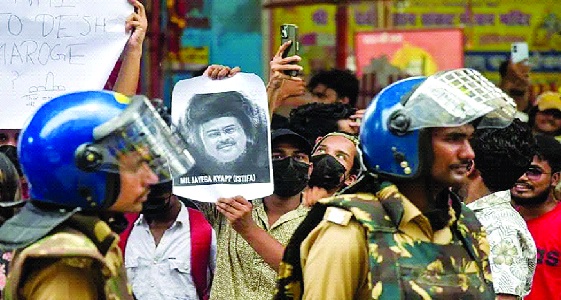
The move follows a series of paper leak incidents involving recruitment and entrance examinations in different parts of the country, which sparked widespread protests among candidates and raised questions about the credibility of examination systems. Several examinations had to be cancelled or postponed after allegations of question papers being leaked before the scheduled tests.


Be the first to comment