
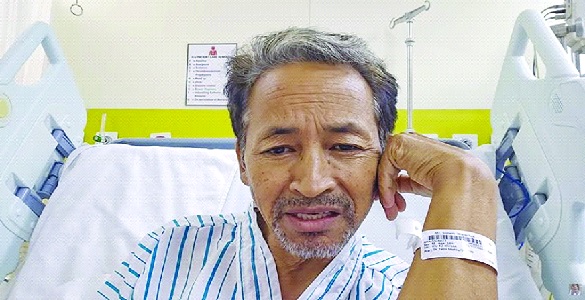

New Delhi (TIP): Climate activist Sonam Wangchuk has defended the integrity of his 26-day hunger strike, questioning why he should be required to prove the sincerity of his protest after enduring significant physical hardship.
Climate activist Sonam Wangchuk has defended the integrity of his 26-day hunger strike, rejecting allegations that he ended the fast after striking a deal with the government and asking critics why he should need a “character certificate” to prove his commitment to the students’ movement.
In a video message shared on X, Wangchuk dismissed allegations that he had struck a deal with the government, saying, “Do I need to prove my sincerity after a 26-day hunger strike?
“AFTER 26 DAYS OF HUNGER, DO I NEED TO PROVE MY SINCERITY!!!
He said he ended his hunger strike only after securing a written assurance as he feared an imminent crackdown on protesters in Delhi, recalling the 2025 firing on youths in Ladakh, and wanted to prevent any violence against students.
The students, led by the Cockroach Janta Party nam (CJP), are protesting at Jantar Mantar and elsewhere against the NEET paper leak. Their key demands include the resignation of Education Minister Dharmendra Pradhan in connection with the controversy.
He also rejected allegations that he had compromised with the government.
“Last night around midnight, I was told the ministers had agreed to give the assurance in writing. I was in a hurry because the situation in Delhi was such; there was apprehension that a major crackdown could happen.
“I was watching reports and was reminded of September 24, 2025, when police and CRPF personnel mercilessly fired at the youth of Ladakh. I was afraid something similar could happen here. I felt that if I ended my fast and appealed for peace, perhaps the situation could be diffused,” he said.
Responding to criticism over ending his fast in the presence of Union ministers, Wangchuk said those questioning his decision were unaware of the circumstances he faced after being shifted from the protest site.
“If I had to make a deal, would I have remained hungry for 26 days? Could I not have struck a deal sitting in an air-conditioned room instead of fasting in Delhi’s heat?” he asked.
He alleged that after being taken to Safdarjung Hospital on July 18, he was treated “like a prisoner”, claiming he was denied free movement, prevented from meeting visitors and not allowed to keep a mobile phone or laptop.


Be the first to comment