
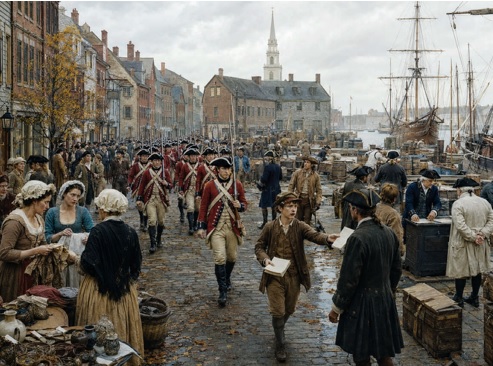

From Protest to Rebellion, 1763-1775
“The Revolution began before independence-with an argument over power, consent and the rights of British subjects.”
VICTORY CREATES A CRISIS
Britain emerged from the French and Indian War in 1763 with an enlarged empire-and a greatly enlarged debt. British officials believed it reasonable for the colonies to help pay for their defense and administration. Many colonists believed they had already contributed men, money and sacrifice. Accustomed to managing their internal taxation through elected assemblies, they viewed new parliamentary measures as an intrusion into established rights. The Royal Proclamation of 1763 attempted to restrict settlement west of the Appalachian Mountains, partly to reduce costly conflict with Indigenous nations following Pontiac’s War. Land speculators and settlers resented the boundary. Indigenous peoples understood that imperial lines meant little unless Britain actually restrained colonial expansion.
SUGAR, CURRENCY AND ENFORCEMENT
The Sugar Act of 1764 tightened customs enforcement and altered duties on molasses and other goods. The Currency Act restricted colonial paper money. Britain also expanded the use of vice-admiralty courts, where customs cases were heard without juries. These measures touched trade, credit and the cherished English right to trial by jury. The underlying dispute was constitutional. Parliament claimed authority to legislate for the entire empire. Colonists distinguished between external regulation of trade and internal taxation imposed without consent. Britain asserted “virtual representation”: members of Parliament served the interests of all subjects. Colonists replied that no representative they elected sat in Parliament
“No taxation without representation was more than a slogan; it was a claim that legitimate power required consent.”


Be the first to comment