
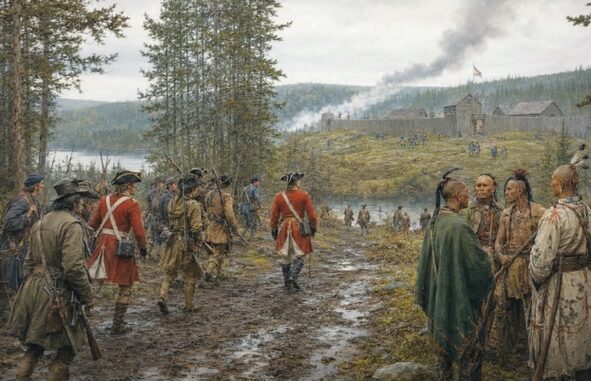

The French and Indian War began in 1754 as a struggle over the Ohio Valley and became part of a global contest known as the Seven Years’ War. Britain and its colonies fought France and its colonial forces; Indigenous nations made independent strategic choices, forming alliances according to their own interests. Young George Washington gained military experience in the conflict, but the war’s meaning extended far beyond any one colonial officer. Britain’s victory in 1763 removed France as a major mainland rival and greatly expanded British claims. But victory brought enormous debt.
British officials concluded that the colonies should help pay for their defense; colonists believed their wartime sacrifices and accustomed selfgovernment entitled them to greater respect. The Crown also sought to limit western settlement through the Proclamation of 1763, partly to reduce conflict with Indigenous nations. Landhungry colonists resented the restriction. The empire had won a continent and weakened the loyalty of many of its colonists. Shared military service, intercolonial communication and common grievances began turning separate societies toward common action.
“Britain’s greatest American victory planted the seeds of its American loss.



Be the first to comment