
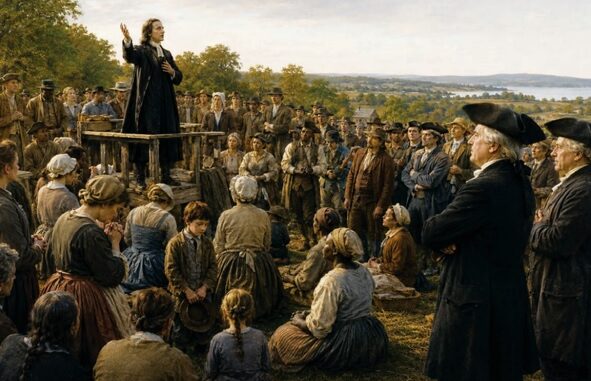

In the 1730s and 1740s, the Great Awakening swept through the colonies. Itinerant preachers spoke to large outdoor crowds, stressing personal conversion over established hierarchy. The movement divided congregations but crossed colonial boundaries, encouraged new denominations and suggested that ordinary individuals could judge authority for themselves. At the same time, Enlightenment ideas emphasized reason, observation, natural law and improvement. Benjamin Franklin embodied the practical colonial Enlightenment as printer, scientist, inventor and civic organizer. Religious revival and rational inquiry were not simple opposites; together they widened debate about conscience, authority and the capacity of individuals.
INDIGENOUS AMERICA AND COLONIAL EXPANSION
Colonial growth came at the expense of Native lands. Treaties were negotiated under unequal conditions, boundaries ignored and settlement pushed steadily inland. Yet Indigenous nations remained formidable. The Haudenosaunee Confederacy exercised diplomatic influence between British and French empires; nations throughout the interior pursued alliances designed to protect their own security and sovereignty



Be the first to comment