
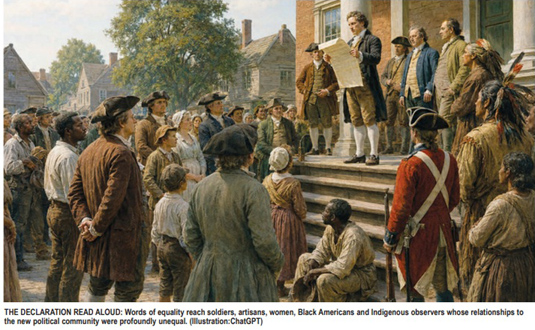

The Declaration was read publicly in Philadelphia on July 8 and soon in towns, military camps, churches and meetinghouses across the states. Crowds cheered; bells rang; royal symbols were removed. In New York, troops and civilians pulled down a statue of George III. Yet reactions were not unanimous. Loyalists rejected the act; uncertain colonists feared the consequences; enslaved and Indigenous people judged the new nation through interests and dangers distinct from those of Patriot leaders. The text also addressed an international audience. The United States needed recognition, credit and alliance-especially from France. By presenting independence as a justified response to tyranny, the Declaration made the American cause intelligible within the political language of the eighteenth-century Atlantic world.
THE NAME “UNITED STATES OF AMERICA”
The phrase was emerging before July 1776 and appeared in the Declaration’s conclusion as “the Representatives of the united States of America.” The document did not instantly create national unity, but it publicly named a collective political identity that the war and future Constitution would have to make real.
“The colonies declared themselves independent states-and began the harder work of becoming one people.”


Be the first to comment