
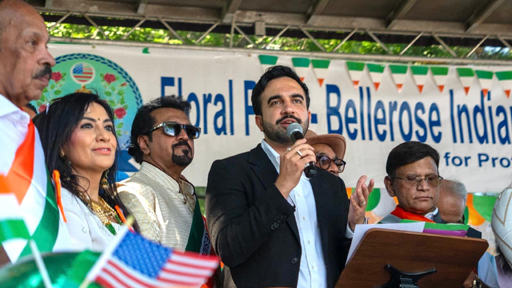

Mayor Zohran Mamdani joins colorful Hillside Avenue procession as Floral Park-Bellerose community celebrates Indian heritage, culture and unity
-
I.S. Saluja
QUEENS, NY (TIP): Thousands of Indian Americans, elected officials, community leaders and families turned Hillside Avenue in eastern Queens into a colorful celebration of India’s heritage on Saturday, August 15, as the Queens India Day Parade and Cultural Program commemorated India’s 80th Independence Day.
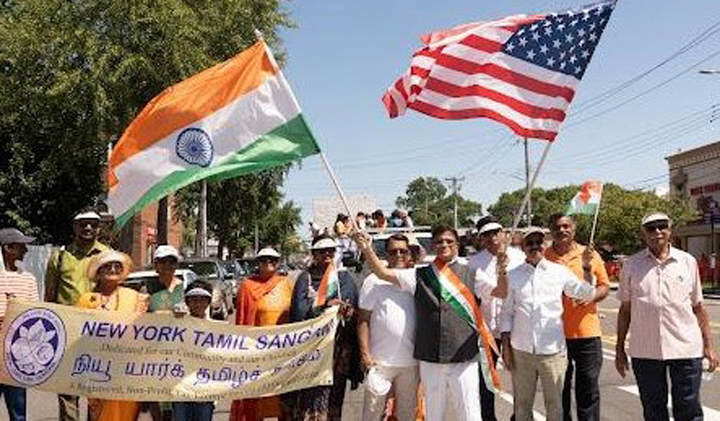
Organized by the Floral Park-Bellerose Indian Merchant Association (FBIMA) Inc., the annual parade brought Indian flags, floats, music and dance to the Floral Park-Bellerose neighborhood, drawing more than 3,000 marchers and spectators in person and another 4,000-plus viewers through a live online broadcast, according to post-event reporting.
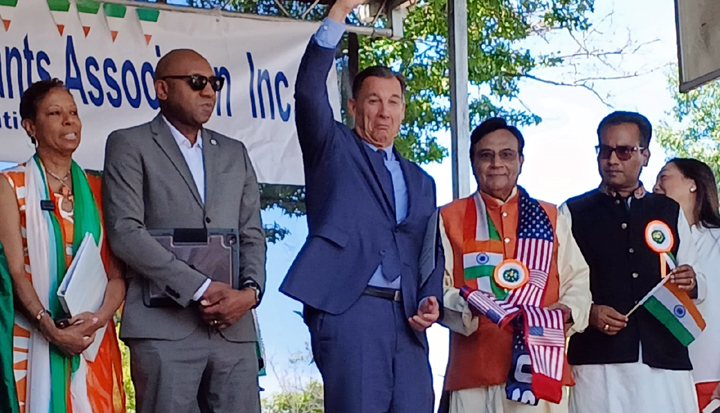
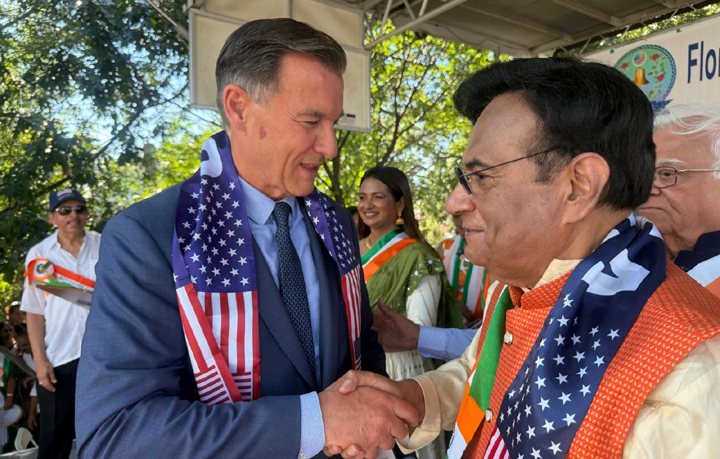
Among the most prominent participants was New York City Mayor Zohran Mamdani, whose presence carried particular significance this year. Mamdani, who took office in January, attended the celebration as New York City’s first mayor of Indian origin.
“Today, I was back in Floral Park for the Queens India Day Parade — this time as the first Indian American mayor of New York City,” Mamdani said afterward. “It was an experience I will never forget.”
Parade Moves Along Hillside Avenue
Participants assembled near Langdale Street and Hillside Avenue before proceeding along Hillside Avenue from 268th Street to Little Neck Parkway.
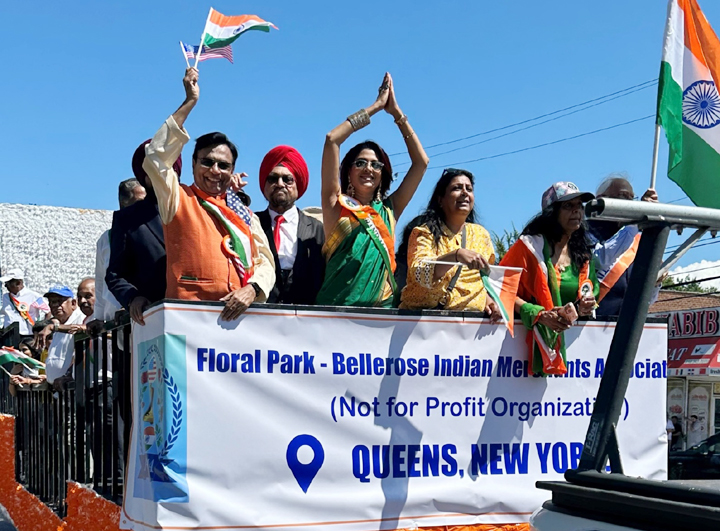
The procession included five floats and approximately 15 Indian community organizations from Queens and Long Island, along with dance and cultural groups. A police band, mounted police and a display of exotic cars added to the spectacle.
The event was organized under the leadership of FBIMA President Dincil George, Board Chairman Thomas Koshy and Parade Chairman Dr. Hari Shukla.
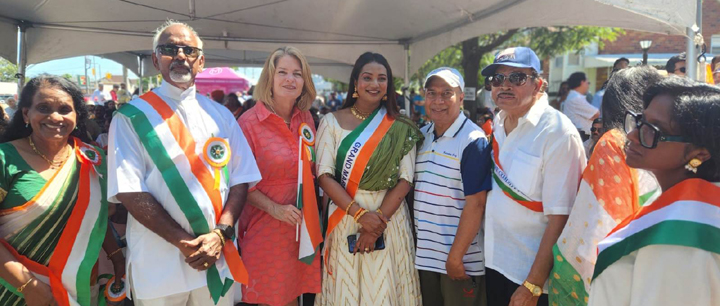
Bollywood actresses Sarnaya Anand and Kashishh Rajput served as Grand Marshals.
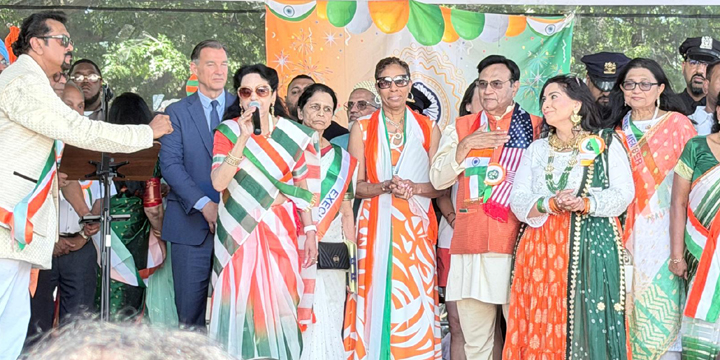
The parade culminated near Little Neck Parkway, where a stage had been erected for speeches, music and cultural presentations. The program featured 12 dance performances, along with musical presentations reflecting both traditional and contemporary Indian culture.
Mayor Mamdani Celebrates His Indian American Roots
Mayor Mamdani addressed the gathering near Little Neck Parkway, where photographs from the event showed him speaking before members of the Indian American community.
His participation gave this year’s celebration an unusual historical dimension.
Born in Kampala, Uganda, to Indian-born parents—scholar Mahmood Mamdani and filmmaker Mira Nair—Mamdani came to New York as a child and was elected the city’s first mayor of Indian origin last year.
At the Queens celebration, he invoked former Mayor David Dinkins’ memorable description of New York as a “gorgeous mosaic,” emphasizing the religious and cultural diversity of the Indian diaspora and its contribution to the city.
For a community celebrating the freedom of the country from which many of its members or their parents came, the presence of an Indian American at the helm of America’s largest city gave the occasion additional symbolic resonance.
Elected Officials Join the Celebration
The parade drew a broad representation of public officials from New York City, New York State and the federal government.
Among those attending were Congressman Tom Suozzi, New York City Comptroller Mark Levine, Queens Borough President Donovan Richards Jr., State Assemblyman Ed Braunstein, State Assemblywoman Michaelle Solages, former City Council Speaker Adrienne Adams, Council Members Shekar Krishnan and Linda Lee, North Hempstead Supervisor Jennifer DeSena, and Town Clerk Ragini Srivastava, along with candidates for public office. The Indian Panorama Chief Editor Prof. Indrajit S Saluja was also among the guests.
Their participation reflected the political and civic prominence the Indian American community has acquired in Queens and neighboring Long Island.
The Floral Park-Bellerose area, situated near the Queens-Nassau border, has become home to a substantial South Asian population and a flourishing network of Indian-owned businesses, community organizations and houses of worship.
Culture Takes Center Stage
Yet politics remained only one part of Saturday’s celebration.
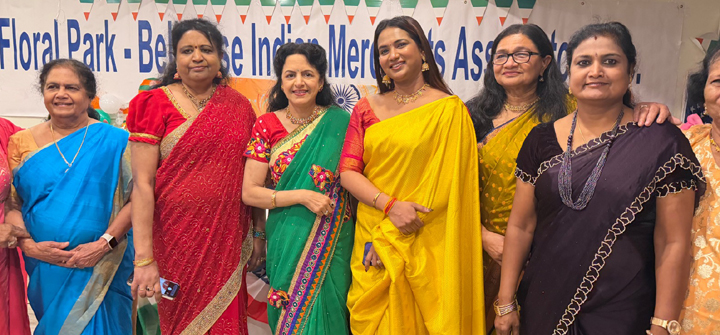
For families lining Hillside Avenue, the dominant sights and sounds were those of Indian culture: the Tricolor, colorful traditional clothing, floats, music and dancers representing the diversity of India’s regions and communities.
The cultural program following the parade continued that theme, giving young Indian Americans in particular an opportunity to perform traditions inherited from parents and grandparents while celebrating them openly as part of life in New York.
That intergenerational element has become one of the most important features of diaspora Independence Day celebrations.
For first-generation immigrants, August 15 often carries memories of the India they left behind. For their American-born children and grandchildren, celebrations such as the Queens parade offer a way of understanding an inheritance they did not experience firsthand.
India at 80, Indian America Coming of Age
This year’s parade came at a remarkable historical conjunction.
India celebrated 80 years of Independence on August 15, while the United States is marking the 250th anniversary of American Independence.
For Indian Americans, the coincidence gives both anniversaries a special meaning.
Their story belongs increasingly to two national narratives: the remarkable journey of independent India and the continuing American story of immigration, opportunity and citizenship.
That reality could be seen on Hillside Avenue: Indian flags carried through a New York neighborhood; elected American officials joining an Indian Independence Day celebration; children born in America performing Indian dances; and, perhaps most strikingly, an Indian American mayor of New York City standing before the community.
The symbolism was difficult to miss.
India’s Independence Day was being celebrated not by visitors temporarily carrying their culture abroad, but by Americans whose Indian inheritance has become one strand in New York’s extraordinary civic fabric.
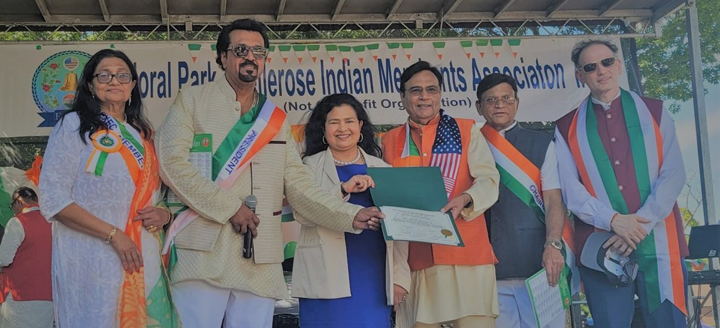
For Mayor Mamdani, the moment was particularly personal. He had attended South Asian community events before becoming mayor. On August 15, he returned to Floral Park occupying a very different office.
And for the Indian American community gathered along Hillside Avenue, his presence offered its own measure of how far that community has traveled.
Eighty years after India became independent, its diaspora was celebrating on the streets of Queens—not merely as Indians remembering home, but as Indian Americans helping shape the city they now call home.
Be the first to comment