

STOCKHOLM (TIP): Humanity’s collective understanding of the cosmos, the human mind, and molecular architecture has taken a monumental leap forward following the announcement of the 2026 Nobel Prizes. By honoring pioneers who transformed Antarctic ice into a deep-space observatory, transformed light into a switch for brain cells, and unlocked the symmetrical mysteries of life, this year’s committees have celebrated the profound power of looking at our world in entirely new ways.
The Royal Swedish Academy of Sciences and the Nobel Assembly revealed a suite of prizes celebrating decades of persistent curiosity. These awards honor breakthroughs that have fundamentally rewritten their respective fields, bridging the gap between invisible subatomic physics and the fluid boundaries of contemporary poetry.
Medicine: Revolutionizing Neuroscience Through Light
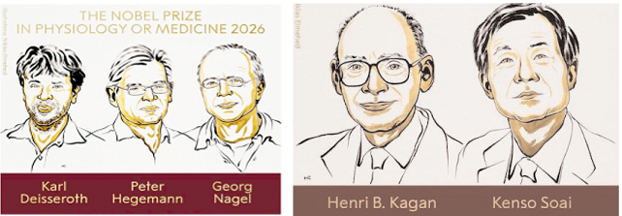
The 2026 Nobel Prize in Physiology or Medicine was awarded jointly to Karl Deisseroth, Peter Hegemann, and Georg Nagel for their revolutionary development of optogenetics.
Optogenetics combines genetic modification and optics to achieve something once thought impossible: controlling the electrical activity of specific neurons in living tissue using light.
• The Discovery: Hegemann and Nagel discovered channelrhodopsins—light-gated ion channels found in green algae. Deisseroth then successfully integrated these light-sensitive proteins into mammalian neurons.
• The Impact: When exposed to bursts of laser light via fiber-optic cables, the modified neurons switch on or off instantly. This molecular switch allows scientists to map complex brain circuits and study neurological disorders like Parkinson’s disease, depression, and blindness with unprecedented precision.
Physics: Catching “Ghost Particles” Under the Antarctic Ice
 The Nobel Prize in Physics was awarded to Francis Halzen for his monumental, decisive contributions to the IceCube Neutrino Observatory.
Halzen, a theoretical physicist, was the visionary driving force behind turning a cubic kilometer of pristine Antarctic ice into the world’s largest particle detector.
n The Discovery: IceCube was built to capture neutrinos—nearly massless, uncharged “ghost particles” that travel across the universe without stopping.
n The Impact: Halzen’s work led to the successful detection of high-energy cosmic neutrinos originating from extreme, violent astrophysical sources outside our galaxy, such as blazars and active galactic nuclei. This breakthrough effectively birthed the field of neutrino astronomy, giving humanity a new way to observe the deep universe.
Chemistry: Decoding Nature’s Asymmetric Chemistry
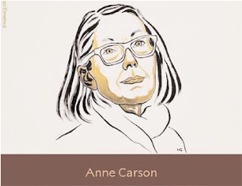
The Nobel Prize in Chemistry was awarded to Henri B. Kagan and Kenso Soai for pioneering discoveries in asymmetric organic synthesis.
Most biological molecules are chiral, meaning they exist in left- and right-handed “mirror-image” forms. In pharmacology, one hand might cure a disease, while the other could be toxic.
n The Discovery: Kagan discovered remarkable non-linear effects in asymmetric catalysis, proving that a small amount of a single-handed catalyst could yield an unexpectedly high purity of the desired mirror-image molecule. Soai discovered an extraordinary system of asymmetric autocatalysis—a chemical reaction that acts as its own catalyst, amplifying a tiny initial imbalance into total chiral purity.
n The Impact: Their work provides the foundational answers to how biological life became asymmetric. It also provides vital tools for chemical manufacturing, allowing pharmaceutical companies to efficiently synthesize pure, safe, single-handed drugs.
Literature: Unifying the Ancient and Contemporary
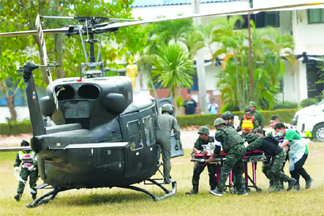
The Nobel Prize in Literature was awarded to Canadian poet, essayist, and translator Anne Carson.
Carson has long been celebrated for erasing the lines between poetry, essay, drama, and scholarship.
– The Academy’s Praise: The Swedish Academy honored Carson for her bold and inventive oeuvre. They noted that her work exists in a playful, brilliant dialogue with classical tradition while forging entirely new forms for contemporary literature.
– The Impact: Renowned for works like Autobiography of Red, Carson reimagines ancient Greek myths and literature through a fiercely modern lens. Her writing explores grief, love, and the limits of language, solidifying her status as one of the most structurally innovative writers of our time.
The 2026 Nobel Schedule Continues
The Nobel season is not yet complete. The world’s attention now turns to Oslo and Stockholm for the final two prizes of the year:
– Nobel Peace Prize: Friday, October 9, 2026
– Sveriges Riksbank Prize in Economic Sciences: Monday, October 12, 2026.
The Nobel Prize: How Alfred Nobel Created a Legacy of Excellence
– The Nobel Prize, one of the world’s most prestigious international awards, was established by Swedish chemist, engineer and dynamite inventor Alfred Nobel to honor individuals and organizations whose work benefits humanity.
– On November 27, 1895, Nobel signed his last will and testament, directing that approximately 94% of his fortune be used to establish prizes recognising outstanding contributions in five fields: Physics, Chemistry, Physiology or Medicine, Literature and Peace. His decision is sometimes linked to a premature obituary published in 1888 following the death of his brother, Ludvig Nobel, which reportedly described Alfred as the “merchant of death”. However, the extent to which this influenced his decision remains uncertain.
– After Nobel died on December 10, 1896, his will faced legal challenges and opposition from relatives. The Nobel Foundation was eventually established to manage his fortune and administer the awards.
– The first Nobel Prizes were presented on December 10, 1901, marking the fifth anniversary of his death. The awards recognise discoveries, achievements and efforts that advance knowledge, culture and peace.
– An additional prize, the Sveriges Riksbank Prize in Economic Sciences in Memory of Alfred Nobel, was established in 1968 and first awarded in 1969. Unlike the original five categories, it was created through a separate initiative.


Be the first to comment