
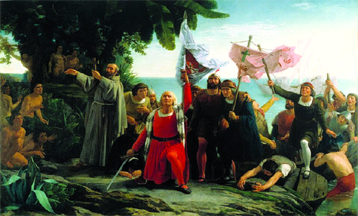

Every October, calendars across the United States mark an observance that has become one of the most fiercely debated holidays in modern Western culture. What originally began as a civic commemoration of transatlantic exploration, maritime courage, and Italian-American cultural pride has, over recent decades, transformed into a complex national conversation about history, imperial conquest, indigenous sovereignty, and how a society chooses to remember its past. To fully understand the weight of the day, one must look beyond the simplified textbook narrative and examine the intricate tapestry of 15th-century ambition, 19th-century immigration politics, and 21st-century historical reexamination.
The Great Transatlantic Gamble
On August 3, 1492, Genoese navigator Christopher Columbus set sail from the port of Palos de la Frontera in southwestern Spain. Sponsored by the Catholic Monarchs, King Ferdinand II of Aragon and Queen Isabella I of Castile, the expedition set out with three small wooden vessels: the flagship Santa María, a square-rigged carrack, alongside two smaller caravels, the Pinta and the Niña. Columbus believed that by sailing directly west across the Atlantic, he could open a profitable ocean trading route to the wealthy ports of Asia, bypassing the land routes controlled by the Ottoman Empire.
After more than two grueling months at sea-during which the crew faced dwindling supplies, false land sightings, and rising threats of mutiny-a sailor named Rodrigo de Triana aboard the Pinta spotted land in the early morning hours of October 12, 1492. Columbus made landfall on an island in the Bahamas archipelago known to its native inhabitants as Guanahani, which Columbus promptly claimed for Spain and renamed San Salvador. Believing he had reached the East Indies, Columbus referred to the indigenous people he encountered as “Indians.” This fateful landfall initiated sustained contact between the Old World and the New, triggering the “Columbian Exchange”-a sweeping global transfer of plants, livestock, human populations, cultures, and lethal infectious diseases that permanently reshaped the ecology and demographics of both hemispheres.
From Assimilation to Federal Recognition
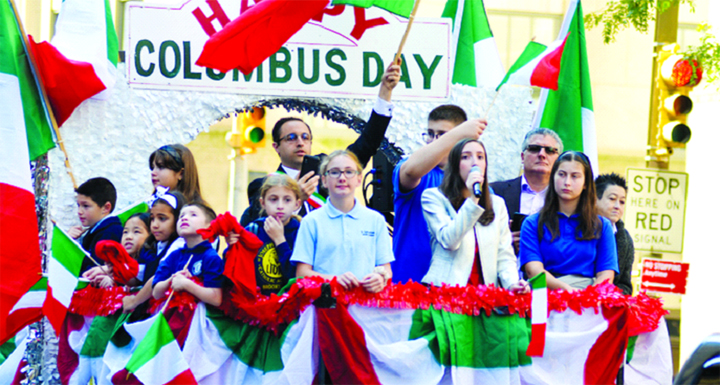 The path from a 15th-century maritime voyage to an official American public holiday was neither immediate nor straightforward. The earliest recorded civic celebration took place on October 12, 1792, when the Tammany Society in New York City organized a banquet and procession to mark the 300th anniversary of Columbus’s landfall. However, the holiday’s formal political adoption was driven largely by 19th-century social tensions surrounding immigration.
During the late 1800s, millions of Italian immigrants arrived in the United States, facing widespread anti-Catholic prejudice, xenophobia, and violent discrimination. A turning point occurred in March 1891, when eleven Italian immigrants were brutally lynched by a mob in New Orleans after being acquitted in the murder of the city’s police chief. To defuse a severe diplomatic crisis with the Kingdom of Italy and promote national unity, President Benjamin Harrison issued a presidential proclamation in 1892 declaring a one-time nationwide celebration of Columbus Day on the 400th anniversary of the voyage. Italian-American communities embraced Columbus-a native of Genoa-as a symbol of Catholic inclusion and patriotic contribution to the American story.
Through intense lobbying by civic organizations like the Knights of Columbus, states began adopting the holiday individually, beginning with Colorado in 1907. In 1934, amidst the Great Depression, Congress passed a resolution authorizing President Franklin D. Roosevelt to declare October 12 an official annual federal holiday. Decades later, under the Uniform Monday Holiday Act enacted in 1968 and taking effect in 1971, the official federal observance was officially shifted from the fixed calendar date of October 12 to the second Monday in October, ensuring a standardized three-day weekend for federal workers.
Reexamination and the Rise
of Indigenous Peoples’ Day
As historical scholarship expanded in the late 20th century, the traditional narrative surrounding Columbus faced intense scrutiny. Critics pointed to primary historical records-including Columbus’s own journals and reports by contemporary historians like Bartolomé de las Casas-which documented the brutal subjugation, forced labor, sexual violence, and near-total demographic destruction of the native Taíno population through enslavement and introduced Old World pathogens.
This shift in historical perspective gave rise to a movement advocating for the recognition of the continent’s original inhabitants. In 1990, South Dakota became the first U.S. state to replace Columbus Day with Native American Day. Two years later, in 1992, the city council of Berkeley, California, officially instituted Indigenous Peoples’ Day to coincide with the 500th anniversary of Columbus’s landfall.
Over the past two decades, this movement has gained widespread momentum. Today, dozens of states and hundreds of municipalities across the United States have either formally replaced Columbus Day or observe Indigenous Peoples’ Day concurrently on the second Monday of October. In October 2021, President Joe Biden issued the first formal presidential proclamation commemorating Indigenous Peoples’ Day alongside Columbus Day, acknowledging both the painful historical truths of European colonization and the enduring resilience, heritage, and sovereignty of Native nations.



Be the first to comment