
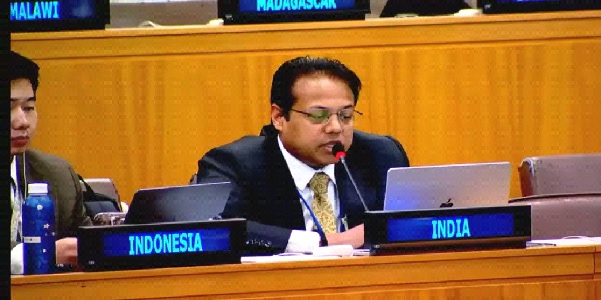

New Delhi (TIP): India has rejected criticism from a United Nations special rapporteur over the alleged stigmatization and retaliation faced by young people discussing mental health and gender justice, questioning the credibility of claims based on anonymous and unverified submissions. Speaking during an interactive dialogue with UN Special Rapporteur Gina Romero at the 81st session of the UN General Assembly’s Third Committee, India’s First Secretary Anuj Swarup challenged the evidence cited in her report on the rights to freedom of peaceful assembly and association. ” A sweeping charge against the world’s largest youth population resting on anonymous and unverified claims is not evidence. It is hearsay, dressed up as a UN report, and my delegation rejects it outright,” Swarup said, according to a report by The Times of India published on Saturday. India argued that the country’s Constitution guarantees freedom of peaceful assembly, association, speech and expression under Article 19. Swarup also cited the role of an independent judiciary, a free press and the National Human Rights Commission in protecting these rights. He questioned Romero’s assertion that young Indians faced retaliation or stigma for raising issues such as mental health and gender justice, saying the report relied on unnamed submissions rather than adequately substantiated evidence. The Indian representative also pointed to youth-led political mobilization and engagement with senior government leaders as examples of civic participation in the country. “In which repressive state does a satirical youth party question the government, march on the capital, and then sit across the table with senior national leaders?” he asked, referring to the youth-led Cockroach Janta Party (CJP) movement discussed in the report. He further cited the government’s response to student protests over irregularities in public examinations, saying Parliament had amended the Public Examinations Act, strengthened measures against paper leaks, undertaken examination reforms and established fast-track courts to deal with exam fraud. Swarup also highlighted the Viksit Bharat Young Leaders Dialogue, saying more than five million young people had participated in discussions on national priorities. He argued that engagement between young people and senior political leaders demonstrated that youth voices had avenues for influencing public policy. UN criticism amid protests in Delhi The exchange comes amid a wave of youth-led demonstrations in New Delhi, including protests organized by the CJP and other groups demanding the resignation of Chief Election Commissioner Gyanesh Kumar over alleged irregularities in the revision of electoral rolls. The Election Commission has denied allegations of political bias. The protests have also led to detentions of activists and journalists, drawing separate criticism from the UN Human Rights Office (OHCHR). On October 10, the OHCHR expressed concern over reports of mass detentions involving demonstrators, protest leaders, civil society members, lawyers and journalists. It urged Indian authorities to respect the right to peaceful assembly, exercise restraint and ensure that restrictions on protests met tests of necessity and proportionality. India rejected those concerns in a separate response, describing them as “unwarranted” interference in its internal affairs. It maintained that peaceful assembly was constitutionally protected, subject to reasonable restrictions in the interest of public order, and urged the UN body to apply its mandate consistently across countries. The latest exchange highlights the disagreement between New Delhi and UN human rights representatives over the assessment of civic freedoms and the treatment of young activists. While India has questioned the evidence underlying Romero’s allegations and cited constitutional protections and government engagement with youth, the UN has called for safeguards for peaceful protest and the rights of those participating in demonstrations.


Be the first to comment