
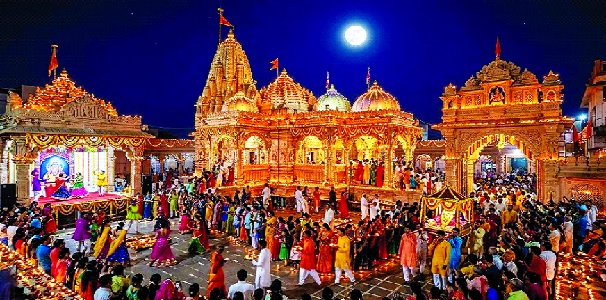

Celebrated under the luminous full moon of autumn, Sharad Purnima is a sacred Hindu festival that symbolizes divine love, spiritual fulfillment, prosperity and the nourishing power of nature. From the enchanting legend of Lord Krishna’s Raas Leela to the tradition of offering kheer beneath the moonlight, this auspicious night invites devotees to turn inward and celebrate the bond between the human soul and the divine.
When the monsoon clouds begin to recede and the autumn sky opens to reveal a brilliant full moon, a special spiritual atmosphere descends across India. Known as Sharad Purnima, this night holds a cherished place in Hindu religious tradition, bringing together devotion, mythology, fasting, prayer and the quiet beauty of moonlit nature.
Falling on the full moon, or Purnima, of the Hindu lunar month of Ashwin, Sharad Purnima is also known by names such as Kojagari Purnima, Kaumudi Purnima and Raas Purnima in different regions and traditions. The festival is associated with Goddess Lakshmi, the goddess of wealth and prosperity, and Lord Krishna, whose divine dance with the gopis is celebrated as an expression of the soul’s longing for union with God.
At its heart, Sharad Purnima is more than a celebration of the moon. It is a reminder that spiritual abundance comes not only from material prosperity but also from gratitude, purity of intention, love and inner awakening.
Origin and spiritual significance
The word Sharad refers to the autumn season, while Purnima means the full-moon day. Sharad Purnima marks the first full moon of autumn in the traditional Hindu calendar and is celebrated with particular devotion in many parts of India.
The festival’s religious significance has developed through several strands of Hindu tradition, including Vaishnava accounts of Krishna’s divine play, popular stories associated with Goddess Lakshmi and regional customs that honor the full moon.
In Indian spiritual thought, the moon has long been associated with calmness, beauty, emotional balance and the rhythms of life. Its waxing and waning cycles are linked symbolically with change, renewal and the passage of time. The bright full moon of Sharad Purnima represents completeness and illumination, making it a fitting symbol for spiritual fulfillment.
The night also arrives at a seasonal turning point. After the rains, the air often feels clearer, the landscape becomes refreshed and the moon appears particularly luminous against the autumn sky. This natural beauty has inspired centuries of poetry, devotional music and religious observances.
Sharad Purnima therefore brings together the spiritual and the seasonal: the light of the moon, the abundance of the harvest season and the aspiration to cultivate clarity and contentment within oneself.
The legend of Lord Krishna’s Maha Raas Leela
One of the most enchanting legends associated with Sharad Purnima is the Maha Raas Leela of Lord Krishna, described in the Bhagavata Purana, particularly in its Tenth Canto.
According to the Vaishnava tradition, on a beautiful autumn night in Vrindavan, the radiance of the full moon illuminated the forests, while the gentle breeze carried the fragrance of blooming flowers. Lord Krishna played his divine flute, whose captivating melody reached the hearts of the gopis, the cowherd women of Braj.
Drawn by their profound love for Krishna, the gopis left their everyday activities and gathered in the forest. Krishna welcomed them and performed the Raas Leela, a celestial dance symbolizing divine love and the relationship between the individual soul and the Supreme Being.
When the gopis became conscious of their special closeness to Krishna, he disappeared for a time, allowing them to experience the intensity of separation and longing. Their yearning deepened their devotion, and Krishna eventually reunited with them.
In the spiritual interpretation of this episode, the Raas Leela is not merely a dance or a romantic tale. It represents bhakti – unconditional devotion and the soul’s desire to experience the divine presence. The full moon becomes a symbol of divine illumination, while Krishna’s flute represents the call of God that awakens the heart. The story reminds devotees that genuine spiritual love requires humility, surrender and freedom from ego.
This association has made Sharad Purnima especially significant in Vrindavan and the Braj region, where devotional performances, temple celebrations, music and recitations commemorate Krishna’s divine play.
Goddess Lakshmi and the legend of Kojagari Purnima
Sharad Purnima is also deeply associated with Goddess Lakshmi, the Hindu goddess of wealth, prosperity, fortune and abundance.
In many traditions, the festival is known as Kojagari Purnima, a name derived from the Sanskrit expression Ko jagarti?, meaning “Who is awake?”
According to the traditional Kojagari legend, Goddess Lakshmi travels through the world on this auspicious night, asking who remains awake in devotion. Those who keep vigil, worship the goddess and remember the divine with sincerity are believed to receive her blessings.
A popular account tells of a poor Brahmin named Valit, whose life was marked by financial hardship. Through his observance of the Kojagari ritual and the blessings associated with Goddess Lakshmi, his fortunes eventually changed. Different regions tell variations of this story, but its central message remains the same: devotion, vigilance and faith are spiritually valuable.
The word “awake” also carries a deeper meaning. Beyond remaining physically awake throughout the night, it can symbolize being alert to one’s duties, opportunities and spiritual responsibilities.
The legend encourages devotees to overcome laziness, greed and carelessness, and to cultivate discipline, gratitude and generosity.
In eastern India, particularly West Bengal, Odisha and Assam, Kojagari Purnima is observed with special Lakshmi Puja. Families decorate their homes, prepare offerings and pray for prosperity, peace and well-being.
Rituals and traditions of Sharad Purnima
Sharad Purnima is celebrated in different ways across India. While the details vary by region and family tradition, the observance generally combines worship, fasting, offerings and appreciation of the full moon.
Early-morning bath and prayer
Devotees traditionally begin the day with a bath, wear clean clothes and offer prayers at their home altar. Some decorate their homes and place flowers, incense and lamps before their chosen deity.
Worship of Goddess Lakshmi
Devotees worship Goddess Lakshmi with flowers, lamps, sweets, fruits and other customary offerings. Prayers seek prosperity, harmony and freedom from financial hardship. In some traditions, devotees also worship Lord Vishnu and the Moon God, Chandra.
Preparing kheer under the moonlight
One of the festival’s best-known customs is preparing kheer, a sweet dish made with milk, rice and sugar, and placing it under the moonlight. After prayers, it is shared as prasad among family members and devotees. In some Swaminarayan traditions, a preparation of milk and flattened rice is offered instead.
Moon worship and night vigil
Families gather to admire the full moon, offer prayers and spend time in devotional activities. Some observe a night vigil, chant mantras, sing bhajans or listen to the Sharad Purnima vrat katha. The vigil is particularly important in Kojagari traditions.
Fasting, charity and sharing prasad
Some devotees observe a fast, following their family or regional customs, and break it after worship. Giving food, clothing or other assistance to people in need is another meaningful way to mark the occasion. The emphasis is on sincere devotion rather than elaborate displays.



Be the first to comment