

Is public support shifting from the far Right towards the centre or the Socialist Left in democratic nations globally?
“The larger question is whether public support is shifting from the far Right towards the center or the Socialist Left in democratic nations globally. A Democratic win in the US would signal that the right-wing Trumpian disruption of global trade and geopolitics has been rejected by the American people. With some shift already visible in Europe, the focus would then turn to India.”
The October 25 Brazilian polls, won by left-leaning President Luiz Inacio Lula da Silva, set off what The Guardian called “10 pivotal days of elections”. The Israeli parliamentary elections were held on October 27, while the US midterms are scheduled for November 3. Meanwhile, the nine-year rule of Serbian President Aleksandar Vucic has ended after he lost a snap election triggered by a youth movement against corruption. In India, the “cockroaches” are spearheading student protests.
Historically, in the post-World War II period, the US and most of its NATO allies set the global standard for liberal democratic governance. The rise of the radical right wing globally is more of a 21st-century phenomenon, which the current elections are putting to the test.
During his first term, US President Donald Trump’s nationalist-xenophobic politics was contained by sensible advisers and the Covid pandemic. In Europe, right-wing political parties started capitalizing on the economic slowdown and rising xenophobia.
The Syrian civil war, resulting from the Arab Spring’s popular uprisings starting in 2011, led to an exodus of Arabs. German Chancellor Angela Merkel opened her country’s borders in 2015 to more than 1.2 million refugees and asylum-seekers, many fleeing the Syrian war. This development led to the consolidation of the ultra-right AfD (Alternative für Deutschland).
Coincidentally, a similar nationalist-majoritarian churn began in India with the victory of the Narendra Modi-led BJP in 2014, with xenophobia against illegal immigrants from Bangladesh or Myanmar being used as a pretext to target Indian minorities.
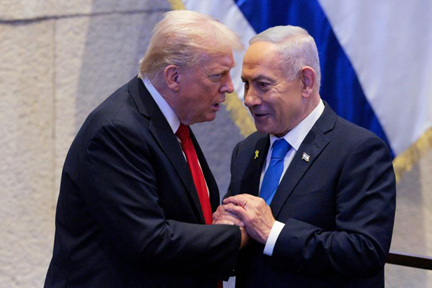
In Israel, Zionist Prime Minister Benjamin Netanyahu fashioned, for the first time, a more drastically right-wing coalition, having aligned with two far-right parties. Itamar Ben-Gvir of Jewish Power became the Security Minister, while the finance ministry went to Bezalel Smotrich of Religious Zionism. These two leaders have openly sought the deportation of all Palestinians.
President Trump’s second term, beginning in January 2025, brought a cruder and more brazen version of nationalist xenophobia. The 1823 Monroe Doctrine was invoked, proclaiming total US control over Latin America.
On the pretext of countering drug trafficking and illegal immigration, the southern border with Mexico was tightened, besides launching air attacks on vessels in the Gulf of Mexico. The regime change in Venezuela, with President Nicolas Maduro and his wife captured and flown to the US, and the subservience of interim President Delcy Rodriguez reflect expanding control over Latin America of pro-US, right-leaning regimes.
The Israeli election results indicate continued support for PM Netanyahu and his radical Zionism. Gadi Eisenkot, a former chief of the Israeli Defense Forces who lost his son and two nephews in the Gaza war, endorses moderate Zionism, though he is strongly critical of Netanyahu.
The Arab parties have gained seats, thanks to their voters’ higher turnout. The polarization is reflected in the verdict due to Israel’s proportional representation. The current threshold is 3.25%, with a party’s seats in the Knesset being proportional to its votes.
Coalition governments are inevitable in Israel’s multiparty system. The formation of the next government depends on the Opposition’s unity and alignment with winners from Arab parties. Alternatively, Netanyahu can dump his far-right supporters and woo centrist Opposition factions.
While coalition talks are underway, Netanyahu shall continue to hold office. Multiple factors will influence the negotiations. One of them is a divide even among pro-Netanyahu right-wing parties over exemption for ultra-religious youth from conscription or compulsory military service. This remains unsettled despite the Israeli Supreme Court ruling against it.
Another factor is the reluctance of even centrist parties to openly align with Arab parties, though a deal to make them abstain is possible. Bringing Arab Palestinians into the governing alliance can drastically alter Israeli politics, while creating an ethos for reverting to a negotiated settlement of the Palestinian issue.
That could also allow gradual stabilization of the region. But the ideal path often varies from the actual choices that politicians make. The region might face greater instability if Netanyahu continues to be in power, in an interim or formal capacity.
The US midterm elections have global significance. Opinion polls indicating that the Republicans are trailing bring into play the resumption of hostilities against Iran. Reportedly the chief of the Israeli Defense Forces defied PM Netanyahu’s order to launch fresh strikes on Iran. That may now be enforced if Trump decides that the attacks can help the Republicans regain popularity.
Post-midterms, if the Democrats capture the House, and more significantly also the Senate, Israel’s radical Zionism and anti-Iran crusade may be constrained. A March 2026 poll in the US found that 60% of Americans viewed Israel unfavorably, with 59% having little or no confidence in PM Netanyahu.
The larger question is whether public support is shifting from the far Right towards the center or the Socialist Left in democratic nations globally. A Democratic win in the US would signal that the right-wing Trumpian disruption of global trade and geopolitics has been rejected by the American people. With some shift already visible in Europe, the focus would then turn to India.
The upcoming Assembly elections, especially in Uttar Pradesh, would indicate whether the youth have abandoned the politics of caste and religion, favoring instead secular politics and equitable development. Prashant Kishor’s byelection win in Bihar from a seat vacated by the current BJP president reflected that shift.
However, the Israeli electoral outcome shows that politics polarized by religion or ethnicity cannot instantly return to principles enunciated by a nation’s founding fathers. Domestically, it would need statesmanship and renewed focus on economic issues, social stability and constitutionalism.
Internationally, there is no reverting to the old post-WWII global order. Its destruction was caused by just one misled major power. Devising a new order requires statesmanship across multiple power centers spanning continents.
(KC Singh is former Ambassador to Iran and UAE. His X handle is @ambkcsingh)


Be the first to comment