

The top court must ensure fairness in electoral roll revisions
Free and fair elections are part of the basic structure of India’s Constitution. India’s potential to emerge as a world power cannot be realized if this foundation and structure is weakened. If an Indian citizen remains on tenterhooks about their right to vote, how can we expect the best from such a citizen?
Did the Supreme Court of India err in its verdict dated May 27, 2026, on the Special Intensive Revision (SIR) of electoral rolls by empowering the Election Commission of India (ECI)to undertake a “limited” inquiry into citizenship for the inclusion of names in, or their exclusion from, the electoral rolls?
Second, can crystallized electoral rolls be unsettled in subsequent elections by deleting names on suspicion?
These questions arise in the context of the electoral rolls in Bihar, published on January 6, 2025, following the ECI’s Special Summary Revision (SSR).
On June 24, 2025, the ECI decided to undertake a fresh SIR, beginning with Bihar. Thus, every electoral roll in Bihar between January 1, 2003 (the date of the last SIR in Bihar), and January 6, 2025 (the date of the last SSR, in Bihar), was, in effect, called into question by the ECI. This was unnecessary, as the ECI, in any case, periodically updates the electoral rolls efficiently.
This unusual exercise effectively called into question the electoral rolls used in every election held in Bihar between 2003 and 2025.
Consequently, in Bihar, the SSR dated January 6, 2025, was superseded by the SIR ordered on June 24, 2025.
The ECI’s notification dated June 24, 2025, was challenged before the Court. However, the challenge was unsuccessful, with the Court endorsing the ECI’s stand in its verdict dated May 27, 2026.
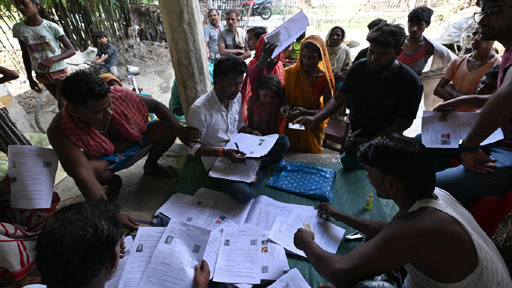
Even before the Court delivered its verdict on May 27, 2026, Assembly elections were held in Bihar in November 2025 and West Bengal in April 2026, following the ECI’s SIR exercise, which entailed mass deletions and surprising inclusions of voters. Widespread dissatisfaction prevailed.
The SIR is now being implemented in other States amid protests.
The ECI’s powers
The Court’s verdict clarified that the ECI has not been empowered to determine citizenship in the “strict sense”. The Court held that the power of the ECI affects an “individual’s entitlement to be included in the electoral roll”. It also held: “It does not, however, operate to divest the individual of claims of citizenship, nor does it foreclose a determination of that question by the competent authority under the Citizenship Act.”
With respect, the words “limited” and “strict sense”, in the context of an inquiry into citizenship, carry no legal significance, even as obiter dicta of the Court.
And the statement that the “power of ECI” “affects” an “individual’s entitlement” to be “included in the electoral roll” is not capable of any interpretation other than that the ECI has the power to disenfranchise an existing voter.
This seems to give carte blanche to the ECI. Little wonder, then, that the ECI has been proceeding to alter the existing electoral rolls nonchalantly.
Enquiry means enquiry, no less; citizenship means citizenship, no less. The ECI’s constitutional authority to inquire into citizenship remains contentious. Even a limited inquiry risks exceeding the ECI’s electoral mandate. The Court seems to have erred.
While preparing the electoral roll, the ECI’s function is limited only to ensuring that every person included is an adult Indian citizen.
The minimum age (18 years) and Indian citizenship are required to be ensured through documents. The ECI’s role is strictly ministerial; it has no authority to conduct any inquiry — limited or otherwise — into citizenship. The problem, however, arises because no single document conclusively proves citizenship.
In other words, the Court vested the ECI with unguided discretion to remove a name from an existing electoral roll on the grounds of suspicious Indian citizenship. This amounts to a citizen, whose name was already on the electoral roll as of January 6, 2025, and who was presumed to be an Indian citizen, being disenfranchised by the ECI through the SIR process with effect from July 1, 2025.
Documents, citizenship, deletion
The Court’s verdict did not even specify any document that could serve as proof of Indian citizenship.
Significantly, however, paragraph 158 of the Court’s verdict reads, inter alia: “… it may not be out of place to note that a Ration Card, unlike a Passport or Birth Certificate, is certainly not a conclusive proof of citizenship…” Thus, the Court has ruled that a passport or birth certificate is conclusive proof of citizenship.
Is this why the Ministry of External Affairs, during a press briefing marking Passport Seva Divas on June 24, 2026, made the controversial statement that a passport was merely a travel document and not proof of Indian citizenship?
Could the Court not have, in the exercise of its jurisdiction, specified the documents that prove Indian citizenship? Or, could the Court not have issued a writ of mandamus directing the government to specify the documents that prove Indian citizenship?
The Court did neither, belying the hopes of every Indian citizen whose citizenship is questioned by the ECI.
How does one prove one’s Indian citizenship? This question still cannot be answered clearly, yet the ECI can disenfranchise a person who has already voted in the last election merely on the grounds of doubts about their Indian citizenship.
On what basis have electoral rolls in India been prepared since January 26, 1950? How can an electoral roll used in a concluded election be altered on the grounds of suspicion? How can a person be disenfranchised after having voted in the previous election? What is the constitutional benchmark for disenfranchising an existing voter? These are questions that the Court could have considered.
The Supreme Court’s powers are extensive under Article 32 (the right to constitutional remedies and the Court’s power to issue writs for the enforcement of fundamental rights), Article 141 (the binding nature of the law declared by the Court on all courts in India), Article 142 (the power to pass orders necessary to do complete justice in any cause or matter pending before it), and Article 144 (the obligation of all civil and judicial authorities in India to act in aid of the Court). The Court can surely still set right this legal vacuum by clearly laying down a yardstick for establishing Indian citizenship.
Adulthood and Indian citizenship are the only two — repeat, only two — qualifications required for inclusion in the electoral roll. The Constitution does not prescribe any third mandatory qualification.
The question of disqualification arises only after identifying qualified voters. Only a person who is otherwise qualified can be disqualified.
Article 326 specifies the grounds for disqualification: “non-residence”, “unsoundness of mind”, “crime”, or “corrupt or illegal practice”.
The Representation of the People Act, 1950, and the Registration of Electors Rules, 1960, must comply with Article 326 of the Constitution. The overriding principles of natural justice must also be followed when disqualifying a qualified voter.
The name of a qualified voter simply cannot be removed from the electoral roll without a pre-decisional hearing.
Protecting franchise
Free and fair elections are part of the basic structure of India’s Constitution. India’s potential to emerge as a world power cannot be realized if this foundation and structure is weakened. If an Indian citizen remains on tenterhooks about their right to vote, how can we expect the best from such a citizen?
Although the right to vote has generally been characterised as a statutory right, its exercise is central to representative democracy and the constitutional commitment to free and fair elections. This was metamorphosed from the Court’s judgments in I.C. Golaknath vs State of Punjab (1967), Kesavananda Bharati vs State of Kerala (1973) and Indira Nehru Gandhi vs Raj Narain (1975), and continues to hold the field. In the interpretation of this writer, the three judgments, read together, surely elevate the voting right to a basic feature of India’s Constitution.
The Kesavananda Bharati judgment established that even Parliament’s power to amend the Constitution cannot be exercised to destroy or damage its basic structure. The principle continues to safeguard essential constitutional features, including democracy.
My Lords, uphold the right to vote freely, fairly and on time.
(Bishwajit Bhattacharyya is Senior Advocate, Supreme Court of India and a former Additional Solicitor General of India)

Be the first to comment