

The targeted opponent may survive the persecution. Public confidence in impartial government may take generations to recover.
The enemies of a president are not necessarily enemies of the Republic. And the authority of the Republic must never be placed at the service of a president’s desire for revenge.

From the earliest years of the American Republic to the present administration, political revenge has tested the institutions entrusted with protecting liberty. The danger today is not merely to those singled out for punishment, but to the independence of justice itself.
Political vendetta is not a new phenomenon in America. It is almost as old as the Republic itself. From the earliest days of constitutional government, officeholders have been tempted to turn public authority against their political adversaries. The instruments change: the temptation persists.
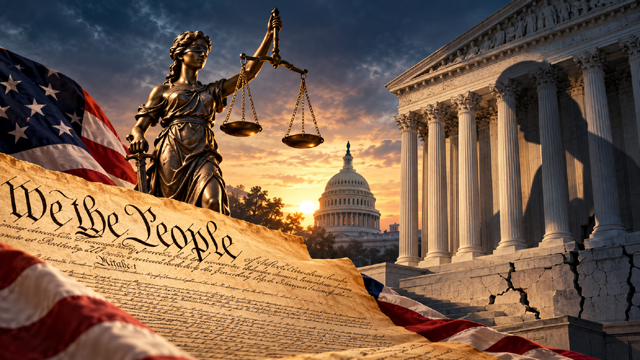
The Constitution begins with “We the People.” It does not say “We the President” or “We the Party in Power.” The authority of government belongs to the people, including those who oppose the government of the day.
There is a decisive distinction between political conflict and political persecution. Harsh criticism, even when unworthy of public office, generally belongs to democratic debate. The misuse of prosecution, taxation, surveillance, regulatory power or public employment to punish opponents is something altogether more dangerous. It transforms public trust into a personal weapon.
The Historical Record
In 1798, President John Adams signed the Alien and Sedition Acts. The Sedition Act was used against opposition journalists critical of the Federalist administration. Barely a decade after the Constitution took effect, the government was prosecuting critics despite the new nation’s commitment to freedom of expression. The law expired in 1801, but its warning endured.
Under Andrew Jackson, the spoils system became closely associated with rewarding political allies through government jobs and displacing opponents. Later civil-service reforms recognized that the machinery of government must serve the public rather than whichever party won the last election.
The Palmer Raids of 1919–1920 demonstrated how genuine security anxieties could be accompanied by sweeping abuses of civil liberties. McCarthyism showed how accusations of ideological disloyalty and congressional investigative powers could intimidate citizens. Under FBI Director J. Edgar Hoover, surveillance operations against activists, including Martin Luther King Jr., revealed the perils of intelligence authority insufficiently restrained.
Richard Nixon supplied the clearest modern warning. His White House maintained lists of perceived enemies, while Watergate and related investigations exposed attempts to misuse executive authority and obstruct accountability. Nixon’s resignation in 1974 affirmed that even the presidency is subject to constitutional limits. The lesson was not that political opponents should escape investigation; it was that the President’s personal interests must not govern the administration of justice.
Retribution as a Public Demand
Against that history, the conduct of President Donald Trump’s second administration raises serious questions. Trump did not invent political vindictiveness, and his supporters maintain that officials who investigated him must be accountable if they committed wrongdoing. That principle is sound: no official should be above the law. But having investigated a president is not itself evidence of misconduct.
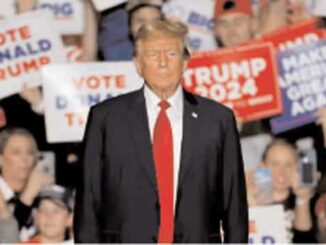
Trump has repeatedly described investigations of himself as politically motivated. During his political rise he also adopted the language of retribution, telling supporters in 2023, “I am your retribution.” After his return to the White House in January 2025, actions affecting federal employees, law firms, institutions and people associated with opposition to him intensified debate about retaliatory use of government power. Reuters documented a broad pattern of actions it characterized as punitive; that journalistic classification should not be confused with a court finding that every action was unlawful.
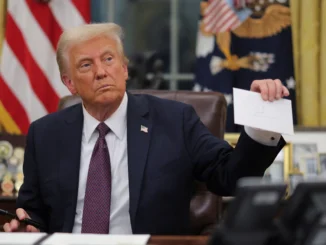
The most consequential issue is not the President’s language alone. It is what happens when public demands for punishment intersect with personnel decisions and criminal prosecutions. A president may set lawful enforcement priorities. He may not replace evidence with personal grievance or insist that a prosecutor produce charges merely to satisfy political anger.
September 2025: The Pressure Becomes Explicit
In September 2025, federal prosecutor Erik Siebert departed the Eastern District of Virginia amid pressure surrounding possible cases against prominent Trump adversaries. Reporting indicated that he had reservations about the strength of the evidence.
On September 20, Trump publicly pressed Attorney General Pam Bondi for action against former FBI Director James Comey, New York Attorney General Letitia James and Senator Adam Schiff. All three had played prominent roles in investigations, litigation or congressional proceedings involving Trump.
Trump then selected Lindsey Halligan, a former personal lawyer, for the interim federal prosecutorial position. Comey was indicted in connection with congressional testimony; James subsequently faced mortgage-related charges. Both denied wrongdoing.
The sequence invites scrutiny: a prosecutor who questioned the evidence departed; the President publicly demanded action against named adversaries; a replacement prosecutor secured indictments. The sequence does not by itself establish every element of unlawful vindictive prosecution. It does make the independence of prosecutorial judgment a central public concern.
In November 2025, a federal judge dismissed the indictments against Comey and James, ruling that Halligan had been unlawfully appointed. The decision did not determine the defendants’ guilt or innocence. The Justice Department appealed, and litigation continued into 2026. The episode nevertheless illustrated why appointment rules and judicial review are essential restraints on executive power.
October 2026: A Warning to Career Officials
On October 15, 2026, nine former FBI employees sued after being dismissed earlier in the year. They had worked on the investigation into Trump’s retention of classified documents at Mar-a-Lago. They alleged retaliation and failures of required procedure. Those claims remain for the courts to decide.
Yet the institutional question is immediate. If a federal agent risks dismissal merely for having been assigned to investigate a politically powerful person, how independent can future investigations be? Agents do not select their cases to suit political fortunes. Their duty is to gather evidence and obey the law.
Officials who fabricate evidence, violate rights or abuse their positions must be held accountable. But participating in a lawful investigation is not proof of disloyalty or wrongdoing. When public servants fear that faithfully performing their duties may end their careers, professional independence gives way to self-preservation. The resulting silence may outlast any administration.
The Real Victims Are the Institutions
An individual singled out by government may suffer legal expense, humiliation, loss of employment or lasting reputational damage. These injuries matter. But the deeper wound of political vendetta is often inflicted on the institutions themselves.
The Department of Justice loses credibility if citizens believe prosecutions depend on presidential favor. The FBI loses independence if agents fear investigating those in power. The civil service loses impartiality if professional judgment must yield to political loyalty. Congress weakens itself when partisan solidarity replaces oversight. Courts face mounting pressure when decisions are judged chiefly by whether they please the executive.
These institutions support the constitutional edifice. A Republic may retain its elections, offices and ceremonial language while the public’s trust in their impartial operation quietly erodes. The targeted opponent may survive the persecution. Public confidence in impartial government may take generations to recover.
Accountability Without Revenge
Condemning political vendetta does not mean granting immunity to former presidents, prosecutors, investigators or political opponents. Credible evidence of wrongdoing must be investigated, wherever it leads. But suspicion is not proof; disagreement is not a crime; and having performed an official duty is not, by itself, misconduct.
The relevant questions are straightforward. Is there credible evidence? Were lawful procedures followed? Were prosecutors free to exercise independent judgment? Would the same standards apply to someone without a history of conflict with the President?
The Attorney General serves the law and the nation, not presidential resentment. Congress must exercise oversight regardless of which party controls the White House. Journalists must distinguish allegations from findings. Citizens must refuse to excuse in their preferred leaders’ conduct they would condemn in their opponents.
America at 250: A Test of Constitutional Character
The founders could not abolish ambition, resentment or the human desire for revenge. They sought instead to build institutions capable of restraining their consequences. Their achievement was not a democracy without political conflict, but a constitutional order in which political conflict need not become governmental persecution.
Winning an election confers authority to govern. It does not confer a license to punish disagreement. The presidency is not a personal possession, and the powers attached to it are not instruments for settling private scores.
We must defend the right to investigate wrongdoing while resisting the use of investigation as punishment for political opposition. That principle protects no single party or personality. It protects the rule of law.
Political opponents come and go. Presidents serve limited terms. Administrations rise and fall. But the Constitution must endure.
The enemies of a president are not necessarily enemies of the Republic. And the authority of the Republic must never be placed at the service of a president’s desire for revenge.
We the People, not We the Powerful.
(References: National Archives (Alien and Sedition Acts; Nixon records); FBI historical records (COINTELPRO); Reuters (September 2025 presidential demands and prosecutor replacement; November 2025 retaliation investigation); AP (October 15, 2026 FBI employee lawsuit); federal court rulings in the Comey/James appointment dispute)
(Prof. Indrajit S Saluja is the chief editor of The Indian Panorama. He can be reached at salujaindra@gmail.com)

Be the first to comment