

WASHINGTON, D.C. (TIP): On Wednesday, November 4, 2026, rising tensions in Asuncion, the capital of Paraguay, turned violent as hundreds of thousands stormed the streets to protest locking out of their accounts in the country’s biggest bank. As fires burned and people anxiously queued outside the collapsed bank, President Santiago Pena, a former shareholder in the bank, announced his resignation.
But as Congress moved to impeach him, Mr. Pena disappeared amid rumors that he had fled to Argentina — just as Brazilian far-right leader Flávio Bolsonaro did last week before fleeing to U.S. after losing the election to President Lula da Silva. “We have information that he left the country without telling anyone. I think he went to Argentina and sought asylum,” said Paraguayan Senator Antonio Velázquez on Thursday, November 5, 2026.
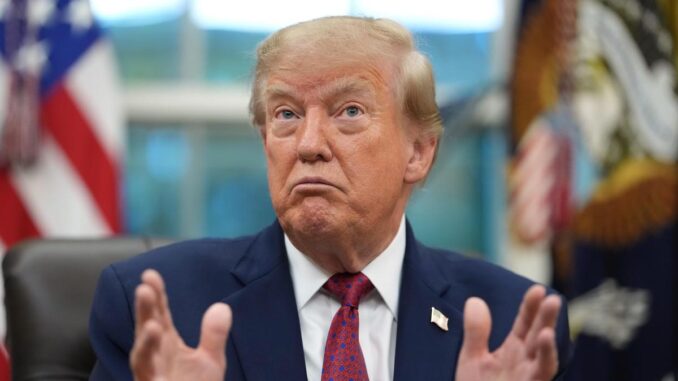
Just a day after a blue wave swept across the U.S. in midterms election shaking President Donald Trump’s administration, the fall of Mr. Pena carries significance beyond the borders of the country of seven million people. Mr. Pena has been one of Mr. Trump’s closest allies in the region, having organized the first Conservative Political Action Conference last year in Asunción, where Argentinian President Javier Milei praised Paraguay’s economy as a “model” to follow.
“If the Republicans had retained the Congress, probably we would have seen Washington coming to Pena’s rescue. But the situation has changed dramatically in the U.S. and our region,” says a Brazilian diplomat, speaking strictly on condition of anonymity.
Former Argentinian President Cristina Kirchner saw it coming as she predicted on Monday, November 2, 2026), Mr. Trump’s defeat and decline of his acolytes in South America. “Paradoxically, the man who did everything he could to help right-wing leaders win elections in Latin America will lose the elections in his own country,” Ms. Kirchner told The Washington Post on November 2.
The following day, Ms. Kirchner was in a meeting with Brazilian Congressman André Janones as they discussed how to mobilize her Peronist party along the lines of Mr. Lula’s grassroots campaign he had led in Brazil and defeat Javier Milei in next year’s election.
Just ten days after Mr. Lula’s victory and two days after Mr. Trump’s rout, the mood across South America is shifting. In his second term, the American President placed the region high on his foreign policy agenda through his “Donroe Doctrine”, which aimed to expand U.S. influence in the region in partnership with right-wing leaders. But the midterms, analysts believe, have given a jolt to that strategy. “The results weaken Trump, who will have more pressing concerns like congressional investigations to deal with.
This, combined with Lula’s victory, could even lead Trump to negotiate tariffs with Brazil,” says Rafael I. Ioris, professor of Latin American studies at the University of Denver, Colorado. “On the other hand, a cornered Trump could become more erratic. It would therefore be advisable for the Brazilian Government to strengthen its ties with Democrats in Congress as a counterbalance to the executive branch,” adds the academic.
The sudden shift comes after an aggressive U.S. policy towards South America in the past 18 months, particularly towards its leftist governments. Besides abducting Venezuelan President Nicolás Maduro, Mr. Trump targeted Brazil and Colombia with tariffs and visa restrictions, and got the Bolivian Attorney General arrested under the Shield of the Americas project. In Brazil, however, there is optimism that the changed political reality could open a window for diplomacy with the Democratic majority in Congress which can apply brakes on Mr. Trump’s interventionist style. “The Congress will tend to cut spending in the defiance sector.
In Latin America, we could see a change in the Shield of the Americas plan, potentially through fewer resources and less emphasis on this policy,” says Camila Vidal, a professor of international Relations at the Federal University of Santa Catarina.
Unlike Brazil, where Mr. Lula is firmly in control, its southern neighbor Argentina, where Mr. Milei is aligned with Mr.Trump, faces uncertainty as he prepares to seek another term in 2027. “The election will depend on the country’s economic and social conditions. But international environment also matters. The political climate that favored Milei’s rise may be beginning to unravel. Lula’s victory and Trump’s defeat do not mean the end of the far-right but they indicate that its expansion is not inevitable and there is room for an alternative based on sovereignty, social justice and peace,” said Leonardo Attuch, one of Brazil’s most prominent commentators.
Colombia, too, could face severe headwinds with the Government of its newly-elected far-right President Abelardo de la Espriella, who received Mr. Trump’s public backing during the Colombian elections, standing on a shaky ground. Former Colombian president Gustavo Petro, who had several public spats with Mr. Trump, draws a parallel between the crises in Paraguay and the policies pursued by other right-wing governments in South America. “The first far-right president falls in Latin America: Santiago Pena of Paraguay. He turned his private bank into a savings deposit for pensions and the budget and went bankrupt. He has bankrupted Paraguay. The same economic programme was ramped up in Argentina and is now being applied in Colombia,” Mr. Petro commented social media on Thursday (November 5, 2026) amid reports of Mr. Pena fleeing to Argentina.
The changed political landscape in Washington could also put Flávio Bolsonaro in a rather tricky situation. The Brazilian far-right leader, who arrived in the U.S. under mysterious circumstances after leaving Brazil, first declared himself to be the “real president-elect of Brazil” before changing it to the “leader of Brazil”. With Mr. Trump last week saying that he had no plans of meeting Mr. Flavio and some Democrats demanding his deportation, Mr. Flávio’s seems to be standing on a slippery slope.
Mr. Lula, meanwhile, was quick to seize on the irony of his running away from Brazil. “Flávio is a jinx for Trump. He landed in the U.S. and Trump lost the election,” the Brazilian President joked during a live conversation, watched by millions, with Congressman Janones on Thursday, November 5, 2026 night.
Reduced to a lame-duck president, Mr. Trump himself could now become a jinx for the far right across South America.
(Source: The Hindu)


Be the first to comment