

The Human Tragedy Remembered on Its 25th Anniversary
25 years after the attacks, the smoke has long disappeared from Manhattan’s
skyline. But the memories, questions and consequences of September 11, 2001, continue to shape America and the world.
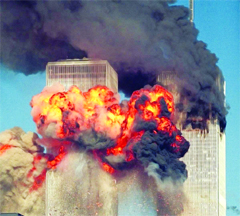
Two hijacked airplanes struck the Twin Towers of the World Trade Center in New York City on the morning of September 11, 2001.
The 9/11 hijackers struck at the heart of the US military when they crashed American Airlines Flight 77 into the world-famous Pentagon building.
There are dates that belong to history, and there are dates that become part of people’s personal memories. September 11, 2001, is both.
For those who lived through it, the morning remains unusually vivid. People remember the television reports, the first photographs of smoke rising from the World Trade Center, the astonishing sight of a second aircraft striking the South Tower, the collapse of buildings that seemed almost indestructible, the streams of people fleeing Lower Manhattan and the sudden emptiness of American skies.
For those who came later, September 11 exists through images and stories: two skyscrapers burning against a clear blue sky, firefighters climbing stairs while others descended, a cloud of dust swallowing streets, passengers aboard Flight 93 deciding to fight back, and, years later, the American special forces operation that ended Osama bin Laden’s life.
But 9/11 was more than one morning of spectacular destruction. It was the culmination of years of radicalization, terrorist planning, intelligence warnings and institutional failures. It triggered wars, transformed America’s security system, altered international politics and changed how millions of people thought about travel, surveillance, terrorism and national identity.
The physical destruction was enormous. The psychological impact was even larger.
And the consequences did not end when the fires were extinguished.
THE AMERICA BEFORE SEPTEMBER 11
To understand why September 11 shocked America so profoundly, it is important to understand the country that existed before it.
The United States entered the 21st century as the world’s dominant superpower. The Cold War had ended. The Soviet Union had disappeared. American military strength was unmatched, the economy was powerful and the country’s cultural and technological influence reached almost every corner of the globe.
New York represented that confidence.
The World Trade Center’s Twin Towers rose more than 1,300 feet above Lower Manhattan. They were not merely office buildings. They were symbols of international commerce and American economic power. Tens of thousands of people worked in and around the complex, while visitors from across the world came to see the towers and the city below them.
The towers were also familiar. They appeared in films, television programs, postcards and photographs. For New Yorkers, they were part of the daily landscape.
Every morning, people entered the complex with coffee cups and briefcases. Elevators carried workers towards offices hundreds of meters above the ground. Restaurants opened. Deliveries arrived. Meetings began.
Nobody looking at the skyline that morning could have imagined that before the day was over, the towers would no longer exist.
The United States had suffered terrorist attacks before. But terrorism was generally regarded as a serious security problem rather than an existential threat to the American homeland.
That perception was about to disappear.


Be the first to comment