

The story of 9/11 began years before the hijackers boarded their aircraft.
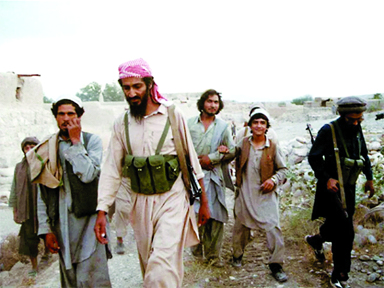
Osama bin Laden emerged from the militant networks created during the war against the Soviet Union in Afghanistan. He eventually became the leader of al-Qaeda, an organisation that sought to build a transnational militant movement and increasingly identified the United States as its principal enemy.
The organization developed in stages. It built financial networks, recruited followers, established training infrastructure and created relationships with militant groups in different countries.
Afghanistan became particularly important after the Taliban rose to power. Al-Qaeda found a permissive environment in which it could train operatives and develop its international network.
Bin Laden’s hostility towards the United States became increasingly explicit.
The first World Trade Center bombing in 1993 demonstrated that the towers could be targeted. The bombing killed six people and injured more than a thousand.
The threat grew.
In 1998, near-simultaneous bombings of U.S. embassies in Nairobi, Kenya, and Dar es Salaam, Tanzania, killed 224 people and injured thousands. In 2000, al-Qaeda operatives attacked the USS Cole in Yemen, killing 17 American sailors.
These attacks were not isolated events. They were part of an evolving campaign.
The 9/11 Commission later documented this history in detail, describing the rise of bin Laden and al-Qaeda, their declaration of war against the United States and the development of the “planes operation.”
America had warnings.
What it did not have was a sufficiently clear picture of what was coming.
THE PLOT TAKES SHAPE
The eventual 9/11 operation was extraordinarily ambitious.
The terrorists planned to hijack several commercial aircraft simultaneously and use them as weapons.
The idea represented a fundamental change from conventional hijacking. Traditionally, hijackers might take control of an aircraft to demand money, release prisoners or obtain political concessions. The 9/11 attackers intended something different: the aircraft themselves would become missiles.
Khalid Sheikh Mohammed was identified by U.S. authorities and the 9/11 Commission as the principal architect of the plot. Osama bin Laden and al-Qaeda provided leadership, organizational support and resources.
The planning process took years.
The men selected for the operation travelled through different countries before eventually entering the United States. Some had studied aviation. The future pilots attended flight schools in America. Others were assigned supporting roles.
The plot required the terrorists to accomplish several things simultaneously: enter the United States without attracting enough attention to stop them, obtain flight training, identify appropriate targets, maintain communication with the organization, coordinate the teams and board the aircraft on the same morning.
The operation depended upon secrecy.
It also depended upon the attackers understanding the vulnerabilities of the American aviation system.
They succeeded.
The 9/11 Commission described the operation as a progression from the development of the “planes operation” to the arrival of the pilots in the United States, the assembling of the teams and the final strategies and tactics.
The most disturbing part was that the plot unfolded largely within the normal rhythms of American life.
The future hijackers were not invading soldiers. They were passengers.
THE WARNINGS THAT DID NOT
BECOME A WARNING
One of the most difficult questions surrounding 9/11 is whether the attacks could have been prevented.
The answer remains complicated.
American intelligence and law-enforcement agencies knew that al-Qaeda represented a serious threat. The organization had already attacked American interests overseas. Officials received warnings about terrorism and the possibility of an attack inside the United States.
But information existed in fragments.
One agency might know something that another did not.
A piece of information might be treated as a minor clue rather than part of a larger pattern.
Foreign intelligence and domestic law enforcement operated within different institutional structures.
The 9/11 Commission later described the summer of 2001 as a period in which the threat was intensifying. Its report examined failures across intelligence, law enforcement, aviation security, the White House and other parts of government.
The tragedy therefore was not simply that America lacked information.
It was that the information did not produce the right action quickly enough.
The system was looking at individual pieces. The terrorists were constructing a whole picture.
That gap would become one of the most important lessons of September 11.



Be the first to comment