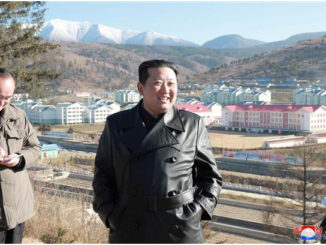
Seoul (TIP): North Korean leader Kim Jong Un visited a new city being built near the border with China and a sacred mountain revered by his family, state media reported on Tuesday, in his first public appearance in more than a month. The northern alpine town of Samjiyon is being transformed into a massive economic hub, called a “socialist utopia by officials, equipped with new apartments, hotels, a ski resort and commercial, cultural and medical facilities.
The developing city is near Mount Paektu, the holy mountain where Kim’s family claims its roots, and he has made multiple visits since 2018, with the official KCNA news agency touting it as “epitome of modern civilisation.”
KCNA said Kim’s latest trip was designed to inspect the third and last phase of construction, due to be completed by the end of this year after delays caused by international sanctions and the coronavirus pandemic.
KCNA did not give a date for Kim’s visit, but it is the first report of public activity by the leader for 35 days, since he gave a speech at a defence exhibition, his longest absence since 2014.
The young, reclusive leader’s disappearance from state media often sparks speculation over his health or whereabouts. South Korea’s intelligence agency said late last month that he had no health issues.
“He said Samjiyon has turned into an example of a mountainous modern city under socialism and a standard of rural development thanks to the workers’ steadfast struggle despite the unfavourable northern environment,” KCNA said.
Kim said building the new city provided experience in construction, design and technologies that would boost economic growth for other regions.
The city is one of the largest initiatives Pyongyang has launched as part of Kim’s push for a “self-reliant” economy as the country faces international sanctions over its nuclear and missile programmes.
Nearly two years after sealing borders to head off Covid-19, North Korea has recently resumed rail freight with China, the latest sign that they could reopen the border soon. Reuters
Durhan (TIP): Durham University in England is offering training to support students working in the sex industry. They have offered its students online courses on how to stay safe while working as a prostitute.
The university also noted that there was an “emerging trend” of its graduates to join the sex industry.
The university’s students union emailed all students and staff advertising a “training opportunity” for “students involved in the adult sex industry”.
The course is created by the Durham Students Union amid rising rates of Durham graduates prostituting themselves or producing explicit content online. The lessons would be designed to provide support and guidance to staff and students who become involved in the sex industry.
The training was important to “ensure that students can be safe and make informed choices”, and pointed to an “emerging trend” of students joining the sex industry, reports Times.
Michelle Donelan, the UK’s Minister of State for Universities, criticised the university for “legitimising a dangerous industry” and “gross breach of its duty to protect” its students.
“Any university that does this is seriously failing in its duty to protect students,” Donelan said.
“It is right that vital support be offered to women who are exploited,” continued the Minister. “However, this course seeks to normalise the sale of sex, which has no place in our universities.”
“We know this is an industry that can target young women and students and trap them in the role,” Donelan added. “Universities should focus on raising awareness of the dangers of this and supporting women. “
One session – advertised as “an interactive course that explores the challenges sex workers may face” – would have been fully booked. Durham University and the Students’ Union have reportedly received several complaints from students who said promotion of the courses to students and staff was drawing attention to the fact that prostitution was available on campus. “It could be a real problem, make it part of university culture and make sex work a normalised activity,” a student told the Times. (TNS)
London (TIP): An explosion outside Liverpool Women’s Hospital on Remembrance Sunday has been declared a terror incident by the British police on Monday.
The motive behind the attack, which ended in one fatality, remains unclear as Britain’s Counter Terrorism Police lead an investigation into the case involving a taxi explosion, alongside MI5 intelligence agency.
A fourth suspect has been arrested as part of the ongoing investigation as the Head of Counter Terrorism Policing North West, Russ Jackson, said the taxi passenger appeared to have made an “improvised explosive device” which caused the blast.
“The fare — a man — had asked to be taken to Liverpool Women’s Hospital, which was about 10 minutes away,” Jackson told reporters.
“As the taxi approached the drop-off point at the hospital an explosion occurred from within the car. This quickly engulfed it in flames. Remarkably the taxi driver escaped from the cab,” he said.
Earlier, three male suspects aged between 21 and 29 were arrested under the Terrorism Act following the car explosion outside the women’s hospital. — PTI
Melbourne (TIP): Australian Prime Minister Scott Morrison condemned the desecration of the statue of Mahatma Gandhi in Melbourne a day after it was unveiled by him.
Morrison in a statement said he was “devastated” to hear that the statue of Mahatma Gandhi at the Australia Indian Community Centre in Rowville, Victoria, had been vandalised after it was unveiled on Friday.
The Australian PM was trenchant in his criticism. “Australia is the most successful multicultural and immigration nation in the world and attacks on cultural monuments will not be tolerated. It is disgraceful and extremely disappointing to see this level of disrespect. Whoever is responsible for this has shown great disrespect to the Australian-Indian community and should be ashamed,” he told the local “South Asia Times”.
This is the first statue of Gandhi in Victoria and was donated by the Government of India. India’s Consul General in Melbourne Raj Kumar has also condemned the act. “When I saw the pictures I was really shocked. I could not believe this could happen here in Australia. Whoever has done this, is not of sound mind,’’ he told the SA Times. (TNS)
Seoul (TIP): South Korea said on Friday it scrambled fighter jets to respond to a group of Russian and Chinese warplanes that entered its air buffer zone unannounced. South Korea’s Joint Chiefs of Staff said it detected seven Russian and two Chinese military aircraft in the country’s air defence identification zone off its eastern coast.
Anticipating the moves, South Korea had already sent fighter jets and other aircraft to the area to prevent accidental clashes, but the Russian and Chinese planes left without breaching South Korea’s territorial airspace, the Joint Chiefs of Staff said. China later told South Korea through a military communication channel that the flights were part of its routine military exercises with Russia.
“(We) assess the current situation as a joint exercise between China and Russia and additional analysis is needed,” the Joint Chiefs of Staff said in a statement.
Air defence identification zones usually expand beyond the country’s territory to allow more time to respond to potentially hostile aircraft. Military planes entering another country’s air defence identification zone are required to notify it in advance.
Chinese and Russian warplanes have often entered South Korea’s air defence identification zones in recent years as they increasingly flex their muscle amid an intensifying competition with the United States. In 2019, South Korea said its fighter jets fired hundreds of warning shots toward a Russian military plane that it said twice violated its national airspace off its eastern coast. Russia then denied that its aircraft entered South Korea’s territory. —AP
KHARTOUM (TIP): Security forces shot dead at least 15 persons and wounded several others as thousands of Sudanese took to the streets on Wednesday on the deadliest day in a month of demonstrations against military rule, medics said. The protesters, marching against an October 25 coup across the capital Khartoum and in the cities of Bahri and Omdurman, demanded a full handover to civilian authorities and for the leaders of the coup to be put on trial. Security forces fired live rounds and tear gas to prevent gatherings in all three cities, and mobile phone communications were cut, witnesses said. State television said there were injuries among protesters and police. “The coup forces used live bullets heavily in different areas of the capital and there are tens of gunshot injuries, some of them in serious condition,” said the Central Committee of Sudanese Doctors, a group aligned with the protest movement. Reuters
Today, in the absence of any other new initiative that would bring the two countries closer together, the Kartarpur Sahib Gurdwara remains both geographically and metaphorically a unique, lonely structure across a bleak landscape.
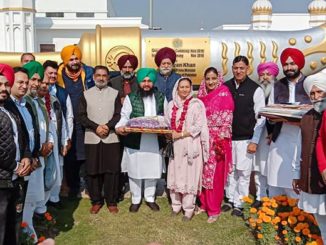
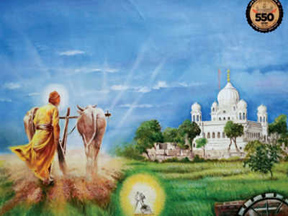
Despite the growing chasm between India and Pakistan, the passage was opened once again ahead of Guru Nanak’s 552nd birth anniversary. Right by the Ravi riverbed in Pakistan’s Narowal district of Punjab, with hardly a building in the distance on any side, the three-story Kartarpur Sahib Gurdwara is a lonely and unique structure. In 2018, sleepy hamlets nearby awoke to the furious sounds of construction, as Pakistan’s then newly elected Prime Minister Imran Khan accepted an old Indian proposal, revived by Prime Minister Narendra Modi, to open a “pilgrim corridor” between the two countries. The corridor would connect the Indian town of Baba Dera Nanak in Gurdaspur district, where the Sikh founder Guru Nanak spent much of his life and the Kartarpur Sahib Gurdwara built originally on the spot where he meditated, less than five kilometers away, that had been divided by the thoughtless pen of imperial British officers who wrought India’s partition in 1947.
For more than 70 years, pilgrims would line up at the last border point on the Indian side, to climb a rickety watch-post and view Kartarpur Sahib through a telescope lens. With the number of Sikhs in Pakistan dwindling, and access to Kartarpur quite rough compared with the gurdwara at Guru Nanak’s birthplace at Nankana Sahib, the shrine had fallen into disuse. While Sikh “jathas” or groups are given visas as part of an agreement for Hindus and Sikh to religious sites in Pakistan, in exchange for visits by Muslim groups to various mosques and shrines in India, these are hard to come by. This was also true for the larger non-Sikh population that venerates Guru Nanak, a Hindu born in 1469, who brought Hindu and Muslim followers together to found Sikhism with the message of “Ik Onkar” (One God) that he spread in travels far and wide until his death in 1539.
The Gurdwara, small in comparison to the scale of more modern Sikh shrines, has immense spiritual importance, say historians. The idea of the organized Langar, or communal kitchen where rich and poor alike of all faiths can come together to cook, serve and eat a meal, which is a distinctive tradition of the Sikh faith, is believed to have been started here. The shrine is the repository of one of the last copies of the original Guru Granth Sahib, the holy book. In his book (Sketches from a Howdah: Lady Canning’s Tours 1858-1861), Pakistani historian Fakir Syed Aijazuddin recounts how a visiting British dignitary, Lady Canning, was shown the Granth, possibly a first for an outsider in three centuries, which she described it in detail in her 1860 journal as “a thick quarto -sized (approximately 10”X 8”) book written in a peculiar character and language”. According to legend, the original gurdwara by the river also housed a Hindu ‘samadhi’ and a Muslim ‘grave’ of Nanak, as final gesture to uniting his followers who belonged to both faiths and followed in his path as the first Sikhs. In 1947, when Pakistan was carved out of India, the location of the Ravi River decided the gurdwara’s fate was in Pakistan, and Sikhs living in Baba Dera Nanak spoke about how they had to flee their homes on the Pakistani side, not realizing that they may never be able to visit their beloved shrine again for decades.
Suicide attack
Back to 2019, and between the decision to lay the foundation stone for the restoration of the 500-year-old gurdwara, the construction of a massive compound around it on the Pakistani side, the departure and arrival building on the Indian side, and the building of a road to carry pilgrims on both sides of the border, a near-conflict broke out between both countries. After a massive suicide bomb attack that killed 40 CRPF soldiers in Pulwama in February 2019, India carried out air strikes on the Pakistani town of Balakot, leading to counterstrikes by Pakistan along the Line of Control.
A few months later, the Modi Government amended Article 370 and bifurcated the State of Jammu and Kashmir into two Union Territories, triggering a series of diplomatic measures by Pakistan, including the recall of High Commissioners, cancelling all trade links and closing its airspace. Conquering the rancor between India and Pakistan was a near impossible feat, and the future of the Kartarpur project, due to be inaugurated in November to mark the 550th birth anniversary of Guru Nanak seemed dim. However, just a few months after exchanging volleys at the UN that year, Mr. Modi and Mr. Khan decided to persevere with the project, and the Kartarpur Corridor was inaugurated on November 9, 2019, allowing the first group of 550 Indian pilgrims to cross over into Pakistan.
The pilgrims did not need a visa, and were allowed into Pakistan by a special arrangement that registers them on the Indian side, and lets them visit Kartarpur for the day. Such international human corridors normally work when there is a natural disaster, a conflict where civilians are caught or a refugee crisis, but Kartarpur is a rare peacetime, pilgrim corridor. Inaugurating the integrated check post at Baba Dera Nanak, Mr. Modi thanked Mr. Khan and likened the opening of the corridor to the fall of the Berlin Wall, leading many to believe Kartarpur would mark the beginning of other new initiatives between India and Pakistan, rolling back the break in ties. That was not to be. The inauguration of the Gurdwara corridor was marred by the presence of “Khalistani separatist elements”, which New Delhi protested, and security officials said they worried about the corridor being misused for the movement of spies, weapons, cash and drugs, cautioning against increasing the number of pilgrims allowed per day beyond a few hundreds. Pakistan was willing to raise the number to 10,000, provided they would each pay an entrance fee of $20. India stipulated that each corridor traveler could carry no more than ₹11,000 and a bag weighing no more than 7 kg. Despite all the restrictions and procedural delays with registering for the journey, nearly 45,000 Indians and OCIs (Overseas citizens of India) visited Kartarpur on the corridor in the first two months (by January 31, 2020), an average of about 500 per day.
More trouble
More trouble followed. Within just four months of opening, the corridor had to be closed due to the COVID-19 pandemic in March 2020, as India and Pakistan imposed lockdowns and international travel restrictions. The year that has followed has seen unabated tensions between the two countries, relieved very intermittently by a COVID health initiative for SAARC countries, an LoC ceasefire, an invitation from India to Pakistan for a conference on Afghanistan in Delhi (which was rejected), and an international cricket match between the two countries. Against all odds, and despite the growing chasm between India and Pakistan, Kartarpur Sahib Gurdwara and the corridor opened once again on November 17, ahead of Guru Nanak’s 552nd birth anniversary.
“The spirit of Kartarpur continues to live. Centuries after his death, Guru Nanak’s message conquers politics, bridges divides and provides a corridor to mutual humanism,” historian Fakir Aijazuddin told The Hindu, when asked about the reopening, in what most would see as an over-optimistic sentiment given the times.
Today, in the absence of any other new initiative that would bring the two countries closer together, the Kartarpur Sahib Gurdwara remains both geographically and metaphorically a unique, lonely structure across a bleak landscape.
(The author is National Editor and Diplomatic Affairs Editor, The Hindu)
“The Vision and Mission of Oneness, as enunciated by Guru Nanak Rai Ji (circa 1469 to 1539) The Prophet of Unification of Humanity, is based on the premise: “There is One Light of Our Creator in All”. Hence, everyone is my own relative. I am a friend to all. The feeling of “the other” or adversary or stranger leads to the monstrous thought of duality and then results in the emergence of the demonic forces of domination, exploitation, discrimination, resulting in war and bloodbath.”
On the 552nd Anniversary of his Blessed-Advent, let’s offer our homage to Satguru Nanak Sahib Ji (circa 1469-1539) The Enlightened One, by way of abiding by his Sacred Tenets of Amity, Humility, Liberty, Equality, Compassion, Empathy, Peace, Love, Justice and Fair-Play. His basic teachings also include ‘Kirat’ (honest earning of a livelihood) offering ‘Sewa'(selfless-service to humanity) with a spirit of empathy & compassion) while remaining in a conscious-state of ‘Simran’ (constant-remembrance of Our Creator). This would yield infinite equipoise to a true seeker of GOD.
Guru Nanak, The Prophet of Oneness of Humanity is a unique amalgamation of a multifaceted embodiment, by way of being a composer and singer of Divine poetry, a politically aware social-reformer and globe-trotter and a staunch advocate of interfaith goodwill, women’s rights and human rights, who was centuries ahead of his times
While being all of these, he was a householder and a farmer, who always practiced before he preached. He did not lay any claims to any wisdom, yet followers would see the Divine Light in Guru Nanak. His principles were replicated by all of his nine successors, up to Guru Gobind Singh Ji, who completed The Mission and anointed the Scripture as Guru Granth Sahib Ji, in circa 1708.
Guru Nanak Sahib Ji lived his last 17 years at the city of Kartarpur. Since 1947, the era of post-partition of India, when the nation was bifurcated, Sikhs had been denied access to several historic Gurdwaras, in Pakistan, including Nankana Sahib, the birthplace of Guru Nanak Sahib Ji. With Divine Grace, the miraculous opening of Kartarpur-Corridor was manifested on the 10th of November 2019, just two days prior to the 550th anniversary of the Blessed-Advent of Guru Nanak Ji.
Guru Nanak Ji denounced celibacy, asceticism and renunciation, unequivocally, stating that anyone could experience Divine realization (Nirvaan, Moksh, Emancipation, Salvation, Liberation) even while living with a family, instead of shunning society and going to the mountains, caves and forests. The Guru says, “GOD resides in the human-body and can be attained through introspection”.
Guru Nanak Sahib Ji sayeth: “Human-birth has been attained to make concerted endeavors towards fostering Oneness of Humanity”.
Guru Sahib taught humanity to deal in the ‘True-Business’ and ‘Real Trade’ of disseminating Love, Peace, Harmony and Equality, while shunning all varieties of discrimination, bigotry, domination, tyranny, prejudice, bias, superstitions, rituals et al. Only then could humanity register a well-deserved ‘Profit of Godly Blessings’, enabling The Soul to have an extremely smooth transition, after shedding the perishable body. The Guru advises thus: “always remember the ultimate reality of death as nobody is assured of inhaling the next breath”.
The Divine Guru traversed to various countries across several continents, during his 4 Holy Tours, covering 27000 miles in 25 years of his 70-year sojourn onthis planet, fostering Goodwill amongst races, cultures, religions and tribal traditions.
Furthermore, The Divine Guru enunciated his Tenets thus: “All of the human interactions must be replete with Divine-Love & Godly-Light, Lifelong-Learning, Selfless Humanitarian-Service in a Spirit-of-Sharing, Amity, Tolerance, Acceptance, Understanding, leading to a Harmonious Co-existence for ALL.
Guru Sahib deliberately chose special and sacred days to visit the highest centers of learning and places of pilgrimage of various religions and sects like Hinduism, Buddhism, Jainism, Zoroastrianism, Islam and Christianity, opining that the Divine-Message with which he was entrusted by The Creator to convey to the masses, could be attained only at large gatherings.
He went up the Himalayas to have a dialogue with the Nath sect of Yogis. Interesting details and routes of such journeys are available at: https://satguru.weebly.com/
The Vision and Mission of Oneness, as enunciated by Guru Nanak Rai Ji (circa 1469 to 1539) The Prophet of Unification of Humanity, is based on the premise: “There is One Light of Our Creator in All”. Hence, everyone is my own relative. I am a friend to all. The feeling of “the other” or adversary or stranger leads to the monstrous thought of duality and then results in the emergence of the demonic forces of domination, exploitation, discrimination, resulting in war and bloodbath. His 9th successor, Guru Gobind Singh Ji (1666 to 1708) continued the Divine legacy, stating “Recognize humanity as one race, ethnicity, creed”, verily in consonance with the thought of Guru Nanak Sahib Ji. Since the year 1708, the Eternal Guru of the Sikhs is Guru Granth (The Holy Scripture in rhyme) that includes the sacred verses spoken by saints and Seers, affiliated to various Faiths.
Guru Nanak Ji emphasized upon the “Religion of Righteousness”, thereby implying that an ideal Divine-Life can be lived, only when humans are empathetic towards everyone in the world. This is the reason, for which the Soul has attained this unique species of a human-frame, with a brain to decide and a heart to experience the joy and sorrow of everyone, and not just one’s own. Rising over and above one’s vested interest would enable one to remain sacredly truthful and loyal to one’s True Divine-Calling.
The ‘burning issues’ that prompted Guru Nanak Ji to raise his vociferous voice were War, Poverty, Education, Environment of Our Planet, Human Rights, Our Shrinking Freedom, Discrimination.
Despite the materialistic human-evolution and massive strides in the spheres of science and technology, leading to a comfortable and luxurious lifestyle, the Aspirations of the Soul have been neglected.
The world is up in flames, today, even more than it was during the life and time of the Blessed Advent of the Divine Preceptor, Guru Nanak (1469-1539). In one verse, he laments and exclaims: “I can visualize the entire humanity engulfed in flames of hatred and bloodshed and righteousness has taken wings”. Guru Nanak Sahib saw in his deep, meditative trance that the entire earth was ablaze with the fires of hatred, prejudice, intolerance, bigotry, superstition, hollow ritualism, and so he set out on his world tour to remind humanity of the lessons of “Divinity in Humanity”.
It is not “religion” (per se, i.e., the various religious teachings, faiths, beliefs, traditions, cultures) that is the cause for all misery. Rather, the real culprit is the MIND (the corrupted form of the Pristine and Sublime SOUL) which is influenced by an illusion to harbor distorted, biased, prejudiced viewpoints. The malady afflicting humanity results from a misinterpretation of religious teachings or sheer ignorance or (sometimes) deliberate hatred originating from a sense of vested interest and misplaced views on account of race, ethnicity, religion, lineage, caste, creed, culture, nationality, power, authority, gender, education, economic status is the real cause of ALL suffering inflicted upon millions of people. The Divine Preceptor, Guru Nanak preached the message of “One God of All, One God for All, One God in All” and actually lived by setting precedents. He emphasized upon reverence for all Prophets and for Scriptures of all religions, while enjoying the birthright and freedom of following one’s own heart in practicing a religion of one’s choice.
The title GURU means “an enlightened spiritual Master” and not an ordinary worldly teacher or an expert etc. The word SIKH means a perpetual learner for the entire lifetime, a disciple or follower of the Guru.
Guru Nanak Sahib says: “GOD, the Omniscient, Omnipotent, Omnipresent ONE is worshipped in innumerable ways and remembered by infinite Hallowed Names, yet GOD remains Only One Entity or the Sole Power and not many or different for people of diverse races, religions, regions, cultures”.
It is ONLY through meaningful dialogue that we would learn about the commonalities and similarities amongst people of various backgrounds, and that’s how all of us can be empowered to live, harmoniously, despite the “so-called differences” of race, ethnicity, religion, region, color, caste, creed, gender, culture, lineage, appearance, rituals, ceremonies, traditions, customs, economic status, position of political power, social clout etc. and the list goes on. If we do not communicate with each other, we tend to remain ignorant about the other. Then, we become fearful or we generate hatred or both of these increases.
When some humans indulge in domination and subjugation, there starts a never-ending war, resulting in massive bloodshed, misery, leaving orphans and widows. This war of attrition and hatred continues, unabated, for generations and centuries. We must work, in tandem, to engage in all such activities, that are meant for the Good of All, in consonance with the inherent nature of the Eternal Soul which is an intrinsic part of the Primal Soul, GOD.
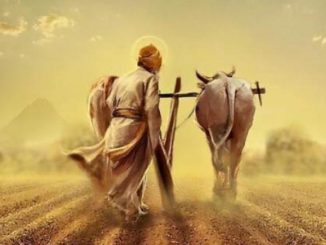
The ‘Kirat’ (endeavor) philosophy, the ethos of work-culture, espoused by Guru Nanak Dev Ji revolves around the basic concepts of honest earnings, compassionate sharing and remembrance of Divine Noumenon to remain in a blissful state of equipoise. Guruji lived his entire life, in consonance with these revolutionary principles, aimed at Good of All. He ensured that such Divine Tenets reached the masses, even if he to encounter the ruthlessly tyrannical rulers of his times. He lived his last many years at Kartarpur in present-day Pakistan, where he kept himself busy with agricultural activities, of course in addition to his regular congregations pertaining to his spiritual inclinations. By maintaining such an ideal lifestyle, Guru Sahib set an exemplary precedent for his disciples who were Sikhs, Hindus and Muslims, who looked up to him as their role-model, not merely at the human level but also as their spiritual mentor. ‘Guru Nanak farming’ soon became an enjoyable ‘bliss-laboratory’, for the enthusiastic householders, who loved their farmlands, protected and befriended the animals and birds, harvested crops to be used for their families as also to provide fodder for other creatures. And all crops were gotten organically, sans the usage of any fertilizers and chemicals. All the time, they enjoyed the company of cattle, butterflies, birds, honeybees. And, not to forget the fish in the ponds. All of this was not merely earning a livelihood but an entirely soul-soothing and a spirit-rejuvenating unique lifestyle, connecting them with The Divine One in every creature of Our Creator. The Guru proclaimed, “air is the Guru, water is the father, earth is the mother”.
In present-day Punjab, the culture of Kirat is totally devastated. Farmlands have turned barren deserts. The water-table is fast receding. Manure, chemicals and pesticides have ruined the soil. Farming has been reduced to a business accruing massive losses. The farmer is becoming an ailing victim of the menace of killer-cancerous and other diseases. Mother earth has lost its naturally characteristic nutrient values. While burning the futile remnants of some crops, the farmers fail to realize that they are burning innumerable earth-friendly worms and also impacting the existence and subsistence of several species of birds. Today, the already critical situation has reached a point where the initially nature-lover farmer is on the precipice of a catastrophe, having been driven to embrace death, by taking recourse to suicide. Decades of manipulative machinations by the corporate sector have eaten at the roots of the life of the populace and life of earth. Looking to increase yields and profits, the farmers have ended up, burdened by mountains of loans culminating in traumatic mental, emotional and psychological ailments.
Toiling on their farmlands has, always, been the ideal and pivotal way of life for all Punjabis. However, such a lifestyle has, apparently, evaporated from Punjab, the granary of India, once upon a time. It is the end of a bygone Golden-Era. The youth are, especially, increasingly distancing themselves from Kirat traditions and culture. The youth are replacing the agricultural implements with their new acquisitions, the ‘ornamental’ motorbikes and cellular phones and are flaunting a totally different kind of lavish lifestyle. The youth have been misguided towards a destructive destination, by elements inimical to the affluence of Punjabis in various spheres of endeavor. Earlier in 1947, millions of Punjabis were made sacrificial lambs and slaughtered at the altar of ugly, sinister politics. The survivors were devoid of their lands. After a breather-of-sorts, arrived 1984 when the hearts and souls of Punjabis were, once again, tortured and several thousands were killed or made to disappear without a trace, during the era of Naxalite and wave of Militancy. Those who were happily treading on the progressively Divine-Path, illumined by Guru Nanak, with the objective of helping many others are left in a destitute and reclusive plight. The appetite of the ‘killer-machine’ was not satiated and then the 6th river of drug-menace was created in the land of 5 natural-rivers, the land which was once blessed by the touch of the sacred feet of several Divine Persona, Gurus, saints, seers, scholars. The famed river ‘White-Bein’ in Sultanpur Lodhi, associated with Guru Nanak Sahibji, has been polluted beyond imagination.
Guru Nanak Sahibji and his disciples had not envisioned such a destructive life replete with environmental pollution and corruptible humanity which enjoys the ruination of fellow humans and extinction of other species from planet earth. The texture of the social-fabric has been fragmented due to the twin-diseases of religious-divide and differences of caste-creed. Politicians rule the roost, to accumulate limitless wealth, at the expense of the life of millions, whose blood is being sucked, verily similar to how Guru Nanak Sahibji had given the description of his times, through his Sacred Gurbaani.
During the final-leg of the life-journey of Guru Nanak Sahibji emphatically stressed upon the paramount significance of ‘Sangat & Pangat’ (congregation and community-kitchen) by inspiring his disciples to adopt this way of life. Guru Sahibji shared all the crops, fruits and vegetables with the community. Guru Sahibji practiced equality, justice and fair-play, by involving the community in the farming activities, thereby laying the foundations of farm-communes, living in peace and harmonious coexistence. This was an exceptionally revolutionary concept, five centuries ago. Profits were shared as in a cooperative society or organization, wherein each primary member has the right to equal shares or units. This measure, initiated by The Guru, ensured the empowerment of the downtrodden segments of society, including those who were economically weak, the suppressed womenfolk deprived of their rights by dominant males in the family and the oppressed so-called low castes. Such decisions paved the way for everyone to live with dignity, security and in peace. Women started enjoying respect and they regained self-esteem. Gurbani laments about the castigation and oppression suffered by women, thus: “why ridicule a woman? from a woman, man is born; within a woman, man is conceived; to a woman, he is engaged and married’’.
Guru Nanak Devji undertook pedestrian Holy Journeys (Udaasiaan) in four directions, travelling thousands of miles, with the objective of having progressively meaningful discussions with decision makers, the clergy, saints and seers from divergent belief systems, while putting forth his own philosophy, in an open exchange of views. Although his family background was not related to agriculture, yet Guru Nanak took to farming during the last several years of his life. His father, Shri Kalyaan Daas ji was responsible (as the Patwaari) for maintaining the financial records of Rai Bulaar, the Muslim ruler of Talwandi. His family also owned substantial lands. Guru Nanak, in his youthful years, was employed as a storekeeper. However, he adopted farming as his vocation, during his final years, considering the need of the hour to make the people self-reliant, by motivating many to take to farming. Guru ji mentions various crops in his Gurbaani, while using them as metaphors, for instance writing about wheat, rice, cotton, coconut, mango, sunflower, sugarcane, varieties of trees, and also about his love for animals and birds. Guru Nanak had a soft corner for ecology and preached about conservation of the environment.
However, today, Punjab, Punjabis, their farmlands and farming profession are, all, facing an identity-crisis. The rulers, in connivance with the corporate, are bent upon usurping the farmlands, thereby rendering the farmers totally destitute going into a state of pain and penury. The progressive Vision and Legacy of Guru Nanak Ji is not being honored. Three black laws have been enacted targeting towards monopolizing farming in the hands of the corporate world, who are already ultra rich. To register their vociferous protest against the deceptive, cruel laws, lakhs of farmers have been braving the extremities of weather and atrocities of authorities, sitting on various borders of Delhi, for the past one year. During this long phase of struggle, between 600 and 700 old and young farmers have succumbed to the vagaries of nature or have been tortured by the elite. The conspiracy against the farmers is being exposed. Their voices of anguish are falling on deaf ears but the ‘Sons of the Soil’ are relentless in waging a Peaceful-War, toregain their birthright to hold on to their soil and their heritage. Five centuries ago, Guru Nanak had proclaimed, during a direct encounter with the ruthless, tyrannical Mughal Babur: “kings are hungry lions; their servants, rabid dogs. They are foes of soothing restful sleep; they are mindless servile cogs. The lackeys of the evil king; waving talon and claw. They prey on common gentlefolk; their tender flesh they gnaw”. The Guru lamented the miserable plight of the defenseless populace, saying “O’ Lord, don’t You feel the pain of the weak and the meek, who are being crushed, ruthlessly”.
The scenario, today, is akin to the situation during the life and times of Guru Sahibji. Yet, the factor of consolation is that the Divine Legacy and Sacred Tenets of Guru Nanak’s philosophy have remained engrained in the psyche of the masses and they are not surrendering before the oppressors and are fighting the battle, valiantly. Rising over and above the distinctions and differences of caste, creed, religion, region, the farming sector has formed a formidable alliance. Abiding by the Divine Teachings of Guru Nanak Sahib, such staunch sense of resilience of the farmers shall, most certainly, fructify into eventual success and the victors shall be empowered to stop the migration of their youngsters, who have been going abroad in large numbers.
Estimates say 617 worshipers killed at houses of worship in the US in 20 years, between 1999 and 2019
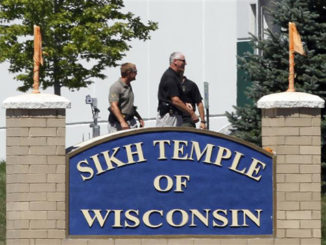
WASHINGTON, D.C. (TIP): The US, which last week graded countries on the Freedom of Religion index, has come under attack for shortcomings on this score. Estimates said 617 worshipers were killed at houses of worship in the US in 20 years, between 1999 and 2019. This includes the murder of six members of Gurdwara in Oak Creek, Wisconsin, and the murder of nine members of the Mother Emanuel AME Church in Charleston in 2015.
Minority religious places of worship were not the sole targets, between 2000 and 2020, American churches experienced 19 fatal shootings. According to the official statistics, hate crimes rose to their highest numbers in two decades in 2020, with more than 1,000 religion-based incidents.
These attacks have led to demands for increasing the Nonprofit Security Grant Program (NPSG) which allows any at-risk nonprofit organization, including houses of worship and other religious institutions, to seek financial support to help protect itself from violence.
Congresswoman Alexandria Ocasio-Cortez has said the increased funding for the NPSG program will allow additional marginalized groups to secure their communities.
Max Sevillia from the Anti-Defamation League estimates that 80 per cent of Protestant pastors say their church has some security measures in place.
“The threat of violence is now a tragic feature of religious life in America, forcing many faith leaders to become ad hoc security planners. But safety, and all that it entails, is an expensive and complex process that most houses of worship simply cannot afford,” he said while seeking higher NPSG funding. Recently, the Congress appropriated $ 90 million for this program this year and $180 million next year. “The problem is that even though the program’s funds have increased, the money available has not kept pace with the scale of the problem,” said Sevillia. The Build Back Better budget has promised $100 million in funding, which, in addition to the $180 million appropriated, brings the amount closer to the $360 million that is necessary to meet the demand. “But at a time of increased vulnerability to hate-motivated violence by domestic extremists, Congress must support this funding,” he says.
WASHINTON, D.C. (TIP): US Congressman Andy Levin has welcomed the repeal of the three farm laws in India. Prime Minister Narendra Modi on Friday, November 19 announced that the government had decided to repeal the three farm laws, which were at the center of protests by farmers for the past year and appealed to the protesting farmers to return home. “Glad to see that after more than a year of protests, the three farm bills in India will be repealed,” Congressman Andy Levin said on Friday. “This is proof that when workers stick together, they can defeat corporate interests and achieve progress – in India and around the world,” he said in a tweet.
In his address to the nation on the auspicious occasion of Guru Nanak Jayanti, Modi insisted that the laws were for the benefit of farmers and then apologized to people of the country while adding that the government could not convince a section of farmers despite its clear heart and clean conscience.
“I have come to tell you that we have decided to repeal the three farm laws. In the upcoming Parliament Session starting at the end of this month, we will complete the constitutional process to repeal the three farm laws,” Modi said. Hundreds of farmers have been camping at the three Delhi borders since November 2020 with the demand that the government repeal the laws.
WASHINGTON, D.C. (TIP): US regulators on Friday, November 19, opened up Covid-19 booster shots to all adults, expanding the government’s campaign to shore up protection and get ahead of rising Covid cases that may worsen with the holidays. Pfizer and Moderna announced the Food and Drug Administration’s decision after at least 10 states had already started offering boosters to all adults.
The latest action simplifies what until now has been a confusing list of who’s eligible by allowing anyone 18 or older to choose either company’s booster six months after their last dose — regardless of which vaccine they had first.
But there’s one more step: The Centers for Disease Control and Prevention must agree to expand Pfizer and Moderna boosters to even healthy young adults.
If the center agrees, tens of millions more Americans could have three doses of protection ahead of the new year. Anyone who got the one-dose Johnson & Johnson vaccine can already get a booster.
WASHINGTON, D.C. (TIP): When NASA astronaut Jessica Watkins launches to the International Space Station next year, her debut spaceflight will make history. Watkins is set to become the first Black woman to join the space station crew, and live and work in space on a long-duration mission on the orbiting outpost. The agency announced Tuesday that Watkins will fly to the space station in April 2022, alongside NASA astronauts Kjell Lindgren and Robert Hines and astronaut Samantha Cristoforetti of the European Space Agency.
They are slated to launch aboard SpaceX’s Crew Dragon capsule from NASA’s Kennedy Space Center in Cape Canaveral, Florida. The mission, known as Crew-4, is expected to last six months.
Watkins, a geologist who earned an undergraduate degree from Stanford University and a doctorate from the University of California, Los Angeles, will serve as a mission specialist during the Crew-4 flight. She was chosen to become an astronaut candidate in 2017 and the April mission will be her first trip to space, according to the agency.
Though a handful of Black astronauts have visited the space station over the course of its 21-year history, almost all had short stays typically lasting less than two weeks during NASA’s space shuttle program.
Last year, Victor Glover became the first Black astronaut to embark on a long-term mission at the space station, and Watkins is set to become the first Black woman to do the same.
In 2018, NASA astronaut Jeanette Epps was expected to become the first Black astronaut — man or woman — to launch on an extended mission at the space station, but she was unexpectedly replaced less than six months before the flight. NASA did not offer an explanation for the switch and The Washington Post reported at the time that Epps’ brother blamed racism at the space agency for the abrupt crew change.
Global wealth tripled over the last two decades, with China leading the way and overtaking the US for the top spot worldwide, Bloomberg reported.
NEW YORK (TIP): Global wealth tripled over the last two decades, with China leading the way and overtaking the US for the top spot worldwide, Bloomberg reported. A report by McKinsey & Co. examines the national balance sheets of ten countries representing more than 60 per cent of the world’s income. China accounted for almost one-third of gains in global net worth over the past two decades, the report said.
“We are now wealthier than we have ever been,” Jan Mischke, a partner at the McKinsey Global Institute in Zurich, said in an interview. Net worth worldwide rose to $514 trillion in 2020, from $156 trillion in 2000, according to the study. China accounted for almost one-third of the increase.
Its wealth skyrocketed to $120 trillion from a mere $7 trillion in 2000, the year before it joined the World Trade Organisation, speeding its economic ascent, the report said. The US, held back by more muted increases in property prices, saw its net worth more than double over the period, to $90 trillion.
In both countries — the world’s biggest economies — more than two-thirds of the wealth is held by the richest 10 per cent of households, and their share has been increasing, the report said. As computed by McKinsey, 68 per cent of global net worth is stored in real estate. The balance is held in such things as infrastructure, machinery and equipment and, to a much lesser extent, so-called intangibles like intellectual property and patents, it added.
Mount Kailash, Tibet (China) – Guru Nanak had discourses with the ‘Siddhas’, accomplished spiritualists.Khost, Afghanistan – Local resident, Khalida Begum, shared her motherly love in remembrance of the departed adherents of Guru Nanak with whom she grew up in this village.Baltistan, Pakistan – Filming in the high-altitude cold desert. The crew expressing a moment of joy after completing the filming in these hard to access areas.Ruins of Baghdad Gurdwara adjacent to the shrine of Faqir Bahlool.Balochistan.By Harbans Lal, Ph.D., D. Lit (Hons)
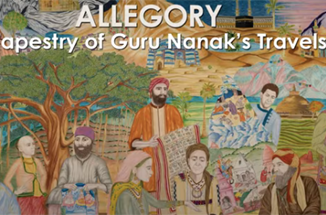
Five centuries ago, Guru Nanak undertook a worldwide journey to alert people of both the Sindhu civilization east of Sindh River Delta, and those of Turk civilizations west of Sindh Delta against clergy-concocted religion. Everywhere he visited, he advocated God as the virtual reality manifested in all creation. Thus, Guru Nanak’s God is realized through an appreciation of the natural designs that flourish within and around all peoples in every corner of the world and everywhere in the universes. ‘ALLEGORY, A Tapestry of Guru Nanak’s Travels’ (website) is a 24-episode documentary that chronicles the vast expanse of sites that were visited by Guru Nanak in Pakistan, Afghanistan, Iran, Iraq, Saudi Arabia, Tibet, Bangladesh, India, and Sri Lanka. Approximately 70 percent of this landscape today falls in geographies where filming is difficult.
Between the 15th and 16th centuries, the universal narratives of Guru Nanak’s travels were rendered solely through oral narratives. In the 17th century, these were documented in the form of books called ‘Janamsakhis’, written by men of faith, and not historians. It gave rise to a diverse canvas of storytelling, travelogue, and hagiography.
But today, these are forgotten, and, alongside the deeply entrenched division of land and nationality, many of the sites have become inaccessible. In addition, Guru Nanak’s narrative today stands limited to Sikh places of worship, gurdwaras, whilst he traveled to multi-faith sites – Islamic, Sufi, Hindu, Yogi, Buddhist & Jain.
In an ambitious three-year effort, Amardeep Singh and Vininder Kaur, the Singaporean couple filmed the entire narrative of Guru Nanak’s travels and are releasing one episode a week on the website TheGuruNanak.com. The project was financed by donations from many nonprofit organizations and philanthropic individuals.
The project has been mostly completed beyond the ambitions of its undertakers. With the aid of stories written half a century after Guru Nanak’s passing away in 1539, along with popular stories and archaeology, the team followed the trails of sites of various faiths visited by Guru Nanak. The team traveled from Mecca to Mount Kailash, filming under the shelling of gunfire in Afghanistan and the scalding summer heat in Iraq, across the waters of river Sindh on the boat, and the desert expanse of Medina to Baghdad. They have gone from the mausoleum of Bahauddin Zakariya in Multan to the Hinglaj Nani Mandir Caves in Balochistan; from Baba Farid’s grave at Pakpattan, Pakistan, where during his visit, Guru Nanak collected the verses of Baba Farid, later enshrined in the Guru Granth Sahib, to the congruent region of Para Chinar, which stands between Pakistan and Afghanistan. In a world where visa constraints, nationalist mandates and geographic divisions are often successful in restricting access, Amardeep and his team continued remaining steadfastly unbounded in their efforts to document the narrative for posterity. Their team comprised of Muslims and Hindus, reflecting the spirit of ‘Oneness’, the teaching of Guru Nanak.
The docuseries, ‘Allegory, A Tapestry of Guru Nanak’s Travels’, is an attempt to appreciate Guru Nanak. It is jointly produced by ‘Lost Heritage Productions’ and ‘SikhLens Productions’. (The author is Emeritus Professor and Chairman, Department of Pharmacology and Neuroscience, the University of North Texas Health Science Center at Fort Worth Texas, and Emeritus Professor of Religious Studies, Guru Nanak Dev University at Amritsar)
Modi obviously calculated that advantage lay in taking a step back on farm laws
By Neerja Chowdhury
The BJP can live with defeats in smaller states, but winning Uttar Pradesh in 2022 is essential for the party, or else 2024 becomes dicey.
“Modi must have calculated that at the end of the day, he will be able to mollify the Jats. Even that ‘little bit’ will help. The BJP brass must have also been worried about the enthusiasm evident at the meetings addressed by Samajwadi Party leader Akhilesh Yadav. His in-principal ally, Jayant Chaudhary of the RLD, has also encountered an exciting response in western UP, not accorded to his party in the past 20 years. The BJP was happy with Priyanka Vadra getting some traction — and it may even be aiding the process — for it would create confusion amongst the Muslims. But that does not seem to be happening at the ground level.”
By announcing to repeal the three controversial farm laws, the Prime Minister has stooped to conquer. His reason for backtracking, something Narendra Modi is not given to do, is political. It can be summed up in two words — Uttar Pradesh. Winning UP in 2022 is a must for the BJP, or else 2024 becomes dicey. The party can live with defeats in smaller states, but it can take no chances in UP.
The BJP has been nervous about UP, notwithstanding the high-decibel campaign CM Yogi Adityanath has already launched in the state, showcasing his many ‘achievements’, and the PM’s high-profile inaugural event for the Purvanchal Expressway which really sounded the poll bugle.
It is thanks to the farmers’ movement that the Jats moved away from the BJP in western UP. Their support to the BJP in 2014 helped it sweep the region and ensured the party’s victory in the General Election.
From the beginning, UP has been critical to Modi’s rise. Had the BJP not got 71 seats in 2014 from UP, it would have been a coalition government at the Centre. It was Amit Shah who, between July 2013 and May 2014, took a stagnant and faction-ridden BJP from a tally of 10 Lok Sabha MPs to 71, rebuilding the organization which he had been tasked to do. He did it when the BJP was not even in power at the Centre. Of late, the Gujjars in western UP have been increasingly unhappy, not finding representation in the state government. After the mowing down of farmers at Lakhimpur Kheri, the Sikhs, too, now nurse a grudge against the party. The Muslims will not look at the BJP anyway. This virtually covers the entire lank of western UP. Western UP, going up to the Terai region, accounts for around 100 seats, and could be decisive. Unlike 2014, and its effect was felt even in 2017, Hindu-Muslim (the Jat-Muslim divide) polarization had helped the BJP mop up a rich crop. In the past year or so, many Jats — they are mostly farmers and have felt that the farm laws would dispossess them of their lands — have been heard saying that ‘this time we are not going to be taken in by the Hindu-Muslim rhetoric’.
Modi must have calculated that at the end of the day, he will be able to mollify the Jats. Even that ‘little bit’ will help. The BJP brass must have also been worried about the enthusiasm evident at the meetings addressed by Samajwadi Party leader Akhilesh Yadav. His in-principal ally, Jayant Chaudhary of the RLD, has also encountered an exciting response in western UP, not accorded to his party in the past 20 years. The BJP was happy with Priyanka Vadra getting some traction — and it may even be aiding the process — for it would create confusion amongst the Muslims. But that does not seem to be happening at the ground level.
The backtracking by the PM came on Gurpurb. It gave the impression that Punjab was a factor in the PM’s change of heart. The PM’s decision could open up the political scenario in Punjab. It is not as if it will put the BJP in the winning seat. The party was being completely written off. The upper-caste urban voter was looking at the Aam Aadmi Party as an alternative to the BJP. Since the farm laws were the reason why the Akali Dal, the BJP’s old ally, broke ranks with it, could the repeal of the laws bring them together again?
Former CM Captain Amarinder Singh has already indicated that he is open to joining hands with the BJP. This will become easier for him to justify, with the farm law story becoming a thing of the past. It’s possible that the government will try and re-enact the law under another garb in future as part of ‘agricultural reforms’. But it is unlikely to do so before 2024 and risk singeing itself, or the Modi brand.
The repeal is a victory for the farmers who sat on dharna for almost a year. It will give new heart to other agitating groups fighting for their rights. But the bottom line is clear: protests are effective when they influence votes.
Of course, the farmers see this as their victory and there is no reason why they should give the credit to the PM or to any other party. Some of the farmers’ leaders may well decide to contest in the forthcoming Assembly elections in Punjab as Independents.
The Opposition will flay the government for the hardships caused to the farmers and the needless deaths that took place during the past more than 11 months.
Endowed with sharp political instincts, which few other contemporary leaders possess today, the Prime Minister has made a move to control damage. It is not a poll-winning ploy. But much will depend on how the BJP resets the narrative in the coming days. Modi is bound to talk about deferring to the people’s wishes. The PM’s address to the nation gave a foretaste of it, when he said despite tapasya, he was unable to convince a section of the farmers.
The PM has obviously calculated that the balance of advantage lies in taking a step back, and then, to give the narrative a new pitch. Managing perceptions is something Modi and the ‘new BJP’ are so adept at.
It would not be surprising if in the coming days, Modi starts to publicly distance himself from Adani and Ambani in a visible — maybe not substantive — way. If there is something that the farmers’ movement has done, it is to club him with the corporate duo. It is an image he would like to do without, of being seen to be helping the richest in the country, when life is becoming harder for the ordinary folk, with price rise spiraling and loss of livelihoods going unaddressed.
That each day, Indians govern themselves in a pluralist democracy is testimony to his deeds and words.
It is the edifice of democracy that Nehru constructed that remains the most indispensable pillar of his contributions to India.
“It was by no means axiomatic that a country like India, riven by so many internal differences and diversities, beset by acute poverty and torn apart by Partition, would be or remain democratic. Many developing countries found themselves turning in the opposite direction soon after Independence, arguing that a firm hand was necessary to promote national unity and guide development. With Gandhi’s death, Nehru could have very well assumed unlimited power within the county. And yet, he himself was such a convinced democrat, profoundly wary of the risks of autocracy, that, at the crest of his rise, he authored an anonymous article warning Indians of the dangers of giving dictatorial temptations to Jawaharlal Nehru. “He must be checked,” he wrote of himself. “We want no Caesars.” And indeed, his practice when challenged within his own party was to offer his resignation; he usually got his way, but it was hardly the instinct of a Caesar.”
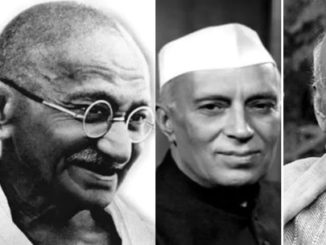
Four men embodied the vision of free India in the 1940s — Gandhi, Nehru, Patel and Ambedkar. Gandhi’s moral rectitude, allied to Jawaharlal Nehru’s political passion, fashioned both the strategy and tactics for the struggle against British rule. Sardar Patel’s firm hand on the administration integrated the nation and established peace and stability. Ambedkar’s erudition and legal acumen helped translate the dreams of a generation into a working legal document that laid the foundations for an enduring democracy.
Setting the way
While the world was disintegrating into fascism, violence, and war, Gandhi taught the virtues of truth, non-violence, and peace. While the nation reeled from bloodshed and communal carnage, Ambedkar preached the values of constitutionalism and the rule of law. While parochial ambitions threatened national unity, Patel led the nation to a vision of unity and common purpose. While mobs marched the streets baying for revenge, Nehru’s humane and non-sectarian vision inspired India to yearn again for the glory that had once been hers.
Of the four, Gandhi and Nehru stood out. Despite differences over both tactics (Nehru wanted Independence immediately whereas Gandhi believed Indians had to be made ready for their own freedom) and philosophy (the agnostic Nehru had little patience for the Mahatma’s spirituality), the two men proved a formidable combination. Gandhi guided Nehru to his political pinnacle; Nehru in turn proved an inspirational campaigner as President of the Indian National Congress, electrifying the nation with his speeches and tireless travel.
Keeper of the flame
Upon the Mahatma’s assassination in 1948, just five months after Independence, Nehru, the country’s first Prime Minister, became the keeper of the national flame, the most visible embodiment of India’s struggle for freedom. Gandhi’s death could have led Nehru to assume untrammeled power. Instead, he spent a lifetime immersed in the democratic values Ambedkar had codified, trying to instill the habits of democracy in his people — a disdain for dictators, a respect for parliamentary procedures, an abiding faith in the constitutional system. Till the end of the decade, his staunch ally Patel provided the firm hand on the tiller without which India might yet have split asunder.
For the first 17 years of India’s Independence, the paradox-ridden Nehru — a moody, idealist intellectual who felt an almost mystical empathy with the toiling peasant masses; an aristocrat, accustomed to privilege, who had passionate socialist convictions; an Anglicized product of Harrow and Cambridge who spent over 10 years in British jails; an agnostic radical who became an unlikely protégé of the saintly Mahatma Gandhi — was India. Incorruptible, visionary, ecumenical, a politician above politics, Nehru’s stature was so great that the country he led seemed inconceivable without him. A year before his death a leading American journalist, Welles Hangen, published a book entitled After Nehru, Who? the unspoken question around the world was: “after Nehru, what?”
Today, looking back on his 132nd birthday and nearly six decades after his death, we have something of an answer to the latter question. As an India still seemingly clad in many of the trappings of Nehruvianism steps out into the 21st century, a good deal of Jawaharlal Nehru’s legacy appears intact — and yet hotly contested. India has moved away from much of Nehru’s beliefs, and so (in different ways) has the rest of the developing world for which Nehruvianism once spoke. As India nears its 75th anniversary of Independence from the British Raj, a transformation — still incomplete — has taken place that, in its essentials, has changed the basic Nehruvian assumptions of postcolonial nationhood. Nehru himself, as a man with an open and questing mind, would have allowed his practical thinking to evolve with the times, even while remaining anchored to his core beliefs.
The pillars of his imprint
In my 2003 biography, Nehru: The Invention of India, I sought to examine this great figure of 20th-century nationalism from the vantage point of the beginning of the 21st. Jawaharlal Nehru’s life is a fascinating story in its own right, and I tried to tell it whole, because the privileged child, the unremarkable youth, the posturing young nationalist, and the heroic fighter for independence are all inextricable from the unchallengeable Prime Minister and peerless global statesman. At the same time, I sought to analyze critically the four principal pillars of Nehru’s legacy to India — democratic institution-building, staunch pan-Indian secularism, socialist economics at home, and a foreign policy of non-alignment — all of which were integral to a vision of Indianness that is fundamentally challenged today. Of these, it is the edifice of democracy that Nehru constructed that remains the most indispensable pillar of his contributions to India.
It was by no means axiomatic that a country like India, riven by so many internal differences and diversities, beset by acute poverty and torn apart by Partition, would be or remain democratic. Many developing countries found themselves turning in the opposite direction soon after Independence, arguing that a firm hand was necessary to promote national unity and guide development. With Gandhi’s death, Nehru could have very well assumed unlimited power within the county. And yet, he himself was such a convinced democrat, profoundly wary of the risks of autocracy, that, at the crest of his rise, he authored an anonymous article warning Indians of the dangers of giving dictatorial temptations to Jawaharlal Nehru. “He must be checked,” he wrote of himself. “We want no Caesars.” And indeed, his practice when challenged within his own party was to offer his resignation; he usually got his way, but it was hardly the instinct of a Caesar.
A deference to the system
As Prime Minister, Nehru carefully nurtured the country’s infant democratic institutions. He paid deference to the country’s ceremonial presidency and even to its largely otiose vice-presidency; he never let the public forget that these notables outranked him in protocol terms. He wrote regular letters to the Chief Ministers of the States, explaining his policies and seeking their feedback. He subjected himself and his government to cross-examination in Parliament by the small, fractious but undoubtedly talented Opposition, allowing them an importance out of all proportion to their numerical strength, because he was convinced that a strong Opposition was essential for a healthy democracy. He took care not to interfere with the judicial system; on the one occasion that he publicly criticized a judge, he apologized the next day and wrote an abject letter to the Chief Justice, regretting having slighted the judiciary. And he never forgot that he derived his authority from the people of India; not only was he astonishingly accessible for a person in his position, but he started the practice of offering a daily darshan at home for an hour each morning to anyone coming in off the street without an appointment, a practice that continued until the dictates of security finally overcame the populism of his successors.
It was Nehru who, by his scrupulous regard for both the form and the substance of democracy, instilled democratic habits in our country. His respect for Parliament, his regard for the independence of the judiciary, his courtesy to those of different political convictions, his commitment to free elections, and his deference to institutions over individuals, all left us a precious legacy of freedom.
The American editor, Norman Cousins, once asked Nehru what he hoped his legacy to India would be. “Four hundred million people capable of governing themselves,” Nehru replied. The numbers have grown, but the very fact that each day over a billion Indians govern themselves in a pluralist democracy is testimony to the deeds and words of the man whose birthday we commemorate tomorrow.
(The author is a third-term Member of Parliament (Congress Party) representing Thiruvananthapuram and an award-winning author of 22 books, including most recently, The Battle of Belonging)
EDISON, NJ (TIP): Indian American Samip “Sam” Joshi, 32, is set to become Edison, New Jersey’s first South Asian and youngest mayor on Jan 1. Son of Indian immigrants, Joshi would replace Democratic Mayor Thomas Lankey whose term ends Dec. 31. Lankey did not seek reelection.
Previously Jun Choi, the township’s first Asian American mayor, was the youngest to serve in the post.
Currently Township Council Vice President Joshi, a Democrat, won the hotly contested race for mayor of the township defeating Republican Keith Hahn and independent candidate Christo Makropoulos in the Nov 2 election.
“I am honored and humbled to be elected as the next mayor of Edison Township,” Joshi said in a Facebook post.
“Thank you to all my friends, family, and supporters for making this election possible. I pledge to be a mayor for all of Edison and will work hard every single day to address and solve the issues we’re faced with,” he said.
“Mayor Lankey and I have spoken regarding our transition, and I can’t wait to roll up my sleeves and get to work. I want to also thank Mr. Hahn for reaching out. I look forward to having the community come together as one as we move forward to a united Edison.”
Joshi and Hahn were the frontrunners throughout the campaign, according to local media. Both candidates are township natives, supported Edison’s open space referendum, a change in local government to a township council ward system and planned to serve as mayor full time.
During the primaries in June, Joshi defeated another Indian-American aspirant Mahesh Bhagia by 63 percent of the votes to 34 percent, despite Bhagia being the municipal chair of the Democrats.
A ‘son of the soil’, Joshi was born and raised in Edison. Joshi was elected as an at-large Council member at 27, making him the youngest elected official in Edison’s history.
He also served on the Fair Rental Housing Authority Board from 2010-2015 and the Edison Zoning Board from 2016 until he was elected to the Edison Township Council.
Sam’s father Pradeep Joshi had moved to the US from Gujarat’s Shirvrajpur in the early 1990s. Pradeep’s brother Raj Joshi had first migrated to the US, following which, their elder brother Arvind, and later younger brother Pradeep, too, shifted to America, Times of India reported.
Politics was deeply rooted in the family, Pradeep’s friend Manorsinh Rathod told the Times. The father-son duo had last visited Shivrajpur around eight years back, “They have a house here and land too,” he said.
Sam’s grandfather Rasiklal Joshi was a doctor who had also contested assembly polls as an independent in the 1970s, according to Rathod. Rasiklal’s wife (Sam’s grandmother) Sharda Joshi was a district panchayat member. “Arvind was also the sarpanch of Shivrajpur,” he said. The family originally hailed from Ratanpur near Godhra. However, Dr Rasiklal shifted to Shivrajpur and started his private practice there.
NEW YORK (TIP): An Indian American entrepreneur in a weird attempt had hired a woman to slap him every time he opened his Facebook account. Maneesh Sethi, founder of wearable devices brand Pavlok, had reportedly hired the woman named Kara, for $8 an hour, to watch his screen and slap him if he went on the social media platform.
Sethi’s act was advertised in Craigslist back in 2012 and has started doing the rounds on social media nine years later after Tesla CEO Elon Musk reacted to it using two ‘fire’ emojis. “When I am wasting time, you’ll have to yell at me or if need be, slap me,” Sethi had written in the 2012 ad. Sethi reacted to Musk’s response with doubt, wondering if the ‘fire’ emojis symbolized his ‘Icarus flying too close to the sun moment. “I’m the guy in this picture. Is @elonmusk giving me two emojis the highest I’ll ever reach? Is this my icarus flying too close to the sun moment? Was that implied by the fire symbols elon posted? Time will tell,” he tweeted on Wednesday, November 10.
WASHINGTON, D.C. (TIP): President Joe Biden has announced his intent to nominate Indian American Geeta Rao Gupta as Ambassador at Large for Global Women’s Issues at the US Department of State.
India born Gupta is currently a Senior Fellow at the UN Foundation and Senior Advisor to Co-impact, a global collaborative philanthropy for systems change, according to a White House announcement Friday, November 12.
While at the UN Foundation, Dr. Gupta with a PhD in Psychology from Bangalore University and a Master of Philosophy and Master of Arts from the University of Delhi, founded and served as Executive Director of the 3D Program for Girls and Women.
She currently serves as co-chair of the WHO Independent Oversight and Advisory Committee for health emergencies, chairs the Global Advisory Board of WomenLift Health, a new initiative to promote women’s leadership in global health. She also serves as Commissioner for the Lancet-SIGHT Commission on Health, Gender Equality and Peace and as a member of the Board of UBS Optimus Foundation and of the Advisory Board of Merck for Mothers.
Previously, Dr. Gupta was a Visiting Scholar at Stanford University and also served as co-Chair of the Gender-Based Violence Task Force of the World Bank. Before that, Dr. Gupta served as Deputy Executive Director, Programs at UNICEF. Earlier, she was a senior fellow at the Bill and Melinda Gates Foundation and served as president of the International Center for Research on Women (ICRW).
Dr. Gupta has served on several boards, including the Global Partnership for Education; Gavi, the Vaccine Alliance; the Partnership for Maternal, Newborn and Child Health; and the MAC AIDS Fund.
She is the recipient of numerous awards, including InterAction’s Julia Taft Award for Outstanding Leadership, Harvard University’s Anne Roe Award and Washington Business Journal’s “Women Who Mean Business” Award.
LONDON (TIP): Gurpareet Bains, a celebrity British Indian chef, who described himself as a “food disrupter”, and known for creating healthy meals packed with superfoods, has passed away at the age of 43.
London-based Bains was believed to have suffered a heart attack on Thursday, November 11 and his marketing agency announced the tragic news of his demise on social media on Friday, November 12.
“We’re absolutely devastated about the tragic passing of Gurpareet Bains,” said Palamedes PR on Twitter.
“The international bestselling author, Indian superfoods pioneer and creator of ‘the world’s healthiest meal’ was a close friend and long-standing client. Our deepest sympathies go out to his family and friends,” the statement read.
Bains was the co-founder of Vedge Snacks, a venture through which he helped develop vegetable-based snack bars.
He first hit the spotlight in 2009, when he created what was dubbed as the “world’s healthiest meal” – a simple chicken curry with blueberries and goji berry pilau – which contained antioxidants equivalent to 23 bunches of grapes. Bains’ debut recipe book, ‘Indian Superfood’, which was published by Bloomsbury a year later, proved to be a huge hit.
As a food writer and nutritionist, his culinary concept revolved around the finding that nearly one-fourth of the top antioxidant-rich foods available to us are spices.
According to his website, he focused on combining these spices with nutrient-dense vegetables, fruits, low-fat proteins and nuts – widely known as superfoods – to create the ‘Indian Superfood’, a collection of “the world’s most antioxidizing recipes”.
His second recipe-book and culinary concept, ‘Indian Superspices’, includes recipes that are believed to help alleviate everyday ailments.
“It proves the robust Indian kitchen is the ideal laboratory in which to explore the medicinal and culinary possibilities of spices together,” Bains had said.
Bains’ third recipe-book, ‘The Superfood Diet’, was a multi-cuisine, healthy cookery book.
In 2011, he was crowned Chef of the Year at the inaugural English Curry Awards.
During the 2020 lockdown, Bains created what he dubbed the world’s healthiest cookie, which consisted of fruits and vegetables. Bains’ fans included Hollywood star and Oscar winner Gwyneth Paltrow.
WASHINGTON, D.C. (TIP): Shristi Sharma, an Indian documented DREAMer from North Carolina has won the $5,000 First Prize in Indian American Impact Project’s “We Are Home” Essay Contest. The contest was open to undocumented and documented South Asian DREAMers who face many obstacles including constant uncertainty over their status and limited opportunities for employment, scholarships, and financial aid.
Undocumented or documented immigrants who grew up in the United States as children but do not have a path to citizenship, have come to be described as DREAMers after the DREAM Act, a bill in Congress that would have granted them legal status.
Manasvi Perisetty from Texas won the $2,500 Second Prize, while Khushi Pate from Indiana and Reet Mishra from California were tied for $500 Third Prize.
“The dozens of submissions we received from students in more than 22 states reflect the need for comprehensive immigration reform” said Sarah Shah, Director of Community Engagement of the Impact Project said announcing the winners and finalists of the contest Nov. 12
“These youth, who only know the United States as home, represent the very best of America and deserve a clear pathway to citizenship.”
Shristi Sharma, a student at UNC-Chapel Hill, said, “I am incredibly grateful for Impact’s initiative to elevate the stories of documented dreamers like me.
“I never imagined getting such an honor and I’m thankful to be able to help bring visibility to our situation for the first time; knowing that people care about hearing our stories is extremely uplifting.”
Shristi had the opportunity to read her winning poem in front of distinguished guests such as Speaker Nancy Pelosi and Majority Leader Chuck Schumer at the Impact Project’s Diwali Reception on Nov. 3 in Washington, DC.
Finalists: Ayaan Siddiqui (Arizona), Sneha Shrinivas (Texas), Bhavey Jain (Indiana), Pareen Mhatre (Iowa), Sai Sumana Kaluvai (California), Sarvani Kunapareddy (Illinois)
All winners and finalists will be invited to Washington, DC for an event with special guests, and their essays published in Brown Girl Magazine.
“We hope by sharing their stories, leaders and policy makers will understand that these DREAMers are Americans,” Impact, a leading community organization said.
As the Sikhs across the world get ready to celebrate the 552nd birth anniversary of their First Master Guru Nanak Dev Ji, it is pertinent to ask if the Great Master’s message is kept in mind while celebrating the momentous event in Gurdwaras and elsewhere. The universal message of Guru Nanak has always had relevance. It is more relevant today when the world is getting more and more strife ridden and people are taking to the path of hatred and violence, forgetting the virtues of love and peace. Guru Nanak, more than five hundred years ago, preached a philosophy that could rid the world of much of its ailments and miseries. He preached universal brotherhood. He declared that he recognized human race as one. “Maanas ki jaat sabhe eke pahchanbo”, he said.
Again, he said, “Na ko bairi, nahe bigana, sagal sang humko ban aayee” which means there are no enemies, nor strangers. I am on terms with all. Peace, harmony, love are the virtues Nanak gave value to. In fact, in recognizing human race as one, he was only taking forward the old Indian idea of “Vasudhaiva Kutumbkam” which means the whole world is a family. In Guru Nanak’s times in India, there were two major religious groups- the Hindus and the Muslims. The latter came to India as invaders and forced many Hindus to convert to Islam. There was natural hatred amongst the Hindus for their Muslim oppressors.
Guru Nanak raised his voice against the tyranny of the Muslim rulers but never became a part of the hate campaign. He had two constant companions- one a Hindu, Bala, and the other, a Muslim, Mardana. He gave out a message of love and oneness of humanity in having the two of them from rival communities. It is said when Guru Nanak left this world his body was claimed by both the Hindus and the Muslims for the last rites.
We need a Guru Nanak today. And we can find him in his teachings. The world can certainly become a better and a more beautiful place to live in if we turned to Guru Nanak for guidance on the art of living in love and peace as brethren.
On Prime Minister Narendra’s Announcement of repeal of farm laws
By Prof. I.S. Saluja
After remaining adamant for more than a year on not repealing the farm laws, Prime Minister Narendra Modi acknowledged in his address to the nation on November 19th, the 552nd birth anniversary of the First Master of the Sikhs Shri Guru Nanak Dev Ji, that there was widespread resentment among the farmers over the farm laws, and announced the laws will be repealed. Hopefully, the announcement will end a painful period in the lives of the farmers of India who lost 700 of their brethren during a year and a half of protest against the farm laws, besides untold suffering the protesters and their families went through.
One man who with his plain-speak has endeared himself to farmers and all right-thinking people across the world is Satya Pal Malik, Governor of Meghalaya who despite being a Modi appointee, warned Modi government of consequences of having a confrontation with the farmers, and always asserted that he would prefer to stand with the farmers rather than stay glued to his cushy job.
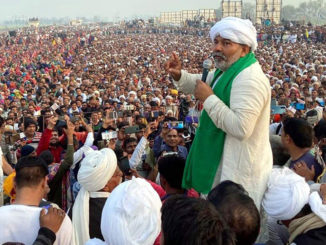
The farmers’ protest has united the farmers over a large part of north India. A number of leaders, including Rakesh Tikait, have emerged as potential power centers and have all the opportunity to lead farmers to political power. It is well to recall the well-known and strong leaders like Chaudhary Charan Singh in Uttar Pradesh and Devi Lal in Haryana who wielded political power on the strength of the farming community that they belonged to.
Indians abroad must be feeling vindicated for their support to the protesting farmers in India. Some of them including Darshan Singh Dhaliwal in the US had their OCI cards revoked and they were not allowed to enter India for their support to protesting farmers. Government of India should now restore their OCI cards and visas and welcome themto India. And this decision should be taken now.
Sometime between the year 1510 and 1520, just before the Mughal rule began in India, Guru Nanak is said to have traveled to the Arab lands visiting, among other places, Mecca and Baghdad. He was in his 40s then. Some say he even performed the hajj, but there is no conclusive evidence to support that claim. On the way back from his sojourn in the Arab lands, Guru Nanak passed through Kabul and Peshawar and halted at a small hamlet, the present-day Hasan Abdal, at the foot of a steep hill.
Attracted by his simple lifestyle and engaging conversation, many people from the village, both Hindus and Muslims, started flocking to Guru Nanak. As the word about him spread, the number of devotees increased.
It so happened that there also lived a Muslim saint, Baba Wali Kandhari, at the summit of the hill above the hamlet. His last name suggests his origins in Kandhar, Afghanistan. Other than having a vantage point from where he could see all that was happening in the village below, Baba Kandhari also had the benefit of having a freshwater spring at the summit, which also flowed down the hill to the village.
From the hilltop, Baba Kandhari could see the people flocking to Guru Nanak. He felt a pang of jealousy, which soon turned into outright resentment against the new saint on the block. If he couldn’t stem the flow of Guru Nanak’s devotees, Baba Kandhari thought, he could perhaps drive the Guru away from the area by stopping the flow of water to the village down below. And stop the water he did.
Guru Nanak took this development calmly, but the villagers were greatly upset over the cutting off of their water supply. They sent a delegation to Baba Kandhari beseeching him to let the water flow, but the Baba was not moved. He sent the delegation back taunting them to ask their guru to divine water for them. The villagers turned to Guru Nanak, who asked his lifelong disciple and companion, Bhai Mardana, a Muslim, to go to Baba Kandhari and plead with him the case of the villagers. But the Baba did not relent. Guru Nanak sent Bhai Mardana again, and yet again, to beg the Baba for water, but to no effect. Not knowing what to do, the desperate villagers approached Guru Nanak once again for advice. As the story goes, Guru Nanak told them not to despair. Pointing to a rock embedded in the ground, he asked them to dislodge it. When they pushed the rock aside, freshwater gushed forth from the ground, enough for the needs of the little village, and some more.
Baba Kandhari was dismayed at this development. But his dismay turned into red hot anger when he discovered that his own spring had meanwhile dried, the water having been sucked by the spring below. Enough was enough, he told himself and decided to get rid of the Guru.
One day, when Guru Nanak was sitting, as usual, surrounded by his devotees, Baba Kandhari pushed a huge boulder down the hill in the direction of the Guru. The boulder rolled down, gaining speed and kicking up dust. When the devotees sitting around the Guru heard the rumble and saw the boulder hurtling down in their direction, they fled in panic. But Guru Nanak continued sitting calmly where he was. When the boulder came close, and it seemed it would surely crush him, Guru Nanak raised his right hand as if ordering the rock to stop. The boulder pushed against Guru Nanak’s hand — and stopped! The Guru’s palm sank into the boulder as if into soft wax, leaving a deep imprint on it.
Upon seeing the miracle, not only the faith of the villagers was reinforced in their saint, but it also convinced Baba Kandhari of the spiritual reach of Guru Nanak. According to one version of the story, Baba Kandhari came down from the hilltop, touched Guru Nanak’s feet, and also joined the Guru’s devotees. Another version says both saints became friends and lived happily thereafter, tending independently to their respective flocks.
Today, the rock with a clearly visible hand imprint is embedded in the concrete structure of the building complex of Panja Sahib. Clear fresh water gushing out from somewhere in the ground cascades down the face of the rock, washing the hand imprint, into a very large pool. Next to the pool, on an elevated platform, stands a beautiful gurdwara, built in the Mughal style by Maharaja Ranjeet Singh (1780-1839). The gurdwara houses the Granth Sahib – the holy book of Sikhs.
(Excerpts from an article by Aziz Ahmad. Source: Internet)
PANJA SAHIB IN PICTURES
Ace photographer Jay Mandalhas visited Panja Sahib a couple of times and took plenty of lovely photographs. He has selected some for the readers of The Indian Panorama which we are glad to reproduce here in this special edition commemorating Guru Nanak Dev Ji’s 552nd Birth Anniversary.
The shrine is considered to be particularly important as the handprint of the founder of Sikhism, Guru Nanak, is believed to be imprinted on a boulder at the Gurdwara.
Text and Photos / Jay Mandal-On Assignment
Gurdwara Panja Sahib complexSandeep Chakraborty, former Consul General of India at New York at the Gurdwara.The old entrance of Gurdwara Panja Sahib.Outer periphery (Parikrama)The Diwan HallHealth Center at the Gurdwara.Children enjoying a jump in the pool.Children at the Gurdwara Sahib.Langar (free food for all) is a unique feature of Sikhism. Volunteers making rotis (prasada) in the kitchen.Prayers are being offered before the food is served.Visitors eat food. All have to sit together on the ground regardless of caste, color, creed, status- a brilliant principle of equality.The locals help in serving food in the langar.Volunteers clean the utensils.A view of the beautiful building of the Gurdwara.Happy devotees at the Gurdwara.Sajjad Azhar, based in Islamabad, is a senior journalist with Urdy Independent. He has done a lot of work on the Sikh temples in Pakistan, particularly Gurdwara Panja Sahib and Gurdwara Nanakana Sahib. Here he is seen at the Gurdwara Panja Sahib. A personal friend of The Indian Panorama editor Prof. Indrajit S Saluja, Azhar has agreed to send his articles on the Sikh Gurdwaras in Pakistan for publication in The Indian Panorama. Thank you, Azhar. (Photo / Courtesy Sajjad Azhar.)
Signup to our Newsletter!
Don’t miss out on all the happenings around the world