Tag: Apple News

  • Indian-Origin woman behind Bezos’ space flight

    Indian-Origin woman behind Bezos’ space flight

    Texas (TIP): Indian-origin Sanjal Gavande was not on Amazon founder Jeff Bezos’ 10-minute space flight Tuesday, July 20 but the 30-year-old engineer from Kalyan in India’s Maharashtra state was on the team that built his spaceship. The world’s richest person, Bezos, 57, blasted into space on Tuesday in the New Shepard rocket ship that traveled to an altitude of roughly 66 miles above the Earth before landing safely in West Texas 10 minutes later.

    He was joined by three other blue-suited crew members on the flight: his younger brother Mark Bezos, 53; American female aviation pioneer Wally Funk, 82; and Dutch incoming college student Oliver Daemen, 18.

    Bezos’ takeoff on Tuesday came on the 52nd anniversary of the Apollo 11 moon landing, which saw US astronaut Neil Armstrong become the first person to step foot on the lunar surface.

    Gavande, who joined Bezos’ Blue Origin space company as a systems engineer in April, was part of the team, which built the New Shepard, according to media reports.

    Shortly after the capsule that carried the crew touched back down on the desert landscape of Van Horn, Texas, a smiling Bezos emerged in a cowboy hat and proceeded to spray an open bottle of champagne with a small crowd of family and friends.

    Bezos is the second billionaire tech titan to blast off in his own spacecraft this month, following 71-year-old Virgin Galactic founder Richard Branson’s historic trip to the edge of space aboard the SpaceShipTwo.

    A mechanical engineering graduate from Mumbai University, Gavande pursued her masters from the Michigan Technology University in 2011.

    After getting a pilot’s license in 2016, she applied for a space-engineering job at NASA but was rejected due to citizenship-related matters.

    “She always wanted to build a spaceship and that is the reason she chose aerospace as a subject while pursuing her master’s degree at Michigan Technological University,” her father Ashok Gavande, who retired from the Kalyan-Dombivli municipal corporation, told India Today.

    Her mother Surekha, who worked with MTNL, said, “People told us that she is a girl, so why has she opted for mechanical engineering?

    I also thought sometimes about whether she would be able to handle such hard work.

    “She has now made us all proud. She had a dream of design aerospace rockets, and she has achieved it,” she told media.

    After completing her post-graduation degree, Gavande worked with Mercury Marine for four years till December 2016 as a design analysis engineer before moving to Toyota Racing Development in California as a mechanical design engineer, according to a report.

    Gavande was honored with the pilot of the year award in 2021 from Orange County, California chapter of Ninety-Nines (local chapter of the International Organization of Women Pilots).

  • Indian-Origin Vaidehi Dongre from Michigan crowned Miss India USA

    Indian-Origin Vaidehi Dongre from Michigan crowned Miss India USA

    WASHINGTON (TIP): Twenty-five-year-old Indian-origin Vaidehi Dongre from Michigan was crowned Miss India USA 2021 while Arshi Lalani from Georgia was declared the first runner-up at the beauty pageant held over the weekend.

    Dongre, 25, graduated from the University of Michigan, majoring in international studies. She works as a business development manager with a major corporation.

    “I want to leave a positive lasting impact on my community and focus on women’s financial independence and literacy,” Vaidehi said. She also won the ‘Miss Talented’ award for her flawless performance of Indian classical dance Kathak.

    Lalani, 20, dazzled everyone with her performance and confidence and was declared the first runner-up. She suffers from brain tumor.

    North Carolina’s Mira Kasari was declared the second runner-up.

    Diana Hayden, Miss World 1997, was the chief guest and chief judge for the pageant.

    As many as 61 contestants from 30 states participated in three different pageants – Miss India USA, Mrs. India USA and Miss Teen India USA. Winners of all three categories get complimentary tickets to travel to Mumbai to take part in worldwide pageants.

    Started by New York-based eminent IndianAmericans Dharmatma and Neelam Saran under the banner of Worldwide Pageants around 40 years ago, Miss India USA is the longest-running Indian pageant outside India.

  • Indian mariner wins USD 1 million in the UAE lucky draw

    Indian mariner wins USD 1 million in the UAE lucky draw

    DUBAI (TIP): An Indian mariner has won USD 1 million (Rs 7.45 crore) in a lucky draw contest in the UAE, according to a media report on Thursday, July 15. Ganesh Shinde, 36, based in Thane, Maharashtra, bought the jackpot ticket on June 16 from the official Dubai Duty Free Millennium Millionaire and Finest Surprise draw website before his arrival here, the Gulf News reported. Shinde works as a mariner for a Brazilian company and every time he travels between Dubai and Rio de Janeiro there is a transit wait at Dubai. Upon his arrival, Shinde found out that he had won the jackpot.

    “It is unbelievable. I am still in shock. This is such a great opportunity. I’m very happy and thankful to Dubai Duty Free. I love Dubai city. I hope to visit soon,” he told the daily.

    Shinde said he has been regularly purchasing the lottery ticket for the last two years.

    “I want a new car, a new apartment, save money for my child’s education. So, the list is long. The prize money will serve these purposes,” he told the newspaper.

    The Millennium Millionaire lucky draw started in 1999 and Shinde is the 181st Indian national to win above USD 1 million at the contest. Indian nationals account for the greatest number of ticket sales at the Dubai Duty Free Millennium Millionaire lucky draw, the daily reported.

    (Source: PTI)

  • Indian American Manisha Bharti appointed first CEO of Pratham USA

    Indian American Manisha Bharti appointed first CEO of Pratham USA

    MINNESOTA (TIP): Pratham, one of India’s largest NGOs providing education to children in Mumbai slums, has appointed Indian American Manisha Bharti as the first Chief Executive Officer of Pratham USA and Global Executive. Bharti, currently Chief of Strategy and Programs at GHR Foundation, one of Minnesota’s largest philanthropic organizations, starts in her job effective September 2021, Pratham announced Thursday.

    Pratham’s work is especially relevant at this time, according to Bharti. “There is such a need for the kind of grassroots, high-quality education Pratham provides with its community-based and digital platforms that are increasingly global in scope.”

    “I’m excited and humbled by this opportunity to help shepherd and co-author Pratham’s next chapter,” Bharti said. “I look forward to working with the global team to deepen Pratham’s impact in India and share its learnings to improve education around the world.”

    Bharti, who oversees a grant portfolio within health, education and international development at GHR Foundation, “brings more than 25 years of professional experience in global development,” Pratham said. Previously she has held senior leadership positions at FHI 360 and the Bill & Melinda Gates Foundation.

    In recent years, Pratham, which means “first” in Sanskrit, has undergone tremendous growth, witnessing increased acclaim and demand for its expertise in India and internationally, according to a Pratham press release.

    “The position of Chief Executive Officer and Global Executive has been established to unify Pratham’s business development, strategy and communications,” says Deepak Raj, Chairman of Pratham USA.

    “Manisha’s appointment marks a significant commitment by the organization to strengthen our US chapters while enhancing our brand globally and improving alignment across regions.”

    “Manisha is ideally suited for this role,” explains Madhav Chavan, Co-Founder and President of Pratham. “Throughout her career, she has driven change, scaled organizations and displayed a talent for bringing people together—invaluable assets for helping shape Pratham’s future.”

    Pratham CEO Dr. Rukmini Banerji echoes the enthusiasm: “We are delighted to have someone of Manisha’s caliber joining us at this pivotal moment for our organization.

    “Our India and US teams have always worked very closely with one another, but this was particularly true during COVID. Together, we can go from strength to strength while at the same time supporting the growth of our international work. With her background and experience, Manisha will be an integral part of this next phase of Pratham.”

    Executive Director Bala Venkatachalam will remain in his position until the transition is complete, at which time he will assume a new global role within the organization. “Bala has done an outstanding job these past seven years,” says Raj. “He has grown our US infrastructure, increased funding and built strong ties between our India and US teams.”

  • Indian national jailed for breaching Covid restrictions in Singapore

    Indian national jailed for breaching Covid restrictions in Singapore

    SINGAPORE (TIP): A 26-year-old Indian national was sentenced to nine months’ jail on Monday, July 12 for trying to leave Singapore during the height of the Covid pandemic when he had been asked to wait in a hospital for the results of his swab test.

    Balachandran Parthiban’s test came positive for Covid after he was picked up by the police at Changi Airport and escorted back to Singapore General Hospital (SGH).

    He had taken public transport there, tried unsuccessfully to buy a ticket to India, and loitered at Terminal 1 of the Changi Airport for about four hours, reported TODAY newspaper.

    The foreign worker later breached an isolation order and went to the airport again in another bid to fly back home. After he pleaded guilty in May to one charge each of exposing others to the risk of Covid and leaving an isolation area without permission, his pro bono lawyer Cory Wong asked for him to be remanded in the Institute of Mental Health (IMH) for psychiatric evaluation.

    Following a nearly four-week stay in IMH, Balachandran was diagnosed with “adjustment disorder with mixed disturbance of emotions and conduct” around the time of his offences in May last year.

    Dr Stephen Phang found that the “minor” mental disorder did not cause him to abdicate his capacity to assume mental responsibility for his actions.

    He still retained the mental capacity to differentiate right from wrong and was not of unsound mind, the psychiatrist added.

    Nevertheless, his subsequent psychiatric history showed that he later developed full-blown “schizophreniform psychosis, which was likely to have been reactive to, and precipitated by the ongoing stress of being held under conditions of security, together with his ongoing concerns about his family situation back in India”, Dr Phang’s medical report stated.

    When in IMH, Balachandran reported hearing voices instructing him to commit suicide which made it difficult for him to control his actions.

    He is now on a reduced dosage of antipsychotic medication as he is clinically well, the psychiatrist added.

    Deputy Public Prosecutor Norman Yew sought 10 months’ jail for Balachandran, while Wong asked for six-and-a-half months’ jail.

    In sentencing, District Judge Ronald Gwee took into consideration two other charges of exposing others to the risk of infection and of using insulting words towards a health officer.

    For each charge of breaking Covid laws, Balachandran could have been jailed for up to six months or fined up to SGD10,000, or both.

    The court earlier heard that Balachandran was a resident of the Jurong Penjuru dormitory for foreign workers, which had been gazetted as an isolation area on April 18 last year to prevent the spread of the coronavirus.On the morning of May 23, he reported sick at his dormitory and complained of fever and sore throat. He was then taken to SGH by ambulance to undergo a Covid swab test at around 12.45 pm.

    About an hour later, he was transferred to the hospital’s “fever screening area” at SGH’s multi-storey car park and repeatedly told to wait for his swab test results.

    However, he left the car park at around 5.35 pm without giving notice because he wanted to buy a flight ticket back to India at Changi Airport. He walked 2.1-km before taking a public bus and taxi.

    His swab test results later showed that he was a confirmed Covid case.

    At the airport, he tried to buy his flight ticket, but to no avail, and was later picked up by the police after they found him loitering at Terminal 1. They escorted him back to SGH.

    Balachandran completed his period of isolation in the hospital on June 8 last year and was diagnosed to be no longer infectious. He went back to the dormitory, was ordered to serve another 14 days’ leave of absence and was not allowed to leave the dorm.

    But he again left for the airport on June 16. He wanted to leave Singapore because he knew that there were many dormitory residents who were infected, the court heard.

    He took a taxi to the airport at around 5.50 am that day with the intention of buying a flight ticket to India but was again rejected.

    After spending the night sleeping at the airport, he went to a relative’s home in Tampines the next day and revealed that he had left his dormitory without permission.

    The relative called and alerted Balachandran’s supervisor, and the police arrived to escort him back to the dormitory at around noon that day.

    (Source: PTI)

  • Indian origin trucker arrested in Canada for smuggling cocaine

    Indian origin trucker arrested in Canada for smuggling cocaine

    The value of this seizure is estimated at USD 14 million

    TORONTO (TIP): A 24-year-old Indian origin trucker was arrested in Canada for allegedly smuggling about 112.5 kg of cocaine estimated at USD 14 million (Rs 1,04,46,17,000) into the country from the US.

    The seizure occurred last month when a commercial truck driven by Pardeep Singh, a Quebec resident, entered Canada at the Peace Bridge in Fort Erie in Ontario and was pulled aside for a secondary examination, the Canada Border Services Agency (CBSA) said Thursday, July 8.

    Border agents searched the vehicle and discovered 112.5 kg of suspected cocaine inside five duffel bags, the agency said in a statement.

    The value of this seizure is estimated at USD 14 million.

    The RCMP have charged Singh with the importation of a controlled substance.

    In a statement, CBSA District Director Kim Upper hailed the seizure as an example of the “integral role” her agency plays in keeping illegal drugs off the streets.

    “Our officers have interrupted the smuggling attempt of a massive amount of narcotics and have put a full stop to the ripple effect these narcotics would have in neighborhoods across our country,” Upper said.

    While the border is closed to non-essential travel because of the Covid-19 pandemic, it remains open for commercial traffic so that essential goods can continue to flow.

    Restrictions on non-essential travel are expected to remain in place until at least July 21.

    (Source: PTI)

  • Indian-origin fraudster posing as car salesman jailed for 9 years in UK

    Indian-origin fraudster posing as car salesman jailed for 9 years in UK

    Defrauded over 200 unsuspecting car buyers out of more than 1 million pounds

    LONDON (TIP): An Indian-origin fraudster posing as a car salesman has been jailed for nine years by a UK court for defrauding over 200 unsuspecting car buyers out of more than 1 million pounds.

    Ravinder Singh Randhawa, 30, was imprisoned for 22 offences of fraud and one offence of money laundering at Exeter Crown Court in south-west England last Friday, July 16.

    According to the UK’s Crown Prosecution Service (CPS), Randhawa was the leader of the fake car selling operation, posing as a legitimate salesman to persuade his victims to pay large sums of money for second-hand vehicles.

    “Randhawa is a prolific and serial offender, preying on trusting members of the public simply wishing to buy second-hand cars. His crimes were sophisticated,” said Sarah Melo, Specialist Prosecutor for the CPS Specialist Fraud Division.

    “He often used identities obtained from previous victims, hijacked the identity of garages and genuine vehicles for sale, so that his victims did not suspect his scam,” Melo said.

    Hundreds of people have suffered at the hands of Randhawa and lost money which they could ill-afford. His crimes have had a profound impact on so many of their lives, she said.

    “Many described the severe effect on their mental and physical health, their family relationships and overall financial stability. For many of his victims this happened at a time when their lives were badly affected by the pandemic,” she said.

    Randhawa often sold the same vehicle more than once and the victims received nothing as he pocketed their money. Some victims drove for miles to collect their new car only to discover that the garage from which they had purchased the vehicle did not exist.

    Those assisting Randhawa to launder his ill-gotten gains, Atif Shariff, 30, and Jason Gilbert, 55, were sentenced to 20 months and 27 months’ imprisonment respectively for their part in the scam operation. Melo said the CPS worked with Devonshire and Cornwall Police worked together to bring the offenders to justice.

    “Randhawa showed no remorse for his actions. He would often laugh at his victims and goad them with abusive messages once they discovered they were victims of his fraud,” she said.

    “He boasted to one victim who’d threatened to call the police that, he’d ‘been doing it for years and the police wouldn’t do anything about it’. He was wrong,” she added.

    The CPS said it is now working to recover as much of the stolen money as possible from Randhawa and his accomplices in order to strip them of their criminal benefit and return the money to their rightful owners. PTI

  • INDIAN AMERICAN NIGHT ORGANIZED

    INDIAN AMERICAN NIGHT ORGANIZED

    Performers.
    Suhag Mehta, Rizwan Qureshi, Farrah Mozawalla, Deepa Goyal, Indu Jaiswal, Priya Suri, Mohinder Singh Taneja, Senator Todd Kaminsky, Nassau County Executive Laura Curran, Mukesh Modi, Dr Jag Kalra, Bobby Kumar Kalotee, Beena Kothari, Deepak Bansal, Anika Tolat, Neeru Bhamri, Roopam Maini, Jasbir Jay Singh.
    Honorees with Nassau County Executive Laura Curran, Senator Kaminsky and Community Leaders.

    LONG ISLAND, NY (TIP): Nassau County Executive Laura Curran along with Indian American Forum under the leadership of Founding Member Dr. Bobby K. Kalotee and Chairwoman Indu Jaiswal brought the community together, on July 11, to celebrate “Indian American Night” at the Eisenhower Park. Chaired by Beena Kothari & Co-chaired and Emceed by Flora Parekh, the event honored distinguished community leaders who made a significant stride through these unprecedented times.

    Several distinguished community leaders, students and achievers were honored by Special Citations – namely Mukesh Modi, Beena Kothari, Dr. Jag Kalra, Deepa Goyal, Priya Suri, Ankur Sahani, Anika Tolat and Hardev Singh. Nassau County executive Hon. Laura Curran shared valuable county resources and information as we move along post difficult times.

    Fascinating dancers, melodious singers and Bollywood performers coordinated by Jyoti Gupta and Indu Gajwani rocked the event. Graceful young Bollywood dancers, choreographed by Manik Malhotra, Jyotika Patel, Shilpa Mithaiwala, young table player and melodious singers namely Kiran Arora, Mitchel Johnson, Kulbhooshan Sharma portrayed true Indian American Culture – Home away from home.

    Several community leaders and IAF Board Members graced the event – to name a few Mohinder Taneja, Jasbir (Jay) Singh, Vijay Goswami, Dr. Bhavani Srinivasan, Rizwan Qureshi and many more. The event was generously covered by several print and TV media. Additional information can be found at www.indianamericanforum.org.

    (Based on a press release by Indu Jaiswal)


  • “In death, Fr. Stan Swamy’s voice is even stronger’ – Father Noby Ayyaneth

    “In death, Fr. Stan Swamy’s voice is even stronger’ – Father Noby Ayyaneth

    Mohinder Singh Gilzian, Father Noby Ayyaneth, Dr. Surinder Malhotra, George Abraham
    Prof. Indrajit Saluja, Varghese Abraham, Leela Maret

    NEW YORK (TIP): “Living Stan was a nobleman, but the departed Stan is unstoppable and his voice on behalf of the poor and the downtrodden is even stronger and will resonate it throughout history,” said Father Noby Ayyaneth of the Malankara Catholic Diocese of North America condoling the death of Father Stan Swamy at a remembrance meeting organized under the banner of Indo-US Democracy Foundation in Floral Park, New York. Jesus Christ was a master humanitarian, and Fr. Stan was following in his master’s footsteps. For him, suffering was not a tragedy in the face of injustice and as he could not be a silent spectator”.

    Mr. George Abraham, Executive Director of the India-US Democracy Foundation, welcomed the gathering and stated ‘it is a dark day for democracy in India and Father Stan Swamy’s detention, treatment in prison and death is a blot on the nation’s consciousness and a travesty of justice. He expressed his disappointment that in today’s India, the presumption of innocence is becoming a thing of the past. India is about to celebrate its 75th Independence Day, and our founding fathers built democratic institutions that stood the test of time and protected democracy, freedom, individual liberty, and equal justice under law. However, these institutions are increasingly under attack and are being diminished. Today, anyone who dares to criticize the authorities is in danger of being termed anti-national.

    Professor Indrajit Saluja, Publisher of Indian Panorama Newspaper, said Father Stan Swamy was a frail and weak man physically but strong morally and spiritually to carry on with his work on behalf of the weaker sections of society. As Indian Americans, we must demand our politicos to speak out when authorities target the poor and downtrodden in India. UAPA is a draconian law that the Supreme Court should have reviewed, and it is a shame that an innocent man had to pay with his life this way.

    Pastor Wilson Jose, Pastor of the Grace International Church in Mineola, said while we have gathered here to celebrate Father Stan’s life, we would like to express our indignation as Pravasis, the way the political leaders and the judiciary treated him in India. Father Stan represented Christ’s teachings to its core and did his best to uplift the neglected ones by a caste system that is in place over centuries. Jesus said, love your enemies and pray for those who persecute you, and Fr. Stan’s life exemplified those principles. During the freedom struggle, Mahatma Gandhi was jailed many times by the British authorities. However, they respected his ideals and made sure no harm happened to him. Sadly today, the Government of India lacks even that basic level of humanity in the treatment of its own citizens!

    Father John Thomas of Orthodox Church pondered what it would be like if any one of us would be in Fr. Stan’s shoes. Will we get intimidated or pull back? Father Stan’s life is a testament to all of us and should inspire us to stand up and fight for what is right.

    Father P.M. Thomas, Vicar-in-charge of Marthoma Church in Queens Village, said Father Stan’s passing had created a big void, and each of us has a role to play in continuing his work. He asked not to be discouraged but to continue the fight until the truth is revealed.

    Mr. Amir Rashid, Director at NYPD who hails from Bihar, described the hardships the marginalized people suffer at the powerful hands in States like Jharkhand. Father Stan Swamy was the voice for the voiceless, and as long as this same power structure exists, these injustices will continue to be tolerated.

    Pastor Babu Thomas of IPC Hebron in Queens Village reiterated the old saying that injustice anywhere is a threat to justice everywhere. Father Stan Swamy was not a terrorist. The government knew that. His only crime was he loved the poor and served them. Unless we stand up and fight for our freedom and rights, our world will be a diminished place to live.

    Dr. Surinder Malhotra, former President of the Indian Overseas Congress described the pathetic situation in India as far as caste and religion is concerned. Unlike the United States, even for a job application, they want to know your religion. Even in our Diaspora here, they tend to ask whether he is a Hindu or a Christian, north Indian or south Indian, and such intolerance is so evident and has become part of our mindset. He condoled the death of a man who dedicated his entire life to doing good but ended up dying in custody.

    Mr. Mohinder Singh Gilzian, President of the Indian Overseas Congress, USA, said it is outrageous that a man who is working on behalf of the poor dies in Government custody. The people who are responsible for foisting false charges to imprison him should be held accountable. The UAPA act is being misused and used against people for political reasons.

    Dr. Anna George, President of the Indian Nurses’ Association in New York, called Father Stan Swamy’s imprisonment and death cruel and unusual punishment. She asked for raising our collective voices to stop this from happening again.

    Mr. Koshy Thomas, who ran for the NYC Council from District 23, expressed his sorrow, and asked authorities to protect  activists such as Father Stan while respecting the human rights of every citizen in India regardless of their religion or caste.

    Mr. John Joseph, the Vice-President of the Indian overseas Congress, urged not to be silent on these ongoing atrocities by the authorities. Is India a real democracy? He asked the participants to be more vigilant in guarding against these Human Rights abuses.

    Mr. Shaji Karackal, National news coordinator, Harvest TV said ‘forgive us father, I am guilty and many of us are for not seeing the truth on time to come to your defense”. Father Stan Swamy will be remembered as a nobleman who stood up for the poor and marginalized.

    Mr. George Chacko also spoke. Mr. Varhgese Abraham thanked everyone for their attendance and paid tribute to the memory of this great soul, Father Stan Swamy. Mr. Shaji Ennasseril (solidactionstudio.com) provided the logistics.

    (Based on a press release)

  • Indian Army Veterans organize Webinar on Moral Development

    Indian Army Veterans organize Webinar on Moral Development

    s

    Participants

    By H.S. Panaser

    NEW YORK (TIP): A webinar on Moral development was organized by Army veterans in India. Aim was to create an awareness amongst the people and contribute to practical application. It is time to implement and channelize our energy into forming good habits. There is a need to develop Moral Infrastructure.

    We have all heard of Physical and Mental Infrastructures. ‘Moral Infrastructure’ is a new term but had been existing in some form and has gradually eroded. This needs to be built up again keeping in tune with the modern times. Since most of it is intangible, the intellectuals have to come together to apply themselves to evolve   a Holistic, ‘Inside Out’ approach from ‘Womb to Tomb’. I attended the webinar which had four eminent speakers.   Lt Gen SRR. Aiyengar, Col (Dr) VRK Prasad, Shri Bharath Madhavan   and Maj Gen K Eswaran.

    The topics covered were as under:

    Morals, Ethics, Values and Moral Intelligence, in which Gen Aiyengar stressed on Moral Intelligence’ and its relevance in the overall moral development. Moral Intelligence is the central intelligence for all humans. It is so because it directs all other forms of intelligence to do something worthwhile.

    Speaking on ‘Value based education (VBE) and its Impact on Moral development and challenges in practical application’, Col Prasad stated that ‘No coin will have any value if any side is missing or blank’. Our education system should be as much value based as it is knowledge based as with the right values a student acquires both knowledge and wisdom as one moves on, in life. Even as per our scriptures a student gets only one fourth of the total learning from his teachers, while the rest, he picks up on his own where the teacher becomes only a facilitator.

    Mr Bharat spoke on ‘The Role of the Triad- ‘Parent Teacher and Women’ in the holistic development of Moral infrastructure of the Nation’. He said – Maata, Pitaa, Guru, Deyvam”, is a saying that is deeply ingrained in every Indian’s mind. Mother comes first, then the father, then the teacher and only then comes God. This shows the level of importance that our ancient seers have kept for the hierarchy of influencers in our lives. The role of the mother is the most essential. Apart from carrying the child in her womb, she plays the most important role in imparting the right values and skills for her child. It is said, “Home is the first school”, our parents are our first teachers, and we learn values, culture, habits, relationships, sharing and caring and many other things that build our personality.

    Lastly, Gen Eswaran gave very practical and down to earth suggestions on how to build up Moral Infrastructure in the country. He covered the entire life of a person from Womb to Tomb including various stages of birth, school, college, career and retirement.  He also spoke about how the three contributors to the nation building that is Citizen, organizations and the government together can make a difference.  He also urged people to have a dream to die for and work towards it. He suggested ways to go about by changing your attitude and forgetting your past.  He suggested that Indian armed Forces are great motivators for a diverse country like India and appealed to all the citizens that ‘Till the time we have the Armed forces and a soldier sacrificing his life, we should not do anything that is NOT in the interest of the nation’.  That is the least we can do to become worthy of this sacrifice’.

    He requested all to align their personal interest with that of the society, organization and the Nation for overall good.

    There was a tremendous response from the audience since it is very rare that people speak openly about integrity, honesty and Moral values.  It is a small step indeed in the right direction. The Moderator, Miss Anuradha carried the show on her shoulders by handling the speakers and the audience.  Her intelligent quotes and experience from the past smoothly dovetailed into the subject stole everyone’s heart.

    The event was sponsored by ‘Help and Serve Public Charitable Trust.’ Gen K Eswaran is the Founder and Trustee of the same and convenor of this meeting.  I have known him since the school days. He has always been a strong proponent of moral values, ethics and character building even while serving in the Army. He has continued his crusade even after retirement. The webinar is on YouTube @ https://youtu.be/gpzqTdryZbo

  • Spyware for snooping

    Digital age calls for privacy, safety

    The expose of the use of the Pegasus spyware, manufactured by an Israeli firm — which the company claims is sold only to ‘vetted’ governments to check terrorism and crime — to conduct surveillance on journalists, politicians and businessmen, leaves many questions unanswered. An international media consortium had on Sunday reported that more than 300 verified mobile phone numbers, including those of two serving ministers, over 40 journalists, three Opposition leaders and one sitting judge, besides business persons and activists in India, could have been targeted for hacking through the spyware. The Israeli company, on its part, has said it does not operate the system that it sells to governments, nor does it have access to data. It has also refused to disclose the identity of its clients. The Indian Government has also denied the surveillance charge, saying that it has no basis, raising queries over the whole affair.

    With smartphones increasingly being used to conduct a range of functions, the revelation has raised question marks about the importance of digital privacy, safety and security. Despite its restricted use, the ease with which the spyware can be installed in the phone is a matter of concern. In 2019, WhatsApp had informed its users about the spyware, and had even filed a case against the Israeli firm, alleging abuse of its platform.

    Incidents of snooping have been alleged even earlier, like in the case of the alleged bugging of the office of then Finance Minister Pranab Mukherjee and when the Congress-backed Chandra Shekhar government had collapsed at the Centre. That the report should have come on the eve of the beginning of the Monsoon session of Parliament may well enliven the proceedings and it is for the Opposition to demand transparency, accountability and safeguards to ensure that the privacy of citizens is protected. Demands have already been raised for PM Modi and Home Minister Amit Shah to clarify the issue because of an ‘atmosphere of fear among people’. In the digital age, the enormity of the task of protecting privacy and safety of citizens has also dawned in no uncertain terms.

    (Tribune, India)  

  • Dealing with denial: On playing down the COVID-19 tragedy

    India must not play down the COVID-19 tragedy, as that would hurt public confidence

    A touchy topic for the Centre and States has been the counting of the dead from COVID-19. In 2020, as the pandemic ravaged Europe and the U.S., Health Ministry officials would incessantly argue that India had better managed the pandemic because its deaths per million of population were comparatively lower. While factually true, it was always apparent that the argument was specious given the size, demographic difference and India’s per capita access to quality health care. But the ferocious second wave, in April and May, characterized by the very visible scenario of hospitals being overrun, and the sick gasping for a very basic necessity of medical oxygen, revealed a spike in excess deaths, compared to the normal death rate in previous years. Even though independent databases, such as the CRS and State records, show large spikes in deaths, with no other explicable cause other than COVID-19, the Centre continues to be in denial of the mortal scale of the pandemic. Tuesday’s statement by Bharati Pravin Pawar, Minister of State for Health and Family Welfare, in the Rajya Sabha, that there were no “specific reports” of deaths from States due to lack of oxygen, led Congress leader K.C. Venugopal, to say the party will move a privilege motion against her.

    Indeed, it is the absolute lack of empathy or acknowledgement of the lived experience of many who have watched their closest suffer and die for want of medical oxygen that makes the Minister’s statement appalling. It is technically true that while no death certificate or medical record would note a COVID-19 patient’s demise as due to “lack of oxygen”, and therefore not causative, the very fact that the Centre moved in April-May to repurpose all its industrial oxygen capacity into producing and transporting medical grade oxygen is itself evidence that the inability to access it must be considered as a probable cause of death. In the early days of the pandemic, a COVID-positive test was necessary to count as a COVID-19 death until the ICMR said it was not always required. It is bewildering why India — with the third highest number of COVID-19 deaths globally, whose oxygen crisis was international news, and mortality figures considered an under-count — sees value in denying oxygen-shortage casualties. Counter-productively, it diminishes public faith in the health-care system. India’s leadership sought to convey the impression that the country had conquered the pandemic and — chastened by the second wave — is now advising abundant caution, with the public messaging focused on the possibility of a third wave, and how nearly a third of the population continues to be vulnerable as per the ICMR’s fourth serology survey. But diminishing the tragedy, especially in Parliament and in its official records, only further erodes the Government’s credibility.

    (The Hindu)

  • Afghans continue to be at the receiving end

    Afghans continue to be at the receiving end

    By Vappala Balachandran

    “Riedel has reminded the US that it had made ‘many mistakes’ in Afghanistan by not paying attention after the Soviets left and allowing it to descend into a ‘failed’ state, permitting the Taliban and al-Qaeda to enter that vacuum. Riedel blamed former President George W Bush for taking his ‘eye off the ball’ in Afghanistan after the 2001 US invasion and letting Osama bin Laden escape into Pakistan.”

    On July 17, Bruce Riedel, formerly of the CIA and now at Brookings, warned that the power vacuum in Afghanistan after the US troop withdrawal will adversely affect India by spawning terrorism. Similarly, The New York Times (July 15) reported Chinese fears of insecurity in the region after the killing of nine Chinese workers in a ‘Belt & Road’ hydroelectric project in Dasu, Pakistan’s Northwest, due to a suspected explosion.

    Riedel had issued a similar warning on April 27, 2021, by reminding President Joe Biden of what President Barack Obama had said in his memoir A Promised Land: “The Riedel report made one thing clear: Unless Pakistan stopped sheltering the Taliban, our efforts at long-term stability in Afghanistan were bound to fail.”

    What was this Riedel report? In February 2009, Obama chose Riedel to chair a White House Review to synthesize suggestions from heavyweights like Richard Holbrooke, special envoy to Afghanistan and Pakistan, Gen David H Petraeus, Central Command Chief, and Admiral Michael G Mullen, chairman of the Joint Chiefs of Staff, before the next NATO summit.

    In a joint press conference at the White House on March 27, 2009, Riedel and Holbrooke outlined Obama’s strategy for NATO presence in Afghanistan: “To disrupt, dismantle and defeat al-Qaeda, and to ensure that their safe havens in Afghanistan and Pakistan cannot threaten the United States anymore.”

    They added that the US exit strategy would depend on that.

    Biden’s White House address on April 14, 2021, also claimed that they had achieved the “disrupt, dismantle and defeat al-Qaeda” strategy. However, Riedel did not agree. He said that Joe Biden, who inherited “a terrible deal from Trump’s feckless negotiators” had “failed to engage with Prime Minister Imran Khan”, which was a mistake. This is because Pakistani generals “will be more hubristic and dangerous than ever”, as Pakistan is the winner “again” in Afghanistan, by outlasting two superpowers.

    Riedel reminded America that Washington DC had made ‘many mistakes’ in Afghanistan by not paying any attention after the Soviets left, allowing it to descend into a ‘failed’ state, permitting the Taliban and al-Qaeda to enter that vacuum. Riedel blamed former President George W Bush for taking his “eye off the ball” in Afghanistan after the 2001 US invasion and letting Osama bin Laden escape into Pakistan.

    In my opinion, a bigger mistake was made in 1992. This was after the failed coup d’état in the Soviet Union in August 1991 and eventual disintegration. In September that year, three Baltic states seceded and declared their independence. A limited ‘Belovezha’ accord signed on December 8, 1991, was modified by the December 21 Alma Ata Protocol in Kazakhstan, creating the Commonwealth of Independent States (CIS) by Russia, Armenia, Azerbaijan, Belarus, Kazakhstan, Kyrgyzstan, Moldova, Tajikistan, Turkmenistan, Ukraine, and Uzbekistan. Western powers, including the United States, recognized these independent countries.

    On March 9, 1992, President Mohammad Najibullah made a direct appeal to the United States through The New York Times to help him in maintaining stability in Afghanistan. This was after President Boris Yeltsin stopped all direct assistance to Afghanistan, which grounded the Afghan air force and encouraged defections, which affected the Afghan army too.

    Senior journalist Edward A Gargan reproduced Najibullah’s text of appeal to the US in The New York Times. Najibullah’s tone was premonitory: “If fundamentalism comes to Afghanistan, war will continue for many more years… Afghanistan will turn into a center of world smuggling for narcotic drugs. Afghanistan will be turned into a center for terrorism.” However, none in Washington DC listened.

    Najibullah also echoed the then Secretary of State James Baker’s statement that Islamic fundamentalism had posed a significant threat to regional stability: “You may think that the Central Asian republics are significant for the United States of America… That’s right. But I must say that the strategic and political significance of Afghanistan is much more than these republics. If Afghanistan is lost and is turned into a center of fundamentalism, you will lose the Central Asian republics.”

    During this period, even King Zahir Shah’s US-based representatives had appealed to the State Department and the CIA that the retention of Najibullah in Afghanistan was very necessary as he was the only Afghan leader who would be able to hold the country together, obstruct the jihadis from coming into power and prevent Afghanistan’s splintering. They even conveyed that Najibullah should be accepted by the US, just as it had recognized the CIS leaders, who were mostly authoritarian. Unfortunately, the rivalry between the State Department and the CIA prevented this from happening.

    Steve Coll, in his book The Ghost Wars, vividly records the clashes between the State Department and the CIA over Najibullah. Initially, the State Department’s special envoy to Afghanistan Edmund McWilliams had differed with CIA’s Station Chief Milton Bearden over Najibullah’s fate. The CIA wanted him to go, as desired by Pakistan’s ISI. Milton Bearden started resenting “interference” by the State Department over their turf.

    In Washington DC, this rift between the CIA and the State Department was carried higher by the then CIA Deputy Director Thomas Twetten and Peter Tomsen, State Department’s new special envoy to the Afghan Resistance. Robert Kimmitt, Under Secretary for Political Affairs, told The New York Times (January 3, 1991) that Secretary of State Jim Baker had wanted to “coax the rebels and the Najibullah regime into democratic elections”, but that “they (meaning CIA) are just bucking policy.”

    However, during that period, Texas Congressman Charlie Wilson, member, US House of Representatives’ Appropriations Sub-Committee for Defense, was exercising disproportionate influence over Afghan operations. It resulted in other voices being ignored.

    Wilson regretted this later. An article in The World, a public radio and podcast programme, on February 11, 2010, said that Wilson, to the end of his life, regretted that “more wasn’t done to stabilize the country” and “the moderate, pro-Royalist factions in the resistance were ruthlessly suppressed by more extreme Islamic militants on our side.”

    These ‘regrets’ of ‘mistakes’ are not going to help the hapless Afghans now who continue to be the victims of external interference.

    (Vappala Balachandran is an author and columnist)

  • Reclaiming democracy via voters’ whip

    Reclaiming democracy via voters’ whip

    By Yogendra Yadav

    “At this stage in history, when we are experiencing “democracy capture” — a capture of democracy through democratic means — these examples hold out hope for the country. There is a parliamentary session going on but the PM is unwilling to make a statement on the floor of the House and answer questions on millions of deaths due to the second Covid wave. The Pegasus disclosures have opened our eyes, if that was needed, to the mockery of constitutionally guaranteed liberties. In this context, andolans and andolanjivis hold out hope for our democracy.”

    Right from the inception of parliamentary democracy in our country, every party has appointed a whip tasked with disciplining the elected representatives. But what about direct command from the voters? Why can’t the voters bypass the parties and instruct their representatives on how to conduct themselves in Parliament?

     The Samyukt Kisan Morcha’s decision to issue a ‘voters’ whip’ is one more democratic innovation in these dark times when formal democratic institutions and practices are taking a downturn. Democracy is being reclaimed on the streets just when the constitutional democratic apparatus is receding. As they say, creativity thrives in the dark.

    The idea behind the voters’ whip is simple, though powerful. Right from the inception of parliamentary democracy in our country, every party has appointed a whip tasked with disciplining the elected representatives. This role has a legal sanction after the insertion of anti-defection provisions in the Tenth Schedule of the Constitution. Now every party can and does issue a whip to its MPs and MLAs, instructing them to be present on certain days and vote in specified ways. The basic idea is that the voters speak to the MPs and MLAs through the party; hence, they should not be allowed to violate its commands. But what about direct command from the voters? Why can’t the voters bypass the parties and instruct their representatives on how to conduct themselves in Parliament?

    That is what the voters ‘whip does. On behalf of the farmers, the Samyukt Kisan Morcha has issued a whip to all the MPs for this Monsoon session that directs them to be present in Parliament for all days, to support the above mentioned demands of farmers’ movement on the floor of the House, not stage a walk-out and “not allow any other business to be transacted in the House till the Union Government accedes to the farmers’ demands”. This voters’ whip “overrides the whip issued by your party” and those who defy it face the prospect of farmers’ boycott.

    It is a conceptual break, but a work in progress on the practicalities. The concept needs to be fleshed out in terms of procedures for issuing the whip (who can issue it? How do we know the voters back it?), mechanisms for monitoring (what exactly constitutes a violation?) and penalty for defiance (who implements it? Exactly how?). A mass movement like the present farmers’ agitation commands exceptional moral authority and can issue such a whip. But the protocols of its use in normal times are yet to be worked out.

    This is but one more instance of innovation in a movement that has been forced to innovate all the time. Take the very form of protest, the morchas outside Delhi’s borders. These are not traditional marches or sit-ins or squatting. Occupying miles of highway to set up colonies defies classification. Similarly, turning toll plazas into sites of regular protest, organizing massive Kisan Mahapanchayats, coalition of farm unions with khap panchayats, building alliance with trade unions, the use of community langar for supporting agitations, extending the idea of langar to daily-use items or even oxygen cylinders — all these are innovations in democratic practices.

    Last week, there was another such innovation, not connected to the farmers’ movement. Chhattisgarh’s capital Raipur witnessed a public hearing on the condition of migrant workers. But this was not another jansunwai, where the victims present their case to a panel of experts and judges. In this experiment, the jury comprised 17 migrant workers themselves.

    They deliberated for three days, heard from co-workers and the experts, to arrive at their verdict. This reversal of gaze takes the idea of public hearing forward and deepens its democratic character.

    One of the most startling innovations in recent time was, of course, Shaheen Bagh. It sprung up just when everyone thought it was impossible to raise minority voice under this government, just when the discriminatory Citizenship Amendment Act seemed like a fait accompli, just when all legitimate forms of protest were being criminalized. An all-women day and night neighborhood gathering was a breathtaking idea, executed to perfection with nationalist symbolism. It combined defiance with pedagogy, anti-politics with deep politics, questioning of political authority with questioning of gender roles.

    These might appear like isolated examples, but they are not. Just start looking around for newer ways of expressing democratic aspirations and you would find something every day. A few months ago, unemployed youths in Uttar Pradesh played a prank on the Yogi government, an incident that served to highlight the widespread unemployment among the educated youth. Last week, some citizens started a #ThankyouModiji campaign, taking a photograph before Prime Minister Narendra Modi’s banner outside petrol pumps, to highlight the rising prices of petrol and diesel. You can keep adding to this list.

    At this stage in history, when we are experiencing “democracy capture” — a capture of democracy through democratic means — these examples hold out hope for the country. There is a parliamentary session going on but the PM is unwilling to make a statement on the floor of the House and answer questions on millions of deaths due to the second Covid wave. The Pegasus disclosures have opened our eyes, if that was needed, to the mockery of constitutionally guaranteed liberties. In this context, andolans and andolanjivis hold out hope for our democracy.

    A historian and theorist of democracy, John Keane, has described these as instances of “monitory democracy” —innovations that add instruments of monitoring the health of democracy and thus deepen its quality. He lists India as one of the prime examples of such democratic innovations. We must also recognize that in post-colonial democracies, such innovations do not merely supplement the existing and functional democratic institutions. They also fill a deeper gap. Many constitutionally mandated democratic institutions only exist on paper in our democracy. Newer practices like the voters’ whip promise to fill the void left by the non-functioning of such institutions.

    (The author is the first and current National president of Swaraj India)

  • Pegasus is India’s Watergate moment

    By Pranesh Prakash

    ‘In 2013, India’s current Home Minister was embroiled in a controversy dubbed “Snoopgate”, with phone recordings alleged to be of him speaking to the head of an anti-terrorism unit to conduct covert surveillance on a young architect and her family members without any legal basis. The Gujarat government admitted the surveillance, including phone tapping, but claimed it was done on the basis of a request made to the Chief Minister by the woman’s father. Yet, no order signed by the State’s Home Secretary — a legal necessity for a phone tap — was ever produced.”

    Intelligence gathering needs to be professionalized, parliamentary oversight introduced, and liberties and law protected

    “If this government ever became a tyranny, if a dictator ever took charge in this country, the technological capacity that the intelligence community has given the government could enable it to impose total tyranny, and there would be no way to fight back because the most careful effort to combine together in resistance to the government, no matter how privately it was done, is within the reach of the government to know. Such is the capability of this technology.” Those words of Sen. Frank Church, who led one of two committees on intelligence and surveillance reform established in the aftermath of the Watergate scandal, are just as relevant in India today given the revelations of extensive surveillance — it is unclear by whom, but signs point to the Indian government — by the use of spyware on people’s phones. While there is much to be said about the international regulation of the unaccountable sale of spyware by shadowy entities such as the NSO Group, it is equally, if not more important to ensure that surveillance in India is made accountable.

    Go easy on the salt

    My former colleague, Sunil Abraham, often likens surveillance to salt. A small amount of surveillance is necessary for the health of the body politic, just as salt is for the body; in excess, both are dangerous. While one cannot enjoy the liberties provided under the Constitution without national security, we must equally remember that national security is not meaningful if it comes at the cost of the very liberties such security is supposed to allow us to enjoy. Excessive and unaccountable surveillance imperils privacy, freedom of thought, of speech, and has a chilling effect on people’s behavior, while shattering the bedrock of the rule of law upon which a constitutional liberal democracy is built.

    The government claims all its surveillance is authorized and justified. But then, the question arises: where are the prosecutions for terrorism, organized crime, espionage, etc., based on evidence from such surveillance? Who is ensuring that the surveillance is necessary and proportionate? Indeed, on the contrary, there are numerous examples of surveillance powers being misused for personal and political gain, and to harass opponents.

    Earlier examples

    In 2012 in Himachal Pradesh, the new government raided police agencies and recovered over a hundred thousand phone conversations of over a thousand people, mainly political members, and many senior police officials, including the Director General of Police (DGP), who is legally responsible for conducting phone taps in the State.

    In 2013, India’s current Home Minister was embroiled in a controversy dubbed “Snoopgate”, with phone recordings alleged to be of him speaking to the head of an anti-terrorism unit to conduct covert surveillance on a young architect and her family members without any legal basis. The Gujarat government admitted the surveillance, including phone tapping, but claimed it was done on the basis of a request made to the Chief Minister by the woman’s father. Yet, no order signed by the State’s Home Secretary — a legal necessity for a phone tap — was ever produced, and the Gujarat High Court shut down an inquiry into “Snoopgate” upon the request of the architect and her father, on the shocking basis that it “did not involve public interest”.

    In 2009, the United Progressive Alliance government swore in an affidavit in the Supreme Court that the CBDT had placed Niira Radia, a well-connected PR professional, under surveillance due to fears of her being a foreign spy. Yet, while they kept her under surveillance for 300 days, they did not prosecute her for espionage.

    Non-state actors such as the Essar group, have also been shown to engage in illegal surveillance. K.K. Paul, then the Governor of Meghalaya, noted complaints by telecom operators that private individuals were misusing police contacts to tap phone calls of “opponents in trade or estranged spouses”.

    There are dozens of such examples of unlawful surveillance which seem to be for political and personal gain and have nothing to do with national security or organized crime. Yet, there are few examples of people being held legally accountable for unlawful surveillance.

    The laws

    Currently, the laws authorizing interception and monitoring of communications are Section 92 of the CrPC (for call records, etc), Rule 419A of the Telegraph Rules, and the rules under Sections 69 and 69B of the IT Act. Indeed, it is unclear when the Telegraph Act applies and when the IT Act applies. A limited number of agencies are provided powers to intercept and monitor.

    In 2014, the Ministry of Home Affairs told Parliament that nine central agencies and the DGPs of all States and Delhi were empowered to conduct interception under the Indian Telegraph Act. In 2018, nine central agencies and one State agency were authorized to conduct intercepts under Section 69 of the IT Act. Yet, the Intelligence Organisations Act, which restricts the civil liberties of intelligence agency employees, only lists four agencies, while the RTI Act lists 22 agencies as “intelligence and security organisations established by the central government” that are exempt from the RTI Act. Thus, it is unclear which entities count as intelligence and security agencies.

    Further, a surveillance alphabet soup exists, with programmes such as CMS, TCIS, NETRA, CCTNS, and so on, none of which has been authorized by any statute, and thus fall short of the 2017 K.S. Puttaswamy judgment, which made it clear that any invasion of privacy could only be justified if it satisfied three tests: first, the restriction must be by law; second, it must be necessary (only if other means are not available) and proportionate (only as much as needed); and third, it must promote a legitimate state interest (e.g., national security).

    In 2010, then Vice-President Hamid Ansari called for a legislative basis for India’s agencies, and the creation of a standing committee of Parliament on intelligence to ensure that they remain accountable and respectful of civil liberties. In 2011, the Cabinet Secretary in a note on surveillance held that the Central Board of Direct Taxes having interception powers was a continuing violation of a 1975 Supreme Court judgment on the Telegraph Act. That same year, parliamentarian Manish Tewari introduced a private member’s Bill to bring intelligence agencies under a legislative framework. That Bill soon lapsed. In 2013, the Ministry of Defence-funded think-tank, the Institute for Defence and Strategic Analysis, published a report, “A Case for Intelligence Reforms in India”, a core recommendation of which was: “the intelligence agencies in India must be provided a legal framework for their existence and functioning; their functioning must be under Parliamentary oversight and scrutiny”.

    In 2018, the Srikrishna Committee on data protection noted that post the K.S. Puttaswamy judgment, most of India’s intelligence agencies are “potentially unconstitutional”, since they are not constituted under a statute passed by Parliament — the National Investigation Agency being an exception. In its 2019 election manifesto, the Indian National Congress — in what to my knowledge was a first for a national political party — called for parliamentary oversight of intelligence agencies.

    Post-Watergate reforms

    The legacy of the Church Committee can be seen in the fact that the Snowden revelations in 2013 did not uncover any spying on Opposition politicians, journalists, judges, and human rights defenders for partisan political ends. What was shocking about the Snowden revelations was the extent of NSA’s surveillance, the overreach of the powers provided under the PATRIOT Act, as well as the lack of sufficient checks and balances provided by the Foreign Intelligence Surveillance Court. The Snowden revelations led to meaningful reform of that court, and controversial domestic surveillance provisions of the PATRIOT Act expired in 2020.

    We need such reforms in India, which are aimed at professionalizing intelligence gathering, bringing intelligence agencies under parliamentary oversight, making them non-partisan, and ensuring that civil liberties and rule of law are protected. This is India’s Watergate moment, and the Supreme Court and Parliament should seize it.

    (The author was a co-founder of the Centre for Internet and Society, and is an affiliated fellow at Yale Law School’s Information Society Project)


  • India’s US envoy Sandhu visits Dalip Singh Saund Post Office in California

    India’s US envoy Sandhu visits Dalip Singh Saund Post Office in California

    This is probably the first time that an Indian Ambassador has visited the post office named after Saund, who was elected to the House of Representatives thrice from 1956 to 1962

    WASHINGTON (TIP): India’s Ambassador to the US Taranjit Singh Sandhu visited the Dalip Singh Saund Post Office, named after the first Indian-American lawmaker, during his recent visit to California. This is probably the first time that an Indian Ambassador has visited the post office named after Saund, who was elected to the House of Representatives thrice from 1956 to 1962. The post office was named after him after the then President George Bush signed a bill in this regard into law on July 21, 2005. During his visit to California last week, Sandhu interacted with the Indian- American community leaders.

    He also held meetings with top US lawmakers from the region, including Scott Peters, who serves on the House Committee on Energy and Commerce, Committee on Small Business; Darrell Issa, who is a member of the House Committee on Foreign Affairs – Subcommittee on the Middle East and North Africa and Subcommittee on Terrorism, Non-proliferation, and Trade; and Mike Levin, member of the Hispanic and Progressive Caucus and House Committee on Natural Resources Committee on Veterans Affairs Select Committee on the Climate Crisis.

    Sandhu visited Los Angeles and San Diego. He had engagements with the community, members of the US Congress and at the University of California.

    He interacted with the Indian community leaders on board the historic Star of India ship in the Maritime Museum of San Diego. Built in 1863, Star of India is the world’s oldest active sailing ship.

    In his remarks, the ambassador said the US had come out in an overwhelming manner to offer support to India during the Covid crisis. He also praised the role of the Indian diaspora during this grim time.

    “Every bit that you do has been key to saving a life in India, making an actual difference to someone’s life. Community has always been a strong pillar, (as has been) seen it in the past, too, to maintain the strong connection with India,” he said. (Source: PTI)


  • Pegasus and farmers issues lead to pandemonium in Indian Parliament: Lok Sabha, Rajya Sabha adjourned

    Pegasus and farmers issues lead to pandemonium in Indian Parliament: Lok Sabha, Rajya Sabha adjourned

    • Parliamentary panel likely to question officials on Pegasus phone tapping allegations
    • Agenda of July 28 meeting is ‘Citizens’ data security and privacy’

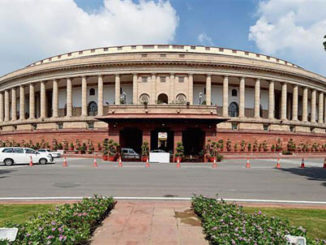
    NEW DELHI (TIP): Parliament remained disrupted on Pegasus snooping row and farmers’ issues for the third day on Thursday, July 22, with the Lok Sabha and Rajya Sabha adjourned twice first till noon and then till 2 pm.

    Opposition MPs stormed the Well, flashing placards in front of Lok Sabha Speaker Om Birla, who repeatedly asked the members to return to the seats saying the government was willing to discuss anything as per rules.

    “This is not right; this is a wrong practice. This Parliament is yours. The onus of retaining its glory is on you. If you don’t do that democracy will not be strengthened. I am ready to get discussion done on the issue that’s agitating you,” said the Speaker, but to no avail.

    Congress, TMC and Left parties were seen storming the Well agitating on issues of farmers and against the alleged snooping of Indian individuals using a foreign spyware.

    In Rajya Sabha too, the opposition MPs forced two adjournments and the House was adjourned within a minute of assembling at 11 am.

    Later, when the RS reassembled, the Opposition MPs continued to raise slogans against the alleged snooping controversy.

    In the ruckus, the deputy chairman sought laying of the parliamentary committee reports that could not be laid at the scheduled hour in the morning due to opposition protests.

    Soon after, he adjourned the proceedings for the day.

    When the Lok Sabha reassembled at noon after the first adjournment the government said it was ready for any discussion.

    Parliamentary Affairs Minister Prahlad Joshi said, “Rajya Sabha has already discussed Covid. Despite our assurances the opposition here is disrupting the question hour which is a right of the members. Disrupting the proceedings when government is ready for discussion is not right. Tell us on what issue you want a discussion. We will discuss.”

    Presiding officer LS Bhartruhari Mahtab urged MPs to go to their seats and allow the House to function but had to again adjourn the proceedings till 2 pm amid pandemonium.

    Later, the Lok Sabha was adjourned till Friday amid continued protests by Opposition members against the “three black farm laws”.

    The Left is seeking a JPC in the snooping row while the Congress and TMC have demanded a Supreme Court-led investigation.

    The government has denied the charges as sensational calling the reports by an international media consortium a “global conspiracy”.

    Speaking in Lok Sabha, Union IT and Communications Minister Ashwini Vaishnav had dismissed the reports as “baseless” and said that the allegations levelled just ahead of the Monsoon session of Parliament were aimed at maligning Indian democracy.

    A parliamentary panel on IT headed by Congress leader Shashi Tharoor is likely to question top government officials, including from Home Ministry, next week on allegations related to phone tapping of many using Pegasus spyware, sources said on Wednesday.

    An international media consortium has claimed that several Congress leaders including Rahul Gandhi, two union ministers, Trinamool Congress leader Abhishek Banerjee and some 40 journalists were among those whose phone numbers were listed as potential targets for hacking through the Israeli spyware which is usually supplied to government agencies.

    The Indian government and Israeli surveillance company NSO Group, which sells Pegasus spyware worldwide, have refuted the reports.

    The 32-member Parliamentary Standing Committee on Information and Technology headed by Tharoor is scheduled to meet on July 28. The agenda of the meeting is ‘Citizens’ data security and privacy’, according to the notification issued by Lok Sabha Secretariat.

    The panel, which has maximum members from the ruling BJP, has summoned officials from the Ministry of Electronics, Information and Technology and the Ministry of Home Affairs.

    Sources in the panel said the Pegasus phone tapping issue will definitely be raised in the meeting and details will be sought from the government officials.

  • U.S. condemns ‘extrajudicial surveillance’ of journalists, activists, regime critics

    U.S. condemns ‘extrajudicial surveillance’ of journalists, activists, regime critics

    WASHINGTON (TIP): Joe Biden had said that China and Russia were “protecting” and “even accommodating” cyber hackers and their hacking. The Biden administration has condemned the harassment and ‘extrajudicial surveillance’ of journalists and others in reaction to reports published by a consortium of news websites that Israeli company NSO Group’s spyware, Pegasus, was used for illegal hacking and surveillance of individuals, including in India.

    “The United States condemns the harassment or extrajudicial surveillance of journalists, human rights activists, or other perceived regime critics,” a White House spokesperson said via email to The Hindu in response to a question on what U.S. President Joe Biden’s position on the issue was.

    Only on Monday, July 19, U.S. President Joe Biden had said that China and Russia were “protecting” and “even accommodating” cyber hackers and their hacking.

    The news reports on Pegasus say that in addition to actually or potentially targeting journalists, leaders of the opposition in India, and others, a database of phone numbers that allegedly belonged to the NSO Group contained the numbers of two U.S. Centers for Disease Control and Prevention (CDC) officials in New Delhi and employees of the Bill and Melinda Gates Foundation.

    Tuesday’s statement from the White House spokesperson stopped short of naming Israel — where NSO Group is based. “Just as states have the duty to protect human rights, businesses have a responsibility to respect human rights, including by ensuring that their products or services are not being used by end-users to abuse fundamental freedoms,” the spokesperson said.

    (Source: The Hindu)

  • Bank of Baroda Chief Executive US Operations Mr.  Elango heads on promotion to corporate office in Mumbai

    Bank of Baroda Chief Executive US Operations Mr.  Elango heads on promotion to corporate office in Mumbai

    I.S. Saluja

    NEW YORK (TIP): Mr. Balasubramaniam Elango, the Chief Executive (US Operations) of Bank of Baroda left here on Thursday, July 22 for Mumbai where he will take up his new assignment as Chief Group Compliance Officer of the Bank of Baroda at the Corporate office.

    In a brief conversation with The Indian Panorama, he spoke about the challenges for the banking industry which requires to meet high standards of compliances at many levels. He said, he is aware of the great responsibility he will have as Chief Group Compliance Officer of the bank.

    Mr. Elango spoke highly of the Indian American community with which he has been in contact for three and a half year. In particular, he appreciated the community for their generous help to Indians in the difficult period of the pandemic. He said the generosity of the Indian American community he witnessed impressed him a lot.  When asked, what message he would like to give to the Indian American community, he smiled and said, “keep up the good work”.

    Born in 1966, Mr. Elango holds a bachelor’s degree in Science and MBA degree in Finance. He is an Associate Member of the Institute of Cost & Management Accountants of India (ACMA) and a certified Associate of Indian Institute of Banking & Finance (CAIIB). He also completed ICSI (Inter) of Institute of Company Secretaries of India.

    Mr. Elango joined Bank of Baroda as a Manager in 2000. In a career spanning over 17 years with Bank of Baroda, he acquired rich experience of diverse Banking operations with a thorough knowledge of International Operations.

    Mr. Elango has held a wide range of responsibilities in Domestic as well as international operations of the Bank in various capacities. He also headed credit & Development department of Bank of Baroda (Uganda) Ltd, Kampala (A subsidiary of Bank of Baroda) for more than four years.

    He spent a good three and a half year here in New York managing the banks US Operations.

  • “Best day ever as Jeff Bezos endshis ride into space on own rocket

    “Best day ever as Jeff Bezos endshis ride into space on own rocket

    DALLAS (TIP): Jeff Bezos, the world’s richest man, went to space and back Tuesday, July 20 morning on an 11-minute, supersonic joy ride aboard the rocket and capsule system developed by his space company, Blue Origin. Riding alongside the multibillionaire were Bezos’ brother, Mark Bezos; Wally Funk, an 82-year-old pilot and one of the “Mercury 13” women who trained to go to space in the 20th century but never got to fly; and an 18-year old recent high school graduate named Oliver Daemen who was Blue Origin’s first paying customer and whose father, an investor, purchased his ticket. Funk and Daemen became the oldest and youngest people, respectively, ever to travel to space. And this flight marked the first-ever crewed mission for Blue Origin’s New Shepard suborbital space tourism rocket, which the company plans to use to take wealthy thrill seekers on high-flying joy rides in the months and years to come.

    “Best day ever!” Bezos said when the capsule touched down on the desert floor at the end of the 10-minute flight. Named after America’s first astronaut, Blue Origin’s New Shepard rocket soared from remote West Texas on the 52nd anniversary of the Apollo 11 moon landing, a date chosen by Bezos for its historical significance. He held fast to it, even as Virgin Galactic’s Richard Branson pushed up his own flight from New Mexico in the race for space tourist dollars and beat him to space by nine days.

    Unlike Branson’s piloted rocket plane, Bezos’ capsule was completely automated and required no official staff on board for the up-and-down flight. Blue Origin reached an altitude of about 66 miles (106 kilometers), more than 10 miles (16 kilometers) higher than Branson’s July 11 ride. The 60-foot (18-meter) booster accelerated to Mach 3 or three times the speed of sound to get the capsule high enough, before separating and landing upright.

    The passengers had several minutes of weightlessness to float around the spacious white capsule. The window-filled capsule landed under parachutes, with Bezos and his guests briefly experiencing nearly six times the force of gravity, or 6 G’s, on the way back.

    Led by Bezos, they climbed out of the capsule after touchdown with wide grins, embracing parents, partners and children, then popped open bottles of sparkling wine, spraying one another.

    haring Bezos’ dream-come-true adventure was Wally Funk, from the Dallas area, one of 13 female pilots who went through the same tests as NASA’s all-male astronaut corps in the early 1960s but never made it into space.

    “I got goose bumps,” said Angel Herrera after the capsule landed. “The hair on the back of my neck stood up, just witnessing history.” Herrera, who lives in El Paso, was one of a few dozen people who watched the launch from inside Van Horn High School, about 25 miles (40 kilometers) away.

    Blue Origin — founded by Bezos in 2000 in Kent, Washington, near Amazon’s Seattle headquarters — hasn’t revealed its price for a ride to space. Two more passenger flights are planned by year’s end, said Blue Origin CEO Bob Smith.

    The recycled rocket and capsule that carried up Tuesday’s passengers were used on the last two space demos, according to company officials.

    Blue Origin is working on a massive rocket, New Glenn, to put payloads and people into orbit from Cape Canaveral, Florida. The company also wants to put astronauts back on the moon with its proposed lunar lander Blue Moon; it’s challenging NASA’s sole contract award to SpaceX. (AP)

    (Agencies)

  • Rasmalai

    Rasmalai

    Ingredients 

    Milk – 1 litre, Paneer – 100 g, Sugar – 3/4 cup, Saffron Strands – 4, Almonds – 1 tsp, sliced, Pistachios – 1 tsp, sliced, Cardamom Powder – 1/4 tsp, Maida – 2 tsp

    Method

    –              Crumble the paneer and mix with maida to a smooth dough.

    –              Make small balls and lightly flatten them.

    –              Heat 1 cup of water in a pan.

    –              Add 1/4 cup of sugar and bring to a boil until sugar has fully dissolved.

    –              Remove from flame.

    –              While it is still hot, add the paneer balls and cover with a lid.

    –              Keep aside for few hours.

    –              Boil the milk in a heavy pan until reduced in half.

    –              Add 1/2 cup of sugar and stir well until fully dissolved.

    –              Remove from flame.

    –              Add cardamom powder, saffron strands and mix well.

    –              Remove the balls from the sugar syrup and squeeze gently.

    –              Add to the hot milk.

    –              Garnish with almonds and pistachios.

    –              Keep it in the fridge for 2 to 3 hours.

    –              Serve chilled.

  • Blake slams tabloid for sharing ‘deceitful’ pics of her daughters

    Blake slams tabloid for sharing ‘deceitful’ pics of her daughters

    Actor Blake Lively has called out an Australian tabloid after they posted a photo of her children on Instagram. Blake and her husband actor Ryan Reynolds have three daughters–James, Inez, and Betty.

    The tabloid shared the picture collage highlighting the faces of Blake Lively’s children. The collage showed James and Inez in a stroller as Blake held Betty in her arms, as per Just Jared. It added that another photo showed her ‘smiling brightly and waving at the cameras’.

    The Gossip Girl actor took to the comments section of the post and shared the ‘real story’ behind the photos. Blake Lively said, “You edit together these images together to look like I’m happily waving. But that is deceitful. The real story is: My children were being stalked by a men all day. Jumping out. And then hiding. A stranger on the street got into words with them because it was so upsetting for her to see. When I tried to calmly approach the photographer you hired to take these pictures in order to speak to him, he would run away. And jump out again at the next block.”

  • Britney Spears says she’s not even close to sharing her truth about conservatorship fight

    Britney Spears says she’s not even close to sharing her truth about conservatorship fight

    Britney Spears recently gave her testimony in court and since then support for the singer amid the conservatorship battle has increased. Spears took on social media to address things that have been bothering her for years.

    Spears has also called out the people who have claimed to be close to her and shared supportive messages for Britney on social media for remaining silent for so many years. However, the singer has now shared a post on Instagram to speak out her truth.

    Britney Spears said that she has just started to share her story. The caption to the post read, “So I said “life goes on” in one of my recent posts but it’s always easier said than done !!!!! In that moment that’s what felt was the easiest to say but I think we all know that I will never be able to let go and fully move on until I’ve said all I needed to say … and I’m not even close !!!!”

    She also said, “I was told to stay quiet about things for so long and I finally feel like I’m just getting here,” while continuing to tell why she wants to tell her truth.

    Britney Spears has been under the court-appointed conservatorship of her father Jamie Spears since 2008, and after 13 long years, she is ready to talk about it and fight against it. The singer also recently won the right to hire a lawyer of her own. Attorney Matthew Rosengart will now handle the case of Spears.

    Spears has also addressed the legal drama over social before. She said on an Instagram post on Saturday, As I said … hope is all I have right now … you’re lucky I post anything at all … if you don’t like what you see, unfollow me !!! People try to kill hope because hope is one of the most vulnerable and fragile things there is !!!! I’m gonna go read a mother f—ing fairy tale now !!!!”

  • Judy Greer to play the lead in ‘LA Bound’ film

    Judy Greer to play the lead in ‘LA Bound’ film

    Actor Judy Greer, famous for starring in the Oscar-winning film The Descendants, 27 Dresses and shows like The Big Bang Theory, is set to play the lead in feature LA Bound, written and directed by Chris McGowan.

    In LA Bound, a small-town high school soccer star ruins his college scholarship and moves to Los Angeles to pursue acting to pay homage to his late sister’s passion for the arts.

    Greer will play Carol Berry opposite Brec Bassinger. David Brown is attached to produce the film. Greer will next be seen in Universal/Blumhouse’s much-awaited David Gordon Green directed sequel Halloween Kill, which is slated to be released on October 15.

    The actor is currently shooting for the Disney Plus feature Hollywood Stargirl, directed by Julia Hart and also starring Uma Thurman and Grace VanderWaal.

  • Khloe Kardashian & Tristan Thompson reunite for first time since split

    Could on-again, off-again co-parents Khloe Kardashian, 37, and Tristan Thompson, 30, be back together? The exes were captured by paparazzi having a reunion while picking up their daughter True, 3, from her dance class in LA on July 20th. In the pics, WHICH YOU CAN SEE HERE, Tristan is seen carrying his daughter, while KoKo stood alongside them, carrying a sippy cup. The Revenge Body star sported a pair of black leggings and a black T-shirt, paired with neon green sneakers and a Prada fanny pack. She looked at ease and wore a black mask amid rising COVID-19 cases.

    Video footage from the outing showed Tristan and Khloe getting into the car together, after the Celtics star put True in her carseat. This public reunion comes about a month after reports claimed Khloe and Tristan split following more allegations of infidelity, which Tristan denied. Recall, after Khloe revealed she and Tristan were very much together during the Keeping Up With The Kardashians reunion, sources claimed that more cheating allegations came out against Tristan, which caused the split. The Good American mogul felt “embarrassed, devastated and heartbroken,” a source told HL at the time of the split.

    “Khloe was being honest about the status of their relationship at the time of the reunion taping. She had nothing to hide and was being completely candid about where things stood between her and Tristan,” the insider said. “Khloe and Tristan are getting along fine and just focused on co-parenting True, plain and simple. That’s all Khloe cares about and she’s not interested in any bad blood or drama between them.”

    More recently, a People Magazine insider claimed that Khloe is still “very loyal” to Tristan, but is also “single and seems okay with it.” “She continues to co-parent with Tristan and they spend time together as a family. Even though he has disappointed Khloé so many times, she is still very loyal to Tristan,” the report detailed. “He will always be special to her. It’s very possible that they will get back together eventually.”    Source: Hollywoodlife