Tag: Arun Jaitley

  • Black money: NDA moves to make names public, top politicians said to be on list

    Black money: NDA moves to make names public, top politicians said to be on list

    NEW DELHI (TIP): The NDA government has started filing charges against individuals having illicit accounts in overseas banks, clearing the way for disclosure of names of those who have stashed black money abroad, and triggering speculation that some prominent politicians may figure on the much-awaited list. Sources said that prosecution has been initiated against one foreign account holder, and will soon be extended to another 15-20 who are on the ‘HSBC Geneva list’.

    Swiss authorities have confirmed the identities of the persons on the list. Launch of prosecution in these cases will meet the condition laid down by Swiss authorities that names of account holders can only be shared with courts after charges are framed. Prosecution proceedings by the income tax department triggered speculation about the identity of the foreign account holders, with political circles discussing names of a former Union minister and the son of another, a former MP with family links to a leading business house, and the scion of a political dynasty which is currently passing through a lean patch.

    Significantly, finance minister Arun Jaitley did not deny the possibility of a former UPA minister being on the list. “I am neither confirming, nor denying. I am only smiling,” he said, attracting a hostile response from Congress. When pressed, Jaitley said, “If my opponent’s name is there, I will be very enthusiastic in declaring it.” Sources also said a fresh list of 19 persons having illegal accounts with Liechtenstein Bank will be shared with Supreme Court after Diwali.

    This will be followed by another 20-odd names from the HSBC list. Launch of prosecution come amid resumed fight between BJP and Congress over black money. Congress latched on to the government’s stand in SC last week that it could not disclose the names of foreign account holders against whom charges were not framed to say that the Modi government had done a U-turn on the issue. BJP hit back, with Jaitley saying they were hamstrung by treaties signed by the UPA which forbade the government from disclosing names of those not facing charges. On October 21, Jaitley scaled up the retaliatory strike by saying that Congress would be embarrassed when the names came out.

    The two sides traded fire again on October 22 with Jaitley saying, “In case charges are proved against some politician and he or she happens to be a member of a political party, the names will be made public.” It is learnt that the list shared by France of Indians having accounts in HSBC Bank, Geneva featured a few Congressmen and their scions with huge deposits at the time the list was leaked. Interestingly, a former UPA-2 minister, who was sent a notice to appear for questioning to explain his deposits, is believed to also have bank accounts in the UAE and later claimed that he had closed his Swiss accounts long ago.

    The government has so far recovered Rs 200 crore by way of tax and penalty from the names shared by Germany and France that included account holders in LGT Bank in Liechtenstein and HSBC Bank, Geneva. The total assessed income in the two cases has gone over Rs 600 crore so far. While prosecution is being launched against many account holders in the HSBC case, the income tax department had filed cases against 18 persons in the LGT Bank case.

    After the French government shared the HSBC Bank list having names of 700 Indians in 2011, the finance ministry had asked the Directorate of Criminal Investigation (DCI) to probe the case. DCI had questioned some top industrialists over deposits estimated to be upwards of Rs 800 crore. A few leading politicians, including the son of a former minister in UPA-2 and the son of an influential Maharashtra minister who faced a humiliating defeat in the recentlyconcluded assembly polls, were put on notice after their names figured on the list. The total tax and penalty in the LGT Bank case was estimated to go up to Rs 40- 45 crore, almost equivalent to the amount that had been spirited away by 19 Indians whose income has now been reassessed to Rs 40 crore, sources said.

  • GOVT TO RE-LOOK AT GOLD IMPORT CURBS AFTER DIWALI: JAITLEY

    GOVT TO RE-LOOK AT GOLD IMPORT CURBS AFTER DIWALI: JAITLEY

    NEW DELHI (TIP): Faced with 5-fold rise in gold imports that is pushing up the current account deficit, finance minister Arun Jaitley said the government would look at re-imposing curbs on gold imports after Diwali. “Let the festival season be over, I will have a look at it,” said Jaitley replying to a query on whether government will re-impose restrictions on gold imports. He was however was non-committal on the nature of restrictions the government may go in for. “I don’t want to spoil the festival season.

    It is only a few days away. Therefore, after the festival I will have look at it,” Jaitley said. The government as well as the Reserve Bank had imposed a string of restrictions on gold imports as country’s current account deficit (CAD) widened to record high of 4.8 per cent of GDP in the financial year 2012-13. The government had increased customs duty on gold to 10 per cent and banned import of gold coins and medallions, while the RBI linked imports of the metal to exports. However, the RBI has started easing some of the curbs and allowed more nominated agencies to import the yellow metal.

    Gold imports jumped to $3.75 billion in September on account of the ongoing festive season. The imports stood at $682.5 million in the same month last year. Higher imports pushed up the country’s trade deficit to about 18-month high of $14.2 billion last month. Gold imports were down for quite a long time following the restrictions. On extension of excise duty sops for auto sector expiring in December, Jaitley said the government would take a view at the right time. He also said that the finance ministry is in the midst of Budget preparation. The minister said last time he got only 40 days to prepare the Budget, but this time he has got five months.

    However, government’s reform agenda should not be judged only by the Budget as several announcements are made outside the Budget as there are 364 more days in the year apart from the Budget presentation day, Jaitley said. A lot of reforms happen outside the budget, he added. On his optimism about the performance of the economy, the minister said he expects that the third and fourth quarters of 2014-15 would see economic pick-up. Jaitley also said he personally believes that RBI should bring down interest rate, but the quantum of the cut is left to the central bank’s judgment.

  • India Takes a Tough Stand

    India Takes a Tough Stand

    India Takes a Tough Stand on Ceasefire Violations by Pakistan

    Modi said: “The enemy has realized that times have changed and their old habits will not be tolerated.

    JAMMU (TIP): India has taken a tough stand on Pakistan violating ceasefire in Jammu and Kashmir during the last nine days.

    Prime Minister Narendra Modi on October 9 said Indian soldiers had responded with courage to ceasefire violations by Pakistan while Defense Minister Arun Jaitley called Pakistan the “aggressor” which would have to bear an “unaffordable” cost for its “adventurism.”

    “The enemy has realized that times have changed and their old habits will not be tolerated,” Modi said. Modi accused his political opponents of using the border situation for electoral gains.

    “Issues like ceasefire violations should not be a matter of debate for political gains.”

    Giving Pakistan a stern warning, Mr. Jaitley said Pakistan has “clearly been the aggressor.” “But it must realize that our deterrence will be credible. If Pakistan persists with this adventurism, our forces will make the cost of this adventurism unaffordable.”

    The International Border between India and Pakistan which witnessed exchange of heavy firing for nine days has left eight persons dead and nearly 90 injured, including 13 security personnel. Besides over 32,000 people have fled from their border homes, leaving 113 hamlets deserted along the International Border.

    India and Pakistan troops traded heavy fire along the IB on the intervening night of October 7 and 8 after Pakistan Rangers shelled almost the entire IB by targeting 60 Border Out Posts (BoPs) and over 130 border hamlets in Jammu, Samba and Kathua districts of Jammu and Kashmir, in which 15 people including 3 BSF jawans were injured. There have been over thee dozen ceasefire violations along IB since October one.

    On October 8, two women of a family were killed and 15 others injured in heavy mortar shelling and firing by Pakistani troops along the IB.

    Five villagers were killed and 34 injured on the intervening night of October five and six in heavy mortar shelling and firing from across the IB and LoC in Jammu and Poonch sectors, triggering strong condemnation by India.

    On October 3, Pakistani troops and rangers violated ceasefire four times by shelling forward areas and villages along the LoC and IB in Gulmarg sector of Kashmir Valley and Poonch and Jammu sector in Jammu region in which a girl was killed and six persons were injured.

    On October 2, Pakistani troops targeted border hamlets in forward areas along LoC in Jammu and Kashmir’s Poonch district by shelling them with mortar bombs and firing resulting in injuries to six civilians.

    Jammu and Kashmir Chief Minister Omar Abdullah had said October 8 that the only way for Pakistan to normalize the situation is to silence its guns.

    “The easiest way, if Pakistan wants to normalize the situation, is to silence its guns. If they stop shelling, I am sure that everyone will stop from here. And that will put an end to this,” he said.

    “Pakistan is deliberately targeting civilian areas and that is evident from the number of the casualties that have occurred on this side,” he had said.

    To disrupt the upcoming Assembly elections in Jammu and Kashmir, the militant leadership in Pakistan is desperate to push in large number of militants into the Indian side to carry out terrorism-related activities, Army officials have said.

  • ‘Nuclear Pakistan capable of fitting reply to India’

    ‘Nuclear Pakistan capable of fitting reply to India’

    ISLAMABAD (TIP): Nuclear Pakistan was fully capable of responding “befittingly” to Indian aggression on the LoC and the international border, the country’s defence minister, Khwaja Muhammad Asif, said on October 9, responding to an earlier statement by Arun Jaitley.

    “We don’t want the situation on the borders of the two nuclear neighbours to escalate into a confrontation. India must demonstrate caution and behave with responsibility,” Asif said.

    Prime Minister Nawaz Sharif has called a meeting of the National Security Committee on Friday to discuss the tense situation at the LoC and the IB, with firing and shelling intensifying to dangerous levels amid accusations from both sides.

    The Pakistani state media reported that two Pakistanis were killed and 12 injured in firing by Indian troops along the working boundary on Wednesday, raising the death toll to 12 and injured to 43. Sources here said India has targeted 73 Pakistani border posts while Pakistan has targeted 47 Indian border posts.

    Pakistan’s military said its troops were responding to
    “unprovoked” Indian firing and only targeting military positions, not civilian population, as claimed by the Indian military.

    The recent escalation comes in the wake of political changes in Pakistan where the military has allegedly managed to get concessions from the beleaguered civilian government, including, reportedly, a change in policy towards India.

    Sharif has been severely criticized by the opposition parties for failing to issue any hard-hitting statement against India over the tense situation. Observers believe Sharif’s speech at UNGA, in which he urged the Kashmir issue should be resolved according to UN resolutions, was an attempt to win military’s support at home.

  • Nine airports to have e-visa facility this month

    Nine airports to have e-visa facility this month

    New Delhi (TIP): In a move to boost tourism, nine airports equipped with e-visa facilities will be operational for 13 countries including USA and South Korea and Prime Minister Narendra Modi is likely to launch it this month.

    In order to give a major boost to tourism in India, the facility of Electronic Travel Authorisation (e-Visa) would be introduced at nine airports in the country where necessary infrastructure are being put in place, sources in government said.

    The authorisation facility would be operational at Delhi, Mumbai, Kolkata, Chennai, Goa, Hyderabad, Bangalore, Trivandrum and Kochi airports in the first phase and will be extended to other airports later.

    The date of its launch will be decided shortly, they said. In the 2014-15 Union Budget, Finance Minister Arun Jaitley acknowledged the importance of tourism as a major job creator and announced the government’s intention to relax the existing visa regime.Besides tourists from USA and South Korea, visitors from all 11 countries which have been given visa on arrival facility are being covered under the e-visa scheme.

  • Advani, M M Joshi axed from BJP parliamentary board

    Advani, M M Joshi axed from BJP parliamentary board

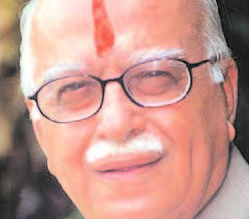
    NEW DELHI (TIP): The generational shift in BJP was complete on August 26 with its founders Atal Bihari Vajpayee, L K Advani and Murli Manohar Joshi being dropped from the BJP parliamentary board, the highest decision-making body headed by BJP president Amit Shah, which has the stamp of Prime Minister Narendra Modi all over now.

    In a token gesture, ailing Vajpayee along with Advani and Joshi, for long the BJP’s ‘Trimurti’, now figure in the new five-member ‘margdarshak mandal’ (guiding group) after being associated with the party for nearly four decades. Three-time Madhya Pradesh chief minister Shivraj Singh Chouhan and party general secretary J P Nadda are the new entrants to the BJP parliamentary board which was reconstituted by newly-appointed chief Amit Shah. The two have also been included in BJP’s central election committee, which decides on the party candidates to be fielded in elections.


    42
    MM Joshi


    The 12-member parliamentary board chaired by Shah now has Modi, Rajnath Singh, Arun Jaitley, Sushma Swaraj, Venkaiah Naidu, Nitin Gadkari, Ananth Kumar, Thawarchand Gehlot, Shivraj Singh Chouhan, Jagat Prakash Nadda and Ramlal as its members. New BJP president Amit Shah initiated the changes after consultations with top BJP leaders and Prime Minister Narendra Modi. For the two veterans, who were not considered for positions of power in the new saffron regime because they were over 75 years, this will be a far more significant blow.

    For Advani, the exclusion from the board is part of a procession of setbacks that the veteran has suffered since he was overruled on whether Narendra Modi should be projected as the party’s PM candidate. The leadership had also shrugged aside the argument of Advani’s loyalists that he should be sponsored for the post of Lok Sabha Speaker. “When a generational shift has taken place and when need for accommodating fresh energy and ideas has finally been recognized, we need to make room for others who are more in tune with the requirements of the changed times,” a senior party leader said.

  • USIBC Convenes Industry to Support the Defense Trade & Technology Initiative on the Occasion of Secretary Hagel’s Visit to India

    USIBC Convenes Industry to Support the Defense Trade & Technology Initiative on the Occasion of Secretary Hagel’s Visit to India

    WASHINGTON (TIP):
    On the sidelines of U.S. Secretary of Defense Chuck Hagel’s visit to India, the U.S.-India Business Council (USIBC) convened several high-level industry meetings to clarify and implement the Defense Trade and Technology Initiative (DTTI). USIBC also met with key stakeholders in the Secretary’s delegation. The industry group hosted the Honorable Frank Kendall, Department of Defense Under Secretary for Acquisition, Technology, and Logistics, who is the U.S. co-chair of this important initiative which offers new areas for cooperation geared towards enhancing bilateral defense trade and technology transfer.

    During Secretary Hagel’s visit, Minister Arun Jaitley announced India’s Ministry of Defence counterpart to the DTTI, which will be filled by the position of Secretary, Defense Production in India’s Ministry of Defence. “Secretary Hagel’s visit marks an exciting new chapter in not only our bilateral strategic relationship, but in laying the foundation for greater defense industrial cooperation,” said Diane Farrell, USIBC Acting President.

    “The net benefit of the DTTI will be felt on both sides, with American companies eager to partner more closely with Indian industry while harnessing India’s vast manufacturing, research, engineering, and knowledge base,” Farrell said. During the Secretary’s visit, defense industrial cooperation was featured significantly on the agenda of both Governments. USIBC will continue to support both U.S. and Indian stakeholders across Government and industry alike, and congratulates Secretary Hagel, Defense Minister Jaitley, and the new co-chairs of the Defense Trade and Technology Initiative on a successful visit.

    Formed in 1975 at the request of the U.S. and Indian governments, the U.S.-India Business Council (USIBC) is the premier business advocacy organization advancing U.S.-India commercial ties. Today, USIBC is the largest bilateral trade association in the United States, with liaison presence in New York, Silicon Valley, and New Delhi, comprised of 300 of the toptier U.S. and Indian companies. Ajay Banga, President & CEO of MasterCard, is USIBC’s Chairman.

  • Cong hoarding wants Priyanka to lead party

    Cong hoarding wants Priyanka to lead party

    BHOPAL (TIP): A day after Union finance minister Arun Jaitley alleged that the Congress was facing a “palace coup”, the party in Madhya Pradesh added fuel to the fire by putting-up a hoarding of Priyanka Gandhi in a busy thoroughfare. Congress workers appealed in the poster that Priyanka Gandhi should join the party to strengthen the hands of AICC president Sonia Gandhi and party vice-president Rahul Gandhi.


    Congress workers Rahul Singh Rathore, Prashant Gurudev and Udayveer Singh (all of who are office-bearers of the Bhopal district Congress) put-up the hoarding at the Board Office square in the city appealing that it is the demand of lakhs of the party workers that Priyanka Gandhi should actively lead the party. At the PCC office, state Congress vice-president Manak Agarwal agreed with the demand displayed in the banner. He said, “The Congress party is headed by Sonia Gandhi and Rahul Gandhi. But Priyanka Gandhi should also become part of this leadership. It will only benefit the Congress party if she too leads from the front. And if she joins, the Congress will gain immensely in the upcoming assembly elections in five states.”

  • Proof against Beniwal enough: Prez

    Proof against Beniwal enough: Prez

    NEW DELHI (TIP): President Pranab Mukherjee was satisfied with the “evidence” provided by the Narendra Modiled Centre against Mizoram Governor Kamla Beniwal to sack her. The President has jotted down in his own hand that he was satisfied with the evidence provided by the government.


    He got a legal opinion and had also asked his aide to speak to the 87-year-old Beniwal to consider her response before he signed the sacking order, sources said. Mukherjee was first informed by Prime Minister Narendra Modi about the Centre’s advice. He was later briefed by Law Minister Ravi Shankar Prasad as well as Attorney General Mukul Rohatgi, who explained to him about the legal issues involved in the case, official sources said. Mukherjee, a stickler for following rules, then asked Omita Pal, Secretary to the President, to speak to Beniwal on Wednesday. The President’s aide, who spoke to Beniwal, recorded that she confirmed the land transaction, the sources said.


    After getting her response to the charges made by the government, he signed the order of “withdrawing the President’s pleasure” on her continuation as the governor. His jotting on the file is in line with the stipulations of the Supreme Court judgment of 2010 on the dismissal of governors, which forbade en masse removal of governors for political reasons. The apex court order had said that in individual cases, the President can withdraw his pleasure if he is “satisfied” with the grounds for a governor’s removal. The government, too, insisted that the apex court’s verdict must be followed in Beniwal’s case, a senior Cabinet minister said.


    The main legal issue put before Mukherjee was Beniwal’s alleged involvement in a land scam in Rajasthan. Beniwal is accused of claiming land meant for farmers after “falsely” stating in affidavits that she had tilled the land for 50 years, though she was a minister in the state’s Congress government. A strategy worked out by Finance and Defence Minister Arun Jaitley saw the Attorney General conveying in detail to the President about the “material based on facts” which showed Beniwal’s acts were unbecoming of a governor and “gross impropriety” on her part. Other allegations against Beniwal are that she spent just one day in Mizoram, where she was posted a month ago, and mostly stayed in Rajasthan and she made “frequent air travels” at the taxpayer’s expense.

  • US Bonhomie for India: US Secretaries Storm New Delhi

    US Bonhomie for India: US Secretaries Storm New Delhi

    The recent visits of Secretary of Commerce Penny Pritzker, Secretary of State John Kerry, and Secretary of Defense Chuck Hagel are being seen as demonstrative of the resurgence of U.S. interest in India as both countries try to strengthen ties.

    NEW DELHI (TIP): It may be a coincidence that the Union cabinet announced August 6, a day before US Secretary of Defense arrived in New Delhi, the decision to allow 49% FDI in Defense. Also announced were the cabinet decisions to allow 100% FDI in Close on the heels of the visits to India by U.S. Secretary of Commerce Penny Pritzker and U.S. Secretary of State John Kerry, U.S. Secretary of Defense Chuck Hagel arrived in India Thursday, August 7, for a three-day visit.

    The fact that these high-profile trips by American officials have occurred so close to one another indicates the resurgence of American interest in India. Furthermore, the emergence of a strong, decisive, and reformist government under the Bharatiya Janata Party (BJP) in India has suddenly put India back on the U.S. agenda. India’s Prime Minister Narendra Modi is keen on reminding the world that India is a large country that cannot be ignored and whose interests must be taken seriously.

    Secretary Hagel is scheduled to meet Prime Minister Narendra Modi and India’s Defense and Finance Minister Arun Jaitley on Friday, August 8 as well as U.S. and Indian defense company executives. Talks are expected to be fruitful for both countries. Hagel is in India to strengthen defense ties between the two nations. Although the two nations have been moving closer over the past decade, they have not become as close as some U.S. policymakers would have liked.

    In fact, events of the past year, including India’s support for Russia in Crimea and the Devyani Khobragade case, show the limitations of a U.S.-India relationship. Nonetheless, both countries are interested in strengthening defense ties when possible, as they still share many common interests, including stability in Afghanistan, as well as concerns over China. It is unlikely that India and the U.S. will remain on anything but cordial terms, despite some occasional bumps. Secretary Hagel himself recognized this, stating that U.S. relationships with new partners in Asia represented both opportunities and challenges.

    The Wall Street Journal quotes Rear Admiral John Kirby, the Pentagon press secretary, as saying that “Secretary Hagel’s meetings will focus on the United States’ and India’s converging interests in the Asia Pacific, our common interests in Afghanistan and initiatives to strengthen our defense cooperation, including military exercises, defense, trade, co-production and co-development and research.” One of Secretary Hagel’s goals is to seek more defense projects between the two countries.

    There is much scope for this. India is the largest importer of U.S. arms, although it still imports up to 75 percent of its arms from Russia. The two countries are close to finalizing a $1.4 billion deal in which India will buy at least 22 U.S. Apache and 15 Chinook helicopters made by Boeing, as well as other aircraft. Discussion of this deal will be at the top of Hagel’s agenda during his visit. India is also keen on bringing in more foreign investment in its defense sector, so it can meet more of its defense needs indigenously.

    India is becoming increasingly ambitious on this front, building, for example, ever-larger warships in India. U.S. investment in India’s defense sector could bolster India’s ability to meet its security needs and be another way in which both the U.S. and India cooperate and profit together. Hagel may also discuss a U.S. offer to jointly develop and produce the next generation of the Javelin missile in India for the Indian market as well for export.

    Analysts are optimistic on the outcome of Hagel’s visit to India. According to Vivek Lall, a former Boeing executive and current chairman of the aerospace and defense committee of the Indo-American Chamber of Commerce, “this visit could be the inflection point of deeper defense ties between both countries, specifically to help boost defense production and state-of-the-art technology absorption.”

  • Army chief Gen Dalbir Singh Suhag warns Pakistan on beheading-like incident

    Army chief Gen Dalbir Singh Suhag warns Pakistan on beheading-like incident

    Dalbir Singh Suhag takes over as new Army chief

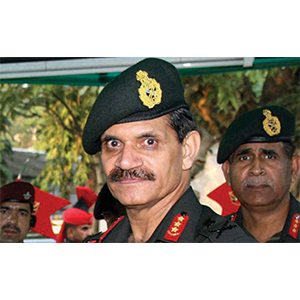
    Lt Gen Dalbir Singh Suhag has taken over as the head of the 1.3 million strong Indian Army, succeeding General Bikram Singh. Suhag, whose appointment had kicked up a row, was designated as Army chief in May by the outgoing UPA government ignoring protests from his predecessor Gen VK Singh and BJP. 59-year-old Lt Gen Suhag, a Gurkha officer who had participated in the 1987 Indian Peace Keeping Force (IPKF) operation in Sri Lanka, is currently the Vice Chief of Army Staff. He will have a tenure of 30 months as the 26th Chief of the armed forces. Suhag was made the Vice Chief of Army Staff in December last year.

    Earlier, he had taken over as the Eastern Army Commander on June 16, 2012. He was at the centre of a controversy triggered by ‘Discipline and Vigilance’ ban imposed on him by the then army chief Gen VK Singh in connection with an intelligence operation in Assam earlier. The ban on Suhag, the then 2 Corps Commander, was lifted soon after Gen Bikram Singh took over in May, 2012. BJP had questioned the “hurry” in making the appointment and insisted that the matter be left to the next government. However, soon after the NDA government took over, defence minister Arun Jaitley said the new dispensation will continue with the appointment made during UPA rule.

    NEW DELHI (TIP): On his first day in office, Army chief Gen Dalbir Singh Suhag on August 1 warned Pakistan that India’s response to any beheading-like incident in future would be “more than adequate, intense and immediate”. “I can tell you that our response to any such act will be more than adequate in future. It will be intense and immediate,” he told reporters after his welcome guard of honour as chief of Army staff.

    The new Army chief was asked how did India give a ‘befitting reply’ to Pakistan after the beheading of Indian soldier Lance Naik Hemraj along the line of control in Poonch sector on January 8, last year by Pakistani troops. Previous Army chief Gen Bikram Singh had on July 31 stated that India had given a befitting reply to Pakistan after the beheading incident. “It has been done. Please understand that when we use force, that use is from tactical to operational to strategic levels.

    “When I mention that during that incident, it was aimed at operations at the tactical level, which have been undertaken. I think this has been done by the local commander, the chiefs have nothing to do with it,” Gen Singh had said. Pakistani Special Forces under the Border Area Teams (BAT) had carried out the operation of beheading Hemraj and mutilitating the body of Lance Naik Sudhakar Singh. Later in August, they had also killed five Indian troops in the same sector in a joint attack by Pakistani Special Forces and LeT terrorists.

  • Blackstone-Embassy JV plans to buy 3 IT parks for Rs 3,000 crore

    Blackstone-Embassy JV plans to buy 3 IT parks for Rs 3,000 crore

    MUMBAI/BANGALORE (TIP): Embassy Office Parks, a joint venture between private equity firm Blackstone Group and office space developer Embassy Group, is in advanced talks to acquire three large IT parks spread over two million sq ft each in Bangalore, Pune and the National Capital Region (NCR) for Rs 3,000 crore.

    “The deal will be closed in less than a year,” Michael Holland, CEO of Embassy Office Parks told ET in an exclusive interaction. Michael Holland added that the talks were initiated in the second half of last year, the period that he described as “the low point in Indian real estate”.

    The company , which earns about Rs 700 crore per year through rentals of office properties, is looking to finance the proposed acquisitions through its rental income, shareholders’ equity and internal accruals. The total office space developed by the company will increase from 16 million sq ft at present to 28 million sq ft in the next five years, Holland said, adding, “With acquisitions, we will be at 40 million sq ft in the next five years.” The company recently acquired Vrindavan Tech Village for about Rs 1,951 crore in one of the largest commercial real estate transactions in India. Holland clarified that the company was not involved in talks to acquire Four Seasons hotel project in Bangalore.

    CityView, the mixed-use development property in the city has a 230-key Four Seasons hotel and 110 serviced residences. Blackstone Group has been acquiring income-earning office properties in India for the past two years through its various joint ventures with developers like Embassy Group and Panchshil Realty.

    While Embassy Office Parks is building its portfolio, it is also working on capitalisation plans, including a Real Estate Investment Trust (REIT). “In less than two years, there will be a capital event (for Embassy Office Parks),” Holland said. “We have potential for $2 billion REIT….REIT is one of the options, but not the only option. We can even consider other options like a REIT in Singapore, traditional IPO or private equity induction.” Income generated by REITs will be taxed at the hands of investors, finance minister Arun Jaitley had announced last week in his budget speech.

    However, Holland said, more clarity was required on certain issues including treatment of capital gains tax, dividend distribution tax and different treatment of loans raised by domestic and foreign investors. “We hope to get more clarity on REITs here following budget for 2015-16. We will review the possibility of listing a REIT here in the spring of next year,” he said.

  • UPROAR IN LS OVER VAIDIK-SAEED MEET

    UPROAR IN LS OVER VAIDIK-SAEED MEET

    Govt has nothing to do with it: Jaitley Leader of the upper House and finance minister Arun Jaitley said for India, Saeed was a terrorist and indeed involved in terrorism against India. Government had nothing to do with “directly, indirectly or even remotely” with any journalist meeting Saeed.


    NEW DELHI (TIP): The Congress and other Opposition parties kept up the pressure in the Lok Sabha on July 17 over RSS leader Indresh Kumar’s defence of journalist Ved Pratap Vaidik’s meeting with Jamaat-ud-Dawa (JuD) chief Hafiz Saeed, compelling External Affairs Minister Sushma Swaraj to make a second statement on the subject in one week. Swaraj told the Lok Sabha that the Indian High Commission in Pakistan was unaware of Vaidik’s meeting with Hafiz Saeed. “The Indian High Commission has categorically stated that it did not know about this meeting.


    Therefore, the question about the High Commission facilitating it does not arise,” Swaraj said. Her Ministry, she said, made enquires after Vaidik, “told some news channels that the High Commission knew about the meeting.We had then sought a report from the High Commission.” Her clarification came after Congress and other Opposition MPs almost brought the House to a halt on the issue. Vedprakash Vedic, a senior aide of Baba Ramdev, who is also a journalist, recently met the alleged 26/11 mastermind in Lahore recently.


    However, Vaidik said he had consented to meet the Jamaat-ud-Dawa boss purely at the behest of a journalist friend from Pakistan. “When I was in Pakistan, the media criticism of Hafiz Saeed in India came up for discussion. It was then that a Pakistani journalist asked me if I would like to meet Saeed in person. I agreed and a call was immediately made to fix the meeting,” he said, denying any other motive to his appointment with the mostwanted terrorist. Refuting allegations that he had met Saeed as an envoy of the Narendra Modi government, Vaidik said his interface with the Jamaat-ud-Dawa boss was driven only by journalistic considerations.


    “I would like to tell Congress, which is alleging that I met him on behalf of the government, to attack the Modi regime directly rather than train its guns from my shoulders”. “I am a known name in Pakistan. My writings and articles are translated and reproduced in Pakistani media. In my 55 years of journalistic career, I have not declined to meet anyone. I have met Maoist leaders and LTTE leaders including Prabhakaran,” said Vaidik. “I wanted to analyse Saeed’s mind and know why he committed heinous crimes against India,” he added.


    He denied being part of the Vivekananda International Foundation, with which IB chief Ajit Kumar Doval was earlier associated. This has been alleged as the reason why he was chosen to play the government’s ‘envoy’ to reach Saeed. “I have never been associated with the government and do not look at such association in the future. I am an independent journalist who is free to meet anyone,” he said.

  • Budget 2014 displays pragmatic & pro-growth policy stance: Sanjay Nayar, KKR India

    Budget 2014 displays pragmatic & pro-growth policy stance: Sanjay Nayar, KKR India

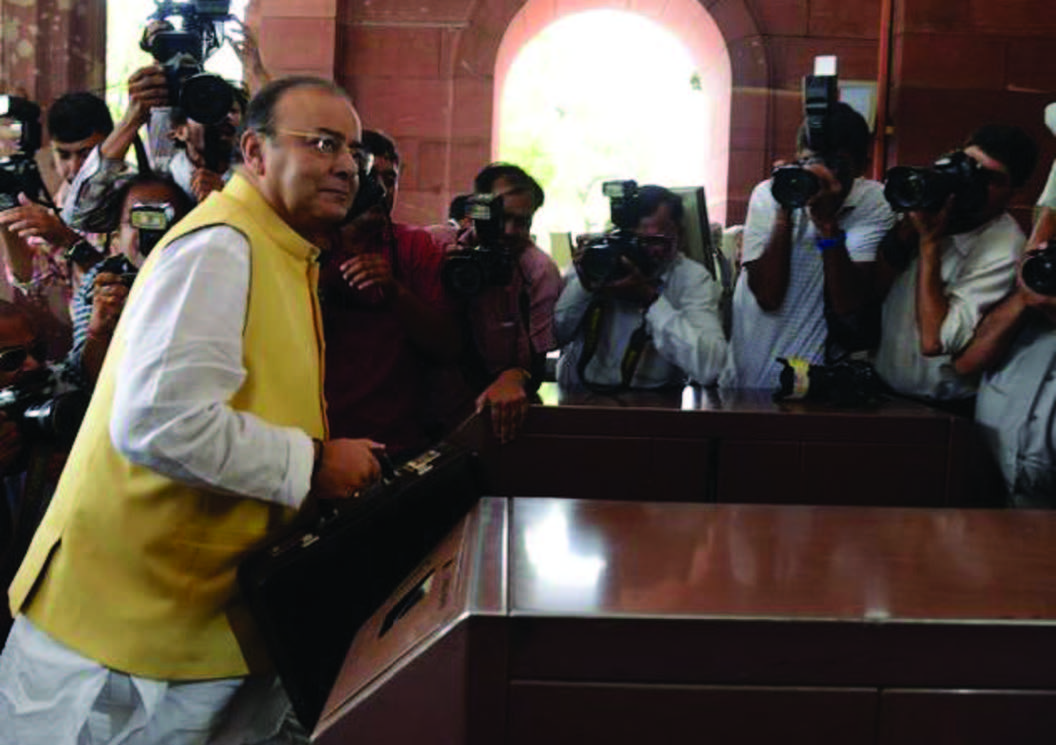
    Presenting his first budget, Finance Minister Arun Jaitley summed up the prevailing economic situation as continuing to present a great challenge to the economic health of the country.

    Emphasising the need to move quickly to revive the economy, he recognised the need to boost India’s economic growth as well as introduce prudent measures to enforce fiscal consolidation and discipline. The budget was eagerly awaited and was expected to present a bold strategy by the new government to revive growth, curb the fiscal deficit and improve investor sentiment in the country.

    It seems to have delivered on those counts. The new government provided a realistic budget, with a clear focus on better governance. The proposed reforms are a fairly good start. The growth strategy seems positive and the drift towards consolidation is much appreciated.

    The budget displays a pragmatic and progrowth policy stance adopted by the government. There is a clear focus on job creation and accelerating bank allowances. This will give a much-needed fillip to sectors such as power, infrastructure, manufacturing, agriculture and small and medium enterprises.

    Through the budget, the government has aimed at reducing uncertainty and enabling clarity in tax matters, seen as crucial to bring back investor confidence to boost the slowly recovering Indian economy. The government has committed to medium-term consolidation and has announced measures to attract capital inflows and boost investments.

    The question is, what is the real number of the subsidies ultimately (I’m not implying that the new government would have all the answers within 45 days), will that mean a curbing of planned expenditure towards investment to meet the 4.1% fiscal deficit target and finally the feasibility of raising .`63,200 crore disinvestment target. Having said the above, clearly the government has given a message that they are open for business. They have sincerely tried to tackle a couple of issues upfront and have given a message that they are ready to sit across the table to put India firmly on the 8% growth path over the next few years.

  • JAITLEY PUTS MONEY IN THE HANDS OF TAXPAYERS

    JAITLEY PUTS MONEY IN THE HANDS OF TAXPAYERS

    NEW DELHI (TIP): The salaried class has reason to cheer the NDA government’s first Budget. Finance Minister Arun Jaitley has reduced the income tax burden, albeit in a minor way, and put some extra money in the hands of the salaried taxpayer. First, he has increased the basic exemption limit by Rs. 50,000 to Rs. 2.5 lakhs for taxpayers less than 60 years of age. The limit will increase by a like amount for senior citizens from Rs. 2.5 lakh to Rs. 3 lakh. Second, he has increased the tax-free savings limit under Section 80C of the Income Tax Act from Rs. 1 lakh to Rs.1.5 lakh. Those who have bought a new house and are paying an EMI have additional cause to cheer.

    The limit for deduction of interest paid on housing loan in the case of self-occupied property has been hiked to Rs. 2 lakh from Rs.1.5 lakh. For taxpayers in the Rs. 5-lakh annual income slab, the savings in tax will be Rs. 10,300 while for someone in the Rs. 10-lakh slab, the tax outgo will be lower by Rs. 21,579, as per calculations by accounting firm EY. The increase in basic exemption limits and under Section 80C have been long-standing demands of taxpayers given that inflation has eroded the value of the current limits.


    36

    Analysts, while commending the overdue concessions, point out that Jaitley could have been a little more generous. The Section 80C limit could have been hiked by Rs.1 lakh (as opposed to Rs. 50,000 now) given that the government is keen to divert household savings to financial instruments from physical assets. For those who travel abroad, the Finance Minister has added an additional incentive in the form of a higher baggage allowance which goes up from Rs. 35,000 to Rs. 45,000.

  • BUDGET A VALIDATION OF UPA POLICIES: CHIDAMBARAM

    BUDGET A VALIDATION OF UPA POLICIES: CHIDAMBARAM

    NEW DELHI (TIP): Former finance minister P Chidambaram, who presented the interim budget ahead of the Lok Sabha polls, has said he is happy to find the BJP government’s first Budget validating the figures presented by him. “The imprint of the UPA government’s policies can be found throughout the Budget speech and in the budget documents,” Chidambaram said in a statement. He said it’s not possible to come out with a “Congress- Mukt Budget”.

    “Welcome to the real world… BJP sought a mandate for Congress-Mukt Bharat.My friend, Arun Jaitley, would have realised that it is not possible to have even a Congress- Mukt Budget,” the former finance minister said. He said Arun Jaitley’s Budget has the imprint of UPA policies on fiscal consolidation, GST, FDI cap in insurance and social sector schemes. “I am glad that Arun Jaitley has acknowledged the basic validity of the numbers presented in the Interim Budget for 2014-15 and has stuck to them…He has also maintained the tax revenue estimates for Corporation Tax, Customs and Service Tax,” he said. Chidambaram referred to the numbers with regard to the fiscal deficit at 4.1% and revenue deficit of 2.9% (marginally lower than 3%).

    Mamata: Budget visionless
    KOLKATA: Chief minister Mamata Banerjee came down heavily on the NDA for what she called a ‘visionless, missionless and actionless’ budget as far as the common man is concerned. According to her, the first Union Budget tabled by the Narendra Modi government can’t stimulate growth or lead to development of the poor. “We heard about a strong and vibrant India before the government came to power.

    We thought that it will be delivered to provide good governance. But from the beginning, we are getting disappointed. Only one positive sign of the new government is established in two budgets that they have become a government of the FDI, by the FDI and for the FDI. Already, there is FDI in the retail. Now FDI is increased to 49% in Defence, and Insurance Sectors. In addition, disinvestment in banking sector is up to 49%.

  • Housing for all by 2022

    Housing for all by 2022

    NEW DELHI (TIP): Union Finance Minister Arun Jaitley announced a big boost for urban areas through 100 smart cities, which will be enabled with the latest technology and infrastructure and will have concepts such as sustainability, walking spaces and specialised domains. The smart cities will have Wi-Fi connectivity, GIS-based mapping and scientific and strategic town planning and integrated public transport systems.

    Mr. Jaitley said the concept of smart cities was in keeping with the times since a “neo middle class is emerging” which aspires for better living standards. He also announced that the government would focus on providing infrastructure, including public transport, solid waste disposal, sewerage treatment and drinking water, in the urban areas. The budgetary provision for the Pooled Municipal Debt Obligation Facility has been enhanced from Rs. 5,000 crore to Rs. 50,000 crore with extension of the facility by five years to March 31, 2019.

    Jaitley said this facility was set up in 2006 with participation of several banks to promote and finance infrastructure projects in urban areas on shared risk basis. It is the vision of the government to create at least 500 habitations with provisions for safe drinking water and sewerage management, use of recycled water for growing organic fruits and vegetables, solid waste management and digital connectivity through publicprivate partnerships (PPPs), he said.

  • POOR MONSOON THREATENS FIRST DROUGHT IN FIVE YEARS

    POOR MONSOON THREATENS FIRST DROUGHT IN FIVE YEARS

    New Delhi (TIP): Weak rainfall in India since the start last month of the monsoon season, crucial to the country’s agricultural earnings, has raised concerns of a first drought in five years, although weather experts are hopeful rains will revive in the next week. A poor monsoon cuts exports, stokes food inflation and leads to lower demand for products ranging from cars to consumer goods, while a slow start could delay exports of some crops and increase the need for imports.

    Rains last week spread to soybean areas in central parts of India and cane areas in the north, but overall rains stood at 43 percent below the seasonal average, a weather office update showed. In 2009 the worst drought in nearly four decades forced India, the world’s top sugar consumer, to buy large quantities of the sweetener from top producer Brazil, driving benchmark New York futures to a 30-year high. The farm sector accounts for around 14 percent of India’s nearly $2 trillion economy, and two-thirds of its 1.2 billion population live in rural areas.

    “The monsoon appears to be more unpredictable,” Finance Minster Arun Jaitley said, presenting his maiden budget on July 10. India, one of the world’s top producers and consumers of rice, corn, cooking oil, sugar and cotton, relies heavily on the summer rains as nearly half its farmland lacks irrigation. The lacklustre monsoon could push up edible oil imports by the world’s top palm oil buyer. That in turn could underpin benchmark Malaysian prices of the tropical oil that have plunged more than a tenth this year.

    The monsoon this year arrived five days late on the southern Kerala coast, and then covered half of India four days later than the usual date of June 15. Usually, the monsoon covers the entire country around mid-July. “The water-stressed western region is expected to receive good rainfall next week as conditions have become favourable for a revival,” said M. Rajeevan, a senior meteorological scientist with the ministry of earth sciences.

    DROUGHT CONCERNS
    Delayed progress of monsoon rains towards the grain belt of northwest India and oilseed-growing regions of central and western India has prompted concerns about a shortfall in grains output, causing prices of some food items to rise. Jaitley said last week there was no cause to panic about the possibility of higher inflation, after a private forecasting agency said there was a 60 percent chance India would face a drought this year.

    “Even if due to inadequate rainfall there is a marginal decline in agricultural production, stocks in the central pool are adequate to meet any exigency (emergency),” Jaitley said. India’s government under new Prime Minister Narendra Modi has moved to ease market concerns over supply shortages and price speculation with a number of steps, including raids against hoarders.

    Policy makers in New Delhi fear a failure of this year’s monsoon could push up retail food inflation by at least one percentage point. Soaring prices of basic goods such as milk and potatoes lifted retail food inflation in May to 9.4 percent and the poor monsoon has fanned fears of worse to come.

  • FIGHTING EXODUS OF DOCTORS FROM ARMED FORCES, GOVT HIKES BOND MONEY

    FIGHTING EXODUS OF DOCTORS FROM ARMED FORCES, GOVT HIKES BOND MONEY

    NEW DELHI (TIP): With 85 doctors pre-maturely leaving military service for the much greener pastures in the civilian world since 2011, the government has hiked the bond money to Rs 25-30 lakh in a bid to stem the exodus from the Armed Forces Medical Services (AFMS). Defence minister Arun Jaitley told Lok Sabha on Friday that the amount of the “bond” — which candidates taking admission in the Armed Forces Medical College for MBBS have to execute and pay if they leave service before 20 years — has been raised from the current academic year.

    While the pre-revised bond money was Rs 15 lakh for the MMBS course in AFMS colleges, it is now pegged at Rs 25 lakh. Similarly, it has been hiked from Rs 5 lakh for civilian candidates and Rs 15 lakh for AFMS doctors to Rs 25 lakh for those undertaking post-graduate MD/MS courses. The bond for post-doctoral super-speciality courses is now Rs 30 lakh from the earlier Rs 5 lakh. “It has also been decided that the above bond money will be enhanced by Rs 1 lakh per year for the next five years,” said Jaitley.

    The number of doctors who opted out of military service by paying the bond money stood at 26 in 2011, 19 each in 2012 and 2013, and 21 till now this year. The AFMS, which looks after the health services in the 13 lakh strong armed forces, has around 5,800 doctors and 620 dentists at present. There were 205 new doctors commissioned in the AFMS in 2011, 234 in 2012, 307 in 2013 and 93 till now this year.

  • GOVT DEFERS GAS PRICE HIKE, MAY JUNK UPA FORMULA

    GOVT DEFERS GAS PRICE HIKE, MAY JUNK UPA FORMULA

    NEW DELHI (TIP): The Narendra Modi government on June 25 indicated that it would not be guided by the UPA’s formula by deferring for three months a decision on revising price of gas produced from domestic fields. “The Cabinet Committee on Economic Affairs has decided that comprehensive discussions were necessary on the issue.

    It was decided that consultations would be held with all stakeholders and it was important to keep public interest in mind,” oil minister Dharmendra Pradhan said on Wednesday. The decision allows a temporary reprieve to consumers from an increase in CNG and PNG prices.

    But it would disappoint gas producers such as state-run ONGC and private sector Reliance Industries and its partner BP plc, which has served an arbitration notice on the government. The UPA’s formula was suggested by C Rangarajan, then head of PM’s Economic Advisory Council. Based on the complex formula, the price of gas from all domestic fields would have more than doubled to $9.3 per unit from $4.2 at present from April.

    The formula became contentious as it would have resulted in a hefty increase in CNG, PNG and power costs as well as the government’s fertiliser subsidy. The implementation of the formula hit the Election Commission barrier, leaving it to the new government.

    Sources said a concern surfaced during extended discussions Pradhan had with the Prime Minister’s Office and finance minister Arun Jaitley that announcing the revision would signal the Modi government toeing the UPA’s formula, even when a lower price was worked out by tweaking Rangarajan’s pricing parameters. “Rangarajan formula is not sacrosanct for the Modi government. It can modify or reject it,” one source said.

    ToI had on June 13 reported that the government may opt for a relook at the formula and appoint a fresh panel. But neither Pradhan nor law minister Ravi Shankar Prasad, who briefed reporters, would not not say whether a new formula was being considered or the Rangarajan formula will be amended to bring down the rates to acceptable levels.

    “The matter needs extensive consultations keeping the public good in mind with all the stakeholders… the new government must be given time to take a call on what should be the mechanism (of review),” Prasad said. Finance minister Arun Jaitley said the review mechanism would be decided by the Prime Minister’s Office and the oil ministry. “There have been one or two meetings. The mechanism in the government which will review the whole thing and come to an opinion, I think now needs to be finalised,” agency reports quoted the FM as saying.

  • Centre Promises Support to Naidu’s Seemandhra Wish List

    Centre Promises Support to Naidu’s Seemandhra Wish List

    NEW DELHI (TIP): When Telugu Desam Party chief N Chandrababu Naidu met Finance Minister Arun Jaitley in the capital on May 30, he was promised full support on his wish list for the Seemandhra regions, which will form the residual Andhra Pradesh when the state of Telangana is born next week. The Planning Commission, Jaitley assured the 64-year-old TDP leader, is already looking into the proposal to grant the special category status to Seemandhra.

    “After the division, there is a resource constraint which the successor state of Andhra Pradesh will suffer from, primarily because Hyderabad will be a part of Telangana. When the bifurcation bill was being passed in parliament in February, we had raised the issue of financially supporting Seemandhra,” Mr Jaitley told reporters after meeting the TDP chief.

  • VETERANS MAY GET PLUM PORTFOLIOS IN MODI GOVT

    VETERANS MAY GET PLUM PORTFOLIOS IN MODI GOVT

    NEW DELHI: The lack of experienced players in NDA ranks seems to have opened up the prospect of BJP veterans landing important portfolios in the incoming Modi government. Sources said while there was uncertainty about the chances of former party president Murli Manohar and leader of opposition in the outgoing LS Sushma Swaraj getting ministries which are part of the Cabinet Committee on Security, the situation has perked up somewhat because of what is being referred to as BJP’s “poor bench strength”.

    Sources said while Swaraj could be considered for the ministry of external affairs, Joshi may be entrusted with the crucial defence portfolio. BJP chief Rajnath Singh and leader of opposition in Rajya Sabha Arun Jaitley continue to be seen as the frontrunners for the two other CCS ministries — home and finance, in that order. Party circles also expect former telecom and disinvestment minister Arun Shourie to get an important portfolio.


    24
    Rajnath Singh

    There are indications that in keeping with his thrust on “lean” government, Modi may begin with a mid-sized team. Party sources said a smaller team will be adequate, given the PM’s plan to reduce the size of the government by clubbing ministries with overlapping responsibilities and by even doing away with those which seen as edundancies. Even as odds seemed to have improved for Swaraj and Joshi to get important portfolios, uncertainty continued to hang over whether L K Advani, another veteran who opposed Modi’s anointment as PM candidate, will get to be Speaker.


    25
    Sushma Swaraj

    BJP sources said Advani had expressed interest in the constitutional post which is supposed to be autonomous of the political executive and, therefore, not a subordinate to the PM. However, the leadership is yet to make up its mind, with the experience of the resistance to Modi from Advani partisans only rendering the call that much more difficult.

  • Anandiben Patel is Gujarat’s first woman CM

    Anandiben Patel is Gujarat’s first woman CM

    AHMEDABAD (TIP): Anandiben Patel took over as Gujarat’s Chief Minister on May 22 afternoon. She was administered oath by the state’s Governor Kamla Beniwal. On stage, was her predecessor Narendra Modi, who will be the country’s next prime minister. The entire BJP top line of leaders like party president Rajnath Singh, LK Advani, MM Joshi and Arun Jaitley were also present as the 72-year-old Anandiben took oath at a packed Mahatma Mandir in Gandhinagar. She is Gujarat’s first woman Chief Minister.

    CONTINED FROM PAGE 1 After Modi resigned as the Chief Minister, a position he had held for 13 years, his party’s legislators elected Patel to be their leader. Modi’s close aide Amit Shah, who does not share the warmest vibes with Ms Patel, was among those who endorsed her name for the chief minister’s post. In Gujarat, Shah and Patel have often been described as Modi’s “left and right arms.” Like Shah, Anandiben Patel is said to enjoy Modi’s complete trust.

    During his long election campaign, while Amit Shah helped Mr Modi script his massive victory, Ms Patel, the revenue minister, held fort in Gujarat as the head of a group of ministers set up to run the state government. She is known to be a very able administrator and has a tough, nononsense image. Dabbing discreetly at her eyes yesterday, as she was elected, an emotional Patel said, “Today when our beloved leaders are going to Delhi, there are tears in one eye and happiness in the other.

    Happiness because they are going to Delhi to wipe the tears of millions of Indians. I wish Narendra Modi all the best.” Handing over, Modi assured Patel that “no files in the chief minister’s office are pending”, and said, “she is a very hardworking minister and has been a performer and am sure Gujarat will continue to move forward on path of growth.”

    Patel has stood by Modi for many years even before he took over as Gujarat chief minister, including when in the mid 1990s, he was banished from state politics after a confrontation with other state leaders. The senior BJP leader was elected to the state assembly in 2012 from Ghatlodiya in Ahmedabad by a margin of 1.10 lakh votes. Her biggest limitation, her colleagues say, is her lack of connect with the party’s grassroots level workers and her inaccessibility.

  • DAY AFTER POLLS, NAVJOT SINGH SIDHU ARRIVES IN AMRITSAR FOR RELIGIOUS CEREMONY IN HIS HOUSE

    DAY AFTER POLLS, NAVJOT SINGH SIDHU ARRIVES IN AMRITSAR FOR RELIGIOUS CEREMONY IN HIS HOUSE

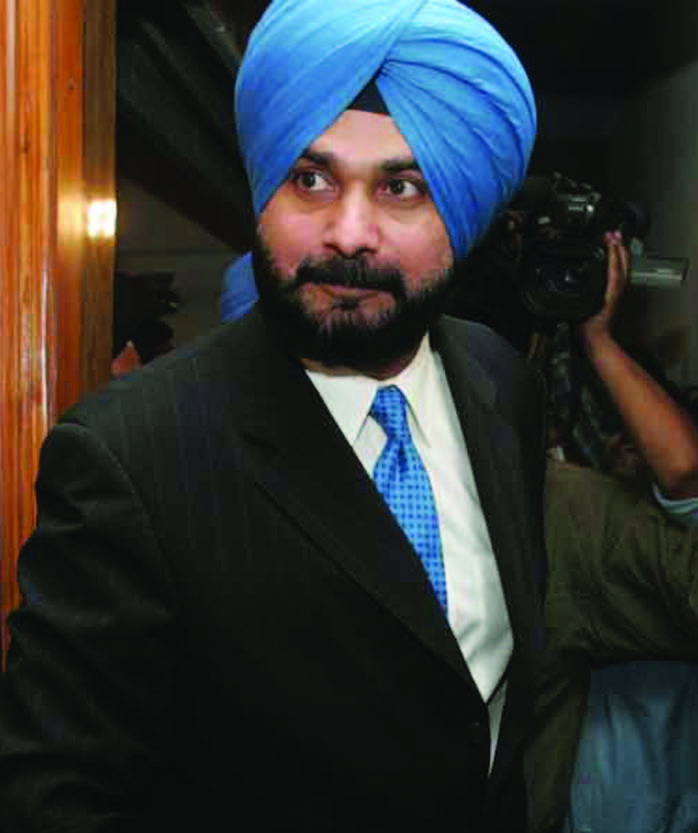
    AMRITSAR (TIP): A day after polling for Lok Sabha elections, outgoing Amritsar MP Navjot Singh Sidhu reached the Holy City on Thursday for installation of Guru Granth Sahib and Shivalingam at his newly-built house.

    Sidhu had remained absent from his constituency during election campaign of his mentor and senior BJP leader Arun Jaitley who had replaced him as party candidate in the Amritsar parliamentary constituency. Wearing a brown suit, a red turban and a striped tie, Sidhu was received by handful of his supporters at Sri Guru Ram Das Ji international airport.

    He refused a direct reply when asked why he did not come to campaign in favour of Jaitley. He said that he had come to visit his house and install Guru Granth Sahib and Shivalangam on the pious occasion of Akshyatritiya. “This is the same Shivalingam, which was installed at my house in Patiala,” he said. Sidhu said that he was not new to Amritsar and had been living here for the past 10 years.

    “Eih meri karam bhoomi hai tae main hamesha wastay eithay natmastak rahanga (this is my work field and I will always stay here with my head bowed in reverence),” he said. Later, Sidhu along with his wife Dr Navjot Kaur Sidhu, who is MLA from Amritsar East assembly segment, performed pooja at their house situated on the outskirts of Amritsar.

  • LOK SABHA POLLS: PHASE 7 SEES 66% VOTER TURNOUT

    LOK SABHA POLLS: PHASE 7 SEES 66% VOTER TURNOUT

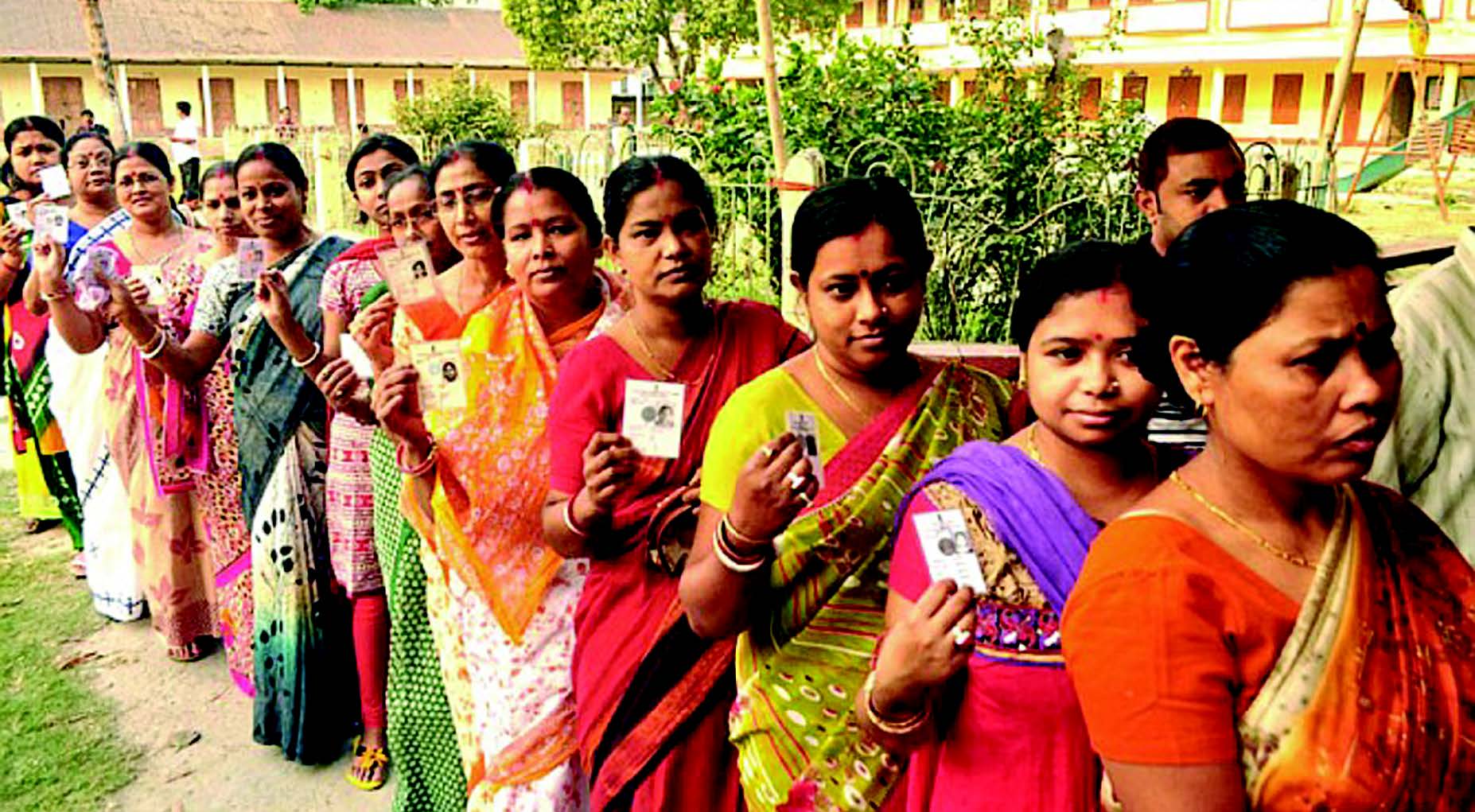
    NEW DELHI (TIP): Nearly 66% of the electorate exercised its franchise on Wednesday in the seventh phase of the 16th general election, in line with the heavy turnout that marked the earlier rounds of voting. More than 139 million people were eligible to cast their votes in the phase that decided the electoral fortunes of political heavyweights including the Bharatiya Janata Party’s (BJP) prime ministerial candidate Narendra Modi and his senior colleagues Rajnath Singh, L.K. Advani, M.M. Joshi and Arun Jaitley, besides Congress party president Sonia Gandhi.

    The day also marked what Modi claimed was the first police complaint registered against him in his life. The first-information report (FIR) was registered against him at the behest of the Election Commission. The BJP is eyeing at least 62 of the seats up for grabs in Wednesday’s voting, by the end of which elections were completed in 438 of the 543 Lok Sabha constituencies. Elections to the remaining 105 constituencies will he held on 7 May (64 seats) and 12 May (41). The results will be declared on 16 May.

    The 438 Lok Sabha constituencies where voting has taken place so far have witnessed a 66.2% voter turnout, compared with 57.6% in 2009. Some 62.4% polling was recorded in Gujarat, where all 26 Lok Sabha constituencies in the state went to the polls on Wednesday. Vadodara, where Modi is in the electoral fray, had witnessed a high turnout of 70% well before polling ended. “There is a phenomenal increase in the voter turnout in Gujarat…,” said Akshay Rout, director general of the Election Commission. “The voter turnout for the state in the 2009 general election was 47.8%.” In the last five Lok Sabha elections, the average voter turnout in Gujarat was less than 50%.

    The turnout is expected to be higher this time around following a voter awareness drive carried out by the Election Commission and with Modi being selected the BJP’s prime ministerial candidate, political experts said. After casting his vote in Gandhinagar constituency, Modi told reporters that this was the end of India’s “mother-son government”—a reference to Sonia Gandhi and her son, Congress vice-president Rahul Gandhi. Modi said the Congress appeared to have accepted defeat after signalling it may support a Third Front (non-Congress, non- BJP) government at the Centre to keep Modi out.

    “The Congress has accepted defeat as it is now saying that it will support the Third Front to keep me out of the race. The Prime Minister, the finance minister and other senior ministers are not in the contest. Tall leaders of the Congress are running away from the elections,” Modi said. “Now, some are trying to save their chairs, some are trying to save themselves and some are trying to save prestige of the Congress party,” he added. Modi suffered a setback, with the Election Commission asking the Gujarat state authorities to register two first FIRs against him for holding a media briefing outside a polling station in Gandhinagar and also holding the BJP’s symbol, the lotus, while talking to reporters.

    “Tone and tenor of the address made by Narendra Modi and the statements made by him, the manner in which the symbol lotus of the BJP was being displayed by him, it is evident that the address was in the nature of political speech intended and calculated to influence and affect the result of elections in the constituencies going to polls today, not only in Ahmedabad but also in all other constituencies in Gujarat and elsewhere in the country,” the poll watchdog said in a statement. Addressing a rally in Tirupati, Modi referred to the FIR. “I will never forget 30 April. Today was the first time an FIR was registered against me,” he said.


    28

    Modi claimed he had never violated the law hadn’t even got a parking ticket in his life. Gujarat is considered to be a bastion for the BJP and the party is looking to make a clean sweep in the state this time around. Modi is also contesting from Varanasi in Uttar Pradesh. In the 2009 Lok Sabha election, the BJP won 15 seats and the Congress 11. The BJP increased its tally in by-elections—in the outgoing Lok Sabha, the BJP has 17 seats while the Congress has nine. On Wednesday, Punjab also recorded its highest-ever turnout at 73%. The voter turnout was 76% in Daman and Diu, 81.35% in West Bengal, 73% in Punjab, 59% in Uttar Pradesh, 70% in the Telangana region of Andhra Pradesh, 60% in Bihar, 85% in Dadar and Nagar Haveli, and 25% in Jammu and Kashmir.

    Telangana vote
    Andhra Pradesh’s Telangana region, which will become India’s 29th and newest state on 2 June, also went to the polls on Wednesday. The region recorded a turnout of 59.3% as of 3pm. Medak (65%) had recorded the highest polling while Hyderabad district (51%) recorded the lowest, a bulletin by the state election commission showed. About 28.1 million voters in Telangana were registered to elect candidates to 17 Lok Sabha and 119 state assembly seats at 30,000 polling stations.While 265 candidates were in the fray for parliamentary constituencies, 1,669 candidates were in the race for the state assembly.

    Voters in Telangana are simultaneously electing representatives to the Lok Sabha and to what will become the Telangana state assembly. The other part of Andhra Pradesh will exercise its mandate a week later on 7 May. The 294-member Andhra Pradesh state assembly will be divided according to constituencies once Telangana becomes a state. The main parties and groupings in the race to form the first government of Telangana are the Telangana Rashtra Samithi (TRS), and two alliances—one between the Congress and the Communist Party of India and the other between the Telugu Desam Party (TDP) and the BJP. The winner in the 119-member Telangana assembly has to get a simple majority of at least 60 seats to form the new government in the would-be state.

    Polling was not devoid of incidents. Actorpolitician K. Chiranjeevi landed himself in an embarrassing position when a youngster objected to him skipping the queue at a polling booth. Chiranjeevi, who is chairman of the Andhra Pradesh Congress Committee, then beat a hasty retreat and stood at the end of the queue. TDP chief N. Chandrababu Naidu, too, landed himself in an embarrassing position when he revealed who he cast his ballot for. “Due to our pre-poll arrangement, I cast both my votes for lotus symbol (of the BJP),” Naidu told waiting media.

    The state election commission did not take kindly to this. “Secrecy of vote has to be maintained by every voter,” Andhra Pradesh chief electoral officer Bhanwar Lal said. As a result, the returning officer of the polling booth will declare Naidu’s vote ineligible. “He should act responsibly,” Lal said. “If we don’t delete that (ballot), action will be taken against us.”