Tag: Australia

  • Gangster Chhota Rajan says never surrendered, wants to return to India

    Gangster Chhota Rajan says never surrendered, wants to return to India

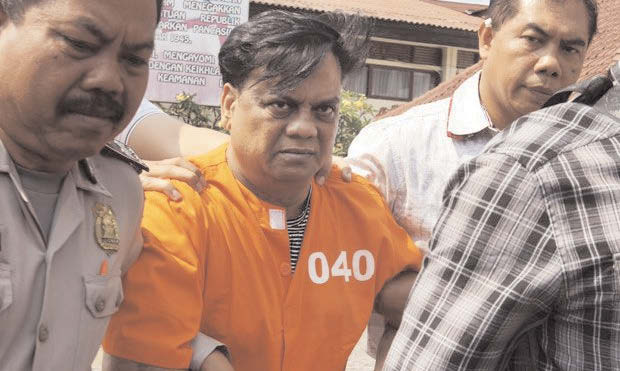
    BALI/MUMBAI (TIP): Underworld don Chhota Rajan, who has been arrested after being on the run for over two decades, claimed on October that he did not surrender and wants to return to India.

    There is intense speculation that the arrest of the gangster, who is wanted in over 75 heinous crimes ranging from murder, extortion to smuggling and drug trafficking, was part of a “deal” with Indian security agencies.

    “I never surrendered. I want to go back to India. Don’t want to go to Zimbabwe,” the one-time trusted aide of terrorist and crime boss Dawood Ibrahim told reporters.

    Rajan, one of India’s most wanted gangsters, was arrested in  Indonesia’s tourist destination Bali on a Red Corner Notice issued by Interpol after eluding law enforcement agencies for over two decades.

    Of these 75 cases, Rajan is facing four cases under Terrorist and Disruptive Activities (Prevention) Act (TADA), one under Prevention of Terrorism Act (POTA) and over 20 cases under the stringent Maharashtra Control of Organised Crime Act
    (MCOCA).

    Indian security agencies are likely to send a team of officials to Bali to bring back the gangster who has been in custody since Sunday.

    The sources are tight-lipped about the arrangements to bring him back because of security concerns arising out of his fierce rivalry with underworld don Dawood Ibrahim and his gang.

    They said agencies are working on more than one plan to bring back 55-year-old Rajan, once known as Dawood’s right hand man, factoring various permutations and combinations.

    Rajan was traveling with the identity of Mohan Kumar with passport number G9273860 when he was apprehended at the airport in Bali, after arriving there on a Garuda Indonesia flight GA715, by the Indonesian Police on a tip-off from Australian authorities, they said.

    The sources said Rajan was in touch with various police officials for the past six months seeking a passage to return to India as he feared for his life in Australia from Chhota Shakeel, a henchman of Dawood.

    In 2000, there was an attempt on his life when Dawood’s men tracked him down to a hotel in Bangkok but he managed a dramatic escape through the hotel’s roof.

    According to serving and former police officers, who have dealt with the Mumbai underworld, arrest of Rajan is a major success and his questioning is expected to shed light on hitherto unknown facts related to cases linked to his syndicate.

    Chhota Rajan assets worth over Rs 4,000 crore, claims Mumbai police

    Mumbai Police officials estimate Chhota Rajan’s current net worth to be in the range of Rs 4,000-5,000 crore. Fifty per cent of the investments are in India, especially in Mumbai and its satellite towns, they say. “According to our reports, Rajan owns a hotel in China, a few jewellery shops in Singapore, Thailand and a hotel in Jakarta. He has also invested in diamond trade in African countries, especially Zimbabwe,” said a senior Mumbai Police official.

    Sources claimed that Rajan tried to strike a deal with some officials from Zimbabwe to seek refuge in that country.

    But Zimbabwe did not want to be seen giving refuge to anyone who was wanted in India. “We found that he asked for Z-plus protection which was denied by them,” claimed the official.

    “The officials with whom Rajan negotiated promised to provide the best of health facilities but refused to extend security cover. Rajan suspected that he would eventually be tracked by the Dawood gang, and did not want to be attacked when he was at his weakest — while undergoing  dialysis for kidney failure,” said a source.

  • Reel Vs Real 127 Hours – Man survives on ants for six days in Australia

    Reel Vs Real 127 Hours – Man survives on ants for six days in Australia

    PERTH, AUSTRALIA: A man missing for six days in a remote Australian desert in searing heat without water was found Tuesday after surviving by eating black ants, police said.

    Reg Foggerdy, 62, disappeared on October 7 heading to the Shooter’s Shack camp near Laverton in the West Australian Goldfields, some 950 kilometres (600 miles) northeast of Perth, on a hunting trip.

    When he failed to return, family members raised the alarm and a search by police trackers finally found him 15 kilometres from where he went missing.

    Goldfields Police superintendent Andy Greatwood said Foggerdy had been sitting under the same tree for the last two days, with no water during his ordeal.

    “He was eating black ants, that’s how he survived. So, fantastic survival skills by him, and fantastic skills by our trackers who found him in an extremely remote location,” he told the West Australian newspaper.

    “He was extremely dehydrated, a bit delusional, but we’ve administered first aid and rehydrated him and it’s pleasing to say he is now sitting up and talking.

    “It was extremely hot, extremely remote, and most people probably wouldn’t have survived.”

    His relieved wife Arlyn said she cried when she heard the news, delighted he managed to stay alive.

    “How you can survive without water and food is a miracle,” she told ABC radio.

    Foggerdy’s sister Christine Ogden said her brother was an experienced bushman and said she would make sure he was better equipped in the future.

    “I’m going to get him to get a satellite phone,” she told the radio station.

  • China’s Ocean Hegemony and Implications for India

    China’s Ocean Hegemony and Implications for India

    The fifth generation of CCP leadership under Xi Jinping has de facto abandoned the Deng doctrine of keeping low profile internationally. China has become more ambitious of becoming a superpower and has been extending its sovereignty claims on the land and the sea. As a rising hegemon, China has started to challenge the existing international strategic order. China has been in the news recently for building artificial islands with air-landing strips in the South China Sea. It has demanded 12 nautical miles exclusive economic zone around these artificial, man-made reefs. China is a signatory to the law of the Seas (UNCLOS). Chinese attempts to claim the bulk of the South China Sea goes against both the letter and the spirit of the law of the sea. Beijing will invoke its EEZ for its own economic benefits while denying the same rights to other claimants. Brushing aside the ASEAN Code of Conduct in the SCS, China claims sovereignty over all of the SCS which is disputed by Vietnam, the Philippines, Malaysia, Brunei and Taiwan.

    For the last several years, Chinese official media has been harping on safeguarding China’s “Ocean Sovereignty”. The PLA navy’s goal is to have a “Thousand Ships Navy”. This stated “TSN” Goal is to further Chinese supremacy in the Indo-Pacific region and exploit the mineral & hydrocarbon wealth in the international sea-beds. PLAN has been entrusted to fight future wars for China’s security as per the former President Hu Jintao. On December 6th 2011, while addressing the PLA Navy, Hu Jintao pronounced that PLAN should make “extended preparations for warfare in order to make greater contributions to safeguard national security”. China unilaterally declared an air-defense identification zone in the East China Sea in November 2013. Recently, a Chinese admiral declared similar intentions of setting up an air defense identification zone in the future above the disputed areas of the South China Sea if Beijing thought it was facing a strategic threat.

    China has created not only facts on the ground but also facts on the Ocean in a very predictable manner of claiming sovereignty with the “Chinese Characteristics”. China always makes maximalist claims against other countries, disputes sovereignty, and alters the facts on the grounds of medieval history or economic reasons, bullies the smaller adversaries into submission, demands mutual concessions while later on sending its armed forces. China has constructed a couple of lighthouses in the South China Sea to provide a fig-leaf for its naked hegemony and sea-resources grabbing activities. China has successfully converted the South China Sea into a virtual private lake affecting the freedom of navigation for the entire world. India has vital maritime interests in the South China Sea. 55% of Indian maritime trade passes through the South China Sea. China has objected vehemently to ONGC’s oil drilling in collaboration with Vietnam in the South China Sea and PLAN ships have started to harass the Indian drilling rigs.

    Once the heat of the South China Sea is gone and Beijing has de facto acquired the marine resources of the South China Sea, the dragon will spread its strategic tentacles into the Indian Ocean. Warning bells are already ringing in the Indian Ocean. PLAN started its naval forays in Indian Ocean up to the Gulf of Aden in 2010 under the garb of anti-piracy operations to control Somali pirates. China’s string of pearl initiative got absorbed in the 21st Century Maritime Silk Road. China did acquire significant naval facilities in Hambantota, Chittagong, Maldives, and listening & communication facilities in the Coco Islands in Myanmar besides building the naval port in Gwadar. Incidentally, India has gifted the Coco islands to Myanmar in Nehru’s realm. Gwadar port was offered to India by Oman but Nehru declined and Pakistan became the owner and the beneficiary. China also acquired naval facilities for recuperation and re-fueling in Seychelles in December 2011. China has already signed an agreement with the UN backed International Seabed Authority to gain exclusive rights to explore poly-metallic sulfide ore deposits in 10,000 square-kilometers of international seabed in Indian Ocean for 15 years. China has been sending nuclear powered submarines to Sri Lanka and Pakistan. Pakistan will receive eight Chinese nuclear powered submarines effectively neutralizing the Indian second strike capabilities in case of a nuclear attack on India. China plans to buy an island from the Maldives for $ 1 billion under the current Maldivian Government of President Abdulla Yameen.

    China’s response to Malabar naval exercises in 2007 when trilateral format included Japan was very negative leading to non-invitation to Japan later on after 2007. India plans to invite Japan in the upcoming Malabar exercises and Chinese reaction would be worth watching. China remains very paranoid about the US “Pivot to Asia” doctrine. Chinese paranoia about the Asian Quadrilateral led to Australia pulling out of that mechanism for maritime cooperation in the Indo-Pacific.

    China had sent trial balloons to US for a G2 condominium by which US will take over the Atlantic Ocean whereas China will have rights over the Pacific Ocean. Unlike Tibet, Indo-Pacific is too important to be given to China on a platter. As a trading nation with vital economic and maritime interests, India will have to safeguard the sea-lanes of communication, ensure freedom of navigation and take the strategic ownership of her maritime interests.

    China’s foreign exchange reserves were at the peak of almost $4 trillion in June 2014. Despite a recent decline in Chinese economy, China’s foreign exchange reserves totaled $3.514 trillion at the end of September 2015. China still has the largest foreign exchange reserves in the world. China will continue to extend its strategic footprints under the much enlarged One Belt, One Road (OBOR) project because it has plenty of spare cash. China also proposes to use the Beijing sponsored AIIB as the financing arm for the OBOR which will ultimately require $ 1.4 trillion in investments. China has already sanctioned$46 billion on China-Pakistan Economic corridor as part of the OBOR connectivity without taking India’s sensitivities about CPEC passing through the POK. While India has cooperated with China in the BCIM (Bangladesh, China, India, and Myanmar) Corridor project, the GOI has been deliberately silent about any synergistic cooperation with the 21st Century Maritime Silk Road project.

    read-more

  • UK schoolgirl guilty of terror offences spared jail

    UK schoolgirl guilty of terror offences spared jail

    LONDON (TIP): A British schoolgirl who admitted two terror offences of possessing “recipes for explosives” and a bomb-making guide was on Thursday spared a custodial sentence after she pleaded to a youth court to let her “prove that I am not a terrorist.”

    The 16-year-old, who cannot be named for legal reasons, was arrested by anti-terrorism police in April and Manchester Youth Court gave her a 12-month referral order with youth offending teams to address her radicalisation.

    The court heard she had intended to hack into the White House and became obsessed with suicide bombings after becoming radicalised online.

    Sitting in court, flanked by her mother and an aunt, she told the judge: “I deeply regret what I have done. I wish to make changes if I get the chance to prove I am not a terrorist.”

    Passing sentence, District Judge Khalid Qureshi said: “It must be every parent’s worst nightmare to discover their child has been accessing material they should not, of whatever type.”

    The girl had used her school’s IT system to search for information on the Islamic State terror group, its militant known as “Jihadi John”, and images of Michael Adebolajo, who killed British soldier Lee Rigby on a London street in 2013.

    Analysis of her mobile phone found instructions for producing a timed circuit, a document about DIY bomb-making and the Anarchist Cookbook 2000.

    The inquiry also led to the arrest of a boy, 14, who admitted involvement in a plot to attack police in Australia on Anzac Day, held on 25 April each year to commemorate the Australian and New Zealand Army Corps’ in the World War One battle of Gallipoli.

    The boy, now 15, was jailed for life earlier this month at London’s Old Bailey court after pleading guilty to inciting terrorism abroad.

    The girl had pleaded guilty at an earlier hearing to two offences under Section 58 of the Terrorism Act 2000, of possessing documents likely to be of use to anyone preparing or committing an act of terrorism.

    No evidence was found that she was aware of or played any part in the Anzac Day plot or any plan to harm others or incite terrorism in the UK or elsewhere, the court was told.

  • Adani’s coal mine project gets re-approval in Australia

    MELBOURNE (TIP): Indian mining giant Adani’s plan to build one of the world’s largest coal mines got a new lease of life on Thursday after the Australian government gave its re-approval to the 16.5 billion controversy-hit project but with “strictest conditions” amid environmental concerns.

    Over two months after an Australian court revoked the environmental approval for the project, environment minister Greg Hunt signed the papers, giving Adani the re-approval with conditions imposed that take into account community issues and would ensure that the company meets the highest environmental standards.

    he federal court in August had revoked the original approval due to a bureaucratic bungle over two vulnerable species — the yakka skink and the ornamental snake.

    Stating that Adani’s project was given re-approval “in accordance with national environment law”, Hunt said his nod for the project considered additional information provided by Adani and environmental groups.

    The approval would be “subject to 36 of the strictest conditions in Australian history,” he said.

    “The conditions I have imposed take into account issues raised by the community and ensure that the proponent must meet the highest environmental standards,” Hunt was quoted as saying by ABC News.

    “The rigorous conditions will protect threatened species and provide long-term benefits for the environment through the development of an offset package,” he said.

  • A US-Pak nuclear deal would be a threat to India’s security

    A US-Pak nuclear deal would be a threat to India’s security

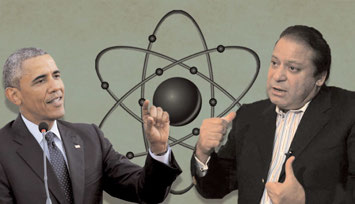
    If a report in a US newspaper is to be believed, a US-Pakistan nuclear deal might be on the cards. The report says that such a deal is being considered around Prime Minister Nawaz Sharif’s visit to Washington this month.

    The report would not have appeared credible but for the evasive comment of the State Department on the subject and the official reaction of the spokesperson of our Ministry of External Affairs cautioning the US authorities against any such decision.

    Ever since the India-US nuclear deal was signed, the Pakistanis, obsessed with the idea of parity with India, have been seeking a similar deal.

    Besides calling the India-US nuclear deal discriminatory, Pakistan has condemned it as threat to its security and warned that it would take all necessary steps to safeguard its interests. Pakistan’s Foreign Affairs Adviser Sartaj Aziz aggressively reiterated this on the occasion of President Barack Obama’s visit to India in January this year.

    By remaining silent, the US has only encouraged this absurd posturing by Pakistan.

    US soft on Pakistan

    Some western nonproliferation specialists have been advocating for some time a nuclear deal with Pakistan in order to remove its sense of grievance. They feel it would give Pakistan an incentive to limit the expansion of its nuclear arsenal and stabilize the nuclear situation in the sub-continent.

    Such advocacy is largely prompted by negative attitudes towards India which, with its historical opposition to the NPT, is seen as the one responsible for nuclearizing South Asia. In their eyes, this is one way of denying India any one-sided advantage in nuclear status.

    Until now, the US Administration has been differentiating India’s case from that of Pakistan and disclaiming any move to offer the latter a similar deal, thought the tenor of its statements has not been sufficiently convincing.

    In fact, both the US and China, to different degrees, have aided Pakistan in achieving its nuclear and missile ambitions.

    A US-Pak nuclear deal will erode the strategic importance of the Indo-US nuclear deal

    In the past, knowing the China-Pakistan nuclear and missile nexus, the US has waived the application of its laws for larger geopolitical reasons linked to the combat against the Soviets in Afghanistan. The Afghanistan factor has, unfortunately, continued to condition US thinking on Pakistan’s nuclear and other errant behavior.

    The US was remarkably soft with Pakistan on the AQ Khan case. It has tolerated Pakistan’s tactics to obstruct discussions on the FMCT at Geneva at a time when fissile material control was still on the US agenda.

    It has overlooked supplies of additional Chinese nuclear reactors to Pakistan in violation of China’s NSG commitments.

    One could speculate that having settled the nuclear question with India, this was one way for the US to allow Pakistan to be a beneficiary of external cooperation in its nuclear sector, as part of the traditional policy of “hyphenation”.

    US agencies and think tanks have been propagating information about the frenetic pace at which Pakistan has been expanding its nuclear arsenal, without any visible reaction from the US government.

    At one time, worried about the rise of radicalism in the country, the US was expressing concern about the security of Pakistan’s nuclear arsenal. But such fears are no longer being expressed.

    US conduct over the years suggests that it has favored the idea of a Pakistani nuclear capability to balance India’s. Remarkably, its complaisance towards the Pakistani nuclear program has continued long after the end of the Cold War.

    Adding to all this, US treatment of Iran’s nuclear ambitions contrasts strikingly with its handling of Pakistan’s nuclear transgressions. While draconian sanctions have been applied on Iran, in Pakistan’s case the US has argued that sanctions might hasten its slide towards failure as a state and increase the risk of its nuclear assets falling into the hands of religious extremists.

    This is specious logic as the US has not taken any precautionary step to curb the development of Pakistan’s nuclear assets, including its decision to introduce tactical nuclear weapons in the subcontinent. An expanded Pakistani nuclear arsenal is even more likely to fall into the wrong hands.

    US reaction to Pakistan’s loose talk about using nuclear weapons against India has been, moreover, notably mild. It could and should have been much stronger.

    The hesitation to impose sanctions on Pakistan contrasts also with the willingness to impose sanctions even on a powerful country like Russia, including its most senior leaders and functionaries.

    What inhibits the US to strong arm Pakistan despite its provocations remains unclear.

    The argument that for dealing with the situation in Afghanistan the US needs Pakistan’s assistance is not convincing. The US needs Russia even more for dealing with yet more complex and fraught problems as Iran and West Asia in general, including the rise of the Islamic State, not to mention the fall-out of mounting tensions in Russia-West relations.

    China-Pakistan axis

    It is mystifying why the US should want to politically legitimize Pakistan’s nuclear conduct through an India-like nuclear deal.

    In India’s case, the US wanted to make a geopolitical shift with the rise of China in mind. It saw India as a counterweight to China in Asia, but for this the nonproliferation issue which inhibited India’s international role had to be resolved.

    Pakistan is in fact China’s closest ally. The geopolitical purpose of a nuclear deal with Pakistan will only legitimize the China-Pakistan nuclear and security relationships and undermine India’s strategic interests vis-a-vis both these adversaries.

    The US has wanted to build a strategic relationship with India largely around shared interests in the Indian Ocean and Asia-Pacific regions in view of mounting signs of Chinese political and military assertiveness and its ambitious naval expansion program.

    Through the China-Pakistan Economic Corridor and the development of Gwadar, Pakistan is facilitating an increased Chinese strategic presence in the Indian Ocean, which contradicts this US strategy.

    Shocking rationale

    According to reports, the underlying reasoning offered by the US, if correctly reported, is almost shocking. In return for an NSG waiver, Pakistan will be asked to restrict its nuclear program to weapons and delivery systems that are appropriate to its actual defense needs against India’s nuclear threat, and not to deploy missiles beyond a certain range.

    This implies that the US accepts that India’s nuclear program is Pakistan-centric and that it poses a threat to Pakistan.

    The Chinese threat to India is being overlooked and the fact that India faces a double Pakistan-China nuclear threat – in view of the close nuclear collaboration between the two countries- is being ignored.

    The US, it appears, would be comfortable if only India would be exposed to the Pakistani nuclear threat, not others.

    US has been consistently soft on Pakistan’s errant behavior in matters like nuclear weapons

    But then, Pakistan’s nuclear arsenal, according to its own leaders, is India-centric. Pakistan is not threatening China, Iran or Saudi Arabia with its nuclear weapons. Which are the countries that the US wants to protect against the use of nuclear weapons by Pakistan?

    Pakistan is developing delivery systems to reach any point in India. The US would apparently be comfortable with that, but not if it developed missiles of longer range. But whose security is US worried about if Pakistan did that? US itself, Japan, Australia, Singapore, China, Iran, Saudi Arabia, Israel?

    China, we know, opposes India’s NSG entry without Pakistan. It would seem the US would be willing to accommodate both China and Pakistan if the latter limited its nuclear threat to India.

    By implication then, the US has no stakes in India’s security from an unstable and adventurous Pakistan, despite our so-called strategic partnership.

    A reward for Pakistan’s military

    The timing of a nuclear deal would be odd too. It is now universally recognized that it is General Raheel Sharif and not Nawaz Sharif who really hold the reins of power in the country. A nuclear deal will be a reward for the Pakistan military and not the civilian power, as Pakistan’s nuclear program is under military control.

    Does the US want to reward the Pakistan military for its operations in North Waziristan against the Pakistani Taliban and is this considered meritorious contribution to the fight against Al Qaeda and terrorism?

    One would have thought far more important for the US and the West is the rise of the Islamic State and its ideology. Compared to which North Waziristan is a side-show. In any case, the Pakistani military is not fighting the Haqqani group.

    Worse, while Pakistani is being accepted as an honest mediator in the Afghan reconciliation process, the Taliban showed its mounting force by occupying Kunduz.

    One hopes that the US report does not accurately reflect President Obama’s thinking.

    If it does, it will show how hollow is the strategic relationship between India and the US, and why it would not be wise to trust the US.

    The India-US nuclear deal will be eroded of much of its strategic importance bilaterally, as result. The US would have, in addition, administered a big political blow to Prime Minister Narendra Modi who has gone out of his way to improve strategic understanding with the US.

    But then, news reports are news reports, and they could merely be political kite-flying. In which case, the India-US relationship will not receive a big jolt for all the reasons mentioned in this article.

    (The author is a former foreign secretary of India. He has also served as India’s ambassador to Turkey, Egypt, France and Russia. He can be reached at sibalk@gmail.com)

  • INDIA TO BE PART OF ELITE ANTI-MISSILE GROUPING NEXT WEEK

    NEW DELHI (TIP): Barring an unpleasant last-minute surprise, India could be accepted as a member in the Missile Technology Control Regime (MTCR) next week. One of the world’s top four non-proliferation regimes, the MTCR plenary will be held in Oslo where the Indian application for membership will be considered. The 34-nation grouping takes decisions by consensus.

    Since India made a formal application for membership in summer this year, India has worked closely with key countries who have promised to support its membership. If India is accepted in the grouping it would be a huge fillip to its missile and space programmes, even allowing it to export its own technology to member countries. In recent years, MTCR has even assumed oversight regarding non-proliferation of UAVs -ironically, Pakistan, not a member of MTCR, has just developed its own armed drones which it has recently used on its own people.

    Accession to MTCR is one of the leftover tasks of the India-US nuclear deal. The US had promised to support India’s membership to all four – Wassenaar Arrangement, Nuclear Suppliers Group and Australia Group, along with MTCR. Initially, Indian diplomatic push was to bundle its membership to all four. The Indian thinking then was India could leverage its candidature all at once rather than lobby separately for all four. However, that thinking underwent a change and the MEA decided to approach all four regimes separately.

    It was originally believed that Australia Group would be the easiest to get into. But India still has to harmonize some of its controls on chemicals etc to make the cut. Instead the government has worked hard to harmonize its export control lists, called SCOMET with MTCR regulations. In March 2015, Indian government put in a host of new items on the SCOMET list which would need prior permission before exports and invite strict oversight by government agencies. A second list on military items also served to harmonize export licensing of military stores, a key compliance demand for MTCR. Acceptance to MTCR might make it easier for India to access the other regimes, though no one is in any doubt about how difficult it would be for India to get into the NSG, where China remains opposed. Between the PM, foreign minister Sushma Swaraj and even President Pranab Mukherjee, the government has lobbied with all the members of the MTCR in the past year. Officials said Indians have been ready with answers to any question put to them by MTCR members. The US has worked closely as well, lobbying for India, the first time after the nuclear deal waiver at the NSG. In the recently concluded Strategic Dialogue between Swaraj and John Kerry, the joint statement noted, “The US side affirms its support for India’s membership in the Missile Technology Control Regime at its upcoming plenary, the Nuclear Suppliers Group, and in the other global non-proliferation export control regimes.”

    China is not a member of the MTCR but has promised to abide by the original 1987 Guidelines and Annexure, but not the subsequent revisions. China has also asked for membership, but China, like Pakistan, is believed to have lax export control systems.

    Established in 1987, the MTCR aims to curb the spread of delivery systems like missiles which carry a minimum payload of 500 kg to a distance of a minimum of 300km.

  • Pankaj Advani wins his 14th World Billiards title

    Pankaj Advani wins his 14th World Billiards title

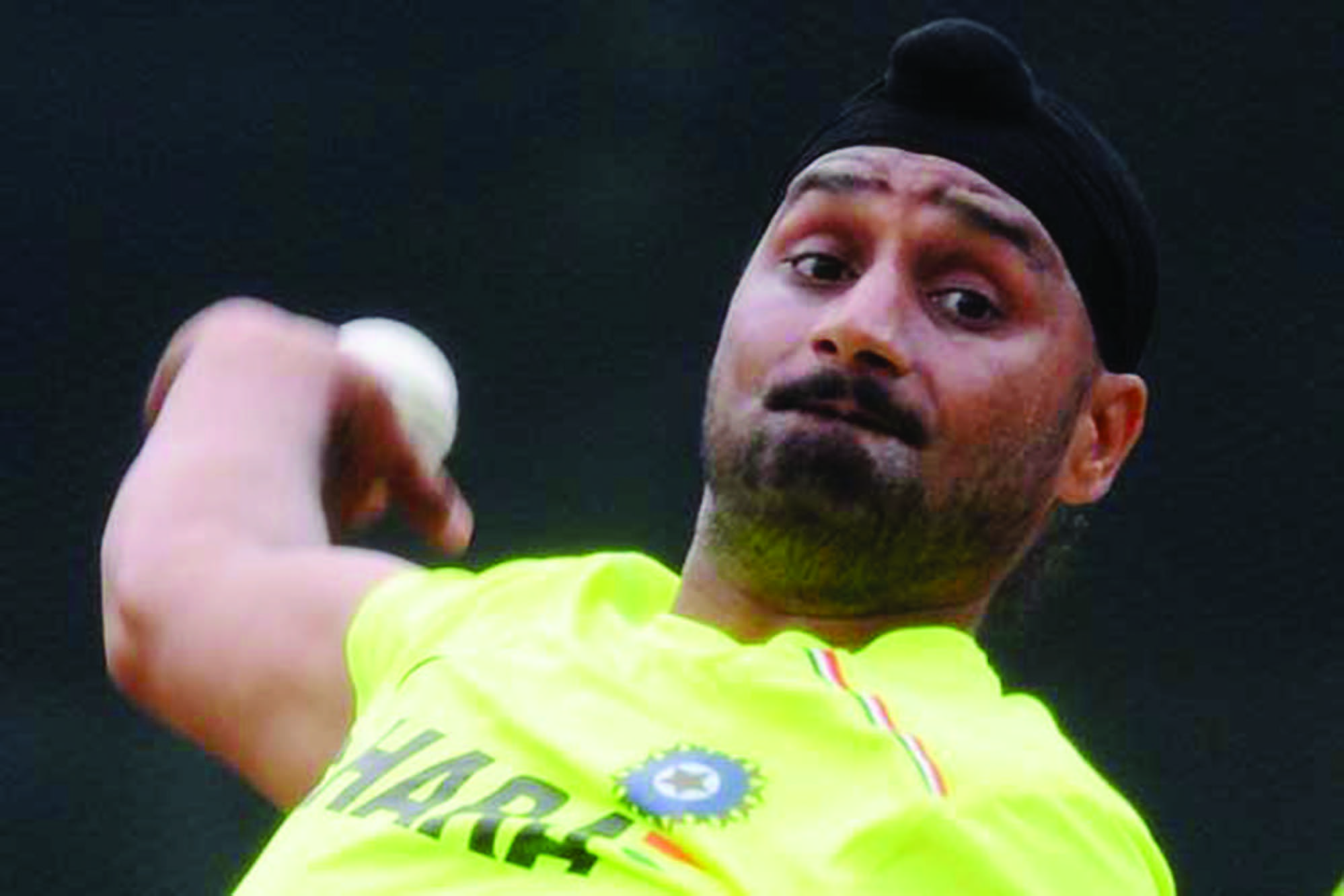
    India’s most successful cueist Pankaj Advani on Sunday, Sep 27, won the IBSF World Billiards Championship after outplaying his opponent in the final to take his world title count to 14 in Adelaide, Australia.

    Advani, 30, left the spectators spellbound with his prolific play and indisputable mastery over the 3-ball game, demolishing Singapore’s Peter Gilchrist by 1168 points.

    On lifting his 14th world crown in style, the Indian ace said, “I was determined to get even with Peter (Gilchrist) after losing the point format final to him. A productive chat with my sports psychologist brother Shree and a good night’s sleep did the trick. We discussed my strategies and mental approach the night before the big final and it all panned out perfectly.”

    Bengaluru’s ‘Golden Boy’ was in roaring form and appeared keen to not only defend his Time format world title but also avenge his loss of the Point format championship to Gilchrist, which happened under a week ago.

    In the opening visit, Advani fired in a quick century (127) to take the initial lead. Failing to capitalise, Gilchrist handed over an opportunity to the Indian star and it was taken full advantage of.

    The 2015 6-red snooker world champion showed his fine prowess in billiards by smashing in two back-to-back triple centuries (360 and 301), making the match a foregone conclusion in the first hour itself.

    With a comfortable 700-point lead, India’s posterboy of cuesport continued to add insult to injury with breaks of 284, 119, 101 and 106 in quick succession to extend his lead to 1100 points at the halfway mark of the 5-hour final.

    On resumption in the second half, Advani continued to punish his opponent with two more centuries but a spirited fightback by the Singaporean in the form of a big double century (284) along with a couple more centuries reduced his deficit.

  • Oil edges up after tumble on build-up in US gasoline stocks

    Oil edges up after tumble on build-up in US gasoline stocks

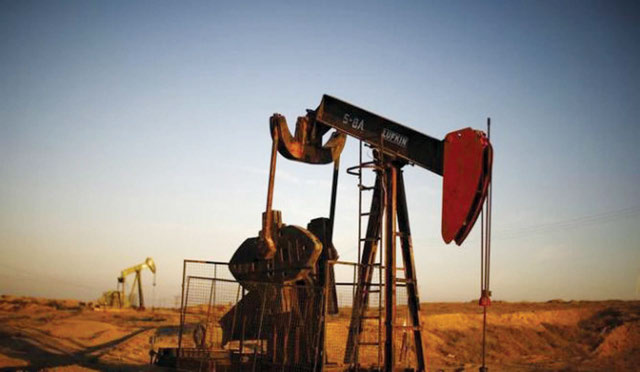
    SEOUL (TIP): Oil prices pared some losses on Thursday after sharp falls overnight on an unexpectedly large buildup in US gasoline stocks and seasonally tepid demand.

    The global benchmark November Brent contract had climbed 44 cents to$48.19 a barrel as of 0151 GMT, after ending the previous session down $1.33 at $47.75 a barrel.

    US crude rose 47 cents to $44.95 a barrel, having slumped $1.88 on Wednesday to settle at $44.48.

    A combination of a slightly better supply-side scenario in terms of prices and a bit of an improvement in industrial sentiment globally has brought in some support,” said Michael McCarthy, chief market strategist at CMC Markets in Australia.

    Data from the Energy Information Administration on Wednesday showed that US crude oil stocks fell 1.9 million barrels in the week to Sept. 18, the second straight weekly drawdown, compared with analyst expectations for a decrease of 533,000 barrels.

    But gasoline stocks rose 1.4 million barrels, compared with analyst expectations in a Reuters poll for a 819,000-barrel gain.

    A planned shutdown of Britain’s North Sea Buzzard oilfield, the biggest contributor to the Forties oil stream which is the largest of the four North Sea crudes used in Brent benchmark, has been reset to November from October, its operator Nexen said.

    Longer-term, a supply surplus continues to weigh on markets.

    “Despite early signs of a cutback in US shale production, the underlying supply and demand fundamentals remain weak for both Brent and WTI. This, alongside uncertainties surrounding China and the broader health of global economy, is capping any recovery in prices,” said BMI Research, part of the Fitch ratings agency.

    “We maintain our below-consensus forecast for both grades in 2016 and 2017, as major supply additions in West Africa, North America, the North Sea and the Middle East will continue to outpace the growth in demand, contributing to a rising overhang of crude in the market.”

  • US, Australia embassies warn of terror attack in Malaysia

    KUALA LUMPUR (TIP): The US and Australian embassies in Malaysia have warned of a potential terrorist attack at a popular hawker street in Kuala Lumpur.

    The U. Embassy issued an advisory Thursday saying it has credible threat information and urged its citizens to avoid Alor Street, located in a shopping belt in the city center, and its immediate surrounding areas.

    It says terrorist organizations had in the past planned attacks to coincide with significant dates, but gave no details.

    The Australian Embassy issued a similar alert to its citizens based on the U.S. threat warning.

    A police spokesman says a statement will be issued later Sept 24.

    Malaysia has arrested more than 100 supporters of the Islamic State group in the past two years, some of whom were allegedly plotting attacks in the country.

  • 2015 Rugby World Cup starts Sep 18

    2015 Rugby World Cup starts Sep 18

    The four-year wait is over for the Rugby Fans who will see the 2015 World Cup where New Zealand will try to defend their title against England, Australia, South Africa, Wales and more, with the 2015 Rugby World Cup lifting off, with an interesting first match.

    2015 Rugby World Cup Schedule – Fixture list, timings, venues and dates of all matches

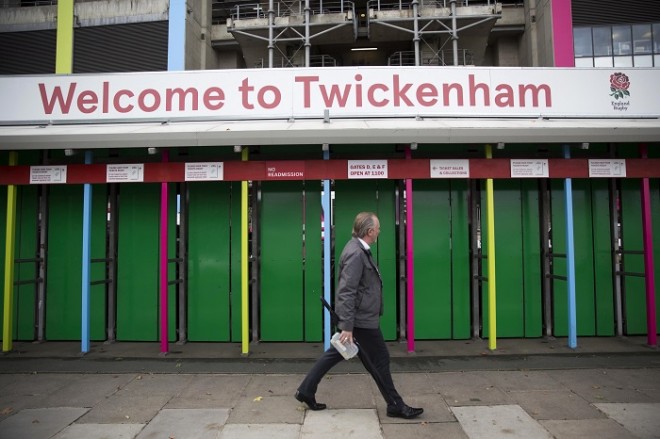
    Friday, September 18: Match 1: Pool A: England vs Fiji (8 pm BST, 12.30 am IST, 3 pm ET) at Twickenham, London.

    Saturday, September 19: Match 2: Pool C: Tonga vs Georgia (12 pm BST, 4.30 pm IST, 7 am ET) at Kingsholm, Gloucester.

    Match 3: Pool D: Ireland vs Canada (2.30 pm BST, 7 pm IST, 9.30 am ET) at Millennium Stadium, Cardiff.

    Match 4: Pool B: South Africa vs Japan (4.45 pm BST, 9.15 pm IST, 11.45 am ET) at Brighton Community Stadium, Brighton.

    Match 5: Pool D: France vs Italy (8 pm BST, 12.30 am IST, 3 pm ET) at Twickenham, London.

    Sunday, September 20: Match 6: Pool B: Samoa vs USA (12 pm BST, 4.30 pm IST, 7 am ET) at Brighton Community Stadium, Brighton.

    Match 7: Pool A: Wales vs Uruguay (2.30 pm BST, 7 pm IST, 9.30 am ET) at Millennium Stadium, Cardiff.

    Match 8: Pool C: New Zealand vs Argentina (4.45 pm BST, 9.15 pm IST, 11.45 am ET) at Wembley, London.

    Wednesday, September 23: Match 9: Pool B: Scotland vs Japan (2.30 pm BST, 7 pm IST, 9.30 am ET) at Kingsholm, Gloucester.

    Match 10: Pool A: Australia vs Fiji (4.45 pm BST, 9.15 pm IST, 11.45 am ET) at Millennium Stadium, Cardiff.

    Match 11: Pool D: France vs Romania (8 pm BST, 12.30 am IST, 3 pm ET) at Queen Elizabeth Olympic Park, London.

    Thursday, September 24: Match 12: Pool C: New Zealand vs Namibia (8 pm BST, 12.30 am IST, 3 pm ET) at Queen Elizabeth Olympic Park, London.

    Friday, September 25: Match 13: Pool C: Argentina vs Georgia (4.45 p BST, 9.15 pm IST, 11.45 am ET) at Kingsholm, Gloucester.

    Saturday, September 26: Match 14: Pool D: Italy vs Canada (2.30 pm BST, 7 pm IST, 9.30 am ET) at Elland Road, Leeds.

    Match 15: Pool B: South Africa vs Samoa (4.45 pm BST, 9.15 pm IST, 11.45 am ET) at Villa Park, Birmingham.

    Match 16: Pool A: England vs Wales (8 pm BST, 12.30 am IST, 3 pm ET) at Twickenham, London.

    Sunday, September 27: Match 17: Pool A: Australia vs Uruguay (12 pm BST, 4.30 pm IST, 7 am ET) at Villa Park, Birmingham.

    Match 18: Pool B: Scotland vs USA (2.30 pm BST, 7 pm IST, 9.30 am ET) at Elland Road, Leeds.

    Match 19: Pool D: Ireland vs Romania 4.45 pm BST, 9.15 pm IST, 11.45 am ET) at Wembley, London.

    Tuesday, September 29: Match 20: Pool C: Tonga vs Namibia (4.45 pm BST, 9.15 pm IST, 11.45 am ET) at Sandy Park, Exeter.

    Thursday, October 1: Match 21: Pool A: Wales vs Fiji (4.45 pm BST, 9.15 pm IST, 11.45 am ET) at Millennium Stadium, Cardiff.

    Match 22: Pool D: France vs Canada (8 pm BST, 12.30 am IST, 3 pm ET) at Stadiummk, Milton Keynes.

    Friday, October 2: Match 23: Pool C: New Zealand vs Georgia (8 pm BST, 12.30 am IST, 3 pm ET) at Millennium Stadium, Cardiff.

    Saturday, October 3: Match 24: Pool B: Samoa vs Japan (2.30 pm BST, 7 pm IST, 9.30 am ET) at Stadiummk, Milton Keynes.

    Match 25: Pool B: South Africa vs Scotland (4.45 pm BST, 9.15 pm IST, 11.45 am ET) at St James’ Park, Newcastle.

    Match 26: Pool A: England vs Australia (8 pm BST, 12.30 am IST, 3 pm ET) at Twickenham, London.

    Sunday, October 4: Match 27: Pool C: Argentina vs Tonga (2.30 pm BST, 7 pm IST, 9.30 am ET) at Leicester City Stadium, Leicester.

    Match 28: Pool D: Ireland vs Italy (4.45 pm BST, 9.15 pm IST, 11.45 am ET) at Queen Elizabeth Olympic Park.

    Tuesday, October 6: Match 29: Pool D: Canada vs Romania (4.45 pm BST, 9.15 pm IST, 11.45 am ET) at Leicester City Stadium, Leicester.

    Match 30: Pool A: Fiji vs Uruguay (8 pm BST, 12.30 am IST, 3 pm ET) at Stadiummk, Milton Keynes.

    Wednesday, October 7: Match 31: Pool B: South Africa vs USA (4.45 pm BST, 9.15 pm IST, 11.45 am ET) at Queen Elizabeth Olympic Park, London.

    Match 32: Pool C: Namibia vs Georgia (8 pm BST, 12.30 am IST, 3 pm ET) at Sandy Park, Exeter.

    Friday, October 9: Match 33: Pool C: New Zealand vs Tonga (8 pm BST, 12.30 am IST, 3 pm ET) at St James’ Park, Newcastle.

    Saturday, October 10: Match 34: Pool B: Samoa vs Scotland (2.30 pm BST, 7 pm IST, 9.30 am ET) at St James’ Park, Newcastle.

    Match 35: Pool A: Australia vs Wales (4.45 pm BST, 9.15 am IST, 11.45 am ET) at Twickenham, London.

    Match 36: Pool A: England vs Uruguay (8 pm BST, 12.30 am IST, 3 pm ET) at Manchester City Stadium, Manchester

    Sunday, October 11: Match 37: Pool C: Argentina vs Namibia (12 pm BST, 4.30 pm IST, 7 am ET) at Leicester City Stadium, Leicester.

    Match 38: Pool D: Italy vs Romania (2.30 pm BST, 7 pm IST, 9.30 am ET) at Sandy Park, Exeter.

    Match 39: Pool D: France vs Ireland (4.45 pm BST, 9.15 pm IST, 11.45 am ET) at Millennium Stadium, Cardiff.

    Match 40: Pool B: USA vs Japan (8 pm BST, 12.30 am IST, 3 pm ET) at Kingsholm, Gloucester.

    Quarterfinals: Saturday, October 17: Match 41: QF1: Winner Pool B vs Runner-up Pool A (4 pm BST, 8.30 pm IST, 11 am ET) at Twickenham, London.

    Match 42: QF2: Winner Pool C vs Runner-up Pool D (8 pm BST, 12.30 am IST, 3 pm ET) at Millennium Stadium, Cardiff.

    Sunday, October 18: Match 43: QF3: Winner Pool D vs Runner-up Pool C (1 pm BST, 5.30 pm IST, 8 am ET) at Millennium Stadium, Cardiff.

    Match 44: QF4: Winner Pool A vs Runner-up Pool B (4 pm BST, 8.30 pm IST, 11 am ET) at Twickenham, London.

    Semifinals: Saturday, October 24: Match 45: SF1: Winner QF1 vs Winner QF2 (4 pm BST, 8.30 pm IST, 11 am ET) at Twickenham, London.

    Sunday, October 25: Match 46: SF2: Winner QF3 vs Winner QF4 (4 pm BST, 8.30 pm IST, 11 am ET) at Twickenham, London.

    Friday, October 30: Third-place Playoff: Match 47: Loser SF1 vs Loser SF2 (8 pm BST, 12.30 am IST, 3 pm ET) at Queen Elizabeth Olympic Park, London.

    Saturday, October 31: Final: Match 48: Winner SF1 vs Winner SF2 (4 pm BST, 8.30 pm IST, 11 am ET) at Twickenham, London.

  • Sania Mirza Wins US Open doubles title

    Sania Mirza Wins US Open doubles title

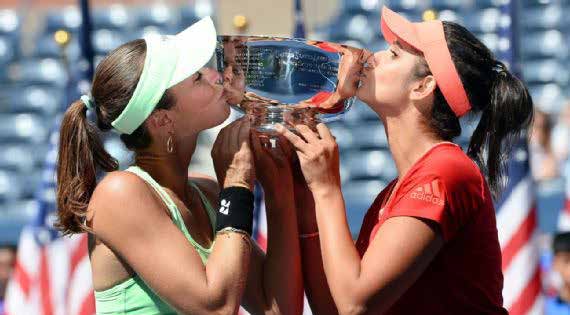
    Top seeds Martina Hingis and Sania Mirza beat Casey Dellacqua and Yaroslava Shvedova to win the U.S. Open doubles title on Sunday, September 13, 2015 and cap off a perfect visit to Flushing Meadows, New York.

    At 34 years old and already a member of the International Tennis Hall of Fame, Hingis paired with Sania Mirza of India to beat Casey Dellacqua of Australia and Yaroslava Shvedova of Kazakhstan 63, 63 in the final.

    Hingis, the Swiss formerworld number one and her Indian partner Mirza, tore through the doubles tournament without dropping a set to claim backtoback grand slams after their victory at Wimbledon.

    It has been a productive and busy visit to New York for Hingis who also captured the U.S. Open mixed doubles title with India’s Leander Paes.

    Having only joined forces in March, Mirza and Hingis have enjoyed a successful  partnership reaching six finals in 12 events and winning two majors.

    After easily taking the first set Hingis and Mirza broke to open the second and apart from a late wobble were never really threatened by the Australian Dellacqua and Kazakhstan’s Shvedova.

    For Hingis it was her second U.S. Open doubles title coming 17years after she won her first in 1998 with Jana Novotna.

    ‘With all the pressure on us, all the time, we‘re really happy to come through,“ Mirza said. Mirza thinks her victory will be a big deal back home in India. ‘It has been a great year for us,“ Mirza said.

    ‘To win Wimbledon was a great year. Then to come back and back it up to win the US Open, we feel like we‘re a really solid team. And we came through again today. Grand Slams mean a lot, but obviously being a woman and being the first one to be able to achieve everything that I‘m achieving is amazing for, not just India, for Indian women, but for Indian sports, for women to pick up sports in the country and that side of the world,“ she said. ‘So I hope they‘re proud.“

  • LOST AUSTRALIAN SHEEP YIELDS 30 SWEATERS WORTH OF FLEECE

    CANBERRA: A lost, overgrown sheep found in Australian scrubland was shorn for perhaps the first time on Thursday, yielding 40 kilograms (89 pounds) of wool — the equivalent of 30 sweaters — and shedding almost half his body weight.

    Tammy Ven Dange, chief executive of the Canberra RSPCA, which rescued the merino ram dubbed Chris, said Thursday she hoped to register the 40.45 kilogram (89 pound, 3 ounce) fleece with Guinness World Records. An official of the London-based organization did not immediately respond to a request for comment.

    The most wool sheared from a sheep in a single shearing is 28.9 kilograms (63 pounds, 11 ounces) taken from a wild New Zealand merino dubbed Big Ben in January last year, the Guinness World Records website said.

    “He’s looking really good, he looks like a new man,” Ven Dange said, as the now 44-kilogram (97-pound) sheep recovered at the Canberra animal refuge. “For one thing, he’s only half the weight he used to be.”

    Champion shearer Ian Elkins said the sheep appeared to be in good condition after being separated from his huge fleece under anesthetic.

    “I don’t reckon he’s been shorn before and I reckon he’d be 5 or 6 years old,” Elkins said. Chris was found near Mulligans Flat Woodland Sanctuary outside Canberra by bushwalkers who feared he would not survive the approaching southern summer. He was found several kilometers (miles) from the nearest sheep farm. A bushwalker named him Chris after the sheep in the “Father Ted” television comedy series.

    Chris was rescued by the RSPCA on Wednesday and taken to Canberra, where he was shorn under anesthetic because he was stressed by human company and because of the potential pain from the heavy fleece tearing skin as it fell away. Ven Dange said he had suffered skin burns from urine trapped in his fleece and could have died within weeks if left in the wild.

    “When we first brought him in yesterday, he was really shy, he was shaking, he would move his head away from people and he could barely get up and walk,” she said.

    “The drugs might be wearing off right now, but he’s actually coming to you and actually wants a pat. He’s certainly moving a heck of a lot better,” she added.

    She said Chris would be found a new home after vets gave him the all-clear.

    Elkins said the fleece was too long to be sold commercially. He hoped it would end up in a museum.

    “I wouldn’t say it’s high quality, but you wouldn’t expect it to be running around in the bush that long unshorn,” he said. Australian merinos are bred for wool and are shorn annually, with fleeces averaging about 5 kilograms (11 pounds).

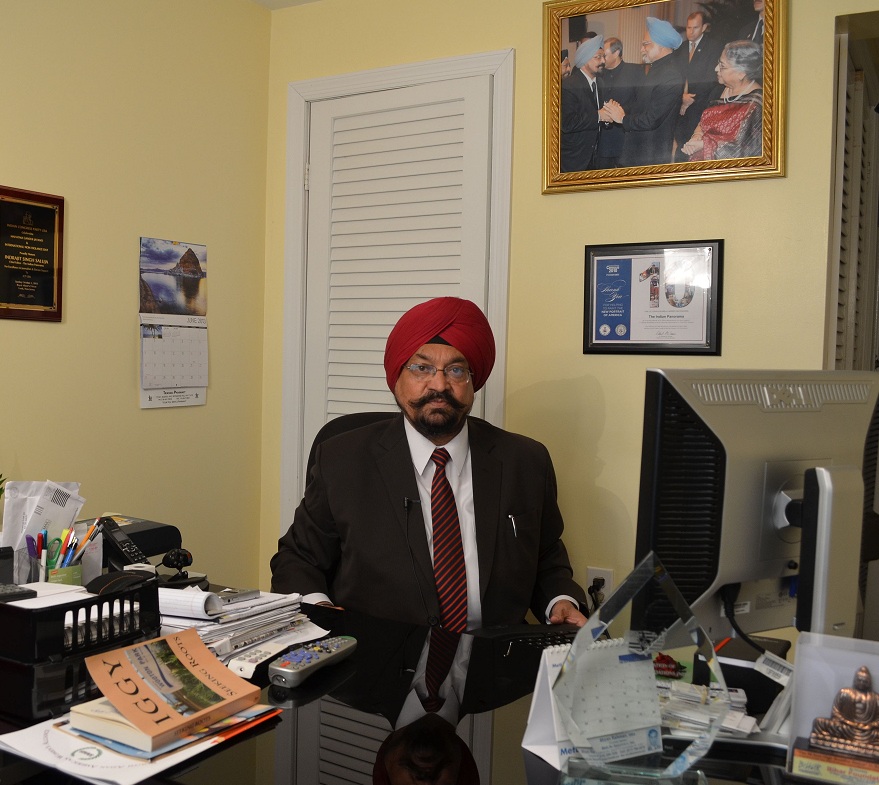
  • Indian-origin Sikh man named Australian of the Day for feeding the homeless

    Indian-origin Sikh man named Australian of the Day for feeding the homeless

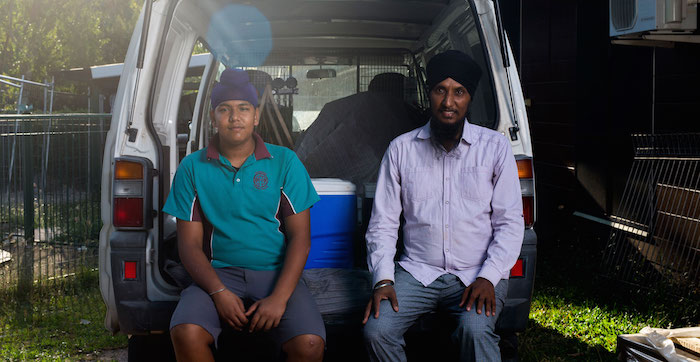
    An Indian-origin Sikh migrant driver in Australia has been named ‘Australian of the Day’ for feeding the homeless in Darwin for the past three years.

    Tejinder Singh works by day as air conditioner mechanic and by night as a taxi driver. Despite his busy life, he still manages to find time to give back to the Darwin community, in the form of a monthly food drive, in which he feeds up to 100 of Darwin’s neediest.

    Alongside young son Navdeep, he dedicates the last Sunday of every month to cooking and distributing vegetarian meals to any and all who are hungry,no matter what class or race. Often finishing his taxi shift in the early hours of the morning, this means his food drive is often completed on little sleep but the act of giving he says, gives him the energy to continue. He has rejected monetary offers from supporters, instead he encourages others to begin their own food drives within their local community.

    “The van, the pots, anyone can use them. It’s for mankind.”

    It is for this noble act that he was featured as Australian of the Day on their website. He often finishes his taxi shift in thr wee hours of the morning and carries out his food drive on very little sleep, but he quoted saying that the act of giving provides him to energy to continue.

    He cooks up 30 kilogrammes of Indian cuisine to feed the homeless after his night shift. The free lunch that Singh offers comprises chickpeas, rice and vegetarian curry.

    “I do something for homeless people, so they get more energy so they’re happy. My religion says 10 per cent of income goes toward needy and poor people – no matter (whether) they belong to your religion or any religion,” Singh was quoted as saying by local media.

    His van carries a signature written as ‘Free Indian food for hungry and needy people, Provide Sikh family.’ Commonwealth Bank has sponsored the Australian of the Year Awards for over 35 years, recognising extraordinary Australians who have made a big difference to the country.

  • Ashley Madison leak: 10k emails from US govt, military sites

    Ashley Madison leak: 10k emails from US govt, military sites

    WASHINGTON (TIP): They came from the UN and the Vatican, from Boeing and Bank of America, from the department of justice and the department of homeland security, and even from the state department and the White House.

    Some 10,000 email addresses from among the nearly 37 million accounts of possible adulterers that have been leaked by hackers this week come from US government and military domains (.gov and .mil), and thousands more from international organizations, big corporations, multinationals, and even countries as distant as India and Australia. Across the world, those who signed on to Ashley Madison, a website that cheerfully promoted infidelity for its members, are sweating bullets, even as those on the sidelines are enjoying the spectacle of the leak and its fall-out with merry memes on social media. Among them, on the revelation that Washington DC had the highest rate of membership — “Why? They are already screwing the whole world.”

    And in a spoof on the website’s promotional slogan ‘Life is Short. Have an Affair’— “Life is short; hire an attorney.” Indeed, divorce lawyers maybe the only ones laughing all the way to the bank as millions of licentious individuals, mostly men, are cringing at the prospect of being exposed, shamed, and even blackmailed— compounded by the fear and anxiety of being confronted by spouses. As they had threatened some weeks ago, hacker or hackers acting under the title ‘The Impact Team’ has posted some 10 GB of data showing the profile of every user, including their name, date of birth, address, phone number, username and email address.

    “Find yourself in here? It was ALM that failed you and lied to you. Prosecute them and claim damages.

  • Australia’s FAL Food and Beverages to enter India & export from India

    Australia’s FAL Food and Beverages to enter India & export from India

    Australia’s FAL Food and Beverages, which makes the Coco Joy, Juiced Up and Aqua Hero beverages, on Monday said it would set up its first Indian factory within three years, which will serve several countries.

    “We’ll start with Coco Joy coconut water and the entire Coco Joy range will be introduced in India over next four to six months. Eventually, we’ll bring our entire portfolio of brands,” Tim Xenos, chief executive, FAL Food and Beverages, said in a phone interview.

    The products will be priced upmarket, but below the premium segment.

    The firm is likely to spend $9-10 million in India to set up its distribution and retail presence, said Xenos. “The manufacturing facility will require more than $5 million,” said Xenos. The company hopes to have an initial production capacity of 12,000-15,000 units per hour and may double it over a period of time. It will require about five acres for a production unit.

    “India will be the hub for manufacturing. Besides meeting the captive demand, we would export to the US, Australia, neighbouring countries like Bangladesh and Sri Lanka and nations that have free trade agreements with India,” Xenos said.

    At present, FAL has three manufacturing units across Malaysia and Saudi Arabia. The maker of low-calorie, low-sugar and fat-free food and beverages sells in Australia, New Zealand, Malaysia, the US and China. FAL Food and Beverages is a part of FAL Holdings, which has a presence in 17 countries across West Asia, Australia, the US, Europe and China.

    “India is the most important market for us. Though we are entering India today, we see revenue from India reaching $100 million in a few years,” said Xenos.

    The firm will operate through a fully-owned subsidiary and set up its own distribution network. FAL Food and Beverages hopes to close the next fiscal year with $100 million sales, from $35 million at present.

    The nutraceuticals market, including nutritional food and beverages, in India is estimated at around $2.8 billion at present and is projected to cross $6.1 billion by 2020, according to a study released on Monday, jointly conducted by the Associated Chambers of Commerce and Industry of India and market research firm RNCOS.

    FAL will start with modern trade retail and grocers across metro markets in India, besides online marketplaces as an alternative route, said FAL’s India business head Jasmeet Khanna.

    For brand promotion, FAL will leverage its global co-branding alliance with Disney in India as well. Former cricketer Vivian Richards endorses Coco Joy. FAL’s other global co-branding alliances include Manchester City Football Club, Melbourne City Football Club and New York City Football Club. “Once we set up our presence, we’ll look at developing branding properties in India as well,” said Khanna.

  • FORMATION OF INDIAN NATIONAL CONGRESS

    FORMATION OF INDIAN NATIONAL CONGRESS

    inc-india-1947The foundations of the Indian National Movement were laid by Surendranath Banerjee with the formation of Indian Association at Calcutta in 1876. The aim of the Association was to represent the views of the educated middle class, inspire the Indian community to take the value of united action. The Indian Association was, in a way, the forerunner of the Indian National Congress, which was founded, with the help of A.O. Hume, a retired British official. The birth of Indian National Congress (INC) in 1885 marked the entry of new educated middle-class into politics and transformed the Indian political horizon. The first session of the Indian National Congress was held in Bombay in December 1885 under the president ship of Womesh Chandra Banerjee and was attended among others by and Badr-uddin-Tyabji.

    At the turn of the century, the freedom movement reached out to the common unlettered man through the launching of the “Swadeshi Movement” by leaders such as Bal Gangadhar Tilak and Aurobindo Ghose. The Congress session at Calcutta in 1906, presided by Dadabhai Naoroji, gave a call for attainment of ‘Swaraj’ a type of self-government elected by the people within the British Dominion, as it prevailed in Canada and Australia, which were also the parts of the British Empire.

    Meanwhile, in 1909, the British Government announced certain reforms in the structure of Government in India which are known as Morley-Minto Reforms. But these reforms came as a disappointment as they did not mark any advance towards the establishment of a representative Government. The provision of special representation of the Muslim was seen as a threat to the Hindu-Muslim unity on which the strength of the National Movement rested. So, these reforms were vehemently opposed by all the leaders, including the Muslim leader Muhammad Ali Jinnah. Subsequently, King George V made two announcements in Delhi: firstly, the partition of Bengal, which had been effected in 1905, was annulled and, secondly, it was announced that the capital of India was to be shifted from Calcutta to  Delhi.

    The disgust with the reforms announced in 1909 led to the intensification of the struggle for Swaraj. While, on one side, the activists led by the great leaders like Bal Gangadhar Tilak, Lala Lajpat Rai and Bipin Chandra Pal waged a virtual war against the British, on the other side, the revolutionaries stepped up their violent activities There was a widespread unrest in the country. To add to the already growing discontent among the people, Rowlatt Act was passed in 1919, which empowered the Government to put people in jail without trial.

    This caused widespread indignation, led to massive demonstration and hartals, which the Government repressed with brutal measures like the Jaliawalla Bagh massacre, where thousand of unarmed peaceful people were gunned down on the order of General Dyer.

    Reformers as guides of Freedom Movement

    The leadership of the freedom movement passed into the hands of reformists like Raja Rammohan Roy, Bankim Chandra and Ishwar Chandra Vidyasagar. During this time, the binding psychological concept of National Unity was also forged in the fire of the struggle against a common foreign oppressor.

    Raja Rammohan Roy (1772-1833) founded the Brahmo Samaj in 1828 which aimed at purging the society of all its evil practices. He worked for eradicating evils like sati, child marriage and purdah system, championed widow marriage and women’s education and favoured English system of education in India. It was through his effort that sati was declared a legal offence by the British.

    Swami Vivekananda (1863-1902) the disciple of Ramakrishna Paramahamsa, established the Ramkrishna Mission at Belur in 1897. He championed the supremacy of Vedantic philosophy. His talk at the Chicago (USA) Conference of World Religions in 1893 made the westerners realize the greatness of Hinduism for the first time.

    Jallianwala Bagh Massacre

    Jalianwala Bagh massacre of April 13, 1919 was one of the most inhuman acts of the British rulers in India. The people of Punjab gathered on the auspicious day of Baisakhi at Jalianwala Bagh, adjacent to Golden Temple (Amritsar), to lodge their protest peacefully against persecution by the British Indian Government. General Dyer appeared suddenly with his armed police force and fired indiscriminately at innocent empty handed people leaving hundreds of people dead, including women and children.

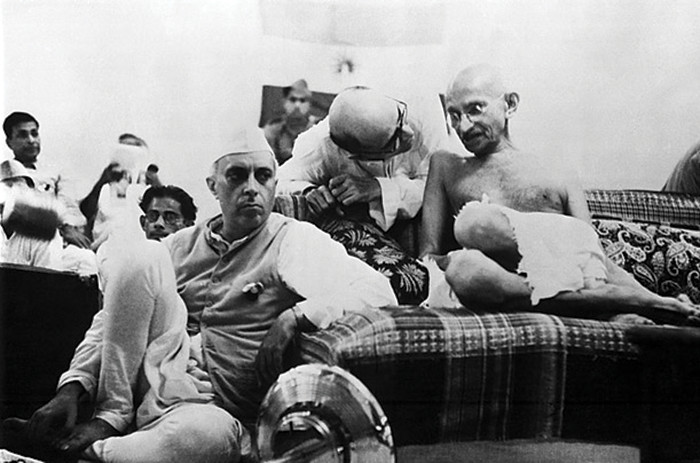
    After the First World War (1914-1918), Mohandas Karamchand Gandhi became the undisputed leader of the Congress. During this struggle, Mahatma Gandhi had developed the novel technique of non-violent agitation, which he called ‘Satyagraha’, loosely translated as ‘moral domination’. Gandhi, himself a devout Hindu, also espoused a total moral philosophy of tolerance, brotherhood of all religions, non-violence (ahimsa) and of simple living. With this, new leaders like Jawaharlal Nehru and Subhash Chandra Bose also emerged on the scene and advocated the adoption of complete independence as the goal of the National Movement.

  • Given the Time, India can be a Regional Security Provider

    Given the Time, India can be a Regional Security Provider

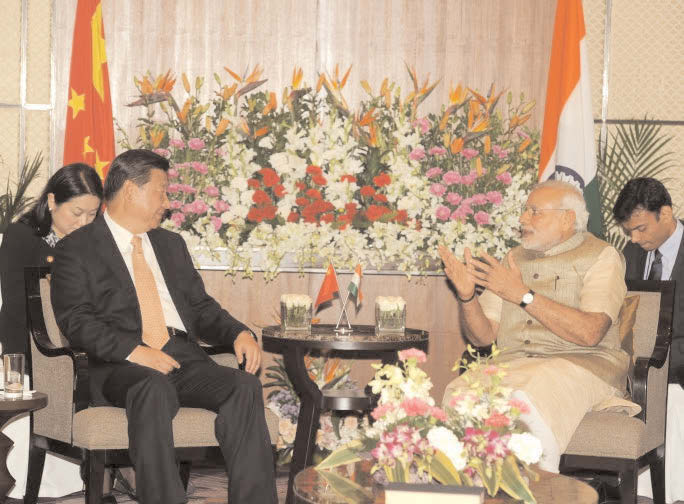
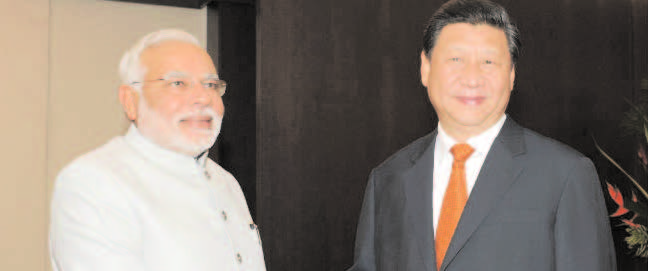
    Despite the cordial meetings between PM Modi and President Xi’s and their  photo ops on the sidelines of the BRICS and SCO summits, India has been drawing the red line with China on its concerns. Official briefings have disclosed clear communiques from India on the issue of China blocking India’s move in the United Nations to question Pakistan on the release of 26/11 attack mastermind Zaki-ur Rehman Lakhvi as well as China’s economic corridor in PoK.

    Only last month the news of Chinese submarines docking in Karachi, had rattled New Delhi. Almost a deja-vu reaction to the Chinese subs making an appearance in Sri Lanka last year. China’s statements that the Indian Ocean is not India’s backyard have only added to Indian anxiety. Not surprisingly, visits in June with US Defense Secretary Ashton Carter, who arrived at an Indian naval base, followed by a trilateral with Australia and Japan on regional security issues have focused on adventurism in the Indian Ocean Region and aggression in the South China Sea.

    There is a growing clamor for India to take up the role of a regional security provider in Asia in the wake of what is being termed as Chinese expansionism. Its was not surprising that both -the renewed India – US Defense Framework Agreement and trilateral discussions, put a strong emphasis on maritime security, and strengthening of India’s defense capabilities to fulfill this ambition. It is a  role that India is eager to take up but, in reality, has a long way to go to achieve in terms of resources and capacity.

    PM Modi’s administration has succeeded in renewing expectations from India, with his first year in office dedicated to revamping the look east policy to act east. The fundamental shift is India’s willingness to work with the U.S. and Asia-Pacific countries on regional security coalitions and shedding of timidity to call China out.

    However, while New Delhi has walked the tightrope to ensure that its strategic choices are not perceived as binary (between the US and China), it is imperative to underline that India’s resource build up is still a work in progress and jumping the gun in terms of expectations will not bode well for India’s long term vision.

    So , beyond the hype it is important to assess how India conceptualizes its own role in Asian security. What roles does it envisage for itself ? The answer perhaps lies in understanding the larger blueprint within which India is calibrating its strategy.

    Conceptually, India’s strategic approach has been rooted in three broad trends : One, revitalizing India’s strategic partnerships with major powers and being recognized as an able contributor to Asian security. Two, reclaiming the south Asian neighborhood to boost India’s role as a regional power. And three, a renewed thrust on economic diplomacy independent of strategic compulsions.

    No longer wanting to sit on the fence, India is looking to play a role in shaping the regional architecture, by increasing economic integration,
    (ASEAN, EAS, RCEP etc), building strategic partnerships and deepening defense cooperation (US, Japan, Vietnam, ASEAN, Australia) with a special emphasis on maritime security. But is all of this easier said than done?

    Realistically, the grand posturing aside, this is a tall order considering the challenges India faces. For one, many a skeptic will tell you that if India can’t even manage its own neighborhood how can it claim to extend its influence in the Asia Pacific?

    An uneasy neighborhood with constant complaints of neglect and lack of leadership from India have been an open secret. Despite PM Modi’s recent efforts, Chinese entrenchment in South Asia – from the ‘One Belt One Road’ initiative to the deepening military ties, is a glaring reality. While this is no zero game of influence, reclaiming the neighborhood would be a pre-requisite to India’s ambitions of a larger role in the great game for Asia. This is no easy task.

    A re-energized look east policy, can only take off if the gaping lacuna in the development of North East India and almost absent physical connectivity with East Asia are fixed. A reputation of slow delivery on projects and the mismatch of political aspirations and resource capacity to deliver are hard truths India has to face up to. The ‘Make in India’ campaign is looking to reverse this but the plans will need time to fructify.

    Even the much celebrated relationship with the US has fallen victim in the past to a lack of momentum and strategic mistrust. Maintaining robust Indo-US ties is imperative to give India a foot in the door of Asian geopolitics. Joint collaborations in defense and technology have to really come through for India to live up to the hype. Till then expectations will only burden India.

    As India gradually rises to its role as a regional balancer in Asia, it is important for India to tell the world to give it time to set its own house in order. New Delhi still has a long way to go in assuring these states of its reliability, not only as an economic and political partner but also as a provider of regional security. The political will is clear, it is time for the commitments to come through. Till then managing China, while building up India’s capacity is the way forward. The hype can wait.

    Shruti PandalaiAuthor | Shruti Pandalai (The author is a Research Analyst & OSD Outreach with Institute for Defence Studies and Analyses. She can be reached at shrutipandalai@gmail.com)
  • Transnationals | Tax Havens | Terrorism

    Transnationals | Tax Havens | Terrorism

    “Westphalian sovereignty is the principle of international law that each nation state has sovereignty over its territory and domestic affairs, to the exclusion of all external powers. The principle of non-interference in another country’s domestic affairs, and that each state (no matter how large or small) is equal in international law is recognized. This doctrine is named after the Peace of Westphalia, signed in 1648, which ended the Thirty Years’ War.” 

    “It is ironical that Terror organizations on one side and Tax havens on the other have completely undermined Westphalia consensus. In that context countries like India have every right to exercise its freedom to pursue terrorists who are undermining its existence whether sponsored by foreign countries or home grown. The concept of territorial jurisdictions and sovereignty are no more valid in the context of terror organizations since they damage both India and its own host countries over period of time. India must protect its national interests and institutions by challenging inimical forces wherever they are located without worrying about Westphalia consensus”.


    In the context of the strikes made against terror camps on the border of Manipur/Nagaland by the Indian Army; there has been number of discussions about national sovereignty and the role of individual States. Actually in the last few decades the activities of transnational corporations aided by tax havens on one side and terrorists on the other side have destroyed the concept of nation state and its sovereignty evolved after the 30 years’ war in 1648 in Westphalia. Westphalian sovereignty is the principle of international law that each nation state has sovereignty over its territory and domestic affairs, to the exclusion of all external powers. The principle of non-interference in another country’s domestic affairs, and that each state (no matter how large or small) is equal in international law is recognized. This doctrine is named after the Peace of Westphalia, signed in 1648, which ended the Thirty Years’ War .After that war major continental European states – the Holy Roman Empire, Spain, France, Sweden and the Dutch Republic – agreed to respect one another’s territorial integrity. As European influence spread across the globe, the Westphalian principles, especially the concept of sovereign states, became central to international law and to the prevailing world order.

    Scholars of international relations have identified the modern, Western-originated, international system of states, multinational corporations, and organizations, as having begun at the Peace of Westphalia. Henry Kissinger in his important book on “world Order” says:

    “No truly global “world order’ has ever existed. What passes for order in our time was devised in Western Europe nearly four centuries ago, at a peace conference in the German region of Westphalia, conducted without the involvement or even the awareness of most other continents or civilizations. A century of sectarian conflict and political upheaval across Central Europe had culminated in the Thirty Years’ war of 1618-48- a conflagration in which political and religious disputes commingled, combatants resorted to “total war” against population centers, and nearly a quarter of the population of Central Europe died from combat, disease, or starvation. The exhausted participants met to define a set of arrangements that world stanch the bloodletting. Religious unity had fractured with the survival and spread of Protestantism; Political diversity was inherent in the number of autonomous political units that had fought to a draw. So it was that in Europe the conditions of the contemporary world were approximated: a multiplicity of political units, none powerful enough to defeat all others, many adhering to contradictory philosophies and internal practices, in search of neutral rules to regulate their conduct and mitigate conflict.

    “The Westphalian peace reflected a practical accommodation to reality, not a unique moral insight. It relied on a system of independent states refraining from interference in each other’s domestic affairs and checking each other’s ambitions through a general equilibrium of power. No single claim to truth or universal rule had prevailed in Europe’s contests. Instead, each state was assigned the attribute of sovereign power over its territory. Each would acknowledge the domestic structures and religious vocations of its fellow states as realities and refrain from challenging their existence. With a balance of power now perceived as natural and desirable, the ambitions of rules would be set in counterpoise against each other, at least in theory curtailing the scope of conflicts. Division and multiplicity, an accident of Europe’s history, became the hallmarks of a new system of international order with its own distinct philosophical outlook. In this sense the European effort to end its conflagration shaped and prefigured the modern sensibility: it reserved judgment on the absolute in favor of the practical and ecumenical; it sought to distill order from multiplicity and restraint.

    “The seventeenth-century negotiators who crafted the peace of Westphalia did not think they were laying the foundation for a globally applicable system. They made no attempt to include neighboring Russia, which was then reconsolidating its own order after the nightmarish “Time of Troubles” by enshrining principles distinctly at odds with Westphalian balance; a single absolute ruler, a unified religious orthodoxy, and a program of territorial expansion in all directions. Nor did the other major power centers regard the Westphalian settlement (to the extent they learned of it at all) as relevant to their own regions.1

    The three core principles on which the consensus rested are:

    1. The principle of the sovereignty of states and the fundamental right of political self determination
    2. The principle of legal equality between states
    3. The principle of non-intervention of one state in the internal affairs of another state

    Interestingly, all three are questioned by contemporary leaders of West and radical Islam.

    Tony Blair the then Prime Minister of UK in his famous Chicago Address -1999-suggests

    “The most pressing foreign policy problem we face is to identify the circumstances in which we should get actively involved in other people’s conflicts. Non -interference has long been considered an important principle of international order….

    “But the principle of non-interference must be qualified in important respects. Acts of genocide can never be a purely internal matter. When oppression produces massive flows of refugees which unsettle neighboring countries then they can properly be described as “threats to international peace and security”.2

    The NATO intervention in Kosovo and Afghanistan as well as US intervention in Iraq provide recent examples of breakdown of idea of Westphalia. Similar is the humanitarian crisis faced by India regarding refugees from East Pakistan.

    Interestingly Radical Islam also considered that the world order based on Westphalian consensus will collapse. “In the aftermath of the 11 March 2004 Madrid attacks, Lewis ‘Atiyyatullah, who claims to represent the terrorist network al-Qaeda, declared that “the international system built up by the West since the Treaty of Westphalia will collapse; and a new international system will rise under the leadership of a mighty Islamic state.”3

    The spread of ISIS across countries and activities of Boko Haram based in Nigeria in Kenya and Chad re-emphasis this point. Radical Islam do not accept territorial boundaries since it works for a global regime for global Ummah.

    The recruitment by these terror organizations is also across continents and countries which does not respect territorial sovereignty. The talk about Caliphate indicates that they are trans-border organizations.

    On the other side we find global corporations transcending sovereignty in search of global profits. For this they use tax havens as a tool.

    Tax havens–numbering more than 70 jurisdictions–facilitate bank facilities with zero taxes and no-disclosure of the names and in many cases anonymous trusts holding accounts on behalf of beneficiary. Basically lawyers and Chartered accountants will deal with mattes. Sometimes a post box alone will be operative system. In the case of Bahamas one building seems to have had tens of thousands of companies registered there.

    Luxemburg (population half a million!) registered companies of various countries have evaded taxes significantly from their legal jurisdiction. The key findings of the activities of transnational companies cutting across territorial jurisdiction is given below.

    • Pepsi, IKEA, AIG, Coach, Deutsche Bank, Abbott Laboratories and nearly 340 other companies have secured secret deals from Luxembourg that allowed many of them to slash their global tax bills.
    • PricewaterhouseCoopers has helped multinational companies obtain at least 548 tax rulings in Luxembourg from 2002 to 2010. These legal secret deals feature complex financial structures designed to create drastic tax reductions. The rulings provide written assurance that companies’ tax-saving plans will be viewed favorably by Luxembourg authorities.
    • Companies have channeled hundreds of billions of dollars through Luxembourg and saved billions of dollars in taxes. Some firms have enjoyed effective tax rates of less than 1 percent on the profits they’ve shuffled into Luxembourg.
    • Many of the tax deals exploited international tax mismatches that allowed companies to avoid taxes both in Luxembourg and elsewhere through the use of so-called hybrid loans.
    • In many cases Luxembourg subsidiaries handling hundreds of millions of dollars in business maintain little presence and conduct little economic activity in Luxembourg. One popular address – 5, rue Guillaume Kroll – is home to more than 1,600 companies.
    • A separate set of documents reported on by ICIJ on Dec. 9 expanded the list of companies seeking tax rulings from Luxembourg to include American entertainment icon The Walt Disney Co., politically controversial Koch industries and 33 other firms. The new files revealed that alongside PwC tax rulings were also brokered by Ernst & Young, Deloitte and KPMG, among other accounting firms.4

    The big four accounting firms namely KPMG/E&Y/Deloitte and PwC have facilitated the movement of funds of clients across borders and territories to make tax “planning” easier for these companies. USA is literally waging war with major Giants like Amazon/Google/Microsoft etc. for not paying adequate taxes in USA in spite of being US based companies. Most of these companies have moved their profits to other Tax Havens.

    Global firms such as Starbucks, Google and Amazon have come under fire for avoiding paying tax on their British sales. There seems to be a growing culture of naming and shaming companies. But what impact does it have?5

    Royal Commission into tax loopholes a must—says a report in Australia.6

    There is an increasing clamor in USA about Congress Should Pass the Stop Tax Haven Abuse Act to Combat International Tax Avoidance. This has been highlighted by both TAX justice network as well as Global Financial Integrity.

    A simple method of trade mis-invoicing by global companies using tax-havens have impacted developing countries nearly 730Billion USD in 2012 says Global Financial integrity. Another interesting finding by GFI is about terror financing using Tax haven route.

    Because of the increasing wariness of MNCs using Tax havens for avoidance of taxes and the opaque ways of functioning of these off-shore structures, demands are growing about their activities and even closing down of these tax havens by European parliament etc.

    Due to relentless pressure from OECD as well as G20 many of these secretive jurisdictions are becoming more transparent.

    But the fact of the matter is these Trans National Companies and Tax Havens together have significantly undermined the concept of sovereignty and territorial jurisdictions.

    It is ironical that Terror organizations on one side and Tax havens on the other have completely undermined Westphalia consensus. In that context countries like India have every right to exercise its freedom to pursue terrorists who are undermining its existence whether sponsored by foreign countries or home grown. The concept of territorial jurisdictions and sovereignty are no more valid in the context of terror organizations since they damage both India and its own host countries over period of time. India must protect its national interests and institutions by challenging inimical forces wherever they are located without worrying about Westphalia consensus.

    (The author is Professor of Finance at IIM-Bangalore)

  • Ukrainians, Australian kin mark year since MH17 downing

    Ukrainians, Australian kin mark year since MH17 downing

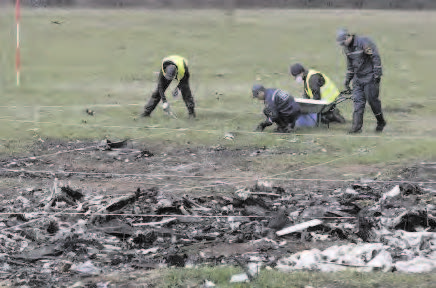
    HRABOVE, UKRAINE (TIP): Residents of the Ukrainian village where a Malaysian airliner was shot down with 298 people aboard a year ago began a procession to the crash site on Friday, while the Australian prime minister remembered the “savagery” of the disaster by unveiling a plaque in Canberra that’s set in soil from the place where the plane went down.

    The two ceremonies come amid an escalating war of words over who was responsible for destroying the plane.

    Ukrainian and Western authorities say the plane was downed by a missile fired either by rebels or Russian troops who allegedly back them.

    The rebels and Moscow say it was hit by a Ukrainian warplane or a Ukrainian-fired missile.

    In Hrabove, villagers carrying flowers gathered in the church in the center of the village at the start of a procession to the site in nearby fields. The commemoration, organized by local leaders and the Russia-backed separatist rebels who control the area, will include the dedication of a small stone with a plaque in the field.

    The passengers included 38 Australian citizens and permanent residents who were among the 298 people on Malaysia Airlines Flight 17, which was heading from Amsterdam to Kuala Lumpur on July 17, 2014, when it was shot down.

    In Canberra, Australian Prime Minister Tony Abbott unveiled a plaque inscribed with the names of Australian victims, which is set in soil that a police officer brought back from Ukraine.

    “He knew that the place where MH17 came to rest was sacred and that a piece of it should come back to Australia,” Abbott said. “It was a humane and decent thing for him to know and do. It was a contrast to the savagery that brought down the plane.” Abbott and his wife then lay a wreath at the base of the plaque. Dozens of family members of the victims followed, many in tears as they lay flowers alongside the wreath in honor of their loved ones. Some kissed the bouquets before they placed them down, while others kissed their fingers and pressed them against the plaque.

    Australia, Belgium, Malaysia, the Netherlands and Ukraine have asked the United Nations Security Council to establish an international criminal tribunal to prosecute those responsible for shooting down the plane.

  • Work force from India

    Work force from India

    Prime Minister Narendra Modi ‘s emphasis on India having a huge and young work force and his assertions that India can provide work force to the whole world, clearly reveal his mind. He realizes that it will not be possible to create employment for the large number of young people in the country. Having learnt a long time ago from the experience of the Gujarati community how rewarding it could be to be working abroad, and realizing that there is enough demand from countries across the world for work force, Modi has set his ken on adding work force to the list of exports.

    People from Gujarat are all over the world today. They are in African countries; in European countries, in USA, in Canada, in Australia and in New Zealand. They are everywhere. It is easier to list the countries where they are not present than to count the countries where they are. And they are amongst the best. They have established themselves particularly as sensible and intelligent businessmen. Business is in their blood. Look at all the top businessmen and industrialists in India and you will find they all belong to Gujarat. Similarly, those who are in professions are doing very well. It is another matter that every day you come across a dubious character who is involved in illegal activity and suffers the consequences.

    Readers will recall that it is not for the first time that PM Modi has spoken of India having a huge work force. He had said that earlier too. Now, with the launch of “Skill India” campaign, he has added an adjective to work force. The adjective is “skilled”. It may sound ambitious to be creating Crores of skilled young people over the next 5 years, as claimed by the Prime Minister but then they say the goal should not be mean. And given the fact that the Indian Prime Minister believes in the best, whether it be clothes or travel, we should suspend our disbelief and go along with him.

    Moreover, just as the NRIs , today, are making India rich with their remittances and investments, the would -be NRIs , too, would enrich the country. The mathematics is perfect. Young people will have jobs abroad and India will benefit from their presence overseas in terms of acquisition of foreign exchange. So we have employment generation and generation of wealth going hand in hand. One would wish it happens sooner than later.

  • New hope for Harbhajan’s flickering career

    New hope for Harbhajan’s flickering career

    NEW DELHI (TIP): When Harbhajan Singh was included in the Indian team for the one-off Test against Bangladesh in June, national selector Sandeep Patil had stated that they felt a second offspinner was needed considering the Bangladesh batting line-up comprises six left-handers. Interestingly, he was not picked for the ODI leg of the tour as the selectors opted for Ravindra Jadeja and Axar Patel. The offspinner did a decent job in the one-off Test claiming three wickets for 75 runs and in the process surpassed Wasim Akram in the list of highest wicket-takers in Tests to take the ninth spot.

    Most would have thought the one-off Test to be Harbhajan’s final hurrah at the international stage, but the selectors opted in favour of Bhajji once again, this time picking him in the depleted Indian team for the limited-over Zimbabwe tour. With Ravichandran Ashwin rested, Jadeja dropped and Karn Sharma injured, Harbhajan will most definitely feature in every game against Zimbabwe. At 35, this opportunity is a new lease of life for a flickering career for one of India’s most successful bowlers.

    Harbhajan has been very vocal about his desire to don the Indian colours again and he has stated that he sees himself servicing his country for another five years. However, that desire was not seen in the domestic circuit, where Harbhajan played only three first-class matches in last season’s Ranji Trophy taking six wickets with a best of 3 for 51. But, he impressed in the Indian Premier League picking up 18 wickets in 15 matches for Mumbai Indians, which eventually led to his comeback in Bangladesh.

    Harbhajan has not played an ODI since June, 2011 and with Jadeja’s stock dipping and Axar not able to impress much in the given opportunities; it looks like the selectors had no option but to go back to Harbhajan. India spin department has been quite thin for a long while and with Pragyan Ojha out of the selectors’ radar completely and Amit Mishra not putting any definite performances, Harbhajan finds himself in a happy position.

    IPL 2015 was a second coming for Harbhajan as he bowled slower through the air and was willing to flight the ball, something he had failed to achieve since 2011. He got rich dividends for his new found form that could possibly extend his career for at least two more years, until the Indian domestic set up unearths a new talent.

    India have been focussed on producing and nurturing fast bowlers and giving young bowlers a go for quite a while now, but getting Harbhajan in the mix of things does hint slight change in the mindset. Dhoni’s comments on identifying the type of fast bowlers the Indian team needs after the ODI series loss to Bangladesh was indicative of the changing thought process that they are done experimenting with rookies and are striving to get a settled bowling unit.

    The Zimbabwe tour will most likely determine whether Harbhajan will accompany Ashwin as the second spinner for the tour of Sri Lanka due to start in August and subsequently the Australia series early next year. Karn Sharma had the golden opportunity to assert his bid for the second spinner’s slot, but untimely injury has pushed him back. Mishra too would have to put in a good show for India A in Australia to get himself in the reckoning. But until then, it is Harbhajan Singh’s time and he will aim to make the most of his second chance.

  • India and America join hands to close in on tax evaders

    NEW DELHI (TIP): India and the United States signed a tax information sharing agreement on Thursday, under a new US law meant to combat offshore tax dodging by Americans as well as by Indians stashing funds abroad.

    The agreement aims to close a window for US citizens to avoid tax through financial products like equities, bank accounts and insurance.

    In return, New Delhi expects to garner Washington’s support to bring back illicit funds stashed by Indians in foreign tax havens and boost revenues by getting information about Indians working in the United States.

    The agreement “would enhance tax transparency and eventually bring in higher equity into the direct tax regime which are necessary for a healthy economy,” India’s revenue secretary Shaktikanta Das said at the signing in New Delhi.

    Following his election promise, Prime Minister Narendra Modi has enacted a ‘black money’ law that foresees tough penalties and a jail term for tax evaders who fail to declare their overseas incomes.Washington has signed pacts covering more than 80 tax jurisdictions to implement the Foreign Account Tax Compliance Act, or FATCA, requiring financial institutions to share information about Americans’ accounts worth more than $50,000.

    Last year, Modi joined leaders from the Group of 20 countries in Australia in an agreement for countries to automatically exchange tax information on a reciprocal basis by the end of 2018.

  • 11th century idol from Tamil Nadu recovered in US

    11th century idol from Tamil Nadu recovered in US

    CHENNAI (TIP): A stolen Chola bronze valued at $1 million may well be the next Indian artefact to come home after a Nataraja and Ardhanari were returned by Australia.

    The idol, surrendered by a private collector to US authorities, was part of the loot smuggled out of India by art thief Subhash Kapoor, say Tamil Nadu police. The figurine of saint Manickavasagar was among the 11th century, Chola-era statues that the Kapoor gang allegedly looted from a temple in Sripuranthan in Ariyalur.

    The recovery from a private collector shows that US investigators are actively pursuing leads on those to whom Kapoor likely sold artefacts. “US officials didn’t reveal the name of the collector. But we came to know he voluntarily surrendered the idol that he bought from a dealer in the Kapoor network,” said a senior police officer in the state crime investigation department’s idol wing.

    US Immigration and Customs Enforcement (ICE) department recently seized nearly 2,500 antique pieces from Kapoor’s gallery and warehouses in the US. “The theft of another country’s cultural property is a terrible crime that robs a nation of its national heritage. This is especially true when the relics are religious idols as in this case. We commend this collector for his conscious decision to return this stolen idol,” said Raymond R Parmer Jr, special agent in charge of ICE-Homeland Security Investigations
    (HIS) in New York.

    An interesting feature of the Manickavasagar is the white coat over it.

    This coat is given so that the statue, when exposed to the atmosphere, develops an artificial green patina on its surface over time. Idol thieves purport to demonstrate through the artificial patina that the idol was dug out from the ground and was not a stolen piece. An idol worshipped in a temple wouldn’t have the patina. In his confession statement to Tamil Nadu police, Subhash Kapoor had said that a curator in London helped him apply the patina to stolen idols to pass them off as antiques dug out from the ground. “What seems to have happened is that the collector kept the Manickavasagar in the closet and the idol therefore didn’t acquire the green patina,” says S Vijaykumar, heritage enthusiast who helps to track stolen idols.

    After being extradited to India in 2012, Kapoor is cooling his heels in Chennai Puzhal prison. The trial against him has commenced based on a chargesheet filed in Udayarpalayam police station in 2008. A chargesheet in another case in Vikramangalam police station is yet to be filed since it requires cooperation of German authorities.

    ICE-HSI has recovered at least six other sacred Chola bronze idols that it anticipates forfeiting and repatriating to the government of India. “I would like to convey my deep sense of appreciation to HSI for the exceptional work done in locating and recovering the Tamil saint’s statue,” said Dhyaneshwar M Mulay, ambassador consul-general of India in New York.

  • Indian Americans Preet Bharara & Rakesh Khurana honored with Carnegie’s ‘Great Immigrant’ award

    Indian Americans Preet Bharara & Rakesh Khurana honored with Carnegie’s ‘Great Immigrant’ award

    NEW YORK (TIP): The Carnegie Corporation has announced the 2015 “Great Immigrant”: The Pride of America” awardees. These are the individuals who have helped advance and enlighten our society, culture, and economy. Preet Bharara, U.S. Attorney, Southern District of New York is among 38 eminent personalities selected as 2015 ‘Great Immigrant’ honorees, on the eve of the nation’s birthday on July 4th by Carnegie Corporation.

    The other Indian American awardee, Rakesh Khurana is the Marvin Bower Professor of Leadership Development at Harvard Business School (HBS), professor of sociology in the Faculty of Arts and Sciences (FAS), and co-master of Cabot House and dean of Harvard College.

    “Our founder, Andrew Carnegie, came to this country as the son of impoverished immigrants and grew up to become one of the greatest contributors to American industry and philanthropy,” said Vartan Gregorian, President of the Corporation. “His devotion to U.S. democracy stemmed from his conviction that the new infusion of talent that immigrants bring to our country keeps American society vibrant.”

    The 38 Great Immigrants honored this year come from more than 30 countries around the world and represent leadership in a wide range of professions.

    They include:

    • Preet Bharara S. Attorney, Southern District of New York (India)
    • Geraldine Brooks Pulitzer Prize-winning Author, Journalist (Australia)
    • Thomas Campbell Director and CEO, The Metropolitan Museum of Art (England)
    • Rabia Chaudry Attorney, Civil Rights Activist (Pakistan)
    • Mica Ertegun Interior Designer (Romania)
    • Stanley Fischer Economist; Vice Chair, Board of Governors, Federal Reserve System (Israel)
    • Jonathan Hunt Fox News, Chief Correspondent (Canada)
    • Malek Jandali Composer, Pianist (Syria)
    • Rakesh Khurana Professor, Dean, Harvard College (India)
    • Marie-Josée Kravis Economist, Philanthropist (Canada)
    • Nastia Liukin Olympic Medal-winning Gymnast (Russia)
    • Bette Bao Lord Author, Human Rights Advocate, Philanthropist (China)
    • Ali Malekzadeh President, Roosevelt University, Chicago (Iran)
    • Silvio Micali Turing Award-winning Professor of Computer Engineering (Italy)
    • Lorne Michaels Peabody Award-winning TV Producer (Canada)
    • Franziska Michor Vilcek Prize-winning Professor, Computational Biology (Austria)
    • Anchee Min Author (China)
    • Sharmin Mossavar-Rahmani Philanthropist; Chief Investment Officer, Private Wealth Management Group, Goldman Sachs (Iran)
    • Firouz Naderi Director, Solar System Exploration, NASA Jet Propulsion Laboratory (Iran)
    • Azar Nafisi Author, Scholar (Iran)
    • Craig Nevill-Manning Engineering Director, Google (New Zealand)
    • Maria Otero U.S. Under Secretary of State for Civilian Security, Democracy, and Human Rights (Bolivia)
    • Eddie Pérez Bullpen Coach, Atlanta Braves (Venezuela)
    • Ilana Rovner Judge, U.S. Court of Appeals, Seventh Circuit (Latvia)
    • Arturo Sandoval Grammy Award-winning Jazz Trumpeter (Cuba)
    • Madhulika Sikka Vice President, Executive Editor, .Mic (India)
    • Thomas C. Südhof Nobel Prize-winning Neuroscientist (Germany)
    • Antonio M. TagubaS. Army Major General, Retired (Philippines)
    • Ann Telnaes Pulitzer Prize-winning Political Cartoonist (Sweden)
    • Thalía Singer, Actress (Mexico)
    • Tuyen Tran Vilcek Prize-winning Fashion Designer (Vietnam)
    • Abraham Verghese Physician, Professor, Author (Ethiopia)
    • Eugene Volokh Professor, Legal Scholar, Blogger (Ukraine)
    • Arieh Warshel Nobel Prize-winning Biochemist (Israel)
    • Raffi Yessayan Judge, Massachusetts Superior Court (Lebanon)