Tag: Bhagat Singh

  • Shaheed Diwas: Remembering the Supreme Sacrifice of Bhagat Singh, Rajguru and Sukhdev

    Shaheed Diwas: Remembering the Supreme Sacrifice of Bhagat Singh, Rajguru and Sukhdev

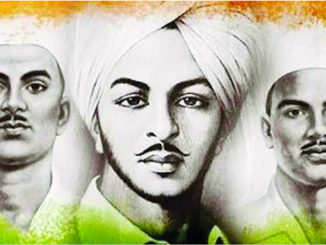
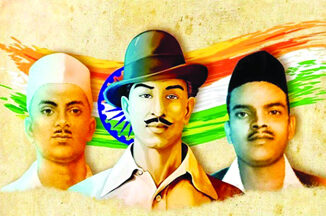
    Shaheed Diwas, also known as Martyrs’ Day, is observed on March 23 every year in India to honor the sacrifices of Bhagat Singh, Sukhdev Thapar, and Shivaram Rajguru. These three young revolutionaries were executed by the British government on this day in 1931 for their relentless struggle against colonial rule. Their supreme sacrifice continues to inspire millions across the country and holds a significant place in India’s freedom movement.
    The day serves as a solemn reminder of the indomitable spirit and bravery of these young freedom fighters. Their unwavering commitment to the nation and fearless resistance against oppression have left an indelible mark on Indian history. Shaheed Diwas is not only a day of remembrance but also a day to reignite patriotism and acknowledge the contributions of numerous other unsung heroes who laid down their lives for India’s independence.
    Historical Background
    The Role of Bhagat Singh, Sukhdev, and Rajguru
    Bhagat Singh, Sukhdev Thapar, and Shivaram Rajguru were prominent members of the Hindustan Socialist Republican Association (HSRA), a revolutionary organization that sought to overthrow British rule through direct action and armed resistance. Their ideology was shaped by a deep sense of patriotism and a belief in socialism and equality.
    One of the most significant events that led to their execution was the assassination of John Saunders, a British police officer, in 1928. This act was carried out in retaliation for the brutal lathi charge on Lala Lajpat Rai during a protest against the Simon Commission. The trio, along with other revolutionaries, sought justice for Lajpat Rai’s death and wanted to send a strong message to the British government.
    In 1929, Bhagat Singh and Batukeshwar Dutt threw bombs in the Central Legislative Assembly in Delhi to protest against the oppressive laws of the British. They were arrested immediately, and Bhagat Singh used his trial as a platform to advocate for India’s independence, gaining massive public support. However, despite widespread protests and appeals, Bhagat Singh, Sukhdev, and Rajguru were sentenced to death and hanged in Lahore Central Jail on March 23, 1931.
    The Impact of Their Execution
    The execution of Bhagat Singh and his comrades sparked widespread outrage across India. They became martyrs in the eyes of the public, and their sacrifice fueled the nationalist movement. Their ideas and writings continued to inspire future generations, reinforcing the idea that independence was worth any price.
    Significance of Shaheed Diwas
    Shaheed Diwas is a day of reflection and inspiration. The sacrifices of Bhagat Singh, Sukhdev, and Rajguru remind the nation of the cost of freedom and the responsibilities that come with it. The day holds multiple dimensions of significance:
    Remembering the Sacrifices of Freedom Fighters
    The day honors not only Bhagat Singh, Sukhdev, and Rajguru but also countless other freedom fighters who gave their lives for India’s independence. It is an occasion to pay tribute to their courage, commitment, and patriotism.
    Inspiring Patriotism in the Youth
    Bhagat Singh and his comrades were young when they embraced the path of revolution. Their story serves as an inspiration to the younger generation, instilling in them the values of nationalism, courage, and selflessness.
    Highlighting Revolutionary Ideologies
    Shaheed Diwas also brings attention to the revolutionary ideologies of Bhagat Singh and his peers. Their belief in socialism, equality, and justice continues to be relevant in modern India, inspiring political and social movements.
    Strengthening National Unity
    By commemorating the sacrifices of these martyrs, Shaheed Diwas fosters a sense of unity and collective pride among Indians. It serves as a reminder that independence was achieved through the combined efforts of people from different regions and backgrounds.
    Key Events and Observances
    Tributes and Memorial Ceremonies
    On Shaheed Diwas, various events are organized across the country to pay tribute to Bhagat Singh, Sukhdev, and Rajguru. Leaders, activists, and citizens gather at memorials such as the Hussainiwala National Martyrs Memorial in Punjab and the Shaheed Smarak in Delhi.
    Educational Programs and Awareness Campaigns
    Schools, colleges, and universities hold seminars, debates, and exhibitions to educate students about the sacrifices of freedom fighters. Documentaries and films on Bhagat Singh’s life are also screened to create awareness.
    Processions and Public Gatherings
    Several cities witness processions where people march with slogans, banners, and posters to honor the legacy of the martyrs. These gatherings reinforce the values of patriotism and national pride.
    Social Media Tributes
    In the digital era, Shaheed Diwas is widely observed on social media platforms. Citizens, celebrities, and political leaders share quotes, images, and messages to commemorate the day and spread awareness.
    Lesser-Known Facts
    – Bhagat Singh’s Love for Literature: Bhagat Singh was an avid reader and writer. While in jail, he read books on Marxism, Leninism, and revolutionary ideologies, which shaped his thoughts on socialism.
    – No Last Wish: Unlike most prisoners sentenced to death, Bhagat Singh, Sukhdev, and Rajguru did not express any last wish. They faced their execution with a smile, singing patriotic songs till their last breath.
    – Refused to Appeal for Mercy: Many political leaders and activists requested clemency for Bhagat Singh, but he refused to seek a pardon, believing that his death would inspire future generations.
    – Faked Identity to Evade Arrest: Before becoming a prominent revolutionary, Bhagat Singh once shaved his beard and cut his hair to avoid being recognized by the British police after the assassination of John Saunders.
    Influence of Bhagat Singh’s Ideology in Modern India
    Even after more than 90 years, Bhagat Singh’s thoughts on freedom, equality, and social justice continue to resonate. His ideas have influenced various political and social movements, advocating for:
    – Education for All: Bhagat Singh believed that ignorance and illiteracy were barriers to true freedom. His advocacy for education as a means to empowerment remains relevant.
    – Elimination of Caste and Class Discrimination: He envisioned an India free from casteism and economic disparity, inspiring movements that fight for equality.
    – Empowerment of Youth: His belief in the potential of young people encourages youth participation in politics, social change, and national development.

    Bhagat Singh: The Icon of revolution

    Famous quotes of Bhagat Singh

    – “Inquilab Zindabad!” (Long live the revolution!)
    – “Revolution is an inalienable right of mankind. Freedom is an imperishable birthright of all.”
    – “Merciless criticism and independent thinking are the two necessary traits of revolutionary thinking.”
    – “The sword of revolution is sharpened on the whetting stone of ideas.”
    – “They may kill me, but they cannot kill my ideas. They can crush my body, but they will not be able to crush my spirit.”
    – “Lovers, lunatics, and poets are made of the same stuff.” (Implying that revolutionaries, like lovers and poets, are driven by deep passion.)
    – “I am full of ambition and hope and charm of life. But I can renounce everything at the time of need.”
    – “I am an atheist and I have my own ideology. The concept of God in itself is a product of human weakness.”
    – “If there is an afterlife, I shall gladly accept all punishment for my sins. But till then, I shall live by reason.”
    – “Any man who stands for progress has to criticize, disbelieve, and challenge every item of the old faith.”
    – “I deny the very existence of that Almighty Supreme Being.” (From his famous essay, Why I Am an Atheist)
    – “It is beyond the power of any man to kill ideas. Ideas do not perish.”
    – “The sanctity of law can be maintained only so long as it is the expression of the will of the people.”

    Shivaram Rajguru: The Brave Marksman of India’s Freedom Struggle


    Sukhdev Thapar: The Fearless Organizer

    Sukhdev Thapar was a valiant revolutionary who played a crucial role in India’s struggle for independence. Born on May 15, 1907, in Ludhiana, Punjab, Sukhdev was an ardent nationalist who dedicated his life to the fight against British colonial rule. As a core member of the Hindustan Socialist Republican Association (HSRA), he worked tirelessly to mobilize young revolutionaries and orchestrate impactful resistance against British oppression. His fearless spirit, ideological commitment, and exceptional organizational acumen made him an indispensable part of India’s revolutionary movement.
    Early Life and Path to Revolution
    Sukhdev grew up in a politically charged environment that fueled his nationalist aspirations. His uncle, Lala Achintram, was actively involved in the freedom struggle, which had a profound impact on him from a young age. Sukhdev was an avid reader and was deeply influenced by the revolutionary thoughts of Bal Gangadhar Tilak, Bipin Chandra Pal, and Aurobindo Ghosh. While studying at National College in Lahore, he became deeply involved in revolutionary activities, eventually joining HSRA. His role within the organization was pivotal in mentoring young revolutionaries and expanding the movement’s reach.
    Sukhdev played a key role in organizing the Nau Jawan Bharat Sabha, a youth organization aimed at instilling nationalist sentiments among Indian youth. He was also instrumental in promoting socialist ideologies among revolutionaries, believing that true independence could only be achieved through social and economic justice.
    Role in the Freedom Struggle
    Sukhdev was instrumental in planning and executing several key actions against British rule. He was a close associate of Bhagat Singh and Shivaram Rajguru, with whom he participated in the assassination of British police officer J.P. Saunders on December 17, 1928. This attack was in retaliation for the death of Lala Lajpat Rai, who was brutally assaulted by British police while protesting the Simon Commission.
    Apart from his involvement in direct action, Sukhdev played a critical role behind the scenes. He was responsible for training new recruits in revolutionary ideologies, weapons handling, and strategic planning. He also managed HSRA’s secret printing press, which distributed nationalist literature to inspire the masses and propagate anti-colonial sentiments. His efforts helped strengthen the underground movement, ensuring a steady supply of trained revolutionaries dedicated to the cause of independence.
    Arrest and Martyrdom
    Following his active involvement in the freedom movement, Sukhdev was arrested in 1929 along with several other HSRA members. He was subjected to rigorous interrogation and torture but refused to betray his comrades or compromise his ideals. During his trial in the Lahore Conspiracy Case, he remained defiant and unrepentant, expressing his unwavering commitment to India’s independence.
    After a prolonged trial, he, along with Bhagat Singh and Rajguru, was sentenced to death in what became known as the Lahore Conspiracy Case. The execution was initially scheduled for March 24, 1931, but the British authorities, fearing public outrage, carried it out a day earlier on March 23, 1931, in Lahore Central Jail. The hanging of the three young revolutionaries sent shockwaves across the nation and ignited widespread protests against British rule.
    Legacy and Inspiration
    Sukhdev Thapar’s sacrifice remains a powerful symbol of courage, determination, and unwavering patriotism. His fearless commitment to the cause of freedom continues to inspire generations of Indians. His legacy is honored across the country, with numerous educational institutions, roads, and memorials dedicated to his memory.

  • Bhagat Singh: A revolutionary hero of the Indian independence movement

    Bhagat Singh: A revolutionary hero of the Indian independence movement

    Bhagat Singh was an Indian revolutionary freedom fighter who was hanged to death by British colonisers at the age of 23 years. Fondly known as ‘Shaheed (martyr) Bhagat Singh’, he is considered a national hero of India’s freedom struggle against colonial rule. As a teenager, Bhagat Singh popularised the slogan of ‘Inquilab Zindabad’ which eventually became the catchphrase of the Indian independence movement.
    Bhagat Singh’s Life
    Bhagat Singh was born in a Sikh family in Banga village of Faisalabad district (previously called Lyallpur), now in Pakistan’s Punjab province, on 27 September 1907. As his family was deeply inspired by nationalism, he too became actively involved in the country’s freedom movements.
    He got admitted to the National College in Lahore, where he studied European revolutionary movements. When his parents tried to get him married, Bhagat Singh left home for Kanpur. In 1926, Bhagat Singh established the ‘Naujavan Bharat Sabha (Youth Society of India) and joined the Hindustan Republican Association (later known as Hindustan Socialist Republican Association). During that time, he met many anti-colonial activists.
    In December 1928, Bhagat Singh, along with Sukhdev and Rajguru, planned to avenge the death of Indian nationalist leader Lala Lajpat Rai and plotted to assassinate the Superintendent of Police James Scott in Lahore.
    However, in a case of mistaken identity, John Saunders, the Assistant Superintendent of Police was shot. To avoid being recognised and arrested for the crime, Bhagat Singh escaped from Lahore to Calcutta after shaving his beard and cutting his hair.
    In April 1929, Singh and Batukeshwar Dutt bombed the Central Assembly Hall in Delhi, and shouted the slogan of “Inquilab Zindabad!”. He was later arrested after the incident.
    Execution of Bhagat Singh
    Bhagat Singh and his revolutionary comrades Rajguru and Sukhdev were hanged by the British on March 23, 1931, in the Lahore Conspiracy case.
    Bhagat Sing’s Revolutionary Activities
    Bhagat Singh was a brave and passionate freedom fighter who took part in several revolutionary activities during India’s struggle for independence from British rule.
    Hindustan Socialist Republican Association (HSRA)
    Bhagat Singh joined this group of like-minded young revolutionaries who believed in using force to overthrow British rule and bring freedom to India.
    Assembly Bombing: Bhagat Singh, along with his associates, threw non-lethal smoke bombs in the Central Legislative Assembly in Delhi in 1929. They did this to protest against repressive laws and show their defiance to the British.
    Lahore Conspiracy Case
    Bhagat Singh and his comrades were arrested after the assembly bombing. They were put on trial in what became known as the Lahore Conspiracy Case, where they boldly declared their revolutionary aims and were willing to face the consequences.
    Hunger Strike
    While in jail, Bhagat Singh and his fellow prisoners went on a hunger strike to demand better treatment and rights for political prisoners. Their courage and determination drew widespread support.
    Slogans and Writings
    Bhagat Singh used his writings and slogans to inspire others and raise awareness about India’s fight for freedom. His slogan “Inquilab Zindabad” (Long Live the Revolution) became iconic.
    Martyrdom
    Bhagat Singh, along with Rajguru and Sukhdev, was sentenced to death for his involvement in the killing of a British police officer. Despite the option of saving his life by renouncing violence, he chose to embrace martyrdom, becoming a symbol of sacrifice for the nation’s freedom.
    Bhagat Singh’s revolutionary activities demonstrated his unwavering commitment to India’s independence and inspired countless others to join the struggle. His bravery and sacrifice continue to be celebrated, reminding us of the power of determination in the pursuit of justice and freedom.
    Bhagat Singh’s Ideals and Beliefs
    Bhagat Singh had strong ideals and beliefs that guided his actions during India’s struggle for independence. Here’s an explanation of his key ideals and beliefs:
    Patriotism
    Bhagat Singh had deep love for his country, India. He believed in the idea of a free and independent India where every citizen could live with dignity and pride. He was willing to sacrifice everything for his homeland.
    Secularism
    Bhagat Singh believed in a united and secular India, where people of all religions and backgrounds could coexist peacefully. He rejected any form of discrimination or religious division.
    Socialism
    Bhagat Singh was influenced by socialist ideas. He believed in a society where wealth and resources were shared more equally among the people, reducing poverty and inequality.
    Non-Violence vs. Revolution
    While he admired Mahatma Gandhi’s philosophy of non-violence, Bhagat Singh felt that, in certain situations, a more forceful approach was needed to gain independence. He believed in using revolutionary means to overthrow British rule.
    Youth Empowerment
    Bhagat Singh had great faith in the power of young people to bring about change. He encouraged the youth of India to actively participate in the freedom struggle and take charge of their nation’s destiny.
    Sacrifice
    Bhagat Singh believed that freedom came with a price. He was willing to sacrifice his life for the greater good of India. He famously said, “It is easy to kill individuals but you cannot kill the ideas.”
    Fearlessness
    He displayed remarkable courage and fearlessness in the face of adversity. He was unafraid of the consequences of his actions and remained steadfast in his commitment to the cause.
    Bhagat Singh’s ideals and beliefs continue to inspire people today, reminding us of the importance of patriotism, equality, and the willingness to stand up for what is right in the pursuit of a just and free society.
    Bhagat Singh Quotes & Slogans
    Bhagat Singh’s quotes and slogans are powerful words that continue to inspire and remind us of his unwavering dedication to India’s freedom struggle.
    “Inquilab Zindabad!” – This iconic slogan, which translates to “Long Live the Revolution,” was often used by Bhagat Singh to inspire the masses in their fight for independence.
    “They may kill me, but they cannot kill my ideas. They can crush my body, but they will not be able to crush my spirit.” – Bhagat Singh emphasized the enduring power of his ideas and convictions.
    “It is easy to kill individuals but you cannot kill the ideas.” – He believed that while individuals could be silenced, the ideas of freedom and justice would persist. “Revolution is an inalienable right of mankind. Freedom is an imperishable birthright of all.” – Bhagat Singh articulated the belief that every person has the inherent right to strive for freedom and justice.
    “I am a man, and all that affects mankind concerns me.” – He expressed his deep concern for the welfare of all humanity, emphasizing the universal nature of his cause.
    “Merciless criticism and independent thinking are the two necessary traits of revolutionary thinking.” – Bhagat Singh stressed the importance of critical thinking and independent analysis in pursuing revolutionary goals.
    “The sword of revolution is sharpened on the whetting-stone of ideas.” – He highlighted the role of ideas and ideology as the driving force behind revolutionary actions.
    Bhagat Singh Legacy
    Bhagat Singh’s legacy is a profound and enduring one, deeply rooted in his fearless commitment to the cause of India’s independence and his unwavering dedication to justice and equality. This legacy continues to inspire not only Indians but people worldwide.
    At the heart of Bhagat Singh’s legacy is his unparalleled bravery and willingness to sacrifice his life for the greater good. He refused to bow down to British oppression and colonial rule, even when faced with the gravest of consequences. His sacrifice is a reminder of the extraordinary lengths to which individuals can go when they passionately believe in a cause.
    Bhagat Singh’s legacy is also deeply intertwined with his ideological beliefs. He was a fervent advocate of socialism, secularism, and equality. His vision for an independent India was one where every citizen, regardless of their religion or background, would enjoy equal rights and opportunities. This vision continues to resonate with the principles of democracy and justice.
    Bhagat Singh famous slogan, “Inquilab Zindabad” (Long Live the Revolution), remains a rallying cry for those who strive for social change and justice. It embodies the spirit of resistance against oppression and tyranny. Bhagat Singh’s writings and speeches, which articulated his vision for a just society, continue to inspire scholars, activists, and thinkers.
    The impact of Bhagat Singh’s legacy extends to various aspects of Indian culture and society. His birth anniversary, observed on September 28th, is celebrated across the nation as a day of remembrance and reflection. Monuments, memorials, and museums dedicated to his memory stand as a testament to his enduring influence. Films, literature, and documentaries continue to be made about his life, ensuring that his story is passed down to new generations.
    Moreover, Bhagat Singh’s legacy has inspired countless individuals to stand up against injustice, tyranny, and inequality not only in India but around the world. His sacrifice and unwavering dedication serve as a beacon of hope for those who believe in the power of ordinary individuals to bring about extraordinary change.
    In conclusion, Bhagat Singh’s legacy is a testament to the indomitable spirit of a young revolutionary who dared to challenge the mightiest empire of his time. His principles of justice, equality, and freedom remain relevant, and his memory continues to ignite the flames of inspiration in the hearts of those who aspire to create a better and more just world. Bhagat Singh’s legacy is not just a part of history; it is a living force that continues to shape the aspirations and dreams of a nation and its people.

  • Bhagwant Mann sworn in as 18th Chief Minister of Punjab

    Bhagwant Mann sworn in as 18th Chief Minister of Punjab

    Punjab Governor Banwarilal Purohit (right) administering the oath of office and secrecy to Bhagwant Mann at Khatkar Kalan. Khatkar Kalan (TIP): Punjab Governor Banwarilal Purohit administered the oath of office and secrecy to Bhagwant Mann in the swearing-in ceremony  at Khatkar Kalan, the ancestral village of legendary freedom fighter Bhagat Singh in Punjab’s Shaheed Bhagat Singh (SBS) Nagar district. The venue was  brimming with ‘basanti’ turbans and dupattas,

    Mann, the 18th CM of Punjab,  took oath in Punjabi. Besides newly-elected AAP MLAs, Delhi Chief Minister & Aam Aadmi Party national convener Arvind Kejriwal, deputy chief minister Manish Sisodia, and other leaders wearing yellow turbans took part in the ceremony.

    The AAP romped home winning 92 seats in the 117-member Punjab Assembly, decimating the Congress and the SAD-BSP combine.

    Besides the newly-elected AAP MLAs, Delhi Chief Minister Arvind Kejriwal, deputy chief minister Manish Sisodia, Delhi minister Satyendar Jain, and other leaders were also present in bright yellow turbans.

    The 48-year-old Mann, who took the oath in Punjabi, also delivered a brief address after the ceremony.

    In his first speech after becoming the chief minister, Mann assured the people of the state that his party’s government in Punjab will work to address issues like unemployment, corruption and farmers’ plight.

    Starting his speech after the Governor left, the new Chief Minister said: “Bhagat Singh had a dream of taking this freedom to every household. AAP is fighting that battle. You have supported us. I will require many lifetimes to pay off the debt of this love that you have showered over me,” he said from the stage.

    Kejriwal, Delhi deputy CM Manish Sisodia and other party leaders, who were seated on a separate stage on Mann’s left, were seen applauding as the new CM took oath and later spoke. The newly-elected 91 AAP MLAs were also seated on another stage to Mann’s right. Mann and Governor were on the podium in the middle. AAP’s Punjab affairs in-charge Jarnail Singh and co-incharge Raghav Chadha also attended the event. Dressed in a white kurta-pyjama, blue blazer and a ‘basanti’ turban, Mann sounded a note of caution as he asked AAP supporters to exercise restraint.

    “I am not going to speak against anyone today. I want to tell you too that we do not have to be arrogant. We do not have to go to anyone’s house and challenge him. We do not have to say that we are the winners. Those who did not vote for us, we are their Chief Minister also. We are their government too. It is democracy. Everybody has the right. I should not get this news that these people are arrogant,” said Mann.

    He reiterated that the new government will start working without losing any time.

    “We will work. We have to start working from today. We have already wasted 70 years. We have no time to waste anymore,” he said.

    Later, in the evening, Mann assumed charge of the office at the Punjab Civil Secretariat.

    During his speech after taking oath, Mann also touched upon the issue of youth of Punjab migrating to other countries for better opportunities and said that this trend has to be reveresed. He assured the people of the state that his party’s government in Punjab will work to address issues like unemployment, corruption and farmers’ plight.

    “I want to share a couplet by Bhagat Singh – ‘Ishq karna sab ka paidayashi haq hai, kyo na iss baar vatan ki sar-zameen ko mehboob bana liya jaye (Loving is everyone’s birthright. Why not choose the nation as our beloved this time)’. We will change the state like Delhi. People will come from abroad to take selfies at our schools. You people created history. Punjab’s name was written in golden words on March 10. It will be written in the school books that February 20, 2022, was the day when people started voting without fear or greed of inducements,” he said.

    Saying that he paid obeisance to the martyrs and sought courage and wisdom to carry out his task as CM, Mann said: “I am not even the dust of their feet. But when public supports you, then you can expect anything from a person.”

    He also thanked Kejriwal for changing country’s politics by creating a political party out of an “aandoolan”.

    He ended his speech, saying: “Haqumat who karate hain jinka dilon par raj hota hai, yun kehne ko toh murge ke sarr pe phi taj hota hai (Real rulers are those who rule over people’s hearts, otherwise even a rooster has a ‘crown’ over its head)’.”

    A number of singers and artists, including Gurdas Mann, Karamjit Anmol, singer-turned-politician and Congress MP Mohammad Sadique, and Amar Noorie, were present at the event.

    There was heavy police presence at the the venue to manage lakhs who started descending at Khatkar Kalan to attend the event from morning itself. The event scheduled to start at 12.30 pm, began at 1.25 pm.

    Mann had invited the people of the state to attend his swearing-in ceremony, saying the three crore people of Punjab will also take oath with him.

    Elaborate arrangements were made for the ceremony which was attended by AAP supporters from various parts of the state. Almost all were seen wearing yellow – in form of dupattas or turbans. While many arrived in buses, few also cycled to the venue.

    The atmosphere was surcharged with enthusiasm as the people raised slogans of ‘Inquilab Zindabad’ (long live revolution) and ‘Bole So Nihaal’.

    In a tweet, the PM said: “Congratulations to Shri @BhagwantMann Ji on taking oath as Punjab CM. Will work together for the growth of Punjab and welfare of the state’s people.”

    Union Defence Minister Rajnath Singh too tweeted his best wishes to Mann for his tenure ahead.

    Tamil Nadu CM M K Stalin and his Odisha counterpart Naveen Patnaik, Samajwadi Party president Akhilesh Yadav were also among those who congratulated the new Punjab CM.      Source: The Indian Express and Agencies

  • Shaheed Diwas: Remembering Bhagat Singh, Sukhdev and Rajguru

    Shaheed Diwas: Remembering Bhagat Singh, Sukhdev and Rajguru

    Shaheed Diwas or Martyrs’ Day is observed on March 23 every year throughout the country. It marks the death anniversary of young freedom fighters Bhagat Singh, Sukhdev Thapar and Shivaram Rajguru. On March 23 in 1931, the three were hanged to death by Britishers. The sons of India were sentenced to death in the Lahore conspiracy case and ordered to be hanged on March 24, 1931. However, the schedule was moved forward by 11 hours and they were hanged on March 23, 1931 at 7:30 pm.

    After Lala Lajpat Rai’s death in November 1928, Bhagat Singh, Rajguru, Sukhdev and others vowed to take revenge. Rai was a prominent leader of India’s freedom movement who had inspired many young Indians to join the quest for freedom.

    In order to teach the ruthless Britishers a lesson, the three planned to execute James A Scott. Scott was the Superintendent of Police during the British rule and was infamous for his cruelty.

    It was Scott who had ordered the police to lathi charge the protesters and personally assaulted Rai, causing life threatening injuries. The plan was to send a message to the British forces that we will not bow down anymore and are capable of taking action.

    However, it was John P Saunders, an Assistant Superintendent of Police, who was killed by mistake. The three freedom fighters were charged for murder of Saunders.

    Bhagat Singh, Rajguru and Sukhdev were only 23 years old when they were hanged for executing Saunders. Their contribution in the freedom struggle is immense and will continue to inspire generations to fight for their rights.

    Bhagat Singh

    Bhagat Singh was born on September 27, 1907, in the village of Banga near Lyallpur district in Punjab, British India. He was an Indian freedom fighter who is considered to be one of the most influential revolutionaries of the Indian independence movement. Bhagat Singh joined the Hindustan Republican Association (HRA) at a young age and became involved in revolutionary activities. He participated in several acts of sabotage against British institutions, including an attempt to bomb the Central Legislative Assembly in Delhi. In 1929, he and two other activists were convicted of assassinating John Saunders, a British police officer. Singh was executed by hanging on March 23, 1931, at Lahore jail at the age of 23. Despite his short life, Bhagat Singh left a lasting legacy in the struggle for Indian independence. He is revered by many as a martyr and symbol of resistance to British colonialism in India. His example continues to inspire new generations of activists worldwide.

    Bhagat Singh had a great impact on the Indian independence movement due to his participation in various activities that led India towards its freedom from colonial rule. His involvement with revolutionary groups resulted in him being jailed for various crimes, but he continued his activism even behind bars through writing and publishing newspapers aimed at spreading nationalist sentiments among people all over India. He was executed by hanging when he was 23 years old after leading an unsuccessful plot to kill a British police officer who ordered a lathi charge on Lala Lajpat Rai, who was protesting colonial policies at the time. This murder had a major impact on Indian society and brought Bhagat Singh to national attention as a revolutionary hero of India’s independence movement.

    Rajguru

    Shivaram Rajguru (1908-1931) was a great Indian freedom fighter who played a major role in the India’s struggle for Independence. He is amongst those great Indian revolutionaries who sacrificed their lives for the freedom of country. His full name was Hari Shivaram Rajguru and was born into a Deshastha Brahmin family. Since his childhood days, he had witnessed the brutal atrocities that the Imperial British Raj inflicted on India and her people. This instilled within him a strong urge to join hands with the revolutionaries in a bid for India’s freedom struggle.

    In the days of the Indian Freedom Movement, the Hindustan Socialist Republican Army (HSRA) was an active force working against the British. Their main motive was to strike fear into the heart of the British regime. They simultaneously spread awareness amongst the people. They made them take notice of the growing domestic uprising when they dealt crucial blows with attacks like in the Lahore Conspiracy Case (December 18, 1928) and the bombing of the Central Assembly Hall in New Delhi (April 8, 1929).

    The protest against the Simon Commission in October 1928 saw the British police lathi-charge the protestors, severely injuring veteran leader Lala Lajpat Rai. Owing to the excessive beating, Lala succumbed to his injuries, which thus instilled revenge in the hearts of the revolutionaries. On December 18, 1928, in Ferozepur, Lahore, a planned retaliation was enforced that led to the assassination of Deputy Superintendent of Police, J.P. Saunders. Shivaram Rajguru, along with Sukhdev Thapar, was accomplice of the legendary Bhagat Singh who spearheaded the attack. Rajguru then went into hiding in Nagpur. Whilst taking shelter in the house of an RSS worker, he even met Dr. K. B. Hedgewar. On his travel to Pune, however, Shivaram was finally arrested. Bhagat Singh, Shivaram Rajguru and Sukhdev Thapar were then convicted of their crime and sentenced to death.

    Sukhdev

    Sukhdev was a famous Indian revolutionary who played a major role in the India’s struggle for Independence. He is amongst those great Indian freedom fighters who sacrificed their lives for the freedom of their country. His full name is Sukhdev Thapar and he was born on 15th May, 1907.

    His ancestral house is in Naughara Mohalla of Ludhiana city, Punjab, India. His father’s name was Ram Lal. Since his childhood days, Sukhdev had witnessed the brutal atrocities that the Imperial British Raj had inflicted on India, which then led him to join the revolutionaries, vowing to set India free from the shackles of British dominion.

    Sukhdev Thapar was a member of the Hindustan Socialist Republican Association (HSRA), and organized revolutionary cells in Punjab and other areas of North India. A devoted leader, he even went on to educate the youth at the National College in Lahore, greatly inspiring them about India’s glorious past. He along with other renowned revolutionaries started the ‘Naujawan Bharat Sabha’ at Lahore that was an organization involved in various activities, mainly gearing the youth for the freedom struggle and putting an end to communalism. Sukhdev himself took active part in several revolutionary activities like the ‘Prison hunger strike’ in 1929; however, he would always be remembered in the chronicles of the Indian Freedom Movement for his daring yet courageous attacks in the Lahore Conspiracy Case (18th December, 1928), that shook the very foundation of the British Government. Sukhdev was the accomplice of Bhagat Singh and Shivaram Rajguru, who were involved in the assassination of Deputy Superintendent of Police, J.P. Saunders in 1928, thus avenging the death of veteran leader, Lala Lajpat Rai, owing to excessive police beating in the Conspiracy case. After the Central Assembly Hall bombings in New Delhi (8th April, 1929), Sukhdev and his accomplices were arrested and convicted of their crime, facing the death sentence as verdict.

  • Lesser known heroes who sacrificed their lives for country’s freedom

    Lesser known heroes who sacrificed their lives for country’s freedom

    Bhagat Singh, Azad, Rajguru, Sukhdev, Ram Prasad Bismil, Gandhi, and Bose are few names that are synonymous with our struggle for freedom from the British. We owe our freedom to them. But apart from these hallowed names, there were thousands of others who too sacrificed their lives on the path of freedom. But unlike these big names, history didn’t do justice with them. Many of them have been forsaken by history and most of us don’t even know about them. This is an attempt to give those souls a tribute because their contribution to our freedom is by no means lesser than those who got their due.

    Kartar Singh Sarabha

    We all love Bhagat Singh, but only a handful know Kartar Singh Sarabha who Bhagat Singh himself considered his guru. Kartar Singh Sarabha was the main architect of the Ghadar revolution which aimed to incite a mutiny in British Indian Army during the thick of World War-I. Sarabha sought to take advantage of the war to uproot the British from India. Born in Ludhiana, Punjab in 1896, Sarabha went to the US for studies and established Ghadar Party in 1913.

    In 1913, the party came out with a paper called ‘Ghadar’ which came out in languages like Pushto, Hindi, Punjabi, Bengali, Urdu, and Gujarati. Sarabha aimed to start a mutiny within British Indian Army and over 20 thousand Ghadar activists travelled to India from different countries of the world put plans in the motion. But the betrayal of an insider resulted in the arrested Sarabha and a few more. After the trial, the 19-year-old, Kartar Singh Sarabha was hanged on November 16, 1915, in Lahore central jail, the same jail where Bhagat Singh, Rajguru and Sukhdev were hanged.

    Raja Mahendra Pratap

    A royalty of Hathras, Aligarh, Raja Mahendra Pratap was one of the first Marxist revolutionaries in the country. In fact, Pratap was the president of first President of the Provisional Government of India formed in Afghanistan.  In 1906, despite against the wishes of the family, he went to Calcutta to attend the Congress session and met several leaders of the Swadeshi movement.

    But soon he realised that Congress won’t be able to help his cause of freedom. Therefore, he moved out of India in 1915 and via Switzerland, entered Germany. With help of Indian members of the Berlin Committee, he met Kaiser Wilhelm-II, the German emperor who promised him assistance to invade India via Afghan border. Pratap who had family relations with Jat Sikh states of Jind, Nabha and Patiala wanted to invade India through Afghanistan and later to use these states to crush the British in India.

    But with Germany’s defeat in WW-I, his dream of invading India didn’t materialise. Pratap also tried to connect with Russians after Germans forsake him and his peers. He met Lenin as well.  In 1932, Pratap was also nominated Nobel Prize in 1932. N.A. Nilsson, his nominator, said about him- “Pratap gave up his property for educational purposes, and he established a technical college at Brindaban. In 1913 he took part in Gandhi’s campaign in South Africa. He travelled around the world to create awareness about the situation in Afghanistan and India. In 1925 he went on a mission to Tibet and met the Dalai Lama. He was primarily on an unofficial economic mission on behalf of Afghanistan, but he also wanted to expose the British brutalities in India. He called himself the servant of the powerless and weak.” Today majority of land acquired by Aligarh Muslim University is donated by Pratap and his family.

    Alluri Sitarama Raju

    Born in a prosperous Kshatriya family in Andhra Pradesh in 1887, Raju left everything for the freedom struggle. In 1922-24, he led a failed yet important  ‘Rampa Rebellion’ with the help of tribals. Raju was referred, “Manyam Veerudu” (Hero of the Jungles) by the local people. He took up the cause of the tribal people in the Agency areas, who were being harassed by British officials under the Forest Act, and led an armed rebellion against the British forces. Raju was trapped and killed by the British in the jungle in 1924.

    Tirot Singh

    Tirot Singh was one of the chiefts of Khasi people in the early 18th century who fought against the Britsh who tried to take control over the Khasi hills. Though the year of his birth is unknown, Tirot Singh fought the British in 1835 when British tried to acquire Khasi hills to extend their possession on Lower Assam areas.

    Actually, the British wanted to construct a road through this area to connect Guwahati with Sylhet to save weeks of travel and malarious country. But Singh and his tribe objected the British occupation of the area and thus British tried to crushed their opposition which resulted in a bloody war between Khasi tribes and the British in which Singh sacrificed his life defending his tribe and land.

    Pingali Venkayya

    Venkaya was the man who designed the Indian national flag.  Before independence, many flags were designed and used by different groups and in this process, Venkaya designed one version of flag for Indian National Congress  which later became Indian flag after minor alterations post-Independence

    According to The Hindu, “Pingali Venkayya was an authority in geology, agriculture and also an educationist who set up an educational institution in Machilipatnam. He, however, died in poverty in 1963 and was largely forgotten by the society and by his own party, the Congress.” A postage stamp was issued to commemorate him in 2009 and in 2011 it was proposed that he be posthumously awarded the Bharat Ratna. The outcome of that proposal is, however, not known.

    Tanguturi Prakasam

    Not many people know about this Andhra Kesari (Lion of Andhra). Prakasam was first the chief minister of Madras presidency and then chief minister in Andhra state. He started as a lawyer but gave up practice in 1921 to participate in the freedom movement.  He rose to fame in 1928 during the protest against Simon Commission in Madras.  The police had issued orders of shooting people in some areas. But  Prakasam didn’t fear the orders and faced police by tearing open his shirt and daring police to shoot at him. This lone act of defiance won him the title of Andhra Kesari.

    Veerapandiya Kattabomman

    Almost 60 years before the rebellion of 1857, Kattabomman rebelled against the British and refused to pay taxes to them.As a chieftain of Palyekar community in the 18th century, Kattabomman waged a war against the British to protect his lands. He too died in the war against the British.

    The Trio of Badal, Dinesh and Benoy

    Bengal had given many freedom fighters and these three were also from there. They are known for their attack on the Dalhousie Square in Kolkata. Much like Bhagat Singh and his friends killed Saunders, the trio killed Col NS Simpson Inspector General of Prisons who was known for his atrocities on the prisoners. The trio of Badal Gupta, Dinesh Gupta and Benoy Basu decided not only to kill him, but also to strike fear in the hearts of the British by attacking the secretariat building- the Writers’Building in Dalhousie Square, Kolkata. On 8 December 1930, trio dressed as Europeans went to Writers’ building and killed Simpson. None of the three revolutionaries wanted to be nabbed; therefore Badal consumed poison whereas Benoy and Dinesh shot themselves. Badal was taken to hospital where he died on 13 December.

    Surya Sen

    Surya Sen popularly known as master Da because he was school teacher was a Bengali Indian independence activist. Sen is known for 1930s Chittagong armoury raid. Sen drew his inspiration from nationalist ideals during his college days on 1916 in Behrampore. In 1918, he was selected as the president of INC’s Chittagong branch. Later after college, Sen started recruiting young men to fight the British. In the late 1920s, Sen decided to free Chittagong from the British and thus formed a group of revolutionaries who carried out the infamous Chittagong armoury raid.  On 18 April, Sen led a group which looted the armoury of the police. Their plan was to seize the arms and destroy the communication system of the city, thereby isolating Chittagong from rest of the British India. The group managed to loot the armoury, but failed to get the ammunition. The group hoisted the Indian National Flag on the premises of the armoury before escaping. But the British captured most of the revolutionaries but Sen in Jalalabad hills. Many died there while fighting the British.

    Sen managed to escape and remained absconding for three years before being captured in 1933. Before he was hanged by the British, he was tortured beyond the limit.

    Source: Indiatimes

  • The character of a nation is known by its martyrs

    The character of a nation is known by its martyrs

    A nation is known by its people. The strength of a nation is known by its heroes. The character of a nation is known by its martyrs. With the Martyrs Day (March 23), commemorating the martyrdom of the three patriots- Bhagat Singh, Rajguru and Sukhdev-four days away, the editorial board of The Indian Panorama decided to recall their sacrifices, as also of many others who sacrificed their lives to bring freedom to India.
    The brief description of the martyrs is meant to remind Indians that the freedom they enjoy today is the result of their sacrifices, and whatever tributes they may pay the patriots on this day, are not enough to repay them for their nobility.
    Let us know some of the martyrs of India.
    India’s freedom movement against the British was witness to an overwhelming participation of people throughout the country. From Kashmir to Kanyakumari, Assam to Gujarat, thousands of men and women fought together against atrocities of the British Raj. While many selflessly gave their lives to protect the dignity of their motherland, others got injured and embraced imprisonment. Let us know about a few brave freedom fighters from various parts of colonial India who gave their lives to achieve freedom for their beloved motherland:

    Mangal Pandey

    Mangal Pandey, (born July 19, 1827, Akbarpur, India—died April 8, 1857, Barrackpore), Indian soldier whose attack on British officers on March 29, 1857, was the first major incident of what came to be known as the Indian, or Sepoy, Mutiny (in India the uprising is often called the First War of Independence or other similar names).
    Pandey was born in a town near Faizabad in what is now eastern Uttar Pradesh state in northern India, although some give his birth place as a small village near Lalitpur (in present-day southwestern Uttar Pradesh). He was from a high-caste Brahman landowning family that professed strong Hindu beliefs. Pandey joined the army of the British East India Company in 1849, some accounts suggesting that he was recruited by a brigade that marched past him. He was made a soldier (sepoy) in the 6th Company of the 34th Bengal Native Infantry, which included a large number of Brahmans. Pandey was ambitious and viewed his profession as a sepoy as a stepping-stone to future success.
    Pandey’s career ambitions, however, came into conflict with his religious beliefs. While he was posted at the garrison in Barrackpore in the mid-1850s, a new Enfield rifle was introduced into India that required a soldier to bite off the ends of greased cartridges in order to load the weapon. A rumour spread that the lubricant used was either cow or pig lard, which was repugnant to Hindus or Muslims, respectively. The belief arose among the sepoys that the British had deliberately used the lard on the cartridges.
    There have been various accounts of the events of March 29, 1857. However, the general agreement is that Pandey attempted to incite his fellow sepoys to rise up against their British officers, attacked two of those officers, attempted to shoot himself after having been restrained, and eventually was overpowered and arrested. Some contemporary reports suggested that he was under the influence of drugs—possibly cannabis or opium—and was not fully aware of his actions. Pandey was soon tried and sentenced to death. His execution (by hanging) was set for April 18, but British authorities, fearing the outbreak of a large-scale revolt if they waited until then, moved the date up to April 8. Resistance to the use of Enfield cartridges later that month in Meerut led to the outbreak of a revolt there in May and the start of the larger insurrection.
    In India, Pandey has been remembered as a freedom fighter against British rule. A commemorative postage stamp with his image on it was issued by the Indian government in 1984. In addition, a movie and stage play that depicted his life both appeared in 2005.

    Rani Lakshmi Bai

    Lakshmi Bai, also spelled Laxmi Bai, (born c. November 19, 1835, Kashi, India—died June 17, 1858, Kotah-ki-Serai, near Gwalior), rani (queen) of Jhansi and a leader of the Indian Mutiny of 1857–58.
    Brought up in the household of the peshwa (ruler) Baji Rao II, Lakshmi Bai had an unusual upbringing for a Brahman girl. Growing up with the boys in the peshwa’s court, she was trained in martial arts and became proficient in sword fighting and riding. She married the maharaja of Jhansi, Gangadhar Rao, but was widowed without bearing a surviving heir to the throne. Following established Hindu tradition, just before his death the maharaja adopted a boy as his heir. Lord Dalhousie, the British governor-general of India, refused to recognize the adopted heir and annexed Jhansi in accordance with the doctrine of lapse. An agent of the East India Company was posted in the small kingdom to look after administrative matters.
    The 22-year-old queen refused to cede Jhansi to the British. Shortly after the beginning of the mutiny in 1857, which broke out in Meerut, Lakshmi Bai was proclaimed the regent of Jhansi, and she ruled on behalf of the minor heir. Joining the uprising against the British, she rapidly organized her troops and assumed charge of the rebels in the Bundelkhand region. Mutineers in the neighbouring areas headed toward Jhansi to offer her support.
    Under Gen. Hugh Rose, the East India Company’s forces had begun their counteroffensive in Bundelkhand by January 1858. Advancing from Mhow, Rose captured Saugor (now Sagar) in February and then turned toward Jhansi in March. The company’s forces surrounded the fort of Jhansi, and a fierce battle raged. Offering stiff resistance to the invading forces, Lakshmi Bai did not surrender even after her troops were overwhelmed and the rescuing army of Tantia Tope, another rebel leader, was defeated at the Battle of Betwa. Lakshmi Bai managed to escape from the fort with a small force of palace guards and headed eastward, where other rebels joined her.
    Tantia Tope and Lakshmi Bai then mounted a successful assault on the city-fortress of Gwalior. The treasury and the arsenal were seized, and Nana Sahib, a prominent leader, was proclaimed as the peshwa (ruler). After taking Gwalior, Lakshmi Bai marched east to Morar to confront a British counterattack led by Rose. Dressed as a man, she fought a fierce battle and was killed in combat.
    Subhas Chandra Bose

    Subhas Chandra Bose, byname Netaji (Hindi: “Respected Leader”), (born c. January 23, 1897, Cuttack, Orissa [now Odisha], India—died August 18, 1945, Taipei, Taiwan?), Indian revolutionary prominent in the independence movement against British rule of India. He also led an Indian national force from abroad against the Western powers during World War II. He was a contemporary of Mohandas K. Gandhi, at times an ally and at other times an adversary. Bose was known in particular for his militant approach to independence and for his push for socialist policies.
    The son of a wealthy and prominent Bengali lawyer, Bose studied at Presidency College, Calcutta (Kolkata), from which he was expelled in 1916 for nationalist activities, and the Scottish Churches College (graduating in 1919). He then was sent by his parents to the University of Cambridge in England to prepare for the Indian Civil Service. In 1920 he passed the civil service examination, but in April 1921, after hearing of the nationalist turmoils in India, he resigned his candidacy and hurried back to India. Throughout his career, especially in its early stages, he was supported financially and emotionally by an elder brother, Sarat Chandra Bose (1889–1950), a wealthy Calcutta lawyer and Indian National Congress (also known as the Congress Party) politician.
    Bose joined the noncooperation movement started by Mohandas K. Gandhi, who had made the Indian National Congress a powerful nonviolent organization. Bose was advised by Gandhi to work under Chitta Ranjan Das, a politician in Bengal. There Bose became a youth educator, journalist, and commandant of the Bengal Congress volunteers. His activities led to his imprisonment in December 1921. In 1924 he was appointed chief executive officer of the Calcutta Municipal Corporation, with Das as mayor. Bose was soon after deported to Burma (Myanmar) because he was suspected of connections with secret revolutionary movements. Released in 1927, he returned to find Bengal Congress affairs in disarray after the death of Das, and Bose was elected president of the Bengal Congress. Shortly thereafter he and Jawaharlal Nehru became the two general secretaries of the Indian National Congress. Together they represented the more militant, left-wing faction of the party against the more compromising, right-wing Gandhian faction.
    Vocal support for Gandhi increased within the Indian National Congress, meanwhile, and, in light of this, Gandhi resumed a more commanding role in the party. When the civil disobedience movement was started in 1930, Bose was already in detention for his associations with an underground revolutionary group, the Bengal Volunteers. Nevertheless, he was elected mayor of Calcutta while in prison. Released and then rearrested several times for his suspected role in violent acts, Bose was finally allowed to proceed to Europe after he contracted tuberculosis and was released for ill health. In enforced exile and still ill, he wrote The Indian Struggle, 1920–1934 and pleaded India’s cause with European leaders. He returned from Europe in 1936, was again taken into custody, and was released after a year.
    Meanwhile, Bose became increasingly critical of Gandhi’s more conservative economics as well as his less confrontational approach toward independence. In 1938 he was elected president of the Indian National Congress and formed a national planning committee, which formulated a policy of broad industrialization. However, this did not harmonize with Gandhian economic thought, which clung to the notion of cottage industries and benefiting from the use of the country’s own resources. Bose’s vindication came in 1939, when he defeated a Gandhian rival for reelection. Nonetheless, the “rebel president” felt bound to resign because of the lack of Gandhi’s support. He founded the Forward Bloc, hoping to rally radical elements, but was again incarcerated in July 1940. His refusal to remain in prison at this critical period of India’s history was expressed in a determination to fast to death, which frightened the British government into releasing him. On January 26, 1941, though closely watched, he escaped from his Calcutta residence in disguise and, traveling via Kabul and Moscow, eventually reached Germany in April.
    In Nazi Germany Bose came under the tutelage of a newly created Special Bureau for India, guided by Adam von Trott zu Solz. He and other Indians who had gathered in Berlin made regular broadcasts from the German-sponsored Azad Hind Radio beginning in January 1942, speaking in English, Hindi, Bengali, Tamil, Telugu, Gujarati, and Pashto.
    A little more than a year after the Japanese invasion of Southeast Asia, Bose left Germany, traveling by German and Japanese submarines and by plane, and arrived in May 1943 in Tokyo. On July 4 he assumed leadership of the Indian Independence Movement in East Asia and proceeded, with Japanese aid and influence, to form a trained army of about 40,000 troops in Japanese-occupied Southeast Asia. On October 21, 1943, Bose proclaimed the establishment of a provisional independent Indian government, and his so-called Indian National Army (Azad Hind Fauj), alongside Japanese troops, advanced to Rangoon (Yangon) and thence overland into India, reaching Indian soil on March 18, 1944, and moving into Kohima and the plains of Imphal. In a stubborn battle, the mixed Indian and Japanese forces, lacking Japanese air support, were defeated and forced to retreat; the Indian National Army nevertheless for some time succeeded in maintaining its identity as a liberation army, based in Burma and then Indochina. With the defeat of Japan, however, Bose’s fortunes ended.
    A few days after Japan’s announced surrender in August 1945, Bose, fleeing Southeast Asia, reportedly died in a Japanese hospital in Taiwan as a result of burn injuries from a plane crash.
    Lala Lajpat Rai

    Lala Lajpat Rai, (born 1865, Dhudike, India—died November 17, 1928, Lahore [now in Pakistan]), Indian writer and politician, outspoken in his advocacy of a militant anti-British nationalism in the Indian National Congress (Congress Party) and as a leader of the Hindu supremacy movement.
    After studying law at the Government College in Lahore, Lajpat Rai practiced at Hissar and Lahore, where he helped to establish the nationalistic Dayananda Anglo-Vedic School and became a follower of Dayananda Sarasvati, the founder of the conservative Hindu society Arya Samaj (“Society of Aryans”). After joining the Congress Party and taking part in political agitation in the Punjab, Lajpat Rai was deported to Mandalay, Burma (now Myanmar), without trial, in May 1907. In November, however, he was allowed to return when the viceroy, Lord Minto, decided that there was insufficient evidence to hold him for subversion. Lajpat Rai’s supporters attempted to secure his election to the presidency of the party session at Surat in December 1907, but elements favouring cooperation with the British refused to accept him, and the party split over the issues.
    During World War I, Lajpat Rai lived in the United States, where he founded the Indian Home Rule League of America (1917) in New York City. He returned to India in early 1920, and later that year he led a special session of the Congress Party that launched Mohandas (Mahatma) Gandhi’s noncooperation movement. Imprisoned from 1921 to 1923, he was elected to the legislative assembly on his release. In 1928 he introduced the legislative assembly resolution for the boycott of the British Simon Commission on constitutional reform. Shortly thereafter he died, after being attacked by police during a demonstration in Lahore.
    Bhagat Singh

    Bhagat Singh, (born September 27, 1907, Lyallpur, western Punjab, India [now in Pakistan]—died March 23, 1931, Lahore [now in Pakistan]), revolutionary hero of the Indian independence movement.
    Bhagat Singh attended Dayanand Anglo Vedic High School, which was operated by Arya Samaj (a reform sect of modern Hinduism), and then National College, both located in Lahore. He began to protest British rule in India while still a youth and soon fought for national independence. He also worked as a writer and editor in Amritsar for Punjabi- and Urdu-language newspapers espousing Marxist theories. He is credited with popularizing the catchphrase “Inquilab zindabad” (“Long live the revolution”).
    In 1928 Bhagat Singh plotted with others to kill the police chief responsible for the death of Indian writer and politician Lala Lajpat Rai, one of the founders of National College, during a silent march opposing the Simon Commission. Instead, in a case of mistaken identity, junior officer J.P. Saunders was killed, and Bhagat Singh had to flee Lahore to escape the death penalty. In 1929 he and an associate lobbed a bomb at the Central Legislative Assembly in Delhi to protest the implementation of the Defence of India Act and then surrendered. He was hanged at the age of 23 for the murder of Saunders.
    Sukhdev

    Sukhdev Thapar was a senior member of the Hindustan Socialist Republican Association. He participated in several actions alongside Bhagat Singh and Shivaram Rajguru, and was hanged by the British authorities on 23 March 1931 at the age of 23. Sukhdev participated in numerous revolutionary activities such as a prison hunger strike in 1929. He is best known for his assaults in the Lahore Conspiracy Case (1929–30). He is best remembered for his involvement in the assassination of Deputy Superintendent of Police, J. P. Saunders, on 17 December 1928, by Bhagat Singh and Shivaram Rajguru, undertaken in response to the violent death of the veteran leader Lala Lajpat Rai.
    Rajguru

    Shivaram Hari Rajguru was an Indian revolutionary from Maharashtra, known mainly for his involvement in the assassination of a British Raj police officer. He also fought for the independence of India and On 23 March 1931 he was hanged by the British government along with Bhagat Singh and Sukhdev Thapar.
    Chandra Shekhar Azad

    Chandra Shekhar Azad a close associate of Bhagath Singh in the freedom struggle was born in the year 1906. He is the most challenging and fearless Independence Fighters against the British Rulers. He was a part of the Hindustan Republican Association. After a fierce battle with British Soldiers and killing so many enemies he shot himself with a pistol.
    Ram Prasad Bismil

    Ram Prasad Bismil was a young revolutionary Independence Fighters from India who martyred for his country like Bhagat Singh. He was born in the year 1857 and was a respectable member of the Hindustan Republican Association along with Sukhdev. British government sentenced him to death for involving in the notorious Kakori train robbery.
    Bipin Chandra Pal

    Bipin Chandra Pal an unforgettable revolutionary was born in the year 1858. Pal was a substantial part of the Indian National Congress and he is the one who encouraged the abandonment of foreign goods. He formed an association with Bal Gangadhar Tilak, Lala Lajpat Rai, and Lal-Pal-Bal trio. All of them together executed many revolutionary activities for the country.
    Chittaranjan Das

    Das the founder of the Swaraj Party and a Lawyer by Profession was born in the year 1870. He was popular as Deshbandhu and took an active part in the Indian National Movement. Being a Law Practitioner he successfully defended Aurobindo Ghosh who was charged in a crime by the British. Chittaranjan used to Mentor Subash Chandra Bose.
    Abdul Hafiz Barakatullah

    Abdul Hafiz Mohamed Barakatullah fought in a unique style for the nation’s freedom. He was born in the year 1854 and is also the co-founder of Ghadar Operated overseas from San Francisco. He took Pen as a weapon and published blazing articles in England’s leading daily to arose the fire of Independence.
    Ashfaqulla Khan

    Ashfaqulla Khan the founder of young revolutionary fire sacrificed his life for Mother India like many other leaders in the list. Similar to Bismil and Chandrashekhar he became a prominent member of the Hindustan Republic Association. He carried out the popular train robbery Kakori Khan with the help of his associates. That’s the reason British Executed him.
    Khudiram Bose

    Born on December 3, 1889 in Habibpur of Midnapore district of the then Bengal Presidency, Khudiram Bose lost both his parents, Trailokyanath Bose and Lakshmipriya Devi, when he was just six. Never too fond of studies, he would rather spend his time helping people affected by flood and other calamities. A student of Midnapore Collegiate School, he gave up studies to dedicate his life to revolutionary activities. After dropping out, he became a member of the Revolutionary Party.
    In 1905, when Bengal was divided, ‘Banga-Bhanga’ saw the strongest protests in Midnapore where Khudiram Bose actively participated in burning British products. The British attitude towards peasants, revolutionaries, farmers and other Indians further fuelled his anger.
    As a member of the Revolutionary Party, he started distributing pamphlets with Vande Matram written on them. At one of the places where Bose was distributing pamphlets, he apparently slapped a police officer, breaking his nose when he was just 14 years old.
    At the age of 16, he had learnt how to make bombs and went about planting bombs near police stations and targeted government officials.
    In 1908, he and Prafulla Chaki were assigned to assassinate Muzzaffarpur district magistrate Kingsford. Kingsford, before being transferred to Muzaffarpur, was a magistrate in Bengal and his method of torturous punishments against revolutionaries had angered the youngsters of Bengal. It was decided that the two appointed men, Bose and Chaki, would hurl bombs at him in the court but after 10 days of monitoring Kingsford’s movements, they realised that hurling bombs in courtroom would injure a large number of innocent civilians. The plan was thereafter changed to assassinate him outside a club which he attended.
    On April 30, 1908, Khudiram Bose instructed Chaki to run away and threw the bomb himself on the carriage, in which Kingsford was supposed to be travelling. However, as he had on previous occasions, Kingsford escaped death as the carriage was, instead, carrying the wife and daughter of a barrister named Pringle Kennedy. Bose was arrested from a railway station in Samastipur district, where he had reached walking barefoot for 25 kilometres (16 miles) after bombing the carriage. Later, the station where he was captured was renamed to Khudiram Bose Pusa railway station.
    Unlike other parts of India, where revolutionaries could rarely afford a lawyer, educated Bengali lawyers’ teams used to represent the revolutionaries of Bengal for free. Khudiram’s statement was recorded in English, instead of the language used by Bose, and lawyer Narendra Kumar Basu used this, along with Bose’s tender age, to defend him. Bose was too young to know the art of making a bomb, he had argued.
    However, the judge received a letter, where it was written that there would be revolutions not only in Bengal but also in Bihar if Bose was not sentenced, or sentenced lightly.
    On 13 July 1908, Bose was finally sentenced to death. On being asked by the shocked English judge, as Bose was still smiling after hearing the judgment, whether he understood the judgment, the young freedom fighter said with a smile on his face, “Yes, I do and my lawyer said that I was too young to make bombs. If you allow me some time before I’m taken away from here, I can teach you the skills of making bombs too.”
    He was, finally, executed at 4:30 in the morning of August 11, 1908.
    Jatindra Nath Das

    He was born in Calcutta and when he was in B.A he was arrested for revolutionary activities. Later, he was contacted by other revolutionaries and he agreed to prepare the bomb. He was arrested when police discovered the Saharanpur bomb factory of H.S.R.A and were put in Lahore Jail with Bhagat Singh and Batukeshwar Dutta. He started hunger strike along with Bhagat Singh and other revolutionaries and died on the 63rd day of his hunger strike.
    Bhagwati Charan Vohra

    He was born in Lahore and he joined H.S.R.A when he met other freedom fighters of India at National College in Lahore. He was a great orator and a campaigner and he prepared the HSRA manifesto that was used to educate people about HSRA and its activity. He rented out a small room in Lahore and used it as his bomb preparation laboratory. The bomb prepared by him was used to blast the train of Viceroy Lord Irwin. He died in Lahore on 28th May 1930 while testing a bomb. It is said that bomb was necessary for the rescue of Bhagat Singh and other revolutionaries. His last words were: “Had this death been late by two days I would have attained more success before dying. Now that desire of mine remained unfulfilled.”
    Madan Lal Dhingra

    Madan Lal was one of the first Indian revolutionaries of the 20th century. He was studying in England when he carried out the Assassination of William Hutt Curzon Wyllie. While studying in England he joined Abhinav Bharat Mandal and became an active member of India House an organization started by Indian in England. On 1st July 1909, during the gathering of the Indian National Association, Dhingra fired five shots at Curzon Wyllie and then he didn’t try to escape and surrendered. After a trial of 25 days, he was sentenced to death and subsequently hanged on 17th August 1909.
    Pratap Singh Baharat

    Pratap Singh Baharat was an Indian revolutionary who hailed from Udaipur district of the Indian State of Rajasthan. He was born in the family of freedom fighters and with his uncle, he carried out bombing at viceroy procession (Lord Hardinge) on 3rd December 1912. Later he was caught and trailed under Banaras Conspiracy Case. He was sentenced to 5 years rigorous imprisonment. Inside the jail, he was tortured to reveal the name of his fellow revolutionaries and he refused. He died in Bareilly Central Jail on 7th May 1918.
    Bhai Balmukund
    Bhai Balmukund was born in Jhelum district, now in Pakistan. He was one of the founding members of the Ghadar Party. He was involved in throwing a bomb at Viceroy Procession in Delhi and killing Europeans by a bomb at Lawrence Garden in Lahore. He was arrested in Jodhpur and after a trial in court, he was sentenced to death. He was hanged in Ambala Central Jail on 11th May 1915.
    Rajendra Lahiri
    Rajendra was born in Pabna District, now in Bangladesh and while studying in college he joined H.R.A to overthrow British from India by aggressive means. He participated in Dakshineswar Bombing and afterward escaped from the site. He remained underground in Benaras as a student and after joining H.R.A executed famous Kakori Train Conspiracy. After a long trial he was found guilty in both the cases and he was hanged in Gonda district Jail on 17th December 1927.
    Udham Singh

    Udham Singh was born in Sangrur district of Punjab and he is commonly referred to as Shaheed-i-Azam Sardar Udham Singh. His father and mother died at an early age of 8 and he studied in an orphanage. He was inspired by Bhagat Singh and joined the Gadar Party. He helped Indian Revolutionaries by providing Arms and ammunition for which he was later arrested. He is famous for Assassinating Michael O’Dwyer in England who approved Reginald Dyer’s Jallianwala Bagh massacre. He concealed his revolver in a book and entered the hall. When the meeting was over he shot O’Dwyer twice killing him immediately. After assassinating O’Dwyer he didn’t try to escape and was arrested.