Tag: BJP

  • BJP mulls ‘moderate’ face for Prez polls, eyes regional help

    BJP mulls ‘moderate’ face for Prez polls, eyes regional help

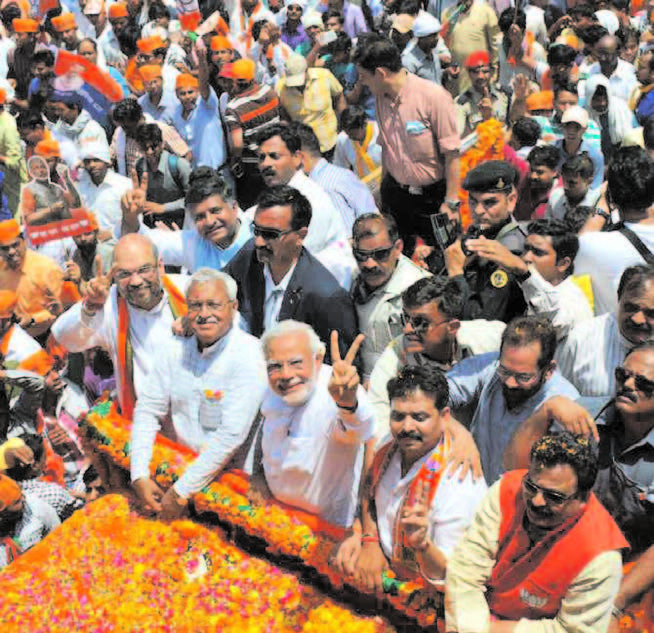
    NEW DELHI (TIP): The BJP has decided to reach out to regional parties over the election of the next President in view of the party’s assessment that several smaller outfits could support an NDA nominee for the post.

    Apart from the National Democratic Alliance coalition, BJP is looking for a bigger umbrella of support for its nominee who will replace President Pranab Mukherjee in Rashtrapati Bhavan.

    The decision to consult regional parties was discussed at a meeting of senior BJP leaders called by party president Amit Shah on Thursday. It is understood that no names were discussed at the meeting.

    The proposed consultations come at a time when BJP is weighing the benefits of proposing a ‘moderate’ face for President and in the process gaining wider support rather than a nominee seen to be imbued in a deep saffron hue.

    This is a point of debate within senior BJP circles as the party begins the process of installing its choice in Rashtrapati Bhavan.

    Though the candidate is expected to be pretty much a BJP-Sangh person, there is a discussion on image and perception as a more acceptable candidate can impact the opposition’s moves to put up a ‘joint candidate’.

    As things stand, BJP is hopeful of garnering the support of Telangana Rashtra Samithi and the two AIADMK factions along with the support of some smaller outfits. The party has also received feelers about possible cross-voting but is considering the possibility of sealing the support of more parties as well.

    Senior BJP leaders had recently asserted that the party was assured of the support of around 54% of the electoral college and was confident of having its way in the presidential poll. The opposition – led by Congress, Left and Trinamool – has been looking to put up a candidate against the NDA to signal their protest against BJP’s politics of “majoritarianism” and make a statement on the viability of an alternative view point.

  • Prevention of Cruelty to Cows; not to humans: an emerging reality in Modi’s India

    Prevention of Cruelty to Cows; not to humans: an emerging reality in Modi’s India

             BY GEORGE ABRAHAM

    “This is a direct infringement of the fundamental right of the people as to what to consume, and this order may even have usurped the State rights in deciding vital issues that impact its citizens. The federal structure that stood the test of time since Independence may also be in the crosshairs. The socio-economic consequences from nutrition to the poor and backward in the society who rely on cheap meat as a staple food, and to the small farmers and traders who rely on these animals for their livelihood are yet to be seen”, says the author.

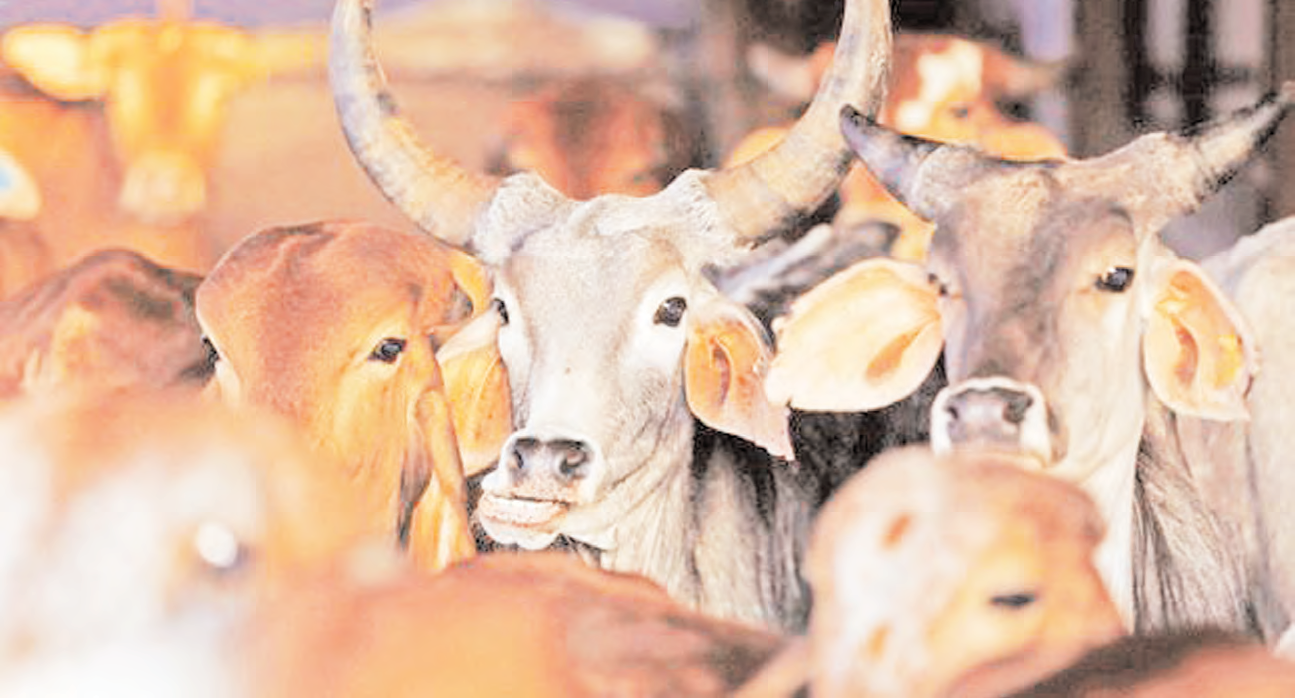
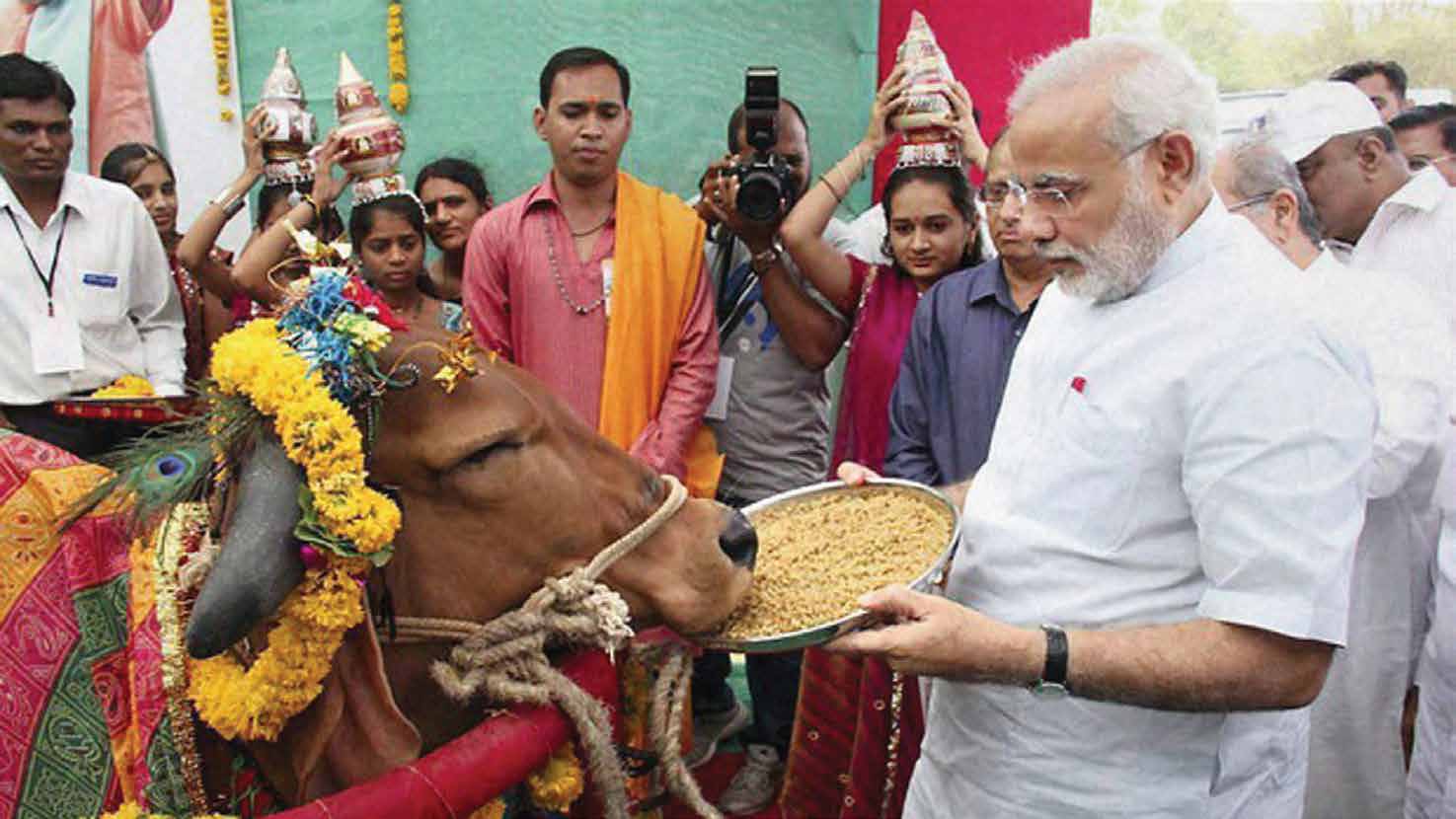
    The long anticipated cow slaughter ban across India under the BJP rule is already here! Most observers were expecting a legislative move probably after the 2019 election when BJP could muster majorities at both houses of the parliament. However, the Modi Sarkar found an ingenious way to test these waters under the guise of the ‘Prevention of Cruelty to Animals Act’ that was enacted in 1960 to prevent the infliction of unnecessary pain or suffering on animals.

    It is indeed a sinister move by the Environmental Ministry issuing new rules to regulate these animal markets with an eye towards limiting or stopping cow slaughter across the nation. The new rule states that animal markets can no longer be used to sell or purchase cattle for the purposes of slaughtering. The regulations apply to bulls, cows, buffaloes and camels. The reactions from the southern states were quick and predictable and the Chief Minister of Kerala, Pinarai Vijayan, took the lead in saying that “Malayali diet need not be decided by Delhi (read Union Government) or Nagpur (read RSS headquarters). Nobody can change our diet,” he said. Student organizations belonging to the Left front as well as Congress in Kerala protested the ban by organizing ‘beef fests’ across the state.

    However, some of the youngsters who belong to the Youth Congress wing of the Congress Party went to the extreme in slaughtering a bull in the open and thereby eliciting strong condemnation from the national leadership in addition to receiving walking papers from the Party’s State leadership. It is regrettable that their stupefied action did cast a shadow on the merit of their arguments in defense of the constitutional protection from the onslaught of religious fundamentalism and may have negatively impacted on the seriousness of the issue at hand.

    Nevertheless, what is most shocking to many of us who are living abroad is the overt and loud reaction to the slaughter of a bull in the open in comparison to the low-key responses to the ongoing lynching of human beings by the self-appointed vigilantes of cow protection. The medieval barbarism by these outlaws was on full display in 2015 when they falsely accused and then dragged Mr. Mohammed Akhlaq from his home in Dadri, U.P. to the street and lynched him before the gathering public.

    On 1 April 2017, Pehlu Khan and at least four others were injured when a mob attacked them while transporting cows that were legally bought in the market. Khan in his fifties later succumbed to his injuries suffered at the hands of these vigilantes. In March 2016, two Muslim cattle traders were found hanged to death in Jharkhand’s Latehar district. Mazlum Ansari and teenager Imteyaz Khan were heading to an animal fair in a nearby district when they were allegedly lynched and hanged by a mob.

    According to the report in The Indian Express, a 20-year old truck driver from Saharanpur was lynched by a village mob in Himachal Pradesh allegedly for carrying cattle from Uttar Pradesh.

    Mustin Abbas, a 27-year-old father of four, was traveling back home after buying bulls from Haryana was allegedly fired upon by Gau Raksha Dal members on April 5, 2016. A month later, a probe into his murder was ordered, according to ‘The Wire.’ In an incident that went viral on the social media, on 11 July 2016 Dalit youths were beaten up outside Mota Samadhiyala village, when they were skinning a dead cow brought from Bediya village.

    The victims included Vashram Sarvaiya, His brother Ramesh, and their cousins Ashok and Bechar, all residents of Mota Samadhiyala. Later the members of Gau Rakshak Dal took them to nearby Una town and again thrashed them with sticks and iron rods after tying them to a vehicle.

    They were paraded half-naked on the road in full display of public view. These are few of the ongoing instances cruel justice meted out to the human beings and the country and its leadership remained largely silent.

    With the issuance of this new order, the Gau Rakshak Dal will be further emboldened and will have the license to terrorize farmers and traders across the land.

    If the issue is indeed borne out of cruelty to animals, why this ban only applies to cattle, camels, and buffaloes but not extended to other species like sheep, goats, and chickens. India exports about 4 Billion dollars worth of beef every year, and it looks simply duplicitous on the part of the Government to close its eyes to the so-called ‘cruelty’ by these big slaughterhouses, many of them owned and operated by the cronies of those are close to power centers.

    This order may effectively cut the flow of red meat to consumers in those states where beef is consumed. All animal markets will be strictly regulated and will be brought under the control of the bureaucrats. As per the new rules, your butcher cannot buy any cattle from the market, and a declaration will have to be signed stating that ‘I promise not to resell the cattle for slaughter.’ In short, the center has made it near impossible to buy or sell cattle for meat or animal markets.

    By circumventing the legislative process in this instance, BJP is busy at work promoting its saffron agenda by imposing a uniform diet code on the people of India. The reason they have rushed it through as a directive may have dual purposes. The first and foremost will be to sow the seeds of division and intolerance well before the upcoming 2019 campaign, a vital environment to profit from.

    Also, this is a direct infringement of the fundamental right of the people as to what to consume, and this order may even have usurped the State rights in deciding vital issues that impact its citizens. The federal structure that stood the test of time since Independence may also be in the crosshairs. The socio-economic consequences from nutrition to the poor and backward in the society who rely on cheap meat as a staple food, and to the small farmers and traders who rely on these animals for their livelihood are yet to be seen!

    However, let us not be under any illusion that all these developments are taking place in a vacuum.

    But rather, it is part of a calculated plan being implemented by the Modi-Shah power structure to impose a majoritarian view and rule on the country thereby undoing the progress achieved post independence under the Nehruvian vision: respect for the minority religions and its traditions and equal protection under the law. The regressive forces that were in control of the nation in collusion with colonial powers are back indeed, and they are back with a vengeance!

    Mahatma Gandhi, who was a great advocate of Ahimsa said once: “How can I force anyone not to slaughter cows unless he is himself so disposed? It is not as if there were only Hindus in the Indian Union. There are Muslims, Parsis, Christians and other religious groups here.” Will we hear such sane voices of enlightenment ever from the heartland of India again!

    (The author is a former Chief Technology Officer of the United Nations and Chairman of the Indian National Overseas Congress, USA. He can be reached at gta777@gmail.com)


  • Getting it right: Demonetization was indeed a speed-breaker

    Getting it right: Demonetization was indeed a speed-breaker

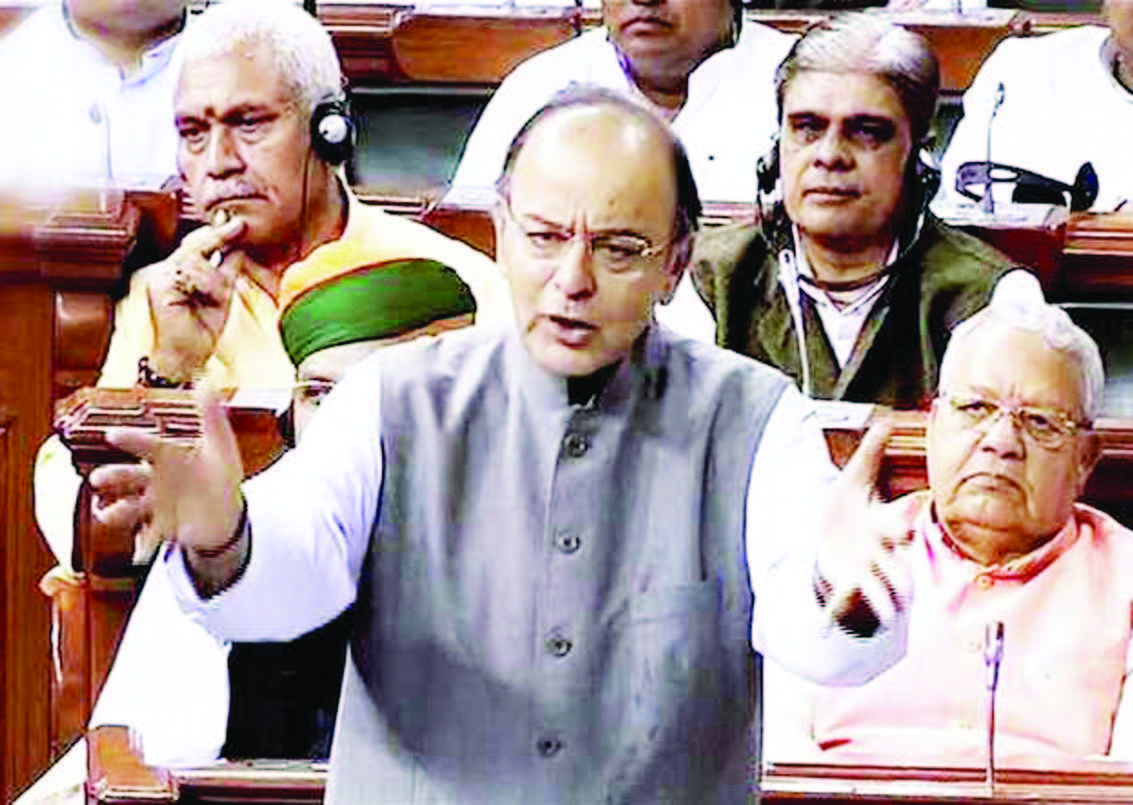
    Putting up a brave face, Finance Minister Arun Jaitley has downplayed concerns over growth slowdown. Experts commenting on the economy growing at 6.1 per cent in the January-March quarter unanimously pin the blame on demonetization. While India has lost the claim to being the world’s fastest growing economy, Jaitley asserts that “we have restored the credibility of the Indian economy through decisiveness and tough policies.” At his press conference on Thursday he went on to recall advantages of demonetization: digitization, expansion of the tax base and less use of cash in deals. He may, however, be reminded that demonetization’s original goals were a little different: end to corruption, black money and terror funding.

    Growth rate slipped to 7.1 per cent in a year when monsoon was normal from 8 per cent when drought had hit large parts of the country. If calculated without indirect taxes, the GDP growth turns out to be the lowest in two years. Besides, even this dismal data does not accurately reflect the pain demonetization caused in the informal sector, where massive job losses were reported.

    While admitting growth was flagging even before the “notebandi”, Jaitley proffered explanations for the less than- rosy situation that marks the Modi government’s three years in office: global trade shrank, big economies turned protectionist and geopolitical uncertainties in the last three years. It was not all that bad after all. Cheap oil provided the government a cushion. Taxes were hiked.

    Instead of stimulating growth, the taxpayer’s money was put into vote-winning populist schemes.

    The note ban in November 2016 had hit an economy growing steadily in a difficult environment. Instead of providing a stimulus, the government caused a self-injury with demonetization. The Finance Minister should have been honest enough to concede that something has gone wrong indeed. Jaitley mentions GST among the government’s achievements. GST would have happened long back had the BJP not scuttled the plan when the UPA proposed it. Secondly, it is too early to count GST benefits.

    Oratory or rhetoric cannot replace hard data. When the third-quarter GDP numbers came, Prime Minister Modi had mocked “Harvard” economists for distrusting people’s “hard work”. It will be interesting to watch how he responds now.

  • Three years on, Modi’s K-policy still to unravel

    Three years on, Modi’s K-policy still to unravel

    BY ARUN JOSHI
    The hope of a turnaround in Kashmir after Narendra Modi became the PM with a huge mandate is ebbing. After three years in office, Modi has little time left for course correction. Islamic radicalization and resistance have converged, undermining the huge mandate of the BJP.

    Prime Minister Narendra Modi’s Kashmir policy has not come out of wraps even after three years. It is true that Kashmir, a volatile problem with international ramifications, is by itself an enigma. The problem, as illustrated by former Prime Minister Manmohan Singh, has two dimensions – internal and external. That sums up the legacy that Modi inherited from Atal Behari Vajpayee who tried to address the issue of the conflict resolution by expanding the ambit of talks within the state. His approach toward Pakistan yielded some substantive results too before those went downhill under the UPA regime, following 26/11.

    After three years, Modi has little time left to go in for course-correction as the challenges have multiplied during this period. Islamic radicalization and resistance have converged, pinning down Kashmiri nationalism.

    At the start of his innings, Modi understood the external and internal dimensions, but inaction and inattention toward simmering discontent in the Valley has posed newer challenges. The presence of Pakistan Prime Minister Nawaz Sharif at Modi’s swearing-in ceremony three years ago had sent out positive signals. This highpoint of the Modi brand of diplomatic outreach triggered hope. Kashmiris hoped that Modi with his huge mandate would ensure that the state turned the corner because the mandate was huge and from the country’s Hindu majority. It is believed that only a strong Hindu national leader can take a bold decision on Kashmir. However, Modi has not been able to chart a successful course and the mandate too is getting undermined.

    Initially, there was a cautious optimism in the air. Modi conducted himself well by not raising the contentious issue of the oftrepeated BJP mantra of abrogation of the special status of Jammu and Kashmir under Article 370. He also did not indulge in Pakistan bashing in the first few months in the office. His development mantra that promised basic amenities like 24×7 water, power supply and food to everyone as well as narrowing of the distances through road and rail links was aimed at addressing the internal problem.

    This appeared a grand strategy with great chances of success. The people of the state reeling under mis-governance and corruption for over decades, welcomed it.

    Politically, he promised to tread the path of “humanity, democracy and Kashmiriyat” to resolve the K-issue. But that was not to be. There was neither backchannel dialogue nor any visible effort to initiate talks anywhere. Doubts started creeping in about Modi’s roadmap on Kashmir. These deepened further when the Foreign Secretary-level talks between India and Pakistan were cancelled in August 2014. The excuse was that the Hurriyat Conference leaders visited the Pakistan High Commission in Delhi ahead of talks. That was nothing new. Delhi was drawing new redlines without assessing the fallout on the external dimension or its adverse ripple impact on the internal one.

    This off-and-on business of talks went on for almost two years. Now these stand halted in the tracks following the September 18, 2016 Fidayeen attack at the Uri Garrison in which more than 20 soldiers were killed. The much-publicized and politicized “surgical strikes” led to a series of retaliatory terror attacks. Thirty nine security personnel have been killed in Kashmir since then. The ranks of local militancy have swelled to 150. The Line of Control is a mini war theatre where the population has been displaced and lives in constant fear in migrant camps on the border.

    Democracy touched a new low when the bypoll to the Srinagar Parliamentary constituency recorded merely 7 per cent voting – a drastic decline from the over 60 per cent turnout in the 2014 Assembly elections. India not only lost the faith of the people, but the USP of the Kashmiris’ faith in democracy through huge participation inelections also suffered a severe jolt.

    This was the result of the incompatible PDP-BJP alliance, akin to the coming together of the North Pole and the South Pole. This coming together could not survive the test of the democratic process, which further suffered due to the postponement and subsequent cancellation of the April 12 byelection to the Anantnag Parliamentary constituency. The rigid thinking of the Election Commission inflicted this blow. The demand made for a large number of troops was as if the polls were going to be a war.

    All these happenings have posed a question mark over the situation in Kashmir, where among others, the student community too is a partner in stone throwing street agitations.

    Post-killing of militant commander Burhan Wani in July 2016, the radicalization is manifest everywhere. Burhan’s successor Zakir Musa, following in his footsteps, declared that “Kashmiris are fighting for Islam” and not for the “freedom of Kashmir”. He has since quit Hizb-ul-Mujahadeen.

    Burhan wanted to set up a Caliphate and Zakir has drawn inspiration from Isis and Al-Qaida. This has created uncertainty and can fuel the crisis. The government has no clue how to handle it. The Kashmir policy, if any, is going haywire.

    Guns and stones can be neutralized by the use of force, but how can it curb the radicalization,which hasgrown because of the developments in Pakistan – the first nation to have two separate clubs of good and bad terrorists. The way Pakistan has honored Ehsanullah Ehsan, the former spokesperson of the Tehreek-e-Taliban Pakistan (TTP) demonstrates practitioners of terrorism too stand to get rewarded. The TTP was responsible for the massacre of the students of the Army school in Peshawar in December 2014.

    Perhaps Modi, like his predecessor Manmohan Singh, believes that the situation in Kashmir would take a turn for the better by itself. That is not going to happen. There are many layers to the internal dimension now.

    STONEWALLING DIALOGUE: Kashmiri students of Gandhi Memorial College throw
    stones on the Jammu and Kashmir policemen during a clash in Srinagar.
    Photo courtesy Mohammad Amin War/ Tribune

    In fact, the situation has turned much worse. India is facing more censure than Pakistan by the violent images travelling abroad. The Indian Army, despite returning to the old practice of cordonand- search operations finds its image bruised by the stone-throwers and hecklers. It is a dangerous terrain because the prolonged conflict and resistance have overtaken the development narrative. The Prime Minister’s call to make a choice between terrorism and tourism has not worked despite the BJP being in power in Kashmir along with the PDP. Both the parties are down. The recovery path has become more difficult.

    (Author can be reached at ajoshi57@gmail.com)


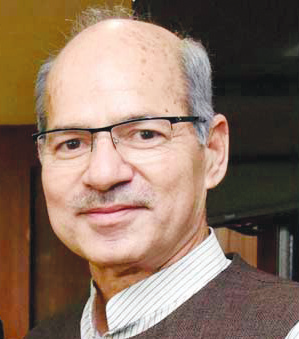
  • ENVIRONMENT MINISTER ANIL MADHAV DAVE DIES

    ENVIRONMENT MINISTER ANIL MADHAV DAVE DIES

    NEW DELHI (TIP): Environment minister Anil Madhav Dave died this morning, depriving Prime Minister Narendra Modi’s government of a key figure as it considers whether to approve the country’s first genetically modified food crop.

    Dave, 60, died at a hospital in Delhi after complaining of feeling unwell, a day after attending a cabinet meeting.

    Prime Minister Narendra Modi tweeted that he was “absolutely shocked” and described Mr Dave’s death as a “personal loss”. He wrote, “I was with Anil Madhav Dave ji till late last evening, discussing key policy issues.”

    The prime minister also said Mr Dave would be remembered as a devoted public servant and was tremendously passionate towards conserving the environment.

    Science and Technology Minister Harsh Vardhan will take additional charge of Environment Ministry.

    The two-term lawmaker from the BJP, Mr Dave had a longtime association with the Rashtriya Swayamsevak Sangh (RSS). He was appointed Environment Minister last year. He was a Rajya Sabha member from Madhya Pradesh. He was a member of various committees in parliament and was also in the Parliamentary Forum on Global Warming and Climate Change.

    Source: Agencies

  • Oppn will leave no stone unturned to garner support: Mamata on Presidential poll

    Oppn will leave no stone unturned to garner support: Mamata on Presidential poll

    KOLKATA (TIP): The Opposition parties will leave no stone unturned to garner support for Presidential election, West Bengal chief minister Mamata Banerjee said. She also “hoped” that the Opposition combination leads to an anti-BJP political formation for the 2019 general elections. “We will talk to all possible sources of support. We will play our game and leave no stone unturned to reach out to other parties,” she said.

    The term of President Pranab Mukherjee ends in July. Banerjee, who had tried to rope in her Delhi counterpart Arvind Kejriwal in the Opposition camp, indicated she is in touch with her Odisha counterpart Naveen Patnaik, Shiv Sena and other parties.

    The Congress-led Opposition is falling short by more than 1.5 lakh votes from the majority mark and it’s an uphill task for them to get their candidate elected. The BJP-led NDA, which rules most of the bigger states and enjoys comfortable majority in the Lok Sabha, appears to have an advantage in the election.

    But Banerjee maintained, “I will be really happy if Pranab da (President Mukherjee) gets another term in office. It all however depends on the government to build a consensus around his name.”

    Odisha’s ruling BJD has around 36,500 votes in the electoral college of the Presidential election while Sena has more than 25,800 votes. “Naveen and I are old friends. I am talking to him for Presidential election,” said the Bengal CM. She is the second Opposition leader after CPI(M) general secretary Sitaram Yechury to woo Patnaik for the upcoming poll for the country’s top office.

    Banerjee’s Trinamool has the largest vote share after the BJP and the Congress in the electoral college with 64,500 votes. On Tuesday, she met Congress president Sonia Gandhi and pledged her support for an Opposition candidate. Trinamool sources said that she has also spoken to Bahujan Samaj Party chief Mayawati. “On the day she spoke to Gandhi, same evening Didi had a long conversation with Mayawati,” claimed one of Banerjee’s trusted lieutenants. Banerjee is popularly referred to as Didi, meaning elder sister in Bengali.

    When asked that if the positioning of different parties for the Presidential poll can lead to a potential alliance, Banerjee said, “I hope it leads to that situation. But right now, it’s too early to say. Parties should realize that the BJP is ruining the social and democratic fabric of our country.”

    Even as her party fought against the Congress-Left combination in Bengal last year, Trinamool chief said, she maintains excellent equation with both Congress president Sonia Gandhi and vice president Rahul Gandhi.“We know each other for a long time. Sonia ji knows me very well. Some state-level Congress leaders behave very badly but that doesn’t mean that my relationship with Gandhi family is spoiled,” she said.

    CONG, SP WELCOME MAYAWATI’S CALL FOR ANTI-SAFFRON FRONT, BJP SHRUGS IT OFF

    NEW DELHI (TIP): The winds of change are blowing, but will they be enough to tame the Modi wave? When BSP supremo Mayawati faced a humiliating defeat in the Uttar Pradesh assembly elections earlier this year, her initial reaction was to blame electronic voting machines for the development. But now, in order to protect what’s left of her vote bank and put an end to the saffron party’s advance through her strongholds, the Dalit leader has decided to adopt a time-honoured strategy that has brought down many a giant in the annals of history.

    She has called for unity among secular parties, which currently lie splintered across the country, and indicated that she is willing to be part of a larger anti-BJP front. Mayawati made the announcement while addressing BSP cadre during BR Ambedkar’s birth anniversary function at Lucknow’s Ambedkar Memorial on Friday. “To keep democracy alive, I am ready to be part of anti-BJP front. We have to cut poison with poison. Due to tampering of EVMs, the voters won’t be able to elect their favourite leaders. The anti-BJP front is necessary to make sure that popular candidates, who enjoy mass support, win the elections,” she said, amid a deafening applause from party workers.

    Source: HT

  • NEXT PRESIDENT LIKELY TO BE FROM BJP; HERE’S WHY

    NEXT PRESIDENT LIKELY TO BE FROM BJP; HERE’S WHY

    NEXT PRESIDENT LIKELY TO BE FROM BJP; HERE’S WHY

    HIGHLIGHTS
    -? YSR Congress was being watched closely on which way they would tilt in the President’s election.
    -? Now, only BJD has not taken a call yet though Odisha CM has been approached by opposition.
    -? BJP sources say their candidate will be an insider and not an independent minded figure.

    NEW DELHI (TIP): The YSR Congress has announced support for BJP in the presidential election, further bolstering the ruling camp’s numbers for the key contest and nearly ensuring that a nominee of the ruling party gets to occupy the Rashtrapati Bhavan in July. Jaganmohan Reddy’s Andhra Pradeshbased outfit, which was noncommittal till now, was being watched closely along with AIADMK and BJD on which way they would tilt in the President’s election.

    Reddy met PM Narendra Modi on May 10 (Wednesday) and issued a public announcement on backing BJP’s candidate. Coming after strong indications from Telangana Rashtra Samithi that it might support BJP in the contest for Pranab Mukherjee’s successor in July, Reddy’s helping hand should all but ensure the appointment of a saffronite as as the next President.

    BJP sources on Thursday said their candidate will be an insider, ruling out the possibility of the party veering around to support an independent-minded figure, someone from the civil society sphere, and setting the stage for a “symbolic” ideological fight with the opposition. With its numbers in the electoral college boosted by the massive UP win, BJP was, in any case, only marginally short of the majority mark in the electoral college comprising elected members of the two Houses of Parliament and state assemblies. Support from YSR Congress and indication that TRS might follow suit has virtually killed the contest. They have also increased the possibility of more regional players breaking for BJP. AIADMK, for instance, has not spelt out its stand yet but BJP is confident of netting its support and the opposition too does not appear optimistic about the ruling party in Tamil Nadu.

    Now, only BJD has not taken a call yet though Odisha CM Naveen Patnaik has been approached by Congress as well as other opposition leaders like chief ministers Nitish Kumar and Mamata Banerjee as well as CPM chief Sitaram Yechury. The presidential election had always appeared an uphill task for the united opposition but it slowly seems to be becoming an impossible battle given the drift of key regional outfits. YSR Congress’s decision to side with BJP implies that the principal poles in Andhra politics will stand on the same side in the presidential polls and vote for the saffron candidate. TDP, which rules Andhra, is a BJP ally, while Jaganmohan is a rival of CM Chandrababu Naidu and nurses the ambition of replacing him. Source: TOI


  • INDIA’S REVENUE RECEIPTS TO HIT RS 30 LAKH CRORE IN 2 YEARS ON INFRA PUSH

    INDIA’S REVENUE RECEIPTS TO HIT RS 30 LAKH CRORE IN 2 YEARS ON INFRA PUSH

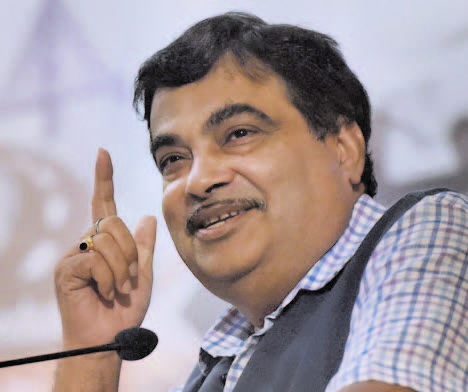
    NEW DELHI (TIP): An integrated policy is on the anvil to ramp up infrastructure at a time when India’s revenue receipts are set to touch the Rs 30 lakh-crore mark in the next two years, Union minister Nitin Gadkari said.

    “An integrated policy for the sector will be formulated and placed before the nation to bolster its economic growth. Unlike the precedent of working in silos, various ministries like road, port, rail, aviation and shipping would closely coordinate,” said Gadkari, who holds the portfolio of road transport, highways and shipping, after inaugurating the India Integrated Transport and Logistics Summit 2017 here.

    The maiden IITL summit saw various government departments come together on a single platform.

    Gadkari said such a huge initiative is taken for the first time and various departments will hold meetings to chalk out a policy which could be placed before the Cabinet or the Prime Minister.

    This is seen as a step towards realising the Prime Minister’s vision of holistic development as augmenting infrastructure, the topmost priority of the government, will help eradicate poverty.

    The minister is optimistic that the three-day summit, which got under way today, would garner Rs 2 lakh crore investment.

    The summit is in line with the government’s plans to have an effective multi-modal logistics and transport sector to make Indian economy more competitive.

    Claiming that this government is “pro-poor”, the minister added that extensive planning to boost infrastructure will not only reduce the high logistics cost, but realise the dream of double-digit growth soon.

    “If we have to wipe out poverty, if we want to achieve double-digit growth, we will have to augment infrastructure in an integrated manner and we are focusing on developing a network of waterways, railways and highways,” Gadkari said.

    Terming GST as “a historic decision”, the minister exuded confidence that the major tax reform coupled with demonetisation are bound to give a push to the country’s total revenue receipts.

    “Post-demonetisation and GST regime, India’s revenue receipts are likely to touch Rs 28-30 lakh crore in the next two years coupled with steps to strengthen infrastructure,” Gadkari said.

    When the NDA government took over in 2014, the revenue receipts read Rs 13 lakh crore, which could scale up to Rs 20 lakh crore during the three years of the present regime, the minister pointed out.

    He also touched on employment part, saying holistic development of a massive network of roads, ports, rail and aviation will create more jobs.

    His ministry, Gadkari said, is taking the length of National Highways to 2 lakh km soon and is committed to achieving a target of building 40 km of roads a day from the current 23 km.

    Thirteen expressways are on the anvil and work has been initiated on five of them with a target of completing the Rs 12,000 crore Eastern Peripheral Expressway by August 15 this year.

  • ‘Outsiders’ Sanjay, Durgesh finally exit Punjab AAP

    ‘Outsiders’ Sanjay, Durgesh finally exit Punjab AAP

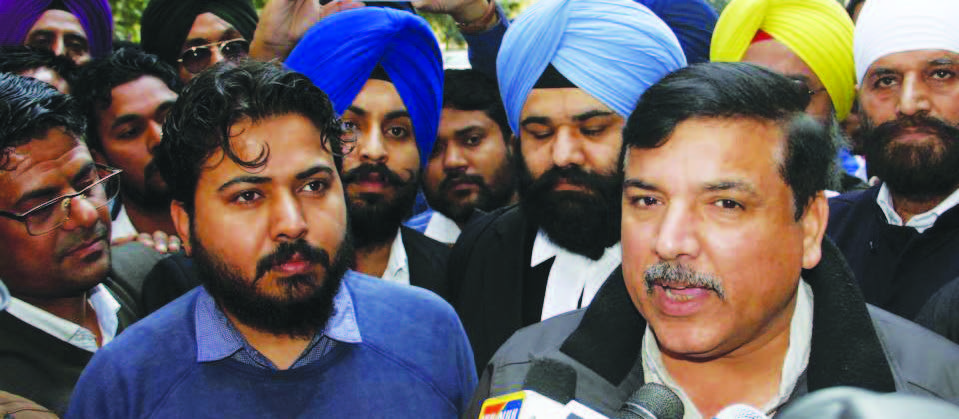
    CHANDIGARH (TIP): It’s been more than six weeks since the Aam Aadmi Party’s disappointing loss in the Punjab assembly elections, but finally a humiliation in the Delhi civic polls became the trigger for Sanjay Singh and Durgesh Pathak to resign as the party’s bosses for the state on April 27 (Thursday).

    The signs were there immediately after the party lost face in the elections to the municipal corporation of Delhi (MCD) on Wednesday. Punjab AAP legislative party leader HS Phoolka, chief whip Sukhpal Singh Khaira and star campaigner MP Bhagwant Mann had upped the ante and again blamed the central leadership, or “the outsiders”, for the party’s Punjab loss.

    Uttar Pradesh natives Sanjay (Sultanpur) and Durgesh (Gorakhpur) had effectively taken over the Punjab unit in early 2015 — as in-charge and co-incharge — almost 18 months before the state polls. The idea was to reap dividends in Punjab — the state that had given the party all its four MPs in the 2014 Lok Sabha polls — particularly after the party’s historic mandate in the Delhi assembly polls in the February of that year.

    By then, Sucha Singh Chhotepur, who had been picked by party national convener and Delhi chief minister Arvind Kejriwal, had built a structure for the party as the state unit convener. The Sanjay-Durgesh team brought along a 52-member team of observers from Delhi that spread out as an umbrella body over that structure.

    Inside story a mystery

    A dormant fight for dominance blew up when Chhotepur was removed in August 2016 over a “sting operation”, allegedly showing him taking bribe for a ticket. The “sting” was never made public, and thus the real reasons behind Chhotepur’s removal remain a mystery. After Chhotepur floated his own party —significant in the politics of perception— the Congress and Shiromani Akali Dal raised the decibel level on labelling AAP as a party of outsiders.

    Some local faces were given posts, but the duo continued to enjoy primary roles— Durgesh as final authority on tickets and funds to candidates, and Sanjay as the overseeing troubleshooter. Their dominance was even disliked by a number of candidates, but they said little or nothing, hoping for a bigger role in an AAP government.

    Another section in the party kept raking up allegations of Sanjay-Durgesh taking money for tickets, but the party overlooked it all, not realising that opposition parties were cashing in.

    All their doing?

    But can the two be blamed for all the mistakes? A section of AAP leaders in Punjab is asking this question too.

    For instance, the party faced serious flak from within for not announcing a chief ministerial candidate. But who could have been projected when prominent local leaders were competing with each other in being on the right side of the duo?

    On seeing all others getting miffed with one given prominence, the party went into the polls on the back of Brand Kejriwal, but the bubble burst on March 11, the result day, when the party managed to win just 20 seats, plus two of coalition partner Lok Insaaf Party, as against its own claims of 100 out of 117. The Congress won a decisive victory with 77, though the AAP managed to become the prime opposition ahead of the SAD-BJP combined tally of 18.

    Insiders and observers both have also pointed out Kejriwal’s flirtations with Sikh radicals, and theories of his own ambitions to become Punjab CM, as reasons behind the loss; and not just mismanagement by the duo.

    Even party leaders in Punjab are not satisfied by the duo’s ouster alone. Khaira and NRI wing convener Jagtar Sanghera want more heads to role, and Khaira in particular has called for a “free hand” to state leaders. A roadmap for introspection and action is still not clear, and party leaders and volunteers remain confused. The resignations by Sanjay and Durgesh are the culmination of resentment within the AAP, but not the final solution to its troubles in Punjab.

    ‘Victory has many fathers, defeat has none’

    While Durgesh did not dwell, Sanjay again denied that he took money in exchange of poll tickets. “There’s no proof,” he told HT over phone. On being blamed for the Punjab fiasco, he commented, “Victory has many fathers; defeat has none.” Advocating introspection now, Sanjay said he had worked “very hard” to build the party “but the results turned out to be a reversal”. Source: HT

  • Canada to work with India for justice for victims of 1984 riots: Sajjan

    Canada to work with India for justice for victims of 1984 riots: Sajjan

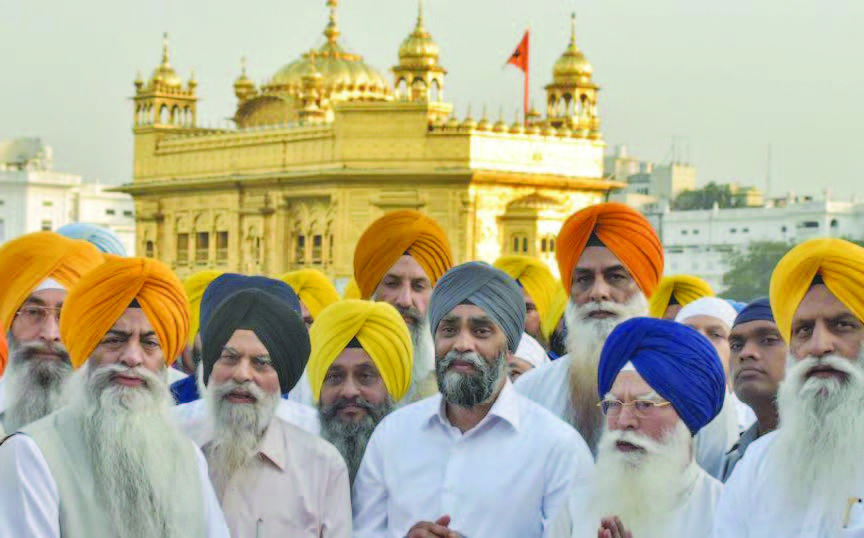
    AMRITSAR/TORONTO (TIP): As the visit to India by Canada’s defence minister, Harjit Sajjan, has been marred by Punjab chief minister Capt Amarinder Singh accusing him of having Khalistani sympathies, the minister now says that he was “disappointed” by those comments but they did “not bother” him.

    Responding to a question during a conference call with Canada-based media on Wednesday, Sajjan said, “I was disappointed with the chief minister of Punjab’s comments.”

    Sajjan went on to add in that context: “It does not bother me in the least. I’m focused on building my relationship with India, being able to discuss important issues including the issue of 1984 as well.”

    He was referring to anti-Sikh violence following the assassination of then prime minister Indira Gandhi in 1984, a sensitive issue in India-Canada relations after the Ontario Assembly recently passed a motion that described the event as “genocide”.

    As the carrying of the motion in the Ontario Assembly preceded his visit, the issue figured in Sajjan’s meetings with Indian officials and ministers. But he did not use the word genocide, as he said, “Our government looks at working with Prime Minister (Narendra) Modi’s government in dealing with and getting justice for the victims of the organised massacres in 1984.”

    He added, “I appreciated their efforts on this and look forward to them actually moving forward even further.”

    Sajjan also said he explained to Indian officials that the vote in the Ontario Assembly was caused by a private member’s motion and there was a difference between the ruling Liberal Party of the province and that of Prime Minister Justin Trudeau at the federal level.

    But Sajjan also said that Canadians had a right to express their viewpoint in “a peaceful way”.

    The Punjab chief minister’s allegations have made headlines in the Canadian media. Sajjan said, as was routine, a meeting with Amarinder Singh was sought as a “courtesy”.

    “But I will not be meeting with him now because he had originally refused,” Sajjan said, as he arrived in Amritsar from New Delhi. Similar requests were also made to the chief ministers of Maharashtra and Haryana.

    Referring to Amarinder Singh’s remarks, Sajjan said, “I don’t know what the motivations were around that.”

    On the issue of Khalistani separatism, he asserted, “There is no movement within Canada.” Sajjan pointed out that “if there was any evidence, any type of intelligence, our security forces would be looking at this immediately”.

    As he travels in India, Sajjan said, “in some ways it’s very emotional” for him. He was last in India in 2002, when his family gathered in their native village in Hoshiapur for a reunion of sorts.

    “For me to come back, it’s a very proud moment for me personally. Even though people look at me coming back as a minister, I look at it coming back as somebody who’s from here. So I’m kind of playing a dual role here. While representing Canada and our government, at the same time, trying to take in as much as I can.”

    As controversies swirled around his visit, Sajjan addressed government-to-government interaction: “We’re looking forward to furthering this conversation and the relationship that we’re still developing.”

    Canada and India are looking at a potential defence MoU, though not committing to a timeframe in that regard. “That will possibly lead to further discussions, towards possibly a defence cooperation agreement but we’re not there yet,” Sajjan said.

    Despite the setbacks dogging the trip, Sajjan said his focus was on how to “discuss the way forward”. Source: HT

  • PM NARENDRA MODI TO GIVE PEP TALK TO BJP CMS; EYE  ON UPCOMING POLLS

    PM NARENDRA MODI TO GIVE PEP TALK TO BJP CMS; EYE ON UPCOMING POLLS

    NEW DELHI (TIP): Prime Minister Narendra Modi will give a pep talk to chief ministers of 13 BJP ruled states at the party headquarters here on Sunday. Party president Amit Shah too will join them.

    The meeting comes within weeks of Modi holding a similar session with leaders of 33 NDA allies, who reposed faith in his leadership and resolved to win the 2019 elections again.

    BJP sources described the meeting as an exercise to gear up BJP-ruled states for the next Lok Sabha election, a key electoral challenge that will also be seen as a referendum on Modi government’s five year tenure.

    Three BJP ruled states, Chhattisgarh, Madhya Pradesh and Rajasthan, will also go to poll in 2018.

    With the BJP ruling 13 states and sharing power in four others, party leaders admit the performance of the state governments will have a bearing on the performance of the BJP in 2019.

    Modi doesn’t want any anti-incumbency to set in against the sitting BJP governments, which can pull down the party in 2019.

    “At the Sunday meeting, he will reiterate that BJP needs to keep its focus on governance and avoid controversies that can provide fresh ammunition to the opposition looking for an opportunity,” a BJP leader said.

    Activism by cow vigilantes, conduct of certain BJP leaders and several others issues have hogged the media limelight, putting the BJP in a tight spot.

    At the just concluded conclave of the BJP in Bhubaneswar, Prime Minister Modi asked BJP leaders to be mindful of their conduct.

    “Don’t let power go into your head. We should not get spoiled,” he told over 300 BJP leaders.

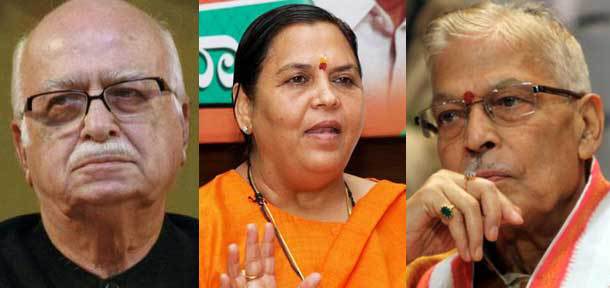
  • Babri Masjid Demolition: Supreme Court of India indicts BJP leaders LK Advani, Murli Manohar Joshi, Uma Bharti for Criminal Conspiracy

    Babri Masjid Demolition: Supreme Court of India indicts BJP leaders LK Advani, Murli Manohar Joshi, Uma Bharti for Criminal Conspiracy

    Apex Court favors joint trial of the accused to speed up the judicial process

    NEW DELHI (TIP): In a major judgement handed down on April 19, Supreme Court of India ordered that the co-founder of the BJP, LK Advani, and other leaders be tried for criminal conspiracy in the demolition of Babri Masjid about 25 years ago.

    The Babri Masjid in Ayodhya was allegedly pulled down by Hindu activists in December 1992, leading to widespread riots in which more than 2,000 people died.

    The apex court added that the trial must conclude within two years, a decision welcomed by Muslim clerics.

    This is a huge setback for former BJP chief Lal Krishna Advani and his colleagues who have repeatedly denied making inflammatory speeches that encouraged Hindu mobs to tear down the Babri Masjid.

    Those accused along with Mr Advani are senior BJP leaders Murli Manohar Joshi and Uma Bharti. They have all denied any wrongdoing, however, the Central Bureau of Investigation (CBI) has always said the destruction of the mosque was a planned event.

    The Supreme Court has been hearing the case since 2011 after setting aside a high court judgement which allocated two-thirds of the disputed site to Hindu groups, and the remainder to Muslims.

    The Allahabad High Court ruling in 2010 addressed three major issues. It said the disputed spot was Lord Ram’s birthplace, that the mosque had been built after the demolition of a temple and that it was not built in accordance with the tenets of Islam.

    The Archaeological Survey of India, in 2003, had reported to the Allahabad High Court that its excavations found distinctive features of a 10th century temple beneath the Babri Mosque site.

    For the first time in a judicial ruling, it also said that the disputed site was the birthplace of the Hindu god.

    Hindus claim the mosque is the birthplace of one of their most revered deities, Lord Ram, and that Babri Masjid was built after the destruction of a Hindu temple by a Muslim invader in the 16th Century.

  • BJP-Akali joint candidate Sirsa wins Rajouri Garden bypoll, AAP loses deposit

    BJP-Akali joint candidate Sirsa wins Rajouri Garden bypoll, AAP loses deposit

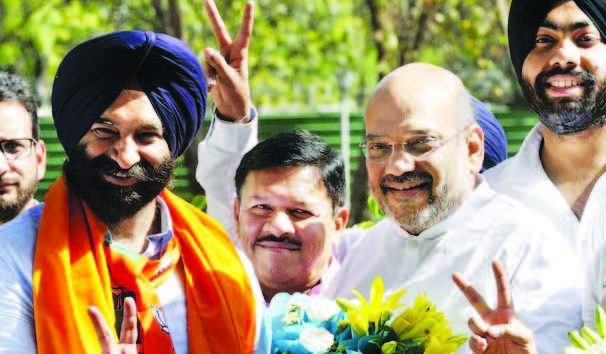
    NEW DELHI (TIP): The Bharatiya Janata Party (BJP) registered a huge victory in the Rajouri Garden Assembly bypoll in the national capital on April 13 handing a humiliating defeat to the ruling Aam Aadmi Party (AAP), which finished a distant third and even lost deposit.

    BJP-Shiromani Akali Dal (SAD) joint candidate Manjinder Singh Sirsa bagged 40,602 seats, over 50% of the total votes polled, in a boost for the saffron party ahead of the 23 April municipal polls.

    Congress’ Meenakshi Chandela finished second with 25,950 votes while AAP’s Harjeet Singh managed to get only 10,243 votes, less than one-sixth of the total votes polled, and lost deposit.

    In terms of vote share, the Congress staged a turnaround of sorts by getting around 33% of the total votes cast,in a jump of over 21% over the 2015 Assembly polls.

    Around 47% of the over 1.6 lakh electors of the west Delhi seat had cast their vote on 9 April.

    With the victory, the BJP’s tally in the 70-member Delhi Assembly will become four. The Congress does not have any presence in the House.

    The seat fell vacant early this year after AAP’s Jarnail Singh quit as MLA to contest the Punjab Assembly poll against SAD patron Parkash Singh Badal.

    Delhi’s richest MLA

    Sirsa will be the richest MLA in Delhi with declared assets of over Rs 185 crore.

    By this distinction, Sirsa dislodges AAP’s Pramila Tokas who topped the list of wealthiest MLAs until now with declared assets of Rs 87 crore. Tokas is an MLA from RK Puram in south Delhi.

    Sirsa, who had contested the assembly election in 2015 also, had declared assets of Rs 239 crore at that time. However, the worth of his assets has dropped by over 22% since then. Sirsa, who calls himself an “agriculturalist and businessman” on his affidavit filed in 2017, has declared moveable assets, such as money, cars, and other valuables worth almost Rs 89 crore, and immovable assets, such as agricultural land and commercial buildings worth over Rs 120 crore. He has also declared liabilities and other outstanding dues, like bank loans, worth approximately Rs 24 crore.

    According to an analysis by Association of Democratic Reforms (ADR), 11 of the 70 Delhi MLAs had total assets worth more than Rs 10 crore after the assembly election in 2015.

  • INOC, USA slams Tarun Vijay for his racist remarks against blacks and South Indians

    INOC, USA slams Tarun Vijay for his racist remarks against blacks and South Indians

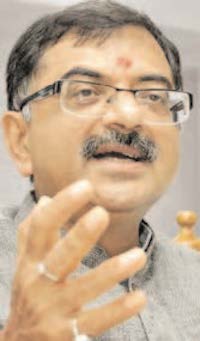
    NEW YORK (TIP): “It is shocking to hear another racist thought and political bigotry emanating from a member of BJP and a former Rajya Sabha MP who may have inadvertently revealed his true colors in his black and south Indian remarks’ said George Abraham, Chairman of the Indian National Overseas Congress, USA. ‘However, there is little surprise as to the sentiment expressed by Tarun Vijay may be widely shared by his party and a good segment of its cadre. Such remarks are not forgotten post simple apology’ Mr. Abraham added. It should be noted that Mr. Vijay was the chief editor of the RSS publication Panchjanya.

    In a discussion on Al Jazeera network, Tarun Vijay said that Indians cannot be called racists as they live with “black people” from southern states of Tamil Nadu, Kerala, Karnataka and Andhra Pradesh.

    “If we were racist, why would we have the entire south, which is complete, you know, Tamil, you know Kerala, you know Karnataka and Andhra, why do we live with them? We have black people around us,” said Vijay.

    The RSS/BJP combine has been successful in camouflaging their upper caste and racist ideology under cover of religious fanaticism. Occasionally, they couldn’t help themselves but by exposing their hypocrisy towards the people of dark skin color. Although Southern states have played a crucial role in the economic revival of India, the political operatives in BJP seem to be fixated on the amount of melanin in their skin.

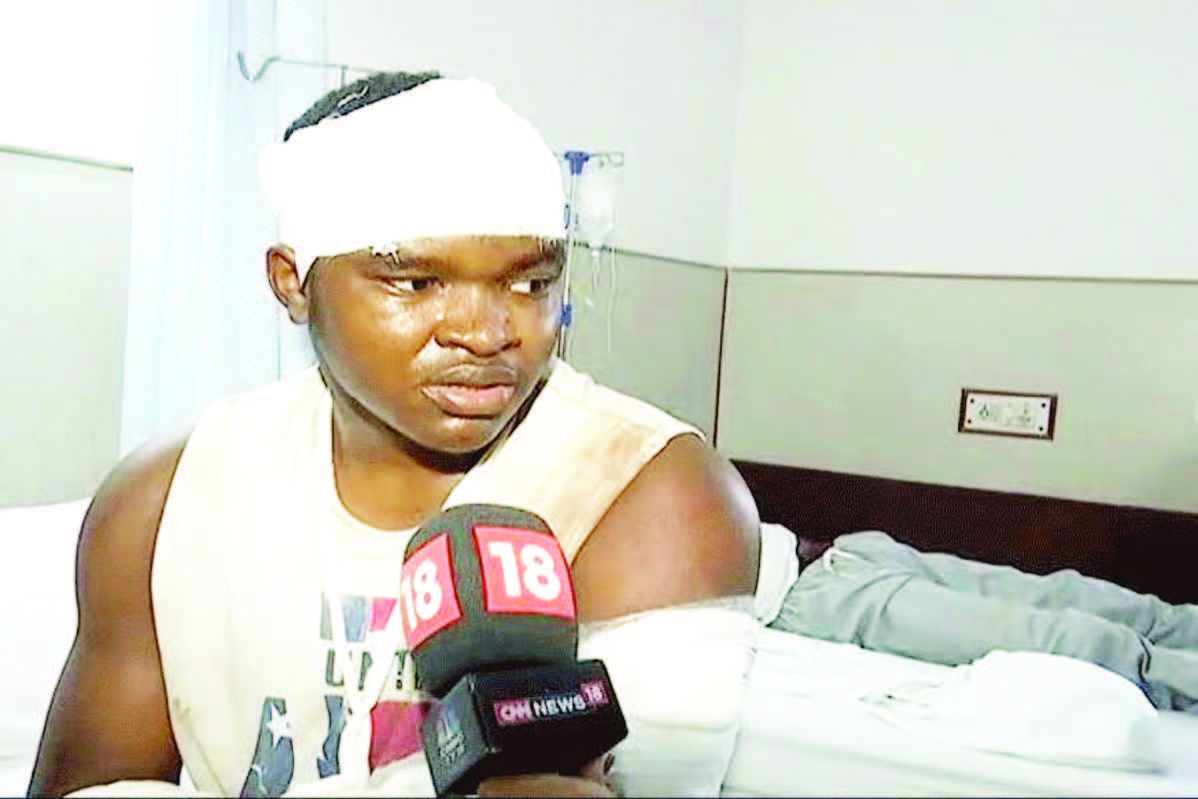
    The deafening silence of their leadership including the Prime Minister towards the attack on the Nigerian students in Noida clearly illustrates that racism is well and alive in India and it may be still abetted by a large segment of the folks like Tarun Vijay.

    Non-resident Indians who live among various cultures and races around the globe ought to be concerned with the ever increasing number of racist incidents emanating out from India and how they would be perceived abroad as the nationalistic sentiments are on the uptick.

    Ref: http://www.bbc.com /news/world-asia-india-39530215

    http://www.hindustantimes.com/in dia-news/bjp-s-tarun-vijay-stokes-racism-row-we-have-south-india-we-live-with-black-people/story-r ma P8qgu UK7zr1m Wem2e4O.html

  • Cow is an excuse – Rajasthan murder more than a vigilante action

    Cow is an excuse – Rajasthan murder more than a vigilante action

    Another vigilante action, another Muslim dead. This time in Rajasthan. But the beating of five persons transporting milch cows, leading to the death of a 55-year-old man, Pehlu Khan, was not surprising even if it was shocking. Circumstances of the case make it obvious that it was not part of any attempt to prevent smuggling of cows. It was an assault on a particular religious identity. For one, anyone familiar with cattle – especially those who claim to be passionately devoted to it – should be able to tell condemned cattle from a milch cow, as was the case here. Then, the man who died had documents to show he purchased the cows for milk as he ran a dairy. The more pertinent bit, however, is that one Hindu driver was let off by the gang, even though he was as much a part of the crew transporting the cattle.

    The disturbing aspect is that this is not an action of “fringe elements”, if there is still any distinction to be made within the communal monolith called the “Sangh”. The police were as quick as the “gau rakshaks” to accuse the cattle buyers of being smuggles, and booked them too without even preliminary inquiries. The Rajasthan Home Minister defended the police action, and even the need for “gau rakshaks” to prevent cattle smuggling. Union Minister Mukhtar Abbas Naqvi said in the Rajya Sabha that the incident had been misreported. It is becoming increasingly difficult for the BJP to deny that it supports such vigilante action, given the systematic persecution of meat traders in certain states. UP has also seen “anti-Romeo squads” and instructions for teachers on how to dress “decently”.

    The fast evolving cultural tyranny needs to be recognised for what it is – a devious ploy at sustaining animosity on communal lines. The motives for this are as much political as a sincere faith in a medieval ideology, not very different from the extreme Islamic intrusion seen in all public institutions in Pakistan. Unless this is understood, and no less than the top leadership of the BJP moves to put a stop to the moral policing, the consequences also may be very similar to as in Pakistan.


  • INOC, USA deplores mob attack on Nigerian Students in Greater Noida, India

    INOC, USA deplores mob attack on Nigerian Students in Greater Noida, India

    NEW YORK (TIP): ‘It is a sad day for a nation when foreign nationals are targeted, harassed and beaten up. What kind of a country India wants to be?’ asked George Abraham, Chairman of the Indian National Overseas Congress, USA. ‘We strongly condemn the alleged racist and brutal attack on Nigerian students by a mob in Greater Noida, U.P and call upon the Ministry of External Affairs and the Chief Minister of Uttar Pradesh to take prompt action to identify and to bring the perpetrators to justice. Undoubtedly, these are hate crimes and should be dealt with seriously’ the statement added.

    Indians are one of the largest Emigrant groups to anywhere and demand freedom and opportunities wherever they seem to settle down. Those opportunities have enabled the NRIs to contribute substantially to the development of modern India. Therefore, it is incumbent on the Government of India as well its citizens to reciprocate and extend the same courtesies to foreigners who come to India whether it is for further studies or conducting business.

    We all had felt the pain when one of our own, an Indian Techie Srinivas Kuchibhotla was killed in Kansas. It is only fair that we express the same outrage when an injustice is done to foreigners who reside in India.

    However, we have serious doubts about the willingness and fortitude of the current BJP Government to seriously deal with racism and bigotry as they thrive on polarization and division. It should be noted that even students from Northeast are allegedly facing harassment and discrimination in their daily lives at the nation’s capital and only the strict enforcement of law and order and upholding of constitutional values may bring about any relief.

    As for NRIs, it is a moral imperative to voice their serious concern in this regard to the government of India. Demanding fairness elsewhere while remaining silent in the face of injustice towards the treatment of foreigners in India would tantamount to just plain hypocrisy, the statement added.

  • An expansive Hindutva agenda?

    An expansive Hindutva agenda?

    The Hindutva project has succeeded in projecting itself as speaking to the deep diversities that crowd U.P

    “The invocation of Shiva and Shakti in this project that hitherto held firmly to a graded order and paternalism would have implications for Indian democracy that have been little envisaged so far”, says the author.

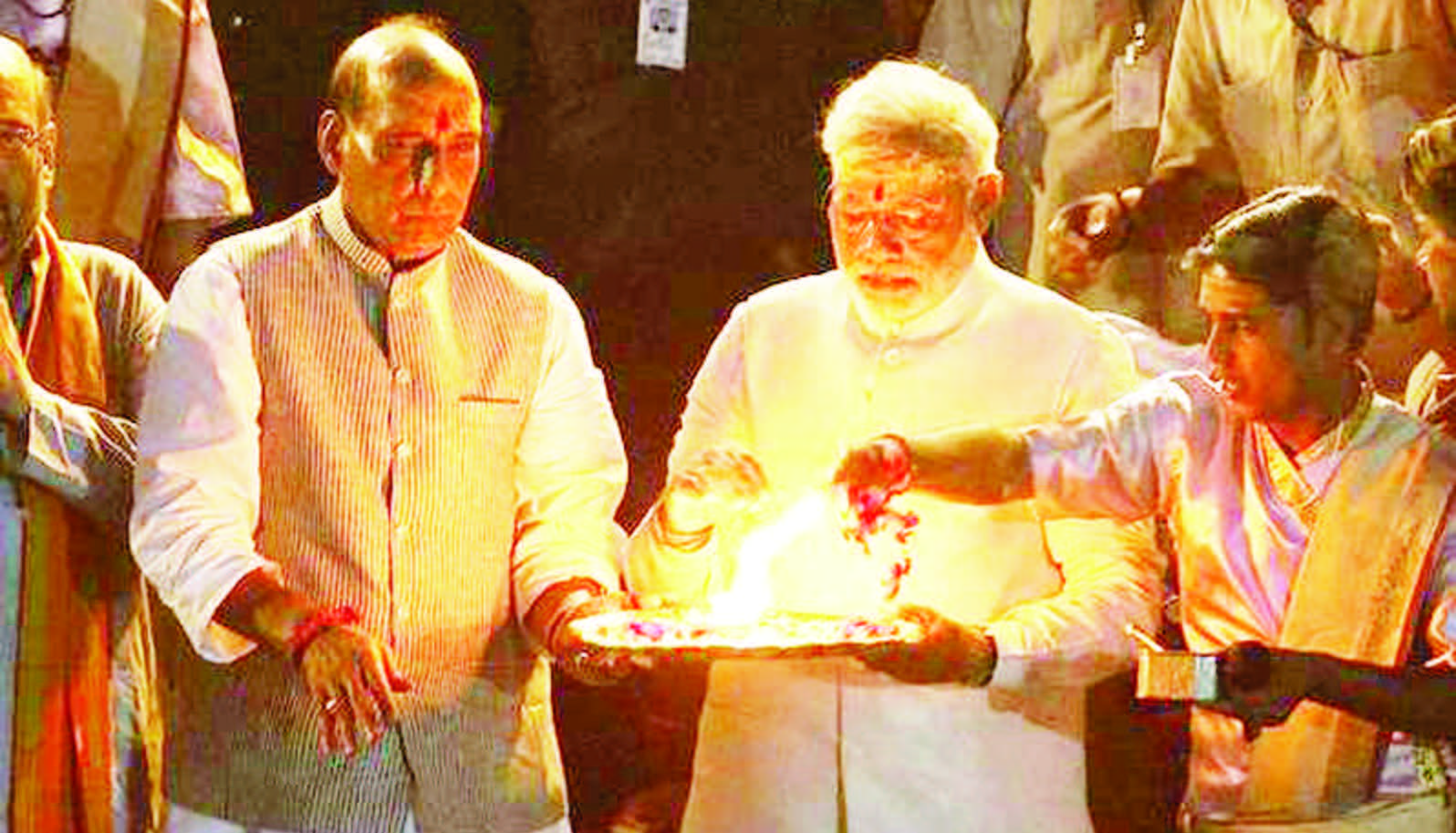
    If symbols speak, and in the layered culture deposits of the Gangetic plain they do speak loud, one of the most memorable spectacles was Prime Minister Narendra Modi’s visit to Kashi Vishwanath Temple on March 4, 2017.

    It was preceded by a roadshow in the narrow, winding streets of Varanasi all decked up for the grand effect, following the garlanding of the statue of Pandit Madan Mohan Malaviya at the Benares Hindu University. Within the temple precincts itself Mr. Modi appeared the great performer, oozing a burst of energy, while the archakas were transfixed in the archaic layout of the ancient temple complex. Place this spectacle alongside Mr. Modi’s salutation to ‘Ganga Ma’ at the Dashashwamedh Ghat of the river on May 17, 2014, a day after his victory from Varanasi Lok Sabha constituency, three years ago: and you have before you one of the most powerful symbols to reach out to the length and breadth of India, Shiva and Parvathi, alongside Ganga, and their complex personifications in myriad forms, the principles of dynamism and recreation, galore across India, in much more vivid forms than Ram lalan of Ayodhya.

    Yogi Adityanath, the new Chief Minister of Uttar Pradesh, himself heads a temple, the Gorakhnath temple, named after a representation of Lord Shiva, a representation that gathers in its fold elements of Buddhism, the tantra practices, the Nathpanthi traditions, and renouncer cults.

    Shiva in political pantheon

    While the Hindutva project is unlikely to shed Ram from its political pantheon, it would be worth watching the deployment of Shiva and Shakti sites spread across the length and breadth of the country, particularly in its peripheral regions. Lord Shiva is the lord of the dissenter, the renouncer, the wayward, the very captive of his devotee, the great patron of arts and crafts, the yogi par excellence, while he is at the same time the great destroyer, angry and disdainful of the social order. He inhabits the peripheries of the Brahmanical dispensation that stipulates a tightly ordered social universe. He is primarily the lord of the lower social orders, of the margins. He is the presiding deity across the vast expanses of the Himalayas, most of the southern part of India, and the hills and ghats where the Brahmanical order is precariously present.

    For the Hindutva ideologues, at least those who walk hand in hand with Mr. Modi, the conquest of Lord Ram’s place of birth at Ayodhya is over; what is important is to bind India together, its myriad differences and diversities through new bonds. Was the Prime Minister, who said little on the Ram Janmabhoomi issue during his numerous public meetings across the length and breadth of Uttar Pradesh, opening a new front for Hindutva? Are we, therefore, stepping into a religio-political project that was little seen as integral to Hindutva so far?

    Finger on the U.P. pulse

    The socio-political space that constitutes Uttar Pradesh today has always nurtured a complex internal debate with regard to the idea of India from the later part of 19th century. The great debate with regard to the future of Muslims in the subcontinent following the demise of the Mughal Empire was centred around this region in which the ulema of Deoband and Barelvi madrasas and later the Aligarh Movement played a decisive role.

    One always found in this region informal groupings of religious adherents, be they Hindus or Muslims, who did not toe the line of any one political party. Besides, after the abolition of the zamindari system this region, as a whole, was not much shaken up by the powerful agrarian and anti-caste movements that have had such powerful impact in the neighbouring region of Bihar.

    However, recent evidence suggests that a large number of traditional upper caste religious groupings in the region have been veering round to the Hindutva project, and orthodoxy has spread its appeal much wider among Muslims. The egalitarian social imaginary of the lower rungs among Hindus has thrown up new modes of religious gatherings, revitalised marginal deities, and much social effort has gone into the construction of shrines and temples and writing caste histories. The Hindutva expressions in this region have reached out to this imaginary while the other political formations in the region have had little say on it.

    The cryptic comment that Samajwadi Party leader Mulayam Singh Yadav made, that Chief Minister Akhilesh Yadav’s defeat is on account of his departure from Lohiawad, has a ring of truth about it, although the former himself reached out to this social imaginary very little. The secular hat that the Congress wears is totally disconnected from this groundswell. The Bahujan Samaj Party did little to disabuse the charge that the Prime Minister made in his election rallies that it serves the good of one against its claims to represent the many. Besides, the impermeable walls that the dominant discourse within this party erects across castes and communities makes it difficult for it to access complex modes of oppression and cultural nuances that play a decisive role in an electorally surcharged arena such as Uttar Pradesh.

    The strategy

    In sum, over the years there has been little attempt to make the deep diversities that crowd Uttar Pradesh speak to one another. The Hindutva project has succeeded in projecting itself as speaking to this diversity through a phalanx of organisations. Mr. Modi was only the presiding deity, the organising centre of this process. The Uttar Pradesh strategy also demonstrates that the Bharatiya Janata Party (BJP) will adopt very distinct strategies in different regions of India, with a few slogans such as ‘Sabka sath, sabka vikas’ as common.

    It is a pity to watch the plight of the Muslims in Uttar Pradesh if we ignore the local bravado on display in some places. The Hindutva project has been surreptitiously redefining the Muslim world in this region that has global ramifications. It has selectively extended support to the Sufi heritage, and Mr. Modi even addressed the World Sufi Forum in Delhi in March 2016. It has tried to win over a section of the Shias with an eye on Pakistan, Iran and West Asia, but also tapped the historic Shia-Sunni rivalry in the State to its advantage. It has not been sympathetic to the demand of Aligarh Muslim University for minority status and has expressed strong resentment against the relatively doctrinaire strand of Islam upheld by the Deoband madrasa. Organised Muslim political opinion has largely concentrated in carving out electoral strategies rather than propose ways by which people who subscribe to deep differences in beliefs and values but share much of everyday life in common can live together. The coexistence and toleration argument does not apply here because everyday life is deeply caught in conflicts and the language of sterile secularism does not offer a line of advance.

    The language of vikas that the BJP spoke during the electioneering, therefore, may have to be seen through the lens of this expansive Hindutva project. Everyone is welcome to participate in the common economic endeavour, but the normative and cultural codes of such an endeavour will be governed by this project. The invocation of Shiva and Shakti in this project that hitherto held firmly to a graded order and paternalism would have implications for Indian democracy that have been little envisaged so far.

    (The author is a former professor at the Centre for Political Studies, Jawaharlal Nehru University, and currently National Fellow, Indian Council of Social Science Research)

  • Parliament Passes Finance Bill: Jaitley invites suggestions for Transparency in electoral funding

    Parliament Passes Finance Bill: Jaitley invites suggestions for Transparency in electoral funding

    NEW DELHI (TIP): India’s Parliament approved, March 30, the Finance Bill, 2017, subsequent to the Lok Sabha rejecting amendments moved to it by the Rajya Sabha and upholding its form it had adopted earlier. This marks the accomplishment of the budgetary exercise for 2017-18.

    Lok Sabha’s consideration of the amendments was marked by an engaging debate, which was initiated by Congress Whip Deepender Hooda. It was laced by searching questions from the Opposition and combative reply by Union Finance Minister Arun Jaitley. The core of the amendments revolved against changes in income tax and company laws in the Bills, which, the Opposition said, gave powers to taxmen to raid and seize without being accountable. The objection was to lift the ceiling on electoral funding by companies; and to prevent disclosure of identity of benefactor (donor) company and the beneficiary political parties.

    Winding up the discussion, Jaitley extended “open invitation” to the Opposition to suggest steps to improve transparency in electoral funding. “I am only hearing adjectives like the system must be clean…It must be transparent,” Jaitley said.

    The changes were necessitated on account of ground realities. Companies are inhibited from being identified for obvious reasons. The system of payment and receiving through checks would continue though.

    The identities of companies purchasing electoral bonds and the donee political parties would be known to the Election Commission and the banks. Rejecting amendments and the apprehensions of the Opposition, Jaitley said: “Do not give a fictional argument that anyone has been given power to conduct raids without being accountable.”

    “Never has it happened that the person raided is informed beforehand. It would be a disaster,” he said, and justified the provision of attachment of properties.


  • Centre accords Z+ VVIP security to UP CM Adityanath

    Centre accords Z+ VVIP security to UP CM Adityanath

    New Delhi (TIP): The Centre has accorded the top category ‘Z+’ VVIP armed security cover to newly-appointed Uttar Pradesh Chief Minister Yogi Adityanath.

    The cover will be provided by a special commando team of the CISF along with a small contingent of the Uttar Pradesh police.

    Adityanath was till now enjoying the smallest category of ‘Y’ category VVIP cover by the CISF in his capacity as a BJP Member of Parliament from Gorakhpur but officials said with his taking charge as CM, a threat perception report of central security agencies required his security paraphernalia to be upgraded.

    “The Chief Minister’s security has been bolstered and he will now be secured by a strong team of CISF commandos everytime he moves across the country. A similar commando contingent will be deployed at his official residence,” a senior officer said.

    As part of the new and upgraded security paraphernalia, Adityanath will have about 25-28 commandos accompanying him with sophisticated weapons at all times he is mobile and his convoy will have pilot and escort vehicles armed with jammers. Under the ‘Y’ cover, he was accompanied by about 2-3 commandos when he travelled, officials said.

    A Central Industrial Security Force squad from its Special Security Group (SSG) has recently taken charge of his security in Lucknow, they said.

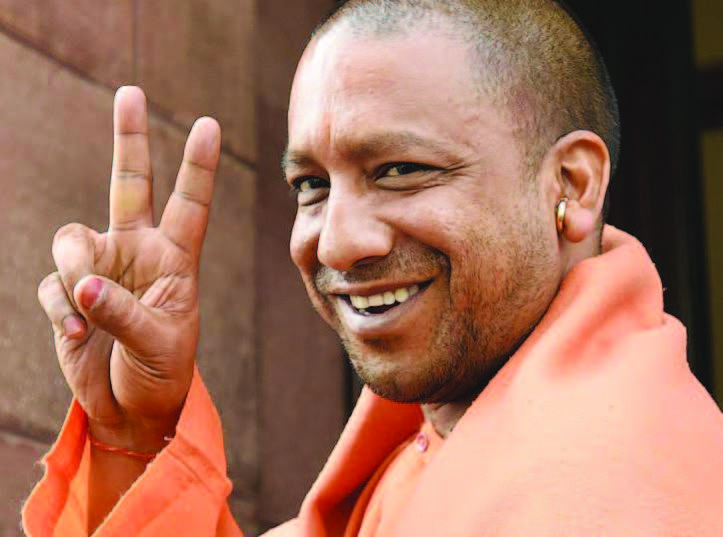
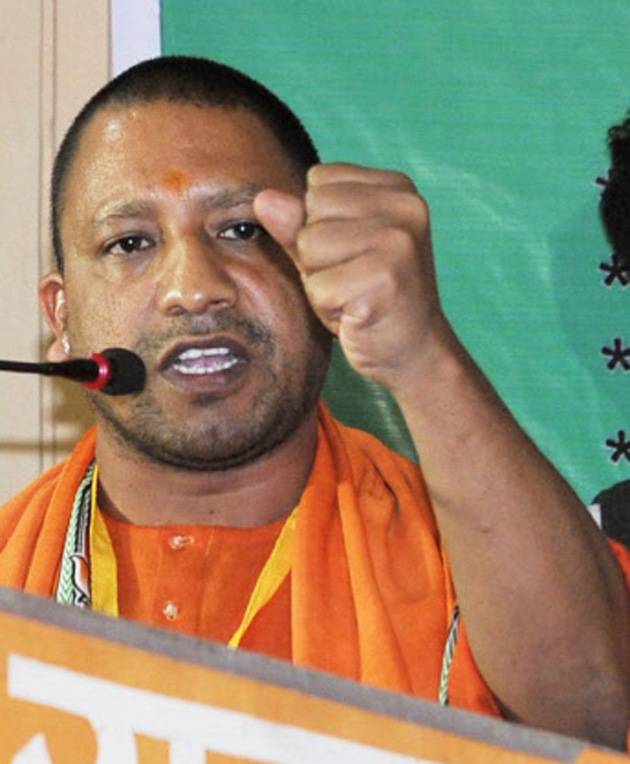
  • INOC, USA expresses serious disappointment over Yogi Adityanath as the Chief Minister of U.P.

    INOC, USA expresses serious disappointment over Yogi Adityanath as the Chief Minister of U.P.

    NEW YORK (TIP): ‘It is a recipe for disaster for the state of Uttar Pradesh however; it is part of a carefully calibrated plan by the BJP to further sow the seeds of polarization and conflict to profit from especially looking at the upcoming Parliamentary election. The real face of the RSS will be on full display soon’ said George Abraham, Chairman of the Indian National Overseas Congress, USA.

    ‘We are indeed shocked to see that this firebrand Yogi Adityanath whose virulent public pronouncements often borders outright contempt for the minorities in India is anointed by the Narendra Modi-Amit Shah combine as the Chief Minister of Uttar Pradesh, the largest state in India’ said Harbachan Singh, the Secretary-General of INOC.

    According to the New York Times report, Mr. Adityanath, 44, was born Ajay Mohan Bisht, and studied mathematics before joining the priesthood. He rose to prominence as part of the campaign to rebuild the Ram temple, and has repeatedly been charged with fanning religious tensions.

    In 2007, he spent 15 days in jail on charges of inciting riots, The Hindustan Times reported. He was booked again later in the year, when riots broke out after he made a speech. He is still facing trial in the two cases, the newspaper reported.

    Mr. Adityanath was a forceful defender of the Hindu mob who lynched Muhammad Ikhlaq, a Muslim man suspected of slaughtering a cow, and argued that Mr. Ikhlaq’s family should be prosecuted for possessing the meat. When some Indians complained that they should not be required perform a “sun salutation” as part of International Yoga Day celebrations, saying it was a religious act, he recommended that those who were offended should “drown themselves in the sea.”

    Mr. Adityanath has openly called for India to be enshrined as a “Hindu Rashtra” and supports the rebuilding of the temple in Ayodhya in place of razed 16th-century mosque. During the State Assembly polls, Adityanath was a major campaigner for the party across UP. The Gorakhpur-based politician enjoys a substantial following in Eastern U.P. where he founded Hindu Yuva Vahini whose volunteers are known to use strong-arm tactics during communal riots, cow-protection drives and to prevent ‘love-jihad.’

    INOC urges the NRIs in America to strongly express their disapproval of the selection of a Hindutva extremist to be the leader of the most important state in India. ‘Opposing Trumpism in America while remaining silent on the fundamentalist ascendance in India would tantamount to nothing less than duplicity’ the statement added.

  • PUT FOREIGN POLICY IN PLACE:  ELECTIONS DONE, MODI MUST GET DOWN TO  SOME SERIOUS GOVERNING

    PUT FOREIGN POLICY IN PLACE: ELECTIONS DONE, MODI MUST GET DOWN TO SOME SERIOUS GOVERNING

    KC Singh

    Modi’s preoccupation with domestic politics may continue through the Delhi municipal elections or even till elections in Gujarat. But he must not let foreign policy issues adrift………The Prime Minister cannot alternate between a pugnacious fighter at home and occasionally a statesman abroad,” says the author – KC Singh.  

    March 11 marked a significant landmark for Modi’s evolution as a dominant national political force, the future of AAP and its leader Arvind Kejriwal and the fate of ‘young’ leaders, 43-year-old Akhilesh Yadav and 46-year-old Rahul Gandhi. The murmurs are the loudest in the Congress against leadership, particularly when despite winning more seats than the BJP in Goa and Manipur, the governments have been formed by the latter.

    After winning an unprecedented mandate in Uttar Pradesh, the most populous state of India, Modi could have shown humility in victory and espoused more collegial governance. Instead, he seems succumbing to hubris, as the BJP, particularly in Goa – despite their Chief Minister and six ministers being rejected by the electorate – have induced Independents, including those who campaigned on anti-BJP platform, with ministerial berths to devise an unethical coalition. The Supreme Court Bench of the Chief Justice disappointed in ignoring past guidelines in judgments and advice in commissions by worthy predecessors like Justices Sarkaria and Punchhi on how Governors should deal with split verdicts. Even if the swearing-in of Manohar Parrikar had to go ahead when the floor test was being advanced, how were all non-BJP supporters allowed to be sworn in as ministers?That clearly taints the process.

    The April-end municipal elections in Delhi are now critical for the Congress, and even more so for the AAP. Gujarat, where the Patel agitation and poor governance post-Modi has created political uncertainty, looms next and there is talk of election, due later this year, being advanced to keep opponents from regrouping. Gujarat is literally the last hurdle beyond which Modi’s path to re-election in 2019 should be clear.

    He is now like Indira Gandhi in her prime, the predominant figure to beat. But strange are the ways of the Indian masses as they both feed the rise of a strong leader and then resist power accumulation. The AAP in Delhi or the Janata Dal in Bihar benefited from this counter urge. Henry Kissinger in his book ‘On China’, comparing India and China, writes that the latter has continuously been a unitary state since 221 BC. India, contrariwise, only thrice: the Mauryas, Guptas and the British, as even the Mughals never controlled the entire south. Indira Gandhi realized after imposing the Emergency in 1975 that she now ruled over a sullen people waiting to punish her. Modi can ignore this lesson of history at his own peril.

    Meanwhile, the external Indian environment has evolved drastically while Modi has been in the domestic mode. Victory of Donald Trump and the coming elections in Europe, in the Netherlands on March 15 and then in France and later Germany, can rewrite the future of the European Union. President Xi Jinping of China, with greater power accretion than any leader since Mao, faces the quinquennial 19th party congress later this year when new faces that may lead China in future should emerge. While the fourth generation ruled from 2003 to 2012, it remains to be seen if Xi will pass the baton to a successor in 2022, accepting the 10-year leadership change principle, or will linger as China faces a slowing economy and a mutating and less benign global order. India-Pakistan relations continue to fester as Pakistan is far from isolated. They have just joined Saudi Arabia’s Sunni coalition by sending troops to defend their border with Yemen. Pakistani economy is also on the mend, returning to 5 per cent GDP growth.

    Modi’s preoccupation with domestic politics may continue through the Delhi municipal elections or even till elections in Gujarat. But he must not let foreign policy issues adrift. The first concern is to insulate gains in India-US relations over the last two US administrations from vagaries of Trump’s immigration policy, approach to Asia and global regimes. Second is India-Pakistan relations in state of persistent tension. That is hardly a strategy to deal with a nuclear weapon-possessing neighbor. Thirdly, relations with China are getting testier over India’s unwillingness to kowtow over the Dalai Lama while the Chinese become intransigent over Indian membership of the NSG and the listing of Pakistan-based terrorists by the UN Security Council sanctions committee.

    Pakistan policy has, time and again, been on hold while Modi fights domestic electoral battles, including subliminally using terror emanating from there as an electoral weapon. Starting with the Maharashtra and Jammu and Kashmir elections in 2014, it has been a recurring tactic. By what definition was the terror attack in Uri comparable to the 26/11 carnage or attack on Indian Parliament in 2001 or the 2006 Mumbai train bombings? When red-lines are shifted to the walls of Indian cantonments then peace is unattainable, as any two terrorists can disrupt it with, or without, Pakistani support.

    On the other hand, Pakistan in the last few months has been sending subtle signals. A new army chief, handpicked by PM Nawaz Sharif, appears in line with him. The detention of Hafiz Saeed and some associates may be a beginning that can be reversed or sharpened. Indian Punjab gets a new government with Capt Amarinder Singh, known to be sensitive to Punjabiyat, as a nebulous and diminishing link between the two divided Punjabs. Modi needs to test the window reopening for engagement and the calibrated resumption of normalization, or even talks.

    For a start, Indian NSA Ajit Doval needs to talk to his counterpart, who is a former general, with a line to army chief Gen Qamar Javed Bajwa. Signals at a recent India-Pakistan track II were that General Bajwa may indeed be the partner Nawaz has been seeking since 1998, when Vajpayee travelled by bus to Lahore. The cultural and ideological space needed for this can be created between the twin cities of Amritsar and Lahore.

    The Prime Minister cannot alternate between a pugnacious fighter at home and occasionally a statesman abroad. He has a limited opportunity to test Pakistani signals and build a consensus behind a new approach to Pakistan. Forcing Pakistan deeper into Chinese arms complicates dealing with both, particularly in an uncertain Trumpian world, when the need to defend Indian diaspora, whether holding Indian citizenship or not, can sour relations. The foreign policy ball has rolled back down the hill which Modi must, like Sisyphus, re-climb.

    (The author is a former Secretary, Ministry of External Affairs, Government of India)

  • BJP Victory celebrated in New York

    BJP Victory celebrated in New York

    NEW YORK (TIP): Indian American community in New York celebrated victory of BJP in U.P., Uttarakhand and other states. Community leaders of various organizations joined in congratulating Modi for landslide victory.

    “Modi magic has worked again. It is the pro-poor and pro-farmer policies of the Prime Minister which have resulted in BJP’s historic victory in Uttar Pradesh,” said Jagdish Sewhani, president of American India Public Affairs Committee. “This is also an endorsement of the demonetization policy of the Prime Minister. This shows people have full faith in him,” he added

    This is vote for Development. People are happy with performance of Prime Minister Modi, said Mr Sewhani

    Dr Shashi Shah, president AIA, Mr Gobind Munjal, Nagendra Gupta andRavi Bhooplapur also spoke at the function.

  • Na baithunga, na baithne dunga: With new challenge,  Modi keeps BJP MPs on their toes

    Na baithunga, na baithne dunga: With new challenge, Modi keeps BJP MPs on their toes

    NEW DELHI (TIP): Prime Minister Narendra Modi is challenging BJP leaders to spread the party’s ideology to the farthest corners of the country. And he is doing it with a directive cloaked as a caution – “na baithunga, na baithne dunga” (Neither will I rest nor will let you).

    Modi’s exhortation, at a meeting of BJP parliamentarians in New Delhi on Thursday, was on the lines of a similar statement he had made just after he was installed as the Prime Minister in 2014.

    Then it was targetted at corruption, one his key election planks. “Na khaunga, na khaane dunga,” Modi had said, warning people that neither he will accept bribes, nor allow anyone to do so.

    The Prime Minister’s new goal for BJP leaders was aimed at ensuring the party’s victory in the 2019 parliamentary polls, said party sources who attended the meeting.

    Modi led the BJP to spectacular victories in the recent five-state assembly polls, winning Uttar Pradesh and Uttarkhand with overwhleming majorities. The BJP also managed to form the governments in Manipur and Goa despite ending up as the second-largest party. The only black spot was the defeat in Punjab where its alliance government wiht the Shiromoni Akali Dal was ousted by the Congress.

    At the BJP parliamentary party meeting, the sources quoted Modi as telling MPs that after nearly three years in office, people have started believing that this government was “performing”.

    And the party must now explore new options to reach out to more people.

    “One untapped area is youth. Before May 26 (the government’s third anniversary), you should come out with suggestions to make youth the brand ambassadors of BJP. No institution should be left out,” he said.

    Modi also set out another target for party leaders between April 6 and 14, between the party’s foundation day and BR Ambedkar’s birth anniversary.

    And that is to promote the government’s ambitious plan of making India free from open defecation under the Swachchta Mission. He also asked MPs to promote the of the BHIM app among street vendors, part of the government’s mission to create a cashless economy.

    “Become vistarak (campaigner) for the party for at least 72 hours during this period,” Modi said.

    “Bhim is a new currency. It will transform lives of people of lower starta,” Modi said, hinting the more it was used there could be incentive through banks. “It will bring them out from the clutches of money lenders.”

    MPs gave Modi and party president Amit Shah a standing ovation at the meeting.

    Parliamentarians also adopted a resolution hailing Modi for leading the party to the historic victory. Sweets from the Tirupati Venkateswara Temple, arranged by parliamentary party secretary Balasubrahmanyam Kamarsu, were distributed to all MPs.

    In his speech, Shah said the result of the 2017 assembly elections has unshackled democracy from three ills –casteism, nepotism and appeasement.

    Maintaining that a new order of polity is emerging, Shah said the Vikas Yatra that started from Gujarat has been ratified by the people.

    “2014 victory was historic. People attached significance to the 2017 elections as well. Victory should not make you complacent. 2019 should be the target now,” Shah said.

    Earlier during the day, MPs greeted Modi with a slogan when he walked into the Rajya Sabha.

    “Dekho dekho kaun aya, Gujarat ka sher aya (See who has come, the lion of Gujarat has arrived)”.

    Opposition MPs, however, taunted BJP for its loss in Punjab.

  • Manoj Sinha in contention for UP CM’s post, Rawat front runner in Uttarakhand

    Manoj Sinha in contention for UP CM’s post, Rawat front runner in Uttarakhand

    NEW DELHI (TIP): Trivendra Singh Rawat, a leader with RSS background, has emerged as the front-runner in the race for the coveted chief minister’s post in Uttarakhand. He is likely to be elected the leader of the BJP legislature party in the hill state. The swearing-in ceremony will take place in Dehradun on Saturday in the presence of Prime Minister Narendra Modi and BJP chief Amit Shah.

    BJP MLAs in Uttar Pradesh will also meet on Saturday to elect their leader and who will take over as the chief minister. Union minister M Venakaih Naidu and BJP general secretary Bhupendra Yadav will attend the legislature party meeting in Lucknow to brief the MLAs of Delhi’s choice. State BJP chief Keshav Prasad Maurya, Union minister Rajnath Singh, and Manoj Sinha are in contention. The date for the swearing-in of the chief minister of the country’s most populous state has not been decided yet.

    In Uttarakhand, Rawat faced stiff competition from former minister Prakash Pant and former MP Satpal Maharaj. Pant is MLA from Pithoragarh and Maharaj from Chaubattakal. Maharaj is a former Congress leader who joined the BJP ahead of the 2014 Lok Sabha elections while Pant was propped up by Rawat’s rival.

    “But Amit Shah’s support to Rawat seems to have tilted the balance in his favour,” a BJP source said.

    A Thakur, Rawat is close to Shah and was one of the three deputies attached to him in Uttar Pradesh during the 2014 Lok Sabha elections. As an RSS leader sent to the BJP, Rawat held the post of Sangathan Mantri (organisational secretary) of the Uttarakhand BJP between 1997 and 2002 and served as a minister in the BJP government in 2007.

    UP chief minister hopeful Keshav Prasad Maurya was admitted to the ICU at Ram Manohar Lohia Hospital here after falling ill. He had fever and high blood pressure when admitted. Doctors have placed him under observation.

    Uttar Pradesh CM to be decided on March 18

    The suspense over the new chief minister of Uttar Pradesh is expected to end at the BJP legislature party (BJPLP) meeting to be held in Lucknow on Saturday.

    The declaration of a new leader, in the presence of Union minister Venkaiah Naidu and party general secretary Bhupendra Yadav, will coincide with the party’s victory day celebration on that day. The BJP’s incumbent legislature party leader, Suresh Khanna, on Thursday confirmed the news about Saturday’s meeting of the party’s newly-elected lawmakers.

  • Manohar Parrikar wins floor test in Goa assembly, 22 votes to 16

    Manohar Parrikar wins floor test in Goa assembly, 22 votes to 16

    Manohar Parrikar won the trust vote on the floor of the House on Thursday, March 16.

    PANAJI (TIP): The Manohar Parrikar-led coalition government in Goa won the floor test in the legislative assembly on Thursday, March 16, by getting 22 votes to 16 in the 40-member Goa assembly, one more than the simple majority figure of 21.

    One MLA was made the speaker for the trust vote and did not vote while one Congress legislator walked out during the floor test against his own party. Congress MLA Vishwajeet Rane walked out during the floor test and later submitted his resignation to the pro tem speaker. Rane, son of Congress veteran Pratapsinh Rane who himself won his 11th term as an MLA in the Goa assembly elections, also resigned as a Congress member. He said he would re-contest from Valpoi constituency.

    Apart from the Bharatiya Janata Party’s 13 MLAs, Parrikar also got support from three legislators of Maharashtrawadi Gomantak Party (MGP), three legislators of Goa Forward party (GFP), two independents, and Nationalist Congress Party’s lone member Churchill Alemao.

    Before the floor test began, Rane told reporters that the delay caused by the Congress leadership in staking claim to form the government had demoralized the people of Goa. “They have lost the trust of voters in Goa,” he said.

    Hours after the Goa governor appointed Parrikar as the chief minister, Rane had said that as many as 13 of the 17 Congress legislators were angry that the party leadership could not elect a legislative party leader. Later, Rane and other Congress legislator Jennifer Monserrate blamed All India Congress Committee general secretary and Goa observer Digvijay Singh for this delay. Singh hit back on Wednesday with a tweet asking Rane “what he was doing with Parrikar in a Goa hotel”.

    A triumphant Parrikar told reporters at a press conference later that the BJP was always confident of winning the trust vote. “The Congress did not have the numbers ever. Today’s floor test was a voluntary vote for us. No MLA was hidden in a hotel or anything,” Parrikar said. The Goa chief minister, who earlier this week resigned as the defence minister and made some deft moves in Goa to stitch together a BJP-led coalition, said “all eyes in India were on this floor test”.

    The floor test was ordered by the Supreme Court after the Congress party in Goa filed a petition on 13 March challenging Goa governor Mridula Sinha’s decision to appoint a BJP-led government.

    Parrikar was sworn in on 14 March along with eight other ministers.

    The chief minister said after winning the trust vote that portfolios would be announced on 18 March. Ministers from MGP and GFP are likely to get important portfolios. In the 40-member Goa assembly, the BJP won 13 seats in the recent elections and later received support from 9 others.

    The Congress won 17 seats and emerged the single largest party but never staked claim to form the government. On Thursday morning itself, it became clear that the BJP would sail through the trust vote as the MGP and GFP leaders reiterated their support to the BJP.