Tag: BJP

  • Some Positive Signs in India-Pakistan Relations?

    Some Positive Signs in India-Pakistan Relations?

    By Prabhu Dayal

     “Hoping for a quick turn-around in Indo-Pakistan relations may just be wishful thinking. Perhaps it is, but I must admit that I have secretly indulged in it since 1978 when I went to Egypt on my first diplomatic posting and witnessed Anwar Sadat and Menahem Begin burying the hatchet between their two countries. Egypt and Israel too had fought deadly wars in 1948, 1967 and 1973, but there is peace between them now, even though some people refer to it as ‘a cold peace’. 

    It is an axiomatic truth that our region needs development not conflict. To continue on our present path would be catastrophic. By working together, we can usher in a new age filled with hope not just for the two countries but for the whole of South Asia.

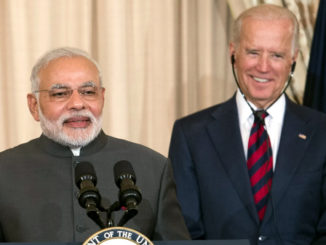
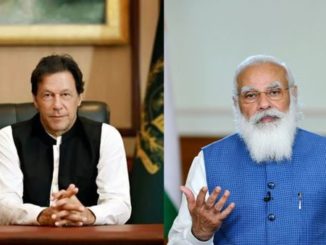
    On the occasion of Pakistan’s 70th National Day on 23rd March this year, Prime Minister Narendra Modi wrote a letter to Prime Minister Imran Khan, saying: “As a neighboring country, India desires cordial relations with the people of Pakistan. For this, an environment of trust, devoid of terror and hostility, is imperative.” He added: ” Excellency, at this difficult time for humanity, I would like to convey my best wishes to you and the people of Pakistan for dealing with the challenges of the COVID-19 pandemic.” Three days earlier, PM Modi had tweeted wishing PM Imran Khan a speedy recovery after he and his wife tested positive for the deadly virus. “Best wishes to Prime Minister @ImranKhanPTI for a speedy recovery from Covid-19,” he had said in his tweet.

    On 29th January, Imran Khan replied to Prime Minister Narendra Modi thanking him for his greetings on Pakistan Day. Khan also said: “The people of Pakistan also desire peaceful, cooperative relations with all neighbors including India. We are convinced that durable peace and stability in South Asia is contingent upon resolving all outstanding issues between India and Pakistan, in particular the Jammu and Kashmir dispute.” He added that the that creation of an enabling environment is imperative for a constructive and result-oriented dialogue. The Pakistani Prime Minister also conveyed his wishes for the people of India in the fight against the Covid pandemic.

    Other positive signs

    In this regard, there are some other positive developments which also need to be noted. Both the armies recommitted themselves to the 2003 ceasefires along the line of control in J&K in February. After about two-and-half years, a delegation of Pakistani officials arrived in India for a meeting of the permanent Indus commission this week. Last week, Foreign Secretary Harsh Vardhan Shringla said India wants good friendly ties with Pakistan provided there’s a conducive atmosphere for dialogue. Similar sentiments have been expressed across the border too.  Pakistan Army chief General Qamar Javed Bajwa said on March 18 that it was time for India and Pakistan to “bury the past and move forward.” He added that the peace between the two neighbors would help to “unlock” the potential of South and Central Asia.

    There are some hopeful signs in regard to trade also. Pakistan had suspended trade ties with India after New Delhi revoked the special status of Jammu and Kashmir in 2019. However, in May 2020, Pakistan lifted the ban on the import of medicines and raw material from India to ensure there is no shortage of essential drugs amid the COVID-19 pandemic. This was the first step of reversing the complete suspension of trade with India. Now, according to media reports, Pakistan’s textile ministry headed by Prime Minister Imran Khan has recommended the lifting of a ban on the import of cotton from India to bridge the raw material shortfall the country’s textile sector was facing. Currently, cotton and yarn imports are allowed from all countries except India. The textile sector in Pakistan strongly favors imports of cotton from India as they are much cheaper than imports from other countries. Pakistan Textile Exporters Association Chairman Khurram Mukhtar tweeted that the import of raw cotton, yarn and grey fabric from India will bridge the gap in demand and supply and will enable Pakistani exporters to continue the growth momentum.

    Two steps forward, two steps backwards

    The past has shown that Indo-Pak relations are a case of two steps forward followed by two steps backwards. However, it cannot be emphasized enough how important it is to end the deeply ingrained hostility unless we want to hurtle towards another conflict, one that will perhaps be more destructive than any in the past. We need bold and out-of-the-box thinking to chart out a new course. To use a cliché, the bull has to be taken by the horns.  Hoping for a quick turn-around in Indo-Pakistan relations may just be wishful thinking. Perhaps it is, but I must admit that I have secretly indulged in it since 1978 when I went to Egypt on my first diplomatic posting and witnessed Anwar Sadat and Menahem Begin burying the hatchet between their two countries. Egypt and Israel too had fought deadly wars in 1948, 1967 and 1973, but there is peace between them now, even though some people refer to it as ‘a cold peace’.

    Pakistan’s hostility

     Sadly, amidst all the turbulence which has marked Pakistan’s history, and which has seen civilian governments and military juntas play musical chairs with one another, one aspect which has retained the stamp of permanence has been its unremitting hostility towards India and its steadfast desire to foment trouble across its eastern border. The inevitable conclusion that is drawn in India is that the ill-will of the Pakistan establishment, especially that of the army cannot be transformed into goodwill; whenever Pakistan can create problems for us, it will always do so. In turn, this has given rise to anti-Pakistan sentiments across many sections of the Indian polity.

    Given the fact that Pakistan’s economic, industrial and military strength is considerably less than India’s, a fundamental plank of its policy continues to be built around the asymmetric or proxy war involving the sending of terrorists across the Line of Control.  Although the Line of Control is fenced, there are portions of it where rivers and rivulets make the fencing vulnerable and such sections are used by the infiltrators. The use of tunnels for sending across infiltrators has also been resorted to by the Pakistanis.


    Kashmir issue


    Will we ever be able to resolve what Pakistan regards as the core issue – the Kashmir dispute? It is very difficult, but I would not say that it is impossible.  It may be pertinent to note that according to the reputed journalist Kuldip Nayyar, Nawaz Sharif had himself admitted to him some years ago that neither can Pakistan take away Kashmir from India nor can India give it away.


    Some analysts have suggested that the only reasonable and workable solution would be to eschew jingoism and settle the Kashmir dispute by recognizing the Line of Control as an International Border. They feel that this is the only alternative to the endless hostility which only impoverishes both countries.

    In his treatise Securing India’s future in the new millennium, the well-known Indian strategic analyst Bramha Chellany has opined:

    “In the long run, the only possible solution to the Kashmir dispute is for the three countries (India, Pakistan and China) to let bygone be bygones and agree to be content with the J&K territories they control.”

    The undeniable fact is that India-Pakistan relations can only be set right through a spirit of give and take.  If the willingness to compromise is absent, then the conflict cannot end, and the hostility will keep increasing. It may take a very long time for everything to fall in place; there will be numerous setbacks. However, working towards this objective is preferable to just being reconciled to the war of attrition.

    It goes without saying that one issue on which India cannot compromise is the demand that the nurseries of terrorism in Pakistan must be closed down. Hopefully, Pakistan will begin to realize that its policy of sponsoring terrorism is causing great damage to itself, as thousands of Pakistanis have died in acts of terrorism committed by the very same outfits which have been trained by the ISI and the armed forces.


    ‘Sone ki chidiya’ versus today’s reality


    Many in India as well as in Pakistan hope that one day our countries could live together as prosperous, good neighbors, much as France and Germany do now after having endured centuries of mutual conflicts. They hark back to those days when the Indian sub-continent produced so much wealth that it was called sone ki chidiya or a bird made of gold.


    That bird is now malnourished, sick and weak. The IMF rankings of countries in terms of Per Capita Income (2020 estimates) place India at 140 in the list and Pakistan at 150 with figures of US$ 1,877 and $1,378, respectively. By comparison, Malaysia is ranked 60 with US$ 10,192, Thailand at 77 with US$ 7,295, Indonesia at 107 with US$ 4,038 and Sri Lanka at 112 with US $ 3,698. Even Bangladesh has overtaken India and Pakistan and ranks 139 with figures of $ 1,888. Only really underdeveloped countries rank behind the South Asian giants India and Pakistan. Despite the fact that the South Asian Association for Regional Cooperation (SAARC) has been in existence since December 1985, it has precious little to show by way of real cooperation unlike ASEAN, another regional cooperation organization in Asia.


    It is an axiomatic truth that our region needs development not conflict. To continue on our present path would be catastrophic. By working together, we can usher in a new age filled with hope not just for the two countries but for the whole of South Asia.

    (The author is a former career diplomat. He can be reached at prabhu_dayal70@hotmail.com)

    (Courtesy / OPOYI)


    ———————————————————

    For Jatinder


    Categories:Breaking News, Front Page, South Asia, India, Pakistan

    Tags#India #Pakistan #ImranKhan #NarendraModi #LoC

  • BJP announces 157 candidates for West Bengal assembly polls, turncoats rewarded

    Kolkata (TIP):  The BJP on Thursday, March 18,  announced its list of 157 candidates for the last four phases of assembly election in West Bengal, rewarding around 22 turncoats and fielding party heavyweights Mukul Roy and Rahul Sinha. The candidate list also features 17 Muslim faces, including women. The party is facing protests and resignations as many of its aspiring old-timers did not find their names in the list of candidates.

    Roy’s son Subranghshu, a sitting TMC MLA, state BJP Mahila Morcha president Agnimitra Paul, Bengali film personalities Rudranil Ghosh, Srabanti Chattopadhyay and Parno Mitra were among those given tickets by the saffron party.

    Roy, BJP national vice-president and former union minister, is back in the electoral fray after a gap of two decades.

    He will contest from the Krishnanagar Uttar seat, which is dominated by the Matua community. He had unsuccessfully contested election on a TMC ticket in 2001.

    The BJP, which has emerged as the main opposition in the state, has also fielded sports personalities and a scientist for the high stakes battle in the state.

    Despite protests over recruits getting more importance than old-timers in the candidates’ list, the party gave nominations to 22 turncoats, including several former TMC MLAs like Arindam Bhattacharya who has been fielded in Jagatdal and Jitendra Tiwari in Pandaveswar.

    However, in some cases, the saffron party has not given nominations to turncoats from their home seats to avoid dissent.

    The list also has 19 women candidates, which is more than its previous two lists.

    The party continued with its strategy of fielding personalities from different walks of life and sitting MPs.

    It named folk artiste Ashim Sarkar from Haringhata assembly seat and scientist Gobhardhan Das from Purbasthali Uttar.

    It has fielded its former state unit chief Rahul Sinha, who is yet to taste success in any of the elections he has contested so far, from Habra against the state Food Supplies Minister Jyotipriyo Mullick.

    The BJP has nominated party MP Jagannath Sarkar for the Santipur seat. The party has so far announced names of five sitting MPs, including Union minister Babul Supriyo, as its candidates for the state election.

  • Daily cases hit 3-month high in India

    India on Thursday, March 11,  logged 22,854 new Covid-19 cases, the highest in nearly three months as well as this year, as Maharashtra, Kerala, Punjab, Karnataka, Gujarat and Tamil Nadu continued to fuel the pandemic burden. The total cases reached 1,12,85,561, riding on a surge in 24-hour infections. It was 76 days ago on December 25 that 23,067 cases were recorded. India’s active cases have gone up from a low of 1.35 lakh on February 12 to a high of 1.89 lakh today, but the government said the disease graph was stable nationally. The high-burden states, it said, needed to prioritise vaccinations. The surges have been high in six states in particular. The daily new cases in Punjab grew around 4.5 times between February 11 and March 11, from 2,112 to 9,402. The rise is around six-fold when compared with 1,388 cases in the first week of February. With around 8,000 cases and over 100 deaths reported over the past one week, Punjab appears headed towards a spike worst than the one in September last when over 60,000 cases were reported in a month. The active cases too have shot up five times—from around 2,000 in February first week to almost 10,000 today. The state today also saw imposition of night curfew in Patiala and Ludhiana districts in view of the rising cases. The government said India had seen active cases as high as 10 lakh on September 18 last and the situation nationally was overall in control, except in six states. The eight of the country’s 10 highest active case burden districts are in Maharashtra and one each in Kerala and Karnataka. The government said Haryana, Gujarat and Madhya Pradesh were at a tipping point and were yet to enter a surge, said Union Health Secretary Rajesh Bhushan. In MP, daily cases have risen from 1,951 on February 11 to 3,915 on March 11; corresponding period rise in Haryana is 824 to 2,440 and in Gujarat from 1,800 to 3,529. On vaccinations, the government said the speed was satisfactory with 2,56,90,545 doses administered till today morning. Globally, India is second only to the US on the speed and scale of inoculation. As of March 9, the US had delivered 9.36 crore doses followed by India (2.43 crore) and the UK (2.37 crore). “The signs from Maharashtra are very worrying. Do not take the virus for granted. It can come up unexpectedly. We also need to caution Delhi as many adjoining districts like Gurugram, Ghaziabad and Gautam Budhh Nagar are seeing surges,” the government said. Punjab health officials said the state may see the worst spike by March-end with cases expected to soar to 3,000 a day. The state has recorded around 8,000 cases and over 100 deaths in a week. Meanwhile, PM Narendra Modi’s mother Hiraben, a centenarian, took her first dose of Covid-19 vaccine on Thursday.

  • Covid-19: Phase 2 of vaccination drive stuck in first gear

    Covid-19: Phase 2 of vaccination drive stuck in first gear

    New Delhi (TIP): Rajasthan is the runaway leader in the first three days of the second phase of India’s Covid-19 vaccination drive, having given doses to 5,187 per million residents, although an HT analysis of data from the first three days of the expanded drive indicates a slow start across the country. Till Wednesday night, India vaccinated a total of 949,147 people, or 712 per million in Phase 2, which covers the most vulnerable sections of the general public. The government hopes that drafting more private hospitals to administer vaccines and keeping facilities open 24×7 will help increase the numbers. The government has previously said its ultimate target in this phase is 5 million shots a day. Delhi, which gave shots to 1,679 people per million population in the second phase till Wednesday night, was in the second spot, while Odisha (1,283 doses per million) was third. To be sure, the per-million metric provides an easy comparison, although a more accurate denominator is the number of people over the age of 60 and over 45 with co-morbidities – a number that wasn’t immediately available for all states and Union territories. In all, the second phase of the drive is expected to cover 270?million people. HT collated and analysed data for India’s 20 most populated states. In the national capital, 33,259 people lined up to receive jabs in first three days of Phase 2 – an average of a little over 11,000 shots a day. In contrast, the three days before the start of the second phase, when only health care workers and front-line workers were getting jabs, the city averaged 19,176 shots a day. On average, 316,382 people have received shots every day across the country under Phase 2 — this has less than halved (653,565 doses administered per day) from the three days before the opening up of the drive. In Bihar, the fewest people showed up to get shots in the first three days of Phase 2 — only 43 doses were administered per million residents in the state. Uttar Pradesh, with 60 shots per million, and Jharkhand (144 shots per million) accompanied it as the three worst-performing states. Bihar and Uttar Pradesh’s numbers were also skewed by their huge populations and the significant proportion of their population under the age of 18 (they are both among India’s youngest states). The numbers account for those vaccinated in the Phase 2 of the vaccination drive, which includes persons above 60 years of age and those who are 45 years or more and suffering from certain medical conditions.

                    Source: HT

  • Group of Ministers spells out steps to ‘neutralize’ narratives critical of Modi regime

    Group of Ministers spells out steps to ‘neutralize’ narratives critical of Modi regime

    NEW DELHI (TIP): With a view to “neutralizing” narratives critical of the Narendra Modi government, a Group of Ministers (GoM), formed to fine-tune “government communication”, has come out with various suggestions, including tracking “50 negative and 50 positive influencers” on the social media and to “neutralize the people who are writing against the Government without facts and set false narratives/spread fake news”, according to media reports. It emerges that the decisions to cap FDI (foreign direct investment) at 26% for the digital media and the new IT rules that have a separate section dealing with a code of ethics for Over The Top (OTT) platforms such as Netflix and Amazon Prime were the result of the GoM’s deliberations. The FDI cap was essential, the GoM felt, to constrict foreign influence on the Indian media. As a result of this capping, Huffington Post, which had been publishing reports critical of the Modi regime, shut its operations in India.

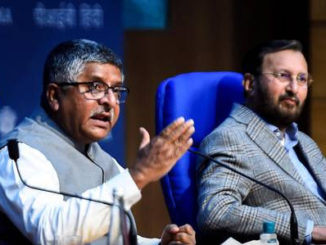
    Information Technology (IT) Minister Ravi Shankar Prasad, Women and Child Development Minister Smriti Irani, Information and Broadcasting (I&B) Minister Prakash Javadekar, External Affairs Minister S Jaishankar, Minority Affairs Minister Mukhtar Abbas Naqvi, Sports Minister Kiren Rijiju, Urban Development Minister Hardeep Singh Puri, Minister of State (MoS) for Finance Anurag Thakur and MoS for the Environment Ministry Babul Supriyo were part of the GoM, which met six times between June 14 and July 9 last year.

    The GoM’s report was first reported by Caravan magazine. There is so far no official word on its contents.

    The GoM report quotes suggestions made by the Ministers. For instance, Prasad suggested, “A list of media personnel and prominent persons, who are pro our line of thought – both nationally and globally, should be prepared. Few eminent academicians, Vice Chancellors, retired Indian Foreign Service officers etc should be identified who can write our achievements and project our viewpoint.” Irani, who held the I&B portfolio in the previous Modi government, recommended, “We should track 50 negative and 50 positive influencers.” The suggestion has been accepted by the GoM and the I&B Ministry has been tasked with implementing it.

    Naqvi suggested direct action against those writing against the government. “We should have a strategy to neutralize the people who are writing against the Government without facts and set false narratives / spread fake news,” he advised.


    Among other action points recommended by the GoM include enlarging the Prasar Bharati News Service into a “main line news agency”. Among the long- term agreed strategies include “coordination with schools of journalism as present students are the future journalists.”


    Puri told the GoM that the journalists who are supportive of the government, even if they are now unemployed, should be roped in. As per the report, this suggestion would also be acted upon. Thakur wanted the BJP and the Modi government to reach out to right-wing parties across the world to arrive at a common ground.

    Supreme Court favors regulation of OTT platforms

    The Supreme Court on Thursday, March 4, made it amply clear to OTT (over-the-top) platforms like Netflix and Amazon that it is in favor of “screening” content shown by them. It said some of the films hosted by the platform were pornographic. “Traditional film viewing has become extinct. Now films and web series are viewed by the public on these platforms. Should there not be some screening? We feel there should be some screening… There is pornography in some films,” Justice Ashok Bhushan, leading a Bench, also comprising Justice R. Subhash Reddy, observed. Senior advocate Mukul Rohatgi, appearing for Amazon producer Aparna Purohit’s bail, said this “was not about pornography but the right to freedom of expression”.


    “But a balance has to be struck,” Justice Bhushan retorted.


    Solicitor General Tushar Mehta said the content included “filthy abuses”. The hearing was based on a plea by Purohit, Amazon Prime’s commercial head, against the Allahabad High Court decision to deny her pre-arrest bail in connection with the probe into Tandav, a web series hosted by the platform. The FIR said the series ridiculed Hindu gods and the country’s political power corridors.


    Justice Bhushan said the court wanted to consider Purohit’s case in the light of the new guidelines notified by the government to hold social media and OTT platforms accountable for their content. The Bench asked the guidelines to be placed on record and scheduled a hearing for March 5.


    The Information Technology (Guidelines for Intermediaries and Digital Media Ethics Code) Rules of 2021 requires streaming platforms to comply with a new three-tier self-regulatory complaint redressal system. It also includes an independent self-regulatory body headed by a retired high court or Supreme Court judge, which will decide on matters related to content.


    Meanwhile, the Information & Broadcasting Ministry on March 4, clarified that none of the OTT platforms will have to register with the government and no government nominee will be present in the self-regulatory body. The statement was issued after I&B Minister Prakash Javadekar had an interaction with representatives of OTT platforms

  • ‘The Metro man of India’ E Sreedharan is BJP’s Kerala CM candidate

    ‘The Metro man of India’ E Sreedharan is BJP’s Kerala CM candidate

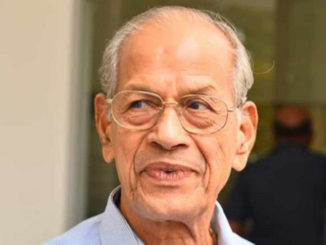
    NEW DELHI (TIP):  E Sreedharan, the ‘metro man’ of India will be the BJP’s chief ministerial candidate for forthcoming Kerala Assembly election, Union Minister V Muraleedharan tweeted Thursday, March 4 evening. “Kerala BJP will fight Kerala polls with E Sreedharanji as its chief ministerial candidate. We will defeat both CPM and Congress to provide a corruption-free, development-oriented governance for the people of Kerala,” Muraleedharan said.

  • Movements must not be delinked from politics

    Movements must not be delinked from politics

    By Yogendra Yadav

    We must recognize that any mass movement cannot but be political in its impact. A movement that questions the rulers, as most movements do, cannot but dent the image of the ruling dispensation. A ruling party that does not accede to the demands of a popular movement must be prepared for political punishment in the electoral arena. A movement must seek to influence electoral outcomes as a final way of ensuring democratic accountability.

    In a democracy it is naïve, if not wicked, to demand that a movement should have nothing to do with politics, political ideology or political party.

    The decision of the Samyukta Kisan Morcha (SKM) to intervene in the coming Assembly elections is bound to reignite an old debate: Should the farmers’ movement keep away from politics? The demand for apolitical movements, in line with Prime Minister Narendra Modi’s derision of andolanjivis, reflects a new low in our rapidly shrinking democracy.

    For the record, the SKM is not going to campaign for any party or candidate. We have decided to appeal to the voters in West Bengal, Assam, Kerala, Tamil Nadu and Puducherry to electorally punish the BJP for its anti-farmer laws, for its outrageous attacks on the movement, for its use of State machinery to suppress and criminalize the movement and, above all, for its imperious arrogance. It is for the voters to decide how they wish to mete out a punishment to the BJP. It is not for SKM to suggest who they should vote for.

    An anti-democratic demand keeps coming up now and then: the farmers’ movement should be apolitical. Funnily, those who are most vociferous in demanding this are politicians, mostly from the ruling party! Or, media persons whose political loyalties are no secret. Our democratic politics has sunk so low that politicians can hope to gain political mileage by proclaiming that politics is dirty. We have all given up on the difficult demand that politics should be responsible, transparent, ethical and truthful. Instead, we all prefer the easy path. Politics is selfish, nasty, brutish and shortsighted. So, let us do away with politics. ‘No politics, please’ seems to be our national banner.

    This demand keeps raising its head within the farmers’ movement as well. The first wave of peasant movements in India was deeply political. Historic protests like the Champaran and Bardoli satyagraha were integral to the political struggle for national freedom. The Tebhaga movement and other struggles launched by the Kisan Sabha were part of anti-colonial, anti-feudal politics of the Left, as was the Naxalbari upsurge after Independence.

    The demand for ‘apolitical’ farmers’ movements gained ground in the 1980s and 1990s, as all mainstream political parties — the Congress as well as the Opposition — turned their back to the farmers. A failure to shape politics led to a defeated and defensive mindset and a demand for apolitical movements. This did not last long. Iconic farmers’ leaders like Prof MD Nanjundaswamy and Sharad Joshi soon realized that they had no option but to form their own parties and contest elections.

    Yet the anti-political language persists. We have kisan unions that name themselves ‘Arajnaitik’ (apolitical). When there were inevitable allegations about the organization taking sides during elections, the breakaway faction called itself ‘Asli Arajnaitik’ (truly apolitical)! Rhetoric about keeping politics out resonates in every meeting of the farmers. This rhetoric has little connect with reality. Most of the big farmers’ organizations are affiliated, formally or informally, to political parties. This is true of at least one dozen organizations within the SKM.

    There is no scandal here, for this is exactly what one should expect in any functioning democracy. The scandal is that some of the movement leaders who are most vocal in demanding dissociation from politics are also most busy in striking deals with political parties during elections. The demand to keep away from political parties is often a desire to choose the most convenient party or candidate to align with in each election.

    Now, there is an element of truth to this suspicion of politics. The farmers’ movement, or any movement for that matter, should not be tied to the apron strings of a political party. A sectional movement of farmers, workers or youth must remain true to the needs and aspirations of that section rather than allow itself to be used as an instrument of the ‘party line’.

    All over the world, keeping the frontal organizations one step removed from the parent party ensures this. While these organizations share the overall ideology of the party, they do not always follow the party’s commands or dictates on everything. Sometimes the mood from below forces such organizations to take a stand at variance from the parent political party. If they don’t, they risk losing their supporters.

    The frontal organizations of the BJP-RSS are a good example. The Bharatiya Mazdoor Sangh, the labor union of the Sangh Parivar, has repeatedly opposed labor policies of the BJP government. Their farmer union, the Bharatiya Kisan Sangh (BKS), initially opposed the three farm laws passed by the Modi government. Even today, it is lukewarm in its support. It is no secret that the BKS has consistently warned and alerted the BJP government against going ahead with these laws. It would not survive if it didn’t. We can and must guard against the instrumental use of a movement by a political ideology or party. Movements that remain limited to such shallow political effects are consigned to the dustbin of history. Any attempt to prolong the farmers’ movement for its own sake or merely to foment disaffection with the Modi government must be resisted.

    Similarly, the farmers’ movement must guard against elements that give it a religious color or use it for separatist designs. We must also be careful about a few individuals using the movement to pursue their personal political ambitions at the cost of the movement.

    At the same time, we must recognize that any mass movement cannot but be political in its impact. A protest movement that questions the rulers, as most protest movements do, cannot but dent the image of the ruling dispensation. A ruling party that does not accede to the demands of a popular movement must be prepared for political punishment in the electoral arena. Any mass movement must seek to influence electoral outcomes as a final way of ensuring democratic accountability.

    In fact, a movement must seek a deeper political impact. Instead of just ensuring the victory or defeat of a party or candidate, a mass movement like the farmers’ movement must seek to shape the agenda of electoral contest. The true ambition of the farmers’ movement must be to ensure that the next parliamentary elections are held on the demands put forward by it. Every movement must aspire to this deep politics.

    In a democracy it is naïve, if not wicked, to demand that a movement should have nothing to do with politics, political ideology or political party. If this were to happen, if a country were to witness mass movements that are completely delinked from politics, something is totally messed up about that democracy. I hope we have not already reached that point.

    (The author is National President, Swaraj India)

    (Courtesy Tribune, India)


  • Bail for Disha Ravi

    Court stands up for individual’s right to dissent

    Climate activist Disha Ravi is out on bail in the toolkit case, 10 days after her arrest that had sparked outrage in India and abroad. The 22-year-old shouldn’t have been put in jail in the first place, going by the dressing-down given by a Delhi court to the police. Pulling no punches, Additional Sessions Judge Dharmendra Rana said, ‘The offence of sedition cannot be invoked to minister to the wounded vanity of the governments.’ This hard-hitting statement shows law enforcement officials as well as their political masters in a poor light. The Delhi Police were left red-faced as the court observed that the ‘scanty and sketchy’ evidence available on record was not sufficient to keep a person with no criminal record in custody. Calling citizens ‘conscience keepers’ of the government in a democratic nation, the court has made it clear that people cannot be put behind bars simply because they choose to disagree with the State’s policies. Such observations can help counter the unwelcome trend of vilification of protesters and hopefully deter cops from invoking the sedition law at the drop of a hat. In any case, the poor conviction rate of this colonial-era legislation is a good reason for the police not to go overboard time and again.


    Judge Rana had been equally forthright last week when he granted bail to two persons who were booked on the charge of sedition for allegedly posting/sharing fake videos on social media regarding the farmers’ protests. He had sounded a note of caution about the misuse of the law ‘to quieten the disquiet under the pretense of muzzling the miscreants. It’s praiseworthy that the judiciary is intervening to prevent infringement of the individual’s right to dissent. The onus now is on the executive to respect difference of opinion and let protesters fearlessly have their say, as long as they don’t incite violence or disturb public peace. With India’s global ranking on the Democracy Index down from 27 (in 2014) to 53 last year, the government direly needs to make judicious use of the powerful tools at its disposal to maintain law and order.

    (Tribune, India)

  • Kerala poll: ‘Metro Man’ Sreedharan to join BJP

    In what is being seen as a major fillip to the party’s prospects in Kerala, India’s “metro man” E Sreedharan is all set to join the BJP. Kerala state party president K Surendran said Sreedharan (88), who is credited with changing the face of public transport system in the country, will officially join during the “Vijaya Yatra”, which the saffron party is launching with the aim to expand footprint in the southern state.

    Beginning on February 21 from Kasaragod, the yatra will culminate at Thiruvananthapuram in the first week of March. While Uttar Pradesh CM Yogi Adityanath will inaugurate the yatra, Home Minister Amit Shah is expected to be present at its culmination. Sreedharan also expressed willingness to contest the polls “if the BJP asked him to”.

    “It is for them to decide the constituency. A lot of development works can be done and I hope to do it by joining the BJP,” he added.

    Source: TNS

    Uttarakhand flash flood: Death toll increases to 61

    Rescuers have so far recovered 61 bodies from Uttarakhand’s flash flood-hit Chamoli district even as 143 people remain missing in the aftermath of the worst natural disaster in the state in years, officials said on Friday, February 19.

    District magistrate Swati Bhadauria said 34 of the bodies have been identified. “…Fourteen [of the bodies] have been recovered from the 1.7km-long tunnel at the NTPC’s power project in Tapovan which is in the focus of the rescue operation,” said Bhadauria. “The rescuers have cleared the muck up to about 146 metres inside the tunnel but are facing difficulty due to the outflow of heavy sludge.”

    The rescuers were also scanning the Alaknanda river downstream of the disaster site to search for more bodies.

    Praveen Alok, a spokesperson for the State Disaster Relief Force, said about 70 of their personnel are searching for bodies in the river in Chamoli, Rudraprayag, Tehri Garhwal, and Pauri Garhwal. “After recovering the bodies, their DNA samples are being collected….to ascertain their identities…”

  • Puducherry political crisis: LG orders floor test on Feb 22

    Amid political turmoil in Puducherry, Lieutenant Governor Tamilisai Soundararajan on Thursday ordered a floor test to ascertain the majority of the ruling Congress-led coalition on the floor of the House. The floor test, the LG said, is to be done by 5pm on February 22.

    In an official statement, the LG noted that both the ruling coalition and Opposition have a strength of 14 members each in the legislative assembly, thus necessitating a floor test in the 30-member legislative assembly, where 16 is the magic number. As per the statement, voting shall take place by show of hands and the proceedings will be videographed.

    “The floor test in pursuance of the above directions shall be concluded by 5 pm on 22.02.2021 and the proceedings shall not be adjourned/delayed or suspended at any cost,” the statement said.

    The development came just hours after Soundararajan took oath as Kiran Bedi’s successor and took charge as the Lieutenant Governor of the Union territory where legislative assembly elections are likely to take place in April-May. Bedi, who was removed from office in a sudden move Tuesday night, was frequently engaged in a tussle with chief minister V Narayansamy.

    Puducherry has been plunged into a political crisis following resignations of Congress MLAs from the Narayanasamy-led government. This has brought down the party’s strength in the legislative assembly to ten, including the speaker, while its ally Dravida Munnetra Kazhagam (DMK) has three members in the legislative assembly.               Source: HT

  • Akalis routed in their bastion

    Akalis routed in their bastion

    Bathinda (TIP): The ruling Congress swept the local body elections in Malwa, considered as the stronghold of the SAD. Post the alliance break-up, the BJP also performed poorly in the region. The Congress won in Bathinda, Mansa, Muktsar and Ferozepur in the Malwa region. It also did well in Faridkot and other districts.

    In Bathinda, the home turf of former Union Minister Harsimrat Kaur Badal, the Congress won 43 seats while the SAD won seven out of the total 50 wards. This is the first time the Congress won a majority in the Bathinda MC. Hence, it will have its first mayor from here. The SAD managed to make a comeback only in some pockets.

    In Moga, the Congress failed to win a majority on its own and was able to win 20 seats while the SAD won 15, Independents 10, AAP four and BJP one.

    In Ferozepur, the home constituency of SAD president Sukhbir Singh Badal, the Congress made a clean sweep and grabbed the control of the MC for the first time. It also won in all wards in Zira and Guruharshai, while the SAD was able to retain wards in Mudki.

    In Muktsar, out of 31 wards, the Congress won in 17, SAD 10, AAP two, BJP one and Independent one. In Malout, the Congress won in 14, SAD nine and Independents four. The Congress also did well in Sangrur district. In Longowal, out of total 15 seats, it won nine while the Independent won six seats. In Sunam, the Congress won 19 while the Independents won four seats.

  • Indian-origin British politician Dhesi expresses concern over arrest of activist Nodeep Kaur

    Indian-origin British politician Dhesi expresses concern over arrest of activist Nodeep Kaur

    Nirpal Singh Shergill in London

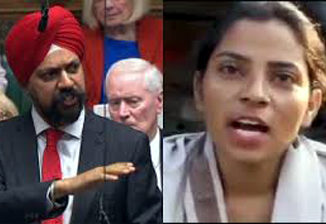
    LONDON (TIP): British Labour Party MP Tanmanjeet Singh Dhesi on Wednesday, February 10, expressed concern over the arrest of labor rights activist Nodeep Kaur over the farmers’ agitation, saying the abuse of peaceful protest activists, especially women, is an affront to democracy and civilized society.

    “Alarmed to learn of sexual assault and torture allegations in police custody of Punjabi trade unionist Nodeep Kaur, who after four weeks hasn’t even been granted bail,” Dhesi tweeted. He added, “Abuse of peaceful farmers protest activists, especially women, is an affront to democracy and civilized society.” Earlier, Punjab-origin politician Dhesi had sent a letter, signed by over 100 MPs and Lords, to UK Prime Minister Boris Johnson on the ongoing farmers’ protests, asking him to raise this matter with his Indian counterpart Narendra Modi when they next liaise. On Monday, the Punjab State Commission for Scheduled Castes asked the Additional Chief Secretary (Home) to ensure relief for Nodeep Kaur. The Commission also sought a report by February 23. It said it has taken suo motu notice of the issue since the woman is a resident of the state. Nodeep Kaur, 23, was arrested on January 12 during the farmers’ protest at Kundli in Haryana. Nodeep’s case came to the fore as US Vice President Kamala Harris’ niece Meena Harris claimed in a tweet that she was “tortured and sexually assaulted” in police custody.

    However, the police said she was facing serious criminal cases.

  • Pious and sanctimonious: On government’s response to criticism

    The government must not see all criticism as part of a conspiracy against India

    India’s unusual response to comments on the ongoing farmers’ protests by some international celebrities comes across as highly sanctimonious. “The temptation of sensationalist social media hashtags and comments, especially when resorted to by celebrities and others, is neither accurate nor responsible,” the Ministry of External Affairs said in a statement. It advised these celebrities to ascertain facts and properly understand the issues at hand “before rushing to comment on such matters”. The response is somewhat supercilious in the immediate context of what singer and performer Rihanna had said in a single tweet. She had asked why the issue was not being talked about more, while drawing attention to a news report on the extraordinary measures taken by the government to put down the farmers’ protests, including the laying of trenches and barricades and banning the Internet. Other international personages who had ventured to talk about the issue included some lawmakers from the U.S. and the U.K. too, but even that did not warrant a formal response from the government. If the MEA statement’s claim that “some vested interest groups” were mobilizing international support smacked of paranoia, the fact that a few isolated comments could send the Indian government into a tizzy, and lead to a lengthy riposte, reflects a siege mentality arising from deep insecurity. Whether it is organized dissent within the country, or informal criticism from elsewhere, it sees everything as a conspiracy against itself, a design on the country’s unity and the stuff of propaganda.

    The registration of a police case after Greta Thunberg, the teenaged Swedish climate change activist, shared a protesters’ ‘toolkit’ on Twitter, has added another twist to this unedifying demonstration of touchiness. Many Indian celebrities, from the fields of cinema and sports, joined issue with Rihanna to state their case against what they saw as external interference. Many of them professed their desire to keep the country together and voiced their disapproval of ‘propaganda’. The larger issue, of course, is something the government itself has drawn attention to. What is the limit to the claim that a problem is a country’s internal matter and something those outside its borders are not entitled to comment upon? Given India’s recent comment voicing concern over the military takeover in Myanmar or the attack on Capitol Hill in the U.S., and its oft-expressed views on developments in neighboring countries, it requires no iteration that some issues that have a bearing on human rights, survival of democracy and international relations do tend to invite comment. It is not as if only the farmers’ protests have got traction overseas. The best way for the government to avoid international criticism is not to allow more people to see it as authoritarian, disrespectful of rights, and given to attempts to undermine institutions of democracy.

    (The Hindu)

  • Vaccines, economy, education, farmers – Modi govt faces several challenges in 2021

    Vaccines, economy, education, farmers – Modi govt faces several challenges in 2021

    The year 2020 can arguably be the genesis of a new learning curve for humanity. A testament to the united struggle emanating from a pandemic that was not only challenging for the vastly under-prepared healthcare, but for politics, economy, environment, individual and interpersonal relationships as well. For the Modi-Shah government, however, 2020 was a testing year. From complete lockdowns with scarce preparation to the ghastly exodus of migrant workers, strained medical infrastructure, de-escalating economy, international standoffs and intense nationwide protests — it is clear the BJP government needs to undertake more corrective than developmental actions this new year.

    Vaccine distribution

    With India approving the Covid-19 vaccine developed by AstraZeneca and Oxford University, the beginning of a mass immunisation campaign will set forth in the world’s second most populous country, which is also the second worst-affected country by the padnemic. To ensure that 1.3 billion people of the country receive vaccine is not only a daunting task, but is complex in multitudes.

    India’s vaccine distribution has to be coherent and seamlessly coordinated due to its underdeveloped infrastructure. With limited cold-chain capacity, India needs to be prepared for expanding its existing storage units at a frenetic pace. Poorer states like Jharkhand, Uttar Pradesh, Bihar will require greater investment from the central government.

    The distribution of vaccine needs to be planned properly, from government medical store depots (GMSDs) or manufacturers directly to state vaccine stores to district level cold-chain points, Public Distribution System would be required to expand its range by at least two folds, while also deviating from its classic red tapism.

    Revitalising the economy

    Growing at its slowest in six years, the Indian economy is expected to contract further this year due to the coronavirus-induced lockdowns, dormant business activities and low consumption during the pandemic.

    According to Reserve Bank of India Governor Shaktikanta Das, the Indian economy will contract 7.5 percent in FY21 due to the disruptions caused by the Covid-19 pandemic.

    The Modi government bears the onus of sliding the economy out of the double-dip recession, and to this end, intellectually thoughtful decisions and fundamentally strong plans are expected from the BJP in 2021.

    Tackling unemployment

    According to the Centre for Monitoring Indian Economy (CMIE), over 122 million people were rendered jobless in April. A joint report by International Labor Organization and the Asian Development Bank estimated that around 4.1 million youth lost their jobs due to Covid-19.

    This was because of the closure of business ventures, indicating that income losses were not only limited to individuals but also to enterprises. Small traders, daily-wage laborers were adversely affected as construction and agriculture were some of the worst-hit sectors. Furthermore, job losses and massive pay-cuts were seen in the organised sector as well, where according to the CMIE, around 5 million people lost their job.

    Hence, Modi government is standing on a crucial juncture where post-Covid-19 India is seeking rehabilitation in terms of employment, not only in the informal sector, but also the more difficult, formal sector.

    Managing farmers’ unrest

    The standoff between the central government and farmers began in September last year, after the three farm bills were passed by the Parliament. Farmers from various states have marched to Delhi and have been protesting for around two  month now.

    Even after several rounds of talks with the central government, there is a massive deadlock regarding the primary demand of repealing the three laws, and no conclusion has been reached yet.

    This growing agitation from the largest sector of the economy is arguably the biggest challenge that needs to be resolved by the Modi government in 2021. A crucial vote bank and a bidding ground for contentious politics with glowing promises of doubling income — BJP needs to be prove its fidelity to the farmers while keeping in mind its reform programmes. And this is certainly not going to be easy.

    Ensuring educational

    equity with online learning

    As an immediate effect of the pandemic, educational institutions were forced to conduct classes online with platforms like Google Classroom or Zoom. This limited education only for those who could afford smartphones, computers, internet and power supply.

    In a country like India, which is already vulnerable to high rates of school drop-outs, the pandemic was a massive blow to education. The full intensity of which will only be realised when schools reopen.

    The closure of schools due to the pandemic is going to affect India’s productivity levels and its earning substantially.

    The damaged education system not only affects students directly, but will also be challenging to the already destabilised economy. The BJP government will have to push its political juggernaut to a more far-reaching agenda on 2021, which requires micro-level planning.

  • Jio ranked 5th strongest brand globally

    Billionaire Mukesh Ambani’s four-year-old telecom venture Reliance Jio has been ranked the fifth strongest brand globally behind the likes of Ferrari and Coca-Cola. The Brand Finance’s Global 500 ranking of the strongest brands globally, which determined the relative strength of brands, is topped by WeChat, according to its annual report on most valuable and strongest global brands. “Despite only being founded in 2016, Jio has quickly become the largest mobile network operator in India and the third-largest mobile network operator in the world, with almost 400 million subscribers,” it said. Jio was Mukesh Ambani’s re-entry into the telecom business, offering free voice calling and dirt cheap data for mobile phones. “Renowned for its incredibly affordable plans, Jio took India by storm through offering 4G to millions of users for free, simultaneously transforming how Indians consume the internet – known as the ‘Jio effect’,” said Brand Finance, the world’s leading brand valuation consultancy. It said brand strengths were determined through metrics of marketing investment, stakeholder equity and business performance. The assessment of stakeholder equity incorporates original market research data from over 50,000 respondents in nearly 30 countries and across more than 20 sectors.

  • Indo-US relations under Joe Biden: Looking into the crystal ball

    Indo-US relations under Joe Biden: Looking into the crystal ball

    By Prabhu Dayal

    There are no doubt problems that will need to be overcome, such as those relating to bilateral trade and restrictions on H1B visas which adversely impact Indian professionals and Indian software companies. Biden may not immediately reverse the Trump administration’s policies which led to these problems, but we have better prospects now than with Trump who had himself formulated these policies. Biden has shown that he takes a broader view on issues such as foreign trade as compared to Trump with his infamous ‘America First’ policy. In a nutshell, my crystal-ball prediction is that the Biden Administration will seek to strengthen Indo-US relations, with China’s territorial and economic expansionism serving as a catalyst in this regard. Institutional linkages such as through Quad and the 2+2 dialogue will also be further cemented.

    • On his first day as US President, Joe Biden reversed a number of the Trump administration policies.
    • A question is being asked whether Joe Biden will also reverse some of Donald Trump’s policies towards India?
    • During the last two decades, the Indo-US relationship has been on an upward trajectory.

    Within minutes of entering the Oval Office for the first time on January 20, President Biden carried out a blitz by signing 17 executive orders.  Next day, he signed an additional 10 orders related to the coronavirus pandemic. These orders reversed a number of the Trump administration policies and covered areas Biden identified as his priorities on the campaign trail. Naturally, a question is being asked whether Biden will also reverse some of Trump’s policies towards India?In this regard, the remarks made yesterday, Jan 21, by Jen Psaki, the White House press secretary need to be noted. In response to a question at a news briefing, she said: “President Biden, who of course has visited India many times, respects and values the long, bipartisan, successful relationship between leaders in India and the United States. He looks forward to a continuation of that.”

    During the last two decades, the Indo-US relationship has been on an upward trajectory whether the White House occupant was a Republican or a Democrat. The Modi-Biden telephone conversation on November 17 endorsed the view that there is bi-partisan support in the US for strengthening what is not just a comprehensive political and economic relationship with India but also a strategic partnership reflecting the emerging global challenges for the world’s oldest and largest democracies, respectively.

    After his phone conversation with Prime Minister Modi, a statement from the Biden’s transition team said: “The President-elect noted that he looks forward to working closely with the prime minister on shared global challenges, including containing COVID-19 and defending against future health crises, tackling the threat of climate change, launching the global economic recovery, strengthening democracy at home and abroad, and maintaining a secure and prosperous Indo-Pacific region”. China was not specifically named, but one has to read between the lines. After all, the threat to the Indo-Pacific region emanates from which country if not from China?

    Retired Gen. Lloyd Austin, who has been nominated by President Biden as his Defense Secretary affirmed this when he told members of the Senate Armed Services Committee during his confirmation hearing on January 19:”If confirmed, my overarching objective for our defense relationship with India would be to continue elevating the partnership”. Responding to a question submitted before his confirmation hearing, Austin said. “I would further operationalize India’s ‘Major Defense Partner’ status and continue to build upon existing strong defense cooperation to ensure the US and Indian militaries can collaborate to address shared interests.”

    Tony Blinken, who is Biden’s nominee for the prestigious position of Secretary of State also expressed similar views during his own confirmation hearing when he told members of the powerful Senate Foreign Relations Committee on January 19: “India has been a bipartisan success story of our successive administrations”.

    It may also be recalled that during the virtual celebrations of India’s Independence Day organized by the Biden Campaign in 2020, Blinken had stressed that Biden has long been a champion of stronger ties with India. He had asserted: “If you go back 15 years, Joe Biden had a vision for the future of US-India relations. In 2006, he said, my dream is that in 2020, the two closest nations in the world will be India and the United States.” Blinken added: ”Well, we’re not quite there, but it’s a terrific vision, and one that I know he will act to realize, as president of the United States.” There are no doubt problems that will need to be overcome, such as those relating to bilateral trade and restrictions on H1B visas which adversely impact Indian professionals and Indian software companies. Biden may not immediately reverse the Trump administration’s policies which led to these problems, but we have better prospects now than with Trump who had himself formulated these policies. Biden has shown that he takes a broader view on issues such as foreign trade as compared to Trump with his infamous ‘America First’ policy.  It may also be mentioned that during his campaign, Joe Biden had taken up a position on issues like CAA and Jammu and Kashmir which was labelled as showing a lack of sympathy for India. These issues could come up in closed-door meetings, but it is unlikely that the Biden administration will raise them in public pronouncements. Working closely with India has become an important aspect of US foreign policy, and it will not be in US interests to undo the closeness in the present global scenario. Additionally, the fact that the Pentagon sees India as a potential purchaser of weapons systems would make it even more necessary for Biden to seek a closer relationship with the Indian political establishment. Therefore, in a nutshell, my crystal-ball prediction is that the Biden Administration will seek to strengthen Indo-US relations, with China’s territorial and economic expansionism serving as a catalyst in this regard. Institutional linkages such as through Quad and the 2+2 dialogue will also be further cemented.

    (The author is a retired diplomat) (Courtesy / OPOYI)

  • No chief guest at R-Day, first time in 55 years

    No chief guest at R-Day, first time in 55 years

    New Delhi(TIP): India will not have a chief guest at the Republic Day parade for the first time since 1966 because of the pandemic. But for the first time, a contingent from the Bangladesh Army will march down Rajpath on January 26, said MEA spokesperson Anurag Srivastava at the weekly media briefing here on Thursday, January 14.

    Sources said it was decided not to have a chief guest after the proposal to draft Surinam President Chan Santokhi as a last minute replacement for UK PM Boris Johnson fell through. At the previous last minute pullout during the UPA regime, New Delhi had managed to persuade the King of Bhutan to do the honours. In the initial years, no chief guest was invited in 1952 and 1952, barely two years after the Nehru government had tried to make it a regular practice. The Bangladesh Army’s participation will be the second time foreign soldiers will participate in the march past after a French Army contingent in 2016.              

                    Source:  TNS

  • India and China continue to maintain close communication

    India and China continue to maintain close communication

    New Delhi (TIP): India and China continue to maintain close communication through diplomatic and military channels with the objective of ensuring complete disengagement at all friction points along the Line of Actual Control (LAC) in eastern Ladakh, the Ministry of External Affairs(MEA) said on Thursday, January 14.

    The MEA spokesperson Anurag Srivastava said the two sides have agreed to hold the next round of military talks and are in constant communication in this regard. “India and China continue to maintain close communication through diplomatic and military channels with the objective of ensuring complete disengagement in all friction points along the LAC in the western sector and for full restoration of peace and tranquillity,” he told a media briefing.

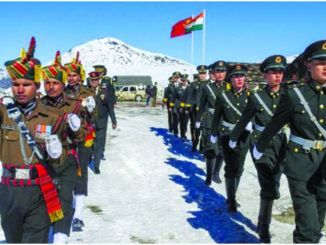
    Srivastava was responding to a question on the status of talks between the two countries on the military face-off in eastern Ladakh. The troops of the Indian Army and the Chinese People’s Liberation Army(PLA) are locked in a standoff for over eight months. Last month, India and China held another round of diplomatic talks under the framework of the Working Mechanism for Consultation and Coordination (WMCC) on India-China border affairs.

    “As you are aware, the latest round of WMCC was held on December 18. The two sides have agreed to hold a next round of senior commanders meeting, and are in constant communication through diplomatic and military channels in this regard,” Srivastava said. The eighth and last round of military talks between the two sides took place on November 6 during which both sides broadly discussed disengagement of troops from specific friction points. Army chief Gen MM Naravane on Tuesday hoped for an amicable resolution of the standoff through talks based on “mutual and equal security”. The Chief of Army Staff at the same time asserted that Indian troops are fully prepared to deal with any eventuality along the LAC and will hold their ground as long as it takes to achieve the “national goals and objectives.” India has all along been maintaining that the onus is on China to carry forward the process of disengagement and de-escalation at the friction points in the mountainous region.

  • Parliament session from Jan 29, Union Budget on Feb 1

    New Delhi (TIP): The Budget session of Parliament will commence from January 29, with Union Finance Minister Nirmala Sitharaman set to present the Union Budget on February 1. The session will be held in two parts — from January 29 to February 15 and March 8 to April 8. The 5th session of the 17th Lok Sabha will have 35 sittings — 11 in the first part and 24 in the second part. President Ram Nath Kovind will address both Houses of Parliament — the Rajya Sabha and the Lok Sabha — at 11 am on January 29. Sitharaman will present the Union Budget at 11 am on February 1. Parliament will adjourn on February 15 to enable various Standing Committees to consider the Demands for Grants of Ministries/Departments and prepare their reports, and reconvene on March 8.

  • Don’t decriminalize adultery in armed forces: Centre to SC

    Don’t decriminalize adultery in armed forces: Centre to SC

    New Delhi (TIP): More than two years after the Supreme Court decriminalised adultery by declaring Section 497 of the IPC unconstitutional, the Centre has moved the Supreme Court with a plea that the historic verdict shouldn’t apply to the armed forces as it may cause instability among personnel who stay away from family.

    A three-judge Bench, headed by Justice RF Nariman, issued a notice to the petitioner on whose plea Section 497 IPC was declared unconstitutional and referred the matter to a Constitution Bench.

    Now, Chief Justice of India SA Bobde will constitute a five-judge Constitution Bench, which will hear the Centre and the original petitioner, and decide the issue.

    In a historic verdict, the Supreme Court had on September 27, 2018, declared unconstitutional Section 497 of the Indian Penal Code, which punished only men for having sexual relationship with a married woman. In a unanimous verdict, a five-judge Constitution Bench, headed by then Chief Justice of India Dipak Misra, had said the 158-year-old Victorian era law was “manifestly arbitrary” and violated a woman’s right to equality and right to non-discrimination guaranteed under Article 14 and Article 15 of the Constitution as it treated them as chattels. The top court had, however, said adultery would be a ground for divorce in matrimonial proceedings and cautioned that the verdict should not be taken as a licence to indulge in such acts.

    Striking down the adultery law, the top court had said, “This (Section 497 IPC) treats the woman as a chattel. It treats her as the property of man and totally subservient to the will of the master. It is a reflection of the social dominance that was prevalent when the penal provision was drafted.” “The enforcement of forced female fidelity by curtailing sexual autonomy is an affront to the fundamental right to dignity and equality,” said the top court. It treated a married woman as a property of the husband,” the Bench had said. It had said, “In treating a woman as chattel for the purposes of this provision, it is clear that such provision discriminates against women on grounds of sex only, and must be struck down on this ground as well.”           Source: TNS

  • Centre-farmers talks : Ahead of 9th round, Mann recuses himself from SC-appointed committee

    Centre-farmers talks : Ahead of 9th round, Mann recuses himself from SC-appointed committee

    NEW DELHI (TIP): Ahead of the ninth round of Centre-farmer talks on Friday, January 15, there have been some major developments on the ongoing agitation. Amid growing criticism, including from his own union, BKU’s Bhupinder Singh Mann (one of the four experts nominated by the Supreme Court for negotiations with farmers protesting against the three farm laws) , on January 14,  recused himself from the committee.

    Meanwhile, amid the growing social media buzz on unions “tractor parade” on the Republic Day, farmers’ leader Balbir Singh Rajewal said the January-26 plan will be revealed after the meeting with the Union ministers. He also urged everyone to maintain peace and harmony and not pay heed to “false and unfounded inflammatory propaganda and rumor mongering” on the tractor march to “malign and scuttle the movement”.

    Even as Rajewal said unions will finalize the contours of January 26 tractor march after their meeting with Central ministers on Friday, BKU leader from Uttar Pradesh Rakesh Tikait announced the program for the day saying that farmers will hold simultaneous parade from Red Fort to India Gate on the Republic Day.

    “The Republic Day Parade has been cut short, it will now be from Rashtrapati Bhawan to India Gate, I am told. We will march from Red Fort to India Gate and meet it there. It will be a historic event,” Tikait said in what is being seen as breaking ranks in the agitation.

    Agriculture Minister Narendra Singh Tomar expressed hope of positive discussions on January 15.

    Clearing the confusion over the fate of tomorrow’s meeting (the only outcome of the January-8 talks) after the SC ruling on Tuesday and Mann recusing from the court-appointed panel today, Tomar said the talks will be held as scheduled. While they have already specified that they will not appear before the court-appointed panel, farmer unions said they were ready to attend the scheduled talks with the government.

    In his statement, Mann said he was thankful to the Supreme Court for nominating him to the committee to start a dialogue with unions on the laws. However, as a farmer leader and union leader, “in view of the prevailing sentiments and apprehensions amongst the farm unions and public in general, I am ready to sacrifice any position offered or given to me so as to not compromise the interests of Punjab and farmers in the country, I am recusing myself from the committee and I will always stand with my farmers and Punjab,” Mann said after the union he headed also distanced itself from him.

    After being selected by the SC, he had urged everyone to put forward their views before the panel.

    Union leaders claimed others on the panel will “also resign soon”.

    Rajewal said efforts were being made to malign the agitation through ‘dushprachar’ (false propaganda). “The whole world is watching. This is not just a farmers’ movement. It has become a mass movement across the country. A movement is successful only when it is completely peaceful, if there is violence it collapses.

    “Misconceptions/false inflammatory propaganda are being spread about the 26 January movement. Some people are saying that the national flag should be hoisted at the Red Fort, some are saying the Parliament will be stormed,” he said, accusing “anti-farmer forces and government agencies” of trying to malign and scuttle the peaceful agitation of farmers and common people. Urging everyone to maintain peace and calm, he told the farmers that the tractor march will be “from” Delhi borders. The exact outline of the programme for January 26 will be given after tomorrow’s meeting.

                    (With inputs from TNS)

    Farmers to attend ninth round of talks with government without ‘much hope’

    New Delhi (TIP): Protesting farmer leaders on January 14 said they will attend the ninth round of talks with the government amid indication that it may be the last such meeting with the Centre, but added that they don’t have much hope as they will not settle for anything less than the repeal of the contentious farm laws.

    Since a Supreme Court-appointed panel on farm laws is likely to hold its first meeting on January 19, the meeting on January 15 between with the government and the unions may be the last one.

    Bhartiya Kisan Union (Ekta Ugrahan) Joginder Singh Ugrahan told PTI, “We are going to hold talks with the government tomorrow. We don’t have much hope from the Friday meeting as the government will cite the SC-appointed panel. The government doesn’t have good intention to resolve our issues.” Mr. Ugrahan said that the unions do not want any committee, adding “we just want a complete repeal of three farm laws and legal guarantee on minimum support price for our crops”. He said that farmers will not call off their protest until their demands are met.

    Another farmer leader, Abhimanyu Kohar, said that government knows that the court cannot repeal the laws and added that the Centre should stop playing with the sentiments of farmers who have been camping at several Delhi borders since November 28.

    He said that forming a committee is not a solution, adding that the new farm laws have been enacted by Parliament and the court cannot do much. While the previous eight rounds of negotiations have failed to end the protests continuing for several weeks on various borders of the national capital, Agriculture Minister Narendra Singh Tomar said earlier in the day that the government is hopeful of positive discussions at the scheduled January 15 meeting.

    In an interview to PTI, Anil Ghanwat, a member of the Supreme Court-appointed committee, said that the panel will have no “ego or prestige issue” if it has to go to farmers’ protest sites to talk to them.

    On the government holding parallel talks with protesting farmers scheduled for January 15,  Ghanwat said, “I think this will be their last meeting with the government. They will say henceforth you (farmers) have to sit with the committee, which will give a report to the Supreme Court.”

    Agriculture Ministry denies RTI query on farm law consultations

    New Delhi (TIP): The Agriculture Ministry has denied a Right to Information (RTI) request for details on pre-legislative consultations on the farm reform laws, saying the matter is sub judice.

    In its response, the Ministry cited the clause from the RTI Act that exempts information which has been expressly forbidden to be published by a court of law or whose disclosure would amount to contempt of court.

    This comes after an earlier response claiming that the Ministry did not have any record of such consultations.

    RTI activist Anjali Bhardwaj had filed her request on December 11, asking for specific details regarding the stakeholder consultations held before the Centre promulgated the three ordinances on agricultural reforms in June. Within the 30-day period given to respond, two Central Public Information Officers (CPIOs) in the agricultural marketing divisions of the Ministry disposed of her request, saying that they did not have any record of such consultations.

    The Hindu had reported this on January 12, a day after the Ministry told the Supreme Court that farm unions were “peddling an erroneous notion” that no consultations were held.

  • Ajit Doval meets Afghan President Ashraf Ghani in Kabul, visit unannounced

    Kabul (TIP): National Security Adviser Ajit Doval on Wednesday met Afghan President Ashraf Ghani and his counterpart Hamdullah Mohib during an unannounced two-day visit to Kabul.

    “Both sides discussed expansion of cooperation in countering terrorism and strengthening regional consensus on the Afghan peace process,” said Afghan President’s spokesman Sediq Sediqqi. “The Afghan National and Defence Security Forces are the righteous pillars of Afghanistan’s stability, the front lines against regional and global terrorism… in collaboration with NATO and the US could achieve more success in the fight against terrorism,” the President said.

    Doval arrived in Kabul days after US Afghan envoy Zalmay Khalilzad, followed by a top US military official, met Pakistan Army officials at Rawalpindi. “The two sides held extensive conversations on issues of strategic mutual interest, including on synchronising efforts to combat terrorism and build peace,” said a statement from the Afghan NSA’s office. Mohib also met Chinese Ambassador Wang Yu. TNS

  • BJP’s new power orderTweaked hierarchy gives it full control, reducing RSS’s interventions

    BJP’s new power orderTweaked hierarchy gives it full control, reducing RSS’s interventions

    By Radhika Ramaseshan

    The BJP took advantage of its commanding position to minimize the presence of the RSS pracharaks in Nadda’s team and overturned an arrangement ostensibly cast in stone.

    An organizational restructuring in the BJP is rarely newsworthy unless the change is effected at the top or a big-time functionary such as Ram Madhav is dropped from the central team of office-bearers and Vasundhara Raje is shafted to pave the way for a leadership makeover in Rajasthan. Recently, JP Nadda, the BJP president, quietly tweaked the organizational hierarchy to reinforce a significant political message: the BJP will exercise complete control over the party and its apparatuses and the patriarch RSS’s interventions could become minimal, if not nominal. The Sangh-BJP equation that was in a permanent flux has settled into a constant in the Modi regime. PM Modi rules over a BJP-majority government that is not rocked by the coalition partners or an Opposition. Until he confronted his first challenge in the farmers’ movement, his authority appeared incontestable. The RSS is hands-off towards the protests. Its farmers’ front, the Bharatiya Kisan Sangh (BKS) issued innocuous statements. The paterfamilias is in no mood to rock the boat.

    The BJP took advantage of its commanding position to minimize the presence of the RSS pracharaks in Nadda’s team and overturned an arrangement ostensibly cast in stone. BL Santhosh remains the general secretary (organization), and there is no dilution in the power he wields as the second-most important person in the party. In the past, a general secretary, however influential, had two or more deputies ‘assisting’ him. This line-up of the general secretary and the joint general secretaries (organization) under him was generally made up of obscure figures who avoided the media, although Sunder Singh Bhandari and KN Govindacharya were exceptions and liberally shared information and political insights. Santhosh and Ramlal, his predecessor, had a trio under them, comprising V Satish, Saudan Singh and Shiv Prakash all of who were ‘loaned’ to the BJP for long-term work.

    Last week, the loanees were relocated in the BJP with new designations, their mandate vastly diminished. It is unclear whether the joint general secretary’s post will remain. Essentially the recast means the Sangh will have only Santhosh to deal with. He will be the sole conduit between the RSS and the BJP, and for all intent and purpose both will depend largely on the feedback he gives and the inputs he shares. A quintessential pracharak from Karnataka, he earned the moniker, poornavadi karyakarta (full-time volunteer). Every pracharak is a full-time volunteer but the sobriquet denoted Santhosh’s ‘exceptional dedication’. During his stint in the Karnataka BJP, also as a general secretary, he allegedly played his share of intra-BJP politics and was rarely on the same page as CM Yediyurappa. But he is credited with ‘discovering’ and nurturing young ‘talent’ such as Lok Sabha MPs Tejaswi Surya and Prathap Simha and the Karnataka BJP president, Nalin Kumar Kateel. The choice of protégés reveals Santhosh’s unmistakable preference for those who are wedded to hard Hindutva.

    In that sense, Santhosh, as also the BJP brass, sorted out the existential dilemma that dogged Vajpayee when he was the PM. Vajpayee had the RSS snapping at his heels. If the VHP got aggressive and amped up the Ram temple demand with violent consequences, on occasions, it was the Swadeshi Jagran Manch (SJM) and the Bharatiya Mazdoor Sangh (BMS) that scuttled Vajpayee’s pet reforms. He was disinclined to give the Sangh fronts unbridled latitude, and suffered as a result.

    Modi has no such issues, regardless of the problems he lived with in Gujarat from the VHP and BKS. He is adept in managing their occasional tantrums. In December 2019, when the VHP threatened to besiege the government if it would not intervene decisively to seek a ‘resolution’ of the Ayodhya ‘dispute’ and got the RSS sarsanghachalak’s endorsement for the agenda, the Centre earned more than a breather when the apex court cleared the way. For Modi, it was an opportune moment to dispel the few misgivings the VHP cast over his ‘commitment’. He presided over an elaborate ground-laying ceremony in Ayodhya to mark the start of the construction.

    Of all RSS fronts, the VHP has the greatest potential to marshal agent provocateurs, whip up communal passions and immobilize an administration. If the outfit is given a free pass to flout the law, a government can breathe easy. This is what has happened in MP. The VHP galvanized its storm-troopers to strike terror in the minority-dominated pockets in the guise of collecting funds for the temple. CM Shivraj Singh Chouhan has embraced hard-core Hindutva, and giving the VHP leeway suits him politically. In UP, the temple’s epicenter, the VHP does little or nothing because CM Yogi Adityanath has everything laid out: a pliant state machinery, public opinion and the voluntary militia of his Hindu Vahini in case action was demanded.

    In contrast, an issue stares the BKS in the face, but it refused to react. In the Centre-farmer face-off, all that the Sangh’s peasant wing asked for was guaranteeing the MSP in the open market and a designated court to adjudicate disputes related to contract farming. At no point did it suggest that the farming laws should be relooked, let alone repealed. Like the BKS, the SJM opted for the straight and narrow.

    Had the RSS, the BKS and the SJM confronted the Centre on the peasantry, it would have been forced to respond and perhaps withdraw the laws. In 2015, it was an ultimatum the SJM served that nudged the government to freeze the proposed amendments in the Land Acquisition Act. The RSS astutely figured that keeping the peace with the Modi dispensation is mutually advantageous and disputes must be buried.

    (The author is a senior journalist)

  • Supreme Court order has confirmed farmers’ fears

    Supreme Court order has confirmed farmers’ fears

    ON GUARD: The farmers have been suspicious of being pushed into mediation that they never asked for or consented to.

    By Yogendra Yadav

    A committee is only as good as its members. It is no secret that the farmers’ organisations were apprehensive about the composition of a committee appointed by the court. The process by which the court arrived at these four names left a lot to be desired, to put it mildly. The same court that chided the government for passing the farm laws without consulting the farmers adopted an even less transparent process to decide upon this committee.

    In rejecting the Supreme Court-appointed expert committee to mediate between farmers and the Narendra Modi government, the farmers’ organisations have not only wisely sidestepped a possible trap, but have also reaffirmed a basic principle of democratic accountability and responsible governance.

    Let there be no confusion about it. The expert committee appointed by the SC is not meant to advise the court on technical matters of agricultural marketing or on the implications of the disputed agricultural laws. The order of the Supreme Court makes it clear that the committee is to facilitate negotiations between the government and farmers’ organizations: “The negotiations between the farmers’ bodies and the government have not yielded any result so far. Therefore, we are of the view that the constitution of a committee of experts in the field of agriculture to negotiate between the farmers’ bodies and the government of India may create a congenial atmosphere and improve the trust and confidence of the farmers.”

    The court goes on to specify that the committee has been “constituted for the purpose of listening to the grievances of the farmers relating to the farm laws and the views of the government and to make recommendations.” Presumably, the committee will try to find a middle ground and advise the government on how the laws should be tweaked in a way so as to satisfy both the government and the protesting farmers. That is precisely why the farmers’ organizations had resisted, right from the beginning, the idea of any such committee. They have objected to being forced into binding mediation, questioned the instrument of a committee and suspected the composition of such a committee. On all three counts, their assessment has been proven right.

    First of all, the farmers have been suspicious of being pushed into mediation that they never asked for or consented to. They have never said no to negotiations with the government. Sure, the talks with the government have been frustrating. The Modi government has been intransigent. Yet, that is the only site for negotiations in a democracy. In the last instance, elected representatives are there to speak to the people. They are accountable to the people and to the farmers. The courts are there to adjudicate between right and wrong, legal and illegal. The courts are not there to engage in give and take, which is part of any negotiation. That is why the courts are responsible to the Constitution and not accountable to the people. That is the logic of democratic governance. Any attempt to shift the site of negotiation from the government to the judiciary amounts to overturning this basic democratic logic. The government’s keenness to shift this ‘headache’ and the Supreme Court’s alacrity to take over have strengthened the resistance of the farmers. It needs to be underlined that the protesting farmers did not approach the court. Nor did the government, at least not on paper. The initial petitioners were third parties who wanted the court to evict the farmers from their protest site. The other set of petitioners questioned the constitutionality of the three laws and wanted these scrapped. None of the petitioners prayed for mediation from the court. Yet, from day one, that is what the court was interested in. The court dismissed, and rightly so, the pleas asking for eviction of the protesting farmers. It recognized, again rightly so, the democratic rights of the farmers to engage in a peaceful protest. As for the pleas, regarding the constitutional validity of the three laws, the court put this on the back burner, saying that it will consider these at an appropriate time.

    The Supreme Court could have expedited this process by setting a time frame within which it will decide upon the constitutional validity of these three laws. That would have been most appropriate. But it chose not to do so. Instead, the court chose to focus on a third issue beyond what was asked for by any party and beyond its legal remit. Farmers’ organizations were smart enough to resist this move from the beginning.

    The second objection of the farmers’ organizations was to the very mechanism of a technical committee of experts. This idea was proposed by the Modi government in the very first round of negotiations held on December 1, and the farmers rejected it there and then. Such a committee would be very useful to clarify a point of law or to work out policy or fiscal implications of the proposed laws. Such a committee could also help work out the details of a compromise formula, once the basic framework is agreed to. But a technical committee cannot possibly work out the basic framework itself. Mediation is not done by technocrats. It is done by non-specialists who have some familiarity with the subject, but more importantly, who enjoy the trust and confidence of both parties. The Supreme Court-appointed committee of experts was never going to be that mechanism.

    Dushyant Dave and the other three lawyers representing just eight out of 400-plus farmers’ organizations involved in this protest were wise to keep away from the court’s deliberations on this issue.

    Finally, a committee is only as good as its members. It is no secret that the farmers’ organizations were apprehensive about the composition of a committee appointed by the court. The court’s order confirmed their worst fears. The process by which the court arrived at these four names left a lot to be desired, to put it mildly. The same court that chided the government for passing the farm laws without consulting the farmers adopted an even less transparent process to decide upon this committee. Names like P Sainath and ex-CJIs were thrown around and quietly dispensed with. No one knows who suggested the four names that the court came up with. Little surprise then that the four names have invited disappointment and ridicule. Not because the four members are not respectable, but because these are arguably the four best advocates for the government’s position and the laws. That the court chose such a partisan committee to mediate between the farmers and the government has cast a shadow on itself.

    Someone might ask: Forget the technicalities, but what’s wrong in the top court stepping in to resolve a deadlock? Well, that is possible, provided the Supreme Court were to enjoy moral authority over and above its legal and constitutional powers. Such moral authority is commanded, not demanded.

    (The author is President, Swaraj India)

  • Remembering Swami Vivekananda: The idol of the youth

    Remembering Swami Vivekananda: The idol of the youth

    Vivekananda’s birthday, January 12, is celebrated in India as National Youth Day

    National Youth Day is observed on January 12 every year, i.e., on the birthday of Swami Vivekananda– a true luminary and credited with enlightening the western world about Hinduism. An ardent disciple of Sri Ramakrishna Paramhansa, Vivekananda played a key role in revival of Hinduism in India. He is well known for his famous 1893 Chicago speech. In 1984, the Government of India declared his birth date as National Youth Day and it is being celebrated since 1985.
    Vivekananda childhood name was Narendranath Dutta, belonged to an affluent Bengali family in Calcutta. He was one of the eight children of Vishwanath Dutta and Bhuvneshwari Devi. On the occasion of Makar Sankranti he was born on 12 January, 1863. His father was an attorney and an influential personality in the society. Vivekananda’s mother was a woman who has faith in God and has a great impact on his son.
    At the age of eight in 1871 Vivekananda was enrolled at Ishwar Chandra Vidyasagar’s Institution and later at the Presidency College in Calcutta. He was exposed to Western philosophy, Christianity and science. He had interest in music both instrumental as well as vocal. He was active in sports, gymnastics, wrestling and body building. He was also fond of reading and till the time he had completed his graduation from the college he had acquired a vast knowledge of various subjects. Do you know on the one hand he read Hindu scriptures like Bhagvad Gita and the Upanishads and on the other hand western philosophies and spirituality by David Hume, Herbert Spencer etc.
    He had grown up in a religious family but studied of several religious books and knowledge led him to question the existence of God and some time he believed in Agnoticism. But he could not completely deny the fact about the supremacy of God. In 1880, he joined Keshab Chandra Sen’s Nava Vidhan and also became a member of Sadharan Brahmo Samaj led by Keshab Chandra Sen and Debendranath Tagore.
    Brahmo Samaj recognised one God unlike idol-worship. Several questions were running in the mind of Vivekananda and during his spiritual crisis he first heard about Shri Ramakrishna from William Hastie, the Principal of the Scottish Church College. He finally met Shri Ramakrishna Paramhansa at Dakshineshwar Kali Temple and Vivekananda asked him a question, “Have you seen God?” which he had asked so many spiritual leaders but was not satisfied. But when he asked from Ramakrishna, he gave such a simple answer that “Yes, I have. I see God as clearly as I see you, only in a much deeper sense”. After this Vivekananda started visiting Dakshineshwar and got several answers of the questions that were in his mind.
    When Vivekananda’s father died, whole family faced financial crisis. He went to Ramakrishna and asked him to pray for his family but Ramakrishna refused and told Vivekananda to pray himself in front of Goddess Kali. He could not ask for wealth, money but instead of it he asked for conscience and reclusion. That day he was marked with spiritual awakening and a way of ascetic life was started. This was the turning point in his life and accepted Ramakrishna his Guru.
    In 1885, Ramakrishna developed throat cancer and was transferred to Calcutta and then later to a garden house in Cossipore. Vivekananda and other disciples of Ramakrishna took care of him. On 16 August, 1886, Shri Ramakrishna gave up his mortal body. Narendra was taught that the service to men was the most effective worship of God. After the demise of Ramakrishna, fifteen of his disciples including Narendranath began to live together at Baranagar in North Calcutta, which was named as Ramakrishna Math. In 1887, all the disciples took vows of monkhood and Narendranath emerged as Vivekananda that is “the bliss of discerning wisdom.” All of them performed yoga and meditation. Further, Vivekananda left the math and decided to tour whole India on foot which was came to be known as ‘Parivrajak’. He saw several social, cultural and religious aspects of the people and also saw what common people faced in their daily life, their sufferings etc.
    World Parliament of Religions
    When he came to know about the World Parliament that was organised in Chicago, America. He was keen to attend the meeting, to represent India and his Guru’s philosophies. After various troubles, he attended the Religious meeting. On 11 September, 1893, he came up on the stage and stunned everyone while saying “My brothers and sisters of America”. For this he received a standing ovation from the audience. He described the principles of Vedanta, their spiritual significance etc.
    He stayed around two and half years in America itself and founded the Vedanta Society of New York. He also travelled to United Kingdom to preach the philosophies, spiritualism and principles of Vedanta.
    Ramakrishna Mission
    Around 1897, he returned to India and reached Calcutta where he founded Ramakrishna Mission on 1 May, 1897 at Belur Math. The goals of the mission were based on the Karma Yoga and its main objective was to serve the poor and suffering or disturbed population of the country. Several social services are also performed under this mission like establishing schools, colleges and hospitals. Teachings of Vedanta were also provided through conference, seminars and workshops, rehabilitation work across the country.

    Let us tell you that Vivekananda’s teachings were mostly based on the Ramakrishna’s spiritual teachings of Divine manifestations and his personal internalisation of the Advaita Vedanta Philosophy. According to him, the ultimately goal of life is to achieve the freedom of soul and that encompasses the entirely of one’s religion.
    Death
    He predicted that he will not live till the age of 40. Therefore, on 4 July, 1902, he died while doing meditation. He is said to have attained ‘Mahasamadhi’ and was cremated on the Banks of river Ganga.