Tag: BJP

  • NARENDRA MODI: FROM TEA SELLER AT TRAIN STATION TO MASTER OF POLITICAL THEATRE

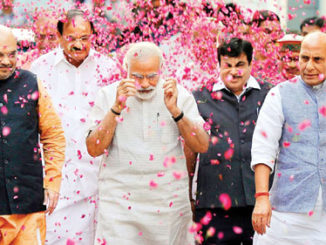
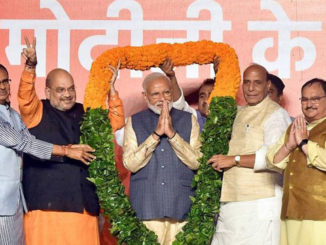
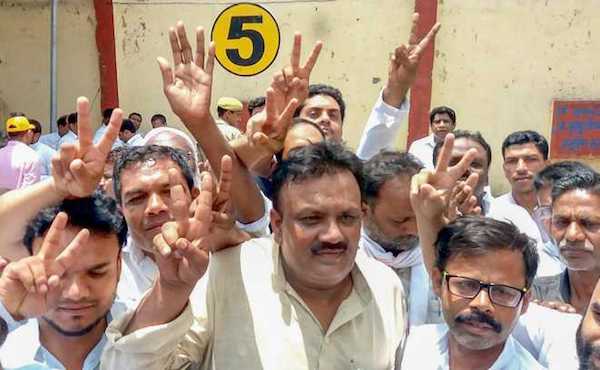
    Narendra Modi, who once sold tea at a railway station has become the most influential Indian leader in generations, winning a landslide in election results announced, May 23, 2019.   Modi’s own party, BJP won an absolute majority – 302 seats.  The BJP combined with its alliance, the NDA, won 351 seats.   As votes were tallied early Thursday, May 23 afternoon, Modi’s chief rival, the Indian National Congress, was leading in just 50 races, the second consecutive dismal showing in a national election for what was once India’s most powerful political party.

    Modi, 68, was born to a poor family in Gujrat State, where he developed a strong dislike for the ruling Congress Party as a result of hanging around a political office near his father’s tea stall.  While still a child, he started attending daily meetings of the RSS (Rashtriya Swayamsevak Sangh), said to be the world’s largest volunteer organization, whose Hindu nationalist ideology envisions the country’s diverse Hindu population as a single nation with a sacred culture that should be given primacy in India.

    Hindu nationalists were sidelined by India’s founding Prime Minister, Jawaharlal Nehru, whose vision of India was of a secular nation at ease with its bewildering plurality.  Their parties, including Modi’s Bharatiya Janata party (BJP), struggled to win more than 10% of the national vote for decades until the 1990s, when they started to expand on the back of a national campaign to demolish a 16th-century Mughal mosque in Ayodhya, U.P. and replace it with a Hindu temple.  That push culminated in the destruction of the mosque by a mob of 150,000 Hindu activists, which triggered rioting across India that killed estimated 2000 people.  Still, the BJP’s support was limited to wealthier Hindus in the country’s north and west, with resistance to the party from poor, marginalized Hindus, Muslims, and South Indians thought to be permanent hurdles to Hindu nationalist domination.

    Modi’s magnetism, especially his personal branding as a tea boy who climbed to the country’s highest ranks, has changed those calculations, drawing vast support from the country’s emerging middle and lower-middle classes.   “He has managed to create this voting bloc—other party’s voters who are voting for the BJP just for Modi,” said Rahul Verma, a fellow at the Delhi-based Center for Policy Research.  “The shifts are actually happening among the more aspirational voters, who think Modi can fulfil their economic aspirations…This leader, who has risen from the ranks of a poor family, has become a symbol.”   This symbolism was especially potent among young Indians, a vital and growing electorate in a country with a median age younger than 28.  “They have grown up seeing the way of life in the West and in places like Singapore and China,” said Vivan Marwana, a journalist who is writing a book on young Indians.  “And Modi came on to the scene in 2014 and promised them bullet trains, a million new jobs, the world’s largest statue of Sardar Vallabhbhai Patel, a former Dy. Prime Minister and Minister of Defense.  It is all very aspirational.”

    Young Indians had grown up being told their country was on the cusp of becoming a superpower.  In Modi, they had a leader who spoke as if it already was.   Alongside aspiration, the BJP promotes a vision of Hindu cultural supremacy that sidelines the country’s 300 million minority population.  As Chief Minister of Gujarat state, Modi was a firebrand Hindutva campaigner.  In 2002, anti-Muslim riots in his state killed at least 1,000 people, resulted in the future Prime Minister becoming an international pariah who was banned from entering the U.S.  In response, Modi presented himself as an outsider being attacked by elites: a refrain that would become a central part of his political messaging.  “He would say he was constantly being targeted by the English-speaking media out of Delhi,” said Nilanjan Mukhopadhyay, author of a biography of the Indian leader.  “He made himself the symbol of the underdog, projected himself as somebody who is against the status quo forces.   The times came to suit Modi.  When the popular disgust at corruption scandals plaguing the previous Congress government boiled over into street protests in 2011, it provided the rightwing populist leader a national springboard.

    “Modi was at the forefront of projecting this strong, centralizing leadership,” said Milan Vaishnav, the director of the South Asia program at the Carnegie Endowment for International Peace.  “He realized what people are looking for is somebody who gets stuff done.”

    HIS MASTERY OF POLITICAL THEATRE, AND FINGER ON THE PULSE OF INDIANS, HAS NOW SECURED HIM THE STRONGEST MANDATE OF ANY LEADER IN DECADES.

    But it will do little to create jobs, alleviate financial stress in the country’s vast agriculture sector or grow the economy on the backdrop of a US trade war and a global slowdown.

    “Issues of economy will be the focus of his first 100 days,” said Rajat Sethi, a fellow at the influential BJP-aligned India Foundation think-tank.   He said Modi could also look to broaden a program of targeted payments to farmers and other struggling groups.

    The scale of Thursday’s victory creates room for Modi to ram through reforms, but also the possibility that he may not have to, said Giles Verniers, a political scientist who teaches at Haryana State’s Ashoka University.  “It is a peculiar result because there were a multitude of ground realities that were clearly going against the BJP.   It won despite jobless growth, rural distress, a tepid economy,” said Verniers.  “It’s as if all those adverse factors did not matter at all.  “And so the worry is that it could translate into a belief that the BJP can win despite poor performance, and that may not necessarily translate into incentives to address the deeper issues with the economy.”

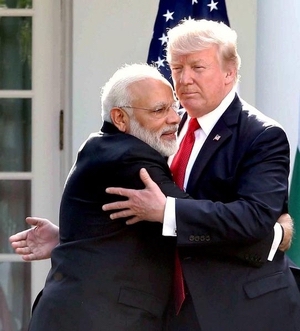
    UNEMPLOYMENT has gone up from 2.2% in 2011 to 6.1% in 2019.  It is hoped that Modi will finally build the necessary infrastructure to build large scale factories to manufacture 100 million pieces of varieties of clothing needed by American consumers.   The former Reserve Bank of India Governor, Raghuram Rajan, now Professor at the University of Chicago has argued that India needs to create an export-oriented economy.   Fortunately, President Trump currently negotiating terms of trade with China is anxious not to depend on China for many of its imports.  President Trump will be happy to do business with India provided India has the capacity and capability to deliver the needs of American consumers.

    100% TRANSFER OF TECHNOLOGY will allow India to manufacture for several reasons.  First, India has a large supply of engineers and professionals. Second, India has a comparative advantage with China and the USA. Third, President Trump must also cope with the skyrocketing prices of drugs manufactured in the U.S.A. Fourth, India has a large supply of biotechnologists, microbiologists, and other health care scientists and professionals. Sixth, making drugs in India will cost a miniscule of what it costs in the USA.   The US drug industry can expand its global market share by making drugs in India.

    Lockheed Martin, United Technologies, Ratheyon, General Dynamics and other military manufacturers can cut the cost of production if they were to make their products in India.   Thus, a confluence of factors such as supply of engineers, scientists and professional managers; comparative advantage in wages and salaries; skyrocketing prices of drugs and military hardware in the US; deterioration of US-China relations in trade; national security and cybersecurity problems; and others look attractive for Prime Minister Modi.  He has a huge mandate now and nothing but a Modi economic revolution could solve many problems with one stroke.

    Never before, Modi had the good fortune of not facing any major opposition for his initiatives or policies.  Modi has almost two thirds majority in the Parliament.   Modi must translate the mandate and the extraordinary goodwill from the electors and the global community into Modi economic revolution that will modernize India.   The roadmap should call for GDP growth of 10 to 12% for the next decade.    Hope Prime Minister Modi comes up with a roadmap for the next 100 days.

    (The author, former CEO, First Asian Securities Corporation, NY and Senior Adviser, Imagindia Institute, a New Delhi think tank lives in Scarsdale, NY.  He can be reached at vpwaren@gmail.com)

  • U.S. Chamber Commends Prime Minister Modi on His Historic Re-Election

    U.S. Chamber Commends Prime Minister Modi on His Historic Re-Election

    WASHINGTON (TIP): After the landslide victory of BJP in the Lok Sabha election that is bringing Prime Minister Narendra Modi back into office for a second term, the U.S. Chamber of Commerce welcomed the outcome of the largest democratic exercise in history, describing it as ‘Ushering in an opportunity for global economic and strategic leadership in India.’

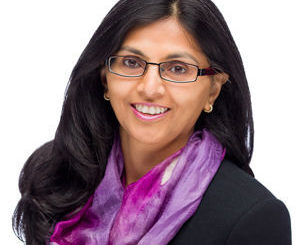
    Nisha Biswal, President of the U.S.-India Business Council at the U.S. Chamber of Commerce, said that in 2014, Prime Minister Modi and the Bharatiya Janata Party won an election on a platform of development for all and an agenda of robust economic reform. “Over the past five years, we have seen good progress on reforms, which include the establishment of a national Goods and Services Tax, passage of the Insolvency and Bankruptcy Code, and a variety of legal and regulatory reforms which have catapulted India’s Ease of Doing Business ranking from 142 to 77. These reforms laid the foundation for India’s strong record of economic growth. Still, much remains to be done to unlock the expansive growth potential of the Indian market. With a strong mandate from the Indian people, Prime Minister Modi will have an opportunity to usher in an era of global economic and strategic leadership for India.”

    “A strong U.S.-India commercial partnership will support these goals, helping India to grow into a $5 trillion economy in the next five years. USIBC believes that trade and investment between the two countries is a critical element of India’s future growth and looks forward to working with Prime Minister Modi and his team to unlock new growth opportunities across the U.S.-India corridor”, she further added.

  • World leaders Congratulate Modi: Great things are in store for US-India partnership, says Trump

    World leaders Congratulate Modi: Great things are in store for US-India partnership, says Trump

    World leaders on Thursday congratulated Prime Minister Narendra Modi for his landslide victory for a second term in office. Congratulatory messages from various parts of the world poured in. While most of them congratulated him over telephone, some leaders took it to social media to extend their greetings.

    US President Donald Trump – Congratulations to Prime Minister @NarendraModi and his BJP party on their BIG election victory! Great things are in store for the US-India partnership with the return of PM Modi at the helm. I look forward to continuing our important work together!

    Bangladesh PM Sheikh Hasina – The Prime Minister of Bangladesh had initiated the call to Modi to extend her congratulations on the clear mandate given by the people of India to the NDA Government. In doing so, PM Sheikh Hasina became one of the first foreign leaders to congratulate the Prime Minister, thus reflecting the extraordinarily close and cordial ties between India and Bangladesh, and the excellent rapport that the two leaders enjoy.

    President of the Russian Federation Vladimir V. Putin – Putin called Modi and congratulated him on his victory in the general elections. President Putin expressed his conviction that the Prime Minister would further strengthen the longstanding friendship between the peoples of both countries and enhance the Special and Privileged Strategic Partnership that bind the two countries together.

    French President Emmanuel Macron – President of France congratulated Prime Minister Narendra Modi over telephone, describing him as one of the foremost leaders of the democratic world. President Macron reiterated his invitation to Prime Minister Modi to visit France in August 2019 for a bilateral meeting and also to attend the G7 Summit at Biarritz.

    Prime Minister of Nepal, K.P. Sharma Oli  – K.P. Sharma Oli called Prime Minister Modi and congratulated him on the electoral victory in the Lok Sabha elections.

    Prime Minister of Japan, Shinzo Abe  – Shinzo Abe called Narendra Modi and congratulated him for the resounding victory of his party in the 2019 General Elections.

    Chinese President Xi Jinping – President of People’s Republic of China, Xi Jinping sent a letter to Prime Minister Modi congratulating him on the electoral victory of National Democratic Alliance under his leadership. In the letter, President Xi noted the great importance he attached to the development of India-China relations and his desire to work with Prime Minister Modi to take the Closer Development Partnership between the two countries to a new height. President Xi also expressed satisfaction at the strong momentum of development in India-China relations in recent years with the joint efforts of both sides.

    Israel Prime Minister Benjamin Netanyahu – Benjamin Netanyahu called his Indian counterpart Narendra Modi to personally congratulate him. “Narendra my friend, congratulation, what an enormous victory. I hope, Narendra, that we can see each other soon, as soon as you form a government and as soon as we form a government,” Netanyahu said in a short video clip of the phone call released by the Prime Minister’s Office. “Well, thank you for your congratulations on my victory, but there’s one difference: You don’t need a coalition, I do, and there’s a big difference.”

  • The historic victory and beyond

    The historic victory and beyond

    By Prof. I.S.Saluja

    It has been a glorious journey for BJP from 2 seats in Parliament in 1984 to 304, May 23, 2019, as I am writing this comment. Mr. Narendra Modi, the man who made it possible with the magic wand in his hand, recalled the tough journey in his address to the party workers at BJP Headquarters in New Delhi on May 23. And he proudly announced that during the long and tough struggle “we never felt tired, nor stopped, nor submitted”. It is the determination to go forward even in the face of the worst circumstances which finally embraces success. Mr. Modi and BJP must be congratulated for the historic victory.

    The election is over. And now is the time to fulfill promises made to people. It was all good to have made all kinds of tall claims of achievements to win votes. But now is the time to devote all energies to do the right service to “New India”.

    Mr. Modi will need to extend himself to achieve the goals he has spoken of in the past. He has admitted there is poverty and it needs to be eradicated. There is unemployment- record highest in 45 years. Mr. Modi has to create jobs for billions of unemployed youth.

    It is an achievement for Mr. Modi that rampant corruption seen a few years before is no more visible. But mere absence of corruption is no guarantee for a state of health for the nation and the people. They need jobs, bread and butter, education, healthcare, and above all, security, which unfortunately, is still elusive.

    The most important thing that Mr. Modi needs to do is to curb the feudal mindset. And the cleansing of the Augean stables has to begin from his tribe- the politicians. Not going into details in my comment, I will urge Mr. Modi to take a cue from the US and Canada with regard to the wages and the privileges of lawmakers.

    The whole nation is expecting Mr. Modi to bring about a qualitative and substantive change in the country. The world is looking at the largest democracy in the world to see if the minorities will be able to live in dignity under the BJP rule. Mr. Modi will have to take care to protect the interests of all Indians, whatever their color or creed.

    We wish Mr. Modi all the best as he prepares to begin his second five-year term as the Prime Minister of India.

    Jai Hind!


  • A Historic Win for BJP: Modi calls it the Victory of the People of India

    A Historic Win for BJP: Modi calls it the Victory of the People of India

    By I.S. Saluja

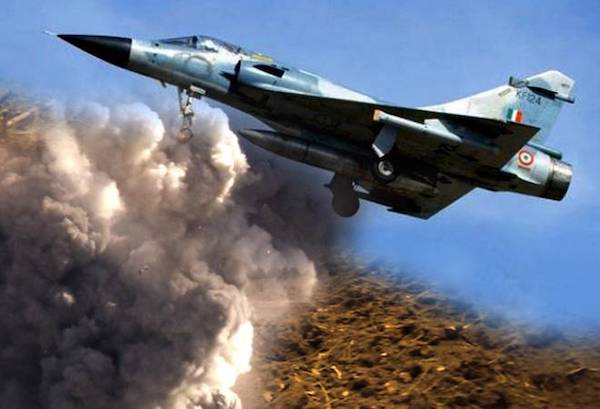
    NEW DELHI / NEW YORK (TIP): Modi had said after the Indian Air Force bombed terrorist location in Balakot in Pakistan, “Humne dushman ko ghar mein ghus kar mara hai”. It is almost a similar surgical strike we saw within India in the just concluded elections. Modi simply intruded into the territory of the opposition and decimated them. Modi magic which was evidenced in 2014 worked with greater efficacy this time around. But the huge victory for BJP -302 seats- has not resulted in any bravado which was probably expected of Mr. Modi.

    In the speech he made to the BJP workers, May 23 at BJP Headquarters in New Delhi, Mr. Modi spoke like a statesman, reassuring the nation that  BJP owed allegiance to the Constitution and that he will take all together in  building a stronger  nation- a reassurance to the fearing minorities who have been uneasy  because of the hardliners in BJP openly speaking in favor of Hindutva and a Hindu nation.

    Mr. Modi said the mandate laid the foundation for the 21st century India, where there would be only two castes. “The first of these castes would be the poor, and the second those who want to fight poverty,” he said. The emergence of these two castes in this election was the reason for the defeat of parties that espoused casteism.

    In an impassioned speech, he said that in his second term, he wanted to make three vows to the people. “My first vow is that I will not do anything out of ill-will or bad intentions. I could make mistakes but never do anything out of malice. My second vow is that I shall never do anything for myself in order to garner profit for myself, and my third vow is that every minute of my life and myself I shall devote to the country. Whenever you want to evaluate me, you must do so on these parameters,” he said.

    Mr. Modi thanked “130 crore” people of India for their faith in Bharatiya Janata Party and for handing down a historic mandate. He said it was their victory; it was the victory of the common people of India. “It is not Modi’s victory. It is the victory of honest people, of youth, of mothers, of hardworking farmers, of honest middle-class people who paid taxes.  He said he dedicated the BJP victory to the people of India.

  • Pulwama attack: Politicizing a conflict for electoral gains

    Pulwama attack: Politicizing a conflict for electoral gains

    What we have witnessed following the strike , from the Government and the BJP leaders would not only sully the image of India but also the nation’s credibility through overt politicization of this conflict, as the country is preparing itself for a critical election.

    By George Abraham

    Ever since the attack in Pulwama by a suicide bomber killing 42 of India’s security personnel, the country has been on the edge,  fearing an all-out war with Pakistan.  Any civilized person could view the barbarity of this dastardly terrorist act only with disgust and rage. However, a confrontation between these two nuclear powers is neither in the interest of these two nations nor does it bode well for the future of this turbulent region. Pakistan has been waging a proxy war with India over the Kashmir issue from the time of Independence, and a final solution to this crisis is not within sight.

    Some would argue that this is the time of war and everyone should keep their apprehensions about its conduct or any other questions they may have close to their chest.  However, a massive intelligence failure of this magnitude over the Pulwama tragedy should  not be missed. How did a young man in his twenties, who was already on the radar of the Security personnel, come to possess, pack & conceal, and then drive 300KG  explosives towards a military convoy undetected? Reports from the region suggest that a police advisory was already in effect a week before this, stating that the Central Reserve Police Force deployment would be targeted. Where is the accountability on these massive security lapses?

    A recent New York Times report paints a scathing image of India’s vintage military equipment and its impact on military readiness. “India’s armed forces are in alarming shape. If intense warfare broke out tomorrow, India could supply its troops with only 10 days of ammunition,  according to government estimates. And 68 percent of the army’s equipment is deplorably old. It is officially considered ‘vintage’”.  A swollen bureaucracy together with lack of funding obviously rendered these procurement and training processes anything but cumbersome.

    Nevertheless, India was left with no choice but to retaliate. Pakistan has been aiding and abetting Jaish-e-Mohammed and its leader Masood Azhar for long despite the pressure from the U.N. and other international bodies. The Air Force was tasked to strike the  terror targets in Balakot region: an order that was carried out despite bad weather conditions. The Indian Military has been known for its professionalism and respect for civilian leadership in a democratic setup. Air Chief Marshal B.S. Dhanoa refused to give a casualty count saying  “IAF doesn’t count the number of dead” and the “casualty figure in an air strike on Balakot camp will be given by the government,” referring to the air strike it had carried out on February 26, 2019.

    Another shameful spectacle that is unfolding in India today is the blatant display of jingoism by the media and their networks to propel a wider war.  Instead of bringing together the nation at a time of crisis, some of these news channels are creating divisions, promoting hate and sowing discord.

    However, what we have witnessed following the strike , from the Government and the BJP leaders would not only sully the image of India but also the nation’s credibility through overt politicization of this conflict, as the country is preparing itself for a critical election. First, the leaked information from sources to the media put the casualty count at 300 to 350. Western intelligence sources and the International press immediately cast severe doubt on these numbers, and some reports directly from the ground characterized the damages as minimal.

    However, in public speeches, Amit Shah, the President of the ruling party BJP, talked about 250 terrorists being wiped out. Other BJP leaders like BS Yeddyurappa said  that his party would win 22 seats in Karnataka after the strike. It is as if BJP leaders are relishing these moments of war and salivating about the prospects of riding to victory in the fog of a protracted fight between the two  nations. It boggles one’s mind to believe that after the Pulwama attack, the terrorists associated with Jaish-e-Mohammed just gathered together to sleep in one place, making an easy target of themselves for the IAF!

    Anyone who questioned the veracity of the BJP leaders’ claims is called an anti-national and accused of doing Pakistan’s bidding. “At a time when our army is engaged in crushing terrorism, inside the country and outside, some people within the country are trying to break their morale, which is cheering our enemy,” Modi said at an election rally. “I want to know from Congress and its partners why they are making statements that are benefiting the enemies”, he added. Modi is apparently absent from the capital in managing the conflict. Instead, he is entirely taking advantage of the ongoing battle on his campaign trail, vilifying the opposition and questioning their patriotism for political advantage.

    Another shameful spectacle that is unfolding in India today is the blatant display of jingoism by the media and their networks to propel a wider war.  Instead of bringing together the nation at a time of crisis, some of these news channels are creating divisions, promoting hate and sowing discord. They broadcast manufactured news; shamelessly appropriate nationalism; and designate a segment as enemy’s  allies. Many of them have become vassals of special interests mostly controlled by crony capitalists aligned with the ruling party.

    It is also sad to hear that there is an atmosphere of fear and intimidation created for Kashmiri students across the country, as Sangh Parivar forces target them for revenge attacks. “It is no secret that the Bajrang Dal and the student wing of the Sangh were foremost in fomenting trouble against Kashmiri students in various parts of India. This was done keeping in mind the upcoming general election”, Omar Abdulla, former Chief Minister of Kashmir said. “It is obvious that  BJP sees an advantage in such environments. It helps them paper over Modi’s mistakes like demonetization, joblessness, India’s poor economic growth and the distress faced by the country’s agricultural sector” he added.

    We collectively admire the bravery and sacrifice of our armed forces. They are fighting to keep all Indians safe and protect the sovereignty of the nation from terrorists and a country that provides haven to them. Moreover, they are fighting to safeguard our democratic traditions and way of life. As Sashi Kumar, a commentator eloquently put it recently, “they are not fighting for this or that political party; they are not fighting for the electoral gains of the ruling party or of the opposition. However, they are, if anything,  fighting the religious fundamentalism of one kind but not to replace it with the rampant religious fundamentalism of another kind, even of the majoritarian variety”.

    The BJP’s strategy appears to be clear and straightforward: playing up Hindu nationalism; linking Kashmiri youth and Jihadi terrorists supported by an enemy, Pakistan; and providing ‘red meat’ to a large segment of the voting public, who are so disappointed with Modi’s failure to deliver his campaign promises. However, this is all at the risk of endangering India’s democratic and pluralistic values, and accelerating animosity between two armed nuclear neighbors, which may even put them on a path to potential disaster!

    (The author is a former Chief Technology Officer of the United Nations and current Vice-Chairman of the Indian Overseas Congress, USA)


  • Vijay Jolly, BJP Leader from India meets with local BJP leaders

    Vijay Jolly, BJP Leader from India meets with local BJP leaders

    BJP Leader Vijay Jolly with American -Indian BJP leaders including New York State Assembly Member Andrew P. Raia at Chai pe Charcha on Modi Govt.’s Achievements in USA, September 15
    Photos / Jay Mandal-on assignment
    American Indian Muslim Leader Selman Khan welcoming BJP Leader Vijay Jolly at New York Namo Tea Party in USA, September 15
    Photos / Jay Mandal-on assignment
  • A universally loved politician: Vajpayee set templates that surprised

    A universally loved politician: Vajpayee set templates that surprised

    The man was a marvel. There have been few politicians like Atal Bihari Vajpayee who so effortlessly stepped across the Lakshman rekha of party propriety and ideology and yet garnered all-round respectability. Right from his debut in the Lok Sabha, there were murmurs by his constipated colleagues about his waywardness and ‘un-swayamsevak-like’ behavior. The minders kept their counsel because of the rarity in their ranks of a silver-tongued communicator like Vajpayee. Compared with other anti-Congress young Turks of the time, Vajpayee was entirely home-schooled in politics. Yet, the man gave the impression of being more forgiving, open-hearted and oriented towards politics of consensus than those schooled in tenets of western liberalism.

    His speech in Parliament that was noticed by Nehru marked him out as a politician to watch out for. And Vajpayee paid the price when it rolled out one of its big guns to humble him in the 1962 elections. Vajpayee was to brush off this dust of defeat several times in his career even as he silkily positioned himself for the top job in the party, leaving it to LK Advani to wield the axe on their one-time mentor Balraj Madhok to land control of the party. The Emergency tested his resolve and staying power as did a barren stretch after Indira Gandhi’s assassination. Vajpayee braved them both.

    Vajpayee’s hour arrived in 1998. And till ill-health laid him low, he occupied the political center-stage with hardly a single blemish of graft, nepotism or rank opportunism blighting his 50 years of public service. As PM, he endured the usual tumultuousness of helming a country, besides countering challenges to his authority with customary élan and panache. His experience enabled him to control the narrative — be it the nuclear tests, the Kargil conflict or the 2002 Gujarat riots. His inclusion in the pantheon of greats was guaranteed when he was felled by a paralytic attack in 2009. The only regret would be that Vajpayee entered South Block 10 years late when his health was already on the decline.

    (Tribune, India)


  • BJP gets drubbing in Bypolls, losing 11 of 14 as regional players set new rules for 2019

    BJP gets drubbing in Bypolls, losing 11 of 14 as regional players set new rules for 2019

    NEW DELHI(TIP): Opposition unity got a booster dose on Thursday, May 31, as the BJP faced stunning defeats in 11 of the 14 byelections for which results were announced and regional forces emerged on top of electoral charts, signaling a new phase in Indian politics.

    The ruling BJP faced a crushing defeat in Uttar Pradesh’s Kairana parliamentary segment where Tabassum Hasan, the joint nominee of Rashtriya Lok Dal and Samajwadi Party — backed by Bahujan Samaj Party and Congress — defeated Mriganka Singh of the saffron fold by around 50,000 votes. BJP’s loss in the communally sensitive Kairana stood out considering it had won the segment by over two lakh votes in the 2014 General Election when the Narendra Modi wave swept UP.

    Of the four Lok Sabha seats where bypolls were held on May 28, the BJP managed to retain only Palghar in Maharashtra, where it defeated a Shiv Sena candidate. Kairana went to the kitty of a united Opposition; Congress’ UPA partner NCP snatched Bhandara-Gondia in Maharashtra from the BJP and the Nationalist Democratic Progressive Party, a BJP ally in the North-East, bagged the Nagaland segment.

    While the trend of BJP’s losses in parliamentary byelections is not new (it has only won five of 27 Lok Sabha bypolls since its historic 2014 landslide), shockwaves for the saffron party came from states where regional satraps convincingly halted the BJP in nine of the 10 Assembly byelections.

    The BJP managed to retain only Tharali in Uttarakhand. In UP, it lost the Noorpur seat to SP’s Naim-ul-Hasan, who was propped up by the joint Opposition. Lalu Prasad’s RJD claimed sweet revenge in Bihar by wresting the Jokihat seat from the Nitish Kumar-led JD(U), which deserted the Opposition ranks some time ago to go and settle with the BJP.

    Maheshtala in West Bengal went to the Mamata Banerjee-led TMC though the BJP was second, pushing the state’s old players CPM and Congress far behind. In Kerala’s Chengannur, the ruling CPM-led LDF won comprehensively while Silli and Gomia in Jharkhand went to the Jharkhand Mukti Morcha. In Punjab’s Shahkot also, the Congress dealt a severe blow to BJP ally Akali Dal.

    An emboldened Opposition saw a clear message in BJP’s multiple defeats. “Victory of a united Opposition,” said Congress’ Pramod Tewari. The results equally established the emergence of a new leader — RJD’s Tejashwi Yadav in Bihar.

    Though signaling a receding Modi wave, Home Minister Rajnath Singh put a spin on the saffron losses by saying, “You have to take two steps back for a big leap.” Overall, it was a day of defense for the BJP, whose spokesman Sambit Patra came up with this reasoning: “We won 325 seats in UP and formed a government. How did we lose bypolls and win later… because bypoll is fought on local issues.”

    That said, ahead of the 2019 General Election, Thursday’s most abiding message is that the time for bipolar politics may be over. A senior politician (name withheld) commented:” BJP ke acche din jaane wale hain”.

    (With inputs from Tribune, Delhi)

  • Indian Overseas Congress, USA denounces BJP’s naked grab of power in Karnataka

    Indian Overseas Congress, USA denounces BJP’s naked grab of power in Karnataka

    NEW YORK(TIP): “BJP has dishonored the office of the Governor and denigrated the constitutional process in democracy in their incessant appetite to grab power at any cost,” said George Abraham, Vice-Chairman of the Indian Overseas Congress, USA. “Unless the people of India recognize the corrosive effect of their actions on institutions they hold dear, the Secular Democracy as we know it could be soon history” Mr. Abraham added.

    Karnataka Governor, Vajubhai Vala, a former Finance Minister under Modi in Gujarat has done a disservice to the nation by not inviting the Congress-JD(S) combine to form the Government. Although it is a post-poll alliance, it is quite evident that they have secured the simple majority that is necessary to claim the right to form the Government. On the other hand, BJP which is short of 8 MLAs might only succeed in their efforts, if they could engage in poaching or horse trading, which is illegal and at the minimum violates the spirit of the constitution.

    By swearing in BJP leader B.S. Yeddyurappa as the next Chief Minister, the Governor appears to have implicitly sanctioned illegal activities that may be already taking place behind the scenes. Janata Dal (S) leader HD Kumaraswamy alleged that Anand Singh, MLA is put under enormous pressure to defect. “Modi government is misusing institutions of the central government. I know they are threatening MLAs. A Congress MLA told me Anand Singh called him and told him ‘they are using ED (Enforcement Directorate), I had a case in ED, and they are going to screw me. I’m sorry I have to protect my interest’,” Mr. Kumaraswamy said, quoting Anand Singh. Previously, he had alleged that Rs. 100 crore and cabinet positions were being offered to his lawmakers”.

    Earlier, in a press briefing, Congress leader P. Chidambaram said the numbers of the Congress party and the Janata Dal-Secular (JD-S) established that the alliance had a majority in the Karnataka legislature. “The Governor, who is an exalted constitutional office, should not walk on a perilous path which is illegal,” Chidambaram said.

    Rahul Gandhi, the President of Congress Party, has also weighed in on the fast-moving developments in Karnataka.: “The BJP’s irrational insistence that it will form a Govt. in Karnataka, even though it clearly doesn’t have the numbers, is to make a mockery of our Constitution. This morning, while the BJP celebrates its hollow victory, India will mourn the defeat of democracy”.

    Congress Party may also partly to bear the responsibility for this debacle as their over-confidence bordering on arrogance by Siddaramaiya, the former Chief Minister, might have prevented them from forming a pre-poll alliance with Janata Dal (S). It should be noted that although Congress won only 78 seats, its vote-share (38%) was higher than that of BJP’s (36%). And combined with JD (S), the anti-BJP vote share amounts to 56% and thereby nullifies the argument that they have some mandate to govern for next five years.

  • Sonia Gandhi says Rahul is her boss too, wants to wo

    Sonia Gandhi says Rahul is her boss too, wants to wo

    HIGHLIGHTS

    ? She said she was convinced Congress’s defeat in 2014 was an aberration

    ? She urged the party to be ready for the national elections

    ? “Reality is different,” she said on PM Modi’s offensive against Congress

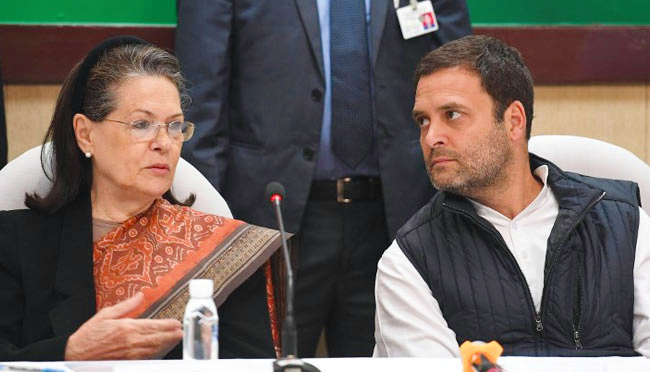
    NEW DELHI (TIP): Launching an all-out attack on the Bharatiya Janata Party (BJP) and the Narendra Modi government, former Congress president Sonia Gandhi on Feb 8 said she would work with “like-minded political parties” to ensure its defeat in the next general elections.

    Addressing the Congress Parliamentary Party, of which she is the chairperson, Sonia alleged that the government was orchestrating violence against minorities to polarise society for narrow political gains.

    She added that this would also be seen in Karnataka, which goes to the polls in a few months.

    Sonia told party MPs to work with dedication, loyalty and enthusiasm, asking them to work with new party president Rahul Gandhi to strengthen the party.

    She added that Rahul is also her boss. “We have elected a new Congress president and on your behalf and on my own, I wish him all the very best. He is now my boss too — let there be no doubt about that — and I know that all of you will work with him with the same dedication, loyalty and enthusiasm as you did with me,” she said.

    “I am confident that we will work cohesively under his leadership to revive our party’s fortunes. That process has begun,” she said.

    However, News18 reported that a section of the old guard in Congress was reluctant to deal with Rahul for political negotiations.

    Congress’ call for a metting of Opposition parties ahead of the Budget Session was also met with a lacklustre response from non-BJP parties, the report said.

    “It has been almost four years since this government came to power, this has been a period in which institutions which have come under systematic assault — Parliament itself, judiciary, media and civil society.

    Investigative agencies have been let loose against political opponents,” The Indian Express quoted Sonia as saying.

    “The minorities feel unsafe and are being subjected to barbarous attacks. Dalits have come under renewed and widespread atrocities, as have women. In many cases, this violence, especially against minorities and Dalits, is not sporadic or random, but orchestrated to polarise our society for narrow political gains. We saw this both in Uttar Pradesh and Gujarat. We will no doubt see it again in Karnataka. Such polarisation is criminal in a democracy, yet those in power look the other way,” NDTV further quoted her as saying.

  • Modi’s $87 billion river-linking project set to take off as floods hit India

    Modi’s $87 billion river-linking project set to take off as floods hit India

    NEW DELHI (TIP): After years of foot-dragging, India will begin work in around a month on an $87 billion scheme to connect some of the country’s biggest rivers, government sources say, as Prime Minister Narendra Modi bets on the ambitious project to end deadly floods and droughts.

    The mammoth plan entails linking nearly 60 rivers, including the mighty Ganges, which the government hopes will cut farmers’ dependence on fickle monsoon rains by bringing millions of hectares of cultivatable land under irrigation.

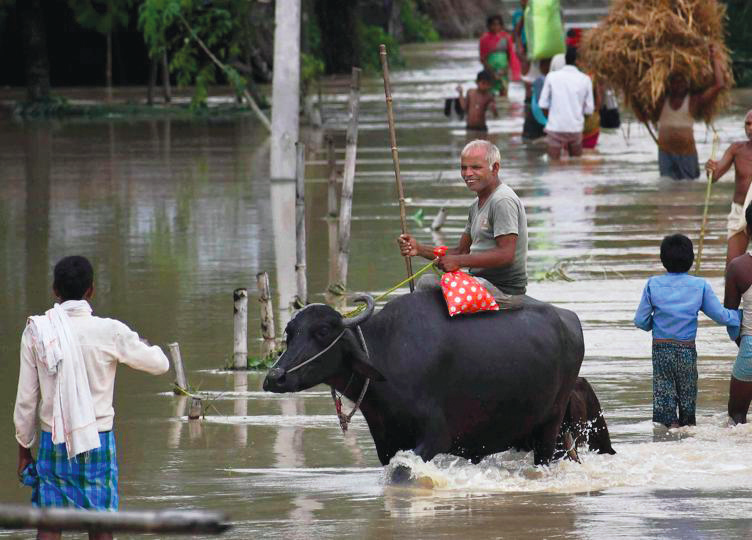
    In recent weeks, some parts of India and neighbouring Bangladesh and Nepal have been hit by the worst monsoon floods in years, following two years of poor rainfall.

    Modi has personally pushed through clearances for the first phase of the project – which would also generate thousands of megawatts of electricity – the sources say, despite opposition from environmentalists, tiger lovers and a former royal family.

    That will involve construction of a dam on the Ken river, also known as the Karnavati, in north-central India and a 22- km (14-mile) canal connecting it to the shallow Betwa.

    Both rivers flow through vast swathes of Uttar Pradesh and Madhya Pradesh, ruled by the Bharatiya Janata Party (BJP), and the prime minister hopes the Ken-Betwa scheme will set a template for other proposed river interlinking projects, one of the sources said.

    “We have got clearances in record time, with the last round of clearances coming in only this year,” Sanjeev Balyan, the junior water resources minister, told Reuters. “The Ken- Betwa interlinking tops the priority list of the government.”

    Government officials say diverting water from bounteous rivers such as the Ganges, Godavari and Mahanadi to sparse waterways by building a clutch of dams and a network of canals is the only solution to floods and droughts.

    But some experts say India would be better off investing in water conservation and better farm practices. Environmentalists and wildlife enthusiasts have also warned of ecological damage.

    The 425-km (265-mile) Ken flows through a tiger reserve nestled in a verdant valley. The government plans to clear out 6.5 percent of the forest reserve to build the dam, relocating nearly 2,000 families from 10 remote villages.

    Around half a dozen clearances, including on environmental and forest protection, have been obtained for the scheme to link the Ken and Betwa, according to two sources and documents seen by Reuters.

    Modi’s cabinet is likely to give its final go-ahead for the project within a couple of weeks, sources say, after which he will flag off construction at the site about 805 km (500 miles) from New Delhi, currently marked only by rows of red concrete slabs placed on the ground.

    Source: Reuters

  • Rahul Gandhi, Mayawati to skip RJD rally on August 27

    Rahul Gandhi, Mayawati to skip RJD rally on August 27

    Video clips of chief minister Nitish Kumar’s statements against PM Narendra Modi before the 2015 assembly elections and Modi’s DNA comment and other remarks against Kumar will be played at the rally.

    PATNA (TIP): RJD chief Lalu Prasad’s proposed ‘BJP Bhagao, Desh Bachao’ rally at Gandhi Maidan in Patna on August 27 seems to have lost its sheen.

    The rally, an effort at uniting the opposition parties to take on the BJP-led NDA in the 2019 Lok Sabha poll, will not be attended by Congress leaders Sonia Gandhi or Rahul Gandhi and BSP supremo Mayawati. However, the Congress will be represented by Ghulam Nabi Azad.

    Mayawati on Thursday justified her decision to skip the rally, saying her party has conveyed to the RJD that it will share the stage with it only if it is decided in advance which party gets how many seats.

    JD(U) dissident Sharad Yadav has also confirmed participation in the rally. Among other leaders who will attend the rally are West Bengal chief minister Mamata Banerjee, former chief ministers of Uttar Pradesh and Jharkhand Akhilesh Yadav and Hemant Soren, respectively.

    “We have extended invitations to 17 parties that have come together with the Congress to form a joint opposition platform,” said Bhola Yadav, a close aide of the RJD chief and MLA from Bahadupur in Darbhanga. He said Om Prakash Chautala-led INLD, DMK and a few other parties from Jharkhand will also be represented at the event. Prasad’s younger son Tejashwi Prasad Yadav has already undertaken a two-phase statewide tour to drum up support for the rally. “The rally will be different from the past with respect to ambience, extensive use of technology and less of rustic flavour. The change can be attributed to the advent of Tejashwi as the widely accepted next generation leader,” they added. Yadav himself is supervising the arrangements for the rally.

    Video clips of CM Nitish Kumar’s statements against PM Modi before the 2015 assembly elections and Modi’s DNA comment and other remarks against Kumar will be played at the rally. “Facts will speak for themselves before the ‘malik’ to make an assessment how Kumar insulted their mandate,” said RJD leader Sanjay Yadav.

  • AIADMK merger sets up mother of all battles for Sasikala

    AIADMK merger sets up mother of all battles for Sasikala

    CHENNAI (TIP): Sitting in Parappana Agrahara jail on Bengaluru’s outskirts, VK Sasikala has the mother of all battles on her hands: her party, on which she had had an unassailable sway for over three decades, is now intent on getting rid of her.

    Apparently steered by the Bharatiya Janata Party (BJP), which is looking for a foothold in Tamil Nadu, the two factions of the All India Anna Dravida Munnetra Kazhakam (AIADMK) recently merged after an acrimonious period in the wake of party supremo J Jayalalithaa’s death last December. The BJP views Sasikala as having too much baggage.

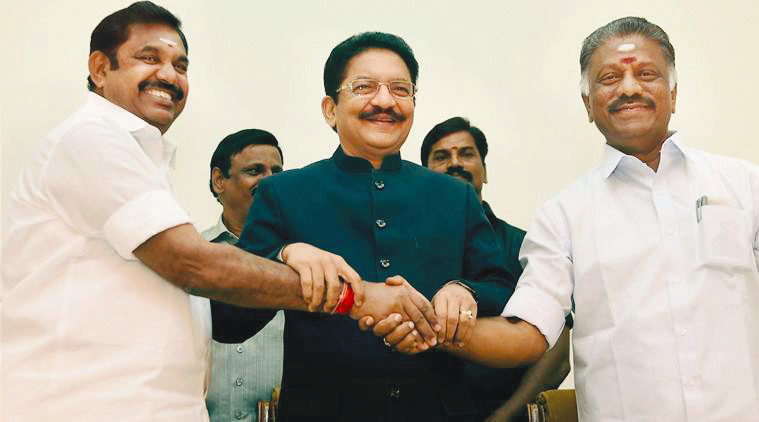
    But the 60-year-old still has some fight left in her, orchestrating her moves through her nephew, TTV Dinakaran. So 19 MLAs supporting him have met governor C Vidyasagar Rao to give him letters withdrawing their support to the Chief Minister. This potentially reduces the EPS–led government to a minority one.

    When Jayalalithaa loyalist O Panneerselvam (OPS) made Sasikala’s exit from the party a condition for the merger, Chief Minister Edappadi Palaniswami (EPS) said the party’s general council will soon be convened to remove her from the post of general secretary.

    For Sasikala, the AIADMK has been as much part of her life, as Jayalalithaa herself was and, for over three decades, she was the go-to person for most AIADMK leaders. Observers, commenting on the developments, say that the BJP perhaps did not want Sasikala to become another Jayalalithaa.

    “The BJP saw in Jayalalithaa’s death an opportunity and is clearly exerting control over the AIADMK. This would not have been possible [with] Sasikala becoming powerful. The fact that Prime Minister Narendra Modi met Paneerselvam four times in a week before the merger establishes BJP’s role. When was meeting Modi so easy for a leader from Tamil Nadu?” asks senior journalist R Ramasubramaniam. Source: HT

  • PM MODI WANTS ‘SWACHH BHARAT’, WE WANT ‘SACH BHARAT’: RAHUL GANDHI

    PM MODI WANTS ‘SWACHH BHARAT’, WE WANT ‘SACH BHARAT’: RAHUL GANDHI

    NEW DELHI (TIP): Congress vice-president Rahul Gandhi on Thursday hit out at the government for not being able to keep its promises and said Prime Minister Narendra Modi wanted to create a “Swachh Bharat” (Clean India) but people wanted a “Sach Bharat” (True India).

    Addressing a meeting of opposition leaders, hosted by rebel Janata Dal (United) or JD(U) leader Sharad Yadav, Gandhi also took a dig at the government’s flagship programme ‘Make in India’, saying most products available in the country were made in China.

    The Congress leader accused the Bharatiya Janata Party (BJP) of not fulfilling the promises made to the people during the 2014 general elections. These included bringing back black money stashed abroad and creating jobs for the youth.

    The meeting, “Sanjhi Virasat Bachao” (save country’s composite culture), was also attended by former prime minister Manmohan Singh and other senior Congress members as well as Left party leaders, including CPM general secretary Sitaram Yechury and CPI national secretary D. Raja. “Modiji says he wants to create a Swachh Bharat but we want Sach Bharat. Wherever he goes he lies,” Gandhi alleged.

    Gandhi also took a potshot at the Rashtriya Swayamsevak Sangh (RSS), BJP’s ideological arm, saying it was bent on changing the country’s Constitution. “One says this country is mine, other says I belong to the country. That’s the difference between RSS and us,” he said. Source: PTI

  • Religious freedom conditions continued to deteriorate in India, says US Report

    Religious freedom conditions continued to deteriorate in India, says US Report

    WASHINGTON (TIP): The United States Commission on International Religious Freedom (USCIRF), that researches and monitors international religious freedom issues, in its latest report slammed ruling BJP and Hindu nationalist groups for perpetrating violence against religious minority communities.

    USCIRF’s 2017 annual report which was released on Aug 15, pointed out that “In 2016, religious tolerance and religious freedom conditions continued to deteriorate in India.”

    “Hindu nationalist groups—such as the Rashtriya Swayamsevak Sangh (RSS), Sangh Parrikar, and Vishal Hindu Perished (VHP)—and their sympathizers perpetrated numerous incidents of intimidation, harassment, and violence against religious minority communities and Hindu Dalits. These violations were most frequent and severe in 10 of

    India’s 29 states. National and state laws that restrict religious

    conversion, cow slaughter, and the foreign funding of nongovernmental organizations (NGOs) and a constitutional provision deeming Sikhs, Buddhists, and Jains to be Hindus helped create the conditions enabling these violations.”

    The report criticized the ruling party as well. “While Prime Minister Narendra Modi spoke publicly about the importance of communal tolerance and religious freedom, members of the ruling party have ties to Hindu nationalist groups implicated in religious freedom violations, used religiously divisive language to inflame tensions, and called for additional laws that would restrict religious freedom. These issues, combined with longstanding problems of police and judicial bias and inadequacies, have created a pervasive climate of impunity in which religious minorities feel increasingly insecure and have no recourse when religiously motivated crimes occur”, it said. Based on these concerns, in 2017 USCIRF again places India on its Tier 2, where it has been since 2009.

    USCIRF suggested following recommendations to the US government:

    • Integrate concern for religious freedom into bilateral contacts with India, including the framework of future Strategic Dialogues, at both the federal and provincial levels, and encourage the strengthening of the capacity of state and central police to implement effective measures to prohibit and punish cases of religious violence and protect victims and witnesses;
    • Increase the U.S. Embassy’s attention to issues of religious freedom and related human rights, including through visits by the ambassador and other officials to areas where communal and religiously motivated violence has occurred or is likely to occur, and through meetings with religious communities, local governmental leaders, and police
    • Press the Indian government to allow USCIRF to visit the country, and urge the Indian government to invite the United Nations Special Rapporteur on freedom of religion or belief to visit India
    • Urge India to boost training on human rights and religious freedom standards and practices for the police and judiciary, particularly in states and areas with a history or likelihood of religious and communal violence;
    • Urge the central Indian government to press states that have adopted anti-conversion laws to repeal or amend them to conform with internationally recognized human rights standards; and
    • Urge the Indian government to publicly rebuke government officials and religious leaders who make derogatory statements about religious communities.


  • IT’S NAIDU VS GANDHI IN V-P POLL ON SATURDAY

    IT’S NAIDU VS GANDHI IN V-P POLL ON SATURDAY

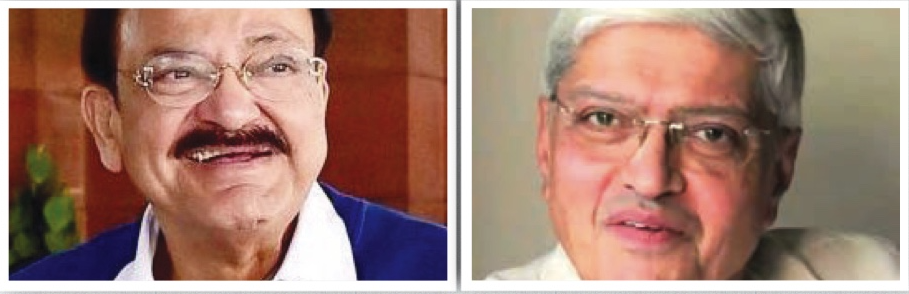
    NEW DELHI (TIP): Ruling NDA candidate M Venkaiah Naidu is tipped to be India’s next vice president as members of Parliament gear up to cast their ballot on Saturday. The name of the next vice president will be known on Saturday evening after members of Parliament cast their ballot during the day in Parliament House.

    The ruling NDA, which has a majority in the Lok Sabha, will find it easy to place its candidate as the next vice president. The opposition has fielded Gopal Krishna Gandhi against Naidu.

    The BJD and the JD(U) which had supported NDA nominee Ramnath Kovind for the post of president, have decided to back opposition nominee Gandhi.

    Though the JD(U) has broken ties with ‘mahagathbandhan’ and joined hands with the BJP to form a new government in Bihar, it has decided to vote for Gandhi, a former governor of West Bengal.

    Members of Parliament will use special pens for marking their choice in the election to be held between 10 am and 5 pm.

    The counting of votes will commence after polling and the results will be declared by 7 pm, Election Commission officials said quoting precedents. No whip can be issued by political parties as the election is through a secret ballot.

    The term of the present incumbent Hamid Ansari, who has held the post for two consecutive terms, is coming to an end on August 10.

    The electoral college which elects the vice president, who is also the ex-officio Chairman of the Rajya Sabha, consists of elected and nominated members of Rajya Sabha and Lok Sabha.

    The total strength of the two Houses is 790, but there are two vacancies in the Lok Sabha and one in the Rajya Sabha. BJP MP in Lok Sabha Chhedi Paswan is barred from casting vote following a judicial pronouncement.

    In the 545-member Lok Sabha, the BJP has 281 members. The NDA led by BJP, has 338 members. In the 243-member Rajya Sabha, the BJP as of now has 56 members, while the Congress with 59 is the single largest party. With its recent wins in the recent assembly polls, the BJP is set to emerge as the single largest party in the Rajya Sabha too next year and the NDA’s tally would be close to 100.

    It would, however, still be short of a majority in the upper house. The one who bags 50 per cent plus one vote of the total valid votes cast will win the poll. Source: PTI

  • Oppn protests in RS over kidnapping of Gujarat Congress MLA

    Oppn protests in RS over kidnapping of Gujarat Congress MLA

    NEW DELHI (TIP): Opposition Congress on July 28 created uproar in the Rajya Sabha, forcing four adjournments in quick succession, alleging that Gujarat Police had kidnapped its MLA in the state with a view to influencing the upcoming elections to the Upper House.

    Congress members trooped into the Well of the House raising antigovernment slogans and charging the BJP with “stealing” MLAs to help its candidates win the Rajya Sabha polls, forcing brief adjournments one after the other.

    Deputy Chairman PJ Kurien first adjourned the proceedings for 10 minutes soon after the House assembled as Congress leaders, including Leader of Opposition Ghulam Nabi Azad and Anand Sharma, raised the issue and party members stormed into the Well raising slogans.

    Similar scenes were witnessed when the House met again, forcing Kurien to adjourn the proceedings till 1200 hours. A repeat of the protests saw Chairman Hamid Ansari to adjourn the House again after it reassembled at noon.

    As there was no let-up in the opposition protests, the House was again adjourned till 1430 hours. Azad said he was not raising the issue of three Congress MLAs who had resigned from the party and one of them being immediately named as the BJP candidate for the Rajya Sabha polls.

    He said Punabhai Gamit, MLA from reserved constituency of Vyara, after attending district Congress executive committee, had gone for tea to another MLA’s house when the district superintendent of police “kidnapped” him.

    The police officer, he alleged, told the MLA that the Congress had decided not to give him a ticket for the upcoming assembly elections and he should leave the party and join the BJP and he would arrange his meeting with the BJP president and get him the ticket.

    Azad alleged that the police officer who picked the Congress MLA up was the one who was arrested in a fake encounter case. The MLA managed to flee when he asked the police officer to allow him to get a changeover of clothes, he claimed.

    “You are stealing MLAs by using the police (to garner votes),” Azad said, adding, “You should be ashamed.”

    Earlier, Sharma had raised the issue through a point of order saying the Constitution was being violated by the ruling BJP which was using the police to “kidnap” MLAs.

    “They are stealing MLAs,” he said, adding that it must be guaranteed that the biennial elections to the Rajya Sabha are free and fair and MLAs are released. Union Minister Parshottam Rupala sought to counter the charge saying it was an internal matter of the Congress, whose MLAs, including the leader of the party in the state assembly, were deserting it. “Why are you complaining here?” he said. Minister of State for Parliamentary Affairs Mukhtar Abbas Naqvi said it is the Election Commission’s responsibility to hold free and fair elections. “If they have a complaint, they should go to the Election Commission. The Rajya Sabha is not the place to protest.”

    The Congress is not able “to keep its house in order”, Naqvi said, prompting the opposition party MPs to troop into the Well shouting slogans.

    “You have to protect the Constitution…Voters are being kidnapped, where do we go,” Azad said. Kurien said the Chair had nothing to do with elections.

    “If what has been narrated has happened, solution lies elsewhere. You can approach police, you can approach election commission and seek remedy. I have no remedy for this,” he said.

    He asked protesting members to return to their seats but his pleas went unheeded. “What is the use of obstructing,” he asked before adjourning the proceedings for 10 minutes.

    When the House reassembled, Anand Sharma (Congress) again raised the issue of kidnapping. To this, Kurein asked what he could do.

    Azad suggested that the Chair can give a direction to the Election Commission to ensure fair election. He said the officer involved in the incident should be removed.

    Kurien, however, said the Election Commission “does not require a direction from the Chair” to conduct free and fair election, as it is bound to do so and “they are doing it”.

    “If you have a complaint, approach the Election Commission,” he said. As the Congress members trooped into the Well and started shouting slogans, Naqvi took potshots at the main opposition party saying they would also demand a direction to the Surpreme Court as several of their members are involved in “corruption” cases.

    The Congress would also seek direction to the Election Commission as they are losing the elections, the minister added.

    Kurien asked agitated Congress members to return to their seats so that Zero Hour business could be taken. However, Congress members kept shouting slogans from the well. Kurien adjourned the House till noon. When the House met at noon, Chairman Hamid Ansari adjourned the proceedings, first briefly for 15 minutes and then till 1430 hours. Source: PTI

  • Nitish says decision to quit was in Bihar interest, mandate not to serve one family

    POLITICAL DRAMA IN BIHAR

    PATNA(TIP) : The decision to part ways with the RJD and join hands with the BJP was taken in the interest of Bihar and will ensure development and justice for the state, Nitish Kumar on July 27 said after being sworn in as the chief minister.

    Kumar resigned the post Wednesday night after a fall out with the alliance partner RJD over corruption charges against Lalu Yadav and some of his family members, including son Tejashwi, who was the then deputy chief minister.

    “Whatever decision we have taken will be in the interest of Bihar and of its people. It will ensure development and justice. It will also ensure progress. This is a collective decision. I ensure that our commitment is towards the people of Bihar,” Nitish Kumar told reporters. Kumar was sworn in as the chief minister of the state along side senior BJP leader Sushil Kumar Modi, who will be his deputy in the new government, at the Raj Bhawan in Patna.

    NITISH-MODI REUNION NOT A HURRIED AFFAIR

    The reunion of Narendra Modi and Nitish Kumar appeared hurried on Wednesday, but it was in the works for nearly seven months. Warmth returned to the chilly relationship between the Prime Minister and Bihar chief minister as early as this January. The two astute politicians met after a long gap at a function in Patna to commemorate the 350th birth anniversary of Guru Gobind Singh. It was January 5 and TV screens flashed images of the two politicians sitting together, smiling at each other and even holding hands at different moments. The bitterness of parting ways and poll campaign was over.

    “The unease in the relationship between the two leaders was over,” a BJP leader said. “Over the next months, they remained in touch, directly and through emissaries.”

    The onstage bonhomie between the two was quite palpable. Modi praised Nitish for arrangements he made for prakash utsav and going ahead with prohibition despite opposition. Kumar reciprocated by praising Modi for successfully implementing a liquor ban in Gujarat as its chief minister.

    The event at the historic Gandhi Maidan in Patna happened within months of Kumar supporting Modi’s decision to recall high-value banknotes. He also supported Modi on the military “surgical strikes” against terrorist hideouts in Pakistan-occupied Kashmir. Less than a week after this bonhomie blossomed, Kumar had an ice-breaking meeting with a top BJP leader in Patna.

    They met again in Delhi in February to explore if a reunion can happen and on what terms.

    The subsequent months saw Kumar talking of a grand alliance against the BJP, and simultaneously sharing with the BJP leadership his unease about the functioning of RJD chief Lalu Prasad, his alliance partner.

    He was jittery over Prasad calling the shots in departments headed by his son, deputy chief minister Tejashwi. This was not acceptable to a leader conscious of his image. A senior Union minister remained in constant touch with Kumar and every move was communicated to Prime Minister Modi and BJP chief Amit Shah.

    A dispute between Tejashwi and another minister close to Kumar over a government project in Raxaul was another flashpoint. He was upset over friction between allies on sharing boards and corporation and the Congress’s dilly-dally on strategic matters.

    LALU PRASAD TO TAKE FIGHT FOR BIHAR TO SUPREME COURT

    Former Bihar Chief Minister and RJD supremo Lalu Prasad
    addresses a press conference in Ranchi on Thursday.
    Pic courtesy: PTI

    PATNA (TIP): The battle for Bihar is expected to reach the Supreme Court but legal experts see little hope for Lalu Prasad, who has said that he will approach the top court against the governor’s decision to not call his Rashtriya Janata Dal for government formation.

    Prasad’s ally Nitish Kumar dumped their so-called Grand Alliance on Wednesday and decided to partner with the Bharatiya Janata Party within hours, a development that Prasad has claimed should not have been allowed by governor Keshri Nath Tripathi since his was the largest party by elected legislators.

    Legal experts say there is nothing illegal about the governor’s action and that he had the prerogative to invite whoever he thought had a better shot at forming government. “The idea of a single-largest party comes after election; after a crisis comes the concept of who has the larger and a stable combination – So the governor has the discretion to call on a combination or a party that will enjoy majority on the floor of the house,” said senior advocate Rajeev Dhawan.

    Dhawan cited the example of Goa and Manipur,where too the governor’s action was challenged in the Supreme Court but nothing came of it.

    The 2017 Goa elections saw a close contest in the 40-member assembly. BJP won 13 seats,while the Congress-NCP with 18 was the single largest collective. Yet the governor invited and appointed a BJP coalition with the MGP (three seats), Goa Forward Party (three seats) and three independents to form the government. Congress took the matter to the Supreme court but its petition was dismissed. Chief Justice of India J S Kehar had then said, “Where are your numbers? You could have finished the case in 30 seconds by showing that BJP don’t have the numbers. It seems you were not confident about the support you have. You should have asked the governor what nonsense she is doing and confidently said look we have the numbers. You should have sat on a dharna. You did nothing. You could have filed affidavits of your supporters before us. You are putting us in the position of the governor. These things you should have stated before the governor.”


  • Mayawati’s resignation accepted

    Mayawati’s resignation accepted

    NEW DELHI (TIP): BSP supremo Mayawati’s resignation from the Rajya Sabha has been accepted by Chairman Hamid Ansari. Officials said Mayawati had submitted a fresh resignation letter as per the prescribed format, which was accepted by Ansari today Accusing the BJP and the Chair of not allowing her to raise the issue of anti-Dalit violence in Uttar Pradesh,Mayawati resigned from the House on Wednesday.

    The three-page resignation letter she submitted was rejected as it was not in the requisite format. As per the format, the resignation letter should be brief and should not mention reasons. The resignation move is seen as an attempt by Mayawati to consolidate her core Dalit support base and re-establish herself as the community’s preeminent leader after facing a massive defeat in the UP Assembly poll earlier this year. There is also a speculation that she might tie up with Lalu Prasad Yadav’s RJD to augment her falling political fortunes.

    The BSP could win only 18 seats while the BJP came to power by winning more than 300 of the 403 seats in the Assembly poll.

    The BJP had termed her resignation as a “drama” and pointed out that her tenure in the House was anyway coming to an end early next year.

  • Debate Why Hinduwadis are obsessed with Cow?

    Debate Why Hinduwadis are obsessed with Cow?

    Cow is not sacred and beef is not forbidden to Hindus, according to Vedas 

    By Dave Makkar

    The author finds no mention in Hindu scriptures about cow being referred to as “mother” or as “holy”. He finds no evidence that cow slaughter was ever prohibited, that beef eating was forbidden. He wonders why Hinduwadis are so obsessed with cow. The Indian Panorama, with this article, is initiating a debate on an issue which has fiercely divided the Indian nation. The views expressed here are the author’s own.

    The current atmosphere in India on the issue of cow defies all sane logic, Hindu religious Texts, thousands of years old sacred history, historians and scholars.  On one hand the current Modi government talks of making India the biggest economic power in the world surpassing America and China. On the other hand, his own party and his Hindu affiliate’s members talk of what people can eat or cannot eat, how many children the Hindu couples should produce, what the women should wear, adult girls cannot be seen in the company of opposite sex friends, Hindu girl cannot marry a non-Hindu and any criticism of government policies make you anti-national that includes refusing to say Bharat Mata ki Jai or Cow is our mother.

     Modi himself and his team members are biggest hypocrites on the issue of cow or meat. As CM of Gujarat under Modi meat production 10,600 tons in 2001-2 went up to 35,286 tons in 2011-12. Still Modi accused UPA government for cow slaughter for their support to meat exporters “Pink Revolution” during the run up to the 2014 elections that brought him to power. Ironically under Modi’s watch bovine/cow meat export has gone up by 70% according to the Commerce Ministry website. Now India is number 1 exporter of bovine/cow meat in the world.

     Modi’s confidante Amit Shah during the 2014 campaign made several speeches that cow slaughter will not be banned in north eastern states of India. As BJP’s party president on May 28, 2015 in Goa; Amit Shah ruled out a nation-wide beef-ban or cow slaughter.  Union Government and Goa Government both under BJP are jointly running a slaughterhouse in Goa.

     Sangeet Som, the Hindutva poster boy & one of the main accused in 2013 Muzzafarnagar communal riots, UP Assembly Member and now Minister in Adityanath Yogi’s government had been personally associated with two meat processing and export companies, Al-Dua and Al-Anam. Al-Dua is one of the India’s leading halal meat export companies which exports meat to Arab countries.

     BJP candidate Sreeprakash on April 2, 2017 in the run up to the Mallapuram Lok Sabha by election in Kerala said, “I will ensure quality beef and standard abattoirs in my constituency.”

     Modi’s Minister of State for Home Affairs Kiren Rijiju in Aizwal on May 27, 2017 said that, “I eat beef, I’m from Arunachal Pradesh and can anybody stop me? So let us not be touchy about somebody’s practices. This is a Democratic country. Sometime some statements are made which are not palatable.” Kiren Rijiju also described as “unpalatable” his colleague Mukhtar Abbas Naqvi’s remarks that those who eat beef should go to Pakistan, and questioned whether anyone could stop him from eating beef. The BJP leaders in Arunachal, Meghalaya, Sikkim, Mizoram, Nagaland have been making statements to their constituents, sale of beef at subsidized rates is their commitment to them. After the new Cattle Trade Rules announced by the Modi government they went to the extent of saying “No Beef No Support to BJP”

     BJP’s Karnataka spokesperson Vaman Acharya on May 28, 2017 while participating in a panel discussion on Suvarna News opposed the beef ban. He said that people from all communities including the Brahmin community, consumed beef. Before India became an agrarian nation, beef had been a staple diet. Even today, several people, including indigenous tribes in the North Eastern States consumed beef as a staple. Acharya had also said that as chairman of the Karnataka Pollution Control Board, he gave permission for the setting up of 16 abattoirs in the State.  Lastly, he had said that he didn’t subscribe to the religious sentimentality attached to the cattle. He retracted his statements on June 6, 2017 under party pressure.

     Modi’s Home Minister Rajnath Singh in Aizwal on June 12, 2017, said that people are free to choose what they want to eat.  When asked about protests against the government’s ban on sale of cattle for slaughter, Singh clarified that the Centre will not impose any restrictions on one’s choice of food. However, even as Singh spoke, scores of people in the Mizoram capital participated in a “beef ban bashing banquet” organized by a local organization. (PTI)

    Kerala BJP and RSS have joined hands to start a co-operative society to sell meat which includes bovine meat as well as fish, a Malayalam daily Deshabhimani reported on July 5, 2017.

    July 17, 2017 Goa’s BJP CM Manohar Parikar who also holds the animal husbandry portfolio in the assembly session replied to BJP assembly members concern over the poor quality of Beef imported from Congress ruled neighboring state Karnataka; “Approximately 2,000 kg beef is produced per day at the state abattoir of the Goa Meat Complex Limited, while rest of beef is brought in from Karnataka. Parrikar said he would issue directions to the department concerned to carry proper inspection of beef imported from Karnataka. Parrikar further added that “The Goa Meat Complex Ltd has no problem in slaughtering more animals if they are brought there by traders,”

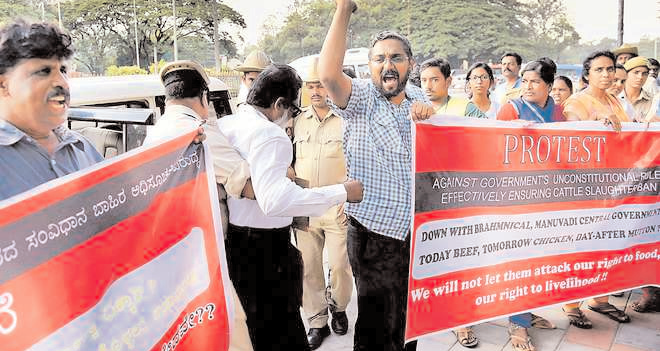
    Modi’s New Cattle Trade Rules that have been stayed by the SC on July 12, 2017 violates Right of a Person to Freedom of Choice regarding Food as enshrined in Indian Constitution and it is also violating the rights of the farmers to trade. Under this law farmers cannot sell the cattle in the market for slaughter but slaughter houses can come to the farmer and buy cattle for slaughter. Then majority of the farmers are not educated how they can comply with filling out numerous forms about the origin & ownership of the animal in question? First, the farmers/dairy operators will be exploited by the bureaucracy and then by Slaughterhouses that can make a cartel to give them less price for their cattle.

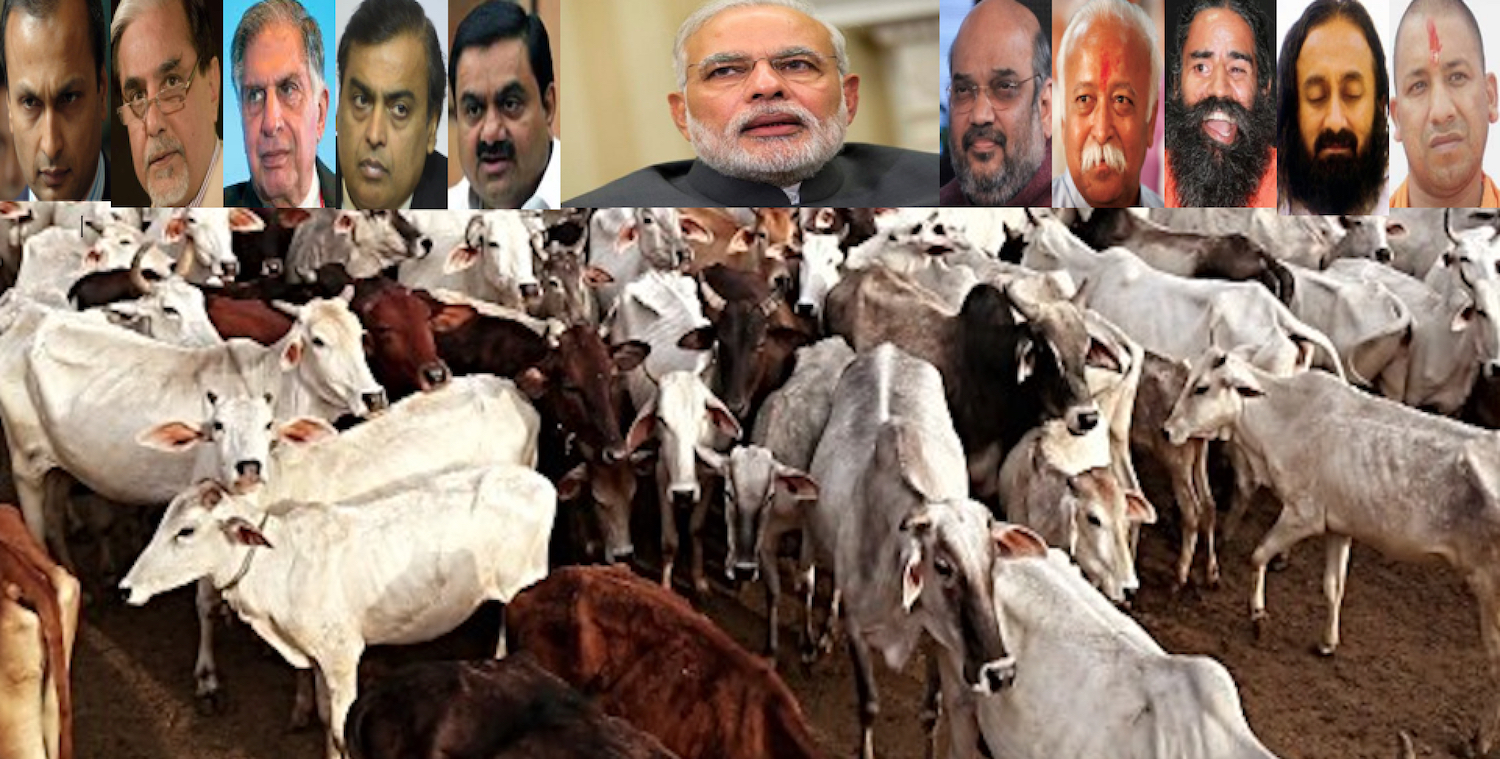
     Modi aka BJP is paving the way for its handlers like Adani, Ambani, Tata and other foreign MNC’s to control the meat and animal hide trade that is worth Billions of Dollars. UP slaughterhouses alone employ 25 lac people with a turnover of Rs. 15,000.00 crore, the highest producer of meat in India. The meat industry is likely to grow at a compound growth rate of 8.4% over the next five years. The processed meat industry is growing even much faster, at about 20%. The meat export from India is about $4.5 billion and raw hide to leather goods is another $5.5 billion. About 22 million people are in the workforce and the meat export industry is expected to grow 50% in 5 years. Beside that 70% of Indians are non-vegetarians. Domestic per capita meat consumption in India is very low — around 5 kg as compared to the world average of 47 kg. With rising incomes between 2003 and 2012, their meat consumption rose by 6.3% a year. It is expected to rise by another 3.5% a year between 2013 and 2022.

     Apart from 73.7 lakh tons of meat in 2016-17, India also produced 108 lakh tons of fisheries in 2015-16 ranking 2nd after China. India is the number One the and largest exporter of shrimp fish in the world. This industry is growing at a robust pace of 8% per annum. The business is valued at Rs. 1 Lakh Crore and employs about 150 lakh people. Andhra Pradesh occupies the first place, West Bengal 2nd and Modi’s Gujarat at 3rd place in fish production in India.

     The demonetization was also done for these very influential people so that they can control food business worth billions that is traditionally run on cash basis by the informal sector. On top of that to pave the way for billions of dollars that can be made in transaction fees in the guise of digital money from the less fortunate and financially most vulnerable people of Indian society. Rich have credit cards; they don’t pay any fees to use it; rather they are rewarded with points and cash back for its use; it is the merchant that pays the fees for accepting it. The poor has to get a “Pre-Paid Debit Card” for a fee with a monthly maintenance fee and fee for loading money; one of the biggest Ponzi schemes ever invented by the American Financial Industry to loot the poor.

     Coming to Team Modi & Hinduwadi’s understanding of Hinduism, its history, its writing on eating meat and views of various learned scholars, all of them are a very big disappointment. Team Modi should do some soul searching why Atal Behari Bajpai avoided the trap of cow laid by the bogus Hindutva supporters that has no love for their own 50 crore (500 million) extremely poor Hindus living a miserable life.

     According to Sanskrit Scholar Rajani K Dixit, “there is no such thing as Holy Cow in the Vedas”. The Vedas consider bovines important for milk, beef, agriculture and transport but not divine or holy. The word ‘Aghnyaa’ applies only to a milch cow because it is not economical to kill it. A Vaisha cow is meant for beef, and especially reserved to an extent for Brahmins only. Atharva 12.4(13) tells us that in case a Brahmin begs for a cow from a non-Brahmin, “even if that person has a beef-dinner at his house, he has to select another cow to slaughter for his own dinner, than the one that is asked for”. The word ‘Aghnyaa’ (not to be killed) coined by Rigveda for young milch cows was the main cause of the Hindu misunderstanding that cows or bovines are not to be slaughtered.

     The Rigveda has never used the word ‘mother’ for a cow. There is no punishment recommended for a cow slaughterer even if someone kills a young milch cow. Beef-eating is also not taboo. Beef parties are not only allowed but highly appreciated, and a person who cooks beef for his guests is praised by the term ‘Atithi-gva’ ‘one who offers beef to guests’.           

     Ritual sacrifice of a bull is a must in worship to God Indra. Beef parties also seem a regular affair in weddings (RV 10.85). Cows are not sacred and beef is not forbidden to Hindus. Here is a line from a verse ascribed to god Savita, the presiding deity of the Gayatri Mantra, describing a dinner party he is hosting: “At night we are going to kill cows” (RV.10.85(19). RV 10.89 (14) mentions “cows for food, laying scattered on the grounds of a slaughter house”. Mark that the author does not use the word ‘animals’ but ‘cows’, showing that beef was the most popular item, and the cow the most slaughtered animal. RV 10.95(6) says that “old cows which do not give milk” are “only fit to be cooked”. It further states that “useless cows ….are taken to be cooked, but never milch cows”. It is clear that slaughter houses are not banned, beef is allowed and useless bovines are allowed to be slaughtered in Hinduism.

     Aadi Shankaracharya born in 788 CE in Kerala: in his commentary on Brahadaranyako Upanishad 6/4/18 says: ’Odaan’ rice mixed with meat is called ‘maansodan’ on being asked whose meat it should be, he answers ‘Uksha’ is used for an ox, which is capable to produce semen. Currently 72 communities including some upper caste Hindus in Kerala prefer beef to the mutton and some prefer it because it is cheaper than mutton.

     Hinduisms great propagator Swami Vivekaanand said: “You will be surprised to know that according to ancient Hindu rite and rituals, a man cannot be a good Hindu who does not eat beef “. (The complete works of Swami Vivekanand vol :3/5/36)

     Vinayak Damodar Savarkar, the Hindutva Icon and Icon of Hindu religious & political parties including BJP, espoused his views in Vidnyan Nishta Nibandh, that the cow, like the peepal tree, should be cared for, as something useful to humans, which meant eating it as well if need be. He insisted that a superstitious mindset towards cows would ruin India’s intellect and that cows should be protected for their economic use to man, and not because of their ‘divinity’. Attributing religious qualities to it gives it a godly status. Such a superstitious mindset destroys the nation’s intellect. “When humanitarian interests are not served and in fact harmed by the cow and when humanism is shamed, self-defeating extreme cow protection should be rejected.”              

    Every now and then, an admirer of Savarkar raises the topic. “Can anyone imagine that the ‘Father of Hindutva’ advocated beef-eating (in special circumstances), rejected the divinity of the Vedas, denounced the sanctity of the caste system and launched a virulent attack on the hypocrisy of the priests?” wrote Ved Pratap Vaidik, a journalist close to several Hindutva figures. “Incidentally, Savarkar was a beef-eater,” wrote Varsha Bhonsle on Savarkar’s birth anniversary, February 26, in 1998. “For he was, above all else, a rationalist – a true Hindu – and eons ahead of contemporary Hindutvawadis.” (“Why is the Cow a Political Animal?” S. Joshi)

    Mahatma Gandhi was approached for total ban on Cow Slaughter in India. His reply was, “I have been long pledged to serve the cow but how can my religion also be the religion of the rest of the Indians? It will mean coercion against those Indians who are not Hindus. The assumption of the Hindus that India now has become the land of the Hindus is erroneous. India belongs to all who live here. Earlier on 25th July 1947 he also said that “The Hindu religion prohibited cow slaughter for the Hindus, not for the world. The religious prohibition came from within. Any imposition from without meant compulsion. Such compulsion was repugnant to religion.”

     A Brahmin’s Cow Tales by D. N. Jha, a high cast Brahmin himself. The cow as a sacred animal, Jha believes, did not really gain currency until Dayanand Saraswati’s cow protection movement in the 19th century”. The cow became a tool of mass political mobilization with the organized cow-protection movement,” the historian points out. “The killing of cows stopped gradually with the agrarian society and caste rigidity. The Brahmins found it convenient to say that those who ate beef were untouchable. But they themselves continued to consume it, recommending it for occasions such as shraadh. The beef-eating habits of Indians which existed in Rig Vedic times and continued till the 19th century and after, despite repeated Brahminical injunctions against cow-killing. That ancient Hindus, including Brahmins, were beef-eaters, willing to incur the minor penalty that an agrarian society began imposing on cow-killers, and that this fondness for cattle meat had nothing to do with Islam or Christianity.       

     For those who blame Muslims for the practice of Cow slaughter in India.  Babar’s first act after conquering Delhi was to forbid the killing of cows. They must read Babar’s Directives (Wasiyyat namd-i-majchfi) a secret testament to his son Humayun and his future generations. For the stability of the Empire, O my son!, “The realm of Hindustan is full of diverse creeds. Praise be to God, the Righteous, the Glorious, the Highest, that He hath granted unto thee the Empire of it. It is but proper that thou, with heart cleansed of all religious bigotry, should dispense justice according to the tenets of each community.’ “And in particular refrain from the sacrifice of cow, for that way lies the conquest of the hearts of the people of Hindustan; and the subjects of the realm will, through royal favour, be devoted to thee. And the temples and abodes of worship of every community under Imperial sway, you should not damage. Dispense justice so that the sovereign may be happy with the subjects and likewise the subjects with their sovereign. The progress of Islam is better by the sword of kindness, not by the sword of oppression.” (Abstracted from the 1936 book The Mughal Empire From Babar To Aurangzeb, by SM Jaffar of Peshawar. It mentions that “the original document is in Persian and is treasured in the Hamida Library at Bhopal as one of its heirlooms.”)

    The British Origin of Cow-Slaughter in India (published 2002) by Gandhian historian Dharampal. His book draws from official documents to show that the riots of 1880-1894 were not the obvious Hindu-Muslim conflagration they were made out to be. The book cites accounts of how “many prominent Muslims as well as the Parsis and Sikhs actively participated in the (cow protection) movement.” Dharampal wrote that large-scale cow slaughter was not the handiwork of Muslims who came to India from central and western Asia. “The question of the sacrifice of a cow did not arise as the land where Islam arose did not have many cows.”

    Mughals were habituated to the meat of goats and mutton, sacrificing camels on the occasion of festivals like Eid or for large feasts, the book says. Dharampal rues the lack of research on cow killing between 1200 and 1700, when a series of Muslim kings ruled over a large part of India. But he goes on to show that systematic slaughter of cattle began in India with the East India Company establishing itself. The British, unlike the central and west Asians, were habituated to beef.  The first slaughterhouse in India was built in Calcutta (now Kolkata) in 1760 by Robert Clive, then Governor of Bengal. It could kill 30,000 animals per day. Several more slaughterhouses were set up in various parts of the country by the Commissariat Wing of the three British armies of Bengal, Madras and Bombay Presidencies. A total of 350 slaughterhouses were constructed by 1910.

     Nitya Sambamurti Ghotge, a veterinary surgeon who heads Anthra, a group in Pune that has worked with rural livestock rearers since 1992. Laws against cow slaughter and Trade Rules will only criminalize the livestock trade, not protect the animals, said Ghotge. Only the smugglers and the law enforcement officials will benefit from the ban on cow slaughter, not the poor farmers or the livestock. Like the agriculture scientist Ramanjaneyulu, Ghotge holds that the cow protection laws are unjust; it is about powerful urban people outsourcing the burden of cow protection on the rural poor, she said.

    As for the BJP’s claim that “cow is the only divine animal that exhales oxygen”, no living being other than plants exhale oxygen is also a myth. Animals, however, exhale unused oxygen, as lungs cannot process all the oxygen that is inhaled. According to the 2006 FAO report, the livestock sector accounts for 9 per cent of carbon dioxide derived from human-related activities, but produces a much larger share of even more harmful greenhouse gases.

     Team Modi is least concerned about the millions of Indians- Hindus as well as non-Hindus employed directly and indirectly in the cattle trade. The millions especially children and elderly that depend on bovine meat as the cheapest source of protein. In the name of misguided Hindutva they are imposing their personal believes on the cattle breeders, traders, farmers and bovine meat eaters without considering the economic realities. There was a time when the owner could get Rs 12,000.00 to Rs. 15,000.00 for the unproductive animal from a slaughterhouse, now that has been reduced to Zero by the Gau Rakshaks/cow vigilantes. Rs 2,500.00-3,000.0 per month is the cost just to keep the animal alive for 8-10 years after the end of its economic utility. If the 10 million or so cattle that possibly end up at the abattoir every year are not culled, farmers will simply stop caring for them and let them loose in towns and cities. It will cost upward of Rs 22,000 crore to take care of them. And since the 10 million-plus will keep adding each year, till they die in their natural course, these costs would only keep on mounting up every year.  Just in the 4th year the cost could be more than Rs. 88,000.00 crore. In BJP ruled state Rajasthan the state government is providing Rs 70.00/day for cow and Rs 35/day for calf and at the same time it is providing Rs. 25.63/person on welfare schemes in the state. Under Modi, India has become an international joke where cow is more valuable than human beings.

    (The author is a New Jersey based community activist and a regular commentator on burning issues. He can be reached at davemakkar@yahoo.com)


                                (The Indian Panorama invites comments on the article)


  • Cattle ban BJP’s route marker for 2019

    Cattle ban BJP’s route marker for 2019

    By Rajindar Sachar

    “The new legislation has been deliberately brought up to further communalize the situation and also financially ruin the poor Muslims. And the government is not even attempting a sham of making suggestions to counter the perception that its actions are weakening the morale of minorities”, says the author.

    Union Home Minister Rajnath Singh, speaking of the achievements of the three years of the Modi government, proudly proclaimed: “We have by and large provided security to the country. India is the second largest country in the world as far as the Muslim population is concerned, and I can say with full responsibility that despite such a large population (of Muslims), the IS has not been able to set foot.”

    Frankly, it is not clear whether he meant it to be a compliment for the patriotism and nationalism of Indian Muslims or he was only praising his security agencies – that notwithstanding such a large population of Muslims, his intelligence agencies have been able to control it. I hope it was not the latter, because it would be uncalled for and unjustly maligning the Muslim community.

    Rajnath Singh should openly say that the patriotism and nationalism of Indian Muslims is no less than any other community, including Hindus. And that anyone even remotely suggesting otherwise is talking treason, as some of the sickening communal Hindu bodies are doing.

    Muslims do not have to carry their patriotism on the sleeve; to suggest that would be calumny. In fact, notwithstanding the provocation from RSS fanatics, the equanimity shown by Muslims is praiseworthy. If the Home Minister is really keen to keep peace in the country, he needs to persuade Modi to immediately withdraw the deliberately provocative animal slaughter legislation, which is being opposed by many states apart from being challenged in high courts.

    The legislation purporting to be for the prevention of cruelty to animals is a ploy to snatch jurisdiction by the Centre on the subject of cattle trade, which is squarely the purview of the states. Even the BJP accepts this, as is clear from the Arunachal Pradesh state party president openly announcing that the Centre’s ban on the sale of cattle for slaughter could not be binding on the states. The entire North-East is on the boil on this matter. Minister of Environment Harsh Vardhan says diplomatically that the government is open to suggestions. This sounds hollow given that half the states are opposed to this legislation, which in reality is an attempt at pleasing the “gau rakshak” gang and to allow them to spread terror. This legislation has been deliberately brought up by the BJP to further communalize the situation and also financially ruin the poor Muslims who earn their livelihood through cattle sales.

    The atmosphere was earlier vitiated by RSS Nagpur bosses installing Yogi Adityanath as Chief Minister of UP, who has already spread fear among Muslims in the state by praying at the makeshift Ram Temple near the Babri Masjid demolition site. This is blatant communalization of the situation in India, which is the strategy of the BJP for 2019 elections.

    Prime Minister Narendra Modi needs to be reminded of how he addressed cow vigilantes in August 2016 saying: “It makes me angry that people are running shops in the name of cow protection…. Some people indulge in antisocial activities at night and in the day masquerade as cow protectors.”

    The Modi government is not even attempting a sham of making suggestions to counter the perception that its actions are weakening the morale of minorities. In that regard, the way Modi has handled the naming of National Commission for Minorities members shows he only wants to retain the shell of it. The present members were appointed after the positions remained vacant for months. Of the five persons appointed, only one is a Muslim (Chairperson) and the remaining are one each from other minorities.

    This too was done after a high court asked the government for a response to a writ petition. According to the 2011 Census, the Hindu population is 79.8 per cent and Muslim 14.2 per cent. The rest 6 per cent is constituted of Christians (2.3%), Sikhs (1.7%), Buddhists (0.7%), Jains (0.4%), and Parsis. It can’t be denied that the object of the minorities panel is to create a mechanism that would give them confidence. To make the minorities feel that they have an equal stake in the running of the State and are equal beneficiaries of its programs. It is hoped that the two more members yet to be appointed would be Muslims, either well-recognized academicians or public figures from the community, to give some reassurance to the community.

    The report of the UN Human Rights Council Forum on Minority Issues, 2010, had made some significant recommendations on minorities and their effective participation in economic life, which each country is mandated to follow: “…the right of minorities to participate effectively in economic life must be fully taken into account by governments seeking to promote equality at every level. From implementing non-discrimination in employment and enforcing protection laws in the private sector to developing national economic development and international development assistance schemes.”

    It is unfortunate that the Opposition has not come up with a concrete/specific program on which it intends to fight the 2019 election. In fact, the Opposition has been reduced to a debating/TV phenomenon. It has no specific program for action. The way the Congress and other political parties are letting wither away the opportunity that arose from the Dalit assertion in Saharanpur speaks ill of their commitment.

    There is already a competition between the Chief Minister of UP and Prime Minister Modi as to who would be a greater favorite of the Sangh Parivar after the 2019 parliamentary elections, assuming the BJP wins the majority.

    Yogi Adityanath has given encouragement to the cow vigilante brigade, as indicated in the UP Director-General of Police issuing instructions to all police officers that those involved in cow slaughter or smuggling should be booked under the National Security Act – a legislation designed to handle terrorists. Has the BJP lost all sense of balance and proportion?

    (The author is a retired Chief Justice of the Delhi High Court)

  • AAP NATIONAL EXECUTIVE TO MEET ON SUNDAY, REDRAW GUJARAT POLL PLAN

    AAP NATIONAL EXECUTIVE TO MEET ON SUNDAY, REDRAW GUJARAT POLL PLAN

    NEW DELHI (TIP): The Aam Aadmi Party (AAP) is likely to redraw its strategy for contesting the Gujarat assembly elections, which is scheduled to be held later this year, and take a few steps back in favour of consolidating its position in Delhi and Punjab.

    Just five months ago, the party launched an elaborate exercise in Prime Minister Narendra Modi’s home state to spread its reach and contest the polls there as a direct challenge to the ruling Bharatiya Janata Party (BJP).

    Its plan was to go all out in the western state, with senior leaders including Delhi’s deputy chief minister Manish Sisodia put in charge of different zones to oversee election preparations. The change in course will be discussed at the meeting of the party’s national executive – the highest. executive body of AAP comprising around two dozen top leaders – on Sunday, an AAP leader said.

    This is the first such meeting after the Delhi municipal polls and the last round of assembly elections in which the AAP fell way short of its expectations of forming a government in Punjab and making electoral gains in Goa.

    A series of crises, including infighting in the Delhi and Punjab units, have hit the party since. The last meeting of the NE was held in April 2016.

    “A final decision on Gujarat will be taken in a meeting of those involved with the party’s expansion in the state with Arvind Kejriwal next week. It is now a question of how many seats to fight in the assembly elections there,” a party leader privy to the deliberations so far said.

    Kejriwal, the party’s national convenor, has called the meeting on June 6. Before that, the party’s top leaders will deliberate on the change in course.

    A senior leader said that the consensus within the party brass is to go slow on Gujarat, and therefore the national expansion plan, and look at “consolidating our position in Delhi and Punjab.” “Gujarat is no longer our priority.

    Regaining lost ground in Delhi is of utmost importance. Punjab has given us a good opportunity by making us the principal opposition party. We need to build on that,” he added. Source: HT

  • BABRI CASE: CHARGES FRAMED AGAINST ADVANI, JOSHI, UMA BHARTI

    BABRI CASE: CHARGES FRAMED AGAINST ADVANI, JOSHI, UMA BHARTI

    NEW DELHI/LUCKNOW (TIP): Veteran BJP leaders LK Advani, MM Joshi, Union Minister for Water Resources Uma Bharti, BJP MP Vinay Katiyar, VHP’s Vishnu Hari Dalmiya and Sadhvi Rithambara and six others will stand trial for criminal conspiracy in the 1992 Babri mosque demolition case, with a special CBI court on May 31 (Tuesday) framing charges against them.

    The trial under the serious criminal conspiracy charge will commence against them from Wednesday, after having been dropped by the trial court in 2001. The verdict was upheld by the Allahabad High Court in 2010. However, the Supreme Court ordered restoration of conspiracy charge against them on April 19 after the CBI approached it for the same. The charge of conspiracy is in addition to the existing charges against them for promoting enmity between different groups on grounds of religion for which they are already facing trial.

    The Congress, meanwhile, demanded the resignation of Bharti and asked Prime Minister Narendra Modi to uphold the law and the Constitution. “One of the accused, Uma Bharti is a Union Cabinet Minister. Having been charge sheeted, she must resign. The Prime Minister must come forward and uphold the rule of law and the Constitution,” AICC incharge of communications Randeep Surjewala said. Union Minister M Venkaiah Naidu claimed the BJP leaders accused in the case were “innocent” and will emerge “unscathed”.

    The accused, who spent nearly three hours in the court on Tuesday, had sought discharge for the offence of criminal conspiracy, which the judge rejected.

    Before Advani reached the court, Uttar Pradesh Chief Minister Yogi Adityanath met him at the VVIP guest house in Lucknow. Just before appearing in the court, Uma Bharti said, “I was present in Ayodhya on December 6, 1992, which is no secret. Crores of BJP workers, lakhs of officials and thousands of political leaders participated. It was an open movement like the movement against the Emergency. I don’t see any conspiracy.”

    All six were granted bail by CBI Special Judge SK Yadav on a personal bond of Rs 50,000 each after rejecting the CBI’s opposition to their bail plea.

    The court will resume hearing on Wednesday. Claiming that even Muslims now wanted construction of a Ram Temple at Ayodhya, BJP MP from Unnao Shakshi Maharaj, who was in Lucknow in connection with the case, told The Pioneer, that no power on earth could stop the construction of the temple at Ram Janma bhoomi.

    Reacting to the chargesheet, Vinay Katiyar demanded that SP leader Mulayam Singh Yadav should also be made an accused in the Babri mosque demolition case because he has given a statement that he had ordered the police to open fire in which 16 people were killed.

    “This statement is a confession and action should be taken against him,” he told reporters.

    Besides the six, conspiracy charges were also framed against Ramvilas Vedanti, Baikunth Lal Sharma, Champat Rai Bansal, Mahant Nritya Gopaldas, Dharam Das and Satish Pradhan, all of whom were allegedly present when the mosque was pulled down.

    Judge Yadav passed two orders, one for grant of bail and the other for framing of charges. The accused are also facing charges of having made assertions “prejudicial to national integration and injuring or defiling a place of worship”.

    The other charges against them include indulging in “deliberate and malicious” acts intended to outrage religious feelings, uttering statements leading to public mischief, rioting and unlawful assembly. The maximum punishment upon conviction after restoration of the conspiracy charge could be up to five years in jail or a fine or both, according to a lawyer who attended the proceedings.The counsel for the accused argued against the framing of charges and pleaded not guilty, saying they had no role in the razing of the mosque.

  • CATTLE SALE BAN HAS NOTHING TO DO WITH STATE LAWS, SAYS JAITLEY

    CATTLE SALE BAN HAS NOTHING TO DO WITH STATE LAWS, SAYS JAITLEY

    Meghalaya leader quits, BJP unfazed 
    • ? BJP’s Meghalaya unit office-bearer Bernard Marak, who had announced a beef party in his hometown to celebrate Modi’s three years in office, quit over new cow-slaughter rules alleging these violated culture of indigenous people
    •  “I quit the party as it is trying to impose its ideology on us. What’s wrong if we planned to celebrate the third anniversary in our traditional way?” Marak was quoted as saying
    • ? BJP leaders, however, say they are not worried because the beef-eating population in the country is only around 2%

    NEW DELHI/TARAKESHWAR (TIP): The row over beef eating and cattle trade kept the political cauldron astir today despite Finance Minister Arun Jaitley’s attempt to calm frayed tempers by insisting the new Central notification will not interfere with state laws on slaughtering animals.

    Following several days of protests, particularly in Kerala and Tamil Nadu, Jaitley told a press conference in New Delhi that the ban imposed by the Centre on sale and purchase of cattle from animal markets for slaughter had nothing to do with state legislations.

    The animal markets are meant for farmers and not for traders, he said, adding that “This is the only effect of the notification.”

    “Every state has its own legislation or no legislation (with regard to slaughter of cattle). You have provision in the Constitution Article 48 (Directive Principles) which says that certain category of animals have to be protected,” Jaitley said.

    Prohibition of cow slaughter mentioned in Article 48 of the Constitution is not an enforceable Article, but a Directive Principle of State Policy. West Bengal’s feisty Chief Minister Mamata Banerjee, who has been at the forefront of the Opposition’s attack on the ban, added a new twist to the row, claiming the Centre was planning to omit buffalo from the ambit of its notification to favour “certain people close to BJP” involved in trade of its meat. “Some people close to the BJP are involved in the buffalo meat trade and that is why, they (Centre) are planning to allow the slaughter of buffaloes,” she told a public meeting in Tarakeshwar in West Bengal.

    Assailing vigilantism in the name of cow protection, she said, “The BJP has got only 29 per cent of the votes, but they are trying to bulldoze the masses. Who are they to decide what one will eat? Who are they to decide what one will wear It is a matter of personal choice.” Source: PTI