Tag: California

  • Sanjay Gupta backs medical marijuana, apologizes for previous views

    Sanjay Gupta backs medical marijuana, apologizes for previous views

    NEW YORK (TIP): One of America’s most prominent doctors says he has shifted his stance in support of medical marijuana. Dr. Sanjay Gupta, chief medical correspondent at CNN and a CBS News contributing medical correspondent, wrote a post on CNN.com called,

    “Why I changed my mind on weed,” in which he describes his change of heart that occurred while filming a documentary, aptly titled, “Weed.” “Long before I began this project, I had steadily reviewed the scientific literature on medical marijuana from the United States and thought it was fairly unimpressive,” wrote Gupta. “Well, I am here to apologize.” Gupta says he was too dismissive of the “loud chorus” of legitimate patients whose symptoms improved with help from medical marijuana. He now says,

    “I mistakenly believed the Drug Enforcement Agency listed marijuana as a schedule 1 substance [a category of dangerous drugs] because of sound scientific proof.” “They didn’t have the science to support that claim, and I now know that when it comes to marijuana neither of those things are true,” wrote Gupta, citing patient cases including a 3-year-old whose seizures were dramatically reduced from 300 a week to three a month with medical marijuana’s help.

    He adds that marijuana does not have a high potential for addiction compared to cocaine, or even cigarettes. Gupta is a faculty member in the department of neurosurgery at Emory University School of Medicine in Atlanta and in 2009, reports suggested he was offered the post of Surgeon General by President Barack Obama. In the doctor’s new post, he did reference concerns about the drug. As a father, he worried about marijuana’s effects on the developing brain.

    Recent research suggests marijuana may affect a teen’s IQ or raise risk for psychiatric disorders like schizophrenia. He says he wouldn’t permit his own kids to try it until they are adults. Gupta also lamented on the challenges facing more research into medical marijuana for treating pain, including a stricter approval process that has to go through health agencies like the National Cancer Institute and the National Institute on Drug Abuse (NIDA).

    He pointed out tolerance is a real problem in existing medications: People are likely to overdose from a prescription drug every 19 minutes, but he couldn’t come across one case of a marijuana overdose. “We have been terribly and systematically misled for nearly 70 years in the United States, and I apologize for my own role in that,” said Gupta. Medical marijuana is currently legalized in 20 states and the District of Columbia: Alaska, Arizona, California, Colorado, Connecticut, Delaware, Hawaii, Illinois, Maine, Massachusetts, Michigan, Montana, Nevada, New Hampshire, New Jersey, New Mexico, Oregon, Rhode Island, Vermont and Washington State. Illinois became the most recent state to approve a law Aug. 1, according to the Marijuana Policy Project.

    Maryland also has a hospital-based medical marijuana program. Quantity limits and approved conditions vary by state, but can include chronic pain, epilepsy, HIV/AIDS and cancer. A recent survey in the New England Journal of Medicine also indicated support for medical marijuana. When told about a hypothetical case of a 68-year-old woman with breast cancer that had spread to her lungs, chest and spine, 76 percent of doctors surveyed said they would favor the use of marijuana for medicinal purposes. But support is not universal.

    The prestigious Mayo Clinic has come out and said it does not support the use of medical marijuana for young people with chronic pain, citing a link to psychological disease and that people under 25 are more prone to become addicted. New York City mayor Michael Bloomberg made headlines in June when he called medical marijuana one of the “great hoaxes of all time.” Recreational marijuana use is currently legalized in Colorado and Washington State, following the November 2012 elections.

  • Threats to National Security and threats to Civil Liberties

    Threats to National Security and threats to Civil Liberties

    SACRAMENTO (TIP): Geneva Liberty Group’s event “1984 Day Rally to ‘Restore the Fourth’ amendment attracted about sixty attendees on August 4th, 3:00-5:00 PM, at Cesar Chavez Park located in heart of the Downtown of Sacramento. The nationwide movement ‘Restore the Fourth’ has been drawing attention of people against the National Security Administration’s surveillance program to preempt any threat to America.

    The rally was one of about 50 peaceful demonstrations in cities across the country. Pieter Singh, one of the organizers, declared that the rally was to correct ongoing oppression of N.S.A, and rebuke the oppressor boldly. “Our organization seeks to secure individual liberty as the solution to ills affecting mankind, support self-government, and oppose oppression anywhere in the world.”

    It is believed the movement originated on Reddit hardly a month ago. NSA’s unreasonable searches and seizures, almost all speakers emphasized, violate Fourth Amendment. Steve Macias, executive director of Cherish California Children and vice president of California Assembly referred to George Orwell’s novel, Nineteen Eighty- Four, to highlight tendency of the Obama administration for a totalitarian control of Americans’ liberties. Most speakers acknowledged Bradley Manning and Edward Snowden as keepers of Americans’ conscience in exposing the surveillance program of the federal government. India born, Eric Arthur Blair wrote under pseudonym of George Orwell. As a member of the British India’s intelligence service, Orwell had witnessed tampering of India’s history and languages.


    img22

    The devious colonial network incapacitated humans to entertain any rebellious thoughts even in their private thoughts. Orwell’s fictional writing is believed to be based on his personal experiences in India and United Kingdom. The predominant theme in Orwell’s novel is that the highly organized system of surveillance and contrivance could, indeed, alter perception of reality. “And if all others accepted the lie which the Party imposed-if all records told the same tale-then the lie passed into history and became truth.’Who controls the past’ ran the Party slogan, ‘controls the future: who controls the present controls the past.’” – George Orwell, Nineteen Eighty-Four Steve said that NSA’s wiretaps targets phone records, emails, and children’s computer.

    In an attempt to provide security, N.S.A., in fact, is endangering the very American society it pretends to protect. Jada Bernard, another speaker, stressed, “Dollars of the lobbyist are louder than the voices of the people. Chris Schwegler warned that criminals should not be allowed to define American culture. “I’m worried that our government has surpassed all limits in invading our privacy,” said Joe Hall, a 21-year-old Sacramento resident. “I am pissed off how our sacred constitution is being violated with impunity,” another young man added. The hallmark of the “Restore the Fourth” rally was that young boys and girls demonstrated a great concern at the dangerous direction the US had been taking in the 21st century.

    Bhajan Singh Bhinder who represented a non-profit, Bhim Rao Ambedkar Sikh Foundation (BRASF) expressed a great concern at ever increasing wiretapping of American citizens. He said facing the truth and ending the regime of lies could only lead to peaceful coexistence. Referring to Dr. Bhimrao Ambedkar, a giant intellectual luminary of Columbia University, New York, Bhinder said that he fought relentlessly to abolish caste system of India as necessary for a healthy global society. Joel Beall and his associates in the end entranced the audience with playing of Berembau, a Brazilian musical instrument. Capoeira, a dance form most common with Berembau, the percussion instrument, demonstrates a martial and rebellious spirit in its movements.

  • California wildfire injures 5, forces 1,800 people to flee

    California wildfire injures 5, forces 1,800 people to flee

    LOS ANGELES, California (TIP): A thousand Californian firefighters are battling a blaze east of Los Angeles that has injured five people and forced 1,800 to flee their homes, authorities said on august 8. Those hurt in the fire — estimated to cover 10,000 acres (4000 hectares) — include four firefighters and a civilian, the Riverside County fire department said.

    The civilian victim was wounded Wednesday and airlifted to a burn center, Fire chief John Hawkins told reporters. Fifteen buildings were destroyed in the city of Banning, 90 miles (150 kilometers) east of Los Angeles, officials said. Thirteen helicopters and six planes are in use to fight the fire, which is only 10% contained and has sparked the evacuation of 1,800 people in several towns near Banning.

    Authorities have not determined what sparked the flames. Smoke has reached the international airport of Palm Springs, but the runways remain open, director Tom Nolan told reporters. The effort to douse the flames is being complicated by high temperatures, very low humidity and wind gusts, weather forecasters said.

  • INDUS AMERICAN BANK plans spectacular float for INDIA DAY PARADE

    INDUS AMERICAN BANK plans spectacular float for INDIA DAY PARADE

    NEW YORK (TIP): Indus American Bank, a New Jersey based community bank, plans to add glitz and glamour to the New York India Day Parade with its colorful float. The 33rd annual parade is a celebration of India’s Independence Day and is scheduled this year for August 18, organized by Federation of Indian Associations in the Tri-State.

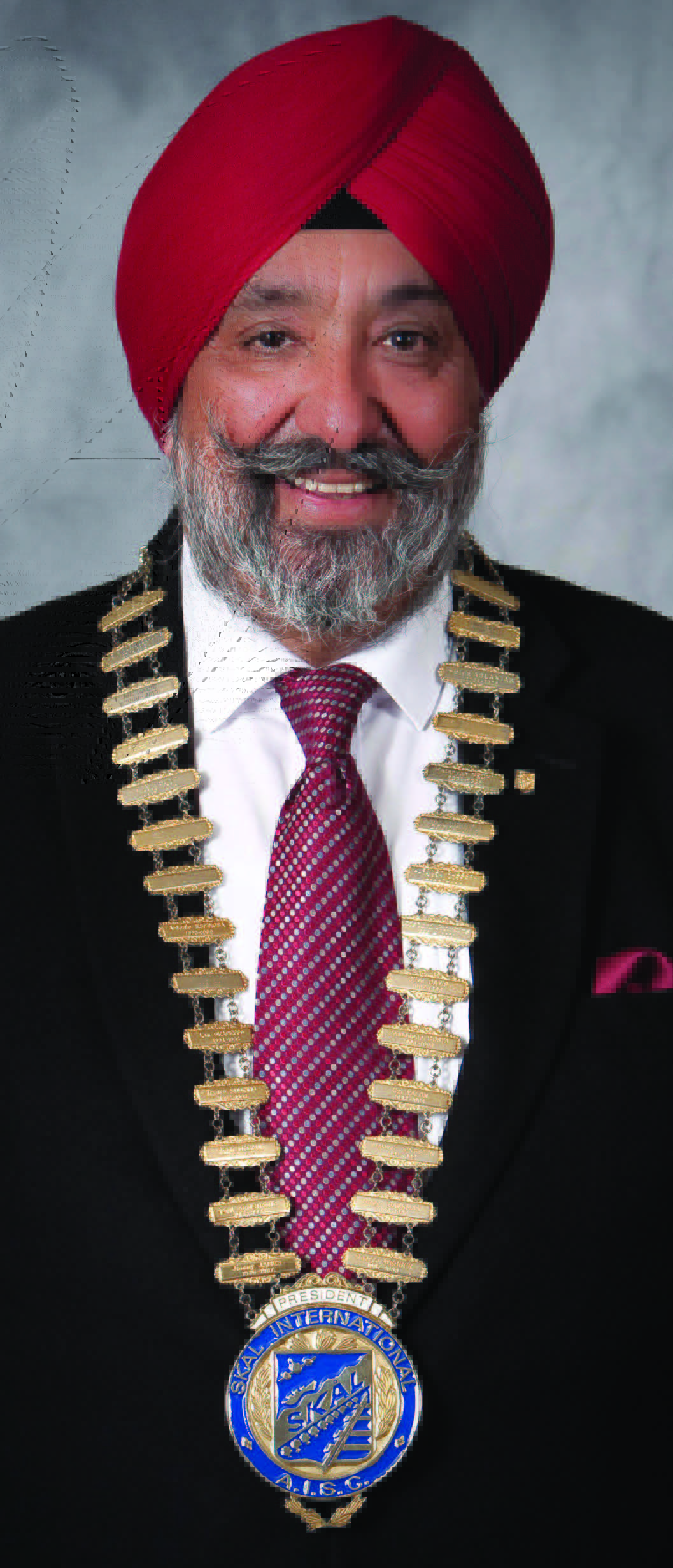
    The bank will felicitate Mr. Mok Singh, a well-known entrepreneur and president of Sita World Group and Air World Alliance, who will ride the bank’s float as a guest of honor. A colorful float will adore the parade and the bank will honor an annual feature. “March for Lasting Peace,” is the theme of this year’s parade aimed at highlighting the Indian philosophy of world peace and friendship. The event is expected to be a showcase of India’s accomplishment in global business and promoting world peace.

    The float, which will represent the Indus American Bank, is designed by a wellknown artist of Indian origin who lives in Queens, NY based and works with News India Times, a community newspaper owned by Parikh World Wide Media. “The presence of Mok Singh is very appropriate for the occasion as he has brought pride to the Indian American community with his election as president of Skål International, the largest organization of professional travel and tourism leaders around the world which promotes global tourism and friendship”, said Anil Bansal, Executive Chairman & Founder, in a statement. “We are proud to honor Mok whose life’s mission is promoting world peace through tourism and travel”, said Bansal adding that Mok has added prestige to the Indian American community with his accomplishments in the field of business and tourism. According to Mr. Bansal, Indus American Bank takes pride in promoting community events and participating in outreach programs.

    “We have supported and will continue to support events like India Day Parade which show case India’s rich history and culture and symbolize India’s growing economic power in today’s world.” Mr. Bansal said that Indus American Bank was committed to the development and growth of the communities in which we operate. “We partner with our communities and build on those relationships.” Mok Singh will join the parade along with the Gandhian leader Anna Hazare, Grand Marshal Vidya Balan, a Bollywood star, Parade Marshalls, Sarath Kumar & Radikaa Sarath Kumar, well known South Indian film stars and the former Army Chief V. K. Singh.

    A number of floats will join the parade as a regular feature. Skål International supports sustainable development and responsible tourism, and is an Affiliate member and Vice President of the Business Council of the U.N. World Tourism Organization. For the past thirty years, Mok has been the Group President of the SITA World Group, where he is directly responsible for the company’s Airline Division, Air world Alliance. He also serves as the Group President of SITA’s IT Group, which operates under the brand OR Global, and its tour division, SITA World Tours. Mok is also the President of a non-profit religious organization called Nanak Sadan Sikh Temple & Community Center in California.

    About Indus American Bank Headquartered in Iselin, New Jersey, Indus American Bank has branches in Iselin, Jersey City, Parsippany and Hicksville (NY) and plans to expand to other cities in New Jersey and New York. Indus American Bank specializes in SBA loans to small businesses, Lines of credit to medical professionals, Home Equity Line of Credit and free rupee money transfer to India. . Indus American Bank has been founded specifically to serve the needs of the South Asians, one of the fastest growing segments of the Asian ethnic group over the coming decade. Presently, Indus American Bank serves both the business as well as the retail customer. Indus American Bank is a member of FDIC and an Equal Housing Lender. For more information, call 732-603-8200 or visit us at www.indusamericanbank.com.

  • India To Help Build World’s Most Powerful Telescope

    India To Help Build World’s Most Powerful Telescope

    MUMBAI (TIP): India has signed a master partnership agreement to become a full-fledged partner of the $1.5-billion five-member international Thirty Metre Telescope (TMT) project. On completion, the Hawaii-situated TMT is said to “become the most advanced and powerful optical telescope on Earth”. Following the agreement signed on July 26, India will now be moving from its current observer status to becoming a full-fledged partner of the project with a 10% share.

    This implies a financial commitment of around Rs 1,000 crores, the department of science and technology said on Thursday. The department, along with the department of Atomic energy, will fund the Indian component. Set to become operational in 2022, the project has four other countries as partners, namely Canada, China, Japan and the US. TMT is promoted mainly by Caltech, the University of California and the Association of Canadian Universities for Research and Astronomy. The in-principle approval of India’s participation was accorded in 2010.

    However, the go-ahead from the legal section of the external affairs ministry came on July 24. Besides the Indian Institute of Astrophysics, the other participating institutions are the Inter-University Centre for Astronomy and Astrophysics, Pune, and the Aryabhatta Research Institute of Observational Sciences, Nainital. Much of India’s contribution will be in-kind, with Indian institutes and industry collaborating to build most of the telescope’s control systems. India will also be contributing the mirror coating systems of the telescope.

  • Indian- Americans Celebrate 100 Years Of Gadar Movement In US

    Indian- Americans Celebrate 100 Years Of Gadar Movement In US

    California-based Inder Singh, chairman of the Global Organization of People of Indian Origin (GOPIO) considers the Gadar movement as an important milestone in the history of India’s struggle for freedom

    WASHINGTON (TIP): Hailing the contribution of leaders of the Gadar movement in India’s freedom struggle, Indian-Americans from across the US have called for remembering their sacrifices annually on Memorial Day. “The Indian-American community, at least on Memorial Day (the last Monday of May), should remember the sacrifices of Gadarites,” said California-based Inder Singh, chairman of the Global Organization of People of Indian Origin (GOPIO).

  • Immigration Reform Will Bring In Economic Benefits: Report

    Immigration Reform Will Bring In Economic Benefits: Report

    Reform is Vital for American Agriculture, says U.S. Secretary of Agriculture Vilsack
    WASHINGTON, DC (TIP): After new study confirms economic benefits of Immigration Reform, Representative Garamendi has again called for the House of Representatives to take action. Representative John Garamendi (DFairfield, CA) August 1, highlighted a new report demonstrating the economic benefits of comprehensive immigration reform to families and businesses in California.

    The study demonstrates that comprehensive immigration reform will create jobs, expand the economy, and strengthen the economic security of hardworking Americans. Earlier this week, a study focused on the benefits for agriculture and rural America. This was reiterated by USDA Secretary Tom Vilsack in his remarks at a conference on BioMass where both he and Rep. Garamendi spoke this morning. “We are a nation of immigrants and a state of pioneers.

    As this study shows, comprehensive immigration reform will strengthen California’s economy, create jobs, and help establish needed normalcy for our vital agricultural sector,” said Congressman Garamendi. “When we come back from the August recess, I hope the leadership in the House is ready to let us vote on a bipartisan compromise similar to what passed the Senate.” According to the White House report, comprehensive immigration reform will spur California’s economy and create approximately 70,070 new jobs in 2014.

    This legislation would foster innovation and business growth, raise workers’ income, and increase state and local tax revenue. 36.6 percent of business owners in California are immigrants, and 38.3 percent of science, technology, engineering, and mathematics (STEM) graduates at California’s best universities are immigrants. A separate White House report noted that in California, 73 percent of farm workers are noncitizens, and many of them are working in the shadows.

    The report found that California especially suffers from agricultural labor shortfalls in the production of fruit and vegetables and in support activities such as farm labor contractors and crew leaders, soil preparation, and planting and cultivating. Under existing laws, if farms in California were suddenly denied access to all unauthorized workers, they would lose $1.7 billion to $3.1 billion in revenues due to lost production. “If comprehensive immigration reform is derailed, it will continue to put California’s farms in a lose-lose situation.

    Too many farmers are stuck with the unenviable choice of hiring undocumented workers or seeing some of their fields go fallow. When Alabama passed a draconian anti-immigration bill, we saw the result: undocumented immigrants fled the state, prison labor began to be used, and crops withered on the vine. There’s a better path forward, and that path is comprehensive immigration reform,” Garamendi added.

    These details come on the heels of another recent study that found immigration reform would be a boon to our nation’s GDP and economy as a whole, while expanding the country’s labor force, producing higher productivity and higher wages, reducing the deficit, and strengthening Social Security. In June, a broad bipartisan coalition in the Senate passed comprehensive immigration reform by a vote of 68 to 32. It’s time for the House to take up this or a similar bill and act to fix our broken immigration system.

  • Ex-Gujarat Ranji Player Is Skipper Of Us National Team

    Ex-Gujarat Ranji Player Is Skipper Of Us National Team

    AHMEDABAD (TIP): Former Gujarat Ranji player Timil Patel has been appointed captain of US’s national cricket team for a series against Canada for the Auty Cup. The 29-year-old Amdavadi leg-spinner emigrated to the US with his family in 2010 after playing 38 first class games for Gujarat. He made his international debut for the US on November 14, 2012, against Canada in the previous edition of the Auty Cup played in Florida.

    “It is an honour to lead the US team,” Timil said on the phone from Canada. “We have young and talented players who have been performing consistently at the club level. Hopefully, we can bring positive results in the upcoming series.” Both the US and Canadian teams are dominated by migrants from the Indian subcontinent. Timil made his debut for Gujarat in 2002 and was part of the team for the next seven years.

    His last game was a Ranji Trophy match against Himachal Pradesh in Surat in 2009. Since settling down in Los Angeles, he has played for the Southern California Cricket Association. He has also played two T20 internationals against Canada and was made the stand-in captain in the first Twenty20 after skipper Steven Taylor suffered an injury.

  • Indian Americans Join ‘Justice For Trayvon Martin’ Vigil

    Indian Americans Join ‘Justice For Trayvon Martin’ Vigil

    NEWARK, NJ (TIP): Indian American community joined the history making nationwide vigil of “Justice for Trayvon Martin”, led by the National Action Network [NAN] of Rev. Al Sharpton. Thousands participated at the New Jersey vigil, held before the Federal Building in Newark. Representing the immigrant Indian community, leaders from New York, New Jersey and Philadelphia participated.

    They demanded FREEDOM FOR ANAND JON held behind bars in California prison without trial which is denial of justice. They declared solidarity with the ‘Justice for All’ movement of NAN. While raising voice for the ‘voiceless’ they appealed to President Obama to take bold steps to implement laws on Gun Control, Racial Profiling, and to establish “ONE LAW UNDER ONE GOD” .

  • President Nominates Indian-American To Key Judiciary Post In California

    President Nominates Indian-American To Key Judiciary Post In California

    WASHINGTON (TIP): Indian-American legal luminary Vince Girdhari Chhabria has been nominated by US President Barack Obama to a key judiciary post in California. Chhabria, nominated to be US district judge for the Northern District of California, is currently deputy city attorney for government litigation and the co-chief of appellate litigation at the San Francisco city attorney’s office, where he has worked since 2005.

    Obama announced his nomination along with five other judicial posts, all of which requires Senate confirmation. “These men and women have had distinguished legal careers and I am honoured to ask them to continue their work as judges on the federal bench,” Obama said, adding that they will serve the American people with integrity and an unwavering commitment to justice.

    “This is a proud moment for NASABA as another deserving South Asian has been nominated to the judiciary,” president of North American South Asian Bar Association Nadeem Bezar said. Once confirmed, Chhabria would be the first South Asian Article III judge in California, and the fourth South Asian Article III judge in the nation following Amul Thapar at the US district court for the Eastern District of Kentucky, Cathy Bissoon at the US district court for the Western District of Pennsylvania, and Sri Srinivasan at the US court of appeals for the DC Circuit.

    Chhabria began his legal career by clerking for Judge Charles R Breyer of the US district court for the Northern District of California from 1998 to 1999. He also worked as an associate at the law firm Covington & Burling LLP from 2002 to 2004. From 2001 to 2002, he clerked for Justice Stephen G Breyer on the US Supreme Court. In 2001, Chhabria worked at the law firm of Keker & Van Nest, LLP, after completing a one-year clerkship for Judge James R Browning of the United States court of appeals for the Ninth Circuit.

    A member of the South Asian Bar Association of Northern California and NASABA, he was a speaker at the 2011 NASABA Convention in Los Angeles. Chhabria received his JD in 1998 from Boalt Hall School of Law at the University of California, Berkeley and his BA in 1991 from the University of California, Santa Cruz.

  • Municipal Bankruptcy-Detroit Files For Largest Municipal Bankruptcy In US History

    Municipal Bankruptcy-Detroit Files For Largest Municipal Bankruptcy In US History

    DETROIT (TIP): The city of Detroit filed for Chapter 9 bankruptcy protection in federal court Thursday, July 18, laying the groundwork for a historic effort to bail out a city that is sinking under billions of dollars in debt and decades of mismanagement, population flight and loss of tax revenue. The bankruptcy filing makes Detroit the largest city in U.S. history to do so.

    The filing by a state-appointed emergency manager means that if the bankruptcy filing is approved, city assets could be liquidated to satisfy demands for payment. Kevin Orr, a bankruptcy expert, was hired by the state in March to lead Detroit out of a fiscal free-fall, and made the filing Thursday in federal bankruptcy court. “Only one feasible path offers a way out,” Gov. Rick Snyder said in a letter to Orr and state Treasurer Andy Dillon approving the bankruptcy. The letter was attached to the bankruptcy filing.

    “The citizens of Detroit need and deserve a clear road out of the cycle of ever-decreasing services,” Snyder wrote. “The city’s creditors, as well as its many dedicated public servants, deserve to know what promises the city can and will keep. The only way to do those things is to radically restructure the city and allow it to reinvent itself without the burden of impossible obligations.”

    Snyder had determined earlier this year that Detroit was in a financial emergency and without a plan to improve things. Snyder hired Orr in March, and he released a plan to restructure the city’s debt and obligations that would leave many creditors with much less than they are owed. Orr was unable to convince a host of creditors, including the city’s union and pension boards, to take pennies on the dollar to help facilitate the city’s massive financial restructuring.

    Some creditors were asked to take about 10 cents on the dollar of what the city owed them. Under funded pension claims would have received less than 10 cents on the dollar under that plan. A team of financial experts put together by Orr said that proposal was Detroit’s one shot to permanently fix its fiscal problems.

    The filing leads to a 30 to 90 day period that will determine whether or not the city of Detroit is eligible for Chapter 9 protection, and define the number of claimants who may compete for Detroit’s limited settlement resources. The petition seeks protection from unions and creditors who are renegotiating $18.5 billion in debt and liabilities, according to the Detroit Free Press.

    “The President and members of the President’s senior team continue to closely monitor the situation in Detroit,” White House spokeswoman Amy Brundage said in a statement Thursday. “While leaders on the ground in Michigan and the city’s creditors understand that they must find a solution to Detroit’s serious financial challenge, we remain committed to continuing our strong partnership with Detroit as it works to recover and revitalize and maintain its status as one of America’s great cities,” the statement read. Sen.

    Carl Levin, D-Mich., remained positive about Detroit’s outlook in spite of the major blow that bankruptcy delivered: “I know firsthand, because I live in Detroit, that our city is on the rebound in some key ways, and I know deep in my heart that the people of Detroit will face this latest challenge with the same determination that we have always shown,” the Senator said in a statement released Thursday.

    A number of factors — most notably steep population and tax base falls — have been blamed on Detroit’s descent toward insolvency. Detroit was once synonymous with U.S. manufacturing prowess. Its automotive giants switched production to planes, tanks and munitions during World War II, earning the city the nickname “Arsenal of Democracy.” Detroit lost a quarter-million residents between 2000 and 2010.

    A population that in the 1950s reached 1.8 million is struggling to stay above 700,000. Much of the middle-class and scores of businesses also have fled Detroit, taking their tax dollars with them. Detroit’s budget deficit is believed to be more than $380 million. Orr has said long-term debt was more than $14 billion and could be between $17 billion and $20 billion.

    For decades, sizeable bankruptcies have been rare in the $3.7 trillion municipal bond market, but experts say there might be an uptick as counties, cities and towns wrestle with economic recession and stubbornly rising costs. Until Detroit filed its landmark case on Thursday, there had been four Chapter 9 municipal bankruptcy filings so far this year, compared with 12 in all of 2012 and 13 during 2011, according to James Spiotto, partner at Chapman and Cutler LLP. The four this year were special-purpose districts in Oklahoma and Arkansas.

    The great bulk of Chapter 9 filings involve utilities and special districts, Spiotto said. Many cases are blocked by judges. Since 1954, cities, villages and counties accounted for only 61 Chapter 9 filings. The highest number of bankruptcy filings occurred in Nebraska, followed by California and Texas.

    What will happen next
    A bankruptcy judge will be appointed to oversee the city’s case. Hearings could take place in Detroit, Kentucky, Ohio or Tennessee. Chapter 9 bankruptcy is poorly understood, in part because it happens so infrequently. Detroit’s case is the largest in U.S. history. Here’s what happens next:

    o The city filed a Chapter 9 bankruptcy petition Thursday in the U.S. Eastern District Court of Michigan.The filing includes additional information on the city’s financial outlook and could include details about the city’s plan to cut costs, such as potential layoffs and department consolidation, said Ken Schneider, a bankruptcy attorney with Detroit-based Schneider Miller PC.

    o Alice Batchelder, chief judge of the U.S. 6th Circuit Court of Appeals, will appoint a bankruptcy judge to oversee the city’s case. o The bankruptcy judge will determine where to hold hearings, which could take place in Detroit, Kentucky, Ohio or Tennessee. o An automatic stay will be issued on most of Detroit’s bills, including unsecured debts, Schneider said today. The city will continue to pay secured creditors, including water and sewer bondholders, who have the right to seize city assets if Detroit fails to pay.

    o An automatic stay also will be issued on lawsuits against the city, including outside challenges by pension officials and union members. This means hearings in those lawsuits will be indefinitely delayed. The plaintiffs can recast their arguments inside of bankruptcy court, said Jay Welford, a bankruptcy attorney and partner at Southfield-based Jaffe Raitt Heuer & Weiss.

    o The city doesn’t need approval to continue services. For example, the police, fire, water, sewer and public works are completely unaffected by the bankruptcy filing for now and will operate as usual. However, cuts are possible in the future. “You have the ability to use your cash,” Welford said. “You don’t need court approval.”

    o Creditors can challenge the city’s right to file for bankruptcy by issuing motions to dismiss the case. o In this case, bondholders and pension officials could accuse the city of failing to negotiate “in good faith,” one of the key criteria allowing the city to file for bankruptcy. The judge would hear arguments on this issue. A ruling could take days, weeks or months – perhaps even a year.

    o The city also will have to prove it is insolvent, another stipulation required to file for Chapter 9 bankruptcy. According to the federal bankruptcy code, this requires the city to prove that it is not paying its bills. Emergency manager Kevyn Orr recently authorized the city to stop making payments on some debts. Bankruptcy experts believe that action was enough to satisfy the insolvency requirement, but creditors may still find wiggle room to argue the city is not insolvent.

    o If the judge authorizes the city to move forward with a Chapter 9 bankruptcy case, Orr would propose a plan of reorganization. This could take weeks, months or years. Bankruptcy court allows the city to restructure its operations and its balance sheet. This could involve budget cuts, layoffs, consolidation, the sale of assets, slashing union contracts, selling assets and dramatically reducing city debts, including outstanding bonds.

    o The city will attempt to win support for the reorganization plan from creditors, including secured bondholders, general obligation bondholders, unions and pension boards. If the city wins enough support, the plan would be put to a vote – and with enough support, the city could emerge from bankruptcy.

    Without enough support, the judge could tell the city it must continue to negotiate with creditors. Orr may eventually pursue a “cram down” procedure, which would require winning support of a minority of creditors and convincing a judge that dissenting creditors are not being reasonable. “We’ll probably get to that because I don’t see how creditors are going to accept what he’s talking about paying them,” Schneider said.

    o The length of the case is widely debated. Some experts believe it could be as short as several months. Others say it could take years. Most complex Chapter 9 cases have taken several years.

    Recent and significant Chapter 9 cases include:
    SAN BERNARDINO, CALIFORNIA

    San Bernardino filed for bankruptcy status last August 1, becoming the third city in America’s most populous state during 2012 to use Chapter 9 in a fiscal crisis. The city of about 210,000 residents located 65 miles east of Los Angeles said it had more than $1 billion in debts and had tapped out its financial reserves. A federal bankruptcy judge has scheduled a hearing for August 28 to determine if the city is eligible for Chapter 9 shelter.

    STOCKTON, CALIFORNIA
    Stockton, a city of 300,000 located east of San Francisco, filed for bankruptcy in June 2012 and was until Detroit’s declaration the biggest U.S. city ever to seek Chapter 9 protection. After years of fiscal mismanagement and a housing market crash, Stockton was unable to pay workers, pensioners and bondholders. In April this year, a judge turned aside objections from bondholders trying to scuttle the case and cleared the way for Stockton to move ahead on a debt-adjustment plan, which local officials hope to file in September.

    JEFFERSON COUNTY, ALABAMA
    At $4.2 billion, Jefferson County set the previous record for the biggest U.S. municipal bankruptcy filing in November 2011. The county has since negotiated a tentative settlement with most creditors that still must be approved by a federal judge. The county, home to Birmingham, Alabama’s largest city, is weighed down by massive sewer-system debt. After the loss in 2011 of a local jobs tax that severely reduced revenues, the county cut 1,300 staff jobs, pulled back on government services and stopped payments on general obligation debt.

    ORANGE COUNTY, CALIFORNIA
    The county, California’s thirdmost populous, filed for bankruptcy in December 1994 after rising interest rates savaged investment bets by its treasurer, leaving the county with a loss of $1.7 billion in an investment pool. That put Orange County at risk of a $1 billion default the next year. Orange County emerged from bankruptcy after 18 months.

    HARRISBURG, PENNSYLVANIA
    Harrisburg, the state capital of Pennsylvania saddled with incinerator debts, lost a bid for Chapter 9 bankruptcy in 2011 and is now under state receivership. With a population of 50,000, Harrisburg is plagued by $320 million of debt incurred by cost overruns from an upgrade of its incinerator. In a bid to ease debts, the city is selling off thousands of Western and other historical artifacts accumulated by a former mayor to stock local museums that were never built.

    VALLEJO, CALIFORNIA
    Vallejo, a former U.S. Navy town near San Francisco, filed for bankruptcy on May 23, 2008, after failing to address steep city personnel costs and sliding revenue from a housing slump. In July 2011, the city won court approval for its financial plan to exit bankruptcy protection.

    CENTRAL FALLS, RHODE ISLAND
    The smallest city in the smallest U.S. state filed for bankruptcy on August 1, 2011, after failing to win concessions from public-sector retirees and others to address an $80 million unfunded pension and retiree health benefit liability, which was nearly quadruple its annual budget of $17 million. Central Falls last September won court approval of a reorganization plan that cut retiree pensions, raised taxes and left bondholders without losses.

  • Passengers’ Calls In US Jet Crash Begged For Help

    Passengers’ Calls In US Jet Crash Begged For Help

    SAN FRANCISCO (TIP): Hundreds of stunned and bleeding passengers staggered across the debris-strewn tarmac after a Boeing 777 crashed-landed at San Francisco International Airport, some trying to help the critically injured, others desperately making emergency calls and begging for more ambulances as minutes ticked away. “There’s not enough medics out here,” a caller told a dispatcher in a phone call released by the California Highway Patrol.

    “There is a woman out here on the street, on the runway, who is pretty much burned very severely on the head and we don’t know what to do.” Two Chinese teens died and 180 of the 307 passengers were hurt Saturday when Asiana Airlines Flight 214 from Shanghai and Seoul slammed tail-first into a seawall at the end of the runway. The impact ripped off the back of the plane and tossed three flight attendants and their seats onto the runway.

    The airliner, which came in too low and too slow, spun and skidded before stopping. The battered passengers, some with broken bones, were told over the jet’s public-address system to stay in their seats for another 90 seconds while the cockpit consulted with the control tower, a safety procedure to prevent people from evacuating into lifethreatening fires or machinery.

    “We don’t know what the pilots were thinking, but I can tell you that in previous accidents there have been crews that don’t evacuate. They wait for other vehicles to come, to be able to get passengers out safely,” said National Transportation Safety Board Chairman Deborah Hersman. In this accident, it appears one of the two Chinese teens who died may have been run over by a fire truck rushing to the burning jet.

    Many passengers jumped out the back of the plane or slid down inflated slides through emergency exits. Then, some said, an unnerving wait began. “We walked and this lady starts to appear, really stumbling and waving her hand and yelling. It took a couple seconds to register,” said Elliott Stone. “Then as I saw the condition she was in, I was like, oh my goodness.” The woman collapsed, he said, and he and his family realized there might be more victims nearby, “so we started running, searching for more.

    I believe we ended up finding four people that were in the back in the rubble, all very bad condition. We stayed with them, comforted them, yelling for ambulances, fire trucks, anyone to come help.” Phone tapes recorded frantic callers, pleading for help. “We’ve been on the ground, I don’t know, 20 minutes, a half hour,” said one woman.

    “There are people laying on the tarmac with critical injuries, head injuries. We’re almost losing a woman here. We’re trying to keep her alive.” San Francisco Fire Department spokeswoman Mindy Talmadge said on July 11 that some passengers who called for help may not have immediately seen ambulances that had been dispatched to a nearby staging area as first responders assessed who needed to be taken to the hospital.

    “There is a procedure for doing it,” Talmadge said. “You don’t cause more chaos in an already chaotic situation. You don’t do that with 50 ambulances running around all over the place.” Within 18 minutes of receiving word of the crash, five ambulances and more than a dozen other rescue vehicles were at the scene or en route, in addition to airport fire crews and crews from other agencies already on the scene, Talmadge said.

    “Our response was immediate,” Talmadge said. Most of the passengers who were hurt had only minor injuries and were quickly treated and released from hospitals. On Thursday, just nine remained hospitalized, three in critical condition. Among those who walked away without serious injury were the four pilots, including Lee Gang-kuk, who was landing the big jet for his first time at the San Francisco airport, and Lee Jeong-Min, who was training him.

    While the two men had years of aviation experience, this mission involved unfamiliar duties, and it was the first time they had flown together. Hersman said the pilot trainee told investigators he was blinded by a flash of light at about 500 feet (152 meters), which would have been 34 seconds before impact and the point at which the airliner began to slow and drop precipitously. She said lasers have not been ruled out.

    It was unclear, however, whether the flash might have played a role in the crash. A third pilot in the jump seat of the cockpit told investigators he was warning them their speed was too slow as they approached the runway, Hersman said. Details emerging from Asiana pilot interviews show the captains thought the airliner’s speed was being controlled by an autothrottle set for 157 mph (252 kph).

    Inspectors found that the autothrottle had been “armed,” or made ready for activation, Hersman said. But investigators are still determining whether it had been engaged. In the last two minutes, there was a lot of use of autopilot and autothrottle, and investigators are going to look into whether pilots made the appropriate commands and if they knew what they were doing, she said. Even if the auto throttle malfunctioned, Hersman stressed, the pilots were ultimately responsible for control of the airliner.

    “There are two pilots in the cockpit for a reason,” she said. “They’re there to fly, to navigate, to communicate and if they’re using automation, a big key is to monitor.” When the pilots realized the plane was in trouble, they both reached for the throttle. Passengers heard a loud roar as the plane revved up in a last-minute attempt to abort the landing.

  • Saudi Princess In Trafficking Case Posts $5 Million Bail

    Saudi Princess In Trafficking Case Posts $5 Million Bail

    SANTA ANA, California (TIP): A Saudi princess charged with human trafficking has posted $5 million bail a day after her California arrest. Prosecutors say 42-year-old Meshael Alayban posted bail on Thursday after appearing in court to face the felony charge, and was being released from Orange County jail.

    District attorney Tony Rackauckas had asked the judge to set bail at $20 million or deny it entirely, saying it was unlikely any amount would guarantee a Saudi princess would appear in court. The district attorney’s office says Alayban has surrendered her passport, must wear a GPS tracking device and cannot leave Orange County without permission from the court. She’s also barred from any contact with the victim. Alayban did not enter a plea. Her attorney called the case just a dispute over work hours.

  • AMERICA CELEBRATES Independence

    AMERICA CELEBRATES Independence

    NEW YORK (TIP): The United States celebrated the 237th anniversary of independence from British rule. Americans traditionally celebrate the Independence Day holiday with parades, picnics, fireworks, sports and concerts. Fourth of July decorations feature the colors of the American flag – red, white, and blue. In New York, the Statue of Liberty re-opened for the first time since Hurricane Sandy struck in October, 2012. The 93-meter statue was not damaged in the storm, but the island it sits on was devastated. The statue was open for a single day last year — Oct. 28, the day before Sandy struck. It had been closed the previous year for security upgrades.

    Neighboring Ellis Island remains closed and there has been no reopening date set. The island was decorated with starspangled bunting, but portions remain blocked off with large construction equipment, and the main ferry dock was boarded up. Repairs to brick walkways and docks were ongoing. But much of the work has been completed since Sandy swamped the 12-acre island in New York Harbor, and visitors were impressed. The statue itself was unharmed, but the land took a beating. Railings broke, docks and paving stones were torn up and buildings were flooded.

    The storm destroyed electrical systems, sewage pumps and boilers. Hundreds of National Park Service workers from as far away as California and Alaska spent weeks cleaning mud and debris. “It is one of the most enduring icons of America, and we pulled it off — it’s open today,” National Park Service Director Jonathan Jarvis said. “Welcome.” Elsewhere in New York, throngs of revelers packed Brooklyn’s Coney Island to see competitive eating champ Joey Chestnut scarf down 69 hot dogs to break a world record and win the title for a seventh year at the 98th annual Nathan’s Famous Fourth of July International Hot Dog Eating Contest. Sonya Thomas defended her title with nearly 37 dogs. Macy’s Fireworks lit up New York skies. It was a riot of colors watched by hundreds of thousands of visitors and by millions on their TV screens.

    In his weekly radio address from Washington, Obama urged Americans to work to secure liberty and opportunity for their own children and future generations. The first family was to host U.S. servicemen and women at the White House for a cookout. Nationwide, Boston hosted its first large gathering since the marathon bombing that killed three and injured hundreds, and Philadelphia,Washington and New Orleans hosted large holiday concerts. A Civil War reenactment commemorating the 150th anniversary of the Battle of Gettysburg drew as many as 40,000 people to Pennsylvania. In Arizona, sober tributes were planned for 19 firefighters who died this week battling a blaze near Yarnell. Atlanta and Alaska planned holiday runs — thousands were racing up a 3,022-foot peak in Seward. In New Orleans, the Essence Festival celebrating black culture and music kicked off along the riverfront.

  • Lawmakers demand honor for first Indian- American Congressman, Dalip Singh Saund

    Lawmakers demand honor for first Indian- American Congressman, Dalip Singh Saund

    WASHINGTON (TIP): A group of 14 lawmakers has requested the State of California to induct Dalip Singh Saund, the first Indian to be elected to Congress, into the California Hall of Fame. The group led by Ami Bera sent a letter to California Governor Jerry Brown describing Congressman Saund as “a trailblazer for human and civil rights and for the Asian- American community”.

    “As we continue to work towards comprehensive immigration reform, the contributions that California Congressman Dalip Singh Saund made should be recognized by enshrining him in the California Hall of Fame,” lawmakers said in the letter. Dalip Singh Saund was the first Asian-American elected to Congress, serving in the 85th, 86th, and 87th Congresses. “He was the first Indian-American to serve in Congress and the first member of a non-Abrahamic faith to be elected to the House,” the lawmakers wrote. “Dalip Singh Saund was born in a small village in India.

    After immigrating to the United States in 1920 to study at the University of California, Berkeley Saund earned an M A and a Ph D in mathematics,” said the letter. “Upon graduating, he remained in the United States and became a farmer-growing lettuce in California’s Imperial Valley of California,” it said. “In 1953, Saund became a distributor of chemical fertilizer in Westmoreland,” said the letter. “Saund’s political career began in 1942 when he was elected President of India Association of America.

    In this role, Saund raised funds to lobby for Congresswoman Claire Booth Luce’s bill for citizenship rights and to allow individuals of South Asian descent to become naturalized citizens,” it added. “After the passage of the Luce- Celler Act, Saund applied for and became a citizen in 1949. One year later he successful ran for election as a Justice of the Peace for Westmoreland Township,” the letter said. “In 1956 Saund successfully ran for the House of Representatives,” it said.

    “Saund served a total of three terms in the House (January 3, 1957 – January 3, 1963), fighting for local and national interests,” the lawmakers wrote in the letter. The letter added that Congressman Saund had opposed the closing of Corona Naval Hospital and championed a number of projects important to California including flood control, supplemental water for Southern California, and water rights for Imperial County farmers.`

  • Senate Passes Comprehensive Immigration Reform

    Senate Passes Comprehensive Immigration Reform

    Obama applauds Congressman Garamendi Urges Swift Action in House John Liu, Saujani welcome passage of the Bill

    WASHINGTON, DC (TIP): The U.S. Senate passed a sweeping immigration bill Thursday, June 27 that would allow the nation’s 11 million unauthorized immigrants to become U.S. citizens, overhaul the country’s immigration system and spend billions to secure the southwest border with Mexico. After years of failed attempts, 14 Republicans joined all Democrats in the Senate to pass the bill on a 68-32 vote. The bill, drafted by a bipartisan group of senators known as the Gang of Eight, would represent the biggest change in immigration laws since 1986. In a statement Thursday, June 27 President Obama applauded the Senate for passing the bill. “The bipartisan bill that passed today was a compromise,” Obama said. “By definition, nobody got everything they wanted. Not Democrats. Not Republicans. Not me. But the Senate bill is consistent with the key principles for commonsense reform that I – and many others – have repeatedly laid out.” Obama also urged the House to pass the bill. “Now is the time when opponents will try their hardest to pull this bipartisan effort apart so they can stop commonsense reform from becoming a reality. We cannot let that happen,” he said.

    Congressman John Garamendi (D-Fairfield, CA) called on the House of Representatives leadership to immediately take whatever action is needed to allow the House to vote on comprehensive immigration reform this year. “The bipartisan comprehensive immigration reform bill that passed the Senate today is far from perfect, but it is a tough compromise that brings us a lot closer to a rational immigration policy in America. I call on House leadership to take the necessary steps to allow an up-or-down vote on comprehensive immigration reform this year,” said Congressman Garamendi. Garamendi added, “We have a broken and unrealistic immigration system in America today, and that’s why a comprehensive approach is needed. We need to bring our country’s 11 million undocumented workers out of the shadows and create a pathway to earned citizenship. We need to recognize the unique needs of farmers and agricultural workers. We need to keep families together. We need to encourage the immigrant entrepreneurs who create jobs for all Americans. We need to be a welcoming place for the world’s best and brightest minds. We need to aggressively enforce laws that protect wages and workplace safety. We need to deport the small group of undocumented immigrants who are violent criminals. We need to improve security along our borders, both land and sea. We need to recognize that an influx of young immigrants into the Social Security System will help extend its solvency. Above all else, we need to recognize that the status quo is unacceptable. I look forward to forging the bipartisan coalition necessary to make comprehensive immigration reform a reality in America.” Congressman Garamendi is a 4th generation Basque, Irish, and Italian American whose family came to California during the gold rush and established a successful ranching business. He believes America is at its strongest when it is a welcoming place for hardworking immigrants and when it lives up to its commitment to diversity and inclusion. Four in ten Fortune 500 companies were founded by first generation immigrants or their children. 44% of Silicon Valley startups founded in the last seven years had at least one key founder who was an immigrant. The Office of the Chief Actuary of the Social Security Administration estimated that an earlier version of the Senate bill would create 3.22 million new jobs by 2024 and boost U.S. GDP by an additional 1.63%. They also “anticipate that the net effect of this bill” on the Social Security System “on the long range … will be positive.” The nonpartisan Congressional Budget Office (CBO) estimates that the Senate’s comprehensive immigration reform bill would reduce the deficit by $157 over the first decade and by $700 over the next decade.

    John Liu, Comptroller of City of New York and a Mayoral hopeful has welcomed the passage of the S744, The Border Security, Economic Opportunity, and Immigration Modernization Act of 2013 in Senate characterizing it as an important step toward giving an estimated 500,000 undocumented immigrants living in New York City the opportunity to participate fully in American society and to pursue citizenship if they so choose.

    In a statement released to the media June 27, Liu said, ” “This represents an important step toward giving an estimated 500,000 undocumented immigrants living in New York City the opportunity to participate fully in American society and to pursue citizenship if they so choose. The Senate immigration reform legislation is not perfect, but it would be a vast improvement over the current state of immigration law, which keeps so many hard-working New Yorkers at a disadvantage in the labor market and in the educational system.

    “It is now up to the House of Representatives to match the Senate’s display of bipartisan leadership and pass a bill that will provide a pathway for undocumented immigrants to attain legal residence and eventual citizenship.” Immigrant rights advocate and Democratic Candidate for NYC Public Advocate Reshma Saujani said, “As the daughter of immigrants fortunate enough to be granted refuge in the United States under dire circumstances, I am thrilled that the US Senate has taken this long overdue first step in providing real reform for millions of people hoping for their opportunity to take part in the American Dream.

    We are a nation of immigrants, yet politicians in City Hall, Albany and Washington have repeatedly shoved the interests of the immigrant community to the periphery. Even with this bill, Washington had to cater to some of the most extreme and virulent anti-immigrant forces, making it a legislative compromise. I am committed to results and have proven this by not waiting for politicians to debate a problem. Instead, I created a program to send undocumented students to college with the DREAM Fellowship program.

    With immigrants and their children comprising two out of three New Yorkers, our City needs to be a progressive leader on this vital national issue, and as Public Advocate I will never stop working to deliver real results for immigrants and their families. “The President and the Senate have shown the leadership our country needs; the House must now do their part to restore the American Dream by passing this groundbreaking legislation, welcoming millions of families and all they can offer to our nation.”

    However, Senate passage of a comprehensive immigration overhaul sparked no excitement in the GOPcontrolled House, where Republican leaders continue to oppose the Senate bill in favor of a piecemeal approach to addressing the nation’s immigration system. “The House is not going to take up and vote on whatever the Senate passes. We’re going to do our own bill through regular order, and it’ll be legislation that reflects the will of our majority and the will of the American people,” said House Speaker John Boehner, R-Ohio. “And for any legislation, including a (final bill), to pass the House, it’s going to have to be a bill that has the support of the majority of our members.”

    House Republicans will hold a special closed-door meeting July 10 to discuss the way forward on immigration, but leading lawmakers have made clear that there is broad opposition to the Senate’s comprehensive approach and little GOP interest in a bill that includes a pathway to citizenship for the 11 million undocumented immigrants until the U.S.-Mexican border is secured.

  • US Sikh Group Offers $10,000 To Deliver Summons To Badal

    US Sikh Group Offers $10,000 To Deliver Summons To Badal

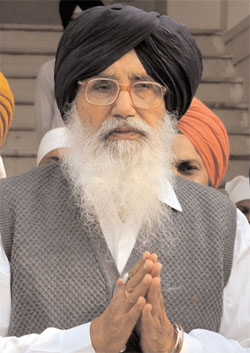
    MILWAUKEE (TIP): Punjab chief minister Parkash Singh Badal is expected to visit Wisconsin next week, and a Sikh group accusing him of human-rights violations is offering $10,000 to anyone who serves him with a federal summons while he’s here. The New York-based advocacy group Sikhs for Justice has filed two federal lawsuits in Milwaukee against Badal. The first lawsuit was thrown out in May over conflicting reports about whether the person served with court papers was actually Badal.

    The group plans to be far more diligent this time. Badal is expected to be in Milwaukee on July 5 for a wedding, and the group has hired three agencies of professional servers to deliver the papers. The servers plan to stake out airports in Milwaukee and Chicago. They’ll try to track him down at the wedding venue, and they’ll look for him at all points in between. Their goal is to deliver a court summons, which can be handed to him or even dropped at his feet. “We are not taking any chances this time,” said Gurpatwant Pannun, legal adviser for Sikhs for Justice.

    “We want to have a photograph and, if possible, video” of Badal being served. Pannun said the chief minister commands a police force that has terrorized and tortured countless people, including the lawsuit’s three plaintiffs. The lawsuit also names Badal’s son, Sukhbir, as a defendant. Sukhbir is Punjab’s deputy chief minister, in which capacity he also oversaw and condoned the detainment and torture of political prisoners, the suit contends.

    Harcharan Bains, who is Badal’s media adviser, would not confirm whether his client will be in the US next week. “We will give a legal response to the summons” if papers are served, Bains said. “The case against Badal is politically motivated but our response will be strictly in accordance with the law.” Badal was represented in the first lawsuit by former federal prosecutor Steven Biskupic, who did not immediately return a message seeking comment.

    Even if papers are served, the Badals could return to India and refuse to attend any US hearings. But Pannun said it wouldn’t bother him if the defendants were convicted in absentia. “That’s fine,” Pannun said. “This will expose them,” he said. Sikhs for Justice will pay separate $10,000 rewards for serving each of the defendants. Anyone _ not only professional servers _ can claim the bonus. The group planned to post a copy of the one-page summons online so anyone could download it and serve one or both defendants.

    The bonus will go to whichever person’s service is considered valid by the federal court in Milwaukee. The civil lawsuit lays out allegations by three Sikhs who say they were detained in Punjab for days without charges and subjected to beatings by a police force overseen by the Badals. All three plaintiffs now live in Fresno, California. Jeet Singh said he was detained four times between 2001 and 2009 for a total of 48 days. He claimed he was waterboarded and beaten with leather belts and that wooden rollers were applied on his legs and thighs.

    His wife, Gurdeep Kaur, said she was detained for 30 days in 2001, during which time male and female officers slapped her and banged her head against a wall. Jagtar Singh alleged he was given electric shocks on his ears, laid on an ice slab and doused in cold water. He also said he was beaten with wooden sticks and leather belts and tied in a wooden trap for extended periods. The lawsuit says the Badals not only condoned the acts but rewarded some of the officers involved.

    Sikhs for Justice initially tried to serve Badal when he visited suburban Milwaukee last year. He was in town following a shooting rampage in which a white supremacist opened fire at a Sikh temple, killing six people. But a man who said he was at the event as an interpreter testified that the papers were handed to him, not to Badal. A judge concluded that the process servers who believed they served Badal made an “honest mistake”.

  • Columbia University Conference To Celebrate South Asian Civil Rights Icon Dr. B. R. Ambedkar

    Columbia University Conference To Celebrate South Asian Civil Rights Icon Dr. B. R. Ambedkar

    NEW YORK (TIP): Dr. Bhim Rao Ambedkar was inspired to devote his life in service to emancipation for the Untouchables of India after discovering black liberation struggles in the USA, say organizers of a centenary conference at Columbia University. The conference, “Ambedkar’s Century: 100 Years From the USA”, occurs on June 29, exactly 100 years to the day since Bhim Rao Ambedkar arrived in New York City in 1913 to begin studies at Columbia University.

    While in the USA, he encountered American civil rights movements and saw strong parallels between the plights of blacks and Untouchables. Mohan Ram Paul, a conference panelist and the protégé of civil rights leader Kanshi Ram, said, “Generations of oppression by Brahminism has divided the Mulnivasi people into 6,000 subcastes which are disunited. Our conference in New York City will unite people from many castes, many religions, and many nations in an alliance for the liberty of all.”

    Dr. Amrik Singh, centennial conference coordinator and a South Asian public affairs expert, remarked, “Before Dr. Ambedkarji returned to India to demand liberation of the oppressed people of South Asia, he was first molded by American freedom movements while gaining an education at Columbia University. In the USA, he saw blacks enduring the same mental and physical tortures inflicted upon Untouchables for no cause save heredity.”

    “The USA has its first black president and, although troubles still abound, the liberties of African Americans are no longer in much greater danger than those of any other American citizen,” said Bhajan Singh Bhinder, a director of Bhim Rao Ambedkar Sikh Foundation, the group organizing the conference. “Slavery is history, racism is dissipating, but caste survives. Changed laws have not changed hearts and minds in India, where a Dalit is the victim of a hate crime every 18 minutes. This conference is a spark for the modern civil rights movement as we examine how Dr. Ambedkarji’s legacy agitates us to action.”

    The conference begins with a Recognition Ceremony at 12pm on Saturday, June 29 outside Lerner Hall on the Columbia University campus. General session will occur in Lerner Hall from 1pm to 6pm. Six students of Dr. Ambedkar’s life will spend those hours delving into his legacy to explain his devotion to the principles of liberty, equality, and fraternity.

    Six topics to be addressed are:
    1. “Betrayal of Dr. Ambedkar, the Indian Constitution, and the Hindu Code Bill” by Mohan Ram Paul of Bhim Rao Ambedkar Sikh Foundation;
    2. “Dr. B. R. Ambedkar’s Critique of Hindu Scriptures and The Model for Reconstruction of the Society” by Dr. Manisha Bangar of Backward and Minority Community Employees’ Federation;
    3. “Anti-Moolnivasi Attempts to Reconcile Ambedkar and Gandhi” by Pieter Singh of Sikh Information Centre;
    4. “Babasaheb Ambedkar, Poona Pact, and the Cultural Politics of Brahminism” by Dr. P. D. Satyapal of Andhra University;
    5. “Subaltern Counter-Memory” by Dr. Angana Chatterji of UC Berkeley;
    6. “The Importance of Dr. B. R. Ambedkar’s Life and Mission,, Guru Nanak Khalsa College, and Hindu Mahasabha” by Dr. Amrik Singh of California State University, Sacramento. Avtar Singh Adampuri, also a director of BRASF, stated: “This conference is a cause for celebration, but it is also an offensive against the root cause of the suffering of South Asia’s downtrodden people, which is the Brahmanical ordering of society.

    We hope every person who believes in ending oppression will accept our hospitality to attend this conference and be inspired by the example of Dr. Ambedkar.”

  • Indian Appointed Dean Of Top Singapore B-School

    Indian Appointed Dean Of Top Singapore B-School

    SINGAPORE (TIP): Ravi Kumar, an IIT alumnus, was on June 19 appointed Dean of the Nanyang Technological University’s Business School here, with the prestigious institution describing him as an academic heavyweight with a good blend of East-West experience. Singapore’s Nanyang Technological University (NTU) appointed Professor Kumar as dean of its Nanyang Business School, a statement by the institution said.

    Kumar did his mechanical engineering from IIT-Madras in 1974. 61-year-old Kumar comes from the University of Southern California’s Marshall Business School where he held several key leadership positions, including that of Vice-Dean for international programs and Vice-Dean for graduate programs. His academic experience in the East comes from his two years as Dean of the College of Business at the Korea Advanced Institute of Science and Technology while on a leave of absence from University of Southern California.

    There he introduced reforms that saw the Korean college break into the top 100 of the Financial Times global MBA rankings, the statement said. The statement described Kumar as, “An academic heavyweight with a good blend of East-West experience. A passionate professor who believes in embedding ethics in his curriculum”. Commenting on his big move to NTU, Kumar said, “NTU has an ambitious leadership that has been consistently building its brand worldwide.

    As one of the pillars of the university, the Nanyang Business School has a great reputation for thought leadership.” NTU Provost Prof Freddy Boey said, “It has taken two years, as the person chosen as Dean of Business must have accomplishments that commensurate with the school’s reputation as one of the world’s finest business schools. Prof Kumar was a clear and compelling choice”.

  • Swimming Champion, Movie Star Esther Williams Dies At 91

    Swimming Champion, Movie Star Esther Williams Dies At 91

    LOS ANGELES (TIP): Esther Williams, whose experiences as a young swimming champion led to a career of Hollywood “aqua-musicals” designed just for her, died on Thursday in Beverly Hills, California, at the age of 91, her spokesman said. Williams, one of the biggest box-office stars of the 1940s and 1950s, died peacefully in her sleep and had been in declining health due to old age, spokesman Harlan Boll said. Williams became known as “Hollywood’s Mermaid” and “The Queen of the Surf.”

    At her peak, the woman with the wide smile and bright eyes was second in earnings only to Betty Grable and often in the top 10 box-office draws. Williams’ aqua-musicals were escapist comedies in lush color, with lavish song and watery dance numbers and lots of footage of synchronized swimming. They were so popular that some credited her with a jump in the popularity of home swimming pools.A typical finale featured Williams diving into a pool or lagoon and surfacing to a crescendo of music with waterdrops glistening on her smiling face and sleek body.

    She dismissed her talent, saying “I can’t act, I can’t sing, I can’t dance. My pictures are put together out of scraps they find in the producer’s wastebasket.”But after watching the films decades later, she softened that self-deprecating assessment, saying: “I look at that girl and I like her. I can see why she became popular with audiences. There was an unassuming quality about her. She was certainly wholesome.” Williams was born in the Los Angeles suburb of Inglewood on August 8, 1921.

    As a young swimmer, she set what were then world records in the 100-meter freestyle and 880-yard relay. She also worked as a model. With future “Tarzan” star Johnny Weissmuller, Williams began appearing in Billy Rose’s Aquacade live water shows, where she attracted the attention of MGM movie executives. She married pre-med student Leonard Kovner and turned down movie offers for a year.

  • PROMINENT LEGAL LUMINARIES OF INDIAN ORIGIN IN THE US

    PROMINENT LEGAL LUMINARIES OF INDIAN ORIGIN IN THE US

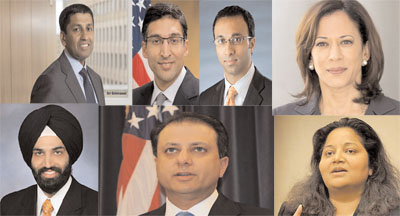
    WASHINGTON (TIP): Recently, Indian-American Srikanth Srinivasan scripted history after he was confirmed as the first South Asian judge to America’s second highest court. But Srinivasan is not the only famous person of Indian origin who has made it to the top ranks in US judicial system.
    Srikanth Srinivasan was appointed as a judge on the prestigious US Court of Appeals in Washington DC, the highest judicial appointment achieved by an Indian-American. Born in Chandigarh, Srinivasan spent nearly two decades as an extraordinary litigator before serving as Principal Deputy Solicitor General of the United States. Now he will serve with distinction on the federal bench. Srinivasan will be the first South Asian American to serve as a circuit court judge in US history.
    Preet Bharara, who was born in Punjab, is the US attorney for the Southern District of New York. In 2012, Bharara was named by Time magazine as one of ‘The 100 Most Influential People in the World’ and was also featured on a cover of Time Magazine. His office was responsible for the high-profile prosecutions of insider trading and other financial fraud on Wall Street including the investigation against the Galleon Group of Raj Rajaratnam and former McKinsey chief Rajat Gupta. Bharara graduated from Harvard College and Columbia Law School.

    Neal Katyal served as Acting Solicitor General of the United States from May 2010 until June 2011. A graduate of Dartmouth College and Yale Law School, Katyal currently runs the appellate practice at the law firm Hogan Lovells and teaches at the Georgetown University Law Center, where he was one of the youngest tenured professors in the university’s history. Katyal has served as counsel or co-counsel for numerous US Supreme Court cases.

    Amit Mehta, an Indian-origin lawyer, is a partner at Washington law firm Zuckerman Spaeder, and has been involved in many big cases, including helping former IMF president Dominique Strauss-Kahn successfully get criminal assault charges in New York state court dismissed. Mehta, 39, is also a board member of the Mid-Atlantic Innocence Project, which seeks to reverse and prevent wrongful convictions in DC, Maryland and Virginia.

    Preeta D. Bansal served as the General Counsel and Senior Policy Advisor to the US federal Office of Management and Budget from 2009 until 2011. Before her assignment in the Obama administration, she served as a law partner at Skadden, Arps, Slate, Meagher & Flom

    Amandeep Sidhu is a partner of law firm McDermott Will & Emery in Washington DC. He has built a reputation as a strong litigator with a solid commitment to pro bono cases. He is a founding member of The Sikh Coalition and has fought a pro bono battle on behalf of three Sikh men who wanted to serve in the US Army. He was able to successfully show that the men were able to meet uniform requirements by using Army-issued cloth for the turbans and that even with a beard, the men could not only use a gas mask effectively, but surpass their clean-shaven comrades in field tests. Eventually the men were allowed to join the service, but Sidhu said that he would settle for nothing less than a policy change.

    Kamala Devi Harris is the Attorney General of California following the 2010 California state elections. Earlier she had served as District Attorney of San Francisco from 2004 to 2011. Recently, US President Barack Obama apologized to Kamla Harris, for his comment in which he described the Indian-American as the best-looking attorney general of America – which many alleged was a sexist remark.

  • 1984 Victims Get Till September To Amend Complaint

    1984 Victims Get Till September To Amend Complaint

    NEW YORK, NEW YORK (TIP): Judge Robert W. Sweet in a pre-trial conference granted “Sikhs for Justice” (SFJ) till September to amend the human rights violation complaint against Indian National Congress party to comply with the Supreme Court’s decision in Kiobel v. Royal Dutch Petroleum Co. In Kiobel case, Supreme Court held that foreign entities can be liable in US Court for atrocities committed overseas only under the limited circumstances.

    Sikhs For Justice announced to amend the complaint to include documentation showing the connection between Congress party of India and its US based affiliated organizations to qualify the pending human rights violations lawsuit for exercise of US Court’s Jurisdiction as ruled in Kioble case.

    The lawsuit filed by SFJ alleges that in November 1984 Congress party had “virtually complete control over governance of the country and as the ruling political party was able to pursue a policy of genocide against the Sikhs under color of state law and with the apparent or actual authority of the government of India”. The May 29 hearing was of great importance to Congress-I who was hoping to get an order dismissing Sikh right group’s complaint on the basis of Supreme Court’s ruling in Kiobel case.

    The Congress is facing the charges of conspiring, aiding, abetting, organizing and carrying out attacks on the Sikh population of India during November 1984. While Judge Sweet was holding a closed door hearing, about 50 Sikhs gathered outside the Federal Court House in Manhattan to show solidarity with the 1984 victims and to express Sikh community’s determination to pursue justice at the international forums.

    According to attorney Gurpatwant Singh Pannun, legal advisor to SFJ, “due to continuous practice of impunity by the successive Indian governments towards the perpetrators of November 1984 Sikh Genocide, the victims are forced to approach the US Court in pursuit of justice”. Through this lawsuit Congress-I’s role in organizing genocidal attacks against a religious minority and subsequent cover up of terming it as “anti-Sikh riots” will be exposed before the international community, added attorney Pannun.

    Mohinder Singh, who now lives in California and is one of the complainants against Congress (I) in US Court stated that he lost his father and two uncles during 1984 Sikh Genocide and this is irony of Indian law that victims are being asked by the Courts to find the witnesses and the ones who killed thousands of Sikhs in broad day light.

    If victims are to find witnesses against Congress leaders involved in genocide of Sikhs, then what the Indian investigating agencies are doing for the last thirty years, Questioned Mohinder Singh. SFJ along with 1984 victims filed the pending rights violation lawsuit against Congress-I {SFJ v. INC 10-cv- 2940 RWS} under Alien Torts Statute (ATS) and Torture Victim Protection Act (TVPA).

  • Prominent Indian American neurosurgeon sentenced to probation for unreported offshore bank accounts

    Prominent Indian American neurosurgeon sentenced to probation for unreported offshore bank accounts

    MILWAUKI (TIP): On February 1, 2013, the U.S. District Court for the Eastern District of Wisconsin sentenced Arvind Ahuja, a Milwaukee neurosurgeon, to serve three years of probation and to pay a fine of $350,000 following his conviction by a federal jury of one felony count of willful failure to file a Report of Foreign Bank Account (“FBAR”) and one felony count of filing a false federal income tax return.

    According to the evidence presented at Ahuja’s August 2012 trial, Ahuja transferred millions of dollars from bank accounts in the United States to undeclared bank accounts located in India at HSBC bank. Ahuja invested the funds in these accounts in certificates of deposit, which earned more than $2.7 million in interest income during the years 2005 through 2009.

    Ahuja also maintained an HSBC bank account in the Bailiwick of Jersey, a British Crown dependency located in the Channel Islands off the coast of Normandy, France. Ahuja used credit and debit cards linked to this account to pay personal expenses while on trips to London. Ahuja managed his offshore accounts with the assistance of bankers who worked at an HSBC India representative office in New York.

    Ahuja’s sentencing is only the latest in a string of taxenforcement news that affects Americans with undeclared offshore bank accounts generally and Indian Americans with unreported non-resident Indian or “NRI” bank accounts specifically. Banks with operations in India offer high interest rates on NRI accounts, usually 9-10%. Unsuspecting account holders may not realize that although the interest income from NRI accounts is typically not taxable in India, it is taxable in the U.S.

    In addition to reporting the interest income and the existence of the account on a U.S. tax return, the account holder must separately disclose the foreign account by filing a FBAR. In December 2010, Vaibhav Dahake of New Jersey pleaded guilty to conspiring to defraud the United States. Sanjay Sethi, also of New Jersey, pleaded guilty on January 7, 2013 to the same charge. Californian Ashvin Desai faces trial on July 23, 2013 for tax evasion, aiding in the preparation of false tax returns, and willful failure to file FBARs.

    All of these Indian Americans are alleged to have maintained undeclared accounts at HSBC India. According to a court filing by the U.S. Department of Justice, there are 9,000 U.S. residents of Indian origin who have $100,000-minimum-balance accounts at HSBC India alone. Undoubtedly, there are many more whose account balances total less than $100,000. According to the DOJ, however, for calendar year 2009, the most recent year for which information is available, there were only 1,391 FBARs filed disclosing 1,921 accounts at HSBC India.

    On April 7, 2011, the U.S. District Court for the Northern District of California granted the IRS and DOJ’s request for a “John Doe summons” to force HSBC India to turn over the names of U.S. taxpayers “who at any time during the years ended December 31, 2002 through December 31, 2010, directly or indirectly had interests in or signature or other authority (including authority to withdraw funds; trade or give instructions or receive account statements, confirmations, or other information, advice or solicitations) with respect to any financial accounts maintained at, monitored by, or managed through The Hongkong and Shanghai Banking Corporation Limited in India (HSBC India).”

  • 12 YEAR INDIAN AMERICAN BOY WINS GEOGRAPHY BEE

    12 YEAR INDIAN AMERICAN BOY WINS GEOGRAPHY BEE

    WASHINGTON (TIP): Passion for geography runs deep in Sathwik Karnik’s family. When he was about 6, his mother began challenging Sathwik and his older brother, Karthik, to her version of hide-and-seek – using an atlas. The boys would comb through the book, trying to be the first to find a city or landmark. The games paid off when Karthik, 15, made the finals of the National Geographic Bee in 2011 and 2012.

    But it was 12-year-old Sathwik, of Plainville, Mass., who finished the job, calmly answering questions about obscure island chains, bodies of water, global trade and culture to win the 25th annual geography bee may 22. The clinching question? “Because Earth bulges at the equator, the point that is farthest from Earth’s center is the summit of a peak in Ecuador. Name this peak.” Sathwik nailed it: Chimborazo.

    Runner-up Conrad Oberhaus, 13, of Lincolnshire, Ill., knew the answer, but Sathwik got all five questions correct in their one-on-one duel. Earlier, Conrad couldn’t name Baotou as the largest city in China’s Inner Mongolian Autonomous Region, home to one of the world’s largest deposits of rare-earth elements. While Conrad didn’t stumble again, Sathwik never relinquished the lead.

    Sathwik and his brother said the victory was a team effort. Ten participants made the finals, culled from a field of 54 state-level winners in Monday’s preliminary round. Sathwik won a $25,000 scholarship, a trip to the Galapagos Islands and a lifetime membership in the National Geographic Society. The finals will be televised Thursday night on the National Geographic Channel and Nat Geo WILD. Conrad, the runner-up, won a $15,000 scholarship. Also represented in the finals were California, Michigan, Colorado, New Hampshire, Oregon and Wisconsin.

  • Cell phone charging in 20 Secs device invented by Indian-American teen S

    Cell phone charging in 20 Secs device invented by Indian-American teen S

    SARATOGA, CA (TIP): An 18-year-old Indian-American girl has invented a super-capacitor device that could potentially charge a cell phone in less than 20 seconds. Eesha Khare from Saratoga in California was awarded the Young Scientist Award by the Intel Foundation after developing the tiny device that fits inside mobile phone batteries that could allow them to charge within 20-30 seconds.

    The so-called super-capacitor, a gizmo that can pack a lot of energy into a tiny space, charges quickly and holds its charge for a long time, NBC News reported. Ms Khare has been awarded $50,000 for developing the tiny device. She has also attracted the attention of tech giant Google for her potentially revolutionary invention. According to the teenager, her device can last for 10,000 charge-recharge cycles, compared to 1,000 cycles for conventional rechargeable batteries.

    “My cell phone battery always dies,” she said, when asked about what inspired her to work on the energystorage technology. Super-capacitors allowed her to focus on her interest in nanochemistry – “really working at the nanoscale to make significant advances in many different fields.” The gadget has, so far, only been tested on an LED light, but the good news is that it has a good chance of working successfully in other devices, like mobile phones, the report said.

    Ms Khare sees it fitting inside cell phones and the other portable electronic devices proliferating in today’s world. “It is also flexible, so it can be used in rollup displays and clothing and fabric. It has a lot of different applications and advantages over batteries in that sense,” she added.