Tag: China

  • China brings lavish funerals under lens of anti-graft campaign

    China brings lavish funerals under lens of anti-graft campaign

    BEIJING: In its latest effort to combat corruption, China has issued new guidelines to rectify and punish violations of funeral regulations for ruling Communist Party members, such as unapproved types of burial and the purchase of oversized tombs.

    Party members should take the lead in promoting environmentally friendly funerals and should act as practitioners of funeral system reforms, new guidelines released by nine ministries -including the Ministry of Civil Affairs (MCA), the Ministry of Science and Technology and the Ministry of Finance said yesterday.

    Thousands of Communist Party of China (CPC) officials including senior leaders and army officials were punished in the last two years in the massive anti-graft drive initiated by President Xi Jinping.

    Party members are also asked to exhort close family members and colleagues to follow the guidelines. Those who violate funeral rules will be corrected and punished, state-run Global Times quoted an official announcement as saying.

    “Many graves for officials are several times larger than the national standard of no more than 1 square metre. Plus, many have luxury decorations, and in some cases, a luxurious grave can serve as a bribe,” Yang Genlai, a funeral management expert with Beijing Social Administration Vocational College, told the paper.

    Ji Jianye – a former mayor of Nanjing, East China’s Jiangsu Province, who was sentenced to 15 years in prison for corruption – once bought a 150 square metre grave for 500,000 yuan (USD 76,550), less than the market price, The Beijing News reported.

    Another prominent problem is officials taking advantage of their power to throw lavish feasts at funerals and collect large sums of money, Yang said.

    China’s Cabinet in 2013 imposed a ban on officials and Party members from holding extravagant funerals to collect money. It also encouraged cadres to donate their bodies or organs after death.However, the guidelines did not specify how Party members involved in violations would be punished, Yang said, adding that even detailed rules about punishment may not effectively resolve the situation if the government fails to crack down on commercial behaviours involved in such violations.

    “Many cemeteries welcome the profit and celebrity that officials’ purchases of luxury tombs bring, and some companies will also establish cemeteries for deceased local officials to gain fame,” Yang said.

    China’s promotion of ecological funerals is in a preliminary stage beset by insufficient relevant facilities, low public acceptance and the prominence of problems like oversized graves, the guidelines added.

    The guidelines for the first time define ecological funerals to include sea burials, burial or scattering of ashes at the bases of trees, and storage of ashes remains in boxes or urns.

    (PTI)

  • In China, gang returns stolen guide dog with apology note

    In China, gang returns stolen guide dog with apology note

    BEIJING (TIP): Chinese guide dog stolen from a blind masseur has been returned by the dognappers with a note of apology that said: “Please forgive us.”

    Qiaoqiao, an seven-year-old black labrador, was taken by a gang of men in a grey van while being taken on a walk outside Beijing.

    She was found on Tuesday with a letter in a plastic bag attached to her collar which said: “We were wrong … we beg pardon.”

    Her blind owner, Tian Fengbo told the New York Times after she returned home: “She is doing well, last night she was a bit low spirited, but now she’s fine. She’s right beside me, bouncing and vivacious.”

    Fengbo said he could “barely eat or sleep” after her kidnapping, BBC reported. Qiaoqiao had been living with him for the last five years before the abduction.

    It is not known who the dognappers are or what their motive was. A common crime across China, dog theives sell the kidnapped animals to meat markets.

    (PTI)

  • China sends fighter jets to South China Sea island

    China sends fighter jets to South China Sea island

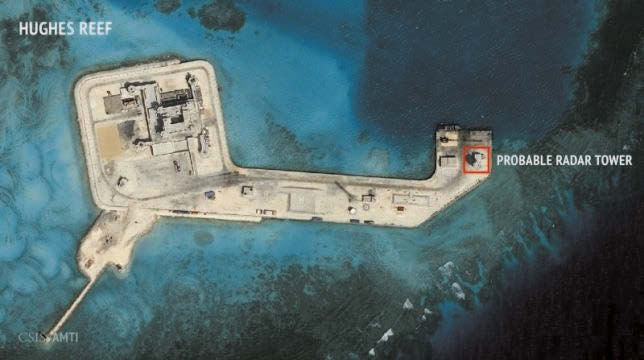
    WASHINGTON (TIP): China has sent fighter jets to a disputed island in the South China Sea, where it deployed surface-to-air missiles earlier this month, US government sources said on Tuesday.

    One US official, however, said China regularly sends jets to Woody Island, part of the Paracel archipelago controlled by Beijing. The deployment was first reported by Fox News.(Reuters)

  • India produces 27 new billionaires in 2015: Hurun Report

    India produces 27 new billionaires in 2015: Hurun Report

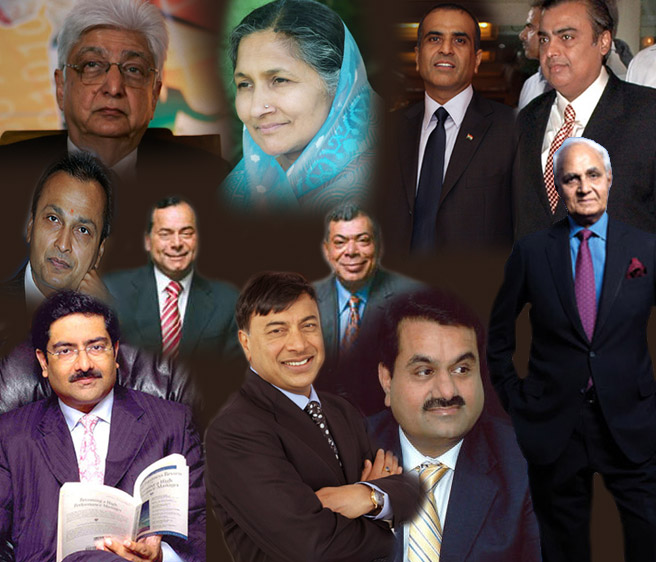
    India added 27 new billionaires and consolidated its position at number three on the list of billionaires, behind China and the United States, according to the Hurun Report 2016. India has 111 billionaires, compared to China’s 568 and the United States’ 535.

    The combined wealth of India’s billionaires went up 25 per cent to $308 billion (Rs 211 lakh crore) as compared to last year. Mukesh Ambani, India’s richest man, and Cyrus Poonawalla of Serum Institute added $6 billion and $4 billion to their wealth, respectively.

    The manufacturing, pharmaceuticals and technology sectors produced 22, 20 and 15 billionaires, respectively. Mumbai remained the headquarters of most Indian billionaires.

    “Despite its slowdown and falling stock markets, China minted more new billionaires than any other country in the world last year, mainly on the back of new listings. Growth in billionaires for the rest of the world was held back by a slowdown in the global economy, the strengthening of the US dollar and the drop in oil prices. The number of billionaires, however, has jumped 50 per cent since 2013,” Rupert Hoogewerf, chairman and chief researcher of Hurun Report, said.

    The richest Indians list did not throw up many surprises with Mukesh Ambani topping the list with a wealth of $26 billion, followed by Sun Pharma’s Dilip Shanghvi ($18 billion) and Pallonji Mistry ($13 billion) at number three. The data is till January 15.

    The Hurun Global Rich List 2016 ranked 2,188 billionaires from 68 countries, up 99 from last year, in another record-breaking year for the world’s billionaires. The total wealth increased by nine per cent to $7.3 trillion, more than the gross domestic product of Germany and the UK combined and close to half of the US.

    According to the list, 729 individuals saw their wealth decrease while 102 dropped out of last year’s list. Russian billionaires lost $130 billion, on the back of a further 19 per cent drop in the Russian Rouble and with lacklustre performance of mining, metals and energy. The average age of billionaires remained the same at 64 years, while 69 per cent were self-made. 31-year old Mark Zukerberg of Facebook was the youngest billionaire among the top 10.

  • BOEING GETS $440 MILLION ORDER FROM PAPUA NEW GUINEA CARRIER

    BOEING GETS $440 MILLION ORDER FROM PAPUA NEW GUINEA CARRIER

    SINGAPORE (TIP): US aircraft maker Boeing said on February 19 it had won a $440 million deal with Papua New Guinea’s flag carrier Air Niugini for four 737 MAX 8 planes.

    Announcing the deal along with Boeing at the final trade day of the Singapore Airshow, Air Niugini chairman Sir Frederick Reiher said the carrier needed the planes “urgently”.

    The airline currently has a domestic service, as well as flights to Australia, Singapore, Fiji, the Philippines, Solomon Islands, Hong Kong, Vanuatu and Japan. It is planning to fly to China in the near future.

    Dinesh Keskar, regional senior vice president for sales at Boeing Commercial Airplanes, said the aircraft had its first test flight in late January and was “performing exceptionally well”.

    Boeing’s 737 aircraft family competes with European rival Airbus’ A320 series in the single-aisle market where the planes are favoured for short to medium-haul routes because of their fuel efficiency.

    The Singapore show, considered the biggest in Asia and held every two years, has seen markedly fewer orders for aircraft this time around amid a global economic slowdown led by China that has impacted travel demand.

    On Wednesday, Airbus said it had won an $1.85 billion deal for the purchase of six A350-900s by Philippine Airlines (PAL), the flag carrier of one of Asia’s fastest-growing economies.

    Boeing also announced a commitment from China’s Okay Airways to buy 12 aircraft for $1.3 billion despite a weakening Chinese economy.

    The biggest deal announced at the show was from Vietnamese budget carrier VietJet Air, which said Thursday it had signed a $3.04 billion contract with US engine maker Pratt & Whitney. The engines will power the 63 Airbus A320neo and A321neo aircraft ordered by the carrier.

    Source: AFP

  • ‘Make in India Week’ gets Rs 15 lakh cr investment commitment

    ‘Make in India Week’ gets Rs 15 lakh cr investment commitment

    MUMBAI (TIP): The week-long ‘Make in India’ fair closed on Thursday with investment commitments of over Rs 15 lakh crore ($220 billion), the government said.

    “The numbers are in. INR 15,20,000 cr investment already committed at #MakeInIndia Week,” the event’s main organiser,” the union Department Of Industrial Policy and Promotion (DIPP) said in a tweet.

    “INR 1,05,000 crore of business enquirers generated during #MakeInIndia Week,” another tweet said.

    Addressing the event’s closing ceremony, DIPP Secretary Amitabh Kant said: “Maharashtra will become the gateway of India”.

    Maharashtra chief minister Devendra Fadnavis said over half of the investment commitments were for his state. “We have signed many memoranda of understanding with several companies across sectors to the tune of Rs.8 lakh crore during the Make In India Week,” he said.

    Of the total investments committed here, 30% are from foreign investors.

    “We have already opened the economy across sectors to the world. We’re now showcasing, connecting and collaborating for manufacturing in the country,” Kant told reporters at the closing press meet.

    The Maharashtra government had signed pacts worth Rs.6 lakh crore, which included large commitments from Mahindra and Mahindra (Rs 8,000 crore), Mercedes (Rs 4,270 crore), Panchshil (Rs 5,000 crore), JSW Jaigarh Port (Rs 6,000 crore) and RCF Chemicals (Rs 6,204 crore), among others.

    On Thursday, it signed other deals worth over Rs 1,60,000 crore, which include commitments from CIDCO’s two projects – Khalapur Smart City (Rs 7,909 crore) and townships in NAINA project area worth Rs 29,952 crore.

    The state government has also received commitments from retail players like Future Group (Rs 850 crore), Trent Hypermarket (Rs 400 crore), D-Mart (Rs 250 crore), Metro Shoes (Rs 50 crore), Shoppers Stop (Rs 50 crore) and Major Brands (Rs 50 crore).

    Karnataka received Rs 9,700 crore of investment proposals on Wednesday at the Make in India Week.

    “The investments include Rs 6,000 crore by First Solar for a solar cell unit, Rs 2,284 crore by French firm Tar Kovacs Systems for an ocean-based renewable energy project and Rs 1,250 crore by Pert Telecom to make smart products and solutions for street lighting, IT security, surveillance and global positioning system (GPS),” an official statement said.

    The event, inaugurated by Prime Minister Narendra Modi on February 13, saw many corporate houses announce their plans to Make in India, notably, Mahindra and Mahindra, the Sajjan Jindal Group, Mercedez-Benz, Godrej, Posco, Vedanta, Ikea and Tatas.

    Several union ministers made their pitch for investments at the event, with Power Minister Piyush Goyal saying his sector needed $1 trillion in investment.

    While Petroleum Minister Dharmendra Pradhan outlined the existing and future policies to attract funds into downstream and upstream oil projects, Heavy Industries Minister Anant Geete unfolded a policy to nearly double the share of capital goods in exports to 40%.

    Meanwhile, US agency Moody’s Investors Service on Thursday forecast for India “stable GDP growth at around 7.5 percent in 2016 and 2017”, saying the country is relatively less exposed to external headwinds, like the Chinese slowdown, and will benefit from lower commodity prices.

    “India is relatively less exposed to external factors, including China slowdown and global capital flows. Instead, the economic outlook will be primarily determined by domestic factors,” Moody’s said in its report “Global Macro Outlook 2016-17 – Global growth faces rising risks at time of policy constraint.”

    Source: IANS

  • Feeling unlucky? These plants can help you

    Feeling unlucky? These plants can help you

    PEACE LILY – This dark green plant with gorgeous bright white flowers helps you prosper by improving the indoor air quality. It also helps prevent asthma, headaches, chronic illnesses, cancer and more. The peace lily does all that simply by sitting pretty in your home. It can clean out formaldehyde, benzene and carbon monoxide from the ambient air, apart from other fumes like cigarette smoke, paint, furniture fumes etc.

    CACTUS- The Aztecs of central Mexico consider a flowering cactus auspicious. According to them, a blooming cactus flower symbolizes good luck and its owner can expect good news immediately.According to the legends, the gods of sun and war had promised Aztec priests that one day, someone would spot an eagle perched on a cactus and holding a snake. This would mean that they had found their home. And it supposedly happened! Aztecs hurried to the swampy shore of a lake to see this wonderful sight and as they watched, the cactus grew into an island, which became their new home.

    MONEY PLANT – Often used in Feng Shui, a money plant is said to produce a positive energy flow that attracts good luck and fortune.In China, the money plant is traditionally given as a New Year gift. But there’s a catch: The plant’s shoot must always point upward for it to bring you wealth. Also, according to popular belief, owners get richer if the plant is propagated using stolen branches (cuttings). On the downside, the person from whom the clippings are stolen, supposedly stands to lose wealth.

    Source: TOI

  • Ohio State, IndoGenius Develop MOOC to Educate Students About India

    Ohio State, IndoGenius Develop MOOC to Educate Students About India

    NEW YORK (TIP): Ohio State University and Delhi-based IndoGenius have developed an online course to help students learn about the importance of India.

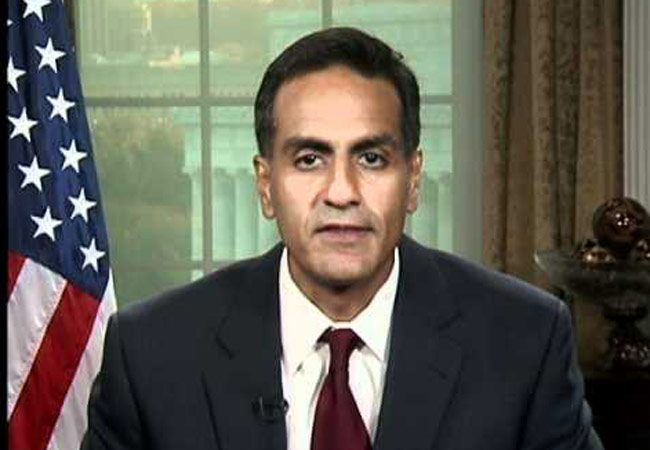
    The course, which was launched Jan 12 by Ambassador to India, Richard Verma, at the American Center in New Delhi will be delivered via the world’s largest online course platform, Coursera.

    The massive open online course (MOOC) is funded through the U.S. Department of State’s Passport to India initiative, which is jointly managed by Ohio State and IndoGenius.

    Passport to India seeks to increase the number and diversity of American college and university students studying abroad and interning in India by 2020.

    The program was launched by former Secretary of State Hillary Clinton in 2011 to create a hub for U.S.-India higher education partnerships and to develop a stronger bond between the youth of both countries by increasing American student mobility.

    “With India’s growing economy it is critical for our future leaders to understand India’s cultural, historic and economic importance in world affairs,” said William Brustein, vice provost for global strategies and international affairs at Ohio State. “Engaging young Americans to experience the depth and breadth of India firsthand will only produce stronger U.S.-India relations. For Ohio State to take a leadership role in this transformative process is an exciting and important opportunity.”

    The curriculum for the course was developed by Brian Joseph, a distinguished university professor of linguistics at Ohio State and Nick Booker, co-founder of IndoGenius, and implemented through the Office of Distance Education and eLearning.

    The course titled, The Importance of India, covers a broad range of topics, from India’s ancient trade relations with the Roman Empire, South East Asia and China to India’s rapidly growing startup ecosystem and its role in creatively solving global problems through technology.

    The course’s final lecture is dedicated to presenting study, startup and internship opportunities in India along with references and advice for those wishing to travel to India.

    By educating students about India through the online course, Ohio State and IndoGenius are hoping it will make a significant contribution toward meeting Passport to India’s goal of increasing the number of students studying abroad in India annually from its current, 4,583 to at least 10,000 in the next four years.

    “India is relevant to American students of all backgrounds and interests,” said Booker of IndoGenius. “The Passport to India MOOC will demonstrate how India’s economic and civilizational re-emergence has renewed the importance of India. Take any of the grand challenges faced by the world today and if you can innovate a solution that works in India it can work anywhere.”

    The course is free for anyone in the world and currently open for enrollment on coursera.org

    Indian students are actively encouraged to join and learn alongside their American peers. Those interested in learning more about Passport to India and its directory of 60+ study abroad and paid internship opportunities in India can do so at www.passporttoindia.com.

  • Chinese students jailed in US for kidnapping and assault

    Chinese students jailed in US for kidnapping and assault

    ROWLAND HEIGHTS (CALIFORNIA) (TIP): Three students from China were sentenced on Feb 17 to years in prison after prosecutors said they stripped, beat and burned two classmates.

    The defendants and victims were “parachute kids” who studied in Southern California while their parents remained back home. Yunyao “Helen” Zhai was sentenced to 13 years behind bars; Yuhan “Coco” Yang got 10 years; and Xinlei “John” Zhang received a six-year term. All three apologized in court for their actions. “I hope they do not carry the wounds from what I did for the rest of their lives,” Zhai wrote of the victims in a statement read by her attorney.

    The 19-year-olds were accused of bullying a 16-year-old girl who was punched and slapped last March at a restaurant and a park in Rowland Heights, east of Los Angeles.

  • Pakistan, with 324 executions in 2015, ranks third worldwide

    Pakistan, with 324 executions in 2015, ranks third worldwide

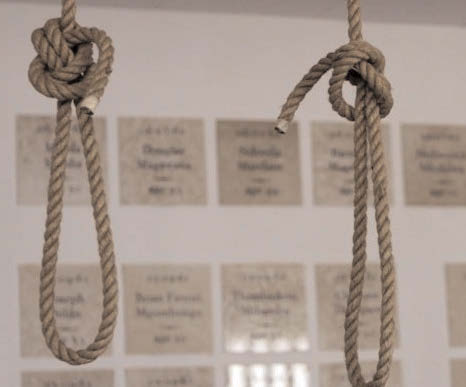
    ISLAMABAD: Pakistan hanged 324 people last year to rank third worldwide in terms of executions, but the vast majority of those put to death had no links to militant groups or attacks, rights groups said in a report seen by Reuters.

    Pakistan lifted a moratorium on executions in late 2014 as a measure to deter militancy, after a Taliban gunmen attacked a school and killed 134 students and 19 adults.

    Of the 351 executions that followed, only 39, or about 1 in 10, involved people linked to a known militant group or guilty of crimes linked to militancy, Reprieve, an international human rights group, and Justice Project Pakistan said in a report.

    Pakistan now ranks after China and Iran, carrying out 324 hangings in 2015 alone, the report showed.

    Juveniles, mentally ill prisoners, and prisoners who had been tortured or had not received fair trials were among those executed, the report found in an analysis of media reports and data from courts, prisons and legal teams.

    “The numbers show that the Pakistan government’s claims do not match reality,” said Maya Foa, director of the death penalty team at Reprieve.

    “Those going to the gallows are too often the poor and vulnerable,” she said in a statement. “It is hard to see how hanging people like this will make Pakistan safer.”

    A spokesman from Pakistan’s interior ministry did not respond to requests for comment.

    The government initially said the unofficial moratorium was only being lifted in cases connected to militancy, but it was later broadened to cover all cases, the report said.(Reuters)

  • A grave provocation: Chinese missiles to increase tensions in South China Sea

    A grave provocation: Chinese missiles to increase tensions in South China Sea

    Beijing’s reported deployment of surface-to-air missile bound to be introspected as launchers on an island in the South China Sea recently photographed by a commercial satellite is an act of grave provocation. It is clearly in violation of the spirit of a 2002 Asean-China joint declaration on the conduct of parties in the South China Sea which affirms the signatories’ commitment to international law. China’s unilateral action, clearly aimed at militarily asserting its claim in the maritime region, is going to aggravate tensions in the South China Sea, a key international shipping route through which $5 trillion worth trade passes each year.

    Beijing is not going to be amused at the detection of the missiles on Woody Island. It could think of imposing an air defense identification zone (ADIZ) whereby China can question and intercept aircraft flying in that area. This could increase chances of conflict, especially with the US insisting on its right to continue to fly, sail and operate wherever international laws permits. Already aircraft from the Philippines overflying the Spratly Islands, another disputed archipelago in the South China Sea, have been the recipients of such stern warnings due to a Chinese ADIZ established in the area. The South China Sea is the scene of multiple and complex maritime disputes between several countries with China as the central player. Beijing claims 1.35 million square miles of water in the area, thus virtually regarding the entire South China Sea to be its own.

    China is busy buildings roads, runways, jetties and other infrastructure on some of the disputed islands and all these activities invite suspicion of its expansionist intent. China also wants the world to respect it as a peaceful nation. It is imperative that it disengages militarily in the South China Sea and seeks to resolve its disputes peacefully through negotiations. Muscle flexing is not going to help build a benign image.

    – Tribune, Chandigarh

  • Protecting India’s Trade Interests

    Protecting India’s Trade Interests

    The Trans-Pacific Partnership agreement (TPP) has been signed in Auckland on February 4 by Australia, Brunei, Canada, Chile, Japan, Malaysia, Mexico, New Zealand, Peru, Singapore, the U.S. and Vietnam. Even as it is touted as the world’s biggest trade deal to date, with signatory countries accounting for more than 50 per cent of global GDP, the TPP still has a long-drawn ratification process ahead of it. Signing of the agreement provides an opportune moment for India, which is not part of the TPP, to take stock and formulate its response to the trade challenges it now faces on both international and domestic fronts.

    Discussing new issues

    The TPP contains detailed obligations on so-called new issues such as labor, investment, environment, e-commerce, competition and government procurement. These issues are not covered under the World Trade Organization’s (WTO) multilateral umbrella. However, as the recent Nairobi Ministerial Declaration stated, “some” members want to explore and discuss new issues and architecture at the WTO. There is an increased likelihood of the U.S. pushing the TPP as the negotiating template for new issues at the WTO, since it better reflects the interests of its own domestic lobbies. As new issues are not likely to be in India’s overall interest, the country must firmly resist such attempts. But this may only be accomplished with a high degree of preparedness and smart coalition-building with like-minded allies.

    India also needs to closely watch the regulatory regimes in TPP countries, ensuring that these countries do not violate their WTO commitments in the process of implementing the TPP. The WTO does allow a member to deviate from its obligations with respect to a free trade area; however, such a deviation is not unqualified. If a TPP country restricts the market access for non-TPP members such as India on account of higher labor standards, a potential violation of WTO provisions may arise, which India should not shy away from pursuing using the WTO’s dispute settlement mechanism.

    India should actively seek disciplines on private standards at the WTO to restrict their proliferation. The TPP attempts to regulate and, according to some experts, legitimizes this regime. A number of studies have predicted that the TPP will lead to proliferation of private standards. However, the fact is that such standards have existed as a parallel regulatory regime in international trade for some time now. For instance, in 2006, the Sialkot sports goods manufacturing cluster in Pakistan came close to closure when Nike decided to stop sourcing footballs made in the area, on account of violation of its labor standards that prohibited child labor. Despite significantly impacting international trade, these standards have escaped regulation under the WTO. This is because they do not originate from the ‘state’ but from private bodies. Disciplining such private standards at the WTO is much needed and is something that should be urgently pursued.

    Impelled by the looming onset of the TPP, India should conclude, on a priority basis, its ongoing free trade negotiations. These include the India-EU Bilateral Trade and Investment Agreement and the mega Regional Comprehensive Economic Partnership with the Association of Southeast Asian Nations, China and others. Benefits from these agreements will help mitigate some of the export losses that India may face in leather goods, textile, and plastics on account of trade diversion due to TPP. Aiming to diversify export destinations to hitherto untapped markets like Latin America and Africa would also help.

    India also needs to identify its trade interest areas and propose alternative negotiating templates. One such area is biopiracy, protection of traditional knowledge, and the link between the WTO’s Trade-Related Aspects of Intellectual Property Rights agreement and the Convention on Biological Diversity. There have been several instances of biopiracy in the past, of Indian traditional knowledge, such as the patenting of the wound-healing properties of haldi (turmeric). Being among the 12 mega biodiversity-rich countries, India needs to bring this issue to the negotiating table in its own free trade agreements.

    On the domestic front, India should accelerate the process of making its products more cost-competitive. There is no denying that India’s infrastructural deficiency, including port congestion and poor road connectivity, is one of the main hurdles in attaining this cost competitiveness. Addressing these will have the dual effect of not only making India’s exports cost-competitive, but will also make them more attractive for international lead firms to integrate India in global value chains.

    The government should launch a comprehensive initiative to enable Indian exporters to not only comply with standards prevalent in the importing market, but also demonstrate the compliance through appropriate conformity-assessment procedures.

    India should resist any attempt to converge its domestic public standards with the dominant private standards in TPP countries. If India’s public standards are harmonized with foreign standards, they will be equally applicable to domestic and export sales on account of the ‘national treatment’ principle of the WTO which prohibits less favorable treatment to imported products. The harmonized standards may result in most producers not only being excluded from export markets, but also being edged out of the domestic market, undermining the Make in India initiative in the process.

    By not being part of the TPP, India will certainly incur losses on account of trade diversion. Yet, joining the TPP is not an option for the country. This would entail very heavy costs. Medicine prices, for instance, would see steep increases. That is precisely why mitigating such projected losses from the TPP should be a government imperative. This can only be achieved by a cohesive trade policy approach on the international as well as domestic front, aimed at protecting and promoting India’s trade interests.

    (The author is an assistant professor at the Centre for WTO Studies, Indian Institute of Foreign Trade, New Delhi.)

  • FOREIGN FIRMS RUSH TO INDIA’S ONLINE MARKETPLACE

    FOREIGN FIRMS RUSH TO INDIA’S ONLINE MARKETPLACE

    NEW DELHI (TIP): India’s booming online marketplace business has attracted a new wave of merchants and sellers from countries such as China, South Korea, Japan, Singapore and the US. In fact, thousands of sellers are getting into tie-ups with Indian e-commerce players to kick-start operations in the country.

    According to industry insiders, around 50,000 sellers from China, South Korea and Singapore are planning to enter India through online marketplace players.

    “In business-to-business (B2B) segment, there is no online organised player in the country right now. The market is being created for the online businesses,” said Sanjay Sethi, co-founder and CEO of Shopclues. The company has brought in DHgate, the second largest player in China after Alibaba, on to its platform. It’s also getting 25,000 South Korean merchants on board. Tie-ups are also in process with Singapore Traders Association to enable them to sell on Shopclues.

    WINDS OF CHANGE
    Around 50,000 sellers from China, South Korea and Singapore want to enter India through online marketplace players
    American retail major Walmart is also exploring ways to tie up with leading e-commerce companies in India, including Flipkart, Snapdeal and others
    Metro Cash and Carry is also in talks with e-commerce marketplace players to sell its products online
    E-commerce giant Alibaba is looking to make a big bang entry into India’s marketplace via One97 Communications-owned Paytm

    American retail major Walmart is also exploring ways to tie up with leading e-commerce companies in India, including Flipkart, Snapdeal, ShopClues, Grofers and Bigbasket. It is learnt that German wholesale giant Metro Cash and Carry is also in talks with e-commerce marketplace players to sell its products online.

    Meanwhile, e-commerce giant Alibaba is looking to make a big bang entry into India’s marketplace via One97 Communications-owned Paytm.

    Alibaba is expected to be the support behind Paytm’s China product portfolio. With that in place, Paytm will aim to become the biggest Indian player insofar as the number of sellers on the platform is concerned. With eight million sellers, Alibaba has the widest seller range as well as product portfolio.

    This is not for the first time that Paytm is planning to sell Alibaba’s product range. During Diwali last year, Paytm had the whole product catalogue sourced from Alibaba and merchants from China were directly shipping products to customers in India, saving Paytm the hassle of finding warehouses.

    As for the second top player in China, DHgate, online B2B would be a gateway into India and an opportunity to get connected to 350,000 sellers through the Shopclues portal.

    DHgate plans to list its products across categories, including electronics, accessories, beauty products and sports. “From China we are getting around 10,000 SKUs (stock keeping units) listed. It is not a retail business and the target audience for this business are other businesses in India,” said Sethi.

    The foreign investment rules vary across retail platforms and companies often resort to complex structuring to bypass policy. While foreign direct investment (FDI) is capped at 51 per cent in multi-brand retail with states having the last say on whether international players would be permitted to operate or not, there’s no limit of foreign investment in single-brand and business-to-business or cash and carry.

    In e-commerce, however, FDI is not permitted. But, e-commerce players are mostly run with foreign money by operating marketplace platforms, where rules have not been framed yet.

  • Will Pakistan be able to counter expanding extremism?

    Will Pakistan be able to counter expanding extremism?

    Pakistan continues to be a major target of terrorism, most recently demonstrated by the attack on Bacha Khan University, which killed 20 people.

    Only a week before, three attacks in close succession at a UN-backed polio clinic in Quetta, a local broadcaster and the Pakistani consulate in Jalalabad killed at least 20 people and injured more than 30, which included civilians and security personnel.

    Slowly but surely, Pakistan’s terrorism crisis has morphed into an existential nightmare, one that is threatening to unravel any semblance of stability. As the country finds itself at the crossroads of prosperity and failure, its fight against terror is more important now than ever.

    Pakistan is one of the main victims of terrorism, a fact often ignored in the West. To put matters in perspective, Pakistan’s terrorism-related deaths from 2007 to 2014 numbered 1,592 – a 940 percent increase from 1998-2006, according to the 2015 Global Terrorism Index.

    The same study also ranks Pakistan fourth out of 124 in a list of countries most affected by terrorism with the tragic Peshawar army school attack in late 2014 serving as an ominous exclamation point.

    The Afghanistan connection

    Many of Pakistan’s problems stem from the political upheaval in Afghanistan. The US invasion after 9/11 turned the lawless border between the two countries into a breeding ground for terrorist activity.

    Nestled between three volatile borders, Pakistan is also situated in one of the most geopolitically sensitive areas of the world, with different players vying for competing interests.

    Ongoing US drone campaigns have radicalized segments of the local population and mobilized groups such as the Pakistani Taliban to carry out attacks against civilians and military targets. These attacks only exacerbate sectarian tensions between Pakistan’s Sunni and Shia communities and continue to bring into question the integrity of Pakistani statehood. With ISIL now in the mix, the situation can only degrade further.

    The military and … the ISI must take fundamental efforts to cease the practice of using terrorism as a foreign policy asset and avoid domestic blowback.

    External factors aside, Pakistan must also take a genuine stance against terrorism within its own borders, root out internal terrorist sympathies and take a leadership role in ending the use of proxies.

    The military and particularly Pakistan’s intelligence agency, the ISI, must make fundamental efforts to cease the practice of using terrorism as a foreign policy asset and avoid domestic blowback.

    With a projected GDP growth of over 5 percent for the next three years, an improved currency and recent consolidation of its three stock exchanges into the new Pakistan Stock Exchange, the country might be showing signs of economic progress after years of volatility.

    The $46bn China Pakistan Economic Corridor project, linking the Gwadar port to the Chinese city of Kashgar, has the potential to turn Pakistan into a strategic trading hub.

    Also given Iran’s post-sanctions reintegration into the world economy, a rekindling of the Iran-Pakistan gas pipeline to address the energy shortage also becomes a real possibility.

    Peace with India

    Indian Prime Minister Narendra Modi’s surprise visit last month also signals that peace with India, although difficult, might not be as elusive as some believe. Similarly, Afghanistan’s new President, Ashraf Ghani, has also shown signs that he is not willing to give up on improving ties with its eastern neighbor despite pressure from within his government.

    History has shown that Pakistan’s military remains the de facto power within the state. However, the head of Pakistan’s armed forces, General Raheel Sharif, has shown restraint by focusing on Operation Zarb-e-Azb in Northwest Pakistan and rooting out political mafias in Karachi rather than plotting coups.

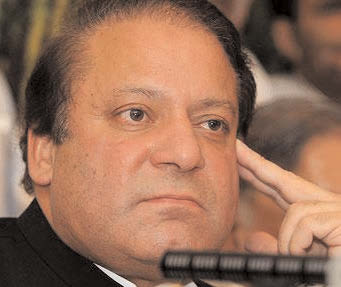
    Nawaz Sharif’s civilian government continues to govern after what marked Pakistan’s first peaceful democratic transition in the country’s 68-year history.

    Often viewing India as a territorial threat, even the ISI might also be on board with improving relations.

    In a 2008 research report for his master’s degree at the US Army War College, the now Director-General of the ISI, Rizwan Akhtar, had argued that Pakistan should “aggressively pursue rapprochement with India”.

    Given that the recent Pathankot attack on an Indian army base is unlikely to deter ongoing dialogue, it seems that a substantial shift in the bilateral relationship based on cooperation and goodwill is under way. A similar approach with Afghanistan in the form of an inter-intelligence accord has both nations bolstering their fight against a shared threat.

    With these positive internal and external developments, it is imperative for Pakistan to capitalize on the political environment and continue to focus on the fight against terrorism in an effort to maintain economic and diplomatic momentum.

    Pakistan’s future, and its very soul, depends on it.

  • Unpaid and angry, some Chinese workers ditch holidays to protest

    Unpaid and angry, some Chinese workers ditch holidays to protest

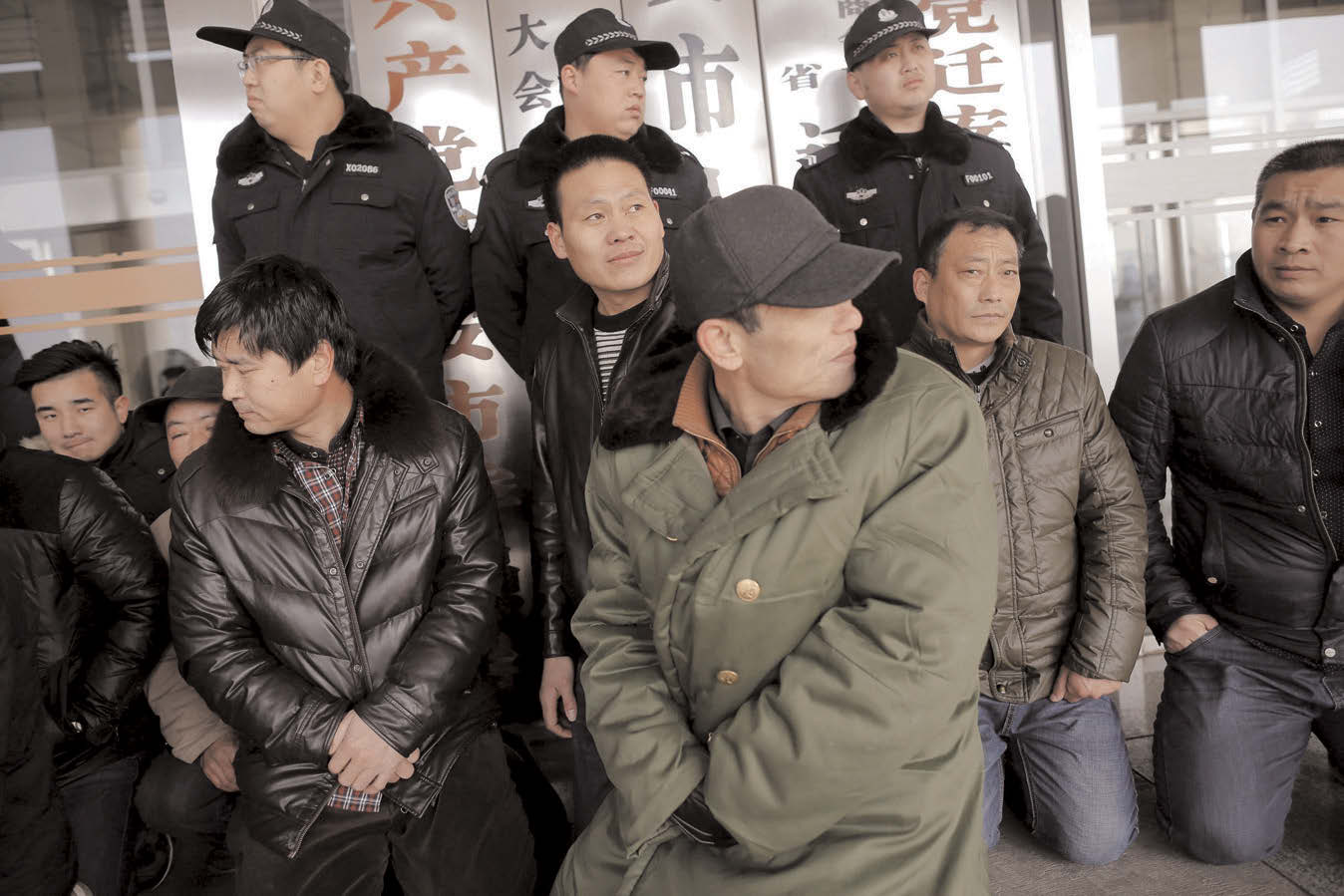
    QIAN’AN/DONGGUAN (TIP): This year, laborer Fan Fu and 20 or so colleagues working on the Zixia Garden apartment complex in Hebei province have not joined China’s legion of migrant workers returning home to celebrate new year with their families.

    Instead, they have camped in the offices of the property developer’s subcontractor, demanding almost a year’s unpaid wages and too angry and proud to go back to native towns and villages empty-handed.

    With China’s economy growing at its slowest in 25 years, more workers face Fan’s predicament and labor unrest is on the rise, a concern for Beijing as it seeks to avoid social unrest even as financial pressures build.

    “The developer has kept using the fact that they have no money as an excuse. As of now they haven’t paid us a single penny,” said Fan, who brought others from his home town in the western province of Sichuan to work on the apartments.

    “We really don’t have any other options,” he told Reuters in the subcontractor’s offices, crowded with bedding and personal possessions.

    The group had earlier petitioned local authorities for redress and staged protests outside government offices in Qian’an, a city in Hebei in China’s north.

    When water and electricity were cut to the dorm where they lived, the subcontractor allowed them to move in temporarily.

    Fan and about 530 other workers on the apartment project are owed paychecks of between 20,000 and 50,000 yuan ($3,000-$7,500). They said the government had offered each non-local laborer 2,000 yuan in cash if they left for the holidays.

    The developer, Qianan City Xinyuan Real Estate, did not respond to Reuters’ requests for comment on the protests and the unpaid wages. The Qian’an government said they were looking into the issue but declined to give details.

    While the housing sector is among the worst-hit in China’s economic slowdown, the pain is being felt by blue- and white-collar workers in other industries.

    According to Geoffrey Crothall of the Hong Kong-based group China Labour Bulletin, which tracks worker issues, there was a spike in protests in the last quarter of 2015.

    Its data show that in December and January, there were 774 labor strikes across China, from 529 in the previous two months, most of them over wage arrears.

    Fearful

    At a printing factory in the western city of Chongqing, a Reuters reporter was present when a local official visited last week to make sure the boss paid his workers before the Year of the Monkey begins.

    The official declined to speak with Reuters, although the boss later said it was an attempt to prevent unrest.

    “That’s (unrest) what the government is most fearful of,” said the factory owner, who did not want to be named.

    Chongqing authorities gave no immediate response to faxed requests for comment.

    China’s senior Communist Party leaders, including President Xi Jinping, have long championed workers’ rights, and are often photographed visiting factories.

    The government is concerned that protests over issues like unpaid wages could spill over into broader dissatisfaction at its rule, as it has derived much legitimacy over the past decades from delivering a higher standard of living.

    Before the holiday, Beijing issued a notice calling on local authorities to “seriously investigate all incidents of wage arrears, so that migrant workers would be paid in a timely manner and in full,” the state-run Workers Daily newspaper reported.

    Over the past few months, however, authorities have arrested at least seven labor activists in Guangdong province in the largest crackdown on organized labor in China in recent years.

    (Reuters)

  • Tug of War on Garbage Tarnishing Clean Delhi Image Worldwide: Jolly

    Tug of War on Garbage Tarnishing Clean Delhi Image Worldwide: Jolly

    NEW DELHI (TIP): Continued tug-war on garbage politics in the capital has tarnished the “Clean Delhi City” image worldwide, stated Senior BJP leader Vijay Jolly at New Delhi February 2, 2016.

    Foreign tourists especially Non Resident Indians (NRI’s) are baffled, surprised and shocked over the recent course of “Govt. & Civic” tussle in Delhi. Cancelation of travel to Delhi by foreign & domestic travelers is causing a tremendous loss to tourism revenue, deplored BJP leader Mr. Jolly.

    Due to piling garbage all over Delhi, foreign tourist arrivals are on the decline, said Jolly. The last quarter of year 2015 registered a growth of 6.1% in FTA in India. Delhi port recorded the highest FTA of 30.08% followed by Mumbai 17.21%, Chennai 8.91%, Bengaluru 6.5%, Kolkata 4.02% etc. The maximum number of foreign tourist arrivals last year were from 15 countries namely Bangladesh 18.81%, USA 10.99%, UK 7.96%, Malaysia 4.72% Sri Lanka 4.69%, China 3.37%, Pakistan 1.61% etc. But early January & February, the FTAs from these countries have considerably reduced, stated the Delhi BJP leader.

    Tussle over financial jugglery, safai karamcharies strike, followed by doctors & teachers strike, non-payment of civic salaries, scattered garbage, over flowing dustbins, stoppage of mid-day meals to children, failure of PWD to clean up Delhi & absence of CM Kejriwal from Delhi are spreading fears of epidemic in Delhi soon, stated BJP leader Mr. Jolly. Conciliation and not confrontation alone can save Delhi. Early bail-out and payment of 2 months pending salaries of civic staff by Arvind Kejriwal govt. is the only -solution stated Mr. Jolly.

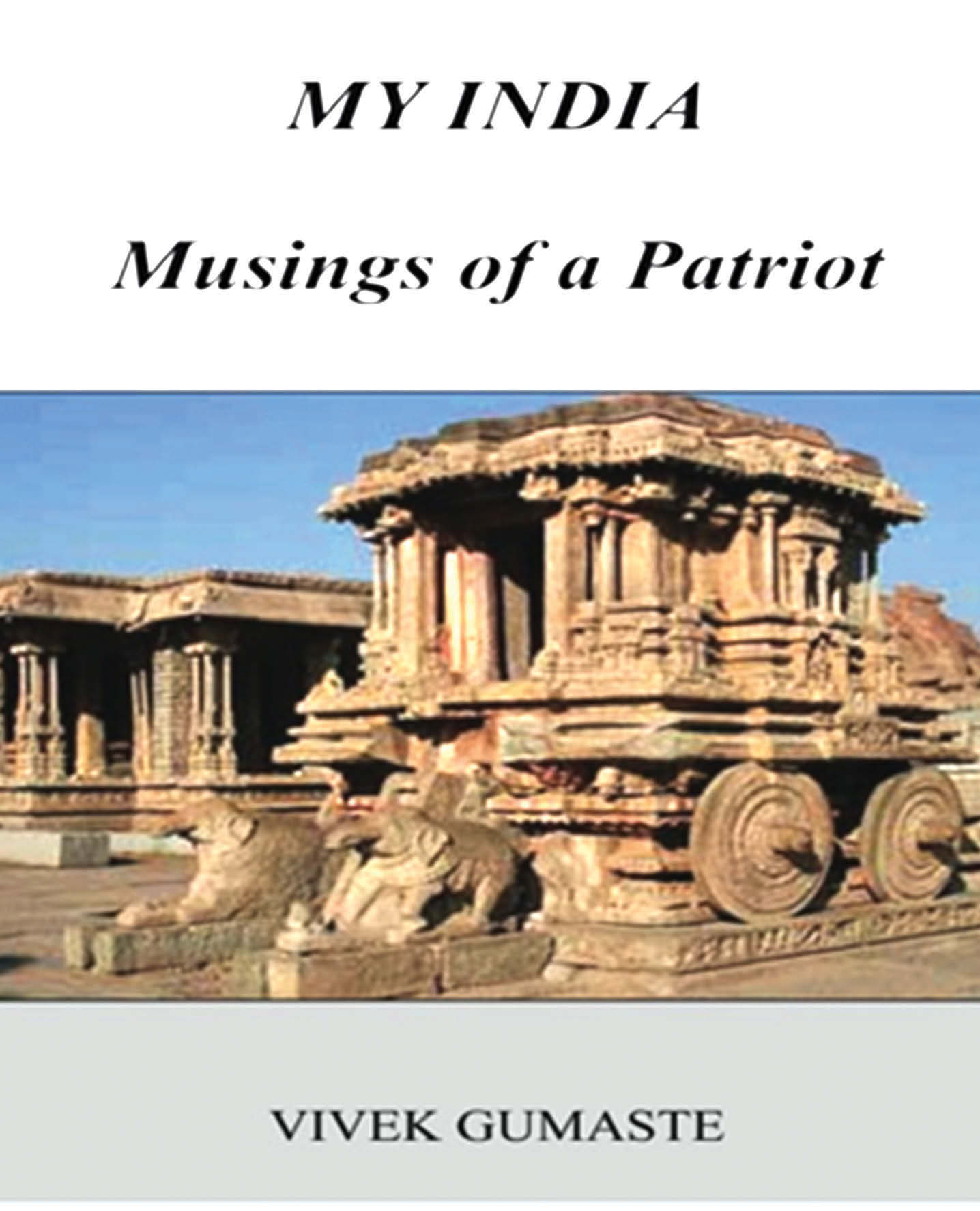
  • BOOK REVIEW – MY INDIA | MUSINGS OF A PATRIOT

    BOOK REVIEW – MY INDIA | MUSINGS OF A PATRIOT

    My India is a collection of op-ed articles and columns which deal with hot button issues relevant to modern India and which have appeared in mainstream Indian newspapers like the New Indian Express, the Hindustan Times, the Sunday Guardian and popular news portals like Rediff and Huffington Post (India).

    Spread out over 290 pages and divided into 11 sections are 59 concise essays that convey a distinct point of view. Topics addressed include India’s secularism, its troubled relations with its neighbors India and China, the contentious Kashmir dispute, cross border terrorism and a host of other issues. .

    With a broad brush the author paints the landscape of modern India with strokes that highlight its aspirations, its deficiencies and the dangers that lurk within and without its borders, producing  in the process authentic picture of current India, albeit in words.

    Leading the way is the first section that attempts to define and bring some clarity to the much bandied term secularism. In an article, No Devil in the Detail, the author points out: “The Constitution of India, therefore, does not categorically define who is a majority or a minority and what constitutes a minority religion let alone identifying such an entity or entities specifically by name………Was this an oversight on the part of our founding fathers? Did they negligently forget to address such a weighty issue in a society that is glaringly diverse in nature, caste ridden since time immemorial and wracked incessantly by communal discord? Or was this an deliberate omission with an express purpose: namely to nip in the bud nascent divisive tendencies right atthe inception of a new nation and chart the course for a classless society that would not recognize minority or majority but only individuals with needs and rights? That seems to have been the idea. (pp 4).

    Further Vivek Gumaste avers: “The term minority is an oxymoron in a secular setting: the two terms are incompatible. A Hindu state can have a Muslim minority and vice-versa but a secular state cannot subscribe to the concept of a majority and a minority for it is that very inequity that a secular state strives to eradicate.” (pp 7)

    The Congress Party, especially its leadership and construct comes in for severe criticism. Commenting on ex-PM Manmohan Singh’s tenure he writes: “Leadership is not merely an exposition of one’s superlative abilities or chaste character; something to be flashed like a showcase diamond. Intrinsic to leadership is an ability to enforce and demand the high standards that one adheres to. By this criterion, Prime Minister Manmohan Singh falls way short of the mark; his pristine innocence is sinking imperceptibly into the quagmire of sleaze and bribery that engulfs him, nullifying in the process any residual altruistic advantage his personal honor may have conferred.”(pp 72)

    Decrying the culture of servility that pervades the Congress Party, Vivek Gumaste writes:

    The l’affaire Vadra (the misdoings of Robert Vadra, Sonia Gandhi’s son-in-law) brings to the fore a far more serious malady than the ostensible crony capitalism that it suggests; a rot that strikes at the very heart of our democracy; an ugly affliction that portends disastrous consequences for the nation’s long term stability: namely the extent and depth of sycophancy that pervades India’s premier political party. Sycophancy is the reigning currency of the Congress party. (pp 82)

    The author reserves his harshest judgement for Pakistan: “To deem Pakistan as a failed state is a generous overstatement. It does not qualify as a state at all, period. A state must have a degree of accountability. A state must have a functioning hierarchy. Pakistan has neither……..Pakistan is a mafia masquerading as a nation; an unholy trinity comprising of non-state actors, an Indophobic military establishment functioning as the mastermind and a puppet civilian government (whenever it exists) that doubles as a deceptive front to buy time for the nefarious misdeeds of this evil triumvirate: all single-mindedly committed to the disruption of India.”

    The DNA of China is encapsulated in these insightful words: “China is a dangerous cocktail of the past and the present. Hidden behind the reassuring façade of modern aspirations in tune with the changing world lies a ruthless medieval mindset that subscribes to notions of territorial expansion and international hegemony.”

    The section on terrorism begins with a list of the major terror attacks that have occurred in India since 1993 and goes on to include chapters that address the Mumbai attack, the bogey of Hindu Terror and our ‘famed’ restraint. With regard to restraint the author avers, “Persistent restraint in the face of continuing evil smacks of cowardice and not moral superiority…”

    Dilating on the concept of free speech the author concludes: ” ‘My right to free speech is indispensable while your right to free speech is dispensable’ attitude will not do. We need to have uniform standards applicable and acceptable by one and all: a sense of fair play that provides a platform for everyone to freely express their opinions within traditional norms that eschew violence.”(pp 242)

    There is an interesting article on corruption wherein the author finds the individual as much to blame as the government: “The problem of corruption is far bigger than what the Lokpal bill envisions and intends to resolve. It is a multifaceted issue that germinates in an individual, is perpetuated by a system and guilefully exploited by the political leadership……..

    As long as there are ‘bribe givers’ there will be ‘bribe takers’ creating a deceptive win-win situation even as the country plummets inexorably towards self -destruction. This cycle must be broken. Each of us (the common man on the street and the affluent industrialist included) needs to make one single-minded resolution: we will oppose one corrupt practice that we personally encounter in our day to day life over the next year regardless of the hardship that this may entail.”(pp 253)

    Finally, in an article titled, “The Rape Controversy: Why We need to Move Beyond Protest,” the author exhorts Indians to move beyond protest: “The current wave of protest like almost every public dialogue in India has a tendency to invariably degenerate into a clash of personalities that usurps center stage and relegates the issue at hand to the back burner. Let us stop the cantankerous bickering between the public and the government, the public and the police and the Union government and state functionaries to conceive a comprehensive united effort that will result in tangible results.” The book will make for interesting, stimulating and informative reading for all- both Indians and non-Indians alike.

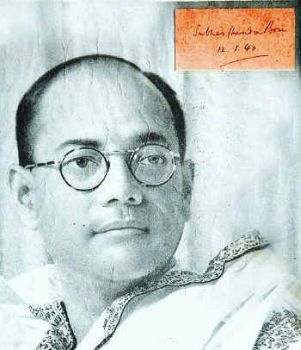
  • NETAJI SC BOSE FILES: HERE IS WHAT WE KNOW SO FAR

    NETAJI SC BOSE FILES: HERE IS WHAT WE KNOW SO FAR

    NEW DELHI (TIP): Prime Minister Narendra Modi on January 23 unveiled 100 declassified documents on Netaji Subhash Chandra Bose at the National Archives of India. The documents are still not available in the public domain, but the NAI is expected to release around 25 digitised copies every month. The timing of the release assumes political significance as West Bengal goes to polls later this year. The Mamata Banerjee government has already made 64 documents public last year and requested the Centre to do the same. These 64 documents, running into more than 12,000 pages, revealed that Subhash Chandra Bose’s family was snooped for nearly a decade by the Nehru government after his disappearance. The documents also show that the British suspected Bose was still alive after his plane crashed in Taipei.

    Netaji Bose’s cremation records appear online

    A UK website has released the evidence given by a Taiwanese official who claimed to have prepared Netaji’s body for cremation after his death in a plane crash in 1945. The testimony, contained in UK Foreign Office file No FC1852/6 and dating back to 1956, is among the last few documents to be released by http://www.bosefiles.info set up to establish that the Indian freedom fighter died in the crash on the outskirts of an airfield in Taipei on August 18, 1945.

    British believed Netaji was alive 

    The British intelligence were skeptical over reports of Netaji’s death in Taipei. They believed that he was still alive and living in either China or Russia. The British arrived at this conclusion after no strong evidence had emerged of his death after his plane had crashed.

    West Bengal probed if Subhas Chandra Bose missed the flight In 1969, Member of Parliament Samar Guha wrote to the then West Bengal chief secretary M M Basu about a “sensational report” of Netaji’s survival. Based on the letter, Basu had directed the state government’s home secretary to conduct a probe into the claims. The report Guha refers to an article that appeared in Jugantar which claims that a police officer had seen Netaji board a submarine in Singapore, not a plane, along with two Japanese officers. The officer went on to say that Netaji left his sword with him before leaving Singapore.

    Netaji files reveal snooping on Subhas Chandra Bose’s family, doubts over death 

    The West Bengal state intelligence has regularly intercepted letters reaching members of Netaji’s family after he went missing in 1945. Documents released last year show the contents of a letter from a Swiss journalist Dr Lilly Abegg to Netaji’s brother Sarat Chandra Bose. Abegg wrote: “I heard in 1946 from Japanese sources that your brother is still living.”

    Netaji’s wife kept in touch with his family even after disappearance 

    Netaji Subhas Chandra Bose saw his daughter Anita only once, when she was four weeks old. He was about to pay another visit to her in Vienna in 1943, but his “sudden departure” prevented this. The 64 files made public by the West Bengal government on Friday showed that while Bose never returned to Europe to his daughter and wife Emilie Schenkl, they continued to write to Netaji’s family after his disappearance.


  • India, Taiwan and China Triangle Opportunity for Strategic Balancing

    India, Taiwan and China Triangle Opportunity for Strategic Balancing

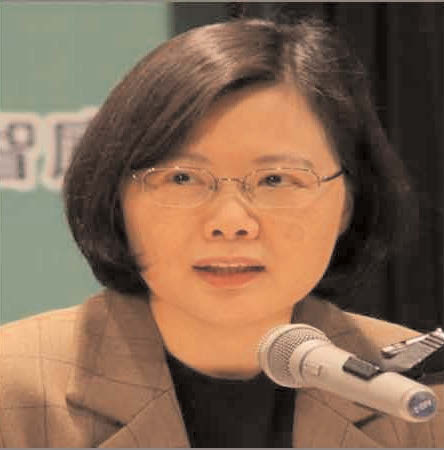
    History, despite Francis Fukuyama’s prediction of it having ended, was made on Saturday, January 16th 2016 inthe “Separate Customs Territory of Taiwan, Penghu, Kinmen and Matsu”, aka Chinese Taipei, aka Republic of China or the de facto Republic of Taiwan. Tsai Ing-Wen of the Democratic Progressive Party was elected President with 56% of the vote defeating Kuomintang’s Eric Chu. Besides, electing its first ever female president from the Democratic Progressive Party, the citizens of this island nation thoroughly defeated the President Ma Ying-Jeau’s Kuomintang Party for excessively placatory and deferential postures towards Beijing. The people of the Republic of Taiwan democratically slapped the Communist China on the face despite its repeated catastrophic warnings. History was also made because per analysts, “A new Taiwanese identity won” in the elections. A new generation with pro-independence mind gave a resounding defeat to the status quoist KMT. The 59 years old Tsai, a former law Professor is an alumnus of the University of Cambridge. She made the history as being elected the first female leader of an Asian nation without having any prior family connections or following the path of dynastic succession.

    It was the 6th direct election for the President of Taiwan since 1988 when Taiwan became a de facto and de jure democracy. The Democratic Progressive Party, also secured a majority in the legislature, marking the first time that the DPP can govern alone with over a 50%majority. Results on the Central Election Commission’s website showed Ms. Tsai receiving 6.9 million votes, around 56% of the total, with her main rival, KMT candidate Eric Chu, getting 3.8 million, or 31%. A third-party candidate took the remainder. It is the first time the ruling KMT and its allies have lost control of the legislature since Chiang Kai-shek moved his Nationalist government across the Taiwan Strait after its defeat on the mainland by Communist forces in 1949.

    Government of India should send a large official delegation for inauguration of the President-elect Tsai on May 20th 2016. India needs to exploit this democratic opportunity of government transition in Taiwan to engage it strategically besides deepening the economic and mercantile ties. Over the years, this analyst has made case for deeper economic, mercantile and strategic engagement with Taiwan in an effort to balance Communist China (1, 2). India’s civil society and the hyperactive NGOs need to make their presence felt in the Republic of Taiwan. There are several levels at which Indian civil society should engage the Taiwanese people. Since our ruling party the BJP has party to party relations with the Communist Party of China and has sent several party delegations to China, it should seriously consider sending an official party delegation for the inaugural of President Tsai.

    From a more pragmatic perspective, the BJP delegation should consist of former heavy weight cabinet ministers like Yashwant Sinha, Dr. Subramanian Swami and Dr. Arun Shourie. Building party to party relations with the Democratic Progressive Party will serve India’s long-term strategic interests.

    The easy way forward would be for the Federation of Indian Chambers of Commerce & Industry (FICCI) and the Confederation of Indian Industry (CII) to send large delegations to drum up more business, investments and joint ventures with their Taiwanese counter-parts. Indian business houses must invest in the tourism and hospitality sector in Taiwan especially in the strategically important island of Penghu in the Taiwan Straits. Newer business entities like Patanjali Yoga Trust should consider exporting their organic consumer items in Taiwan.

    Besides the business leaders, Indian Think-tanks, civil society, cultural and religious organizations should step up to the plate to foster people to people relations. Dharmic organizations should foster the Buddhist-Hindu brotherhood using Dharma-Dhamma paradigm. Since the time of Asoka, the great, India has exercised cultural and Dharmic diplomacy. Perhaps, His Holiness Dalai Lama should grace the occasion of inaugural function of the President-elect Tsai with his divine presence and blessings. In the same analogy, one of the Shankaracharyas should be persuaded to travel to Taiwan for blessing the new woman president of that nation! Organizations like Dharmacharya Sabha, Art of Living and Bharat Swabhiman have a role to play in promoting Yoga, meditation and other instruments of India’s soft power in Taiwan. Even ex-servicemen organizations should be encouraged to send delegations to Taiwan for the presidential inaugural.

    India needs to focus on developing religious tourist facilities in the islands of Matsu and Penghu especially shrines to the Mazu (Matsu) Guardian Goddess of the sea whom Taiwanese revere. Because Taiwan is an island and relies on the sea for sustenance, the “sea goddess” Mazu (Matsu) is very important for the seafaring Taiwanese people. Taiwanese and Chinese Goddess Guanyin (Kuanyin) began her divine existence and origin in India as the male bodhisattva Avalokiteshwara, but is usually described in Chinese communities as the Buddhist goddess of mercy. Worshipped by people of Chinese origin – including many who don’t explicitly identify themselves as Buddhist – since the 12th century, her full name is translated as, ‘she who hears all of mankind’s cries’. Reciprocally, India should hard-sell the Buddhist circuit for the Taiwanese tourists to India. Owing to historical Indian cultural influences in the East Asia, we need to remember and reinforce our soft power diplomacy while engaging Taiwan.

    We both nations are the legitimate trading partners in the World Trade Organization (WTO). Chinese Taipei has been a member of the WTO since 1 January 2002. Taiwan is also a member of the Asia Pacific Economic Conference (APEC) where India’s application is pending for membership for the last twenty years (3). Taiwan is an aspiring candidate country for membership of the Trans Pacific Partnership (TPP). Officially, since we have trade and commerce going on with the Separate Customs Territory of Taiwan, Penghu, Kinmen and Matsu (Chinese Taipei), the official Indian delegation should be headed by the Commerce Minister or by the Finance Minister. Communist China has intense trade and investment relations with Taiwan, so it can’t possibly object if India adopts the same course (2). India must deepen economic engagement with Taiwan on a war footing. Taiwanese investments should be sought aggressively and tapped voraciously for the #Make-In-India Campaign. Cash-rich Taiwan is sitting on foreign exchange reserves of $425 billion as of December 31st 2015. Instead of letting this money be invested across the straits in the Communist China, India should raise the economic costs for China by providing an attractive alternative destination for the Taiwanese surplus capital for investment in India’s infrastructure.

    The only country that currently exports arms to the Republic of Taiwan is the US. Taiwan is desperately trying to modernize its armed forces in view of continued military threat from the Communist China. India is trying to enter the lucrative arms export market. India has 3-4 defense items/armament systems ready in its inventory that can be exported to Taiwan in the near future. These armaments include the Tejas fighter aircrafts, Dhruva attacks helicopters, Arjun battle tanks and Brahmos hypersonic missiles. Taiwan would be delighted to buy Indian hardware for its defense. India should also take future orders from Taiwan for supply of frigates and submarines. Since Communist China is exporting and supplying arms to Pakistan and building its capacity continuously, we should do the same with Taiwan.

    India’s strategic establishment must adopt diplomatic and strategic pragmatism and must learn to strike when the iron is hot! Our soft power and hard power must be complimentary to each other for sake of furthering our strategic interests.


    The author (Dr. Adityanjee) is President, The Council For Strategic Affairs, New Delhi. He can be reached at adityancsa@gmail.com ; twitter@DrThinkTank

  • PADMA AWARDS 2016

    PADMA AWARDS 2016

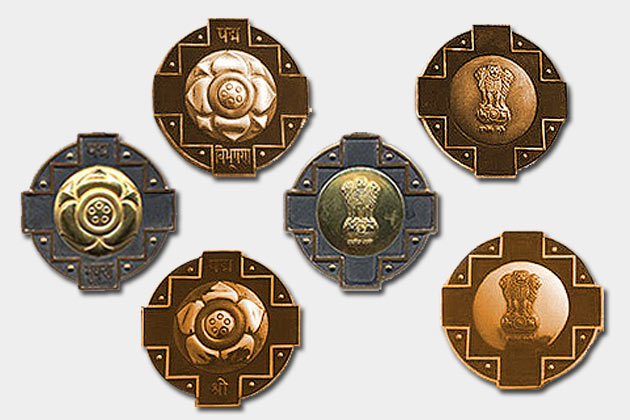
    NEW DELHI (TIP): Former Comptroller and Auditor General of India Vinod Rai, actor Rajinikanth, spiritual guru Sri Sri Ravishankar and tennis player Sania Mirza are on the list of 112 Padma awardees whose names were announced on Monday by the government.

    The awards will be given across three categories: the Padma Vibhushan, Padma Bhushan and Padma Shri. These awards are given on Republic Day, for the over six decades now, to people who the government recognises have excelled in their fields.

    Padma Vibhushan

    1. Shri Rajinikanth    Art-Cinema    Tamil Nadu
    2. Ms. Yamini Krishnamurthi Art- Classical dance Delhi
    3. Smt. Girija Devi    Art-Classical Vocal    West Bengal
    4. Shri Ramoji Rao    Literature & Education-Journalism   Andhra Pradesh
    5. Dr. Viswanathan Shanta    Medicine- Oncology    Tamil Nadu
    6. Shri Shri Ravi Shankar    Others-Spiritualism    Karnataka
    7. Shri Jagmohan    Public Affairs    Delhi
    8. Dr.Vasudev Kalkunte Aatre    Science & Engineering    Karnataka
    9. Shri Avinash Dixit (Foreigner)    Literature & Education
    10. Late Shri Dhiru Bhai Ambani (Posthumous)    Trade & Industry    Maharashtra

    Padma Bhushan

    11. Shri Anupam Kher Art-Cinema Maharashtra
    12. Shri Udit Narayan Jha Art-Playback Singing Maharashtra
    13. Shri Ram V. Sutar Art-Sculpture Uttar Pradesh
    14. Shri Heisnam Kanhailal Art-Theatre Manipur
    15. Shri Vinod Rai Civil Service Kerala
    16. Dr. Yarlagadda Lakshmi Prasad Literature & Education Andhra Pradesh
    17. Prof. N. S. Ramanuja Tatacharya Literature & Education Maharashtra
    18. Dr. Barjinder Singh Hamdard Literature & Education – Journalism Punjab
    19. Prof. D. Nageshwar Reddy Medicine-Gastroenterology Telangana
    20. Swami Tejomayananda Other-Spiritualism Maharashtra
    21. Shri Hafeez Contractor Others-Architecture Maharashtra
    22. Shri Ravindra Chandra Bhargava Public Affairs Uttar Pradesh
    23. Dr.Venkata Rama Rao Alla Science & Engineering Andhra Pradesh
    24. Ms. Saina Nehwal Sports-Badminton Telangana
    25. Ms. Sania Mirza Sports-Tennis Telangana
    26. Ms. Indu Jain Trade & Industry Delhi
    27. Late Swami Dayanand Sarawasati (Posthumous) Others- Spiritualism Uttarakhand
    28. Shri Robert Blackwill (Foreigner) Public Affairs USA
    29. Shri Pallonji Shapoorji Mistry (NRI/PIO) Trade & Industry Ireland

    Padma Shri

    30. Smt. Prathibha Prahlad Art- Classical Dance Delhi
    31. Shri Bhikhudan Gadhvi Art- Folk Music Gujarat
    32. Shri Sribhas Chandra Supakar Art- Textile Designing Uttar Pradesh
    33. Shri Ajay Devgn Art-Cinema Maharashtra
    34. Ms. Priyanka Chopra Art-Cinema Maharashtra
    35. Pt. Tulsidas Borkar Art-Classical Music Goa
    36. Dr. Soma Ghosh Art-Classical Vocal Uttar Pradesh
    37. Shri Nila Madhab Panda Art-Film Direction and Production Delhi
    38. Shri S.S. Rajamouli Art-Film Direction and Production Karnataka
    39. Shri Madhur Bhandarkar Art-Film Direction and Production Maharashtra
    40. Prof. M. Venkatesh Kumar Art-Folk Artist Karnataka
    41. Ms. Gulabi Sapera Art-Folk Dance Rajasthan
    42. Smt. Mamta Chandrakar Art-Folk Music Chhattisgarh
    43. Ms. Malini Awasthi Art-Folk Music Uttar Pradesh
    44. Shri Jai Prakash Lekhiwal Art-Miniature Painting Delhi
    45. Shri K. Laxma Goud Art-Painting Telangana
    46. Shri Bhalchandra Dattatray Mondhe Art-Photography Madhya Pradesh
    47. Shri Naresh Chander Lal Art-Theatre & Cinema Andaman & Nicobar
    48. Shri Dhirendra Nath Bezbaruah Literature & Education Assam
    49. Shri Prahlad Chandra Tasa Literature & Education Assam
    50. Dr.Ravindra Nagar Literature & Education Delhi
    51. Shri Dahyabhai Shastri Literature & Education Gujarat
    52. Dr.Santeshivara Bhyrappa Literature & Education Karnataka
    53. Shri Haldar Nag Literature & Education Odisha
    54. Shri Kameshwaram Brahma Literature & Education – Journalism Assam
    55. Prof. Pushpesh Pant Literature & Education-Journalism Delhi
    56. Shri Jawaharlal Kaul Literature & Education-Journalism Jammu & Kashmir
    57. Shri Ashok Malik Literature &Education Delhi
    58. Dr.Mannam Gopi Chand Medicine-Cardio Thoracic Surgery Telangana
    59. Prof. Ravi Kant Medicine-Surgery Uttar Pradesh
    60. Prof. Ram Harsh Singh Medicine- Ayurveda Uttar Pradesh
    61. Prof. Shiv Narain Kureel Medicine- Paediatric Surgery Uttar Pradesh
    62. Dr.Sabya Sachi Sarkar Medicine -Radiology Uttar Pradesh
    63. Dr. Alla Gopala Krishna Gokhale Medicine-Cardiac Surgery Andhra Pradesh
    64. Prof. T.K. Lahiri Medicine-Cardio Thoracic Surgery Uttar Pradesh
    65. Dr. Praveen Chandra Medicine-Cardiology Delhi
    66. Prof. (Dr) Daljeet Singh Gambhir Medicine-Cardiology Uttar Pradesh
    67. Dr.Chandrasekar Shesadri Thoguluva Medicine- Gastroenterology Tamil Nadu
    68. Dr. (Mrs.) Anil Kumari Malhotra Medicine-Homeopathy Delhi
    69. Prof. M.V. Padma Srivastava Medicine-Neurology Delhi
    70. Dr. Sudhir V. Shah Medicine-Neurology Gujarat
    71. Dr. M. M. Joshi Medicine-Ophthalmology Karnataka
    72. Prof. (Dr) John Ebnezar Medicine-Orthopaedic Surgery Karnataka
    73. Dr. Nayudamma Yarlagadda Medicine-Paediatric Surgery Andhra Pradesh
    74. Shri Simon Oraon Other -Environment Conservation Jharkhand
    75. Shri Imitiaz Qureshi Other-Culinary Delhi
    76. Shri Piyush Pandey Others-Advertising & Communication Maharashtra
    77. Shri Subhash Palekar Others-Farming Maharashtra
    78. Shri Ravinder Kumar Sinha Others-Wildlife Conservation Bihar
    79. Dr. H.R. Nagendra Others-Yoga Karnataka
    80. Shri M. C. Mehta Public Affairs Delhi
    81. Shri M. N. Krishna Mani Public Affairs Delhi
    82. Shri Ujjwal Nikam Public Affairs Maharashtra
    83. Shri Tokheho Sema Public Affairs Nagaland
    84. Dr. Satish Kumar Science & Engineering Delhi
    85. Dr.Mylswamy Annadurai Science & Engineering Karnataka
    86. Prof. Dipankar Chatterji Science & Engineering Karnataka
    87. Prof.(Dr.) Ganapati Dadasaheb Yadav Science & Engineering Maharashtra
    88. Smt. (Prof.) Veena Tandon Science & Engineering Meghalaya
    89. Shri Onkar Nath Srivastava Science and Engineering Uttar Pradesh
    90. Ms. Sunita Krishnan Social Work Andhra Pradesh
    91. Shri Ajoy Kumar Dutta Social Work Assam
    92. Shri M. Pandit Dasa Social Work Karnataka
    93. Shri P. P. Gopinathan Nair Social Work Kerala
    94. Smt. Madeleine Herman de Blic Social Work Puducherry
    95. Shri Srinivasan Damal Kandalai Social work Tamil Nadu
    96. Shri Sudhakar Olwe Social Work Maharashtra
    97. Dr. T.V. Narayana Social Work Telangana
    98. Shri Arunachalam Murugantham Social Work Tamil Nadu
    99. Ms. Deepika Kumari Sports-Archery Jharkhand
    100. Shri Sushil Doshi Sports-commentary Madhya Pradesh
    101. Shri Mahesh Sharma Trade & Industry Delhi
    102. Shri Saurabh Srivastava Trade & Industry Delhi
    103. Sh Dilip Sanghvi Trade & Industry Maharashtra
    104. Dr. Keki Hormusji Gharda Trade & Industry Maharashtra
    105. Late Shri Prakash Chand Surana (Posthumous) Art – Classical Music Rajasthan
    106. Late Shri Saeed Jaffrey (NRI/PIO/Posthumous) Art- Cinema UK
    107. Shri Michael Postel (Foreigner) Art-Archaeology France
    108. Shri Salman Amin Sal Khan (NRI/PIO) Literature & Education USA
    109. Smt. Hui Lan Zhang (Foreigner) Others-Yoga China
    110. Shri Predrag K. Nikic (Foreigner) Others-Yoga Serbia
    111. Dr.Sundar Aditya Menon (NRI/PIO) Social Work UAE
    112. Shri Ajaypal Singh Banga (NRI/PIO) Trade & Industry USA

  • India-China DGMO hotline soon

    India-China DGMO hotline soon

    NEW DELHI (TIP): A hotline between the director general of military operations (DGMO) in Indian and Chinese armies is likely to come up within months.

    “Surveys were carried out to set up the hotlines between the two DGMOs. It should happen in the coming months,” Army chief Gen Dalbir Singh Suhag said in his annual press conference on the eve of the Army Day.

    Establishing an exclusive telephone link between the two top Army officers is considered one of the confidence building measures between the two armies that fought a bitter war in 1962. Last year, two new border personnel meeting (BPM) points at Daulat Beig Oldie in Jammu & Kashmir and Kibithu were made operational. Another BPM point in the Barahoti plains is under the active consideration. “Bilateral relations are improving, which is evident from many high-level exchanges in the last one year,” said Gen Dalbir Singh. However, there is no slow down on raising the mountain strike corps, a specialised force to launch offensive strike in mountainous terrain like the Sino-Indian border areas.

  • Blast in fireworks factory kills 5 in central Chinese town

    Blast in fireworks factory kills 5 in central Chinese town

    BEIJING (TIP): Five people were killed and seven injured January 14 in an explosion at a fireworks factory in central China just weeks ahead of the Chinese New Year, authorities said.

    The Tongxu county government in Henan province said the cause of the blast was not immediately clear and was under investigation.

    China is less than a month away from new year celebrations, when holiday revelers set off fireworks. There are frequent fireworks-related incidents at factories in the weeks leading to the holiday, as China generally has a poor record in workplace safety.

    On Wednesday, an explosion at a machinery factory killed four workers in the eastern city of Shanghai.

    Tongxu county was in the spotlight recently when local authorities ordered the demolition of a gigantic statute of communist revolutionary Mao Zedong, after the structure drew sneers from a large segment of the public.

    (AP)

  • Chinese marines’ desert operations point to long-range ambitions

    Chinese marines’ desert operations point to long-range ambitions

    BEIJING: Days after China passed a new law that for the first time permits its military to venture overseas on counter-terror operations, its marines began exercises in the western deserts of Xinjiang, more than 2,000 kilometres from the nearest ocean. The continuing drills are an indication, analysts say, that the marines, who have traditionally trained for amphibious assault missions, are being honed into an elite force capable of deploying on land far from mainland China.

    China’s limited means to respond to threats abroad were highlighted by two incidents in November: when Islamic State executed a Chinese hostage, and the killing of three executives by Islamist militants who attacked a hotel in Mali.

    China’s new counter-terrorism law, passed in late December, is aimed at protecting its expanding global commercial and diplomatic interests. But China’s military commanders are also trying to create a military in the likeness of the world’s most dominant power projection force, analysts say.

    “They study what the Americans have done very carefully and it’s the mirror image effect,” said Leszek Buszynski, a visiting fellow at the Australian National University’s Strategic and Defence Studies Centre.

    The cold weather training will improve the marines’ ability to conduct “long-distance mobilization in unfamiliar regions”, the deputy chief of staff of the Navy’s South Sea fleet Li Xiaoyan said in a ministry of defence statement earlier this month.

    During the drills, the marines will travel 5,900 kilometres via air, truck and rail beginning in the southern province of Guangdong, the longest range manoeuvres ever conducted by the force, state media said.

    EXPEDITIONARY FORCE

    The exercises are the latest in recent years that show the efforts China is making to boost its expeditionary force capabilities.

    In 2014, the marines conducted their first training in the grasslands of the northern landlocked Inner Mongolia region. At the time, the exercise was seen as unusual for the south China-based force more proficient in beach landings.

    Since those drills, the roughly 15,000-strong marine corps, which operates under the People’s Liberation Army (PLA) Navy’s South Sea fleet, appears to be settling into a new niche.

    “They never really had a major strategic role, as force projection wasn’t something the PLA was willing, or able, to think about even ten years ago,” said Gary Li, an independent security analyst in Beijing.

    With amphibious divisions in the PLA Army also capable of extending China’s reach into the South China Sea and Taiwan, Li said the marines are a good fit for a budding Chinese expeditionary force.

    “The main advantage of playing around with the marines is that they have a higher concentration of specialists, act well as light infantry, have good esprit de corps, and are nimble enough to be deployed over long distances if needed,” he said.

    Chinese marines 1RISING GLOBAL PROFILE

    Along with President Xi Jinping’s vows to build a more modern military, the global profile of China’s armed forces is on the rise.

    Already, the South Sea fleet, which is based on the mainland coast near the island of Hainan, has been used on operations far from the South China Sea.

    The fleet’s vessels have ventured to the Middle East and Mediterranean after deployments on international anti-piracy patrols around the Horn of Africa.

    Chinese officials announced in November they were in talks with Djibouti to build permanent “support facilities” to further boost Chinese naval operations, in what would be China’s first such off-shore military base.

    The African port, sitting on the edge of the Red and Arabian seas, is home to several foreign military bases, including US, French and Japanese naval facilities.

    (Reuters)

  • Taiwan rock star Freddy Lim running for MP

    Taiwan rock star Freddy Lim running for MP

    Taiwan’s voters go to the polls on Saturday to choose a new president and parliament.

    This year an unusual candidate is running for MP. Freddy Lim is the lead singer of the Taiwanese heavy-metal band Chthonic.

    Tattooed, pony tailed and the front man for Asia’s biggest death metal band, it’s clear Freddy Lim is not your average politician.

    The 39-year-old is running for one of 113 seats up for grabs in Taiwan’s parliamentary elections Saturday the same day the island picks a new president.

    As he does with his music, he hopes to give voice to the island’s young people, many of whom fear a future under the influence of China.

    For his campaign photos, he’s suited up and pinned his long hair back so it’s barely visible but Lim, and his newly formed party, has unsettled many in Taiwan’s political establishment, who desperately need the younger voters he appeals to.

    His opponents don’t seem to know how to handle his counter-cultural appeal.

    Lin Yu-Fang, the ruling party incumbent in the Taipei district Lim is contesting, on Friday called on voters not to elect a candidate “who has hair that is longer than a woman’s,” according to the Taipei Times newspaper.

    The Indian Panorama spoke to Anny Yu who is an American citizen from Taiwan, she welcomes the change in political discourse and believes a long awaited good change will come with his (& New Power party – NPP) win.

    China has claimed sovereignty over Taiwan since the end of the Chinese civil war in 1949 when, as the Communists swept to power, the defeated Nationalist government moved to the island.

    China insists that other nations cannot have official relations with both countries at once, which has led to the diplomatic isolation of Taiwan. However, Taiwan has firm links with the US, from which it buys a great deal of its arms.

    Despite China’s efforts to blackball the country, Taiwan has become one of Asia’s big success stories as one of the world’s top producers of computer technology.

  • RBS Warns Investors of ‘Cataclysm’: ‘Sell Everything’

    RBS Warns Investors of ‘Cataclysm’: ‘Sell Everything’

    NEW YORK (TIP): The Royal Bank of Scotland reportedly has advised clients to brace for a “cataclysmic year” and a global deflationary crisis, warning that major stock markets could fall by a fifth and oil may plummet to $16 a barrel.

    The bank’s credit team said markets are flashing stress alerts akin to the turbulent months before the Lehman crisis in 2008, the UK Telegraph explains.

    “Sell everything except high quality bonds. This is about return of capital, not return on capital. In a crowded hall, exit doors are small,” the bank, also known as RBS, said in a client note.

    “Andrew Roberts, the bank’s research chief for European economics and rates, said that global trade and loans are contracting, a nasty cocktail for corporate balance sheets and equity earnings. This is particularly ominous given that global debt ratios have reached record highs,” Ambrose Evans-Pritchard reported.

    Roberts said the bank’s red flags for 2016 — falling oil, volatility in China, shrinking world trade, rising debt, weak corporate loans and deflation — had all been seen in just the first week of trading. “We think investors should be afraid,” Roberts said.

    RBS also said if oil falls below $30, then $16 is on the horizon, CNN Money added.

    RBS compares the market mood with that of 2008 before the collapse of Lehman Brothers and the start of the global financial crisis.

    At least then, emerging markets were there to save the world from complete collapse.

    China can’t save the world this time around, let alone any other big emerging market. RBS remains “deeply skeptical” that Chinese authorities can right the ship any time soon. It warns that without allowing a massive devaluation of its currency — around 20% — China can be of no help.

    RBS believes China suffered a massive outflow of capital in December — perhaps as much as $170 billion — with much of that money going straight into the dollar.

    This latest warning follows on from an incredibly bearish outlook for 2016 that Roberts’ team issued late last year, Business Insider reminds us. At that time, Roberts said there are “a number of bad headwinds affecting the world right now, which will worsen in 2016” and that this means RBS is wary of “mostly everything except high-quality 5-10 year government bonds.”