Tag: China

  • China halts stock trading as market lurches down again

    China halts stock trading as market lurches down again

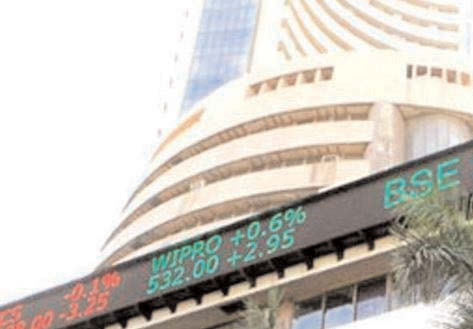
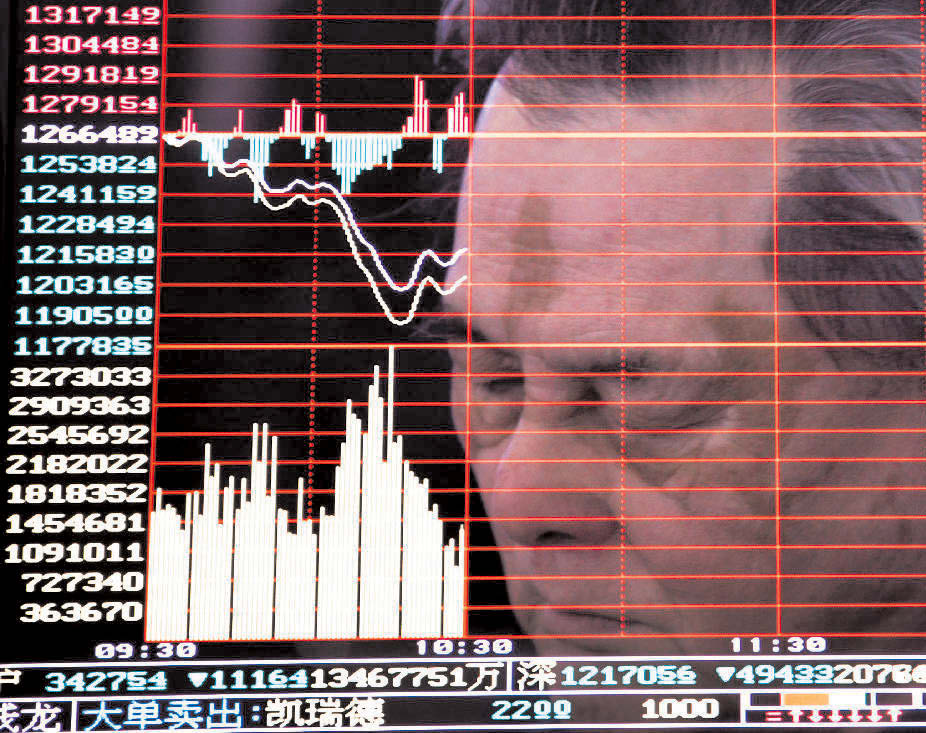
    BEIJING: China’s stock market lurched lower again on Monday, triggering “circuit breakers” that halted trading. The slump was the latest episode in months of turmoil for Chinese investors.

    China’s market benchmark soared 150 per cent between November 2014 and early June
    2015, as cheerleading in the state press encouraged inexperienced investors into the market. The Shanghai Composite Index hit its peak June 12 and then fell 30 per cent. A panicked government slashed interest rates and bought shares to halt the slide. Beijing gradually withdrew emergency measures starting in September as prices tentatively stabilized.

    The biggest one-day declines since June and government responses:

    • — June 26: The benchmark Shanghai Composite Index falls 7.4 per cent as part of a slide triggered by investor concern a change in bank regulations is aimed at limiting credit to finance trading.
    • — June 27: Beijing cuts interest rates for a fourth time since November to reassure investors of official support for the market.
    • — June 29: The government announces its main pension fund for civil servants will be allowed for the first time to invest in stocks.
    • — July 1: Mainland China’s two stock exchanges in Shanghai and Shenzhen cut trading fees by 30 per cent.
    • — July 3-5: Regulators cancel initial public stock offerings in response to fears of too little demand. Authorities pour more money into a state-owned fund that finances stock trading. Brokerages create a 120 billion yuan ($19 billion) fund to buy shares.
    • — July 8: Regulators announce insurance companies will be allowed to invest more in stocks. Brokerages expand their stock-buying fund. An arm of China’s sovereign wealth fund says it will buy shares.
    • — July 27: After more than 1,000 companies suspend trading in their shares, the Shanghai Composite Index falls 8.5 per cent despite a government ban on sales by major shareholders.
    • — August 19: The Shanghai index declines 5 per cent but rebounds in the last minutes of trading to close up 1.2 per cent in what analysts say might have been the last major government intervention.
    • August 24: The Shanghai benchmark falls 8.5 per cent in its biggest one-day loss in eight years. It ends down 38 per cent from its June 12 peak.
    • August 25: The Shanghai index loses 7.6 per cent to hit an eight-month low. Beijing cuts interest rates for a fifth time in nine months.
    • January 4: The index loses 6.9 per cent in its first trading day of 2016. Trading is halted for the day after a broad market index, the CSI 300, falls 7 per cent by early afternoon, triggering a newly enacted “circuit breaker” on its first day of operation.
  • Sensex down over 300 pts as China halts trading

    Sensex down over 300 pts as China halts trading

    MUMBAI (TIP): For the fourth day on the trot, turbulences in the Chinese market sent global investors, including those on Dalal Street, scurry for cover. On Thursday morning as the CSI 300 index in Shanghai tanked 7% and the authorities there halted trading for the day, in early trade the Sensex lost over 400 points and was close to breaking below the psychologically important 25,000 mark. This was the second 7% fall in the benchmark index for the Chinese stock market this week, which was on the back of signs of further economic weakness in the world’s second largest economy.

    In India, the Sensex has lost over 1,000 points since its New Year day closing at 26,161.

    On Thursday, the slide in the domestic market was led by ONGC, Tata Motors, Maruti and Tata Steel, each falling over 2.5%. Of the 30 Sensex stocks, only five were trading above the red line. Dealers, however, assured that the onus of the current market weakness can’t be passed on to ant domestic factors and is attributed only to factors external to India.

    At 11am, Sensex was down 332 points (1.3%) at 25,075 while Nifty on NSE was down 107 points (1.4%) at 7,634. Around Asia, Nikkei in Japan was down 2.2% while Hang Seng in Hong Kong was down 2.4%. The recent crashes in global markets are also because of Chinese government decision to let Yuan, its currency that the government manages vigorously, weaken, indicating dim chances of a quick recovery of the economy that grew in double digits for most of the last 25 years.

  • Saudi Arabia omitted from UK’s death penalty strategy ‘to safeguard defence contracts’

    Saudi Arabia omitted from UK’s death penalty strategy ‘to safeguard defence contracts’

    LONDON (TIP): The British Government left Saudi Arabia off a list of thirty countries to be challenged by diplomats over their continued use of the death penalty – despite executing over 90 people a year.

    The Kingdom is the only major death penalty state to be omitted from a 20-page Foreign Office document setting out the UK’s five-year strategy to reduce the use of executions around the world.

    Among the countries given a greater priority were Barbados Singapore and Jordan that between them passed less than ten death sentences in 2014.

    Human rights groups and opposition politicians have expressed concern that ministers left the notoriously sensitive Saudi regime off the list to safeguard billions of pounds of defence contracts and security co-operation.

    The Liberal Democrat leader Tim Farron said the time had come to “shine a light” into the “shady corners” of the UK relationship with the Saudi regime.

    The Foreign Office minister Tobias Ellwood would only express the UK’s “disappointment” at the 47 executions carried out by Saudi Arabia at the end of last week.

    The UK strategy, which was written in 2011, sets out what it describes as a list of “priority countries” where British diplomats would be “encouraged” to “proactively drive forward” and “make progress” towards the UK’s ultimate goal of abolishing the death penalty over five years.

    It lists China, Iran, Belarus, the US and the Caribbean as the countries where most effort should be focused but goes on to list another 25 countries that have “been identified where posts should also be working towards” reducing the use of the death penalty.

    But Saudi Arabia does not appear on either list despite having one of the worst human rights records in the Middle East.

    Maya Foa, Director of the death penalty team at international human rights organisation Reprieve said it was a “shocking” omission.

    “Saudi Arabia has consistently ranked in the world’s top five executioners, and a large proportion of beheadings carried out in the country have been for non-violent offences, including protest,” she said.

    “It is shocking that the Kingdom was absent from the countries targeted by the UK’s death penalty strategy over the past five years, when every other major executioner in the world – China, Iran, Iraq, the US and Pakistan – was included.”

    Amnesty International’s Head of Policy Allan Hogarth said it was “astonishing” omission.

    “We’ve become increasingly alarmed that the UK government has been bending over backwards to avoid criticising Saudi Arabia’s appalling human rights record,” he said.

    “Ministers are always harping on about how their ‘engaged’ relationship with Riyadh means they can talk ‘frankly’ on issues like human rights, but what do these conversations actually consist of and what have they ever achieved? Apparently very little.

    “It’s time the government reviewed its approach to human rights in the Kingdom and adopted a far more robust stance.” Tim Farron, leader of the Liberal Democrats added: “Saudi Arabia is a barbaric regime and the UK government must do more to stand up to them. The Government must not just write reports and accidentally miss them out due to worrying about diplomatic nicety, it should hold them to account.

    “The Liberal Democrats have called for a debate into the UK – Saudi Arabia relations to try and shine a light into the shady corners of this relationship.”

    But former foreign secretary Sir Malcolm Rifkind said that there were “a number of advantages” to Britain’s relationship with Riyadh, including the provision of Saudi intelligence which had helped prevent terrorist plots.

    “There are a number of circumstances where Saudi Arabia and the West have co-operated effectively on counter-terrorism,” he said.

    “That has to be by far the single most important priority at this moment in time.” (The Independent)

  • India-US N-deal to blame for test: Expert

    India-US N-deal to blame for test: Expert

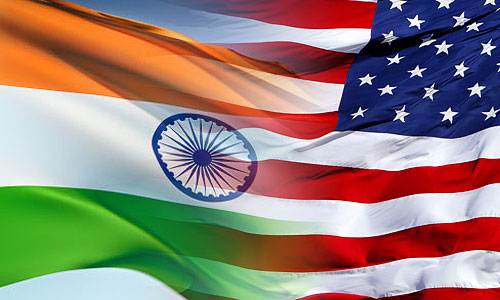
    BEIJNG (TIP): Chinese expert has blamed the India-US nuclear deal for weakening the non-proliferation treaty and making it difficult to enforce non-proliferation regime on North Korea. “China is very keen to ensure non-proliferation in North Korea. But the US has made this difficult by signing a nuclear deal with India after it tested the bomb,” Peking University associate professor Wang Dong told state broadcaster CCTV while referring to North Korea’s testing of hydrogen bomb.

    China is the biggest supplier of goods to North Korea, but is reluctant to impose sanctions on the country despite several western countries being interested in such a move.

    “Chinese authorities feel the US might get an upper hand in the region if economic sanctions are imposed, and it leads to the fall of North Korea’s ruling family,” said CCTV journalist Yang Rui.

    • Saibal Dasgupta (TNN)
  • EXODUS: EUROPE, ASIA, AND BEYOND

    EXODUS: EUROPE, ASIA, AND BEYOND

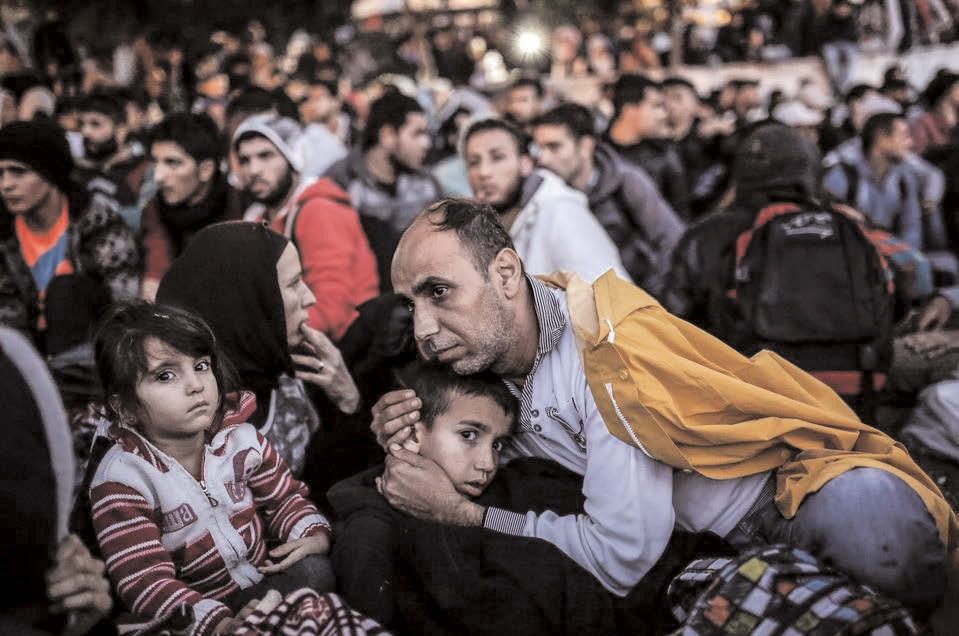
    As the battles raged in Syria and Iraq, millions of innocent civilians have sought refuge elsewhere to escape the dire straits in their home countries. Their prime destination: Europe. They came via planes, trains, ships, boats, cars, and for many, on foot: hundreds of thousands of displaced people fleeing a war no one asked for, leaving behind everything – their careers, property, families, their lives.

    Most of the world, at first, did not seem to notice the crisis. Not until the photo of a boy in a red shirt, lying lifeless, face down on the sands of a Turkish beach, came up in newspapers, websites, and social media.

    Three-year-old Syrian refugee Aylan Kurdi’s death shocked the world into consciousness, and spurred western governments to act on the worsening humanitarian crisis.

    By the end of 2015, more than one million migrants and refugees reached the continent, nearly 970,000 of which made the journey crossing the waters of the Mediterranean. It wasn’t only Syrians and Iraqis fleeing the mess in their home countries; there were also thousands escaping poverty and persecution, mainly from other Mideast and African states.

    Europe and other western countries scrambled to address the exodus, as the crisis became another test for the EU. Following a slew of emergency summits this year, EU leaders have acknowledged they were too slow to carry out a joint strategy to tackle Europe’s worst refugee crisis since World War II. Other countries have also stepped up, like Canada, which has already welcomed its first batch of Syrian refugees.

    Asia, in particular Southeast Asia, also had its own refugee crisis. Impoverished, persecuted, and with nowhere to go, Rohingya took to rickety boats in their bid to escape the quagmire they were in. The crisis came to a head around May, when thousands of these refugees, mainly from Myanmar’s Rakhine state, were left abandoned at sea, setting off a regional crisis. Horror stories of kidnap, coercion, and hunger emerged from the hundreds who staggered ashore or were eventually rescued by Thai, Indonesian, and Malaysian authorities after weeks at sea.

    Refugee exodus is seen as logical outcome of Syrian president's survival strategy.
    Refugee exodus is seen as logical outcome of Syrian president’s survival strategy.

    The crisis has ebbed somehow in the past few months, thanks to some action of regional governments involved, as well as due to the monsoon season. But with the monsoon ending, the crisis might again surge forward into the headlines – and a solution still seems far away.

    Tensions defused? The Iran nuclear deal

    The odds were stacked against it, but on July 14, weary foreign ministers from the US, Britain, France, China, Russia, Germany, the EU, and Iran announced to the world that a deal to curb Iran’s nuclear ambitions had been forged. It was a diplomatic victory for the parties involved, especially for Iran, which has been trying to shake off its long-time image as a pariah state.

    The ministers of foreign affairs of France, Germany, the European Union, Iran, the United Kingdom and the United States as well as Chinese and Russian diplomats announcing the framework for a Comprehensive agreement on the Iranian nuclear programme (Lausanne, 2 April 2015).
    The ministers of foreign affairs of France, Germany, the European Union, Iran, the United Kingdom and the United States as well as Chinese and Russian diplomats announcing the framework for a Comprehensive agreement on the Iranian nuclear programme (Lausanne, 2 April 2015).

    Under the deal, Iran pledged to slash the number of centrifuges – which enrich uranium – from around 19,000 to 6,104, of which 5,060 will still enrich. It also has to change the design of a new nuclear reactor being built and shrink its stock of low-enriched uranium, shipping it to Russia. In return, outside powers will end some of the international sanctions that have severely squeezed the Iranian economy.

    The road to the deal, however, wasn’t an easy one. For years, Iran has maintained that its nuclear program was for peaceful, civilian purposes, but a weary West always eyed it with suspicion. In the past few years, the two sides have see-sawed between coming close to a deal and coming close to conflict. The relative success of the deal was a result of months of non-stop negotiations, as well as the presence of a more moderate government in Tehran, led by President Hassan Rouhani.

    The question now: Will both sides honor the deal?

    Greek tragedyA country teetering on the brink of bankruptcy due to years of financial mismanagement. A hardline, leftist government. An economic bloc avoiding a region-wide collapse. These were the elements of a Greek tragedy that unfolded throughout the better part of 2015, as Greece and the European Union negotiated to save the Balkan nation from crashing out of the eurozone.

    Greek Meltdown Fed up with the hated “troika” – the European Commission, European Central Bank, and the International Monetary Fund -Greeks in January voted into power their first leftist government, led by Alexis Tsipras’ SYRIZA party. Tsipras came into power with the promise to lead the country out of the debt crisis. However, after months of intense, pressure-filled negotiations and despite voters saying “no” to a new deal, Greece caved in to its creditors’ demands and signed its latest bailout deal. The deal, worth 86 billion euros ($93 billion) to be spread out over a 3-year period, ultimately saved the country from crashing out of the eurozone, but it came with strict conditions.

    The fallout: Tsipras resigned August 20 after accepting the deal, reneging on a promise to stand its ground against the country’s creditors. A snap poll in September, however, saw Tsipras and his SYRIZA party hold on to power. Adding to Greece’s economic woes is the refugee crisis, with the country acting as migrants’ main gateway to the EU, straining the already burdened nation.

    Russia and China: Show of force

    From ISIS to Iran, Russia – long overshadowed by richer and more influential countries in the West – continued to assert itself as it seeks to revive its power and influence. From Ukraine to Syria, it has made its presence felt, mostly through its military. It has been steadily fortifying its army, building and expanding bases in the Arctic, growing its defense budget, and taunting its neighbors with its planes, submarines, and ships with clandestine – and in one case, deadly – side trips outside its territory.

    China: Show of force.
    China: Show of force.

    Russia has also been making inroads on the political front, participating in some of the year’s major diplomatic issues, such as the Iran nuclear deal. But the centerpiece in the past 12 months has been Syria, as President Vladimir Putin’s government seeks to keep and gain more influence in the Middle East.

    Meanwhile, China has also made aggressive moves economically, diplomatically, and militarily. As other world powers became stuck in other issues, bogged down by economic and political matters, the Middle Kingdom continued to expand its reach, primarily through billions of dollars in economic aid and infrastructure projects.

    Despite winning a lot of new friends, China has one major thorn on its side: its long-simmering maritime and territorial disputes with its Asian neighbors. The East and South China Seas have become sensitive spots in the region – particularly the Spratlys, where Beijing has been building artificial islands in its attempt to bolster its claims in the area. The waters are now being tested by militaries from other countries, including the US and Australia, with an increasing number of confrontations near the disputed “islands.” China also lost in round one of an arbitration case lodged by the Philippines at the global maritime tribunal.

  • Year in Review 2015’s biggest moments for online India

    Year in Review
    2015’s biggest moments for online India

    See Year in Review: 2015 for the complete lowdown on 2015’s biggest moments for online India.

    Top 10 Most-Searched Male Celebrities
    1.  Salman Khan
    2.  Yo Yo Honey Singh
    3.  Shahid Kapoor
    4.  Aamir Khan
    5.  Shahrukh Khan
    6.  Amitabh Bachchan
    7.  Akshay Kumar
    8.  Ranbir Kapoor
    9.  Prabhas
    10. Hrithik Roshan

    Top 10 Most-Searched Female Celebrities
    1.  Sunny Leone
    2.  Katrina Kaif
    3.  Deepika Padukone
    4.  Priyanka Chopra
    5.  Aishwarya Rai
    6.  Anushka Sharma
    7.  Kim Kardashian
    8.  Sonakshi Sinha
    9.  Radhika Apte
    10. Sonam Kapoor

    Top 10 Most-Searched Sportspersons
    1.  MS Dhoni
    2.  Virat Kohli
    3.  Suresh Raina
    4.  Sachin Tendulkar
    5.  Chris Gayle
    6.  Yuvraj Singh
    7.  Sania Mirza
    8.  Ab De Villiers
    9.  Sourav Ganguly
    10. Saina Nehwal

    Top 10 Most-Searched Politicians 
    1.  Narendra Modi
    2.  Arvind Kejriwal
    3.  Smriti Irani
    4.  Shashi Tharoor
    5.  Hema Malini
    6.  RR Patil
    7.  Yogendra Yadav
    8.  Jayalalitha
    9.  Kiran Bedi
    10. Radhe Maa

    Top 10 Most-Searched News Events
    1.  ISIS
    2.  APJ Abdul Kalam
    3.  ICC Cricket World Cup 2015
    4.  Indian Premier League 2015
    5.  Indian Super League 2015
    6.  Latest Gold Prices
    7.  MH370
    8.  Sheena Bora investigation
    9.  Yakub Memon
    10. Vyapam

    Top 10 Most-Searched Movies and TV Shows
    1.  Baahubali
    2.  India’s Daughter
    3.  Bigg Boss 9
    4.  Bajrangi Bhaijaan
    5.  ABCD 2
    6.  Ragini MMS 2
    7.  Prem Ratan Dhan Payo
    8.  Fast and Furious 7
    9.  Badlapur
    10. Fifty Shades Of Grey

    Top 10 Most-Searched Gadgets
    1.  iPhone 6
    2.  Apple
    3.  Nokia
    4.  Windows 10
    5.  Sony Xperia
    6.  Lenovo A6000
    7.  iPhone 5
    8.  Intex Mobile
    9.  iPhone 6S
    10. Macbook

    Most epic Selfies of 2015
    1.  Narendra Modi and Li Keqiang during the PM’s China visit
    2.  Ranveer’s antics and Deepika’s charms
    3.  Shahid Kapoor with new wife Mira Rajput
    4.  Sachin Tendulkar’s team selfie with Mumbai Indian
    5.  Arjun Kapoor’s star studded selfie
    6.  King Khan with ex-One Direction member Zayn Malik
    7.  Katrina’s debut in the realm of Selfies
    8.  Amitabh Bachchan and younger Bachchan pouting

    Top 10 Bike launches 2015
    1.  Bajaj Pulsar RS 200
    2.  Honda Livo
    3.  Bajaj Pulsar AS 200
    4.  Bajaj Avenger Street/Cruise 220
    5.  Mahindra Mojo
    6.  Yamaha YZF-R3
    7.  Bajaj CT100
    8.  Suzuki Gixxer SF
    9.  Ducati Scrambler
    10. Yamaha Saluto

    Best Instagram accounts of the year
    1.  Jacqueline Fernandez
    2.  Tanya Ghavri
    3.  Alia Bhatt
    4.  Yasmin Karachiwala
    5.  Karan Johar
    6.  Sonam Kapoor
    7.  Namrata Soni
    8.  Priyanka Chopra
    9.  Daniel Bauer
    10. Sonakshi Sinha

    Top 10 moments from Bollywood
    1.  Salman Khan’s conviction
    2.  Gajendra Chauhan’s appointment as FTII Chairman
    3.  Shahid Kapoor’s marriage
    4.  Aadesh Shrivastava
    5.  Labh Janjua
    6.  20 years of DDLJ
    7.  Salman Khan and Shahrukh Khan
    8.  Priyanka Chopra in Quantico
    9.  Award wapsi
    10. Aishwarya Rai Bachchan in Jazbaa

    Top 10 Fashion trends of 2015
    1.  Cape Jackets
    2.  Pantsuits
    3.  Boho Chic
    4.  The Bob
    5.  Sneakers
    6.  Bardot
    7.  Gladiators
    8.  Slitted dresses
    9.  Separates
    10. Playsuits

  • US expects Pakistan will take action against Pathankot attackers

    US expects Pakistan will take action against Pathankot attackers

    The US expects Pakistan will take actions against the perpetrators of the terror attack on IAF base in Pathankot, a top American official said, hours after Islamabad said it is working on the “leads” provided by India.

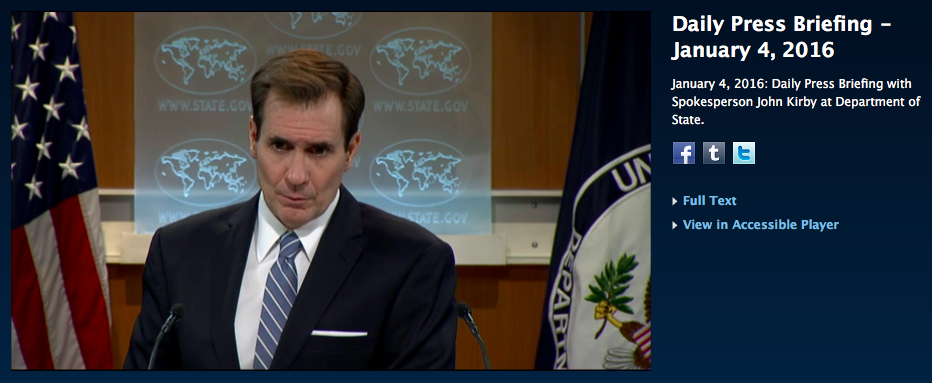
    “The government of Pakistan has spoken very powerfully to this and it’s certainly our expectation that they’ll treat this exactly the way they’ve said they would,” state department Spokesman John Kirby said on Monday.

    Pakistan has said it is working on the “leads” provided by India on this attack.

    Describing terrorism as a “shared challenge” in South Asia, the US also asked all countries in the region to work together to disrupt and dismantle terrorist networks and bring justice to the perpetrators of the Pathankot terrorist attack.

    “We urge all the countries in the region to work together to disrupt and dismantle terrorist networks and to bring justice to the perpetrators of this particular attack. I would note that the government of Pakistan, also publicly and privately condemned this recent attack on the Indian air base.

    “We have been clear with the highest levels of the government of Pakistan that it must continue to target all militant groups,” Kirby said.

    The government of Pakistan has said publicly and privately that it’s not going to discriminate among terrorist groups as part of its counter-terrorism operation, he said.

    “So this is a shared challenge that we all face in the region and we in the United States want everybody to treat it as a shared challenge,” Kirby said, adding that the US has strongly condemned the terrorist attack on the Indian Air Force (IAF) base in Punjab’s Pathankot.

    “We extend our condolences to all the victims and their families,” he said.

    He said the US has for a long time talked about the continued safe haven issues there in between Afghanistan and Pakistan and certainly between India and Pakistan.

    “We’re mindful that there remain some safe havens that we obviously want to see cleared out. And we continue to engage with the government of Pakistan to that end. And again, I would point you back to what the government of Pakistan itself has said and acknowledged that it’s not going to discriminate among terrorist groups and it will continue to take the fight,” Kirby said.

    The Pakistani government, the Pakistani people very much understand the threat here, Kirby said.

    “What we want and what we continue to say we want and will continue to work for is increased cooperation, communication, coordination, increased information-sharing and increased efforts against what we all believe is a shared challenge in the region.

    “We want to see the government of Pakistan continue to press the fight against terrorists, all terrorists, and to meet their own expectations that they’re not going to discriminate among groups. They’ve said themselves and our expectation is that they’ll live up to that pledge,” he said.

    “We recognise there’s more everybody can do, not just Pakistan but every nation can do because it is a shared challenge and it’s a challenge, as you well know, that doesn’t necessarily observe borders and boundaries. So it’s something that everybody can attack more,” Kirby said.

    Kirby said the US is encouraged by the government of Pakistan condemning this attack, and the statement that they’ve made about not discriminating among groups.

    “As we’ve said before, this is an issue that, as are so many issues between India and Pakistan and we want to see them work out bilaterally,” Kirby said, adding that normalisation of relations between India and Pakistan remains vital to the security and economic prosperity of the entire region.

    “We strongly encourage the governments of both India and Pakistan to remain steadfast in their commitment to a more secure and prosperous future for both our countries and for their region,” Kirby added.

    Pakistan on Monday said it is working on the “leads” provided by India on the terror attack on the IAF base in Pathankot, according to the Foreign Office.

    Extending Pakistan’s deepest condolences to the government and people of India on the “unfortunate terrorist incident” in Pathankot, a statement by the spokesperson of the ministry of foreign affairs said, “In line with Pakistan’s commitment to effectively counter and eradicate terrorism, the Government is in touch with the Indian government and is working on the leads provided by it.”

    The statement, however, did not give details of the “leads” provided by India.

    BELOW IS THE TRANSCRIPT OF THE PRESS BRIEFING

    QUESTION: Two questions. Yes, sir. One, it was then prime minister Atal Bihari Vajpayee who went to Pakistan with a message of peace, and it was also Prime Minister Nawaz Sharif then. And he took the bus from India to Pakistan. It was a big step at that time. And when he came back in the bus, India was faced with the Kargil War.

    MR KIRBY: Faced with a what?

    QUESTION: Kargil War. War.

    QUESTION: Kargil War.

    MR KIRBY: Kargil War.

    QUESTION: That means Pakistan’s General Musharraf attacked India. That was a gift for the Atal Bihari prime minister for the peace message. Now, on Christmas Day, Prime Minister Narendra Modi took another peace step and went to Pakistan, meet and greet Prime Minister Nawaz Sharif. When he came back – and again, the message was same from the people of India to the people of Pakistan: message of peace. When he came back, India was faced with the terrorism, terrorists on the border in airbase. So what would – and upcoming meeting January 16 is also now at stake whether India should continue or not. So what do we make this, before my second question?

    MR KIRBY: Well, there is an awful lot there. I mean, you saw my statement over the weekend. We strongly condemn the terrorist attack on the airbase in the Indian state of Punjab; and as before, we extend our condolences to all the victims and their families. We remain committed to a strong partnership with the Indian Government to combat terrorism. You and I have talked about that many, many times. We urge all the countries in the region to work together to disrupt and dismantle terrorist networks and to bring justice to the perpetrators of this particular attack.

    I would note that the Government of Pakistan also publicly and privately condemned this recent attack on the Indian airbase. And we’ve been clear with the highest levels of the Government of Pakistan that it must continue to target all militant groups, and the Government of Pakistan has said publicly and privately that it’s not going to discriminate among terrorist groups as part of its counterterrorism operations.

    So I think as I’ve said before, this is a shared challenge that we all face in the region. And we in the United States want everybody to treat it as a shared challenge. And the Government of Pakistan has spoken to this, has spoken very powerfully to this, and it’s certainly our expectation that they’ll do exactly what – they’ll treat this exactly the way they’ve said they will.

    QUESTION: Second, the people of Pakistan and the people of India both wants these terrorists – that training centers in Pakistan should be closed down, but the Pakistan Government is not taking any steps. And finally, what – the Indian media has been showing all these terrorism activities line by line and live from Pakistan and into India, this latest attack. And at the same time, Pakistani media has been told by the ISI and the military they will be punished if they show, but they must condemn that India media is just overstating all these attacks. What I’m saying: What is the future? Why U.S. is not taking action or asking Pakistan to stop and close down all these training centers, which they are threatening U.S. and India?

    MR KIRBY: Well, we have for a long time talked about the continued safe haven issues there in between Afghanistan and Pakistan and certainly between India and Pakistan. We’re mindful that there are – remain some safe havens that we obviously want to see cleared out. And we continue to engage with the Government of Pakistan to that end. And again, I would point you back to what the Government of Pakistan itself has said and acknowledged, that it’s not going to discriminate among terrorist groups and it will continue to take the fight.

    And Pakistan too has suffered from terrorism. Thousands and thousands of Pakistani soldiers have been killed. Thousands of Pakistani citizens – innocent Pakistani citizens – have been killed or injured by terrorist attacks. The Pakistani Government, the Pakistani people very much understand the threat here. And what we want and what we continue to say we want and will continue to work for is increased cooperation, communication, coordination; increased information sharing and increased efforts against what we all believe is a shared challenge in the region.

    QUESTION: Thank you, sir.

    MR KIRBY: Yeah.

    QUESTION: Can I follow it up?

    MR KIRBY: Yeah.

    QUESTION: Can I follow it up?

    QUESTION: South China Sea.

    QUESTION: Follow-up.

    MR KIRBY: I’ll go to you, then I’ll come to you. Go ahead.

    QUESTION: Do you think Pakistan is taking enough steps against terrorist networks which are targeting India, like Lashkar-e-Tayyiba, Jaish-e-Mohammad?

    MR KIRBY: Well, what I would tell you is we all recognize this is a fluid threat. It’s one that you could probably never do enough to get at. So we want to see the Government of Pakistan continue to press the fight against terrorists, all terrorists, and to – as I said, to meet their own expectations that they’re not going to discriminate among groups. They’ve said that themselves, and our expectation is that they’ll live up to that pledge. But we recognize there’s more everybody can do – not just Pakistan, but every nation in the region can do – because it is a shared challenge. And it’s a challenge, as you well know, that doesn’t necessarily observe borders and boundaries. So it’s something that everybody can attack more.

    QUESTION: You said more every nations to do. What should India do?

    MR KIRBY: I’m not going to —

    QUESTION: What —

    MR KIRBY: Look, I —

    QUESTION: In this fight against terrorism, what do you want – expect India to do?

    MR KIRBY: I’m not prepared with an agenda list for every nation in the region and what they can do. I think you should speak to Indian authorities about the challenges that they’re facing and their plans to address it. Our role has been and will continue to be one of encouraging regional cooperation and communication to get at what is actually a regional – trans-regional, frankly – threat.

    QUESTION: And finally, the kind of statements that have come from India and Pakistan after this Pathankot attack – does this give you comfort, some kind of comfort, that there is not much – enough tension between the two countries after this attack?

    MR KIRBY: Well, I mean, certainly we – we’re encouraged by the Government of Pakistan condemning this attack, and again, the statements that they’ve made about not discriminating among groups. But this is – as we’ve said before, this is an issue that – as are so many issues between India, Pakistan – India and Pakistan – we want to see them work out bilaterally.

    Okay? Yes.

    QUESTION: Can I have a follow-up on that —

    MR KIRBY: Okay.

    QUESTION: Yeah. Over the weekend, have you been in touch with either India or Pakistan to ensure that talks are on tracks and it – they’re not derailed?

    MR KIRBY: Talks are —

    QUESTION: Talks between India and Pakistan which have been started afresh last week.

    MR KIRBY: I don’t have any discussions to read out to you, but I can tell you the normalization of relations between India and Pakistan remains vital to the security and economic prosperity of the entire region. We strongly encourage the governments of both India and Pakistan to remain steadfast in their commitment to a more secure and prosperous future for both their countries and for the region. So I don’t have any specific discussions to read out to you.

    You’ve been patient. Go ahead.

  • Nigerian charged in sophisticated email scam is in custody in Dallas

    Nigerian charged in sophisticated email scam is in custody in Dallas

    DALLAS (TIP): A Nigerian man living in the U.S. on a student visa faces federal wire fraud charges in connection with a sophisticated email phishing scam targeting businesses.

    Amechi Colvis Amuegbunam, 28, of Lagos, Nigeria, was arrested in Baltimore in August and charged with scamming 17 North Texas companies out of more than $600,000 using the technique. He remains in federal custody in Dallas. If convicted, he faces up to 30 years in prison and a fine of up to $1 million.

    He is accused of sending emails that looked like forwarded messages from top company executives to employees who had the authority to wire money. Amuegbunam tricked the employees into wiring him money by transposing a couple of letters in the actual company email, authorities said.

    The FBI issued an alert earlier this year about the new cyberattack it called the “Business Email Compromise.” The FBI said it is a “growing fraud that is more sophisticated than any similar scam the FBI has seen before.”

    Federal officials say more than 7,000 U.S. businesses have been scammed out of a total of about $740 million.

    “It’s a prime example of organized crime groups engaging in large-scale, computer-enabled fraud, and the losses are staggering,” said Maxwell Marker, an FBI agent who oversees an organized crime section, in a recent bulletin.

    The FBI said it’s the work of organized crime groups from Africa, Eastern Europe and the Middle East.

    The Dallas investigation began in 2013 when two North Texas companies reported falling victim to the scheme, each losing about $100,000, according to an FBI complaint.

    In the case of Luminant Corp., an electric utility company in Dallas, an employee with the authority to wire money received an email from someone who appeared to be a company executive, the complaint said.

    But the email domain name had two letters transposed. For example, someone created the email with a domain name of lumniant.com.

    The duped employee wired $98,550 to a bank account outside Texas.

    The FBI subpoenaed information about the email account and learned it was created by someone named Colvis Amue, the complaint said.

    Agents determined that person was Amuegbunam and that he scammed another company out of $146,550, according to the complaint. A third company realized the phishing email was fake and did not send the $381,903 requested.

    “The Dallas FBI quickly learned that this was a widespread scheme,” the complaint said.

    The FBI has identified five other conspirators who live in Nigeria who are subjects of the investigation.

    In these scams, “money mules” are employed to accept the initial transfers into their personal bank accounts. They then are told to quickly transfer the money elsewhere, usually to a bank account outside the U.S. The money usually ends up in Asian banks, including those in China and Hong Kong, the FBI alert said.

    The criminals have become experts at imitating invoices and accounts, agents say. The fraudulent emails are typically well worded and specific to the type of business being targeted, the FBI says. The phrases, “code to admin expenses” and “urgent wire transfer,” are frequently used.

    In one recent case provided by the FBI, a company accountant received an email from her chief executive, who was on vacation outside the country. He asked her to transfer money for a “time-sensitive acquisition” before the day’s end, according to the FBI. The executive said a lawyer would contact her with more information.

    The accountant said such requests were not unusual.

    The lawyer sent her an email with her CEO’s signature on a letter of authorization with the company’s seal that was attached. The email gave her instructions to wire more than $737,000 to a bank in China.

    The accountant learned about the scam when the CEO called the next day, saying he knew nothing about the wire transfer request.

    The FBI said criminal groups usually target businesses that have foreign suppliers or regularly make wire transfer payments.

    “They have excellent tradecraft, and they do their homework,” Marker said. “The days of these emails having horrible grammar and being easily identified are largely behind us.”

    (Source: Dallas Morning News)

  • UK website releases new documents on Netaji

    UK website releases new documents on Netaji

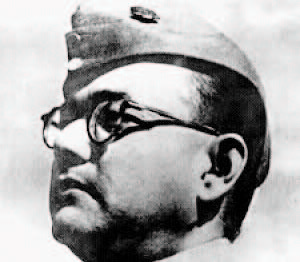
    A UK-based website set up to chart the last days of Netaji Subhas Chandra Bose has released a new set of documents to dismiss claims that he may have been spotted in China years after his death in a plane crash.

    The website – www.bosefiles.info – has reproduced a telegram from the Indian Embassy in Beijing contradicting claims in India about the nationalist leader being in the Chinese capital in 1952. Bose was reported dead as a result of a plane crash in Taiwan in 1945.

    But in 1955, S M Goswami, an ardent admirer of Bose, published a pamphlet in India with the heading ‘Netaji Mystery Revealed’.

    It carried a picture of Chinese officials with a Mongolian trade delegation said to have been taken in 1952. Goswami pointed out one of the persons in the photograph to be Bose.

    Appearing as a witness before the 1956 Netaji Inquiry Committee he presented the photo as evidence of Bose being alive, contrary to reports of his death in 1945.

    The committee sent the exhibit to the Indian Embassy in Beijing for identification. The diplomatic mission forwarded it to the Chinese foreign ministry.

    Following a response from the Chinese foreign ministry, the embassy cabled India’s ministry of external affairs: “Concerning alleged photograph of SUBHAS CHANDRA BOSE: We showed this to Foreign Office who have informed us that the photograph is of LEE KE HUNG, Medical Superindendent of PUMC (Peking University Medical College)”.

    “The telegram exposes one of countless attempts over 70 years to spread disinformation about Subhas Bose,” says Ashis Ray, a London-based journalist who has set up the website to “release documentary evidence which reinforces what happened to Bose, so that people are able to judge for themselves the truth”.

    On December 7, bosefiles.info exposed claims about Bose having escaped to the Soviet Union in 1945.

    It posted two diplomatic notes from the Russian Ministry of Foreign Affairs sent in 1992 and 1995 respectively and a public statement by the then Russian Ambassador in India in 1996, which unanimously confirmed there was no information in the Soviet or KGB archives about Bose entering the Soviet Union in or after 1945.


  • Alibaba to invest $1.25 bn in Chinese online food delivery service

    Alibaba to invest $1.25 bn in Chinese online food delivery service

    SHANGHAI (TIP): Alibaba Group Holding Ltd has agreed to invest $1.25 billion in Chinese online food delivery service Ele.me, leading business weekly Caixin reported on Friday.

    The report, citing unidentified sources, said Alibaba will obtain a 27.7% stake in Ele.me, becoming its biggest shareholder.

    Alibaba and Ele.me both declined to comment.

    Ele.me, which roughly translates as ‘Hungry Now?’, is part of a trend in China for what is known as online-to-offline (O2O) services. These include taxi hailing and restaurant review apps that link smartphone users with offline businesses.

    Earlier this year, the food delivery service firm raised $350 million from investors, including CITIC Private Equity, Tencent Holdings Ltd, Alibaba rival JD.com Inc, Dianping and Sequoia Capital.

    As more Chinese use their phones for everything from shopping to booking restaurants, China’s internet giants Alibaba, Tencent and Baidu Inc are increasingly investing in these services to attract more users to their own platforms.

    Alibaba, the world’s biggest e-commerce company, and social networking and video games titan Tencent together spent more than $8 billion last year alone backing sometimes strikingly similar ventures, such as taxi hailing apps Kuadi Dache and Didi Dache.

  • Finding a Niche in the Emerging World Order

    Finding a Niche in the Emerging World Order

    Prime Minister Narendra Modi’s apparently impromptu visit to Lahore on Christmas day is readily explained by the need to contain the Taliban and ensure regional stability and connectivity in the ‘Heart of Asia’ after the US-led International Security Assistance Force withdraws next year. The visit follows growing realization in capitals across the region that mutual security interests must supersede Cold War alliances or ideological mindsets to avoid the fate of nations like Iraq and Syria. The Taliban and/or its mutants cannot be permitted to spread in the Afghan neighborhood, which includes Central Asia, Iran, Pakistan and India, an effort that calls for convergence between Kabul, Islamabad and New Delhi. One can discern the benign presence of Moscow and Beijing as both have huge stakes in a revitalized Asian economic boom independent of Western hegemony.

    Besides China’s Silk Road project, several multi-nation projects centre on Afghanistan, viz, the Turkmen railways, transmission lines, highways, oil pipelines and gas pipelines including the Turkmenistan-Afghanistan-Pakistan-India pipeline. India wants to join the Afghanistan-Pakistan trade and transit agreement so that Afghan products can directly enter India and its products reach Afghan and Central Asian markets.

    These mega-development prospects doubtless prompted Mr. Modi to engage with Pakistani Prime Minister Nawaz Sharif on the sidelines of the Paris climate conference in late November. Thereafter the National Security Advisors met in Bangkok and smoothened the way for External Affairs Minister Sushma Swaraj’s visit to Islamabad for the Heart of Asia-Istanbul Process conference on Afghanistan. India has huge stakes in the integration of Central Asia, East Asia and West Asia.Though not opposed, India does not expect a lasting peace to emerge from talks between the Afghan Government and Afghan Taliban groups. A better option is state-level engagement which Kabul too prefers. Hence, it is inconceivable that as he went through his Kabul engagements – inaugurating the India-built $90 million Parliament House, gifting three Mi-25 attack helicopters and 500 new scholarships for children of martyrs of Afghan security forces -Mr. Modi would not have discussed the Lahore stopover with President Ashraf Ghani and CEO Abdullah Abdullah. It seems equally likely he mentioned it to Russian President Vladimir Putin before departing from Moscow. It may be relevant to note that since Russia began bombing IS positions in Syria, Pakistan does not favor regime change in Damascus.

    Pakistan Tehreek-e-Insaaf party leader Imran Khan’s presence in India (possibly to deliver the Sharif family wedding invitation) and the mature welcome to Mr. Modi’s stopover by Pakistan political parties (as opposed to the Congress’s petty squabbling) suggests that the Pakistani polity may have achieved some degree of cohesion in tackling terrorism. The Peshawar school attack last year is a grim warning of the danger from non-state actors.

    Mr. Modi’s first state visit to Russia, as part of the 16th Annual Bilateral Summit, has revitalized India’s most tried and trusted friendship and sent a signal to the international community that President Putin cannot be downsized by Western machinations. Mr. Modi secured Mr. Putin’s backing for India’s permanent membership of the UN Security Council and reiterated the commitment of both nations to a multipolar world order. Both nations already cooperate in forums like Brics and the Shanghai Cooperation Organisation (where Russia helped in India’s full membership), the G20 and the East Asia Summit.

    Syria, Afghanistan and the common threat posed by terrorism figured in the talks, but the summit’s main takeaway was Russia’s big bang return to India’s defense and nuclear energy sectors. Mr. Modi’s Make in India project in the defense sector got a major boost with the deal to jointly manufacture 200 Kamov-226T light military helicopters.

    The real triumph is the acquisition of five S- 400 Triumf surface-to-air missile systems (and 6,000 missiles). Literally the ‘crown jewels’ of Russia’s defense capability, the S-400 can destroy aircraft that use stealth technology, other fighter aircraft, cruise missiles and tactical missiles from up to 400 kilometers away, as effectively demonstrated earlier this month when Russia deployed the system to protect its Hmeimim airbase in Syria after Turkey downed a Russian jet.

    This will give India the ability to engage multiple targets at long range and restore the strategic balance with China and Pakistan. With Prime Minister Modi reportedly budgeting $150 billion to upgrade India’s military, with the Navy planning to order three Russian frigate warships and a possible joint development of a fifth generation fighter aircraft, New Delhi could be Moscow’s salvation as the latter faces a second year of recession amid Western sanctions.

    With the Paris climate conference failing to yield a comprehensive deal, the burden of combating global warming with clean energy expectedly fell upon individual nations. Mr. Modi having previously identified nuclear energy as pollution-free, the two nations are moving ahead with plans to build at least 12 nuclear power plants in India with the highest safety standards in the world, over the next 20 years. Two plants are slated to come up in Andhra Pradesh under the Make in India program. A vibrant partnership, however, calls for deeper economic integration. The Indian Prime Minister hopes to take advantage of the US-led Western sanctions against Russia to meet the latter’s demand for dairy products, seafood, and other goods and to attract Russian cash-rich billionaires to invest in India’s infrastructure fund, since they are no longer welcome in the old European financial havens due to Mr. Putin’s resistance to Western geo-political agendas to dismember West Asian and African countries on the lines of the old Yugoslavia.

    Access to Russian capital for his Make in India campaign would empower Mr. Modi’s drive to build a strong indigenous manufacturing base to generate employment and export revenues. Given the sharp downturn in Russo-Turkey relations, Mr. Modi hopes that Russian tourists will flock to India (not just in Goa) and tasked the tiny Indian community in Russia to motivate Russian families to discover India.

    Another gain is Russia’s commitment to ship 10 million ton of oil annually to energy-starved India in the next 10 years. Both countries plan to intensity collaboration in developing space exploration, rocket manufacture and engine manufacture, nano-technology, metallurgy, optics and software sectors. In substance, the visit announced that the Asian quest to forge a rational world order has moved to a new level. Mr. Modi’s short and informal visits to Afghanistan and Pakistan may be read as an invitation to take a seat of honor at the evolving new world concert.

    (The author is a social development consultant and a columnist with The Pioneer, a leading newspaper of Delhi).

  • Cost of Piracy

    Cost of Piracy

    An Indian firm will pay a fairly hefty restitution to the state of California for using pirated software. This unauthorized use, according to the state’s Attorney General, Kamala Harris, gave the company unfair advantage and also constituted theft of intellectual property. Pratibha Syntex Ltd, an apparel manufacturer, will pay $1 lakh in restitution, clean up its act, put into place proper policies to stop such practice in the future, and conduct regular audits to ensure that this is done.

    The US has again demonstrated the long reach of its law, and the figure of $22 billion is being cited as estimated loss in revenue to California manufacturers due to global companies using pirated American software. The use of pirated software is practically ubiquitous and different studies come up with varying figures, but it is generally agreed that the US is the largest paying consumer of software with a low piracy rate of 17 per cent. Emerging economies like Venezuela, Indonesia, China and India indulge in the rampant use of pirated software.

    While propriety software will always be necessary, and should always be paid for, there are now many options that allow open-source software or ‘shareware’ to be used. Some such software is of very high quality and is given free, Google’s Android systems being one example. Individuals and companies can thus, with some effort, find free or reasonable substitutes for almost all kinds of software in common use, and thereby benefit from it without infringing the law. There is also evidence of a change in attitude.

    The emerging idea of software as a service available on shared ‘cloud’ servers, rather than as a product, makes it available at a less daunting price. But that requires robust Internet services, which may not be readily accessible in many parts of the world. It is in the interest of software vendors to price their products fairly and to make them approachable in emerging markets, just as it is in the interest of users to eschew pirated software, as the latest case has demonstrated.

  • Saina shines in a subdued season for Indian badminton

    Saina shines in a subdued season for Indian badminton

    NEW DELHI (TIP): Saina Nehwal continued to break new grounds in a year that saw her reach the pinnacle of world badminton but it turned out to be a subdued season, marred by injuries and poor form, for the rest of the Indian shuttlers.

    Saina and K Srikanth continued their good run, winning two titles each, while PV Sindhu, Parupalli Kashyap and Ajay Jayaram battled through injuries to claim a title but overall the Indian shuttlers could not reach the heights that they achieved in a watershed 2014.

    Continuing her rich vein of form, Saina clinched the Syed Modi Grand Prix Gold and then broke the jinx of never winning the Indian Open Super Series with a splendid performance which catapulted her to the World No. 1 position. The Olympic bronze medalist also produced stellar performances at three of the most prestigious events in world badminton calendar, reaching the finals of the All England and World Championship and the China Super Series Premier.

    However, the girl from Hyderabad suffered an ankle injury at Fuzhou in November which forced her to skip the Hong Kong Open and also posed a serious question mark on her performance at the season-ending BWF Super Series Finals but Saina stunned the world with a superlative win over World No. 1 Carolina Marin in the second match before fitness issues saw her fail to qualify for the semifinals. Sindhu, who had mesmerised the world by bagging five bronze medals including a World Championship medal last year, suffered a stress fracture on her left foot and it affected her game throughout the season as she made too many early exits from tournaments.

    (PTI)

  • NELONG VALLEY: LADAKH IN UTTARAKHAND HIMALAYAS

    NELONG VALLEY: LADAKH IN UTTARAKHAND HIMALAYAS

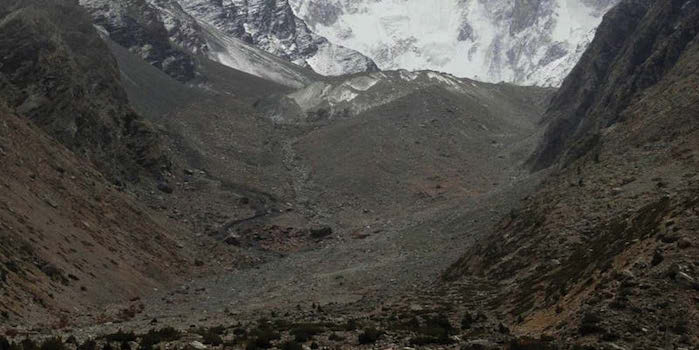
    The spectacular Nelong Valley – a cold desert like area – tucked in the Uttarakhand Himalayas, close to the Indo-China border, was opened to tourists earlier this year after 53 years of remaining out of bounds post the 1962 War. While the state government opened it with much enthusiasm in May, it failed to promote the destination as a result less than 200 tourists visited the valley in the last six months.

    The valley, which has a similar landscape as that of Ladakh, is not only rich in natural beauty but also houses remnants of the treacherous Indo-China trade route – like a hand-built wooden bridge – that was used for centuries by the locals prior to the war.

    LADAKH IN UTTARAKHAND1About Nelong Valley

    The valley, situated at an altitude of around 11,000 feet above the sea level, falls under the Gangotri National Park in Uttarkashi district, is around 315 km from Dehradun. It is also only 23 kms away from Bhaironghati, a place just eight kms ahead of the famous Gangotri shrine.

    Entry to this restricted area perched close to the China border had remained forbidden for civilians after the 1962 war. The arid region was thrown open in May and closed for the season in November.

    Regulated tourism

    The government has put a cap on the number of vehicles entering the valley per day, which is maximum six with only four occupants in each. A permit letter from the sub-divisional magistrate is required to visit the area while entry of foreigners is banned. Though the government had opened the destination with high hopes, only 184 tourists visited the valley in six months.

    Manoj Jagudi an engineering graduate visiting the valley said, “This place is like a hidden treasure in the Himalayas but little is known about it outside the state.”

    Potential of Nelong Valley 

    Experts say the picturesque valley holds a tremendous potential to be developed into a niche tourism destination, just like the world-famed Valley of Flowers in Chamoli district of Uttarakhand that attracts thousands of tourists and nature enthusiasts every year.

    Retired senior bureaucrat SS Pangtey, considered an authority in Uttarakhand tourism, says the region is an untapped asset of natural splendor that could turn into a major attraction for domestic tourists if publicized properly.

    “It is a remote, virgin area which has a huge potential to become an adventure tourism hotspot if only the state is able to publicise it amply,” Pangtey says.

    He said regulated tourism (to prevent disturbance to local ecology) is alright “but even that will happen only when they get to know about the valley in the first place”.

    Arun Puri, an Uttarkashi-based tour operator, says that the “permit process should be simplified and a single window information system should be put in place in the state capital to facilitate tourists”.

    LADAKH IN UTTARAKHAND#Local heritage

    In the wake of the 1962 War, locals of the Rongba (Bhotiya) tribe residing in the valley were forced to shift to Bagori and Dunda villages in Uttarkashi district. Re-opening of the valley has brought much joy to them.

    “Prior to the war, trade with Tibet was the economic mainstay of the villagers in the valley. Few remnants of the trade route – the most prominent one being a narrow wooden bridge along the gorge – still remains intact. This valley could thus be highlighted as a heritage site,” said Jot Singh, a native of Nelong valley and now a farmer living in Bagori village.

    Vinod Panwar, a local from Uttarkashi, said Nelong Valley will make for an “added attraction” to tourism circuit in the region, thereby improving the local economy.

    Source: HT

  • MAHINDRA TO BUY ITALIAN CAR DESIGNER PININFARINA

    MAHINDRA TO BUY ITALIAN CAR DESIGNER PININFARINA

    MUMBAI (TIP): Mahindra & Mahindra and Tech Mahindra agreed to buy Italian car designer Pininfarina SpA in a deal worth about euro 168 million ($185 million), underscoring the Indian vehicle maker’s international ambitions.

    M&M, together with its affiliate Tech Mahindra, would form a special purpose vehicle (SPV) to acquire 76 per cent stake in the indebted Italian firm. While Tech Mahindra will own 60 per cent in the SPV, M&M will own the remaining share. Both companies would pay euro 25.3 million (Rs 186 crore) to buy Pininfarina’s promoter Pincar’s stake. Further, the SPV would make an open offer of euro 20 million (Rs 147 crore) to the public shareholders of Pininfarina to acquire the remaining stake in the Italian firm.

    “The legendary high-end design credentials of Pininfarina will significantly enhance the design capabilities of the entire Mahindra group,” Chairman Anand Mahindra said in the statement. “Given the increasing design sensibilities of today’s consumers, product design will greatly influence customer choice.”

    The takeover of Pininfarina, the creator of numerous Ferraris including the 458 Spider roadster, marks the latest international expansion by Mahindra following its acquisitions of South Korean carmaker Ssangyong and the motorcycle unit of French auto manufacturer PSA Peugeot Citroen. The designer already cooperates with Mumbai-based Mahindra on sports  utility vehicle (SUV) development and worked with it on the Halo electric sports-car concept unveiled last year.

    Pininfarina, which has been unprofitable for 10 of the past 11 years while struggling with debt, shut a floundering division that built cars for other manufacturers three years ago. The deal is expected to close in the first half of 2016. Mahindra was advised by Rothschild & Co, while EY advised Pininfarina.

    The buy-out of the 85-year-old firm will help Tech Mahindra, India’s fifth largest information technology firm, strengthen its engineering services business.

    Tech Mahindra will also benefit from the designer’s focused presence in Italy and Germany, hotbeds of European automotive manufacturing, as well as in the US and an emerging automotive market, China. It also augments Tech Mahindra’s transportation, aerospace and industrial design offerings. For Pininfarina, the acquisition will mean an ability to leverage Tech Mahindra’s presence across 90 countries and access to about 780 customers.

    In September this year, Tech mahindra had joined hands with Ericsson, EBS and TomTom, and came up with a connected car solutions for the automobile makers. The solution features built-in analytics capabilities to manage recorded information from a vehicle and its sensors. It also enables service providers and manufacturers to deliver a range of services such as remote diagnostics, roadside assistance and emergency calls. It also delivers infotainment, news and location-based information inside a car.

    Following the deal, Pininfarina will remain an independent company with a separate listing in Milan. Paolo Pininfarina, a grandson of the company’s founder, will remain chairman.

    Pinfarina is “a jewel,” Tech Mahindra’s chief executive Chander Prakash Gurnani said at a press conference in Turin. “It will continue to be polished. It will continue to be built better now we have the financial muscles to build it.”

  • CANADIAN COMPANY SELLS BOTTLED FRESH MOUNTAIN AIR IN CHINA AS SMOG LEVELS WORSEN

    CANADIAN COMPANY SELLS BOTTLED FRESH MOUNTAIN AIR IN CHINA AS SMOG LEVELS WORSEN

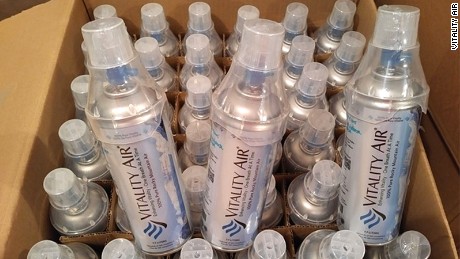
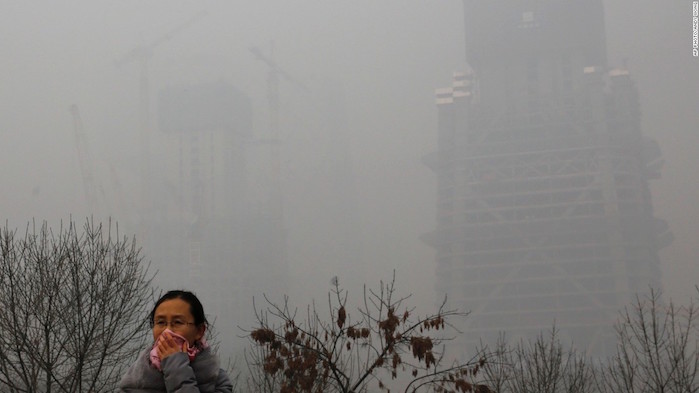
    BEIJING (TIP): s China’s pollution problems continue, a Canadian company has cashed in on the crisis by selling bottles of fresh mountain air to people for up to $28 (£18.50) each.

    Beijing was issued its first ever red alert in December over its hazardous pollution levels, causing the capital to shut down schools and construction for a period of time, while attempting to take a percentage of the city’s cars off the road and telling people to stay indoors.

    Since then Shanghai has seen its own smog problem hit its highest level since January, with schools being prompted to ban outdoor activities and factory work curbed on Tuesday.

    But sales of Vitality Air – bottles fresh mountain air from Banff and Lake Louise, Canada – have soared in China. A single bottle of the company’s “premium oxygen” costs$27.99 ($18.50) while a bottle of its Banff air costs up to $23.99 ($15.85).

    Harrison Wang, Vitality Air’s China representative, told Mail Online that the minute the bottles went on sale in Taobao, a Chinese website similar to eBay for online shopping, they “sold out almost instantly”.

    The company started marketing the product in China less than two months ago, but now that the first shipment of 500 bottles is sold out, another of 700 bottles is on its way.

    Wang said the company sees pollution as an issue in China “and we want to give people the opportunity to inject a little bit of fresh air into their daily lives”.

    Vitality Air markets itself as “enhancing vitality one breath at a time,” and says it can help with “hangovers, alertness and working out,” as well as being “your solution to pollution”.

    But Vitality Air is not the only business cashing in on China’s pollution problem – a restaurant in in Zhangjiagang city recently started charging patrons for fresh air, after owners bought air filtration machines for the establishment and added a surcharge to people’s bills for the operation costs (The Independent)

  • Mock Tale: Ministry to monitor Intolerance

    Mock Tale: Ministry to monitor Intolerance

    Good morning, good evening or good night! Based on the time, when you are reading this piece. Greeting you as per your time to prove my tolerance of your point of view. Considering the consideration with lots of intellectuals gave to the awards. The awards were just sitting at their homes and taking away precious space, they came up with a brilliant idea to get some space on the newspapers as well as get rid of these awards.

    “What lies in a name?” The great literary giant William Shakespeare raised this question in the 16th Century through one of his character Juliet, “What’s in a name? That which we call a rose by any other name would smell as sweet.” He was born in 1564 and lived on this earth till 1616 and to match his caliber; intellectuals of independent India came up with their original version in 2015. They went many steps further, Shakespeare was only writing and actors were enacting and that too on the stage. Indian intellectuals wrote a new and powerful phrase through their actions, ‘What lies in an award, award is not as sweet as it once was, if the political climate of the country has changed.”

    The saga of saintly creative beings of Bharat continued with full force, they came up with ideas. The looked at ideas, which was used by Mahatma Gandhi against British regime. Gandhiji lead a march to make salt. When the awards started loosing their sweetness, it was a natural progression that these salty awards should be returned. India respects traditions, once an intellectual always an intellectual, so these intelligent beings were assured of the fact that nobody can snatch their claim to sanity and their balanced way of understanding, appreciating, analyzing and letting the society know about the state of society.

    You know what, in one way, these doctors of society found the root of all evils in one word, ‘intolerance’, who is increasing it, the obvious answer, the government because democratic government is elected to measure and monitor intolerance.

    There is nothing more important than this study, so said, award returning group of intellectual beings.

    They chose not to work for reducing intolerance but to raise the voice against it. Some of them were busy in their own world. They didn’t have enough time to keep up with the everyday happenings of the nation. They were smart enough to go by the opinions expressed by their intellectual friends. This generous support for other intellectuals helped them in assuring themselves about their own intellectual acumen. Yes!Let us kill many birds by one stone. Their eyes told each other.

    One fine day, finally, they got a call from the prime minister himself. Some of them went with full display of their ego and statements that showed their concerns for the nation and their distrust with the Prime Minister.

    To their surprise, PM appeared calm and unruffled by their remarks. He participated with them in the brainstorming aimed at reducing intolerance. Ideas with top intellectuals over Gujarati delicacies lead to innovative thinking. He encouraged them to think out of the box. One senior intellectual came up with a brilliant idea, he thought about creating a new ministry. This would be known as ‘Ministry to monitor intolerance. This was like
    ‘aha’ moment for the whole group. Prime minister was also happy with this exercise. At last, a potential solution was in sight.

    Now the big question, who would head this ministry? This question was discussed and debated, most of the intellectuals felt, they were in a position to serve the nation as minister. Their love for the nation was so deep that they didn’t bother about becoming minister, yet they were ready to take this responsibility. The greatness of intellectuals lead to talk about the financial provisions for the ministry. Prime minister agreed to allocate big budget for this important ministry. Intellectuals could visualize how it would help in traveling, staying connected with the media, organizing seminars and obliging other intellectuals who would have stayed away from the government patronage without this ministry.

    Now the question was, what should be the criterion for choosing the minister?

    One thing was clear, he has to be from the minority and he should be the one, who was first to return his award, well, this caused problem. At least 3 people claimed to be the forerunner in adopting this creative means for raising their voice against growing intolerance. Here was another angle, whose statements got printed in the newspaper first?

    They wanted to reach a consensus, but it was not happening. In order to buy time, they said, a delegate would visit United Nations head quarter in New York and another delegate would go to China for coming up with a cost effective plan to implement various schemes about monitoring and reducing intolerance.

    All of them agreed, the efficient and cheap way of providing goods and services is really very important.

    This trip of intellectuals was seen as a victory of those, who want the nation to be tolerant. Media wrote about it, praised the sacrifice of intellectuals but soon media became restless. The masala of negative statements from intellectuals was missing from the headlines.

    The idea of forming new ministry was kept a secret but the plans to formulate a new ministry related to intolerance got leaked. The journalists felt cheated and betrayed by intellectuals. In their minds, the whole issue of this ministry emerged due to their hard work and constantly bombarded ‘intolerance weather report’ on people. Here is the thing, one journalist talked to her colleague in the press club. ” We need to do something?” Sure, her colleague called the potential minister and shared her grudge. The future minister himself joined them after 23 minutes.

    Some people overheard their conversation. ” As a minister, we will start a national award for people, who have worked hard for sharing the measurements of intolerance in the nation. You see, this shows their commitment for peace. We would call it ‘Intolerance monitoring national media award’ the award money would be huge. I guess, she would be the first awardee.

    In next few weeks, the ministry was formed, the reporter heaped praise after praise on the minister. She was talking to international media about how India is celebrating its own measures against intolerance by recognizing the whistle blowers. She also talked about honesty, integrity and love for the nation amongst all minority Indians.

    One day the minister got a call from PMO. Prime minister appreciated the efforts of the Intolerance monitoring ministry. He also said, there has been no negative news, there has been no ‘award return’ ceremony after the formation of this ministry.

    Minister thanked the officer for his compliments and expressed happiness at the reduced level of intolerance.

    Intellectuals were happy, they were getting awards and they could get awards, they were traveling abroad and they were designing new studies, they were meeting foreign dignitaries and there were plenty of opportunities to demonstrate their progressiveness by criticizing traditions and gradually the world around them started becoming familiar again. The ministry for monitoring intolerance in India is being considered for special noble
    (Nobel?) peace prize this year.

    The author is a Program director at ITV, New York. He can be reached at itvprogram@yahoo.com
  • ASIA’S BLEEDING HEART

    ASIA’S BLEEDING HEART

    The Heart of Asia Conference (HOAC) in Islamabad last week was bookended by two devastating attacks in Kandahar and Kabul. As Afghan President Ashraf Ghani was being honoured with a 21-gun salute in Islamabad, the Taliban were in the midst of a 20-hour-long assault on Kandahar airport that killed at least 54. And before the ink dried on the HOAC pledges, the Taliban penetrated the relatively secure diplomatic enclave in Kabul in a brazen attack on the Spanish embassy in which eight people died. The Afghan High Peace Council called it a slap in the face of the peace process. The Taliban is clearly sticking to the fight-talk-fight strategy even in winter. That the Taliban chose a key peace conference to shed blood is the jihadist group’s way of painting the Afghan government as weak and it’s the harbinger of yet another bloody spring and summer.

    The HOAC has been underway since 2011, but has not been able to evolve into a tangible mechanism to deliver peace. Ghani’s speech alluded to this shortcoming and called for verifiable mechanisms to counter the jihadist threat. He was careful in choosing his words in Islamabad, but not when giving interviews to the German and French media earlier, when he clearly said, “Pakistan was in a state of undeclared war against Afghanistan” and “a major trust deficit” exists between the two. Whether one conference can bridge that mistrust seems unlikely, Ghani’s optimism notwithstanding.

    Afghan officials attribute the HOAC’s “success” to several factors: One, Pakistani PM Nawaz Sharif acknowledging Afghanistan’s sovereignty, its central government and constitution; two, the US and China acting as guarantors for the peace negotiations with the “reconcilable” Taliban and opposing the irreconcilable ones; three, the commitment to a high-level meeting in early 2016 to draw a region-wide counter-terrorism and security strategy.

    To Afghan officials, the litmus test of Pakistan’s seriousness and sincerity would be whether it’s willing to restrain the Taliban from conducting largescale attacks. Kandahar and Kabul appear to have already betrayed the newfound Afghan trust in the capacity, if not the will, of the Pakistani security establishment. The chief of the Afghan National Security Directorate (NDS), General Rahmatullah Nabil, took to Facebook to post a scathing critique of not just Pakistan but also Ghani, chiding the latter for letting “the 5,000-year-old Afghan history kneel before a 60-year-old Pakistan”. Nabil followed this with a resignation. Needless to say, Ghani accepted it promptly. This led to the media asking if he was fired at Pakistan’s behest. A visibly upset Ghani formally denied the charge but the die has been cast.

    The Afghan media then reported Ghani conceded way too much in Islamabad. A leaked report was cited that Pakistan has apparently demanded that Ghani act against the Tehrik-e-Taliban Pakistan, restrain “anti-Pakistan rhetoric and individuals”, accept the Durand Line as the formal border, limit Indian influence, and deny support to Baloch separatists and Pashtun nationalists. This litany of Pakistani demands means we are back at square one in the bilateral relationship. Islamabad’s demands have put the onus of securing peace wholly on Kabul.

    That fits well with the pattern of Pakistan’s peace pledges to Afghanistan, which start before the first snow and melt away with the first thaw, making way for the Taliban’s attacks. Pakistan has never been keen on a political solution. The closest it came to a political partner was the fundamentalist warlord Gulbuddin Hekmatyar. What’s at stake isn’t just military gains but also the future of Ghani’s government. He is bound to face a backlash when Pakistan reneges on its pledges. The opposition is wary of Ghani putting all his eggs in Pakistan’s basket again. His attempt in May to have the NDS surreptitiously sign an MoU with the ISI had backfired badly.

    The difference now is that Ghani has almost no political capital to squander. The November protests in Kabul, after the Islamic State’s massacre of Hazaras, showed Ghani is on thin ice. This is not lost on Pakistan and the Pakistan-backed Taliban, who would love to plunge Kabul into political chaos at a time of their choosing. International guarantors can certainly play a major role. But they and the principles of non-interference were hallmarks of the May 1988 Pak-Afghan Geneva Accords. Yet, Afghanistan has been the bleeding heart of Asia since.

  • India and Japan Sign Deals on Military, Train Sales, Nukes

    India and Japan Sign Deals on Military, Train Sales, Nukes

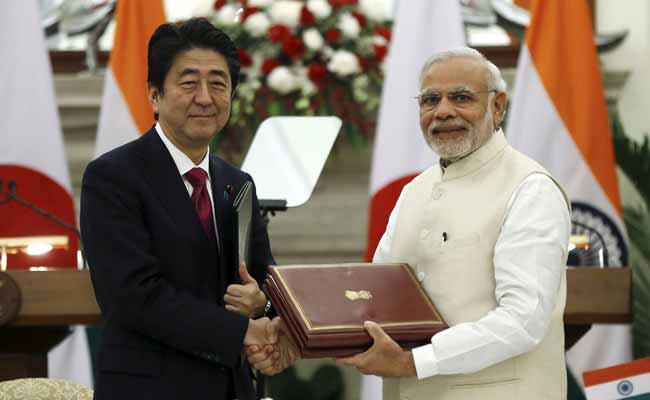
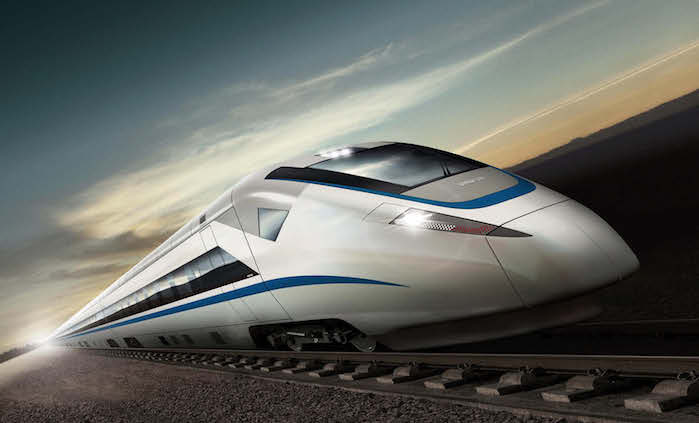
    NEW DELHI (TIP): India has agreed to buy a high-speed bullet train from Japan, in an attempt to transform its creaking rail system. Japan will build India’s first bullet train and provide a $12bn package of financing and a low-cost, long-term loan for the effort, the countries announced on Saturday, December 12.

    Prime Minister Shinzo Abe was welcomed in New Delhi by his Indian counterpart Narendra Modi who said Japan has played a “decisive role in India’s economic transformation”.

    Prime Minister Narendra Modi said the train would link Mumbai and Ahmedabad, cutting travel time on the route from eight hours to two.

    Last week Mr. Modi’s cabinet cleared the $14.7bn (£9.6bn) cost of building the bullet train system.

    The agreements with Japan came during a three-day visit to India by the Japanese Prime Minister, Shinzo Abe.

    The leaders of Asia’s second and third largest economies also announced other areas of co-operation, including, working on defense technology, and agreeing a memorandum of understanding on the peaceful use of nuclear energy.

    Abe referred to India’s stand that it would continue a moratorium on nuclear tests and advance its use of nuclear energy for peaceful purposes.

    India, which has 21 nuclear power plants, has ambitious plans to quadruple its current 5,000 megawatts of nuclear power to 20,000 megawatts by 2020 to fuel the energy demands of its booming economy.

    The two countries also signed a deal that would help India’s efforts to upgrade its military equipment. Japan’s possible sale of US-2 amphibious aircraft to India would be Tokyo’s first major military hardware transfer since lifting a postwar ban on the export of defense equipment in 2014.

    The latter agreement is expected to allow Japan to export nuclear plant technologies to India.

    Both countries are in territorial disputes with China, and their new accords may be seen by some as a reaction against China’s growing influence in the region.

    Japan has in the past shunned civil nuclear cooperation with India, which has not ratified the international Non-Proliferation Treaty, but appears to have softened its stance.

    The announcements came after Abe lavished praise on Modi’s 18-month-old premiership following a meeting with business leaders in the capital.

    “Prime Minister Modi’s economic policies are like Shinkansen – high speed, safe and reliable while carrying many people along,” he said.

    Both Modi and Abe are right-wing nationalists and economic reformers who have forged an unusually close relationship since the Indian leader came to power last year, partly to counter China’s growing influence.

    The leaders of Japan and India, Asia’s second and third-largest economies, promised to use their alliance to push areas of mutual interest, including reform of the UN Security Council, on which both are seeking permanent seats.

    Modi, who hopes to attract foreign investment under his key Make in India campaign, lauded the recent decision by Japanese-owned carmaker Maruti Suzuki to begin the first exports of Indian-made cars to Japan.

    India’s economic growth accelerated to 7.4 percent in the second quarter of the financial year, figures released in November showed, outperforming China.

  • US SEEKS NEW GROUP FOR CHINDIA AT WTO

    US SEEKS NEW GROUP FOR CHINDIA AT WTO

    NEW DELHI (TIP): At the World Trade Organisation (WTO) headquarters in Geneva, there have been voices— largely from the US — suggesting that a new category of countries be created apart from the three main groups — developed, developing and least developed countries.

    It has been suggested that the new group should comprise the rapidly growing economies, such as China and India, which have gained considerable mass in recent years. Although there has not been an explicit demand to create a new group of emerging countries, there have been discussions behind closed doors that have raised eyebrows in the Capital.

    After all, this move has the potential to change the way global talks have taken place in the past and the impact may be felt beyond trade. “It has strategic implications that go beyond just WTO. If the demand finds merit then other negotiations, including the climate talks, may be impacted,” said a source based in Geneva.

    At the WTO, it would push China, India and others, which fall into the same category of advanced developing countries, to go for sharper duty cuts and adjust their rules related to, say, trade facilitation, more quickly than developing countries.

    While there has been chatter for several years, there is more discussion today. “The US is more bothered about China and its impact on the global economy but India is also getting clubbed into the same group, given that it is growing fast,” the source said.

    Economists, however, believe that the demand may be a little premature given that there is huge disparity between the developed countries and those in the second group, such as China and India. “Size of China’s economy is same as US, but China’s per capita income is 22% of the US per capita income because China has four-and-half times more people. It makes Chinese per capita income like where US income was in late 1920s or mid-1930s,” former US treasury secretary Larry Summers had pointed out in a recent interview. Currently, Chinese per cacapita income is around 14%of the US level. Source: TOI

  • JAPAN TO BUILD INDIA’S FIRST BULLET TRAIN

    JAPAN TO BUILD INDIA’S FIRST BULLET TRAIN

    NEW DELHI (TIP): The bullet train accident in China four years ago along with low-cost finance and a promise to have a substantial ‘Make in India’ component and transfer of technology clinched the deal for Japan to build the first high-speed train that will run between Mumbai and Ahmedabad —with the possibility of extending it to Delhi in future.

    The Rs 98,000 crore project was cleared by the cabinet on Wednesday evening and is set to be announced during Japanese premier Shinzo Abe’s visit later this week.

    Sources said that a committee headed by NITI Aayog vice-chairman Arvind Panagariya has said that the Shinkansen System had the best safety record with no fatalities in addition to the fact that delays on a trip did not exceed a minute.

    Design flaws and weak management are said to have caused a crash in the south-eastern city of Wenzhou in which 40 died and close to 200 were injured. China was keen on funding and building the country’s first bullet train as it sought to enhance its railway footprint across the globe.

    But there is still chance for others. Although Japan is keen to fund other similar projects, the government has kept the window open to partner with other countries, sources said.

    In the coming years, up to 70-80% of the components could be manufactured in India. The Japanese government has offered technical support and was willing to drive the local manufacturing and technology transfer initiative within a specified period, said sources. In addition, it has offered funding at 0.1%, compared to the 0.3% cap decided by India recently, with the tenure of the loan at 50 years, along with a 10-15 year moratorium. Of the total project cost, around Rs 17,000-18,000 crore would be the cost of land.

  • Beijing lifts smog red alert

    Beijing lifts smog red alert

    BEIJING: Beijing’s first ever red alert for smog expired Thursday, as blue skies and sunshine replaced the thick haze that covered the city for days.

    The Chinese capital put its air pollution emergency plan into action earlier this week, pulling half of all private vehicles off the streets from Tuesday, ordering many factories to close and recommending that some schools allow students to remain home.

    The measures were being lifted from midday Thursday, according to a social media post by Beijing’s environmental protection bureau.

    The red alert, the highest tier of a four-colour warning system, came as heavy smog flooded the city for the second time in as many weeks.

    The unprecedented move followed scathing public criticism aimed at the city’s weak response to last week’s thick haze, which saw pollution sky-rocket to levels not seen in years.

    Counts of PM2.5 — harmful microscopic particles that penetrate deep into the lungs — reached well over 600 micrograms per cubic metre last week, according to the US embassy, which issues independent readings, and were regularly above 300 in recent days.

    By lunchtime on Thursday they were down to 22 as moderate winds blew from the north, below even the World Health Organization’s recommended maximum exposure of 25.

    In a note posted online, the city wrote that the emergency measures had “been effective in slowing down the process of smog accumulation”, and expressed its “heartfelt thanks” and “sincere tribute” for residents’ contributions to the effort.

    The city will “fight well a hard battle to prevent and contain air pollution”, it said.

    But the struggle is largely out of municipal officials’ hands since much of its air pollution comes from neighbouring areas, where pollution levels remained hazardous Thursday, particularly to the south in Hebei province.

    The recurrent bad air has driven residents of the capital to hospitals in growing numbers, according to a report on Internet giant Tencent’s news portal.

    During the last month’s periods of severe pollution, it said, trips to medical facilities using hailing app Didi Kuaidi — backed by Tencent — went from 3.4 percent of all journeys to 4.1 percent, an increase of more than a fifth.

    The report also cited online retailer JD.com as saying pollution mask sales soared by as much as 400 percent in response to the bad air.

    The miasma came as President Xi Jinping attended a critical meeting on climate change in Paris, a potentially embarrassing coincidence that underscored China’s struggle to control the pollution that contributes to both its chronic smog and global warming.

    Most of the country’s greenhouse gas emissions come from the burning of coal for electricity and heating, particularly when demand peaks in winter, which is also the key cause of smog.

    Earlier this month, China’s meteorological bureau said it expected at least one and possibly two more bouts of heavy pollution in December, with the first expected as soon as Saturday.

    It remains unclear how Beijing will respond to future airborne smog peaks, but other cities in the region followed its lead this week by issuing their own red alerts as pollution levels climbed even higher than those seen in the capital. (AFP)

  • Alibaba.com says India one of its fastest-growing markets | SMILE

    Alibaba.com says India one of its fastest-growing markets | SMILE

    New Delhi: Alibaba Group’s wholesale trading platform Alibaba.com said on Monday, December 7, that India is one of its fastest-growing markets with about 4.5 million registered users.

    The Chinese e-commerce giant  is taking the Indian market very seriously indeed. It announced the launch of a slew of services for Indian small and medium enterprises (SMEs) selling on Alibaba.com.

    India is the second largest market for Alibaba’s business-to-business platform after China followed by the US and Europe, said Timothy Leung, head of global business development during his visit to Delhi.

    “India is at a stage where e-commerce is set to kick-off and we see a huge opportunity there,” added Leung.

    Alibaba.com on Monday launched an online platform SMILE, which stands for Small and Medium Industries Leveraging Export, the programme will offer solutions like financing, logistics, certifications and technology. Alibaba’s partners for the SMILE programme include companies like ICICI Bank, Kotak Mahindra Bank, Crisil Rating, Tally, Capital Float Jeena, SGS and Mypacco, who will provide finance, credit rating, online lending, and transportation support to SMEs.

    This initiative is meant for the merchants who are on Alibaba.com, the global resellers platform that was opened to Indian SMEs in July.

    SMILE will give access to global business trading counterparts as well as trading solutions such as financing, logistics, inspections and certifications, technology and SME trade-linked education.

  • Indian-Origin Scientist Developes New 3D Software to Track Embryonic Development

    Indian-Origin Scientist Developes New 3D Software to Track Embryonic Development

    WASHINGTON:  An Indian-origin scientist has developed a new, open-source software that can help track the embryonic development and movement of neuronal cells throughout the body of the worm, and is now available to scientists.

    The software is described in a paper published in the open access journal, eLife on December 3rd by researchers at the National Institute of Biomedical Imaging and Bioengineering (NIBIB) and the Center for Information Technology (CIT); along with Memorial Sloan-Kettering Institute, New York City; Yale University, New Haven, Connecticut; Zhejiang University, China; and the University of Connecticut Health Center, Farmington. NIBIB is part of the National Institutes of Health.
    Although scientists have identified a number of important proteins that determine how neurons navigate during brain formation, it is largely unknown how all of these proteins interact in a living organism.

    “Understanding why and how neurons form and the path they take to reach their final destination could one day give us valuable information about how proteins and other molecular factors interact during neuronal development,” explained Hari Shroff, head of the National Institute of Biomedical Imaging and Bioengineering (NIBIB) research team.

    The new technology will be pivotal in their project to create a 4D neurodevelopmental “worm atlas” that attempts to catalog the formation of the worm nervous system.

    This catalog will be the first comprehensive view of how an entire nervous system develops.

    According to Mr Shroff, it will be helpful in understanding the fundamental mechanisms by which all nervous systems, including ours, assemble.

    They also expect that some of the concepts developed, such as the approach taken to combine neuronal data from multiple embryos, can be applied to additional model organisms besides the worm.

    “We do not yet understand neurodevelopment even in the context of the humble worm but we’re using it as a simple model of how these factors work together to drive the development of the worm brain and neuronal structure,” he informed.

    “We are hoping that by doing so, some of the lessons will translate all the way up to humans,” Mr Shroff added.

    The worm known as C elegans has only 302 neurons, 222 of which form while the worm is still an embryo.

    The worm even has its own versions of many of the same proteins used to direct brain formation in more complex organisms such as flies, mice, or humans.

  • India-US defense officials discuss common security interests

    India-US defense officials discuss common security interests

    WASHINGTON (TIP): Top Indian and American defense officials have discussed a range of common regional security interests and new opportunities for engagement, laying the foundation for defense minister Manohar Parrikar’s maiden visit to the US in December, a senior Pentagon official said.

    The 14th US-India Defense Policy Group (DPG) meeting was co-chaired by US Under-Secretary of Defense for Policy Christine Wormuth and Indian Defense Secretary G Mohan Kumar.

    Held at the Pentagon here on November 18, the meeting serves as an annual, senior-level defense dialogue and was the primary mechanism to guide bilateral strategic defense ties.

    “The two sides discussed a wealth of common regional security interests, new opportunities for defense engagement, and ways to further strengthen the military-to-military ties,” a senior US defense official told PTI.

    The meeting took place in the backdrop of escalating tensions over territorial claims in the South China Sea, over which Washington and Beijing are locked in a war of words after China began developing artificial islands in areas also claimed by several other South East Asian nations.

    “This dialogue was particularly important as it marks the first time the DPG has convened since (US Defense) Secretary (Ashton) Carter’s successful trip to India in June and has laid the foundation for Indian minister of defense Manohar Parrikar’s upcoming visit to the US in December,” the official said.

    Parrikar is scheduled to visit the US on December 10.

    Wormuth and Kumar identified several key areas such as defense strategy, humanitarian assistance and disaster relief (HADR), and maritime security cooperation which may present new opportunities for collaboration in the coming year.

    “Both emphasized their commitment to onward progress in defense cooperation in order to build on the positive momentum brought about through recent senior-level engagements,” the official said.

    The meeting was also the first after the Defense Framework Pact was signed during Carter’s India visit.

    The pact provides avenues for high-level strategic discussions, continued exchanges between armed forces of both countries, and strengthening of defense capabilities.