Tag: China

  • International Day of Yoga: Celebrating union of body and Consciousness

    International Day of Yoga: Celebrating union of body and Consciousness

    International Yoga day

    Yoga is an ancient physical, mental and spiritual practice that originated in India. The word ‘yoga’ derives from Sanskrit and means to join or to unite, symbolizing the union of body and consciousness. Today it is practiced in various forms around the world and continues to grow in popularity.

    Recognizing its universal appeal, on 11 December 2014, the United Nations proclaimed 21 June as the International Day of Yoga by resolution 69/131. The International Day of Yoga aims to raise awareness worldwide of the many benefits of practicing yoga.

    Yoga is more than just burning your calories and toning your muscles. It is a mind body workout where you have strengthening and stretching poses along with deep breathing techniques to relax your mind and body There are more than 100 different forms of yoga. Some are fast paced and intense. Others are gentle and relaxing. Yoga is an invaluable gift of ancient Indian tradition. It embodies unity of mind and body; thought and action; restraint and fulfilment; harmony between man and nature and a holistic approach to health and well-being. The word yoga literally means union. Through yoga you can explore profoundly the very mechanics of life.

    International Day of Yoga at Times Square, New York

    The fact is that yoga is a way of life. While all the other exercises take care of your physical conditions, yoga helps you to control your mind and body. There are various yoga postures or asanas that help you to keep your body fit and healthy. Pranayama or breathing exercise helps you to rejuvenate your mind and soul. It is said you should begin your day with pranayama and it helps you to think better and stay calm and peaceful. Sedentary lifestyles, unhealthy diet and stress – all these lead to various diseases. Yoga teaches you to control all these through exercises.

    Launching a particular date for practicing yoga all across the world and celebrating as yoga day was initiated by the Indian Prime Minister, Mr. Narendra Modi. In a yoga day essay for students, it is important to mention that international day of yoga which is also called as the world yoga day is celebrated on the 21st of June. The declaration was done after the call by the Indian Prime Minister to the United Nations General Assembly on 27th of September in 2014 during his address to the UN General Assembly.

    International Day of Yoga at the Queens Museum in 2016.

    The celebration of the event  international day of yoga is supported by various global leaders. More than 170 countries including USA, China, Canada took part in this event which was celebrated for the first time on the 21st of Jan 2015. It was celebrated on international level by organizing the activities like yoga training campus, yoga competitions and so many activities to enhance your awareness about the innumerable benefits that you can derive by practicing yoga on a daily basis. This event is celebrated to create the awareness of the wholesome effects of yoga among the public all over the world.

    Thus it can be concluded as; meditation or ‘dhyana’ teaches you how to discipline your mind. Through a systematic practice of yoga, you can overcome your negative thinking which in turn gives you confidence and enhances your mental power. This increases self-awareness and helps you to increase your attention and concentration; hence yoga is suitable for children also.

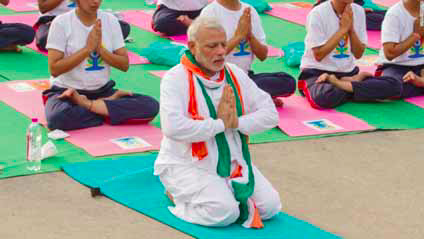
    The first International Day of Yoga was observed world over on 21 June 2015. … 35,985 people, including Narendra Modi and a large number of dignitaries from 84 nations, performed 21 yoga asanas (postures) for 35 minutes at Rajpath in New Delhi.

    The declaration of international day of yoga is a great moment for India. It took less than three months to be declared as the world yoga day by the United Nations general assembly. Indian Prime Minister, Narendra Modi had called for it on 27th of September in 2014 which was finally declared on 11th of December in 2014. It was first ever in the history that the initiative of any country has been proposed and implemented in the UN body within 90 days. This resolution has been adopted under the global health and foreign policy by the general assembly in order to provide a holistic approach to you for your health and well-being.

    International Day of Yoga at the United Nations in 2016

    Official name of this day is UN International Yoga Day and also called as Yoga Day. It is a worldwide event celebrated by all countries through practicing yoga, meditation, debates, meetings, discussions, variety of cultural performances, etc.

    Indian Prime Minister, Mr. Narendra Modi has put his views for adopting a day especially for yoga while addressing to the United Nations General Assembly. He asked the world leaders for adopting international yoga day to deal with the declining health because of negative climate changes. Especially, he suggested 21st of June for adopting the international day of yoga as this day is the longest day in northern hemisphere regions as well as of great significance in many parts of the world.

    Yoga is a Hindu spiritual and ascetic discipline, a part of which, including breath control, simple meditation, and the adoption of specific bodily postures, is widely practiced for health and relaxation.

    The Myriad Benefits of Yoga are:

    Yoga is very necessary and beneficial for you if it is practiced on a daily basis in the morning. It is a combined workout of the mind and body which enhances your brain functions, reduces stress and rejuvenates your body and soul.

    Yoga is beneficial for the mental, physical and emotional development of children. In this world of fierce competition, yoga helps to reduce stress and tension.

    It helps you to gain flexibility, manage stress, improves posture, memory and concentration.

    Apart from these benefits, yoga also helps in flexibility of spine, induces relaxation and strengthens lower back.

    Thus on a final note, yoga helps you to achieve the perfect harmony between your mind, body and soul. It drives away all negativity from your system and promotes in the achievement of a healthy and a happy life.

  • Trump hails deals worth ‘billions’ with Vietnam

    Trump hails deals worth ‘billions’ with Vietnam

    WASHINGTON (TIP): US President Donald Trump talked trade with Vietnamese Prime Minister Nguyen Xuan Phuc during a White House visit on May 31 and welcomed the signing of business deals worth billions of dollars and the jobs they would create.

    The US Commerce Department announced 13 new transactions with Vietnam worth $8 billion, including $3 billion worth of US produced content that would support more than 23,000 American jobs.

    These include deals for General Electric Co worth $5.58 billion for power generation, aircraft engines and services, its largest-ever combined sale in Vietnam. Caterpillar Inc and its dealer in Vietnam also agreed to provide generator management technology for more than 100 generators in Vietnam, the company said. “They (Vietnam) just made a very large order in the United States – and we appreciate that – for many billions of dollars,which means jobs for the United States and great, great equipment for Vietnam,” Trump told reporters at the White House.

    The Commerce Department estimate of the deals was considerably less than the $15 billion figure given by Phuc during a speech at the Heritage Foundation, adding that most of the total involved the import of U.S. equipment. Communist Vietnam has gone from being a Cold War enemy to an important partner for the United States in the Asia-Pacific, where both countries share concerns about China’s rising power.

    Phuc told Trump the relationship had undergone “significant upheavals in history” but that the two countries were now “comprehensive partners.” Phuc’s meeting with Trump makes him the first Southeast Asian leader to visit the White House under the new administration.

    TRADE FRICTION : However, while Hanoi and Washington have stepped up security cooperation in recent years, trade has become a potential irritant, with a deficit widening steadily in Vietnam’s favor, reaching $32 billion last year, compared with $7 billion a decade earlier. Commerce Secretary Wilbur Ross said it was important to shrink the U.S. trade deficit with Vietnam but noted that the southeast Asian country of 80 million people was the fastest-growing market for U.S. exports, rising 77 percent since 2014 to $4.4 billion.

    “The growth of the middle class and the increasing purchasing power in Vietnam are further incentives to strengthening our longterm trade and investment relationship,” Ross said. Trump, who has had strong words for countries with large trade surpluses with the United States, said he would be discussing trade with Phuc, as well as North Korea. Washington has been seeking support to pressure North Korea to drop its nuclear and missile programs, which have become an increasing threat to the United States. Hanoi has said it shares concerns about Korea. ( (Reuters)

  • India, Pak to become full SCO members at Astana summit: China

    India, Pak to become full SCO members at Astana summit: China

    BEIJING (TIP): India and Pakistan’s admission to the Beijing-backed Shanghai Cooperation Organisation (SCO) will be formalised at the grouping’s summit in Kazakhstan next week, China said on June 1.

    “The members states of the SCO are accelerating the MoU procedures with the two countries and everything is going very well,” foreign ministry spokesperson Hua Chunying said.

    “We hope India and Pakistan as the full members at the Astana summit (on June 8-9). We also expect the Astana summit will complete the admission procedures for the two countries,” Hua told reporters.

    Afghanistan, Belarus, India, Iran, Mongolia and Pakistan have observer status. (PTI)

  • TRUMP PULLS US OUT OF PARIS CLIMATE ACCORD

    TRUMP PULLS US OUT OF PARIS CLIMATE ACCORD

    ● Speaks of negotiations to re-enter green pact on terms fair to US
    ● Many States and Cities pledge to abide by Paris climate accord

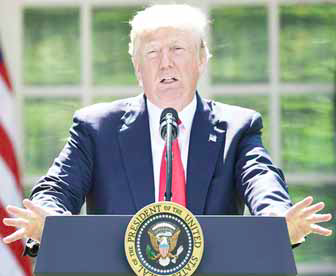
    Donald Trump on Thursday, June 1, withdrew the US from the landmark Paris climate accord which he said was not tough on India and China, and alleged that the deal was negotiated “poorly” by the Obama administration and signed out of “desperation”.

    “In order to fulfil my solemn duty to protect our citizens, the United States will withdraw from the Paris Climate Accord…We are getting out and we will start to renegotiate,” Trump said at the Rose Garden of the White House.

    Trump said he wants a fair deal for the American businesses to stay in the Paris agreement on climate change. Trump said the Paris agreement on climate change agreed upon by more than 190 countries was “negotiated  poorly by Obama administration and signed out of desperation”. “This agreement is more about climate and more about others getting advantages. This put the US to a very very big economic disadvantage,” he said, adding that as a result of the deal, the US would not be able to compete with other countries in the world.

    Trump made this announcement in front of a battery of reporters when the temperature this afternoon was reported to be around 26 degrees Celsius. By withdrawing the US from the climate deal, he fulfilled his major campaign promise and overturned the major foreign policy accomplishment of his predecessor Barack Obama.

    In addition to the US, only two other countries-Syria and Nicaragua-are not part of the Paris agreement. California Governor Jerry Brown called Trump’s decision possibly “tragic” and a step “backwards” for the US. New York Gov. Andrew Cuomo says his state will continue to abide by the Paris climate accord regardless of President Donald Trump’s decision to pull out of the landmark 190-nation agreement to reduce carbon emissions.

    Cuomo said that the Republican president’s decision is “reckless” and harmful for the nation and the planet. He says he will use executive orders to ensure the state does not abandon its efforts to boost renewable energy while reducing emissions tied to climate change. New York Governor Cuomo, along with California Governor Edmund G. Brown Jr. and Washington State Governor Jay R. Inslee have announced the formation of the United States Climate Alliance, a coalition that will convene U.S. states committed to upholding the Paris Accord and continuing to take action against climate change.

    In the wake of that decision, 61 mayors across the U.S. announced that they would step up their cities’ own efforts to combat climate change, and adopt the Paris climate agreement on a local scale. Mayor Bill de Blasio, unsurprisingly, is among the members of the Climate Mayors, and in a statement, he denounced Trump’s move: “President Trump can turn his back on the world, but the world cannot ignore the very real threat of climate change. This decision is an immoral assault on the public health, safety and security of everyone on this planet. New Yorkers are already experiencing hotter summers, more powerful storms and rising seas, which disproportionately affect already vulnerable communities.

    Democratic lawmakers have said this is retreat of American leadership and gives opportunities to countries like India, China and Germany. The US, however, will not immediately pull out of the Paris Act. He would follow the four-year rule to get out of it. This means that the US will leave the Paris Agreement in 2020.

    Former Obama aide David Axelrod said, “in backing off of climate pact”, Trump “is locking arms with Syria and Nicaragua and matching confidently into the past”.

    INDIA AT ADVANTAGE: US PREZ:

    Trump said the deal gives advantages to countries like India and China. “India makes its participation on receiving billions and billions of dollars from developed countries. Paris accord is very unfair at the highest level to the US. The current India will be allowed to double its coal production and so does China,” Trump alleged. “A sad and weak decision,” tweeted Richard Verma, former US envoy to India.

    ‘HISTORIC MISTAKE’, BUT CLIMATE ACTION WILL GO ON:

    US President Trump’s decision will not derail action to curb one of the most serious problems facing the planet, political leaders, scientists, activists and other experts vowed on Thursday, June 1. But they warned that the decision could slow the pace of a global switch to clean energy, putting more lives and billions of dollars in investment at risk as climate change impacts pick up pace It also is likely to further erode US leadership in the world, with China and the EU expected to take the lead on global climate action, and will cost the US jobs in surging clean energy businesses, they said What remains unclear is how much influence the US will now have on how the Paris pact is put into action, starting in 2018, given that the US exit from the accord cannot be immediate, experts said.

  • China demands action from Pak to rescue kidnapped Chinese couple

    China demands action from Pak to rescue kidnapped Chinese couple

    BEIJING (TIP): China has stepped up pressure on Pakistani authorities “to take every necessary measure” to rescue a Chinese couple who were abducted near Quetta, the capital of Balochistan province which also houses the Gwadar port.

    The couple who teach the Chinese language at a local school were kidnapped on Wednesday by three men posing as policemen at Jinnah city near Quetta, Pakistani media said. The husband and wife team were forced to board a white car by the kidnappers at gun point, it said. The police have found no clues about the whereabouts of the abductors although a high-power investigation group is looking at it.

    “We keep close communication with Pakistan, request relevant Pakistani authorities to take every necessary measure to rescue the abducted while ensuring their safety and take more effective measures to secure the safety of Chinese citizens and organs in Pakistan,” Chinese foreign ministry spokesman Lu Kang said on Thursday

    China has been repeatedly telling Pakistani authorities to ensure the safety of Chinese citizens as part of the security arrangements for the $46 billion China Pakistan Economic Corridor.

    “The Chinese government attaches great importance to the safety of overseas Chinese citizens and condemns the abduction of personnel in any form,” Lu said adding, “After the incident happened, the Chinese government, along with relevant departments, the Chinese Embassy in Pakistan and the Chinese Consulate General in Karachi, immediately launched the emergency response mechanism”. (AP)

  • US warship in South China Sea: China calls it ‘provocative action’, urges America to ‘correct mistake’

    US warship in South China Sea: China calls it ‘provocative action’, urges America to ‘correct mistake’

    WASHINGTON/BEIJING (TIP): The US has sent a navy warship near an artificial island built by China in the disputed South China Sea as part of the first “freedom of navigation” operation under President Donald Trump, prompting Beijing to strongly condemn the “provocative action.”

    The guided-missile destroyer, USS Dewey, conducted a patrol within 20 kilometres of Mischeef Reef, part of the Spratly Islands. A crucial shipping route, China claims ownership of the vast majority of the South China Sea, including the Paracel and Spratly island chains, a claim disputed by numerous other countries including the Philippines and Vietnam.

    The Chinese government has reclaimed land and built up artificial islands in the sea, including on Mischief Reef, and deployed military assets to them. The exercise is the first since October and comes after high-level visits and friendly exchanges between the US and China to settle trade issues and vows to cooperate to contain the nuclear programme of North Korea, a Chinese ally.

    Pentagon spokesman Jeff Davis said, “We operate in the Asia-Pacific region on a daily basis, including in the South China Sea. We operate in accordance with international law.” The patrols are “not about any one country, or any one body of water,” he told the Wall Street Journal.

    In Beijing, China reacted sharply to the action saying the US warship had entered the South China Sea “without permission”. China’s defence ministry said two Chinese frigates had “warned and dispelled” the US Navy ship after it had entered its waters “without permission.” “We firmly oppose the US behaviour of showing force and boosting regional militarisation, and have made solemn representation to the US side,” defence ministry spokesman Ren Guoqiang said.

     China’s foreign ministry too criticised the US move. “The act damaged China’s sovereignty and security interests, and could have easily led to an air or sea accident,” foreign ministry spokesman Lu Kang told reporters. “[China] resolutely opposes any country sailing or flying freely that could pose damage to China’s sovereignty and security interests. At present, through the joint efforts of China and Asean countries, the South China Sea situation has cooled down. “The acts of the United States have seriously disrupted the process of dialogue and consultation.” We urge the US to correct this mistake,” he said.

    A Pentagon official said that since 1979, the freedom of navigation programme has demonstrated non acquiescence to excessive maritime claims by coastal states all around the world. It includes consultations and representation by American diplomats and operational activities by the US military forces. (PTI)

  • Nepal will carefully weigh use of funds from China: Nepal envoy

    Nepal will carefully weigh use of funds from China: Nepal envoy

    NEW DELHI (TIP): As concerns abound in India over Nepal’s decision to join China’s One Belt, One Road (OBOR), Nepal has come out strongly to underscore the significance of its ties with India, saying no country can change its geography.

    While fears have been expressed about another South Asian nation walking into a debt trap, Nepal has assured India that the agreement it signed to officially join OBOR is still at a “premature stage” and that it will carefully weigh terms and conditions for utilisation of funds from China. “What we have is only a framework agreement (on OBOR) with China and the modalities of terms and conditions for fund utilisation will be worked out later. All such considerations will be made on merit and in keeping with our national interest,” Nepal’s ambassador Deep Kumar Upadhyay told TOI. This is significant in the context of Sri Lanka which, faced with a debt crisis that emanated from Chinese loans, has again turned to Beijing for help. China is seeking to improve connectivity with Nepal, including by building a cross border railway line, but Upadhyay said such projects would take years.

    “Even China acknowledges that we can’t change geography. We need 365 days of continuous supplies. We have joined OBOR but we have also made it clear to the Chinese that by joining OBOR we don’t want to, or mean to, undermine the relationship with India which we are proud of,” Upadhyay said.

    To underline the significance of Nepal’s ties with India, Upadhyay said cooperation with India in the power sector had resulted in practically no power cuts across the country since Diwali last year. This has been made possible by not just our own internal management but also because India supplied us an additional 151MW of power last year. This additional power was made possible through the double circuit transmission line between Muzaffarpur and Dhalkebar. (TOI)

  • CPEC may ignite more India-Pakistan tensions: UN report

    CPEC may ignite more India-Pakistan tensions: UN report

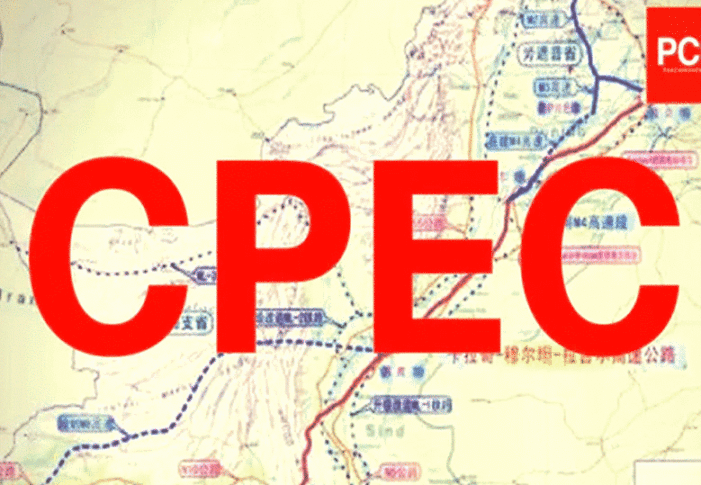
    ISLAMABAD (TIP): The $50 billion China-Pakistan Economic Corridor (CPEC) traversing through PoK might create “geo-political tension” in the region by igniting further tensions between India and Pakistan, a UN report has warned.

    The report released by the UN’s Economic and Social Commission for Asia and the Pacific (ESCAP) said that the project could also fuel separatist movement in Pakistan’s Balochistan province. “The dispute over Kashmir is also of concern, since the crossing of the CPEC in the region might create geo-political tension with India+ and ignite further political instability,” said the report on China’s ambitious Belt and Road Initiative (BRI).

    The report, prepared at the request of China, also cautioned that the instability in Afghanistan could cast a shadow over viability of the CPEC over which India has already raised protests with China and boycotted the last week’s BRI summit in Beijing. “Afghanistan’s political instability could also limit the potential benefits of transit corridors to population centres near Kabul or Kandahar, as those routes traverse southern and eastern Afghanistan where the Taliban are most active,” the report said.

    The report also covered other economic corridors of the BRI including the Bangladesh-China-India-Myanmar Economic Corridor (BCIM). According to the report, while the CPEC could serve as the “driver for trade and economic integration” between China, Pakistan, Iran, India, Afghanistan and the Central Asian states, it could also cause many problems within Pakistan and reignite separatist movement in the country due to opposition in Balochistan.

    “However, social and environmental safeguards are a concern. The CPEC could lead to widespread displacement of local communities+ . In Balochistan, there are concerns that migrants from other regions of Pakistan will render ethnic Baloch a minority in the province,” it said.

    Further, concerns exist that the CPEC will pass from the already narrow strip of cultivable land in the mountainous western Pakistan, destroying farmland and orchards. The resulting resettlements would reduce local population into an “economically subservient minority”, it said. “In addition, Hazaras are another minority of concern. If the benefits of the proposed CPEC are reaped by large conglomerates, linked to Chinese or purely Punjabi interests, the identity and culture of the local population could be further marginalised,” the report cautioned. “Marginalisation of local population groups could reignite separatist movements and toughen military response from the government,” it said.

    About the BRI, it said, the scale of the BRI both in terms of geographical coverage and its cross-sectorial policy influence will shape the future of global development and governance.

    “It brings wide-reaching implications for China, for the countries it links across the Asia-Pacific and for the global economy+ ,” it said. “In order for the full potential of the BRI to be realised there are several prerequisites. It should be founded on principles such as trust, confidence and sharing benefits among participating states.” It should play a positive role in the response to climate change over the coming decades, promoting low carbon development and climate resilient infrastructure, the report said.

    “Lastly, to be effective and deliver results in a timely fashion, it should go beyond bilateral project transactions to promote regional and multilateral policy frameworks,” it said. “The BRI will serve the interests of China and the countries along its corridors more effectively if it is shaped as a collective endeavour and is well integrated into existing regional cooperation initiatives,” it said.

    To this end, the BRI needs to co-opt and engage Asian sub regional platforms to ensure that it reinforces regional plans of connectivity and prioritises the missing transport links along corridors, particularly those in the China-Central-West Asia and the China-Indo-China-Peninsula corridors, it said.

    Shamshad Akhtar, former governor of State Bank of Pakistan, who heads the ESCAP wrote the foreword for the report. In her foreword Akhtar said, “our analysis confirms the benefits the BRI could bring are significant. The BRI could help raise economic output levels by an average of 6 per cent in participating countries. If these countries lowered border transaction costs and import tariffs, the difference the BRI could make would be greater still.” (PTI)

  • Fake News Hyperventilating or Constitutional Crisis, with Brutus lurking in the Ides of March?

    Fake News Hyperventilating or Constitutional Crisis, with Brutus lurking in the Ides of March?

      By Ravi Batra
    The cascading events, generally are layered and rarely, as now, erupt into a crescendo from an approaching constitutional crisis.

    Initially, let me disclose that I am a registered Democrat, and seeing how Hillary’s team, including, DNC, illegally mistreated Sen. Bernie Sanders, and how Huma profited by quitting as Hillary’s deputy chief of staff and was immediately rehired as a “special government employee” and simultaneously got paid to work for the Clinton Foundation and Teneo Holdings – unethical and corrupt – I voted for Donald J. Trump to shake up the Establishment who, like Marie Antoinette, wanted Americans to “eat cake” when they couldn’t afford to “buy bread.” No hardworking American can get such a sweet Huma-Deal, soaked in conflicts of interests and influence peddling, without being shamed and maybe, going to jail. Leave aside Bill’s famous Tarmac Meeting with AG Lynch, forcing her recusal, and causing Comey to act as he did in 2016, where he, Comey cut Hillary a huge break by not indicting her for her planned-private email server, her housekeeper printing classified emails for Hillary’s review, and with full access to Bill to know all confidential matters without any “pillow talk” or an “audit trail” – due to password-sharing by Hillary to her housekeeper (and perhaps, Bill and Huma, etc.). General Petraeus ought get a presidential pardon from President Trump.

    I also admit that I didn’t like Preet Bharara being “fired,” after he was re-hired, as that hurt everyday New Yorkers from getting a government Lincoln decreed, while making those in power feel above-the-law again.

    Now, I turn to the issues at hand. Here is what we know, based upon the fast and furious reportage by The Washington Post, of Watergate fame, The New York Times and CNN, etc.

    President Trump likes General Flynn; even, after terminating him for lying to the Vice President. Perhaps, he likes Flynn too much. We know that Obama administration was told about Flynn-Russia contacts by our Special Allies in Europe. We know Obama warned then-president-elect Trump about Flynn. Yet, Trump as president appointed Flynn NSA, only, to fire him 18 days after he knew Flynn lied to the Vice President, with a termination oddly soaked with Flynn-love.  The bizarre Comey-termination, after a prior failed Loyalty-Pledge Request, was immediately followed by the incredulous Lavrov-Kislyak Oval Office visit with American Media barred, and POTUS later admitting to NBC’s Lester Holt that he, DJT, was thinking of the Russia Investigation when he fired Comey, hence, admitting his invisible state-of-mind worthy of self-immolation.

    If I was personal counsel to Donald J. Trump, not White House Counsel to the Office of the President of the United States, which requires the fiduciary duties protect the Office of the President and not necessarily the man who is president, I would want to know the answer to one critical bifurcated question, to wit: “Donald, did you create or approve of a plan, during your presidential campaign, that a “reachout” to Russia ought occur because you want to: (1)  “restart” US-Russia relations so as to defuse the ever-warming resurgence of the Cold War, as a matter of future US policy to cause Crimea’s return to Ukraine, NATO to refocus on defeating Terror, and Russian nuclear-armed submarines, ships and planes to join United States and NATO to enforce global peace and security? Or, (2) win the 2016 election with help from a foreign power, that is hostile to the United States, in violation of American democracy and rule of law and become the Manchurian President – remote-controlled by Russia?

    If Donald’s answer is YES to (1) and NO to (2), then he is like Nixon in 1968 delivering his famous China Speech at the Council on Foreign Relations, later to open up the world to China in 1971 and switch Taiwan’s United Nations Security Council seat from ROC to PRC. It’s all legal, even as history judges China the winner over Nixon, as China, instead of being a counterbalance to the then-Soviets, pulled a Veto along with Russia in 2013 in UNSC after Syria’s chemical war crimes.

    If Donald’s answer if NO to (1) and YES to (2), then he is in worse shape than Nixon’s Watergate Cover-Up, as here, it would be Trump’s Crime with Trump’s Cover-Up.

    Assuming DJT’s answers are YES and NO, not NO and YES, then I would advise him to cut loose everybody as President Reagan did in the Iran-Contra Affair, and let everybody, especially those who sought to make individual side profits from such Russian engagements to face the music, Congressional and Special Counsel Robert Mueller. For saving the Trump Presidency may be valuable to America and everyday Americans. Just look at what he has accomplished in his First foreign trip with the mature and uniquely capable Rex Tillerson by his side in Riyadh, Saudi Arabia. Just a few years ago, Saudi Arabia was so sick of our non-action against Syria, that after winning the coveted UN Security Council seat, Amb. Abdallah Y. Al-Mouallimi made history by declining the seat and Riyadh considered setting up an alternate multilateral system of government, given the void of American leadership in face of heart wrenching suffering caused by Syria and ISIS.

    However, there is a unique weakness that President Trump faces, that neither Nixon nor Reagan faced, in this early onset of the Impeachment Season: Both Houses of Congress are in Republican control. This is not so much a strength for the disruptive president, as it is a weakness. The Republicans want more than anything to retain both Houses in the 2018 Mid-Term elections. So, after getting the Tax Cut, they prefer to cause Impeachment to start out of righteous indignation, as then they get the normal-Establishment Mike Pence to be president – assuming he is not tainted and already-resigned by knowing about Flynn as Chair of Trump Transition Committee (for how could Flynn have lied to the Vice President in 2017, when Mike Pence already knew about Flynn-Russia and Flynn-Turkey in 2016) – well, then Speaker Paul Ryan is President. So, Mr. President, “beware the Ides of March” as “Brutus” lurks. Julius Caesar Act 1 Scene 2.

    (Ravi Batra, an eminent NY attorney, is a former NYS Commissioner, Joint Commission on Public Ethics; Chair, National Advisory Council South Asian Affairs)

  • Iran votes for reform

    Iran votes for reform

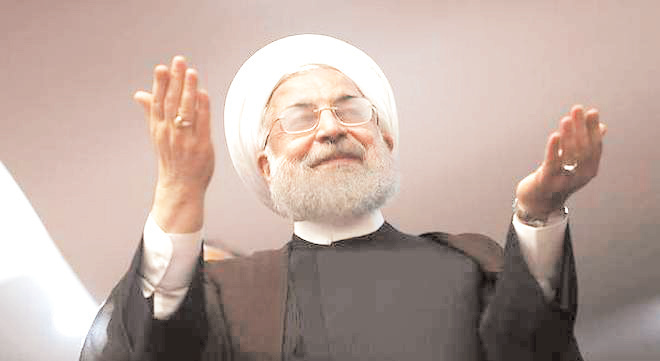
    “Mr. Rouhani’s decisive victory is a shot in the arm for the moderates coming after the elections in February last year for the Parliament and the Assembly of Experts where the moderates and the reformists had registered significant gains”, says the author.
    By Rakesh Sood

    After a difficult campaign, President Hassan Rouhani won a crucial second term in Iran’s presidential elections held on May 19. A high turnout of 73% helped him score a convincing victory over his principal challenger Ebrahim Raisi, a conservative cleric, in the first round itself, winning 57% of the votes compared to Mr. Raisi’s 38.5%. More than two-thirds of Iran’s voters are in urban areas and most of them are Rouhani supporters; therefore, as voting hours got extended to midnight indicating a high turnout, the mood in the Rouhani camp turned jubilant.

    A DIFFICULT CAMPAIGN:

    In 2013, Mr. Rouhani had campaigned and won on a platform that focused on bringing sanctions to an end,which he was able to achieve in July 2015 with the Joint Comprehensive Plan of Action (JCPOA), a nuclear agreement concluded with the P-5 + 1. The sanctions relief has had a positive impact on the economy with oil exports up and GDP growth hitting 6% last year though expectations were higher. In a TV debate in the run-up to the election, Mr. Raisi described the JCPOA as ‘a check that Rouhani had failed to cash’. Opinion polls had favored Mr. Rouhani, because Mr. Raisi, though close to the Supreme Leader,Ayatollah Ali Khamenei, was considered a relative newcomer to politics. However, concern grew when Mohammad Bagher Ghalibaf, a former Iranian Revolutionary Guards Corps (IRGC) pilot and the Mayor of Tehran since 2005, withdrew from the race in support of Mr. Raisi, who had spent most of his life in the judiciary before being appointed custodian of the shrine of Imam Reza in Mashhad last year. He also controls Astan-e-Quds Razavi, one of the wealthiest foundations, and is seen a possible successor to the present Supreme Leader who is 77 and in poor health.

    Therefore Mr. Rouhani’s decisive victory is a shot in the arm for the moderates coming after the elections in February last year for the Parliament and the Assembly of Experts where the moderates and the reformists had registered significant gains.

    ROUHANI’S CONSTRAINTS:

    However, given Iran’s complex governance structures, President Rouhani will have to tread carefully as his powers and those of the directly elected 290- member Parliament are constrained by the non-elected authorities. The key power center is the Supreme Leader who is appointed by the Assembly of Experts and in turn appoints the heads of radio and TV, the armed forces and the IRGC, the Supreme National Security Council, the 51-member Expediency Council and the higher judiciary. He also chooses six members of the powerful Guardian Council, with the other six nominated by the judiciary. The Guardian Council in turn vets candidates for all elections, presidential, parliamentary and the 88-member Assembly of Experts. It cleared only six candidates out of the more than 1,600 who filed nominations for the presidential contest; rejections included former President Mahmoud Ahmadinejad’s nomination. In addition, it approves all legislation passed by Parliament to ensure its consistency with Islamic jurisprudence. A dispute between Parliament and the Council is resolved by the Expediency Council. The Assembly of Experts is directly elected and its primary role is to appoint the Supreme Leader, critical during Mr. Rouhani’s second term.

    Mr. Rouhani’s principal challenge will be to sustain economic growth and nudge the reform process forward in order to tackle unemployment, currently running at over 12%, and higher among the youth. He has promised to expand individual and political rights, enlarge women’s role and ensure greater accountability.

    Some of these will be challenged. While his victory margin is a clear endorsement for reform, the Supreme Leader will play a critical balancing role. It is interesting that, in his immediate remarks, he praised the Iranian people for the impressive turnout, but did not congratulate the winner.

    In foreign policy, Mr. Rouhani will present the image of a moderate and more outward-oriented Iran. He is no stranger to Iran’s complex politics. From 1989 to 2005, he was Secretary of the Supreme National Security Council, reporting to the Supreme Leader, and handled the nuclear negotiations during 2003-05.

    During this period, he also served a term each as Deputy Speaker of Parliament and as member of the Expediency Council. Following Mr. Ahmadinejad’s election in 2005, he quit. After being elected in 2013, he persuaded the Supreme Leader to shift responsibility for the nuclear negotiations to the Foreign Ministry and let Foreign Minister Mohammad Javad Zarif take the lead.

    In addition to managing his home front, the other challenge for Mr. Rouhani will be keep the JCPOA going in the face of the U.S. Congress’s and now President Donald Trump’s declared hostility.

    DEALING WITH TRUMP:

    During the election campaign, Mr. Trump had called it the ‘worst deal ever’ and threatened to tear it up as soon as he was elected! Subsequently, he seems to have modified his position, realizing perhaps that it is not just a bilateral agreement with Iran but also includes Russia, China, the U.K., France, Germany and the European Union. In April, the Trump administration certified that Iran was abiding by its obligations but Secretary of State Rex Tillerson added that a 90- day policy review would be undertaken in view of ‘Iran’s alarming ongoing provocations’.

    More recently, on May 17, the Trump administration continued the sanctions waiver (under Section 1245 of the National Defense Authorization Act 2012), needed every 120 days even while imposing sanctions on seven Iranian and Chinese individuals and entities on account of missile proliferation activities.

    In April, a slew of human rights related sanctions were imposed. In mid- June another waiver, this time under the Iran Freedom and Counter-Proliferation Act, will need to be renewed if the JCPOA is to be sustained. These are necessary because in 2015, the Republican-dominated Congress rejected the JCPOA and U.S.

    President Barack Obama used executive authority to waive U.S. sanctions but these waivers need to be renewed periodically. The JCPOA was the outcome of protracted negotiations over more than a decade, during which Iran had steadily built up its nuclear capabilities, especially in the enrichment domain, and in 2015 was estimated to be only months away from acquiring enough Highly Enriched Uranium to produce one device (approximately 25 kg) though Iran consistently maintained that its program was exclusively for peaceful purposes. Given deep suspicions however, the JCPOA with its extensive inspection and reporting obligations was the best way to prevent Iran from developing a military nuclear capability for the next 10-15 years.

    Opponents say that while cheating is unlikely, they fear that Iran will retain its nuclear appetite after abstaining during the 10-15 year period and resume its activity once the inspection obligations expire.

    THE SAUDI FACTOR:

    Perhaps the most troubling problem is the new embrace of Saudi Arabia that was in evidence during Mr. Trump’s visit. It raises the prospects of greater U.S. involvement in the war in Yemen and can push relations with Iran into a confrontation. In 2016, there were 19 ‘incidents at sea’ between U.S. and Iranian vessels in the Persian Gulf. The most serious was in January 2016 when the IRGC held two U.S. vessels and 10 servicemen, accused of trespassing in Iranian waters. The crisis was resolved within hours, thanks to some quick phone conversations between U.S. Secretary of State John Kerry and Mr. Zarif. That link is missing today.

    It is all the more ironic because Iran is the one country that is opposed to the Islamic State. Yet the U.S. is keener to bless the Saudi-created Islamic Military Alliance to Fight Terrorism, a grouping of 41 Sunni nations, under the command of former Pakistani Army Chief, General Raheel Sharif. It remains unclear what the role of this coalition is, to fight the IS or Iran or in Yemen, or to secure the Gulf monarchies!

    For the last quarter century, the U.S. practiced dual containment of Iran and Iraq, a policy that suited both Israel and Saudi Arabia. Mr. Obama’s push for the JCPOA was driven by a desire to extricate U.S. policy from this stranglehold and expand options. If a return to the Saudi embrace creates additional tensions and a collapse of the JCPOA, it could push Iran to cross the nuclear threshold with much wider regional implications.Mr. Rouhani’s challenges are just beginning.

    (The author is a former diplomat and currently Distinguished Fellow at the Observer Research Foundation. He can be reached at rakeshsood2001@yahoo.com)

  • Shen Yun: The Stunning Theatrical Extravaganza

    Shen Yun: The Stunning Theatrical Extravaganza

    By Mabel Pais

    NEW YORK CITY (TIP): Preity Uupula, a former Miss India International, said of Shen Yun, “The energy was very powerful in the room. (For) some of the pieces, I just closed my eyes and I felt like it was a meditation. It’s very healing actually.”

    Like India, China can be proud of 5000 years of an ancient, rich civilization and culture. Having some of its roots in the ancient Indian spiritual path of Buddhism, Shen Yun, based in New York, has a mission to revive 5000 years of divinely inspired culture.

    The last performances of this breathtaking theatrical amazement, for the season, were held at NJPAC (the New Jersey Performing Arts Center, NJ) from May 3-7. For 5,000 years, divine culture flourished in the land of China.

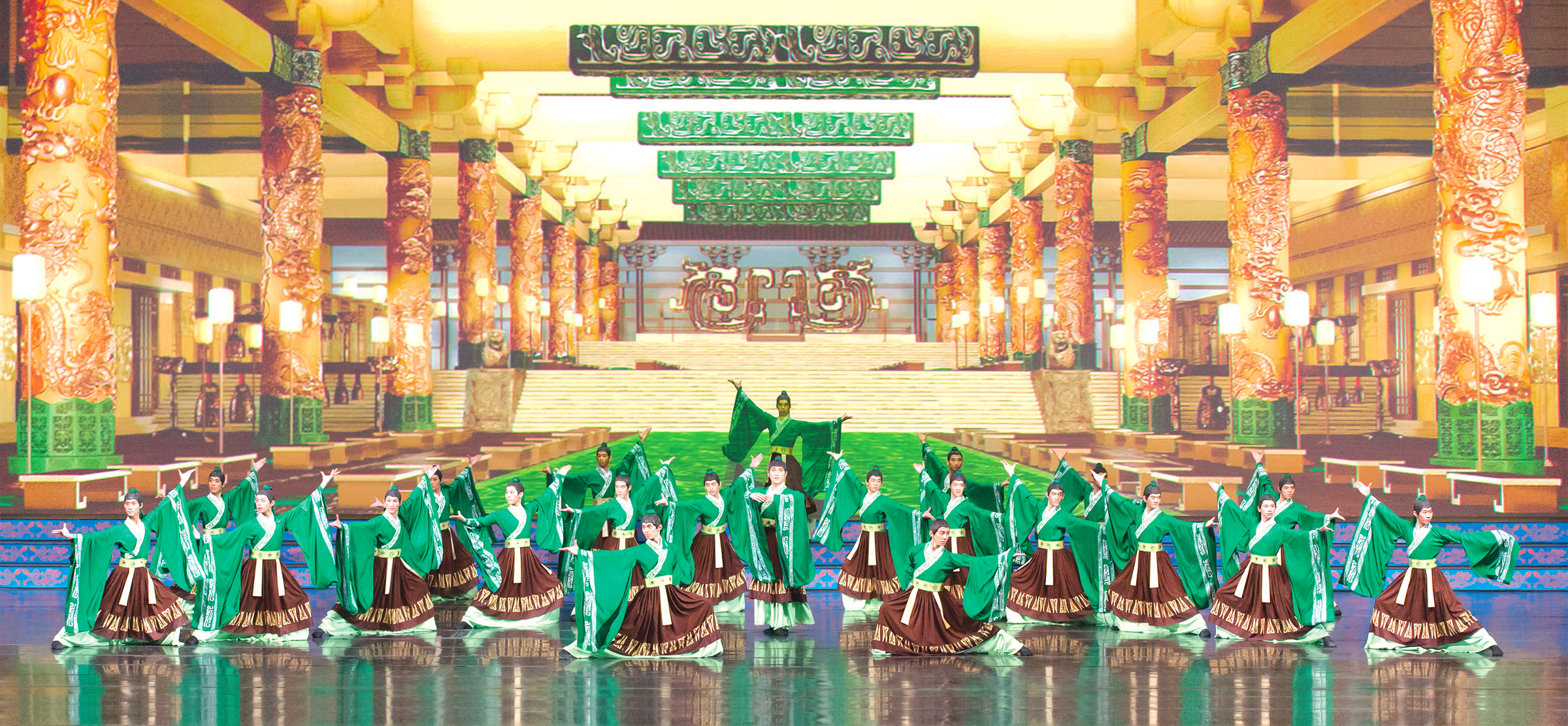
    Shen Yun Performing Arts, Manchurian Elegance
    Shen Yun Performing Arts, Sleeves of Grace
    Shen Yun Performing Arts, Han Imperial Air

    Humanity’s treasure was nearly lost, but through breathtaking music and dance, Shen Yun is bringing back this glorious culture. Shen Yun means, “The beauty of heavenly beings dancing.”

    Falun Dafa, also known as Falun Gong, is a practice that combines teachings for self improvement and meditation exercises. The teachings are centered on three main principles-truth, compassion, and tolerance.

    Shen Yun’s artists practice Falun Dafa, and it is a source of inspiration for their performances. However, over the last 60 years of Communist rule, the regime has treated Chinese values – centered on the idea of harmony between heaven and earth – as a threat to its existence and banned traditional beliefs and practices.

    Through the universal language of music and dance, Shen Yun weaves a wondrous tapestry of heavenly realms, ancient legends, and modern heroic tales, taking you on a journey through 5,000 years of Chinese culture. Its stunning beauty and tremendous energy leave audiences uplifted and inspired.

    A Shen Yun performance features the world’s foremost classically trained dancers, a unique orchestra blending East and West, and dazzling animated backdrops-together creating one spectacular performance. The Shen Yun Symphony Orchestra blends the singular beauty of Chinese melodies with the precision and power of the Western orchestra.

    “Amazing! The artists perform as if they are fluid bodies with no bones. Gravity does not apply to them. They leap and fly in the air while they perform their numbers…..” quipped Pattie King, audience member at NJPAC.

    “Mesmerizing! Reclaiming the divinely inspired cultural heritage of China,” remarked Donna Karan, creator of DKNY.

    “I was mesmerized and astonished within the first few minutes…..Shen Yun music proves that not every message needs to be delivered via language or written words…..” Rojin Rahmani, musician.

    Shen Yun Performing Arts is the world’s premier classical Chinese Dance and Music company. In 2006, a group of leading classical internationally award winning Chinese artists came together in New York with one wish: to revive the 5000-year-lost world of traditional Chinese culture and share it with the world. Through breath taking music and dance, Shen Yun is bringing back this glorious culture.

    Each season, the company produces an all new show and tours with it around the globe, performing at the world’s top venues – Lincoln Center in New York, The New Jersey Performing Arts Center, New Jersey, Kennedy Center in Washington, the London Coliseum.

    Since ancient times, Chinese culture has been heralded as a gift from the divine; and part of that divine gift was a supreme art form that has endured to this day: Classical Chinese Dance. “It (Classical Chinese Dance) has a history of several thousand years in both folk and imperial settings. It served as entertainment for large gatherings and celebrations”, says Ms. H. Sue Guo, Principal, The Fei Tian Academy of the Arts College, New York, the college that trains the performers of Shen Yun. Branches of the college exist in California and Taiwan.

    Within China’s grand civilization of 5000 years, many traditions are linked together: martial arts, Chinese opera, folk dance and acrobatics. They all have something in common. Chinese dance has 3 main components: technical skill, form and a special feature called yun or physical bearing. Chinese dance’s technical skills include a whole series of challenging leaps, jumps, flips and many difficult tumbling techniques.

    In eastern philosophy, there is a saying “beauty and roundness,” explains choreographer, principal dancer and associate company manager Yungchia Chen. “The path of the movement needs to be circular, rounded and full. It’s different from ballet which focuses on straight lines.”

    What takes classical Chinese dance to another level is yun or physical bearing that is a certain sensibility when Chinese people perform classical Chinese dance. “It’s an artistic feeling that rises from the culture” demonstrates dance teacher Gu Yun. When the dancer moves there is an internal energy connected to the breath. The breath meets the body. The breath is crucial.

    Over the centuries, the technical skills, form and bearing all come together to make classical Chinese dance one of the richest, most expressive and most demanding art forms in the world.

    The training process for each dancer is extremely arduous. Daily training lasts for 7- 8 hours. It takes 6 years schooling just to be good enough to go on stage. After 10 years training in college is completed.

    Every year, Shen Yun creates a whole new production with original dances, costumes and music. By adding the distinctive melodies of ancient Chinese instruments, over Western orchestration, Shen Yun brings together two of the greatest classical musical traditions the world has ever known.

    Johnny Stuart, music director, calls the music “just phenomenal, mind blowing!” Music conductor Leon Natker says that “putting together classical Chinese instruments and classical western instruments is a way towards the future for me as a musician.” Jing Xian, a composer of the performance, says, “Both these (Chinese and western) musical systems are excellent. But it’s just like cooking. You might have great ingredients but if we don’t understand the characteristics of the ingredients, and to stir fry random things together, it simply won’t taste good.”

    Shen Yun music displays China’s traditional melodies. Just like dance, music can also present different times, places, characters and moods. China has 5 millennia worth of culture: from the melodic styles of over 50 ethnic groups to grand imperial court music and lavish folk tunes. This heritage is an endless source of inspiration.

    “What we are taking on is a responsibility we simply cannot shirk. There are times when I really feel it’s our life’s mission. It may take many life times to complete.” “I have dedicated my entire life to the arts. Yet it was only after I reached my 70s that I found that this is where it has the greatest meaning,” says Ms. H. Sue Guo, Principal, The Fei Tian Academy of the Arts College, New York.

    (Mabel Pais is a freelance writer. She writes on theater, health and wellness, social issues and spirituality)


  • US envoy: North Korea is intimidating the entire world

    US envoy: North Korea is intimidating the entire world

    UNITED NATIONS: US Ambassador Nikki Haley accused North Korea on Tuesday of intimidating the entire international community with its nuclear program, military ability and cyberattacks, and said any country that doesn’t implement UN sanctions is supporting Pyongyang’s actions.

    “No one is immune to the threat of North Korea,” she told reporters before emergency closed-door consultations by the UN Security Council on the North’s weekend ballistic missile launch, which experts said demonstrated a significant technological jump with the rocket flying higher and for a longer period of time.

    “We’re not going to continue to just say go ahead and test as often as you want,” Haley said, flanked by the South Korean and Japanese ambassadors. “This is a true threat to every country in the world. … We’re going to make sure we put the pressure on them economically, diplomatically, politically and internationally.” Haley said the US and China have been working on “a unified plan” on how to approach North Korea that would include stronger implementation of existing sanctions and tougher new sanctions.

    She indicated Washington and Beijing had agreed they would take action if a new test looked to be long range and leaning toward an intercontinental ballistic missile that could reach the United States.

    The latest launch appeared to fulfill both criteria, Haley said, “so I believe that China will stay true to that, and that we’ll come together on how we’re going to do that.”

    The Security Council, which has imposed six rounds of sanctions on the North, discussed possible further action at Tuesday’s meeting. Haley previously indicated that new sanctions could target oil, a critical import for North Korea mainly from China, and she said Tuesday the US also wants sanctions on organizations and businesses in third countries  that are helping Pyongyang.

    Uruguayan Ambassador Elbio Rosselli, the current council president, said after the meeting that members are united in condemning the latest missile launch as “a serious threat to international peace.” He said the council is exploring many different avenues to proceed and “clearly sanctions are a way to go,” but also diplomacy.

    Council diplomats, speaking on condition of anonymity because the consultations were private, said China never mentioned working with the US on a new sanctions resolution, and both China and Russia said they support a negotiated solution through dialogue.

    Haley was asked about comments by Russian President Vladimir Putin in Beijing on Monday who called North Korea’s nuclear and missile tests “unacceptable” but also said the United States should stop intimidating Pyongyang.

    “We need to return to dialogue with the Democratic People’s Republic of Korea, stop intimidating it and find ways to solve these problems peacefully,” Putin was quoted as saying, using North Korea’s official name. “Is it possible or not? I think it is possible.”

    Haley answered Putin and others who have made similar comments about the United States: “What about North Korea intimidating us? They’re intimidating the entire international community. They’re trying to strengthen their muscle with no cause. There is no reason for North Korea to be having these actions outside of the fact they just choose to do so.”

    Haley noted that this weekend’s missile came within 60 miles of Russia’s border and said Russia is “all wrong.” “It is actually North Korea trying to intimidate the international community,” Haley said, “and Russia itself should be concerned because that ballistic missile test was a signal to South Korea for their new elections, it was a signal to

    Russia in how close it got, it was a signal to Japan being in the region, and it was a signal to us.”

    The US ambassador said Russia has the same decision to make as the rest of the international community: “You either support North Korea or you don’t, but you have to choose. You have to pick a side.”

    She said North Korean leader Kim Jong Un is “paranoid” and thinks that the United States is trying to promote regime change and that there are people trying to assassinate him.

    “We’re not trying to do any of those things,” she said. “What we are saying is that for peace on the Korean peninsula, he has to stop his testing. He has to stop any nuclear programs that he has. The US, we are willing to talk — but not until we see a total stop of the nuclear process and any tests there.”

    Haley said the Security Council is going to send a strong and unified message to North Korea that “the international community wants to support you but as long as you test, and as long as you continue your nuclear program, you are on an island by yourself.” (AP)

  • North Korea missile program progressing faster than expected, says South

    North Korea missile program progressing faster than expected, says South

    SEOUL (TIP): North Korea’s missile program is progressing faster than expected, South Korea’s defense minister said on May 15, hours after the UN Security Council demanded the North halt all nuclear and ballistic missile tests and condemned Sunday’s test-launch.

    The reclusive North, which has defied all calls to rein in its weapons programs, even from its lone major ally, China, has been working on a missile, mounted with a nuclear warhead, capable of striking the US mainland. US President Donald Trump’s administration has called for an immediate halt to Pyongyang’s provocations and has warned that the “era of strategic patience” with North Korea is over. US Disarmament Ambassador Robert Wood said on Tuesday China’s leverage was key and that it could do more.

    South Korean defense minister Han Min-koo told parliament Sunday’s test launch was “successful in flight”. “It is considered an IRBM (intermediate range ballistic missile) of enhanced caliber compared to Musudan missiles that have continually failed,” he said, referring to a class of missile designed to travel up to 3,000 to 4,000km.

    Asked if North Korea’s missile program was developing faster than the South had expected, he said: “Yes.”The North’s KCNA news agency said Sunday’s launch tested its capability to carry a “large-size heavy nuclear warhead”. Its ambassador to China said in Beijing on Monday it would continue such test launches “any time, any place”.Trump and new South Korean President Moon Jae-in will meet in Washington next month, with North Korea expected to be high on the agenda, the South’s presidential Blue House said.

    Moon met Matt Pottinger, overseeing Asian affairs at the US National Security Council, on Tuesday and said he hoped to continue to have “sufficient, close discussions” between Seoul and Washington, the Blue House press secretary said at a briefing.

    ‘FURTHER SANCTIONS POSSIBLE’:

    In a unanimously agreed statement, the 15-member UN Security Council said it was of vital importance that North Korea show “sincere commitment to denuclearization through concrete action and stressed the importance of working to reduce tensions”.

    “To that end, the Security Council demanded the Democratic People’s Republic of Korea conduct no further nuclear and ballistic missile tests,” the council said, adding that it was ready to impose further sanctions on the country.

    The statement also condemned an April 28 ballistic missile launch by Pyongyang. Following that launch, Washington began talks with China on possible new UN sanctions. Traditionally, the United States and China have negotiated new measures before involving remaining council members. (Reuters)

  • New China-made attack chopper makes maiden flight

    New China-made attack chopper makes maiden flight

    BEIJING (TIP): The China-made attack helicopter Z-19E made its deput flight from the Harbin airport on May 18 marking a major step towards the country’s entry into the global market for combative choppers.

    Also called the “Black Whirlwind,” the Z-19E, which took the maiden flight on Thursday, is the first export-oriented attack helicopter developed by the AVIC Harbin Aircraft Industry Group.

    Based on the Z-19’s design, the 19E can be used in quick response, low-impact and frequent attack missions, the China National Radio reported.

    Deputy chief designer Li Shengwei said the helicopter is equipped with safety features to improve the pilot’s survival rate.

    “The Z-19E and Z-9 are similar in many respects,” Li said. In terms of manoeuvrability and functions, the Z-19E meets international standards and its operating interface is in English, he said.

    “The Z-19E has strong market potential as some of its components are compatible with other countries’ military systems,” Song Zhongping, a military expert who served in the PLA Rocket Force, told the state-run Global Times.

    Song also noted that the helicopter would fare well in the global market. (AP)

  • China reports progress on South China Sea code of conduct

    China reports progress on South China Sea code of conduct

    BEIJING (TIP): China says it has reached agreement with the 10 countries of the Association of Southeast Asia Nations on the rough outline of a legally binding code of conduct designed to prevent clashes in the strategic South China Sea.

    State media on Friday quoted Vice Foreign Minister Liu Zhenmin as saying that the agreement reached the day before laid a “solid foundation” for further negotiations.

    Liu said the text of the framework agreement would remain secret and projected no date for finalizing the code of conduct.

    China and the members of ASEAN committed 15 years ago to signing a code of conduct, but progress has been slow amid disputes over the body of water that China claims virtually in its entirety. (AP)

  • S Korea president says ‘high possibility’ of conflict with North

    S Korea president says ‘high possibility’ of conflict with North

    SEOUL (TIP): South Korean President Moon Jae-in said on May 14 there was a “high possibility” of conflict with North Korea, which is pressing ahead with nuclear and missile programmes it says it needs to counter US aggression.

    The comments came hours after the South, which hosts 28,500 US troops, said it wanted to reopen a channel of dialogue with North Korea as Moon seeks a two-track policy, involving sanctions and dialogue, to try to rein in its neighbour.

    North Korea has made no secret of the fact that it is working to develop a nuclear-tipped missile capable of striking the US mainland and has ignored calls to halt its nuclear and missile programmes, even from China, its lone major ally.

    It conducted its latest ballistic missile launch, in defiance of UN Security Council resolutions, on Sunday which it said was a test of its capability to carry a “large-size heavy nuclear warhead”, drawing Security Council condemnation.

    “The reality is that there is a high possibility of a military conflict at the NLL (Northern Limit Line) and military demarcation line,” Moon was quoted as saying by the presidential Blue House. He also said the North’s nuclear and missile capabilities seem to have advanced rapidly recently but that the South was ready and capable of striking back should the North attack .

    Moon won an election last week campaigning on a more moderate approach towards the North and said after taking office that he wants to pursue dialogue as well as pressure. But he has said the North must change its attitude of insisting on pressing ahead with its arms development before dialogue is possible. South Korean Unification Ministry spokesman Lee Duk-haeng told reporters the government’s most basic stance is that communication lines between South and North Korea should reopen.

    “The Unification Ministry has considered options on this internally but nothing has been decided yet,” said Lee.

    NO WORD YET ON THAAD

    Communications were severed by the North last year, Lee said, in the wake of new sanctions following North Korea’s fifth nuclear test and Pyongyang’s decision to shut down a joint industrial zone operated inside the North. North Korea and the rich, democratic South are technically still at war because their 1950-53 conflict ended in a truce, not a peace treaty. The North defends its weapons programmes as necessary to counter US hostility and regularly threatens to destroy the United States. Moon’s envoy to the United States, South Korean media mogul Hong Seok-hyun, left for Washington on Wednesday. Hong said South Korea had not yet received official word from the United States on whether Seoul should pay for an antimissile US radar system that has been deployed outside Seoul.

    US President Donald Trump has said he wants South Korea to pay for the Terminal High Altitude Area Defense (THAAD) anti-missile system which detected Sunday’s test launch. China has strongly opposed THAAD, saying it can spy into its territory, and South Korean companies have been hit in China by a nationalist backlash over the deployment.

    The United States said on Tuesday it believed it could persuade China to impose new UN sanctions on North Korea and warned that Washington would also target and “call out” countries supporting Pyongyang.

    Speaking to reporters ahead of a closed-door UN Security Council meeting, US Ambassador to the United Nations Nikki Haley also made clear that Washington would only talk to North Korea once it halted its nuclear programme. Trump has called for an immediate halt to North Korea’s missile and nuclear tests and US Disarmament Ambassador Robert Wood said on Tuesday that China’s leverage was key and Beijing could do more.

    Trump warned this month that a “major, major conflict” with North Korea was possible, and in a show of force, sent the Carl Vinson aircraft carrier strike group to Korean waters to conduct drills with South Korea and Japan.

    The US troop presence in South Korea, a legacy of the Korean War, is primarily to guard against the North Korean threat. (AP)

  • India’s boycott of One Belt, One Road summit in China was self-defeating

    India’s boycott of One Belt, One Road summit in China was self-defeating

    Narrow-mindedness, lack of vision, and an inflated sense of our own place in the world drove this latest tantrum

    By Girish Shahane
    “Our self-deceptionwouldn’t matter had it not led to India potentially being frozen out of the most important trade architecture in our part of the globe, a chain of highways, rail connections, sea routes and telecommunications facilities that would be particularly helpful to our tragically underdeveloped Northeast”, says the author.

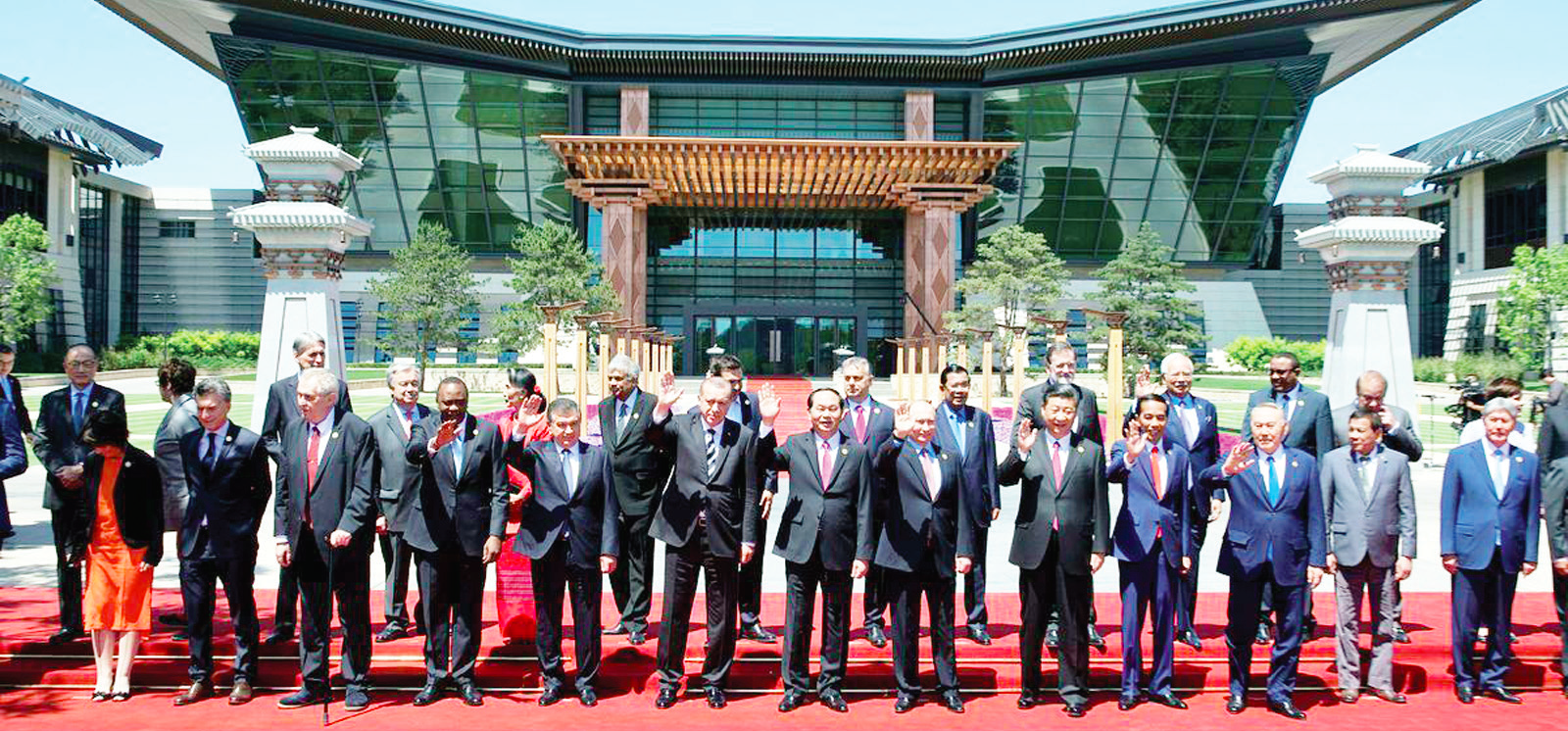
    Last week, China hosted a massive summit to spur one of the most ambitious global trade infrastructure initiatives in history. As leaders from across Asia, Africa, Europe and Latin America gathered in Beijing to work on details of the

    One Belt, One Road plan, India chose to take its bat and ball and go home. Unfortunately for us, nobody needed India’s bat and ball. Our absence was barely noticed, and our rejection of the initiative will hurt only ourselves.

    China’s President Xi Jinping used the summit to claim moral and practical leadership of global free trade for the second time in five months. The first was in Davos last winter, soon after the United States’ counter to China, the Trans-Pacific Partnership, had been capsized by the populist tidal wave that brought Donald Trump to power.

    The OBOR plan, as might be expected, was dreamt up primarily as a way for China to continue its growth trajectory for the foreseeable future. The country has overinvested in its own infrastructure, and is afraid its traditional export markets will not support the nation’s continued growth. Its solution to both these profound crises is to offer its expertise in building infrastructure and credit from a newly-minted bank to underdeveloped nations, expanding those markets in the process. By reinventing the Silk Road for the current century, Xi and his colleagues hope to boost the economy of China’s western states, which has lagged behind even as coastal regions have been transformed in the past three decades. If it works, OBOR will be a win-win for all countries concerned. If it doesn’t, China stands to lose the most.

    India’s main objection to the OBOR plan is that a segment of it, the China-Pakistan Economic Corridor, passes through parts of the erstwhile Jammu and Kashmir state that India claims as its territory. Claiming land that we haven’t controlled for 70 years, whose residents have never shown any interest in becoming Indian citizens, is an absurd charade played by all our political parties in tandem with our refusal to countenance a negotiated solution to the entire Kashmir issue. We continue to delude ourselves that Gilgit-Baltistan is part of India, but can do nothing about it beyond punishing cartographers who suggest otherwise, while the world community looks on in bemusement like an adult faced with a child who demands acknowledgement of an imaginary friend.

    LOSS AVERSION
    One Belt, One Road is a chain of highways,
    sea routes and telecom facilities.
    Image courtesy/ Chatham House

    Our self-deception wouldn’t matter had it not led to India potentially being frozen out of the most important trade architecture in our part of the globe, a chain of highways, rail connections, sea routes and telecommunications facilities that would be particularly helpful to our tragically underdeveloped Northeast. Why do we seek to engage in a symbolic fight rather than focus on what will provide concrete benefits to Indians? Hallucinatory nationalism is part of the answer, but not the whole story. It is complemented by loss aversion. The strength of that impulse has been demonstrated repeatedly by psychologists and economists. The pain we feel after losing ten rupees outweighs our joy at gaining the same amount. In fact, it’s likely that the pain of losing ten rupees outweighs the joy of gaining twice that amount. This imbalance becomes crucial in political calculations, and is bolstered by three related factors.

    First, the causes behind loss tend to be more specific and easily definable than the causes behind gains, a phenomenon proven by the backlash against globalisation. Second, the groups that lose as a result of a policy and those who gain are quite different. Third, pain often precedes gain and comes as a sharp shock, while gain is spread out over years and even generations. In the final equation, you get a set of people with a definable loss, who feel their pain sharply, and feel it right away, and another lot that might be far larger but whose lives improve over a long period of time for reasons that aren’t entirely clear, whose joy does not measure up to the pain of commensurate loss. It’s no wonder that politicians tend not to risk antagonising the first group even if it means denying the second far greater reward.

    That said, the Narendra Modi government could have sent an envoy to the OBOR summit without much political loss. A few hyper-nationalists would have been pained by our tacit acceptance of Pakistan’s flagrant attempt to better the lot of its citizens. On the other hand, since China helped build the Karakorum Highway decades ago, it’s hard to see how its planned upgrade threatens India’s fictitious sovereignty over the region. No, it wasn’t fear of a backlash or an understanding of loss aversion that drove our latest tantrum. It was narrow mindedness, lack of vision, and an inflated sense of our own place in the world.

    (Source: Scroll.in)

  • US envoy: North Korea is intimidating the entire world

    US envoy: North Korea is intimidating the entire world

    UNITED NATIONS: US Ambassador Nikki Haley accused North Korea on Tuesday of intimidating the entire international community with its nuclear program, military ability and cyberattacks, and said any country that doesn’t implement UN sanctions is supporting Pyongyang’s actions.

    “No one is immune to the threat of North Korea,” she told reporters before emergency closed-door consultations by the UN Security Council on the North’s weekend ballistic missile launch, which experts said demonstrated a significant technological jump with the rocket flying higher and for a longer period of time.

    “We’re not going to continue to just say go ahead and test as often as you want,” Haley said, flanked by the South Korean and Japanese ambassadors. “This is a true threat to every country in the world. … We’re going to make sure we put the pressure on them economically, diplomatically, politically and internationally.”

    Haley said the US and China have been working on “a unified plan” on how to approach North Korea that would include stronger implementation of existing sanctions and tougher new sanctions.

    She indicated Washington and Beijing had agreed they would take action if a new test looked to be long range and leaning toward an intercontinental ballistic missile that could reach the United States.

    The latest launch appeared to fulfill both criteria, Haley said, “so I believe that China will stay true to that, and that we’ll come together on how we’re going to do that.” The Security Council, which has imposed six rounds of sanctions on the North, discussed possible further action at Tuesday’s meeting. Haley previously indicated that new sanctions could target oil, a critical import for North Korea mainly from China, and she said Tuesday the US also wants sanctions on organizations and businesses in third countries that are helping Pyongyang.

    Uruguayan Ambassador Elbio Rosselli, the current council president, said after the meeting that members are united in condemning the latest missile launch as “a serious threat to international peace.” He said the council is exploring many different avenues to proceed and “clearly sanctions are a way to go,” but also diplomacy.

    Council diplomats, speaking on condition of anonymity because the consultations were private, said China never mentioned working with the US on a new sanctions resolution, and both China and Russia said they support a negotiated solution through dialogue.

    Haley was asked about comments by Russian President Vladimir Putin in Beijing on Monday who called North Korea’s nuclear and missile tests “unacceptable” but also said the United States should stop intimidating Pyongyang.

    “We need to return to dialogue with the Democratic People’s Republic of Korea, stop intimidating it and find ways to solve these problems peacefully,” Putin was quoted as saying, using North Korea’s official name. “Is it possible or not? I think it is possible.”

    Haley answered Putin and others who have made similar comments about the United States: “What about North Korea intimidating us? They’re intimidating the entire international community. They’re trying to strengthen their muscle with no cause. There is no reason for North Korea to be having these actions outside of the fact they just choose to do so.”

    Haley noted that this weekend’s missile came within 60 miles of Russia’s border and said Russia is “all wrong.” “It is actually North Korea trying to intimidate the international community,” Haley said, “and Russia itself should be concerned because that ballistic missile test was a signal to South Korea for their new elections, it was a signal to Russia in how close it got, it was a signal to Japan being in the region, and it was a signal to us.”

    The US ambassador said Russia has the same decision to make as the rest of the international community: “You either support North Korea or you don’t, but you have to choose. You have to pick a side.”

    She said North Korean leader Kim Jong Un is “paranoid” and thinks that the United States is trying to promote regime change and that there are people trying to assassinate him. “We’re not trying to do any of those things,” she said. “What we are saying is that for peace on the Korean peninsula, he has to stop his testing. He has to stop any nuclear programs that he has. The US, we are willing to talk — but not until we see a total stop of the nuclear process and any tests there.”

    Haley said the Security Council is going to send a strong and unified message to North Korea that “the international community wants to support you but as long as you test, and as long as you continue your nuclear program, you are on an island by yourself.” (AP)

  • Nepal in talks with China to build $8 bn cross-border rail link

    Nepal in talks with China to build $8 bn cross-border rail link

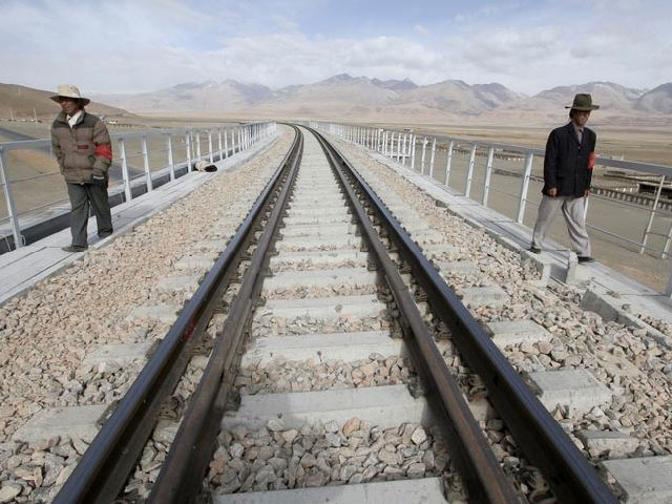
    BEIJING (TIP): Nepal is in talks with China to build a cross-border rail link that may cost up to $8 billion, and funding could be expected after Nepal formally signed up to Beijing’s Belt and Road initiative, a Nepali finance ministry official said on May 14.

    Yug Raj Pandey, an under-secretary at Nepal’s ministry of finance, told Reuters the proposed 550 kilometre-long railway would connect China’s western Tibet region to Nepal’s capital of Kathmandu and will carry goods and passengers.

    The Himalayan nation officially signed an agreement two days ago to be part of President Xi Jinping’s ambitious plan to build a new Silk Road, he said on the sidelines of the Belt and Road Forum in Beijing.

    “Now we are a member of (the initiative) we can get some specific project assistance from China’s government. We expect it for the railway,” he said. “Once we connect by railway then we can increase our trade and invite more tourists to Nepal.”

    Pandey said the two countries had been in discussions for the past five months about the project, which could cost $7-8 billion and take up to eight years to complete.

    He said Nepal planned to start preparing a detailed project report for the railway, and that they had yet to decide how much funding they will seek from China.

    The railway will travel over 400 kilometres in China to the Nepal border, and then about another 150 kilometres from the Nepali border to Kathmandu, he said.

    (Reuters)

  • THE GETAWAY TO MEET THE OMNIPRESENT

    THE GETAWAY TO MEET THE OMNIPRESENT

    THE GETAWAY TO MEET THE OMNIPRESENT

    Char Dham of Uttarakhand or ChotaChar Dham (small four abodes) is one of the most important Hindu Pilgrimages in India. It comprises of four most holy sites of Uttarakhand, namely – Badrinath, Kedarnath, Gangotri and Yamunotri. When and how these places got linked in a pilgrimage circuit together is not known. Each of the places has its own individual and legendary history. But perhaps it is the greatness and mysticism of each site that has qualified them to form a sacred pilgrimage tour.

    Till 1950s going to the four most sacred sites of Uttarakhand meant embarking on a strenuous journey on foot through the hilly trails. People, like wandering sadhus, and those who could afford to travel with an entourage, were the most likely and regular pilgrims of Chota Char Dham. After the 1962 Indo – China war, India put massive efforts in building means of better connectivity to and infrastructure at border areas. Now the roads could take one till the nearest points of the holy abodes. This encouraged people from other backgrounds (economic or social) to initiate a tour of Char Dham circuit in Himalayas.

    HISTORY OF YAMUNOTRI

    Yamunotri is where the second most holy of river of India, the River Yamuna, takes birth. Situated in the Uttarkashi district of Uttarakhand, Yamunotri Dham is the first stop in the pilgrimage. It is believed that bathing in its water cleanses all sins and protects from untimely and painful death. The shrine of Yamunotri is believed to be built in 1839 by the king of Tehri, Naresh Sudarshan Shah. Besides the Yamuna Devi (goddess), the idol of Ganga Devi too is housed in the revered temple. There are many hot water springs near the temple; Surya Kund is the most important among them. Devotees boil rice and potatoes in the kund and accept it as a Prasad of the devi.

    LEGEND

    Yamuna Goddess is believed to be Sun’s daughter and twin sister of Yama (the god of death). It is said that sage Asit Muni lived here and bathed in both Ganga and Yamuna. In his old age, when he was unable to go to Gangotri, a stream of Ganga started to flow across the steam of Yamuna.

    HISTORY OF GANGOTRI

    Gangotri Dham is dedicated to Goddess Ganga, who is said to have descended on earth to absolve the sins of human kind. The river originates at Gaumukh from the Gangotri glacier which is some 18 km from the town of Gangotri. Situated in Uttarkashi district of Uttarakhand, the original temple of Gangotri was built by by Amar Singh Thapa, a Gurkha general, in the early 19th century.

    LEGEND

    King Sagar undertook an Ashwamedha Yagna and sent his 60,000 sons along with the horse. The horse was lost; tracing the horse to the Sage Kapila’s ashram, the 60,000 sons stormed the ashram and disturbed sage who was in deep meditation. Enraged Kapila opened his fiery eyes that turned all 60,000 sons into ashes. Later, on Kapila’s advice, Anshuman (Sagar’s grandson) started praying to Goddess Ganga, requesting her to come down to earth to cleanse the ashes of his relatives and grant salvation to them. Anshuman failed in his aim; it was his grandson Bhagirath whose rigorous meditation made Ganga to come down to earth. Lord Shiva tied Ganga and distributed its water in a number of streams to save the earth from its mighty force.

    HISTORY OF KEDARNATH

    Situated in the Rudraprayag district of Uttarakhand, Kedarnath is the most remote pilgrimage spot in the yatra. It is believed that originally the temple of Kedarnath was built by Pandavas. And Adi Shankaracharya got the present structure constructed in the 8th century adjacent to the old temple site. The grey stone structure is an architectural marvel because of its imposing design and its ability to survive for so many centuries in such a harsh terrain.

    LEGEND

    Pandavas were searching for Lord Shiva to absolve themselves from their sins committed at the battlefield of Mahabharata. Lord Shiva was in no mood to forgive them so easily, so he converted himself into a bull and went to Garhwal side of Uttarakhand. On being found by the Pandavas, he dived into the ground. Different parts of the Lord came up at different parts – hump at Kedarnath, arms at Tunganath, navel at Madhya-Maheshwar, face at Rudranath and hair emerged at Kalpeshwar. Taken together, these five sites are known as Panch-kedar. Pandavas got temples made at each of the five places.

    HISTORY OF BADRINATH

    Badrinath is considered one of the most holy places in Hindu religion. One of the 108 Divya Desams, Badrinath temple is part of both Char Dham and Chota Char Dham. Adi Shankaracharya found the idol of Lord Badri in Alaknanda River and put it up in a cave near the Tapt Kund. In 16th century, a Garhwal King got the temple erected, which has been renovated many times as a result of natural calamities. Sandwiched between Nar and Narayan peaks, the beauty of Badrinath Dham is further enhanced with the glorious background of Neelkanth peak.

    LEGEND

    As per one of the legends, the indulgent lifestyle of Lord Vishnu was criticised by a sage, after which Vishnu went to meditate as an act of penance, over here. Goddess Laxmi (his wife) became a berry tree to shade him from the sun and other harsh elements of nature. Another divine tale states that Badrinath used to be the realm of Shiva. Vishnu tricked Shiva into leaving the site and established himself instead.


  • APPLE MAY DROP IPHONE SE PRICE, SELL IPHONE 5S FOR JUST RS 15,000

    APPLE MAY DROP IPHONE SE PRICE, SELL IPHONE 5S FOR JUST RS 15,000

    APPLE MAY DROP IPHONE SE PRICE, SELL IPHONE 5S FOR JUST RS 15,000: REPORT

    You may soon be able to buy the iPhone 5S for as less as Rs 15,000 courtesy a planned price drop by Apple to boost its sales figure in India.

    According to a Economic Times report that quoted three industry executives, Apple may price the four-year-old iPhone 5s around Rs 15,000 per unit — a Rs 3,000 drop from Rs 18,000 — as part of an online-exclusive retailing strategy.

    The officials said that the company’s distributors have already informed the brick-and-mortar cellphone stores that iPhone 5S supplies will be eased out, and that the model would be sold only online – at an aggressive price point.

    They also hinted that the iPhone SE will become the entry handset for offline retail in India for Apple, carrying a price tag of Rs 20,000.

    The alleged strategy decision from Apple comes at a time when iPhone sales are slowing down in China — the company’s biggest market outside US. One of the officials pointed out that the Rs 15,000 to Rs 20,000 category has expanded 158% and hence Apple wants more market share in that segment.

    iPhone SE too will operate in that price bracket in phases through cashback offers, one of the officials said. “The company will have a 10-12% pricing advantage for iPhone SE once it starts assembling it in India by next month,” he was quoted as saying.

  • EIGHT KILLED AFTER MAGNITUDE 5.5 EARTHQUAKE HIT CHINA’S NORTHWEST

    EIGHT KILLED AFTER MAGNITUDE 5.5 EARTHQUAKE HIT CHINA’S NORTHWEST

    EIGHT KILLED AFTER MAGNITUDE 5.5 EARTHQUAKE HIT CHINA’S NORTHWEST

    XINJIANG (TIP): Eight people were killed when an earthquake with a magnitude of 5.5 struck in China’s northwest Xinjiang region on May 10, the official Xinhua news agency said, with photographs online also showing damaged buildings.

    The China Earthquake Administration (CEA) said the quake occurred in the remote Taxkorgan County area of Kashgar Prefecture at a depth of 8 km (5 miles). Xinhua said in a microblog post 11 people were also injured.

    Xinjiang is frequently jolted by earthquakes, most of which cause little damage. Xinhua also reported that some building walls had been cracked or had collapsed and that casualty figures were still being compiled. (Reuters)

  • China’s Silk Road forum latest effort to boost Xi Jinping’s stature

    China’s Silk Road forum latest effort to boost Xi Jinping’s stature

    China’s Silk Road forum latest effort to boost Xi Jinping’s stature

    BEIJING (TIP): China will seek to burnish President Xi Jinping’s stature as a world-class statesman at an international gathering centered on his signature foreign policy effort envisioning a future world order in which all roads lead to Beijing.

    The “Belt and Road Forum” opening on Sunday is the latest in a series of high-profile appearances aimed at projecting Xi’s influence on the global stage ahead of a key congress of the ruling Communist Party later this year. All feed a fundamental yearning among ordinary Chinese: to see their country’s prestige and status rise.

    “Xi is now seen as a world leader with a lot of influence and respect internationally and that will definitely boost his domestic appeal,” said Joseph Cheng, a long-time observer of Chinese politics now retired from the City University of Hong Kong.

    Leaders from 28 countries are set to attend, including Presidents Vladimir Putin of Russia and Rodrigo Duterte of the Philippines. The most prominent attendee from the West will be Prime Minister Paolo Gentiloni of Italy.

    Other Western nations, including the United States, will be represented by officials of significantly lower standing. Washington is sending a delegation led by Eric Branstad, senior White House adviser in the Department of Commerce. Britain, Germany and France are to be represented by finance officials.

    That’s partly because of developments at home, but also is a reflection of concerns that China may be exporting its standards on human rights, the environment and government transparency, while leaving poor countries with unsustainable levels of debt.

    Yet the forum is as much about promoting Xi’s image at home as it is about pushing his vision abroad.

    Chinese state media outlets have linked Xi inextricably to the two-day gathering in Beijing, which will be centered around their president’s plan for a vast network of ports, railways and roads expanding China’s trade with Asia, Africa and Europe. Xi has even popped up in a series of English language promotional videos produced by the official China Daily called “Belt and Road Bedtime Stories.”

    “He’s showing vision. Leaders have to be visionary. He’s showing hope in their economic future by proposing a very significant economic plan,” former U.S. ambassador to China Max Baucus told The Associated Press. “I think it’s going to help him very much ahead of the next party congress.”

    The party will hold its twice-a-decade congress this fall at which Xi will oversee an infusion of fresh blood in leading bodies, most importantly the all powerful Politburo Standing Committee. Xi rose to the top of an intensely competitive system riven by factions and rivalries to take the reins of the party in 2012, and has steadily accrued powers well beyond those of his predecessors in areas such as defense, internal security and the economy.

    He’s also fallen back on the hallowed tradition of political campaigns and sloganeering, preaching the “Chinese Dream” of prosperity and national rejuvenation, pushing a sweeping anticorruption campaign and cracking down on the infiltration of “Western” democratic values that could threaten party control.

    In the international sphere, he’s presided over both the Asia-Pacific Economic Cooperation forum and the G- 20 meeting of industrialized states, both of which were attended by former President Barack Obama. In January, Xi sought to portray himself as a champion of globalization and free trade at the World Economic Forum in Davos, in contrast to President Donald Trump’s protectionist rhetoric. On an entirely different level though is his signature initiative formally known as “One Belt, One Road.”

    It aims to reassert China’s past prominence as the dominant power in Asia whose culture and economy deeply influenced its neighbors as far as Africa and Europe. It speaks deeply to Chinese pride in their country’s explosive economic growth and political clout after a century of humiliation at the hands of foreign powers that formally ended with Mao Zedong’s communist revolution in 1949.

    The initiative also furthers the Xi administration’s reputation for muscular foreign policy. Under Xi, China has strongly asserted its claim to virtually the entire strategic South China Sea and established the Asian Infrastructure Development Bank as a global institution alongside such bodies as the World Bank, Asian Development Bank and International Monetary Fund.

    And unlike APEC and Davos, it involves the disbursal of potentially trillions of dollars in contracts, expanding both China’s economic reach and Xi’s personal authority as holder of the purse strings. The Asian Development Bank says the region, home to 60 percent of the world’s people, needs more than $26 trillion of infrastructure investment by 2030 to keep economies growing. (AP)


  • PM Modi in Lanka to re-emphasise traditional Buddhist connect

    PM Modi in Lanka to re-emphasise traditional Buddhist connect

    PM Modi in Lanka to re-emphasise traditional Buddhist connect

    NEW DELHI/COLOMBO (TIP):Prime Minister Narendra Modi arrived in Colombo on May 11 on a two-day visit which is mainly aimed at reinforcing the traditional connect between India and Sri Lanka at a time when China is seeking to make inroads in the island nation.

    Modi, on his second visit to Sri Lanka in two years, is here primarily to participate on Friday in the International Vesak Day celebrations, the biggest festival of Buddhists.

    He will inaugurate a hospital built with India’s assistance of Rs 150 crore. He will also address the Indian-origin Tamils against the backdrop of India’s insistence that Sri Lanka should undertake devolution of power to the ethnic community as part of the reconciliation process.

    Sri Lankan Prime Minister Ranil Wickremesinghe and several senior ministers, including foreign minister Mangala Samaraweera, were at the Colombo International Airport to receive the Indian Prime Minister.

    “As Sri Lanka proudly celebrates #InternationalVesakDay, I warmly welcome Indian Premier @narendramodi who will grace the occasion,” tweeted President Maithripala Srisena.

    Modi was accorded a guard of honour by the Sri Lankan Air Force at the airport. The visit and the agenda is mainly to re-emphasise the traditional connect between India and Sri Lanka, particularly in the context of Buddhism, which is a shared heritage.

    This assumes significance since China is aggressively trying to make inroads in Sri Lanka.

  • Anti-immigrant rhetoric to hit US universities financially

    Anti-immigrant rhetoric to hit US universities financially

    WASHINGTON (TIP): Some of the popular US universities may be hit by “Trump effect” —the antiimmigrant rhetoric that is building in the country.

    According to DrEducation, a US-based research and consulting firm specialising in international student trends, just a 5% decline in the number of international students for the year 2017-18 could dent the revenue of the US universities by $249.30 million (on current education cost). And a decline of 10 % could cost them $498.60 million.

    Institutions that have benefited from the rising demand from key countries like China, India and Saudi Arabia will be the first to lose in the possible decline in international student enrollment for 2017-18. Based on its analysis, the consulting firm is apprehending serious implications on the financial sustainability of the universities even if the decline is just 5%. “The financial impact indicates that institutions must move towards more informed strategies rather than mere reacting to the external changes,” said Dr Rahul Choudaha, CEO, DrEducation.

    In an exclusive conversation with TOI recently, Phil Baty, editor of the Times Higher Education World University Rankings, said that with Brexit and the US President Donald Trump sending “negative messages” about two of the biggest destinations of international education, opportunities are ripe for students to explore equally good but less expensive options. “Canada is cheaperand is more liberal with visas. German universities are now doing very well. Dutch universities are really strong.

    French higher education establishments outside the main framework of the French university system are offering masters in English now. It will be Britain and America’s loss to see fewer Indian and international students, who are the life blood of a great university,” said Baty. (PTI)