Tag: CIA

  • ‘No Time to Die’ crosses $700 million mark

    ‘No Time to Die’ crosses $700 million mark

    The 25th James Bond movie, No Time to Die, has become one of the few big-screen releases during the Covid-19 pandemic to cross the $700 million mark. A Cary Joji Fukunaga directorial, the Daniel Craig-starrer has accumulated $708 million. It is only the second Hollywood film after F9 to achieve this feat. Now, only F9: The Fast Saga ($721 million), Hi, Mom ($822 million), and The Battle at Lake Changjin ($874 million) are above No Time to Die.

    But in terms of purely overseas (outside North America) earnings, the film has grossed more than F9, and is thus the biggest overseas earner in Hollywood during the pandemic. The film was made on a hefty budget of $250 million, so great performance at the box office was essential. Craig has received a lot of praise for his swan song performance in No Time to Die, with some saying it is the best performance of his career. Directed by Cary Joji Fukunaga, and written by Neal Purvis, Robert Wade, Fukunaga and Phoebe Waller-Bridge, the film follows a jaded Bond who has retired from MI6 but gets recruited by the CIA to rescue a kidnapped scientist. Léa Seydoux, Ben Whishaw, Naomie Harris, Jeffrey Wright, Christoph Waltz, Rory Kinnear, and Ralph Fiennes return from previous films. Rami Malek, Lashana Lynch, Billy Magnussen, Ana de Armas, David Dencik, and Dali Benssalah join the franchise with No Time to Die.

  • Out competing China will be key to national security in decades ahead: Biden’s CIA nominee

    Out competing China will be key to national security in decades ahead: Biden’s CIA nominee

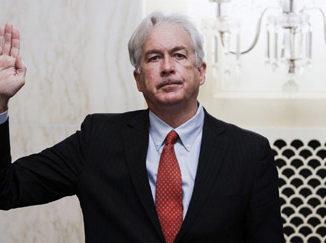
    WASHINGTON (TIP): Out competing China will be key to America’s national security in the decades ahead, President Joe Biden’s pick to lead the CIA has told lawmakers, stressing that Beijing is the “biggest geopolitical test” that the US will face. Willian Burns, 64, a former diplomat who served in Russia and the Middle East, shared the assessment with members of the Senate Select Committee on Intelligence during his confirmation hearing on Wednesday, Feb 23, for the post of Central Intelligence Agency (CIA) Director.

    “Out competing China will be key to our national security in the decades ahead. That will require a long-term clear eyed bipartisan strategy underpinned by domestic renewal and solid intelligence,” Burns said.

    “There will be areas in which it will be in our mutual self-interest to work with China from climate change to nonproliferation. And I am very mindful that (President) Xi Jinping’s China is not without problems and frailties of its own,” he said. “The challenge posed by Xi Jinping’s China, by an adversarial China, it is hard for me to see a more significant threat or challenge for the United States as far out as I can see into the 21st century than that one. It is the biggest geopolitical test that we face,” Burns said.

    The relations between the US and China are at an all-time low. The two countries are currently engaged in a bitter confrontation over various issues, including trade, the origins of the novel coronavirus pandemic, the communist giant’s aggressive military moves in the disputed South China Sea and human rights.

    “There are, however, a growing number of areas in which Xi’s China is a formidable authoritarian adversary, methodically strengthening its capabilities to steal intellectual property, repress its own people, bully its neighbors, expand its global reach, and build influence in American society,” Burns said.

    For the CIA, that will mean intensified focus and urgency, continually strengthening its already impressive cadre of China specialists, expanding its language skills, aligning personnel and resource allocation for the long haul, and employing a whole of agency approach to the operational and analytical challenges of this crucial threat, he told the lawmakers.

    “Another priority intimately connected to competition with China is technology,” he said.

    Responding to a question, Burns said that the evolution of China under Xi’s rule over the last six or seven years has been a very sharp wake-up call in a lot of ways, the kind of aggressive, undisguised ambition and assertiveness has made very clear the nature of the adversary and rival that America faces today.

    “The challenge is how do you build a long-term… We have to buckle up for the long haul, I think, in competition with China. This is not like the competition with the Soviet Union and the Cold War, which was primarily in security and ideological terms,” he said.

    “This is an adversary that is extraordinarily ambitious in technology and capable in economic terms as well. So, it is buckling up for the long term and developing a very clear-eyed bipartisan strategy, which I think is entirely possible right now,” Burns said.

    Burns told lawmakers that it’s important for the United States to view cooperation with China on climate issues is not a favor to the United States. It’s in the self-interest of China to do that.

    “So, in other words, it’s not something to be traded. It’s in the self-interest of China as well to work on these issues. And it’s important for us to be clear eyed about that, as I’m sure the president and Secretary (John) Kerry will be,” he said. The Chinese military has been flexing its muscles in the strategically vital Indo-Pacific region and is also engaged in hotly contested territorial disputes in both the South China Sea and the East China Sea.

    Also, at the hearing, Burns stressed the importance of “firmness and consistency” in responding to Russia, CNN reported. Burns said he learned through his foreign policy work “in dealing with those threats, responding to them and deterring them, firmness and consistency is hugely important, and it’s also very important to work to the maximum extent possible with allies and partners.”             “We have more effects sometimes on Putin’s calculus, when he sees responses coming, firm responses coming not just from the United States, but from our European allies and others as well. So, it pays off to work hard at widening that circle of countries who are going to push back,” he was quoted as saying by the report.

    Burns also said that “it’s always a mistake to underestimate Putin’s Russia,” noting that under Vladimir Putin’s leadership it can be at least as disruptive as a rising power like China.

    “So, we have to be quite cold-eyed in our view of how those threats can emerge,” he said.

    If confirmed, Burns won’t be a member of Biden’s Cabinet, which represents a change from the Trump administration, but a return to the status the job had in the Obama administration, the report added.

    CIA deputy director David Cohen has served in the role of acting director as Burns awaits confirmation. (Source: PTI)

  • We have hit the ground running: Kamala Harris

    We have hit the ground running: Kamala Harris

    Biden signed 15 executive reversing some of the key policies of his predecessor Trump

    WASHINGTON (TIP): With President Joe Biden signing nearly two dozen executive actions, fulfilling major campaign promises and addressing the challenges of race, health and economy head-on, Vice President Kamala Harris has said the new administration has “hit the ground running”. On day one in the office on Wednesday, Biden signed 15 executive orders and two other directives, reversing some of the key foreign policies and national security decisions of his predecessor Donald Trump. The orders, the White House said, are aimed at addressing the major problems being faced by the country. The executive orders ranged from rejoining the Paris agreement on climate change, halting America’s withdrawal from the World Health Organisation, revoking Muslim travel ban and stopping immediate construction of Mexico border wall.

    “We have hit the ground running,” Harris, 56, said on Thursday, a day after the historic inauguration wherein Biden was sworn in as the 46th President of the United States and she became the first-ever woman vice president of the country. Harris is the 49th Vice President of the US.

    Harris, who is also the first-ever black American and Indian-origin person to occupy the position, had a busy first working day.

    In the morning, she and Second Gentleman Doug Emhoff joined Biden and First Lady Jill Biden to watch the virtual presidential inaugural prayer service hosted by the Washington National Cathedral. Thereafter she joined Biden in receiving the daily intelligence briefing in the Oval Office of the White House. In the afternoon, Harris joins the president for his remarks on the administration’s COVID-19 response. She was standing by his side, as he signed a series of executive orders and other presidential actions responding to the COVID-19 crisis.

    Soon thereafter, Harris joined the president in a briefing from members of their COVID-19 team on the coronavirus response and the state of vaccinations.

    In between her busy schedule, Harris administered the oath of secrecy to Avril Haines, America’s first woman spy chief. “Earlier today, I swore in our first Cabinet member, Avril Haines, after her confirmation by the Senate last night. As the Director of National Intelligence, Director Haines will be dedicated to keeping the American people safe,” Harris said in a tweet. In her capacity as DNI, 51-year-old Haines would oversee as many as 18 American intelligence agencies, including CIA and FBI.

    Meanwhile, Emhoff posted a picture of him and Harris walking towards the Oval Office. “Honored and ready to get to work. It was a great first day,” the Second Gentleman tweeted. On Friday, Harris will join Biden in attending the daily briefing, after which the two leaders would have lunch together in the private dining room, the White House said.

    Harris will receive a briefing with the president on the state of the economic recovery in the state dining room. Then she will join Biden for his remarks on the administration’s response to the economic crisis. The president will also sign executive orders in issues related to the economy.

    In the evening, Harris will hold a virtual meeting with National Economic Council Director Brian Deese and small business owners affected by COVID-19 to discuss the Biden-Harris administration’s plan to address the ongoing economic crisis.

    “Kamala Harris is now the 49th Vice President of the United States. But, of course, in more ways than one, she is not the 49th but the first. The first African American woman, the first Asian American woman, the first woman, to hold the office of the vice presidency in our nation’s history,” Senate Democratic Leader Chuck Schumer said on the Senate floor on Thursday.

    House of Representatives Speaker Nancy Pelosi said the inauguration was a breath of fresh air for the country. “The inauguration of Joe Biden as president, Kamala Harris as vice president of the United States, with all of the newness that that presented, first woman, first African-American woman, first Asian-American woman, the best. Not just about demography, but about the quality of leadership. So exciting,” Pelosi told reporters at the Capitol Hill.

    (Source:  PTI)

  • Biden likely to give India more strategic space

    Biden likely to give India more strategic space

    Biden has said that he would constitute a united front of the US, its allies and partners to ‘confront China’s abusive behavior and human rights violations’ and ‘place US back at the head of the table’ to mobilize collective action on global threats. Germany, France and the European Union have welcomed Biden’s election promise to work on issues like China’s unfair trade practices and other challenges.

    By Yogesh Gupta

    Joseph  Biden Jr. will soon take over as the 46th President of the United States. There is some consternation as many critics are not sure how the Joe Biden-Kamala Harris duo will react to the human rights situation, particularly in Kashmir. Also, that he will be ‘soft’ on China which may recoil on India in its current military confrontation with that country. Biden is a seasoned and skillful politician, who for decades has served on the Senate Foreign Relations Committee, including as its chair. Second, he is calm, contemplative and a team leader who will listen to and go by the professional advice of the US establishment — including the State, Defense, National and Homeland Security, CIA, Trade and other departments. His long innings as the Vice President in two terms of President Obama unambiguously authenticate this view.

    In an article, Why America must lead again, in the Foreign Affairs journal in March this year, Biden wrote that President Trump had diminished the credibility and influence of the US by abdicating the American leadership, indulging in ill-advised trade wars which had hurt its own consumers and undermining and abandoning its allies which are America’s biggest strength.

    The post-COVID-19 world will be very different from 2016 when the Obama-Biden duo left. China’s economy has made huge strides during this period. However, much of China’s economic growth is based on extensive use of unfair trade practices, including denial of market access, stealing of foreign technologies, subsidies to its state-owned industries and others.

    China’s swift growth has been accompanied by massive modernization of its military, including manufacture of fifth generation of fighter and stealth aircraft, long- and medium-range missiles, hypersonic and artificial intelligence (AI)-based weapons, destroyers and aircraft carriers.

    Similarly, China has made considerable progress in other emerging technologies like 5G, quantum computing, new materials, robotics and space weapons. The rapidly growing China is now challenging the economic and military pre-eminence of the US in Asia. It has launched aggression against a number of countries allied or getting closer to the US such as India, Taiwan, Vietnam, Australia and others and is trying to divide the transatlantic alliance.

    Biden has said that he would constitute a “united front of the US, its allies and partners to confront China’s abusive behavior and human rights violations” and “place US back at the head of the table” to mobilize collective action on global threats. “When we join together with fellow democracies, our strength more than doubles. China can’t afford to ignore more than half the global economy,” he argued. Germany, France and leaders of the European Union have welcomed Biden’s election promising to work together on China and other challenges.

    Though the aggressive rhetoric of Trump administration may change as Biden seeks China’s collaboration on climate change, non-proliferation and control of infectious diseases, the US and its allies will take collective action against China’s unfair trade policies, as per the Biden team. The US sanctions on export of sensitive technologies to China are likely to continue. In his earlier avatars, Biden played an important role in the passage of the Indo-US Civil Nuclear Deal in the Congress (2005) and later when the Obama administration declared India as a ‘major defense partner’ (2016). With the signing of Logistics Exchange Memorandum of Agreement (LEMOA), Communications Compatibility and Security Agreement (COMCASA) and Basic Exchange and Cooperation Agreement for Geo-spatial Cooperation (BECA) recently, India has established close linkages with the US security architecture. Its large growing economy, professional armed forces and stout determination to resist China have augmented its strategic value. In its pursuit of multipolar world, India can play a critical role in checking the growth of China’s hegemony and its domination of Asia.

    Biden made it clear in his Foreign Affairs essay that he would “fortify the USA’s collective capabilities with democratic friends by reinvesting in its treaty alliances with Australia, Japan, South Korea and deepening partnerships from India to Indonesia to advance shared values in a region that will determine the USA’s future.”

    Biden has promised to invest in improving America’s competitiveness, pull down trade barriers, resist the slide towards protectionism and give more emphasis to fair trade. Given the rising trade deficit and unemployment in the US, it is likely that there will be some tough negotiations with India on issues such as high tariffs, market access, levy of taxes on US technological giants like Amazon and Google, but in an amicable manner without resorting to threats and tariffs.

    On issues relating to immigration, H1B visas and the studies of Indian students in US universities, Biden is likely to be more positive though keeping in view unemployment in his own country.Some Biden advisers have stated that he would raise human rights issues with India like Obama. This will be more in the nature of a dialogue among friendly states and would not be the main driver of his overall policy given New Delhi’s sensitivities and the importance attached to strategic issues confronting the two countries.

    Biden has stated that his administration would stand with India against the threats it faces from its own region and along its borders. Given the above template, it is likely that India would find greater resonance on Pakistan’s support of terrorism, a continued US role in the fight against terror groups in Afghanistan and on resuming a nuclear deal with Iran.

    Similarly, his stand on re-joining the Paris climate change agreement, convening a summit of democracies to discuss issues of common interest, meetings of major carbon emitters to reduce harmful emissions and control of infectious diseases would be of considerable interest to India. Summing up, India is likely to get more strategic space and a greater sympathetic understanding of its concerns from the Biden administration than that of President Trump.

    (The author is a former ambassador)

  • WikiLeaks: We’ll work with tech firms to defeat CIA hacking

    WikiLeaks: We’ll work with tech firms to defeat CIA hacking

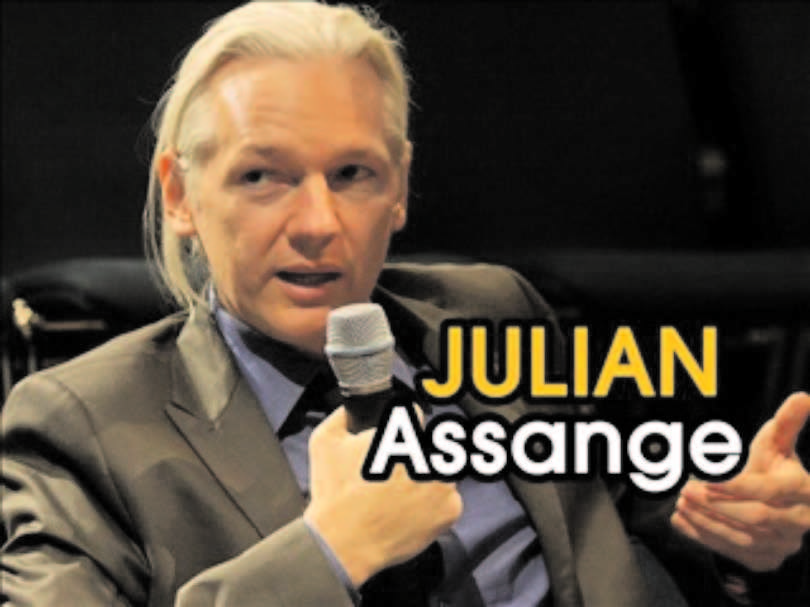
    WikiLeaks will work with technology companies to help defend them against the Central Intelligence Agency’s hacking tools, founder Julian Assange said on Thursday, an approach which sets up a potential conflict between Silicon Valley firms eager to protect their products and an agency stung by the radical transparency group’s disclosures.

    In an online press conference, Assange acknowledged that some companies had asked for more details about the CIA cyberespionage toolkit whose existence he purportedly revealed in a massive leak published Tuesday.

    “We have decided to work with them, to give them some exclusive access to some of the technical details we have, so that fixes can be pushed out,” Assange said. Once tech firms had patched their products, he said, he would release the full data of the hacking tools to the public.

    The CIA has so far declined to comment directly on the authenticity of the leak, but in a statement issued Wednesday it suggested that the release had been damaging by equipping adversaries “with tools and information to do us harm.”

    Assange began his online press conference with a dig at the agency for losing control of its cyberespionage arsenal, saying that all the data had been kept in one place.

    “This is a historic act of devastating incompetence,” he said, adding that, “WikiLeaks discovered the material as a result of it being passed around.”

    Assange said the technology was nearly impossible to keep under wraps— or under control.

    “There’s absolutely nothing to stop a random CIA officer” or even a contractor from using the technology, Assange said. “The technology is designed to be unaccountable, untraceable; it’s designed to remove traces of its activity.” (AP)

  • US, EU rift: Trump White House to rescue Indian-origin CIA agent

    US, EU rift: Trump White House to rescue Indian-origin CIA agent

    WASHINGTON (TIP): The Trump White House is coming to the rescue of a CIA agent of Indian-origin who is being extradited from Portugal to Italy following a conviction for her role in kidnapping an Egyptian cleric, igniting another flashpoint in the growing rift between the United States and the European Union. Sabrina de Sousa, who was born in Goa and grew up in Mumbai before emigrating first to Portugal and then to the U.S. (she has dual citizenship of both countries), was detained in Lisbon on Monday night, in a case that has dragged on for nearly a decade. Portugal wants to comply with the Italian request for her extradition, following an European arrest warrant, for her alleged role in the 2003 kidnapping of an Egyptian cleric as part of a secret United States rendition program during the Bush administration.

    De Sousa, who is now 60, says at the time Osama Moustafa Hassan Nasr, also known as Abu Omar, was kidnapped from the streets of Milan in February 2003, she was actually on a skiing trip with her son in Northern Italy. Nasr was taken to a military base and then moved to Egypt where he was allegedly tortured even as an Italian court convicted him on terrorism-related charges.

    But in 2009, another Italian court sentenced 26 Americans, including de Sousa, in absentia of kidnapping and other charges related to the abduction. Most have since been pardoned and not one has done time in prison, but a dual citizenship appears to have put Sousa in European crosshairs. In October 2015, she was detained at Lisbon’s airport on a European arrest warrant while attempting to travel to India, where she still has family. She was later released but ordered to remain in Portugal.

    On Monday, she was detained for extradition to Italy after Rome press for compliance on an European warrant, even as the Trump administration expressed disappointment and said it would intervene in the matter.

    ”The US government’s view is that this [conviction] was a violation of her diplomatic status,” a Senior administration official told Fox News, adding, ”We’re very concerned and following the case closely… the highest levels of our government are trying to intervene on her behalf.”

  • How 4 federal lawyers paved the way to kill Osama bin Laden

    How 4 federal lawyers paved the way to kill Osama bin Laden

    WASHINGTON (TIP): Weeks before President Barack Obama ordered the raid on Osama bin Laden’s compound in May 2011, four administration lawyers hammered out rationales intended to overcome any legal obstacles — and made it all but inevitable that Navy SEALs would kill the fugitive Qaida leader, not capture him.

    Stretching sparse precedents, the lawyers worked in intense secrecy. Fearing leaks, the White House would not let them consult aides or even the administration’s top lawyer, attorney general Eric Holder. They did their own research, wrote memos on highly secure laptops and traded drafts hand-delivered by trusted couriers.

    Just days before the raid, the lawyers drafted five secret memos so that if pressed later, they could prove they were not inventing after-the-fact reasons for having blessed it. “We should memorialize our rationales because we may be called upon to explain our legal conclusions, particularly if the operation goes terribly badly,” said Stephen W Preston, the CIA’s general counsel, according to officials familiar with the internal deliberations.

    While the bin Laden operation has been much scrutinized, the story of how a tiny team of government lawyers helped shape and justify Obama’s high-stakes decision has not been previously told. The group worked as military and intelligence officials conducted a parallel effort to explore options and prepare members of SEAL Team 6 for the possible mission.

    The legal analysis offered the administration wide flexibility to send ground forces onto Pakistani soil without the country’s consent, to explicitly authorize a lethal mission, to delay telling Congress until afterward, and to bury a wartime enemy at sea. By the end, one official said, the lawyers concluded that there was “clear and ample authority for the use of lethal force under US and international law.”

    Some legal scholars later raised objections, but criticism was muted after the successful operation. The administration lawyers, however, did not know at the time how events would play out, and they faced the “unenviable task” of “resolving a cluster of sensitive legal issues without any consultation with colleagues,” said Robert M. Chesney, a law professor at the University of Texas at Austin who worked on a Justice Department detainee policy task force in 2009.

    “The proposed raid required answers to many hard legal questions, some of which were entirely novel despite a decade’s worth of conflict with al-Qaida,” Chesney said.

    This account of the role of the four lawyers — Preston; Mary B. DeRosa, the National Security Council’s legal adviser; Jeh C. Johnson, the Pentagon general counsel; and then-Rear Adm. James W. Crawford III, the Joint Chiefs of Staff legal adviser — is based on interviews with more than a half-dozen current and former administration officials who had direct knowledge of the planning for the raid. While outlines of some of the government’s rationales have been mentioned previously, the officials provided new insights and details about the analysis and decision-making process.

    The officials described the secret legal deliberations and memos for a forthcoming book on national security legal policy under Obama. Most spoke on the condition of anonymity because the talks were confidential.

    ‘The biggest secret’

    “I am about to read you into the biggest secret in Washington,” Michael G Vickers, the undersecretary of defense for intelligence, told Johnson.

    It was March 24, 2011, about five weeks before the raid. Not long before, officials said, Preston and DeRosa had visited the Pentagon to meet with Johnson and Crawford, the nation’s two top military lawyers. The visitors posed what they said was a hypothetical question: “Suppose we found a very high-value target. What issues would be raised?”

    One was where to take him if captured. Johnson said he would suggest the Guantanamo Bay prison, making an exception to Obama’s policy of not bringing new detainees there.

    But the conversation was necessarily vague. The Pentagon lawyers needed to know the secret if they were going to help, Preston told DeRosa afterward.

    By then, the two of them had known for over six months that the CIA thought it might have found bin Laden’s hiding place: a compound in Abbottabad, a military town in northeastern Pakistan. Policymakers initially focused on trying to get more intelligence about who was inside. By the spring of 2011, they turned to possible courses of action, raising legal issues; Thomas E. Donilon, national security adviser to Obama, then allowed the two military lawyers to be briefed.

    One proposal Obama considered, as previously reported, was to destroy the compound with bombs capable of taking out any tunnels beneath. That would kill dozens of civilians in the neighborhood. But, the officials disclosed, the lawyers were prepared to deem significant collateral damage as lawful, given the circumstances.

  • Musharraf equates Bal Thackeray with Hafiz Saeed, calls Osama a Hero

    Musharraf equates Bal Thackeray with Hafiz Saeed, calls Osama a Hero

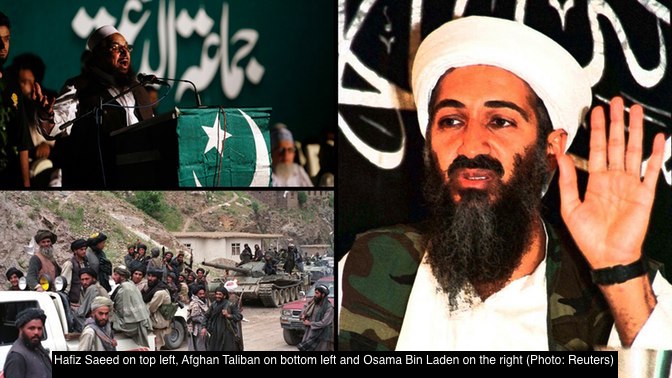
    In an interview to a Pakistani channel, Pakistan’s former president General Pervez Musharraf made scathing comments about Bal Thackeray and Pakistan’s support to extremist outfits in the past. Haqqani is our hero of 1980s & Osama was our hero. Yes, CIA’s as well. (al-Qaida chief Ayman) al-Zawahiri was our hero,” he added while referring to the Pakistan introduced religious militancy from 1979.

    Comparing Hafiz Saeed with RSS and Shiv Sena, former Pakistan president Parvez Musharraf said that those demanding action against Jamaat-ud-Dawah chief in his country were toeing in the Indian line.

    He said Afghan and Kashmiri mujahideen were their heroes in the 1990s, but the situation has now changed while referring to Saeed “I do not want to discuss this (Saeed) issue,” Musharraf shot back at his interviewer on a popular Pakistani TV channel on Saturday night. “Since India is going after this, we are also following them.”

    Musharraf rantingly asked the interviewer to ascertain what RSS was doing in India. “They do not play cricket with us. You saw what happened with (Pakistan cricket board chief) Shahryar Khan,” he said. “The face of (ex-Pakistan foreign minister Khurshid Mahmud) Kasuri’s book release organiser was blackened. Ghulam Ali’s concert was banned and he was thrown out.”

    “This is what is happening there. Are we catching any Sena leader? Was not Bal Thackeray a terrorist… did anybody catch him… a serving Army colonel was involved in the Samjautha blast in which 100 (sic) Pakistanis were killed. You are talking about Saeed, give us that Colonel,” he said.

    He cited PM Narendra Modi and his Cabinet’s presentations to the RSS brass to draw a link between Shiv Sena’s protests against Pakistan’s and BJP’s parent organisation.

    He cited Pakistan’s support for the US-backed Afghan war and said the atmosphere changed after 1979 when Islamabad introduced religious militancy in its favour to throw the Soviets out. “We brought mujahideen from around the world. We trained the Taliban… and sent them in. They were our heroes. (Afghan warlord Jalaluddin) Haqqani is our hero of 1980s. Osama (bin Laden) was our hero. Yes, CIA’s as well. (al-Qaida chief Ayman) al-Zawahiri was our hero,” he acknowledged.

    But he added that the atmosphere has changed now. “The hero has become a villain.”

    He said a similar thing was replicated in Kashmir in the 1990s. “A freedom struggle started there in the 1990s. They (Kashmiris) were killed badly. Indian Army killed them, they came to Pakistan. We gave them heroes’ reception.”

    Musharraf acknowledged Pakistan trained and supported Kashmiri rebels. “They were mujahideen who would fight the Indian Army for their rights. LeT was formed along with 10-12 such groups,” he said. He called these groups their heroes who were putting their lives at stake. “Now this has converted into terrorism.”

  • ‘Pak under Zia-ul-Haq broke promise on uranium enrichment’

    ‘Pak under Zia-ul-Haq broke promise on uranium enrichment’

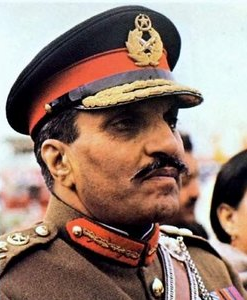
    WASHINGTON (TIP): Pakistan under dictator general Zia-ul-Haq’s administration broke its promise on uranium enrichment in the 1980s, a series of newly declassified documents have shown amid reports that the US is considering a civil nuclear deal with the country.

    According to the latest declassified documents released by National Security Archive, the then military dictator General Haq assured that Pakistan would not enrich uranium above five per cent and in lieu of it extracted huge amount of financial aid and modern military assistance from the US.

    “I appreciate the assurances you gave ambassador Hinton that Pakistan would not enrich uranium above the five per cent level,” the then US President Ronald Reagan wrote in a letter to Zia on September 12, 1984.

    In the letter, Reagan expressed concern over Pakistan’s nuclear weapons programme.

    “I must candidly state that enrichment of uranium above five per cent would be of the same significance as those nuclear activities, such as unsafeguarded reprocessing, which I personally discussed with you in December 1982 and would have the same implications for our security programme and relationship,” Reagan said.

    In fact, Reagan in his letter warned that if Pakistan goes ahead with his nuclear weapons programme, it might attract untoward action from other countries in the region.

    “I have personally discussed with you my concerns about stemming nuclear proliferation, and my Administration remains fully committed on this issue,” he wrote.

    “Concern is also growing in Congress and among the public about Pakistan’s nuclear weapons programme. I am mindful that other countries in the region might use this issue as a pretext for untoward action towards Pakistan,” Reagan said.

    By saying so, Reagan was referring to the CIA assessment that India was planning to carry out strikes against Pakistani nuclear facilities.

    A talking point memo ahead of the letter refers to this.

    The talking points, which has now been declassified and made public by NSA, refer to Washington’s “judgement” that it is “likely that at some point India will take military action to pre-empt your military programme.”

    Such a possibility had been discussed in previous national intelligence estimates.

    Consistent with the allusion to an Indian threat, the talking points included an inducement for Pakistan to adopt safeguards on its nuclear facilities, in light of the threats that Pakistan faced, “we would be prepared to act promptly to discourage or help deter such action as you move toward safeguards.”

    Whether this offer, close to a security guarantee, was actually made to General Zia remains to be learned, the NSA said.

    The declassification of documents comes amid a Washington Post report which said the US is negotiating a pact on new limits on Pakistan’s nuclear weapons and delivery systems, a deal that might lead to an agreement similar to the Indo-US civil nuclear deal.

  • US Drone Strike Kills Seven in Pakistan

    US Drone Strike Kills Seven in Pakistan

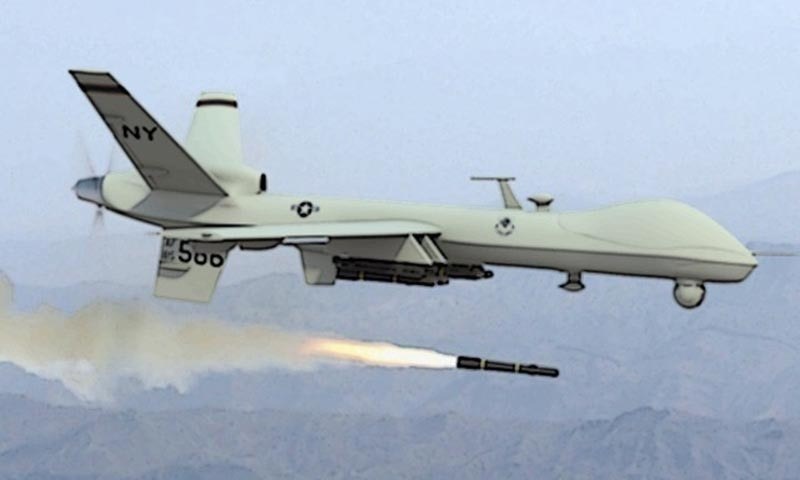
    A US drone strike in Pakistan’s volatile South Waziristan tribal region today killed at least seven militants and injured two others.

    “A vehicle close to a militant compound was the target of the strike in the Shonkrai Narai village of South Waziristan,” an official said about the airstrike carried out by a CIA-operated drone.

    Waziristan is among Pakistan’s seven tribal districts near the Afghan border which are rife with insurgents and have been strongholds of Taliban and Al Qaeda operatives, among others.

    Military in June last year launched an all-out operation named ‘Zarb-i-Azb’ against Taliban militants in the region, following which parts of the tribal agency was declared cleared of militants.

    The army has intensified its offensive since the Taliban’s massacre of 153 people, mostly children, in a school in the northwestern city of Peshawar in December.

    The official confirmed the deaths, but did not provide details regarding the identities of the deceased,  The Express Tribune reported.

    The drone strike comes after a long halt as North Waziristan has been the main target of American drone strikes.

    The drone strike is the 13th in the tribal area of Pakistan since the beginning of this year.

    At least five militants were killed when a US drone fired two missiles at a compound in North Waziristan, officials had said on September 1.

    Earlier this week, security forces imposed a curfew in South Waziristan after a convoy came under attack which left one dead and injuring five security personnel.

    Meanwhile, the army is continuing its operation in the nearby Shawal Valley where a ground offensive was launched last month.

    More than 85 people have been killed in drone strikes in Pakistan.

  • Hack by Chinese leads to resignation of OPM’s Director

    Hack by Chinese leads to resignation of OPM’s Director

    Katherine Archuleta said she would step down on Friday to help the department “move beyond the current challenges”.

    Authorities suspect that Chinese-based hackers targeted the computer systems of the OPM, which acts as the personnel office of the federal government.

    Initially the OPM said four million workers were affected by the breach.

    However, the department disclosed on Thursday that the data of more than 20 million people, including current and former employees, may have been compromised.

    Authorities in Beijing have publicly denied any involvement.

    Ms Archuleta resignation comes a day after Democrats and Republicans in Congress called for her to step aside as the scope of the data breach expanded significantly.

    Among the data targeted were forms used to vet potential employees of federal agencies including as the CIA and branches of the military.

    The stolen data includes health and financial information, criminal records, and the names and addresses of government employees and their relatives.

    Experts are concerned that the sensitive information could be used to blackmail US agents.

  • Pope calls for new economic order, criticises capitalism

    Pope calls for new economic order, criticises capitalism

    SANTA CRUZ(BOLIVIA) (TIP): Pope Francis on July 9 urged the downtrodden to change the world economic order, denouncing a “new colonialism” by agencies that impose austerity programs and calling for the poor to have the “sacred rights” of labor, lodging and land.

    In one of the longest, most passionate and sweeping speeches of his pontificate, the Argentine-born pope also asked forgiveness for the sins committed by the Roman Catholic Church in its treatment of native Americans during what he called the “so-called conquest of America.”

    Quoting a fourth century bishop, he called the unfettered pursuit of money “the dung of the devil,” and said poor countries should not be reduced to being providers of raw material and cheap labour for developed countries.

    Repeating some of the themes of his landmark encyclical “Laudato Si” on the environment last month, Francis said time was running out to save the planet from perhaps irreversible harm to the ecosystem.

    Francis made the address to participants of the second world meeting of popular movements, an international body that brings together organisations of people on the margins of society, including the poor, the unemployed and peasants who have lost their land. The Vatican hosted the first meeting last year.

    He said he supported their efforts to obtain “so elementary and undeniably necessary a right as that of the three “L’s”: land, lodging and labor.”

    His speech was preceded by lengthy remarks from leftist Bolivian President Evo Morales, who wore a jacket adorned with the face of Argentine revolutionary Ernesto “Che” Guevara. He was executed in Bolivia in 1967 by CIA-backed Bolivian troops.

    “Let us not be afraid to say it: we want change, real change, structural change,” the pope said, decrying a system that “has imposed the mentality of profit at any price, with no concern for social exclusion or the destruction of nature.”

    ‘Intolerable’ system 

    “This system is by now intolerable: farm workers find it intolerable, laborers find it intolerable, communities find it intolerable, peoples find it intolerable The earth itself – our sister, Mother Earth, as Saint Francis would say – also finds it intolerable,” he said in an hour-long speech that was interrupted by applause and cheering dozens of times.

    Since his election in 2013, the first pope from Latin America has often spoken out in defence of the poor and against unbridled capitalism but the speech in this Bolivian city was the most comprehensive to date on the issues he has championed. Francis’ previous attacks on capitalism have prompted stiff criticism from politicians and commentators in the United States, where he is due to visit in September.

    The pontiff appeared to take a swipe at international monetary organisations such as the IMF and the development aid policies by some developed countries.

    “No actual or established power has the right to deprive peoples of the full exercise of their sovereignty. Whenever they do so, we see the rise of new forms of colonialism which seriously prejudice the possibility of peace and justice,” he said.

  • Pakistan shuts down ‘Save the Children’ offices

    Pakistan shuts down ‘Save the Children’ offices

    ISLAMABAD (TIP): Pakistan ordered international children’s aid agency ‘Save the Children’ to shut down its operations in the country as authorities today said no NGOs “working against the country” will be allowed to continue.

    The charity’s country office here was sealed June 12 after government officials accompanied by police placed a lock on its gate and and asked employees to leave.

    The non-governmental organizations’ foreign staff has been directed to leave Pakistan within 15 days, police said.

    A statement issued by the Interior Ministry said the international NGO was involved in “anti-Pakistan activities”, Geo News reported.

    Interior minister Chaudhry Nisar Ali Khan said NGOs working against the country’s national interest will not be allowed to continue its work in Pakistan.

    “We don’t want to put ban on any NGO but we want to compel them to work under their charter,” Khan was quoted as saying by the Dawn.

    The interior minister added that they had been receiving intelligence reports for many years but no action was being taken. NGOs, whose numbers run into hundreds, have been operating without any code of conduct, law and agenda, he said.

    He also appealed to all international NGOs and governments to respect the laws of Pakistan, adding that the government will not bear any kind of foreign pressure regarding the working criteria of the NGOs.

    Meanwhile in a statement today, ‘Save the Children’ objected to the government’s action. “Save the Children was not served any notice to this effect.

    We strongly object to this action and are raising our serious concerns at the highest levels,” it said.

    The NGO added that it has been operating in Pakistan for over 35 years and that currently it had 1,200 employees in the country but none of them a foreign national.

    Pakistan has previously linked the charity to the fake vaccination programme used by the CIA to track down al-Qaida chief Osama Bin Laden.

    The NGOs activities had been under strict scrutiny for the past six months.

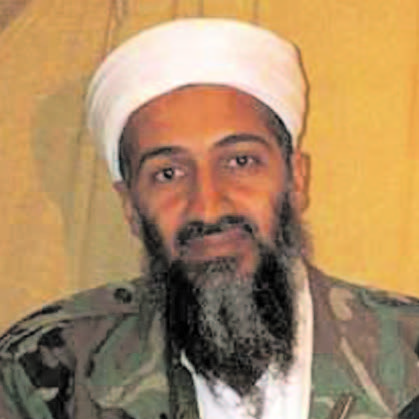
  • Secrets of the bin Laden ‘treasure-trove’ – 106  documents released

    Secrets of the bin Laden ‘treasure-trove’ – 106 documents released

    In his final years hiding in a compound in Pakistan, Osama bin Laden was a man who at once showed great love and interest in his own family while he coldly drew up quixotic plans for mass casualty attacks on Americans, according to documents seized by Navy SEALs the night he was killed.

    On May 20th  morning, the U.S. Office of the Director of National Intelligence released an unprecedented number of documents from what U.S. officials have described as the treasure-trove picked up by the SEALs at bin Laden’s compound in Abbottabad, Pakistan, on May 2, 2011.

    Totaling 103 documents, they include the largest repository of correspondence ever released between members of bin Laden’s immediate family and significant communications between bin Laden and other leaders of al Qaeda as well as al Qaeda’s communications with terrorist groups around the Muslim world.

    Also released was a list of bin Laden’s massive digital collection of English-language books, think tank reports and U.S. government documents, numbering 266 in total.

    To the end bin Laden remained obsessed with attacking Americans. In an undated letter he told jihadist militants in North Africa that they should stop “insisting on the formation of an Islamic state” and instead attack U.S. embassies in Sierra Leone and Togo and American oil companies. Bin Laden offered similar advice to the al Qaeda affiliate in Yemen, telling it to avoid targeting Yemeni police and military targets and instead prioritize attacks on American targets.

    Much of bin Laden’s advice either didn’t make it to these groups or was simply ignored because al Qaeda affiliates in Yemen and North Africa continued to attack local targets.

    ISIS, of course, didn’t exist at the time bin Laden was writing. The group, which now controls a large swath of territory in the Middle East, grew out of al Qaeda in Iraq and has charted a different path, seeking to create an Islamic state and not prioritizing attacks on the United States and its citizens.

    Taken together, these documents and reading materials paint a complex, nuanced portrait of the world’s most wanted man in the years before he was killed in the raid on his compound.

    In the letters that bin Laden exchanged with his many sons and daughters, he emerges as a much-loved and admired father who doted on his children. And in a letter he sent to one of his wives, he even comes off as a lovelorn swain.

    That’s in sharp contrast to the letters bin Laden sent to al Qaeda leaders that demanded mass casualty attacks against American targets and insisted that al Qaeda affiliates in the Middle East stop wasting their time on attacks against local government targets. “The focus should be on killing and fighting the American people,” bin Laden emphasized.

    What bin Laden was reading

    Bin Laden’s digital library is that of an avid reader whose tastes ran from “Obama’s Wars,” Bob Woodward’s account of how the Obama administration surged U.S. troops in Afghanistan in 2009 and 2010, to Noam Chomsky as well as someone who had a pronounced interest in how Western think tanks and academic institutions were analyzing al Qaeda.

    Bin Laden was a meticulous editor, and some of the memos he wrote were revised as many as 50 times. Of the thousands of versions of documents recovered from computers and digital media that the SEALs retrieved at bin Laden’s compound, the final tally numbers several hundred documents.

    The new documents show how bin Laden reacted to the events of the Arab Spring, which was roiling the Middle East in the months before his death. While bin Laden had nothing to say publicly about the momentous events in the Middle East, privately he wrote lengthy memos analyzing what was happening, pointing to the “new factor” of “the information technology revolution” that had helped spur the revolutions and characterizing them as “the most important events” in the Muslim world “in centuries.”

    Some of the documents paint an organization that understood it was under significant pressure from U.S. counterterrorism operations. One undated document explained that CIA drone attacks “led to the killing of many jihadi cadres, leaders and others,” and noted, “(T)his is something that is concerning us and exhausting us.” Several documents mention the need to be careful with operational security and to encrypt communications and also the necessity of making trips around the Afghan-Pakistan border regions only on “cloudy days” when American drones were less effective.

    Al Qaeda members knew they were short on cash, with one writing to bin Laden, “Also, there is the financial problem.”

    Some of the documents have nothing to do with terrorism. One lengthy memo from bin Laden worried about the baleful effects of climate change on the Muslim world and advocated not depleting precious groundwater stocks. Sounding more like a World Bank official than the leader of a major terrorist organization, bin Laden fretted about “food security.” He also gave elaborate instructions to an aide about the most efficacious manner to store wheat.

    Family concerns

    Many of the documents concern bin Laden’s sprawling family, which included his four wives and 20 children. Bin Laden took a minute interest in the marriage plans of his son Khalid to the daughter of a “martyred” al Qaeda commander, and he exchanged a number of letters with the mother of the bride-to-be. Bin Laden excitedly described the impending nuptials, “which our hearts have been looking forward to.”

    Bin Laden corresponded at length with his son Hamza and also with Hamza’s mother, Khairiah, who had spent around a decade in Iran under a form of house arrest following the Taliban’s fall in neighboring Afghanistan during the winter of 2001.

    Hamza wrote a heartfelt letter to bin Laden in 2009 in which he recalled how he hadn’t seen his father since he was 13, eight years earlier: “My heart is sad from the long separation, yearning to meet with you. … My eyes still remember the last time I saw you when you were under the olive tree and you gave each one of us Muslim prayer beads.”

    In 2010 the Iranians started releasing members of the bin Laden family who had been living in Iran. Bin Laden spent many hours writing letters to them and to his associates in al Qaeda about how best he could reunite with them.

    In a letter to his wife Khairiah, he wrote tenderly, “(H)ow long have I waited for your departure from Iran.”

    Bin Laden was paranoid that the Iranians –who he said were “not to be trusted” — might insert electronic tracking devices into the belongings or even the bodies of his family as they departed Iran. He told Khairiah that if she had recently visited an “official dentist” in Iran for a filling that she would need to have the filling taken out before meeting with him as he worried a tracking device might have been inserted inside.

    U.S. intelligence officials have a theory that bin Laden might have been grooming Hamza eventually to succeed him at the helm of al Qaeda because the son’s relative youth would energize al Qaeda’s base. But Hamza never made it to his father’s hiding place in Abbottabad. When the SEALs raided bin Laden’s compound, they assumed Hamza would likely be one of the adult males living there, but he wasn’t.

    U.S. intelligence officials say they don’t know where Hamza, now in his late 20s, is today.

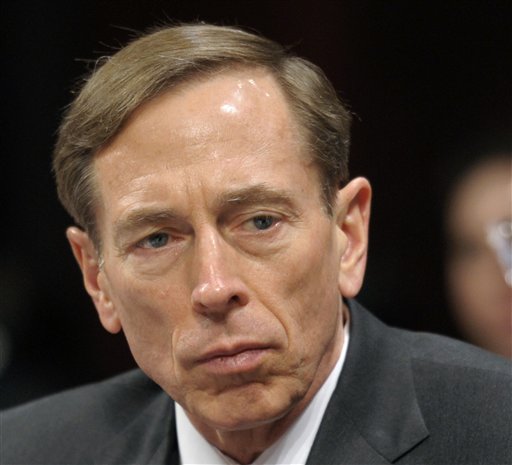
  • Ex-general, CIA chief Petraeus gets probation, $100,000 fine in leak case

    Ex-general, CIA chief Petraeus gets probation, $100,000 fine in leak case

    CHARLOTTE, NC (TIP): Former US military commander and CIA director David Petraeus was sentenced to two years of probation and ordered to pay a$100,000 fine but was spared prison time on April 23 after pleading guilty to mishandling classified information.

    The retired four-star general apologized as he admitted in federal court in Charlotte, North Carolina, to giving the information to his mistress, who was writing his biography. He agreed under a plea deal to a misdemeanor charge of unauthorized removal and retention of classified material. US magistrate judge David Keesler raised the fine from the $40,000 that had been recommended to the maximum possible financial penalty for that charge, noting it needed to be higher to be punitive and reflect the gravity of the offense. “This constitutes a serious lapse of judgment,” Keesler said during the hour-long hearing. The guilty plea ended an embarrassing chapter for a man described in letters to the court as one of the finest military leaders of his generation. Petraeus, 62, a counter-insurgency expert with a Princeton University doctorate, served stints as the top U.S. commander in the wars in Iraq and Afghanistan and was once considered a possible vice presidential or presidential candidate.

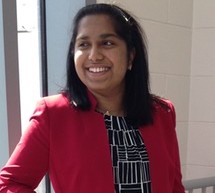
  • Pooja Chandrashekar: Indian-American Teen Whiz cracks All 8 Ivy League Schools

    Pooja Chandrashekar: Indian-American Teen Whiz cracks All 8 Ivy League Schools

    Indian-origin student and entrepreneur Pooja Chandrashekar created history by securing admission at all eight Ivy League schools and six other top US universities.

    “They are all fantastic schools, so I couldn’t discount any of them… I wanted to make sure I could get into a really good school and have more choices,” Chandrashekar told The Washington Post.

    However, she cleared all of them and scored 2390 out of 2400 in her SAT, getting an average grade point of 4.57. She even excelled in all 13 Advanced Placement Exam and gained admission to all the Ivy League Universities: Harvard, Yale, Princeton, Cornell, Dartmouth, Columbia, Brown, and Pennsylvania.

    Besides Ivy League schools, she got through Stanford, MIT, Duke, the University of Virginia, the University of Michigan, and Georgia Tech. But, Chandrashekar is keen on joining only three of the 14, Harvard, Stanford and Brown, as they have offered her admission into medical school. She now wants to explore the field of medicine and bio-engineering.

    The Indian-origin teenager was born to an engineer couple, who stayed in Bangalore before moving to Virginia in US – where she was born and brought up. Like other teens, even Chandrashekar cherishes Bollywood songs and television shows like ‘Shark Tank’. However, she is not like every other teen as she is already an entrepreneur.

    Chandrashekar studied in Nysmith School in Herndon before she joined Thomas JeffersonHigh School for Science and Technology, where she studied computing, artificial intelligence and DNA science.

    Besides being a genius student, Chandrashekar is the founder and CEO of ProjectCSGIRLS, which is “a national youth-driven nonprofit working to close the tech gender gap by running a national computer science competition for middle school girls and workshops around the country,” according to her website poojachandrashekar.com.

    She has even developed a mobile application that helps in “diagnosing concussions and a speech-based diagnostic test for Parkinson’s disease”. This app is believed to give 96% accurate diagnosis of Parkinson’s disease.

    Chandrashekar loves speaking about her work and she has attended several conferences and summits around the country. She was part of the IEEE Women in Engineering International Leadership Conference, the Global Tech Women Voices Conference, the O’Reilly Velocity New York Conference, and the STEM Symposium for the National Capital Region, the website reads.

    She has received altogether 30 honours and recognitions since 2010, including CIA Outstanding Student Scientist Award, and 1st Place Individual American Regions Mathematics League Local.

  • CIA gave cops secret technology to spy on cell phones

    WASHINGTON (TIP): Empowered by a technology developed by the CIA, the US Justice Department uses secret airborne devices that mimic cellphone towers to track American citizens while hunting criminal suspects, a media report has said.

    The CIA and the US Marshals Service of Department of Justice has developed this technology in what the Wall Street Journal called “a high-tech hunt for criminal suspects”.

    But those gadgets, known to law enforcement officials as “dirtboxes,” also scoop up data from tens of thousands of unsuspecting mobile users, the paper’s unnamed sources said.

    The programme operates specially equipped planes that fly from five US cities, with a flying range covering most of the US population, it said.

    Planes are equipped with the devices trick cellphones into reporting their unique registration information, it added. The surveillance system briefly identifies large numbers of cellphones belonging to citizens unrelated to the search. The practice can also briefly interfere with the ability to make calls, these people said, according to the daily. According to a CIA spokesman quoted in the news report, some technologies developed by the agency have been lawfully and responsibly shared with other US government agencies.

    “How those agencies use that technology is determined by the legal authorities that govern the operations of those individual organizations–not CIA,” the CIA Spokesman said.

  • Pakistan likely sheltered Osama: Ex-ISI chief

    Pakistan likely sheltered Osama: Ex-ISI chief

    ISLAMABAD (TIP): The former chief of Pakistan’s intelligence agency, ISI, Lt. Gen. Asad Durrani (retd) has said that the Government of Pakistan is likely to have sheltered slain terror mastermind Osama bin Laden and handed him over to the US as part of a deal. “I cannot say exactly what happened but… it is quite possible that they (the ISI) did not know, but it was more probable that they did,” Al Jazeera quoted General Asad Durrani (retd) as saying.

    The ex-Al Qaeda chief and the mastermind of the 9/11 terrorist attacks in the US was killed in a US raid on his house in Pakistan’s garrison town of Abbottabad in May, 2011. Officially, the ISI maintains that it did not harbour bin Laden and played no part in the US raid.

    Durrani told Al Jazeera that he doubted the official line given by the ISI that it was unaware of the Al Qaeda leader’s whereabouts until his death, implying that Pakistan would only have exchanged knowledge of his location in a quid pro quo deal.

    Durrani, who served as director general of the ISI from 1990 to 1992, asserted that bin Laden was handed over in exchange for an agreement on “how to bring the Afghan problem to an end”.

    Asked whether bin Laden’s compound was an ISI safehouse, Durrani responded: “If ISI was doing that, then I would say they were doing a good job. And if they revealed his location, they again probably did what was required to be done.” 

    Commentators have questioned how bin Laden could have eluded the ISI in the years leading up to his killing, given the location of his compound in a garrison town.

    According to the US, the raid on bin Laden’s compound was deliberately conducted without the knowledge of the Pakistani government or its military.

    The Abbottabad Commission, which was set up by Pakistan to investigate the circumstances surrounding the raid, charged the military and the government with “gross incompetence” leading to “collective failures” that enabled bin Laden to reside in Pakistan unnoticed.

    The ISI had previously helped the US Central Intelligence Agency (CIA) detain a number of high-ranking suspects, including Ramzi Yousef, one of the men who planned the 1993 World Trade Centre bombing in New York, and Khalid Sheikh Mohammed, one of the alleged masterminds of the 9/11 attacks on New York and Washington.

  • DELHI ELECTIONS AND LESSONS TO LEARN

    DELHI ELECTIONS AND LESSONS TO LEARN

    Even if BJP wins the Delhi there are some reminders/lessons to Narendra Modi and BJP leaders that they cannot afford to ignore.   


    Lesson 1:  Local corruption:


    While BJP under leadership of Narendra Modi is addressing macro issues of investments and economy, they cannot afford to ignore the issues such as the oppressive and extortionist local corruption that are daily faced by common man. In this wonderful article Rediff details interviews on how petty corruption disappeared overnight during 49 day AAP rule in New Delhi. Whether that would have continued if they ruled further is debatable, but it struck a chord with the common man. A similar sentiment was expressed to me by an executive working in an MNC in Mumbai who was strong supporter of Modi saying AAP will be good for the country because it will force BJP leadership to address local corruption. He said such was disdain to Mumbai police even among middle class, if there is a police person found dying on the street, they would leave him or her to die. Whether getting a license or ration card or even a death certification for a dead family member, Indians are subject to horrendous extortion and nothing was done, nay even talked about in BJP circles. I remember when Modi won, there was this euphoria that the days of this extortion and oppressive local corruption will be gone, but none of that is even talked about today by BJP.


    Lesson 2:  Connecting with common man


    Narendra Bhai can take a leaf from the life of Mahatma Gandhi. If Modi wondered why does the feverish pitch for him during central elections is missing today, is it possible he is missing opportunity to associate with common man. Gandhi ji hardly spoke, but he was a powerful figure because he completely associated with common man, wearing simple loin cloth, eating most simple food, living humble life. Symbols matter and in a country where most people are poor it is important not to flaunt any displays. A poor man may not understand all the financial strategies but he quickly picks up the visual vibrations. True, the tragedy is most of the netas in India who plundered the nation to the hilt did so by wearing simple white khadi dress. 


    Even then, Modi should pay attention to wearing flaunting dresses. In spite of the hard work he is putting day and night, in spite of impeccable credibility, the common man associates with visual symbols and they do matter.


    Lesson 3:  The black money – managing expectations


    After  big words that they will get the black money BJP failed miserably in managing the expectations. The fact of the matter is in spite of talking about black money for more than three decades, Ram Jethmalani, who was himself once in power could do very little to get the money back. The secret banks exist for one thing only, protect the secrecy of their depositors and  they are not going to bend over backwards to hand over the details to India. We are just living in fools’ paradise that black money will be back in no time. But then it begs a question, what is stopping BJP in declaring the black money national asset and come up with amnesty scheme to instill confidence in the common man? In one of the interviews Narendra bhai said while he would not go after anyone with vengeance he would not obstruct legal proceedings. If this is correct, why is Dr Swamy case against Sonia continues to drawn out?   Many believe Jaitley is the biggest block. To be fair, Narendra Modi is thinking beyond and many of us may not realize his vision. If BJP goes after Gandhi family, with its entrenched 60 year rule and immense resources, they have potential to do enormous damage and immense harm to discredit Modi’s efforts for improving country. Modi may want to first focus on building the nation instead of getting distracted with those that can undermine his efforts. As he said why should India be satisfied with just 2 trillion why not target 20 trillion. This is in tune with how Modi handles things brilliantly where he does not spend energy fighting enemies, he simply makes them irrelevant. The problem is either Jaitley is being overzealous in protecting black money holders such as Gandhi family or BJP is doing a very poor job of managing expectations.


    Lesson 4:  The foreign economists obsession


    There seems to be this obsession with foreign educated economists, some who even went against India and that is supposed to show that we do not get carried away with smaller issues and use the best talent. But is the best talent only available from western educated economists only?   How about the economists from our own country. Here comes again the Jaitley view. While he is considered a brilliant person, his tendency to rely heavily on the West educated so called intellectuals shows India needs only western educated minds to solve it issues. Jaitley budget is considered no different that the budget of previous administration. There are many sane voices in the country with very constructive ideas whether it is water resource management, debt trap, food security etc., but does Jaitely have patience to get all inputs before finalizing the budget.


    Lesson 5:  The Jaitley factor


    There is no doubt Modi and Jaitley are very close. The problem is people voted for Modi but not for Jaitley. Talk to many people in RSS, BJP, they feel that Jaitley has the biggest stamp in administration and is viewed by many as a western educated intellectual who have little touch with real life issues of India. He grew up with wheeling dealings of corrupt Delhi establishment and can serve very important role, but is the importance he is playing in Modi administration in the best interest of the nation?   Issues like local corruption are not even on his radar.


    Lastly, the purpose of the article is not to show support for  AAP to capture power. They have potential to play a very pernicious role by playing into hands of dangerous western NGOs, the CIA, the missionaries who are hell bent to break the hold of nationalistic leadership that holds power in India today. But they are rabble rousers who can play an important role in a democracy and they are serving a call for course correction in BJP. It is a gentle reminder of India’s great democracy, ‘BJP, thy need to introspect’.


    By Satya Dosapati – (The author is a US based  social activist. He can be reached at narayanasd123@gmail.com)
  • Crucial spy in Cuba paid a heavy Cold War price

    Crucial spy in Cuba paid a heavy Cold War price

    WASHINGTON (TIP): He was, in many ways, a perfect spy — a man so important to Cuba’s intelligence apparatus that the information he gave to the Central Intelligence Agency paid dividends long after Cuban authorities arrested him and threw him in prison for nearly two decades.

    Rolando Sarraff Trujillo has now been released from prison and flown out of Cuba as part of the swap for three Cuban spies imprisoned in the United States that President Obama announced Wednesday.

    Mr Obama did not give Mr Sarraff’s name, but several current and former American officials identified him and discussed some of the information he gave to the CIA while burrowed deep inside Cuba’s Directorate of Intelligence.

    Mr Sarraff’s story is a chapter in a spy vs. spy drama between the United States and Cuba that played on long after the end of the Cold War and years after Cuba ceased to be a serious threat to the United States. The story — at this point — remains just a sketchy outline, with Mr Sarraff hidden from public view and his work for the CIA still classified.
    The spy games between the two countries lost their urgency after the fall of the Soviet Union, but the spies have stuck to their roles for more than two decades: pilfering documents, breaking codes and enticing government officials to betray their countries. “There were a number of people in the Cuban government who were valuable to the U.S., just as there were a number of people in the U.S. government who were helpful to the Cubans,” said Jerry Komisar, who ran C.I.A. clandestine operations in Cuba during the 1990s.

    With Wednesday’s exchange of imprisoned spies and the leaders of the United States and Cuba talking in a substantive way for the first time in more than 50 years, some people who were part of the spy games between the two countries now wonder just how much it was worth it.

    In retrospect, Mr Komisar said, there was little need for American intelligence services to devote so much attention to Cuba — a country with a decrepit military that he said posed no strategic threat to the United States since the Soviet Union pulled its missiles off the island in 1962.

    After decades of cloak-and-dagger activities between the two countries, he said, it turned out to be “a draw.”

    “You have to ask yourself, ‘To what end?’ ” he said.

    Before he was arrested in November 1995, Mr Sarraff worked in the cryptology section of Cuba’s Directorate of Intelligence and was an expert on the codes used by Cuban spies in the United States to communicate with Havana. According to members of his family, he had studied journalism at the University of Havana and had the rank of first lieutenant at the intelligence directorate.

    It is not clear when Mr Sarraff, now 51, began working for the CIA Chris Simmons, who was the chief of a Cuban counterintelligence unit for the

    Defense Intelligence Agency from 1996 to 2004, said that he worked with another man — Jose Cohen, one of Mr Sarraff’s childhood friends — to pass encryption information to the C.I.A. that led to the arrest of a number of Cuban agents operating in the United States.

    Mr Simmons said that Cuba’s spy service regularly communicated with its agents in America using encrypted messages sent over shortwave radio. After Mr Sarraff helped the United States crack the codes, he said, the FBI was able to arrest Cuban spies years after Mr Sarraff was discovered and put in prison in Cuba.

    “When Roly was providing information, he was giving us insights about where there were weaknesses in the Cuban encryption system,” Mr Simmons said.

    Cuban authorities arrested Mr Sarraff in November 1995 and put him on trial for espionage, revealing state secrets and other acts against state security. According to one senior American official, the Cuban government learned of his plans to defect when he was on assignment in a third country and recalled him to Cuba and put him in jail.

    According to members of Mr Sarraff’s family, he went to work one day in 1995 and never came home. Cuban officials told the family for more than a week that Mr Sarraff was on a job in the country’s interior and would be back soon.

    He was sentenced to 25 years in prison. Mr Simmons, the former D.I.A. officer, said he believed that the reason Mr Sarraff was not executed was because his parents were officials in the Cuban government. “He has always maintained his innocence” his sister, Vilma Sarraff, said by telephone from Spain. She said that Mr Sarraff’s daughter was 7 when he was arrested.

  • CIA chief challenges Senate torture report

    CIA chief challenges Senate torture report

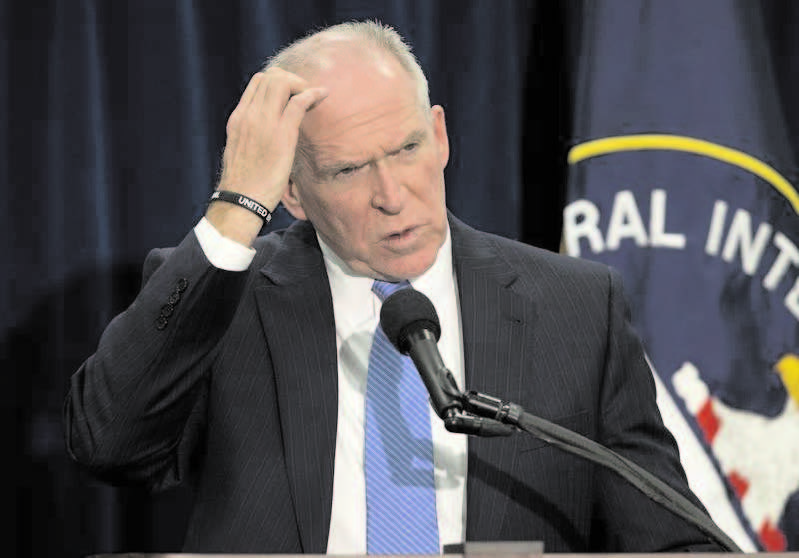
    WASHINGTON (TIP): CIA director John Brennan threaded a rhetorical needle in an unprecedented televised news conference at CIA headquarters on December 11 acknowledging that agency officers did “abhorrent” things to detainees but defending the overall post-9/11 interrogation program for stopping attacks and saving lives. At the heart of Brennan’s case is a finely tuned argument: that while today’s CIA takes no position on whether the brutal interrogation tactics themselves led detainees to cooperate, there is no doubt that detainees subjected to the treatment offered “useful and valuable” information afterward.

    Speaking to reporters and on live television— something no one on the CIA public affairs staff could remember ever happening on the secretive agency’s Virginia campus —Brennan said it was “unknown and unknowable” whether the harsh treatment yielded crucial intelligence that could have been gained in any other way. He declined to define the techniques as torture, as President Barack Obama and the Senate intelligence committee have done, refraining from even using the word in his 40 minutes of remarks and answers.

    Obama banned torture when he took office. He also appeared to draw a distinction between interrogation methods, such as water boarding, that were approved by the Justice Department at the time, and those that were not, including “rectal feeding,” death threats and beatings. He did not discuss the techniques by name. “I certainly agree that there were times when CIA officers exceeded the policy guidance that was given and the authorized techniques that were approved and determined to be lawful,” he said. “They went outside of the bounds. … I will leave to others to how they might want to label those activities.

    But for me, it was something that is certainly regrettable.” But Brennan defended the overall detention of 119 detainees as having produced valuable intelligence that, among other things, helped the CIA find and kill al-Qaida leader Osama bin Laden. A 500-page Senate intelligence committee report released Tuesday exhaustively cites CIA records to dispute that contention. The report points out that the CIA justified the torture — what the report called an extraordinary departure from American practices and values — as necessary to produce unique and otherwise unobtainable intelligence.

    Those are not terms Brennan used Thursday to describe the intelligence derived from the program. The report makes clear that agency officials for years told the White House, the Justice Department and Congress that the techniques themselves had elicited crucial information that thwarted dangerous plots. Yet the report argues that torture failed to produce intelligence that the CIA couldn’t have obtained, or didn’t already have, elsewhere. Although the harshest interrogations were carried out in 2002 and 2003, the program continued until December 2007, Brennan acknowledged. All told, 39 detainees were subject to very harsh measures.

    Former president George HW Bush, CIA director in 1976-77, supported the agency. “I felt compelled to reiterate my confidence in the agency today, and to thank those throughout its ranks for their ongoing and vitally important work to keep America safe and secure,” Bush said in a statement.

  • CIA tweets ‘Argo’ errors on Iran crisis anniversary

    CIA tweets ‘Argo’ errors on Iran crisis anniversary

    LOS ANGELES (TIP): The CIA on Friday good naturedly highlighted the inaccuracies in Oscar-winning Iran hostage drama “Argo,” in a series of tweets to mark the anniversary of the 1979 crisis. The 2012 film tells the story of a bold Central Intelligence Agency (CIA) operation to rescue six US diplomats trapped in the Canadian ambassador’s residence in Tehran. It is well known that the movie takes liberties with the facts, including a white-knuckle airport runway chase at the end, and the significant underplaying of Canada’s role in resolving the crisis and rescuing the diplomats. But just in case anyone had forgotten, the CIA gave a blow-by-blow account on their Twitter feed, under the keywords “reel” (cinema) and “real” (genuine).

    Here are some excerpts: Reel #Argo: “When the US Embassy is overtaken the 6 US diplomats go right to the Canadian ambassador’s residence to live for the 3 months.” Real #Argo: “5 of them went to many different places until they ended up at the homes of the Canadian Ambassador & the Dep. Chief of Mission.” Reel #Argo: The CIA officer and the six diplomats go into town to scout locations. – Real #Argo: They never went to the marketplace to scout a location. The six hid in the Canadian’s homes for 79 days.

    Reel #Argo: Airline tickets are not waiting at the counter and have to be rechecked before the tickets are authorized and confirmed. Real #Argo: The Canadians had already purchased the tickets for the Americans. There were no issues at the counter nor the checkpoints. Reel #Argo: The Americans are detained at the airport by security guards & a call is made back to “Studio Six” to verify their identity. Real #Argo: It didn’t happen. An early flight was picked so airline officials would be sleepy & Revolutionary Guards would still be in bed. Reel #Argo: The plane clears Iranian air space and the Americans cheer and celebrate.

    Real #Argo: That happened; there was even a round of celebratory Bloody Marys. #ThankYouCanada. When “Argo” was released the Canadian ambassador, Ken Taylor — who is now 80 years old — made his views clear about regarding some aspects of the movie’s accuracy. “The movie’s fun, it’s thrilling, it’s pertinent, it’s timely,” he told the Toronto Star. “But look, Canada was not merely standing around watching events take place. The CIA was a junior partner,” he said. The US embassy was stormed on November 4, 1979, triggering a crisis which lasted 444 days and is widely credited with ending any re-election hopes president Jimmy Carter might have had.

  • Kill the Messenger

    Kill the Messenger

    Cast: Jeremy Renner, Rosemarie DeWitt, Mary Elizabeth Winstead, Oliver Platt, Michael Sheen, Ray Liotta, Andy Garcia Direction: Michael Cuesta Genre: Drama Duration: 1 hour 52 minutes

    STORY: The film tells the story of American investigative journalist Gary Webb, whose controversial story ‘Dark Alliance’ caught the nation’s attention and shook the CIA. It also discloses the consequences Webb had to bear for his pursuit of truth.

    REVIEW: In 1996, Webb (Jeremy Renner) alleged that the CIA (Central Intelligence Agency) supported Nicaraguan rebels to smuggle cocaine into the United States in exchange for raising funds to covertly support the contras. His shocking revelation about CIA’s connection with cocaine dealers obviously didn’t go down too well with the agency and its closet publicists – the mainstream press.

    Inevitably, Webb’s ballsy act invited counter-attack. Soon, the credibility of his lowlife sources and his integrity as a journalist were questioned. His own newspaper buckled under pressure, thus doubting his ethics, which eventually drove him over the edge. Adapted from Webb’s own ‘Dark Alliance’ and Nick Schou’s ‘Kill the Messenger’, Michael Cuesta not only recounts the life of Gary Webb but also sheds light on media manipulation, newspaper politics and the sacrifices a journalist is forced to make, for uncovering a conspiracy.

    “The reason I’d enjoyed such smooth sailing for so long hadn’t been because I was careful and diligent and good at my job…the truth was that, in all those years, I hadn’t written anything important enough to suppress,” Webb confesses in a speech. A terrific Jeremy Renner manages to portray the emotional upheaval, passion and edginess of the late Gary Webb brilliantly. His rendition of the reporter’s candid speech is heart-breaking.

    ‘The Hurt Locker’ star delivers an Oscar-worthy performance and proves why he deserves more superior roles than the Hawkeye (The Avengers). Michael Sheen, Ray Liotta and Andy Garcia are effective in their respective cameos. Be it the secret chase sequence shot in dim light at a parking lot or the scenes where the camera follows Renner as if it were a man, the chilling cinematography adds to the mystery and intrigue. Grim, taut and smartly paced, Kill The Messenger is undoubtedly one of the best crime-dramas of the year. Watch it.

  • Nobel Peace Prize for Indian Subcontinent: Kailash of India and Malala of Pakistan share the coveted prize

    Nobel Peace Prize for Indian Subcontinent: Kailash of India and Malala of Pakistan share the coveted prize

    LONDON (TIP): History was made on October 10 when an Indian and a Pakistani jointly shared the Nobel Peace Prize for 2014. India’s Kailash Satyarthi and Pakistan’s Malala Yousafzai were awarded the Nobel Peace Prize for “showing great personal courage” and their struggle against the suppression of children and young people and for the right of all children to education. Malala is the youngest to be awarded the globally prestigious annual prize.

    The committee said Kailash Satyarthi maintained Mahatma Gandhi’s tradition and headed various forms of protests and demonstrations, all peaceful, focusing on the grave exploitation of children for financial gain. He has also contributed to the development of important international conventions on children’s rights”. “Children must go to school and not be financially exploited. In the poor countries of the world, 60% of the present population is under 25 years of age.

    It is a prerequisite for peaceful global development that the rights of children and young people be respected. In conflict-ridden areas in particular, the violation of children leads to the continuation of violence from generation to generation,” the committee said. Talking about Malala, it said “Despite her youth, Malala has already fought for several years for the right of girls to education, and has shown by example that children and young people, too, can contribute to improving their own situations. This she has done under the most dangerous circumstances. Through her heroic struggle she has become a leading spokesperson for girls’ right to education”.

    Who is Kailash Satyarthi?

    Satyarthi is an Indian child rights activist born in Vidisha, about 50km from Bhopal. He studied engineering at the Govt Engineering College, Vidisha and gave up his career as an electrical engineer over three decades ago to start Bachpan Bachao Andolan, or Save the Childhood Movement. Today, the non-profit organization Bachpan Bachao Andolan he founded is leading the movement to eliminate child trafficking and child labour in India. The organisation has been working towards rescuing trafficked children for over 30 years.

    It receives information from a large network of volunteers. “My philosophy is that I am a friend of the children. I don’t think anyone should see them as pitiable subjects or charity. That is old people’s rhetoric. People often relate childish behaviour to stupidity or foolishness. This mindset needs to change. I want to level the playing field where I can learn from the children. Something I can learn from children is transparency. They are innocent, straightforward, and have no biases.

    I relate children to simplicity and I think that my friendship with children has a much deeper meaning than others,” he said. Satyarthi, 60, admires Mahatma Gandhi and has likewise headed various forms of peaceful protests “focusing on the grave exploitation of children for financial gain,” the Nobel committee said. While announcing the historic Nobel peace prize to an Indian and a Pakistani jointly, the Nobel Committee said, “The Nobel Committee regards it as an important point for a Hindu and a Muslim, an Indian and a Pakistani, to join in a common struggle for education and against extremism.”

    ‘Honour to children in slavery’

    “It’s an honour to all those children who are still suffering in slavery, bonded labour and trafficking,” Satyarthi said after he shared the prestigious award with Pakistani teenager Malala. “It’s an honour to all my fellow Indians. I am thankful to all those who have been supporting my striving for more than the last 30 years,” said Satyarthi. “A lot of credit goes to the Indians who fight to keep democracy so alive and so vibrant, where I was able to keep my fight on,” said Satyarthi. “Something which was born in India has gone globally and now we have the global movement against child labour. After receiving this award I feel that people will give more attention to the cause of children in the world.”

    Malala Yousafzay: An idol to the world, outcast at home

    Malala Yousafzay, who won the Nobel Peace Prize on Friday, is hailed around the world as a champion of women’s rights who stood up bravely against the Taliban to defend her beliefs. But in her deeply conservative homeland, many view her with suspicion as an outcast or even as a western creation aimed at damaging Pakistan’s image abroad. Malala, now aged 17, became globally known in 2012 when Taliban gunmen almost killed her for her passionate advocacy of women’s right to education.

    She has since become a symbol of defiance in the fight against militants operating in Pashtun tribal areas in northwest Pakistan – a region where women are expected to keep their opinions to themselves and stay at home. “The terrorists thought that they would change our aims and stop our ambitions but nothing changed in my life except this: Weakness, fear and hopelessness died. Strength, power and courage was born,” she told the United Nations last year. “I do not even hate the Talib who shot me. Even if there is a gun in my hand and he stands in front of me.

    I would not shoot him,” she said in a speech which captivated the world. Malala has also won the European Union’s human rights award and was one of the favourites to win the Nobel Prize last year. Now based in Britain, she is unable to return to her homeland because of Taliban threats to kill her and her family members. The current Taliban chief, Mullah Fazlullah, was the one who ordered the 2012 attack against her. Yousafzai has enrolled in a school in Birmingham and become a global campaigner for women’s right to education and other human rights issues, taking up issues such as the situation in Syria and Nigieria.

    In her native Swat valley, however, many people view Malala – backed by a supportive family and a doting father who inspired her to keep up with her campaign – with a mixture of suspicion, fear and jealousy. At the time of her Nobel nomination last year, social media sites were brimming with insulting messages. “We hate Malala Yousafzai, a CIA agent,” said one Facebook page.

    She was a young student in the Swati town of Mingora in Pakistan’s northwestern Khyber Pakhtunkhwa province when she became interested in women’s rights. At the time, the Taliban were in power in the strategic valley after they took control over the region and imposed strict Islamic rules, including their opposition to women’s education. She wrote an anonymous blog describing her life under the Taliban controlled the region.

    In October 2012, after the Taliban were pushed out of Swat by the Pakistani army, she was shot in the head on her way to school by a Taliban gunman. She survived after being airlifted to Britain for treatment and recovered from her lifethreatening wounds. “The wise saying, ‘The pen is mightier than sword’ was true. The extremists are afraid of books and pens,” she told the United Nations. “The power of education frightens them. They are afraid of women. The power of the voice of women frightens them.”

  • Why US didn’t share anything on Osama’s hideout with Pakistan

    Why US didn’t share anything on Osama’s hideout with Pakistan

    WASHINGTON (TIP): Pakistani spy agency ISI having close ties with terror groups is an open secret and this was the reason why the US did not share the intelligence about the raid on Osama bin Laden’s hideout with Islamabad, former defense secretary and ex-CIA director Leon Panetta has said.

    “We had been discussing this for months, and it was an open secret that Pakistan’s intelligence agency had ties to terrorist groups — that, after all, was a major part of our rationale for not sharing our bin Laden intelligence with the ISI,” Panetta wrote in his book ‘Worthy Fights:

    A Memoir of Leadership in War and Peace’ which hit the stores on october 8. Panetta was the CIA director in the first term of the Obama administration and was also his defence secretary later. In both these position, Panetta was a strong advocate of US-Pakistan relationship and always came out in strong defence of ISI and the Pakistan army whenever there were allegations of the spy agency having links with the terrorist outfit. In fact, while serving in the Obama administration —both as CIA chief and defence secretary —Panetta always issued certificates to ISI on allegations of its links with terror outfit.