Tag: CIA

  • They Thought Bullets Would Silence Us…

    They Thought Bullets Would Silence Us…

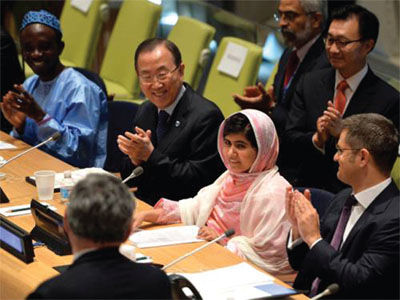
    On Friday, July 12, the United Nations Assembly listened spellbound to 16-year-old Malala, who was shot by the Talibans in Pakistan for attending school. Malala urged the governments to ensure free and compulsory education. Excerpts from her speech
    HONORABLE UN Secretary General Mr. Ban Ki-moon, respected president of the General Assembly Vuk Jeremic, honorable UN envoy for global education Mr. Gordon Brown, respected elders and my dear brothers and sisters: Assalamu alaikum(peace be upon you). Today is it an honor for me to be speaking again after a long time. Being here with such honorable people is a great moment in my life and it is an honor for me that today I am wearing a shawl of the late Benazir Bhutto.

    I don’t know where to begin my speech. I don’t know what people would be expecting me to say, but first of all thank you to God for whom we all are equal and thank you to every person who has prayed for my fast recovery and new life. I cannot believe how much love people have shown me. I have received thousands of good-wish cards and gifts from all over the world. Thank you to all of them.

    Thank you to the children whose innocent words encouraged me. Thank you to my elders whose prayers strengthened me. I would like to thank my nurses, doctors and the staff of the hospitals in Pakistan and the UK and the UAE government who have helped me to get better and recover my strength. I fully support UN Secretary General Ban Ki-moon in his Global Education First Initiative and the work of UN Special Envoy for Global Education Gordon Brown and the respectful president of the UN General Assembly Vuk Jeremic.

    I thank them for the leadership they continue to give. They continue to inspire all of us to action. Dear brothers and sisters, do remember one thing: Malala Day is not my day. Today is the day of every woman, every boy and every girl who have raised their voice for their rights. There are hundreds of human rights activists and social workers who are not only speaking for their rights, but who are struggling to achieve their goal of peace, education and equality.

    Thousands of people have been killed by the terrorists and millions have been injured. I am just one of them. So here I stand, one girl among many. I speak not for myself, but so those without a voice can be heard. Those who have fought for their rights. Their right to live in peace. Their right to be treated with dignity. Their right to equality of opportunity. Their right to be educated. Dear friends, on 9 October 2012, the Taliban shot me on the left side of my forehead.

    They shot my friends, too. They thought that the bullets would silence us, but they failed. And out of that silence came thousands of voices. The terrorists thought they would change my aims and stop my ambitions. But nothing changed in my life except this: weakness, fear and hopelessness died. Strength, power and courage was born. I am the same Malala. My ambitions are the same. My hopes are the same.

    And my dreams are the same. Dear sisters and brothers, I am not against anyone. Neither am I here to speak in terms of personal revenge against the Taliban or any other terrorist group. I am here to speak for the right of education for every child. I want education for the sons and daughters of the Taliban and all the terrorists and extremists. I do not even hate the Talib who shot me.

    Even if there was a gun in my hand and he was standing in front of me, I would not shoot him. This is the compassion I have learned from Mohamed, the prophet of mercy, Jesus Christ and Lord Buddha. This the legacy of change I have inherited from Martin Luther King, Nelson Mandela and Mohammed Ali Jinnah. This is the philosophy of nonviolence that I have learned from Gandhi, Bacha Khan and Mother Teresa.

    And this is the forgiveness that I have learned from my father and from my mother. This is what my soul is telling me: be peaceful and love everyone. Dear sisters and brothers, we realize the importance of light when we see darkness. We realize the importance of our voice when we are silenced. In the same way, when we were in Swat, the north of Pakistan, we realized the importance of pens and books when we saw the guns.

    The wise saying, “The pen is mightier than the sword.” It is true. The extremists are afraid of books and pens. The power of education frightens them. They are afraid of women. The power of the voice of women frightens them. This is why they killed 14 innocent students in the recent attack in Quetta. And that is why they kill female teachers. That is why they are blasting schools every day because they were and they are afraid of change and equality that we will bring to our society.

    And I remember that there was a boy in our school who was asked by a journalist: “Why are the Taliban against education?” He answered very simply by pointing to his book, he said: “A Talib doesn’t know what is written inside this book.” They think that God is a tiny, little conservative being who would point guns at people’s heads just for going to school.

    These terrorists are misusing the name of Islam for their own personal benefit. Pakistan is a peace-loving, democratic country. Pashtuns want education for their daughters and sons. Islam is a religion of peace, humanity and brotherhood. It is the duty and responsibility to get education for each child, that is what it says. Peace is a necessity for education.

    In many parts of the world, especially Pakistan and Afghanistan, terrorism, war and conflicts stop children from going to schools.We are really tired of these wars.Women and children are suffering in many ways in many parts of the world. In India, innocent and poor children are victims of child labor. Many schools have been destroyed in Nigeria. People in Afghanistan have been affected by extremism.

    Young girls have to do domestic child labor and are forced to get married at an early age. Poverty, ignorance, injustice, racism and the deprivation of basic rights are the main problems, faced by both men and women. Today, I am focusing on women’s rights and girls’ education because they are suffering the most. There was a time when women activists asked men to stand up for their rights.

    But this time we will do it by ourselves. I am not telling men to step away from speaking for women’s rights, but I am focusing on women to be independent and fight for themselves. So dear sisters and brothers, now it’s time to speak up. So today, we call upon the world leaders to change their strategic policies in favor of peace and prosperity.We call upon the world leaders that all of these deals must protect women and children’s rights.

    A deal that goes against the rights of women is unacceptable. We call upon all governments to ensure free, compulsory education all over the world for every child.We call upon all the governments to fight against terrorism and violence. To protect children from brutality and harm.We call upon the developed nations to support the expansion of education opportunities for girls in the developing world.

    We call upon all communities to be tolerant, to reject prejudice based on caste, creed, sect, color, religion or agenda to ensure freedom and equality for women so they can flourish.We cannot all succeed when half of us are held back.We call upon our sisters around the world to be brave, to embrace the strength within themselves and realize their full potential.

    Dear brothers and sisters, we want schools and education for every child’s bright future. We will continue our journey to our destination of peace and education. No one can stop us.We will speak up for our rights and we will bring change to our voice.We believe in the power and the strength of our words.

    Our words can change the whole world because we are all together, united for the cause of education. And if we want to achieve our goal, then let us empower ourselves with the weapon of knowledge and let us shield ourselves with unity and togetherness. Dear brothers and sisters, we must not forget that millions of people are suffering from poverty and injustice and ignorance.We must not forget that millions of children are out of their schools.

    We must not forget that our sisters and brothers are waiting for a bright, peaceful future. So let us wage a glorious struggle against illiteracy, poverty and terrorism, let us pick up our books and our pens, they are the most powerful weapons. One child, one teacher, one book and one pen can change the world. Education is the only solution. Education first. Thank you.

    The most courageous girl in the world Former UK Prime Minister Gordon Brown hailed Malala Yousafzai as “the most courageous girl in the world” as the Pakistani schoolgirl who was attacked by the Taliban last year called on world governments to provide free compulsory education for every child in a speech at the United Nations headquarters in New York.

    The address, timed to coincide with her 16th birthday, drew a standing ovation at a special Youth Assembly held in the presence of Mr. Brown, who is the UN’s special envoy for education, and the body’s Secretary- General, Ban Ki-moon, who declared it “Malala day”. Ms Yousafzai, who was shot in the head in October in Pakistan’s Swat Valley after attracting the ire of the Taliban for raising a voice against its attacks on girls’ education, also presented Mr. Ban with a petition signed by 4 million people asking for help to deliver education to all children.

    The speech came as Save the Children released a report based on research by UNESCO revealing that almost 50 million children living in war zones do not attend school at all, and that attacks on education are on the rise, largely due to the conflict in Syria. Justin Forsyth, Save the Children’s chief executive, said of Malala: “She was speaking for the nearly 50 million children around the world who are currently being denied the opportunity of an education because of conflict.”

    He added that the world “should listen” to Malala, who was nearly killed in last year’s attack. Few, however, managed to watch Ms Yousafzai in Pakistan. Only two of the county’s many news channels showed the speech live. The most-watched broadcaster, Geo News, showed portions of the speech later, while other channels all stuck to normal programming. Moreover, Pakistanis are currently unable to see videos on YouTube, because of an ongoing court ban.

    The speech did not get much attention in the days leading up to the event. In Pakistan, she is seen as a hero by many, especially those who oppose the Taliban’s campaign of violence. But for others she has been turned into an object of controversy, shrouded in conspiracy theories wildly alleging that she was “a CIA agent” and that her shooting was “staged”.

    These theories have had alarmingly wide purchase among young Pakistanis on the internet. The hostility to the schoolgirl, some observers say, is a measure of the pitch of anti-Americanism in Pakistan, where even the faintest association with the US is attacked.

  • Taliban Gunmen Attack Presidential Palace In Afghanistan

    Taliban Gunmen Attack Presidential Palace In Afghanistan

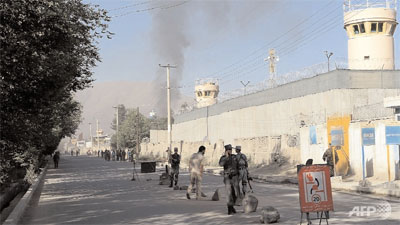
    KABUL (TIP): An early morning insurgent attack on Afghanistan’s presidential palace on June 25 has been put down with all the assailants killed, Kabul’s police chief said. General Ayoub Salangi told Reuters the gunfight ended after about 90 minutes with all the attackers killed. Taliban gunmen attacked Afghanistan’s presidential palace and surrounding buildings, including the CIA’s Afghan headquarters, with explosions and gunfire shaking the city centre.

    A Reuters reporter at the palace said the attack began soon after 6.30am (0200 GMT), when at least one man opened fire with an automatic rifle at a gate to the palace in the central Shash Darak district. Karzai’s whereabouts were not immediately known, though he was due to attend a press event at the palace after 9am (0430 GMT). Reporters had been gathering at the palace when the attack began and dived for cover as government forces returned fire. Heavy explosions resounded and the gunfire intensified. Schoolchildren walking to classes nearby were also caught in the exchanges.

    The Taliban claimed responsibility the attack in a text message to Kabul reporters from spokesman Zabihullah Mujahid. “Today at 6.30am a number of suicide bombers attacked the presidential palace, defence ministry and the Ariana Hotel,” Mujahid said. The Ariana Hotel is known to house the headquarters of the US Central Intelligence Agency (CIA) in Afghanistan. A thick plume of smoke was seen rising from the building.

    An Afghan official told Reuters the attackers had made their way into a nearby building from which they fired. Shash Darak includes the most important buildings in Kabul, including the palace, the headquarters of NATO-led forces in Afghanistan, the Afghan Defence Ministry and the CIA’s Afghan station.

  • Pakistan Taliban vow to avenge Waliur death

    Pakistan Taliban vow to avenge Waliur death

    ISLAMABAD (TIP): A “shocked” Pakistani Taliban on Thursday confirmed the death of its deputy chief Waliur Rehman in a American drone strike and announced it was withdrawing its offer to hold talks with the new Pakistan government over the killing. “I confirm the martyrdom of Waliur Rehman in a drone strike on Wednesday. We are shocked at the martyrdom of our leader but are proud of his sacrifices,” said Ihsanullah Ihsan, spokesman for the banned Tehrik-e-Taliban Pakistan.

    Ihsan said the Taliban was withdrawing its offer of a dialogue with the new government, and would take revenge for Rehman’s killing. “We had sincerely offered a dialogue to the government but we strongly believe that the government has a role to play in the drone strikes,” he said. The Taliban consider the Pakistan government “fully responsible” for the drone strikes because it was “passing on information” to the US, he said.

    Rehman and three senior militant commanders were among six persons killed in the CIA-operated drone strike carried out in Chashma Pul area of North Waziristan Agency. Sources said his death would hit the incoming PML-N government’s plans to open a dialogue with the Taliban as mediators were hoping to establish contact with the militants through the relatively moderate Rehman. The PML-N, which won the general election earlier this month, has said it will hold talks with the Taliban and other militants to usher in peace in the country.

    Earlier in the day, security officials told journalists in the country’s northwest that Rehman was buried at an undisclosed location on Wednesday night. The US had accused Rehman of involvement in a 2009 suicide attack in Afghanistan that killed seven CIA employees. Rehman was carrying a $5 million bounty on his head. The Pakistani Taliban, formed in late 2007, aims to overthrow the Pakistani government, which it believes is too closely aligned with the US.

  • China Emerging As New Force In Drone Warfare

    China Emerging As New Force In Drone Warfare

    BEIJING (TIP): Determined to kill or capture a murderous Mekong River drug lord, China’s security forces considered a tactic they’d never tried before: calling a drone strike on his remote hideaway deep in the hills of Myanmar. The attack didn’t happen — the man was later captured and brought to China for trial — but the fact that authorities were considering such an option cast new light on China’s unmanned aerial vehicle program, which has been quietly percolating for years and now appears to be moving into overdrive. Chinese aerospace firms have developed dozens of drones, known also as unmanned aerial vehicles, or UAVs. Many have appeared at air shows and military parades, including some that bear an uncanny resemblance to the Predator, Global Hawk and Reaper models used with deadly effect by the US Air Force and CIA.

    Analysts say that although China still trails the US and Israel, the industry leaders, its technology is maturing rapidly and on the cusp of widespread use for surveillance and combat strikes. “My sense is that China is moving into large-scale deployments of UAVs,” said Ian Easton, co-author of a recent report on Chinese drones for the Project 2049 Institute security think tank. China’s move into large-scale drone deployment displays its military’s growing sophistication and could challenge US military dominance in the Asia-Pacific. It also could elevate the threat to neighbors with territorial disputes with Beijing, including Vietnam, Japan, India and the Philippines. China says its drones are capable of carrying bombs and missiles as well as conducting reconnaissance, potentially turning them into offensive weapons in a border conflict. China’s increased use of drones also adds to concerns about the lack of internationally recognized standards for drone attacks.

    The United States has widely employed drones as a means of eliminating terror suspects in Pakistan and the Arabian Peninsula. “China is following the precedent set by the US The thinking is that, ‘If the US can do it, so can we. They’re a big country with security interests and so are we’,” said Siemon Wezeman, a senior fellow at the arms transfers program at the Stockholm International Peace Research Institute in Sweden, or SIPRI. “The justification for an attack would be that Beijing too has a responsibility for the safety of its citizens. There needs to be agreement on what the limits are,” he said. Though China claims its military posture is entirely defensive, its navy and civilian maritime services have engaged in repeated standoffs with ships from other nations in the South China and East China seas. India, meanwhile, says Chinese troops have set up camp almost 20 kilometers (12 miles) into Indian-claimed territory.

    It isn’t yet known exactly what China’s latest drones are capable of, because, like most Chinese equipment, they remain untested in battle. The military and associated aerospace firms have offered little information, although in an interview last month with the official Xinhua News Agency, Yang Baikui, chief designer at plane maker COSIC, said Chinese drones were closing the gap but still needed to progress in half a dozen major areas, from airframe design to digital linkups. Executives at COSIC and drone makers ASN, Avic, and the 611 Institute declined to be interviewed by The Associated Press, citing their military links. The Defense Ministry’s latest report on the status of the military released in mid-April made no mention of drones, and spokesman Yang Yujun made only the barest acknowledgement of their existence in response to a question.

  • US Senate confirms Brennan as CIA director

    US Senate confirms Brennan as CIA director

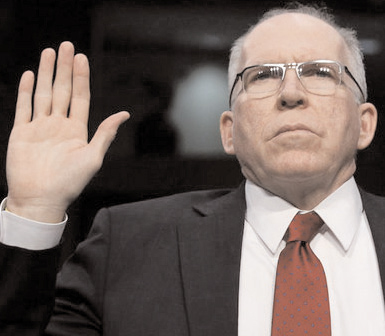
    WASHINGTON (TIP): The US Senate has confirmed John Brennan as the next director of Central Intelligence Agency (CIA). Currently the counter terrorism adviser to the US President Barack Obama, Brennan was nominated by a vote of 63 to 34 on Thursday. The vote was delayed by a 13-hour long filibuster by Republican Senator Rand Paul of Connecticut in pursuit of more information about the administration’s domestic drone policy.

    Welcoming the nomination, Obama said that the Senate has recognised Brennan’s qualities and determination to keep US safe along with his commitment to work with Congress and build relationships with foreign partners. “With John’s 25 years of experience at the agency, our extraordinary men and women of the CIA will be led by one of their own. I am especially appreciative to Michael Morell for being such an outstanding acting director and for agreeing to continue his service as deputy director,” he said.

    He added that the timely accurate intelligence is absolutely critical to disrupting terrorist attacks, dismantling al-Qaida along with its affiliates and meeting the broad array of security challenges that we face as a nation. “John’s leadership and our dedicated intelligence professionals will be essential in these efforts. I am deeply grateful to John and his family for their continued service to our nation,” he said.

    The vote on confirmation was moved through the Senate as Paul lifted his filibuster after receiving response to his question from the attorney general, Eric Holder. “Does the president have the authority to use a weaponised drone to kill an American not engaged in combat on American soil? The answer to that question is no,” according to Holder’s letter to Senator Rand Paul. “This is a major victory for American civil liberties and ensures the protection of our basic Constitutional rights. We have separation of powers to protect our rights. That’s what government was organised to do and Constitution was put in place to do,” Paul said.

  • Bin Laden’s son-in-law captured, charged in US with conspiring to kill Americans

    Bin Laden’s son-in-law captured, charged in US with conspiring to kill Americans

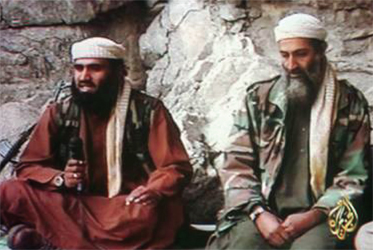
    NEW YORK (TIP): A top Al Qaeda spokesman who is the son-in-law of Osama bin Laden has been captured overseas and charged in the United States with conspiracy to kill Americans, according to an indictment unsealed Thursday, March 7. Sulaiman Abu Ghaith appeared alongside bin Laden in a 2001 video in which they took responsibility for the 9/11 attacks and warned of more, before he dropped out of sight for more than a decade before his arrest.

    According to the officials, who spoke on condition of anonymity, Turkish officials captured Abu Ghaith in the capital Ankara, where a court ruled he had entered the country illegally with a fake passport. The Turkish government then ostensibly deported Abu Ghaith to his birthplace Kuwait, but arranged for him to transit through Jordan where he was ultimately taken into custody by U.S. law enforcement, the officials said. Jordanian sources confirmed that Abu Ghaith was sent by Turkey via Jordan to Kuwait, and intercepted in Jordan and brought to the U.S. “I commend our CIA and FBI, our allies in Jordan, and President Obama for their capture of al-Qaeda spokesman Sulaiman Abu Ghaith,” said Rep. Peter King, R-N.Y., a member of the Homeland Security Committee, who first announced the news.

    “I trust he received a vigorous interrogation, and will face swift and certain justice,” added King, who is also chairman of the Sub-Committee on Counterterrorism and Intelligence. Prosecutors say from at least May 2001 to around 2002, Abu Ghaith served alongside bin Laden, appearing with him and his then-deputy Ayman al-Zawahiri, speaking on behalf of the terrorist organization and in support of its mission, and warning that attacks similar to those of September 11, 2001 would continue. The government says around May 2001, Abu Ghaith urged individuals at a guest house in Kandahar, Afghanistan, to swear allegiance to bin Laden. On the evening of Sept. 11, 2001, after the terrorist attacks on the United States, bin Laden summoned Abu Ghaith and asked for his assistance. He agreed to provide it.

    On the morning of Sept. 12, 2001, Abu Ghaith appeared with bin Laden and Zawahiri, and spoke on behalf of al-Qaeda, warning the United States and its allies that “[a] great army is gathering against you” and called upon “the nation of Islam” to do battle against “the Jews, the Christians and the Americans,” the court document says. Also, after the September 11, 2001 terrorist attacks, Abu Ghaith delivered a speech in which he addressed the then-U.S. Secretary of State and warned that “the storms shall not stop, especially the Airplanes Storm,” and advised Muslims, children, and opponents of the United States “not to board any aircraft and not to live in high rises.” Abu Ghaith arranged to be, and was, successfully smuggled from Afghanistan into Iran in 2002, where he spent most of the decade, U.S. officials said. Even as government officials applauded the arrest of Abu Ghaith, his transport to the United States stirred controversy among lawmakers who were apparently caught by surprise by the news. “We believe the administration’s decision here to bring this person to New York City, if that’s what’s happened, without letting Congress know is a very bad precedent to set,” said Sen. Lindsey Graham, R-S.C., who held a press conference with Sen. Kelly Ayotte, R-N.H. “And when we find somebody like this, this close to bin Laden and the senior al- Qaeda leadership, the last thing in the world we want to do, in my opinion, is put them in civilian court. This man should be in Guantanamo Bay,” Ayotte said. “So we’re putting the administration on notice,” said Graham. “We think that sneaking this guy into the country, clearly going around the intent of Congress when it comes to enemy combatants, will be challenged.” Earlier, House Intelligence Chair Mike Rogers, R-Mich., strongly criticized the administration for bringing Abu Ghaith to the United States. Rogers, a former FBI agent, said that Mirandizing a top al-Qaeda suspect and bringing him to the United States for trial creates a host of problems – instead of sending him to the facility at Guantanamo Bay, Cuba, which was built to handle high value prisoners. “Al-Qaeda leaders captured on the battlefield should not be brought to the United States to stand trial,” Rogers said. “We should treat enemy combatants like the enemy.

    The U.S. court system is not the appropriate venue.” The Obama administration has been trying to clear out Guantanamo and not bring any new prisoners there. Sen. Charles Schumer, D-N.Y., said it’s fine with him if Abu Ghaith is put on trial in New York because key state and city officials had been consulted in advance, unlike in the case of terror suspect Khalid Sheikh Mohammed. “Unlike with KSM, Kelly and others had been consulted ahead of time about this and they gave the green light to do it. As you know, (Police Commissioner) Ray Kelly, Mayor (Michael) Bloomberg and I opposed the trial of (Mohammed) in New York and we successfully made sure that didn’t happen,” said Schumer. “On issues like this, I defer to Commissioner Kelly, and I think the mayor does as well. And he thinks it’s OK to do it here, and I’ll go by that,” Schumer said.

  • Zardari Raises Concerns Over Drone Attacks With US Delegation

    Zardari Raises Concerns Over Drone Attacks With US Delegation

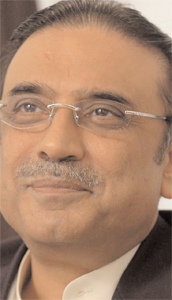
    ISLAMABAD (TIP):President Asif Ali Zardari onThursday described US droneattacks in Pakistan’s tribalareas as “counterproductive”,saying the two countriesneed to “find a way out” inthe campaign againstmilitants operating in theregion.The drone attacks arecausing “great damage”among the people, Zardaritold a visiting delegation ofthe US Senate ForeignRelations Committee headedby its chairman RobertMenendez during a meetingat the presidency.

    Zardari also voicedconcern over continuedmilitant attacks on thePakistan army andparamilitary troops from theAfghan side of the border,presidential spokesmanFarhatullah Babar said.The president stressed theneed for NATO and Afghansecurity forces to act as an”anvil to Pakistan’s hammeroperations”.The two sides discussedseveral issues, includingbilateral relations, the fightagainst militancy and theregional situation, duringtwo rounds of talks.

    A delegation-level meetingwas followed by another onein which Zardari wasassisted by foreign ministerHina Rabbani Khar.CIA-operated spy planeshave carried out scores ofattacks in the lawless tribalbelt bordering Afghanistanthat have killed top al-Qaidaand Taliban leaders,including Tehrik-e-TalibanPakistan chief BaitullahMehsud.However, rights groups saydozens of civilians have alsodied in the attacks.During his talks with theUS delegation, Zardari alsoreferred to the need toacknowledge sacrifices madeby Pakistan in the fightagainst militancy.The blame-game “will notserve the common purpose ofdefeating militants”, he said.

  • As I See It: Worry About Kerry

    As I See It: Worry About Kerry

    As the US president, Barack Obama embarks on his second term, New Delhi is once again feeling the chill of a new administration in Washington. Sections of the Indian foreign policy making community are once again doing what they do best – crying hoarse over a possible change in the tone and tenor of US foreign policy. Obama has a new cabinet line-up with John Kerry nominated for the post of secretary of state, Chuck Hagel for the secretary of defense and John Bremmer as the head of the CIA. The US foreign policy is in a state of flux and some very significant changes are likely over the course of the next few years under the second Obama presidency. The most important issue in the short to medium term will be withdrawal of around 66,000 US troops from Afghanistan after more than a decade battling al Qaeda and the Taliban.

    Like most nations around the world, New Delhi will also be impacted by the impending changes in the foreign policy priorities of Washington. But instead of debating the larger ramifications of these changes, the discussion in India today is reminiscent of the discussion in the country when Obama came to office for the first time in 2008. There were widespread concerns about Obama’s attitudes towards India after eight years of privileged position under George W Bush administration. George W Bush, deeply suspicious of communist China, was personally keen on building strong ties with India.

    Hence, he was willing to sacrifice long-held US non-proliferation concerns to embrace nuclear India and acknowledge it as the primary actor in South Asia, dehyphenated from Pakistan. The Obama administration’s concerns in its initial months with protecting the nonproliferation regime, dealing with the immediate challenge of the growing Taliban threat in Afghanistan and Pakistan, and solving the unprecedented economic challenge led it to a very different set of priorities and an agenda in which India seemed to have a marginal role. The only context in which Obama mentioned India in his early months was related to the need to resolve Kashmir so as to find a way out of the west’s troubles in Afghanistan.

    To many Indians, the new administration seemed intent on sidelining India. In a similar vein, discussion these days is centered around the appointment of John Kerry and his supposed ’tilt’ toward Pakistan. Kerry has been closely associated with Obama administration’s Pakistan policy.

    It was he who helped broker the release of the CIA contractor, Raymond Davis, arrested on suspicion of murder and later persuaded Islamabad to return parts of US stealth helicopter that crashed during the Abbottabad raid that killed Osama bin Laden. Kerry has already been termed by sections of the Indian media as a friend of Pakistan, implication being that he would be unfriendly towards India. Kerry’s strong support for strengthening the NPT and the Kerry-Lugar-Berman bill authorizing a five-year $7.5 billion financial aid package to Pakistan have been viewed as examples of Kerry’s pro-Pakistan worldview.

    Sympathetic ear
    Pakistan’s effusive praise for Kerry’s nomination may indeed underscore a sense in Islamabad and Rawalpindi that they have gained a sympathetic ear in the new US cabinet. It won’t be surprising if the recent adventurous behavior of Pakistan military at the Line of Control may have been inspired by this bravado.

    But just as Pakistan will be fooling itself, if it believes that Kerry is going to be Pakistan’s friend, India is being unnecessarily defeatist if it thinks that Kerry’s nomination will be a disaster for India. Kerry is neither going to be pro-India nor pro-Pakistan, he will be pro-US. And if Obama had to change his foreign policy worldview vis-à-vis India soon after coming into office, Kerry will have no choice but to build on Obama’s first term and strengthen ties with India.

    After all, it was Kerry who has described India-US ties as “without doubt one of the most significant partnerships in US foreign policy.” The US-India relationship has matured and reached a stage where changes in personnel will only have a limited impact on its trajectory. There is a growing perception that India is not yet ready for prime-time and that the political leadership in New Delhi remains perpetually preoccupied with domestic turmoil and lacks political will to claim India’s rightful place in the comity of nations.

    It is for India to pursue strategic partnerships with like-minded nations and advance its interests. The world will only take India seriously when India starts taking itself seriously and starts behaving like a serious power. There is a larger problem that underlies this perpetual hyperventilation in India about the ostensible tilt in Washington.

    It has become a regular feature of Indian diplomacy to press America toward securing its own regional security interests. The speed with which India has outsourced its regional foreign policy to Washington is astonishing.New Delhi is now reduced to pleading with Washington to tackle Pakistan and to rein in Pakistan army’s nefarious designs against India in Afghanistan, in Kashmir and elsewhere.

    For all the breast beating in recent years about India emerging as a major global power, Indian strategic and political elites display an insecurity that defies explanation. A powerful, self-confident nation should be able to articulate a coherent vision about its priorities and national interests.

    The brazen display of a lack of self-confidence by Indian elites in their nation’s abilities to leverage the international system to its advantage only weakens India.

    A diffident India will continue to crave for the attention of Washington but will find it difficult to get. A confident India that charts its own course in world politics based on its national imperatives will force the world to sit up and take notice.

  • With top brass under scrutiny, Pentagon chief orders ethics review

    With top brass under scrutiny, Pentagon chief orders ethics review

    BANGKOK (TIP): Defense secretary Leon Panetta has ordered the US military’s top brass to look for any gaps in ethics training as he lamented lapses in judgment by officers that could “erode public confidence in our leadership,” a Pentagon spokesman said on Thursday

    Questions over the conduct of US generals has come into sharp focus over the past week as retired General David Petraeus lost his job as CIA director over an affair and General John Allen, who leads the Afghan war effort, was placed under investigation for potentially inappropriate emails with a Florida socialite.

    A Pentagon spokesman told reporters travelling with Panetta in Thailand that development of the defense secretary’s initiative pre-dated the latest scandals. Lesser-known US military leaders have come under scrutiny recently, with one general demoted by Panetta for wasting taxpayer money and another facing accusations including forcible sodomy of a subordinate. “The vast majority of our senior officers takes this responsibility (of leadership) seriously and acts in accord with ethics regulations and training,” Panetta said in a memo to the chairman of the joint chiefs of staff, General Martin Dempsey. “Yet, as has happened recently, when lapses occur, they have the potential to erode public confidence in our leadership. … Worse, they can be detrimental to the execution of our mission to defend the American people.” Panetta, in the memo dated Nov. 14, called on Dempsey to work with other military leaders to review existing ethics training programs “to determine if they are adequate to address the concerns I have identified.” He said he would present President Barack Obama an interim report by December 1 with initial results of the review and any recommendations developed by that time. The memo did not list any specific lapses but on Wednesday Panetta announced he was demoting retiring Army General William Ward and would seek to recoup $82,000 in expenses from him.

    Ward was accused of misconduct in travel, misuse of military aircraft and misuse of staff. In one case, Ward took his official plane to Bermuda for an overnight refuelling stop with his wife, investigators found. In another case, Brigadier General Jeffrey Sinclair, a 27-year Army veteran based at Fort Bragg in North Carolina, is accused of 26 violations of military law including forcible sodomy, wrongful sexual conduct, possessing pornography while deployed and conduct unbecoming of an officer.

    The charges stem from allegations of inappropriate behaviour toward four female subordinates and a civilian over the past five years. Sinclair is also accused of claiming more than $4,000 in personal travel as military business expenses.

    Panetta said he knows of no other military officials beyond Allen drawn into the investigation of Petraeus.Panetta said in his memo that the Pentagon has strong rules in place setting standards for personal conduct “and prohibit misuse of taxpayer resources.” He said it is not enough to merely comply with rules, saying military leaders also need to exercise sound judgment. “An action may be legally permissible but neither advisable nor wise,” he wrote.

  • ‘Classified Data In Petraeus Lover’s PC’

    ‘Classified Data In Petraeus Lover’s PC’

    WASHINGTON (TIP): A computer used by Paula Broadwell, the woman whose affair with David Petraeus led to his resignation as CIA director, contained substantial classified data that should have been stored under more secure conditions, law enforcement and national security officials said on Wednesday. The contents of the classified material and how Broadwell acquired it remain under investigation, the officials said. But the quantity of classified material found was significant enough to warrant a continuing probe, the officials said. President Barack Obama told a news conference on Wednesday there was no indication so far that any classified information had been disclosed as a result of the Petraeus scandal. As a reserve officer in military intelligence, Broadwell – co-author of a biography on Petraeus – had security clearances that gave her access to classified material, several officials said.

  • CIA director David Petraeus quits over extramarital affair

    CIA director David Petraeus quits over extramarital affair

    WASHINGTON (TIP): David Petraeus, the retired four-star general renowned for taking charge of the military campaigns in Iraq and then Afghanistan, abruptly resigned on November 9 as director of the CIA, admitting to an extramarital affair. The affair was discovered during an FBI investigation, according to officials briefed on the developments.

    They spoke on condition of anonymity because they were not authorized to publicly discuss the matter. It was unclear what the FBI was investigating or when it became aware of the affair. Petraeus’ resignation shocked Washington’s intelligence and political communities. It was a sudden end to the public career of the bestknown general of the post 9/11 wars, a man credited with salvaging the US conflict in Iraq and sometimes mentioned as a potential Republican presidential candidate. His service was effusively praised on November 9 in statements from both Republican and Democratic lawmakers. Petraeus, who turned 60 on Wednesday, told CIA employees in a statement that he had met with President Barack Obama at the White House on November 8 and asked to be allowed to resign.

    On Friday, the president accepted. Petraeus told his staffers he was guilty of “extremely poor judgment” in the affair. “Such behavior is unacceptable, both as a husband and as the leader of an organization such as ours.” He has been married for 38 years to Holly Petraeus, whom he met when he was a cadet at the US Military Academy at West Point, New York. She was the daughter of the academy superintendent.

    They have two children, and their son led an infantry platoon in Afghanistan. Obama said in a statement that the retired general had provided “extraordinary service to the United States for decades” and had given a lifetime of service that “made our country safer and stronger.” Obama called him “one of the outstanding general officers of his generation.” The president said that CIA deputy director Michael Morell would serve as acting director.

    Morell was the key CIA aide in the White House to President George W Bush during the Sept 11, 2001, terror attacks. “I am completely confident that the CIA will continue to thrive and carry out its essential mission,” Obama said. The resignation comes at a sensitive time.

    The administration and the CIA have struggled to defend security and intelligence lapses before the attack that killed the US ambassador to Libya and three others.

    It was an issue during the presidential campaign that ended with Obama’s re-election on Tuesday. The CIA has come under intense scrutiny for providing the White House and other administration officials with talking points that led them to say the Benghazi attack was a result of a film protest, not a militant terror attack.

    It has become clear that the CIA was aware the attack was distinct from the film protests roiling across other parts of the Muslim world. Morell rather than Petraeus now is expected to testify at closed congressional briefings next week on the Sept 11 attacks on the consulate in Benghazi. For the director of the CIA, being engaged in an extramarital affair is considered a serious breach of security and a counterintelligence threat.

    If a foreign government had learned of the affair, the reasoning goes, Petraeus or the person with whom he was involved could have been blackmailed or otherwise compromised. Military justice considers conduct such as an extramarital affair to be possible grounds for court martial. Failure to resign also could create the perception for the rank-and-file that such behavior is acceptable.

    At FBI headquarters, spokesman Paul Bresson declined to comment on the information that the affair had been discovered in the course of an investigation by the bureau. Holly Petraeus is known for her work helping military families. She joined the new Consumer Financial Protection Bureau to set up an office dedicated to helping service members with financial issues.

    Though Obama made no direct mention of Petraeus’ reason for resigning, he offered his thoughts and prayers to the general and his wife, saying that Holly Petraeus had “done so much to help military families through her own work. I wish them the very best at this difficult time.” Petraeus, who became CIA director in September 2011, was known as a shrewd thinker and hard-charging competitor.

    His management style was recently lauded in a Newsweek article by Paula Broadwell, coauthor of the biography, “All In: The Education of General David Petraeus.” The article listed Petraeus’ “rules for living.” No. 5 was: “We all make mistakes.

    The key is to recognize them, to learn from them, and to take off the rear view mirrors – drive on and avoid making them again.” Petraeus told his CIA employees that he treasured his work with them “and I will always regret the circumstances that brought that work with you to an end.” The director of national intelligence, James Clapper, said Petraeus’ departure represented “the loss of one of our nation’s most respected public servants.

    From his long, illustrious Army career to his leadership at the helm of CIA, Dave has redefined what it means to serve and sacrifice for one’s country.” Other CIA directors have resigned under unflattering circumstances.

    CIA director Jim Woolsey left over the discovery of a KGB mole and director John Deutch left after the revelation that he had kept classified information on his home computer. Bush sent Petraeus to Iraq in February 2007, at the peak of sectarian violence, to turn things around as head of U.S. forces. He oversaw an influx of 30,000 US troops and moved troops out of big bases so they could work more closely with Iraqi forces scattered throughout Baghdad.

  • Senator seeks support for bill to cut all US aid to Pakistan

    Senator seeks support for bill to cut all US aid to Pakistan

    WASHINGTON (TIP): Senator Rand Paul, in his ‘Dear Colleague’ letter written September 18 urged members to pass the bill which seeks to cut all foreign aid to any country that “fails to secure” US embassies.

    The bill also demands financial accountability from countries like Pakistan, Egypt and Libya, which recently saw violence directed against US embassies.

    Paul’s move came within hours of Pakistan Foreign Minister Hina Rabbani Khar’s arrival in Washington to hold talks with US officials and lawmakers.

    Paul, the Senator from Kentucky, issued a similar letter to his colleagues in the Senate, underlining his intention to obstruct any pending legislation until the Senate addresses these matters.

    “This week is likely our last chance to address the ongoing violence, to promote security at our diplomatic facilities, and to take appropriate steps to ensure cooperation from the governments of Pakistan, Egypt and Libya,” Paul said in his letter.

    “First, we must demand accountability from the government of Pakistan, which receives over USD 3 billion from us every year, yet routinely plays both sides of some of the most important issues while openly thwarting our objectives in the region,” he wrote.

    “They should be subject to the same conditions applied to Egypt, Libya, and the others,” Paul wrote seeking release of Shakil Afridi, the Pakistani doctor who has been found guilty of treason for helping CIA track Osama bin Laden.
    “Dr Afridi remains under arrest for his role in finding bin Laden, and no country that arrests a man for helping to find bin Laden is an ally of the US. If Pakistan wants to be our ally and receive foreign aid for being one, then they should act like it, and they must start by releasing Dr Afridi,” Paul said.

    As this is likely to be the final week of legislative session for both the House and Senate before an extended recess, Paul urged the lawmakers to take immediate action to pass the bill.

    “The bill should send a strong clear message to these entities that you do not get foreign aid unless you are an unwavering ally of the US,” he argued.

    Paul said the US must ensure that unless there is full cooperation in bringing the attackers on embassies to justice, no foreign aid will be provided in the future.

    “We must insist that any country which expects assistance from the US cannot permit the growth and influence of violent ideologies within their borders, especially when the practitioners of these ideologies are intent on murdering our diplomatic personnel abroad,” he wrote, seeking full investigation into the cases of recent attacks. (Input from Agencies)

  • US choppers on Osama mission crossed Indian air space?

    US choppers on Osama mission crossed Indian air space?

    New Delhi (TIP): The flight path taken by two American MH-47 Chinook helicopters to Abbottabad in Pakistan to kill Osama bin Laden in May last year has triggered a controversy with questions being raised as to whether they flew over the Indian air space.

    A just-published book, containing a first-hand account of the raid on the al-Qaida leader’s hideout in the Pakistan garrison town near Islamabad, contains a map showing the flight path of the two helicopters after they took off from Jalalabad in Afghanistan in the dead of the night on May one.

    The map shows the helicopters crossing Pakistan’s eastern border with India before looping around and approaching Abbottabad from the South East. The book — No Easy Day: The Autobiography of a Navy SEAL — is written by one of the US Navy SEALS Matt Bissonnette, who participated in the operation, using pseudonym “Mark Owen”.

    Questions about whether the helicopters flew over the Indian air space have been raised by a popular US website Redstate, described as a leading conservative news blog. This has set off a debate in the cyber world.
    The blog states that “this apparent use of Indian air space” raises questions including whether the Indian government had advance knowledge about the Abbottabad mission and whether the US had sought and was granted permission to use Indian air space.

    Indian Air Force sources in New Delhi on Wednesday dismissed this hypothesis and said the US helicopters had not crossed into Indian air space at all.

    B Raman, a noted security expert who retired as a senior officer of India’s external intelligence agency RAW, has doubted whether the helicopters would have been flown into Pakistan via India.

    He has written that in planning operations of this nature involving air and missile action, the US is always worried that if the Pakistanis detect the action, they may misinterpret that the action had been originated by India and this could lead to a war between the two nuclear powers.

    The book gives fascinating details of the mission undertaken by 22 SEALS, an EOD tech and a CIA interpreter, who flew in two Black Hawk helicopters into Abbottabad, where Pakistan’s military academy is located, on the night of May 2, 2011 from a US base in Jalalabad. They killed Osama and four others hiding in a house.

  • HAQQANI NETWORK AS  FTO: WHAT IMPACT?

    HAQQANI NETWORK AS FTO: WHAT IMPACT?

    By B.Raman

    In a report to the US Congress on September 7,2012, Mrs. Hillary Clinton, US Secretary of State, intimated it of her decision to designate the Haqqani Network, an affiliate of the Afghan Taliban operating from the Kurram-North Waziristan areas of Pakistan, as a Foreign Terrorist Organization (FTO) under the Immigration and Nationality Act.

    She said in a separate statement:

    “Today, I have sent a report to Congress saying that the Haqqani Network meets the statutory criteria of the Immigration and Nationality Act (INA) for designation as a Foreign Terrorist Organization (FTO). This action meets the requirements of the Haqqani Network Terrorist Designation Act of 2012 (P.L. 112-168). Based on that assessment, I notified Congress of my intent to designate the Haqqani Network as an FTO under the INA. I also intend to designate the organization as a Specially Designated Global Terrorist entity under Executive Order 13224.

    “The consequences of these designations include a prohibition against knowingly providing material support or resources to, or engaging in other transactions with, the Haqqani Network, and the freezing of all property and interests in property of the organization that are in the United States, or come within the United States, or the control of U.S. persons. These actions follow a series of other steps that the U.S. government already has taken against the Haqqanis. The Department of State previously designated key Haqqani Network leaders under E.O. 13224, and the Department of the Treasury has designated other militants with ties to the Haqqanis under the same authority. We also continue our robust campaign of diplomatic, military, and intelligence pressure on the network, demonstrating the United States’ resolve to degrade the organization’s ability to execute violent attacks.

    “I take this action in the context of our overall strategy in Afghanistan, the five lines of effort that President Obama laid out when he was in Afghanistan in May: increasing the capacity of Afghan security forces to fight insurgents; transitioning to Afghan security lead; building an enduring partnership with Afghanistan; pursuing Afghan-led reconciliation; and putting together an international consensus to support peace and stability in the region. We will continue to work with both Afghanistan and Pakistan to move these efforts forward and build a more peaceful and secure future.”

    For some weeks now, the State Department had been under pressure from sections of the Congress to declare the Haqqani Network as an FTO because of its role in killing US and other NATO troops in Afghanistan. The State Department was resisting the pressure because US intelligence reportedly believed that Sergeant Bowe Bergdahl of the US Army, who disappeared from southern Afghanistan in June, 2009, might be in the custody of the Network. They were worried that the designation of the Network as an FTO could hamper efforts to rescue him. The decision now to designate the Network as an FTO would indicate that the US intelligence is pessimistic about its chances of being able to rescue him.

    The Agence France Presse (AFP) reported as follows on September 8,2012:

    “The network’s founder is Jalaluddin Haqqani, a disciplined Afghan guerrilla leader bankrolled by the US to fight Soviet troops in Afghanistan in the 1980s and now based with his family in Pakistan.

    “In the 1980s, Jalaluddin was close to the CIA and Pakistani intelligence. He allied himself to the Taliban after they took power in Kabul in 1996, serving as a cabinet minister under the militia’s supreme leader, Mullah Omar.

    “When American troops arrived after the 9/11 attacks, Haqqani looked up old friends and sought refuge in North Waziristan, becoming one of the first anti-US commanders based in Pakistan’s border areas.

    “He has training bases in eastern Afghanistan, is close to al Qaeda and his fighters are active across east and southeastern Afghanistan and in Kabul.

    “Militarily the most capable of the Taliban factions, the network operates independently but remains loyal to Omar and would probably fall behind any peace deal negotiated by the Taliban.

    “Now in his late 70s and frail, Jalaluddin’s seat on the Afghan Taliban leadership council has passed to his son Sirajuddin, who effectively runs a fighting force of at least 2,000 men.

    “The United States blames the network for some of the most spectacular attacks in Afghanistan, such as a 2011 siege on the US embassy and, in 2009, the deadliest attack on the CIA in 25 years.

    “Washington has long since designated Jalaluddin and Sirajuddin “global terrorists” but in July Congress urged the State Department to blacklist the entire network.

    “Supporters of the designation say the financial sanctions will help disrupt the Haqqani network’s fundraising activities in Saudi Arabia and the United Arab Emirates.

    “But Pakistanis fear it could further worsen ties between Islamabad and Washington just as cooperation had resumed after a series of major crises in 2011, particularly the killing of Osama bin Laden in Pakistan.

    “Any such decision will take the relationship back to square one, ruining the improvement seen in ties between the two countries during the last couple of months,” a senior Pakistani security official said.

    “Last year, the outgoing top US military officer, Admiral Mike Mullen, called the Haqqanis the “veritable arm” of Pakistan’s ISI, although other American officials later distanced themselves from the remarks.”

    The designation of an organization as an FTO impairs its ability to collect funds from the Diaspora in the US. Where an organization does not depend on flow of funds from the Diaspora in the US, it has very little impact on its operational capabilities.

    The US started the practice of declaring foreign terrorist set-ups as FTOs in 1997. Since then, there has not been a single instance of any terrorist organization withering away due to drying-up of funds because of its being declared an FTO. All organizations declared by the US as FTO continued to maintain their terrorist activities without any problem.

    The US declared the Liberation Tigers of Tamil Eelam (LTTE) as an FTO in 1997. It had no impact on the activities of the LTTE. The LTTE was crushed 12 years later in May 2009 not by the US designation, but by the counter-insurgency operations of the Sri Lankan Army.

    Since 1997, the US has declared the Harkat-ul-Ansar also known as the Harkat-ul-Mujahideen (HUM), the Lashkar-e-Toiba (LET) and the Harkat-ul-Jihad-al-Islami (HUJI) of Bangladesh as FTOs. The declarations have had no impact on their activities. They continue to be as active as before

    This is because the jihadi terrorist organizations based in Pakistan, Bangladesh and Afghanistan get their funds not from the Diaspora in the US, but from the Diaspora in the Gulf, from so-called charitable organizations in Saudi Arabia and other Gulf countries and from the intelligence agencies sponsoring them such as those of Pakistan and Saudi Arabia. They also get their funds from the narcotics trade in the Af-Pak region.

    Unless these real sources of funding are tackled, just designating an organization as an FTO and making it illegal for persons in the US to help it financially will not help.

    The US war of attrition based on precise intelligence, which has been effective against Al Qaeda in the tribal areas, has not been that effective against the Haqqani Network. Al Qaeda is perceived largely as an Arab organization. Some Pashtuns have had no qualms over co-operating with the US against Al Qaeda as one saw in the case of the Pashtun doctor, now in Pakistani custody, who allegedly collaborated against Osama bin Laden. But the Haqqani Network is a Pashtun organization. It has been more difficult to find Pashtun sources willing to collaborate against the leadership of the Network.

    Only the Shias of Kurram, who have been suffering due to the atrocities committed by the Afghan Taliban and the Network, and the Tajik remnants of Ahmed Shah Masood’s pre-2001 organization might be in a position to help in neutralizing the Haqqani Network through ground and air operations. The suspicions between the US and the former followers of Masood have come in the way of such operations. The US has been reluctant to seek the co-operation of the Shias of Kurram because of their reported links with Iran.

    New ideas, new operational methods and new allies are required to neutralize the Network without having to depend on Pakistan. The US has been bereft of such ideas, methods and allies. Designating the Haqqani Network an FTO alone will not help.

    The US and other NATO forces have been facing problems in Afghanistan because of the mix of conventional and terrorist strikes adopted by the Afghan Taliban and the commando style complex terrorist strikes in which the Haqqani Network specializes. Unless an effective answer is found to the capabilities and techniques of the Afghan Taliban, there is unlikely to be an improvement in the ground situation in Afghanistan.

    Only punitive pressure against Pakistan can help in neutralizing the Haqqani Network. The Network operates from sanctuaries in North Waziristan and Kurram. It maintains close links with the ISI, which is well-informed regarding the location and movements of its leaders. The ISI is in a position to help the US in neutralizing the Network, but is hesitant to do so as it looks upon the Network as its strategic ally for recovering its influence in Afghanistan after the withdrawal of the US and other NATO forces from there.

    The US is not prepared to declare Pakistan a state-sponsor of terrorism for its collusion with the Network. Declaration of Pakistan as a State-sponsor of terrorism could entail follow-up steps such as a rupture of diplomatic relations with Pakistan, termination of all military-military and intelligence-intelligence co-operation and suspension of all economic and military assistance. No US Government would be prepared to take such actions. The US has to tolerate Pakistan and find ways of getting along with it whatever the difficulties and consequences of such a policy.

    In the absence of a capability to mount an Abbottabad style unilateral strike against the Haqqani leadership, the only transit option left to the US is to have the Network designated as an FTO. That is what it has done without any illusions that it will lead to the neutralization of the Network.

    (The author is Additional Secretary (retd), Cabinet Secretariat, Govt. of India, New Delhi, and, presently, Director, Institute For Topical Studies, Chennai, and Associate of the Chennai Centre For China Studies. E-mail: seventyone2@gmail.com Twitter @SORBONNE75)