
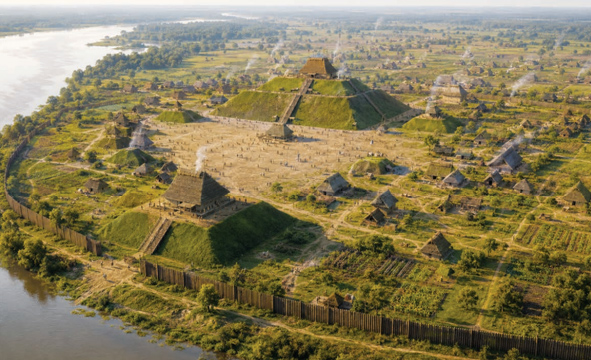

Apersistent misconception holds that early Indigenous Americans lived only in small, scattered bands. Communities varied greatly, but some created substantial towns and regional centers. Cahokia, near the Mississippi River across from modern St. Louis, contained monumental earthworks, planned public spaces, neighborhoods and far-reaching connections. Its central Monks Mound remains one of the largest human-made earthen structures in the Americas. Indigenous government took many forms: clans, councils, hereditary offices, chosen leaders, and combinations of civil, spiritual and military authority.
The Haudenosaunee Confederacy joined distinct nations under a durable framework of diplomacy and collective governance. Scholars debate its precise influence on the United States’ founders, but Europeans unquestionably encountered nations experienced in alliance, negotiation, conflict and peace. Native peoples identified medicinal properties of plants; cultivated crops; managed forests and grasslands; built watercraft; preserved food; tracked animals; and read subtle changes in weather and seasons. Crops first cultivated by Indigenous peoples of the Americas-including corn, potatoes, tomatoes, cacao, beans and squasheventually transformed diets around the world.
“Europeans did not bring society to an empty continent; they entered societies they did not yet understand.”

Be the first to comment